
Podcast
Pure Digital Passion with Moses Kemibaro
Hosted by Moses Kemibaro · EN
This is pure digital passion, the podcast of Moses Kemibaro, one of Kenya's and Africa's leading digital marketers, techbloggers, and technology analysts. Join me for insightful interviews and commentaries on all things digital from across the African continent on a myriad of compelling topics and themes. I share Africa's stories of pure digital passion!
46episodes
Episodes
Newest firstAll episodes

Episode 154 - Rethinking Built Environment Security In Kenya: Insights from the RIANA Group Security Executives Forum 2025 Discussion Panel
Apr 25, 202501:02:01Tap to summarizeOn Friday, 11th April 2025, I had the privilege of moderating a high-impact panel at the RIANA Group Security Executives Forum at the Hyatt Regency Nairobi. Themed “Integrating Security from the Ground Up”, the discussion explored the vital collaboration between architects, engineers, surveyors, and security professionals in designing and delivering safer, smarter buildings.We’re in an era where traditional approaches to security no longer cut it. Physical barriers, standalone CCTV systems, and manual visitor logs feel almost archaic when juxtaposed with today’s smart technologies, AI-driven threat detection, and integrated systems thinking. This is precisely the lens we applied to this forum.The panel comprised some of the region’s foremost professionals from the real estate, insurance, hospitality, and construction sectors:Andrey Lyubimov — Development Manager, HASS ConsultJack Njuguna — Regional Head of Security, Jubilee InsuranceJohn Githiri — Director & Project Manager, Millstone Construction CompanyLeakey Indiazi Changilwa — Security Manager, Gem Forest Hotel NairobiMoses Karani — Quantity Surveyor & Incoming Chair, AAK Quantity Surveyors ChapterKey Takeaways From The Discussion Panel. Throughout the 90-minute session, we unpacked some compelling insights that are now available in the full video and audio podcast episode — live on the Pure Digital Passion Podcast. Security Should Be a Design Imperative, Not a Retrofit: Andrey Lyubimov emphasized the importance of incorporating security at the earliest stages of property development. Sharing his experience with a mixed-use project in Nairobi that employed facial recognition technology, he demonstrated how early integration prevented costly bottlenecks and inefficiencies.Risk Assessment Is Non-Negotiable:: Jack Njuguna made a compelling case for layered security architecture — blending physical measures like access control and surveillance with cyber safeguards. He underscored the insurer’s perspective: ROI in security is most evident when incidents occur, but preparedness mitigates long-term losses.Compliance and Standards Are Still Playing Catch-Up John Githiri pointed out that while Kenya’s 2024 Building Code and KEBS standards offer a regulatory framework, real-world adoption remains inconsistent. Much of what gets implemented still depends on client aspirations more than national legislation.The Hospitality Lens: Security Without Sacrificing Experience: Leakey Indiazi shared hospitality-specific nuances — such as balancing stringent security protocols with seamless guest experiences. His insights from the frontlines of hotel security highlighted how technology like LPR and smart communication between guards enhances safety without intimidation.Future-Proofing Through Value Engineering: Moses Karani articulated the financial implications of late-stage security integrations and how early planning — even without full implementation — helps align budgets with essential infrastructure for future rollouts.We also explored the often-overlooked topic of retrofitting existing buildings, calling for more thoughtful legislation and incentives to upgrade aging structures without needing to rebuild from scratch. Passive design principles were debated too, with general consensus that we’re shifting rapidly from passive to active security paradigms.What's Next? The panel called on developers, policymakers, and professional bodies to:Integrate risk assessments into early designPartner with independent security experts, not just vendorsConsider cybersecurity as core to physical security planningEducate clients on the long-term value of secure infrastructurePush for legislation that normalizes integrated security standards
Transcribe →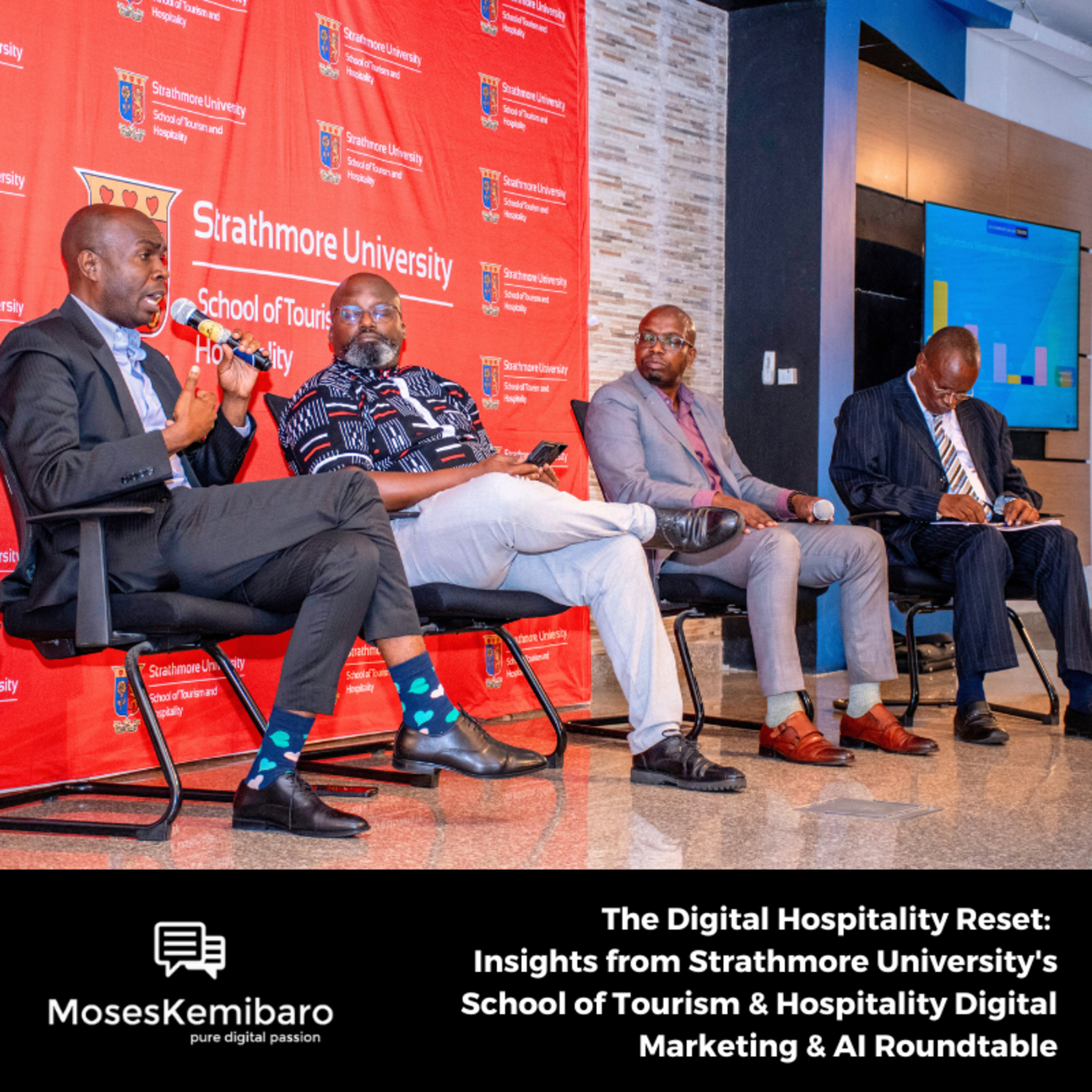
Episode 153 - The Digital Hospitality Reset: Insights from Strathmore University's School of Tourism & Hospitality Digital Marketing & AI Roundtable
Apr 11, 202502:03:22Tap to summarizeYesterday, I had the pleasure of participating in a compelling and deeply insightful panel at Strathmore University’s School of Tourism and Hospitality, focused on how AI and Digital Marketing are transforming Kenya’s hospitality and tourism sectors.The event—hosted at the Microsoft Auditorium—was themed “Optimizing MarTech as a Strategic Tool for Business Success.” I joined a dynamic panel alongside Kevin Omondi (Founder, DotNext), Ronald Okumu (CEO, AI Connect), and hospitality industry veteran Tony Muiruri, with the discussion expertly moderated by Joe Owako.This wasn’t your typical academic event. It was raw, real, and filled with meaningful dialogue from both the panelists and a diverse audience. From influencer marketing to predictive analytics, we unpacked how hospitality players in Kenya must urgently adopt smarter, AI-driven strategies to stay competitive.What We DiscussedAI Is Not the Future—It’s NowRonald made it clear: AI is already driving real outcomes in hospitality—lowering costs, improving guest engagement, and powering dynamic pricing models. But Kenya’s slow adoption is often due to leadership hesitation, talent gaps, and legacy thinking.Digital Marketing Without Brand Strategy Is NoiseKevin highlighted how AI has made content creation easier—but that also means there’s more noise. He stressed the importance of differentiation, brand storytelling, and personalised engagement. If you’re not clear on who you are, you get sorted by price.CRM Systems = Long-Term ValueTony offered a masterclass on CRM as a driver of customer lifetime value. With AI-powered tools, hoteliers can map customer preferences, automate communication, and build lasting relationships beyond one-time bookings.AI Won’t Kill Agencies—Stagnation WillAs someone running a digital agency, I shared a candid truth: agencies must evolve. AI should automate the busywork and free up teams to deliver more strategic value. The future agency is faster, smarter, and outcome-driven—not just billing by the hour.The Audience Had Questions We All Needed to HearOne moment stood out. A young influencer questioned why hotels are still investing in massive billboards instead of content creators who bring real engagement. Another hotel marketer pointed out that management culture often lags behind modern consumer behaviour—and therein lies the challenge.This wasn’t a one-way panel. It was a genuine exchange of ideas, frustrations, and opportunities between experts and practitioners across the room.
Transcribe →
Episode 152 - How Citi, Visa, and Cellulant Are Transforming B2B Payments in Kenya With Citi Optimized Pay
Apr 10, 202500:58:53Tap to summarizeLast week, I had the pleasure of sitting down at the Visa Innovation Studio in Nairobi 🇰🇪 with three exceptional leaders—Olivia Etyang’ from Visa 💳, Evans Toroitich from Citi 🏦, and Catherine Wangechi from Cellulant 🔗—to unpack one of the most exciting fintech collaborations I’ve come across in a long time.Together, these three premier organizations have launched Citi Optimized Pay 🚀—a bold and timely solution aimed at addressing one of the most persistent problems facing businesses in Kenya and beyond: the working capital gap in supply chains 💸.💼 Why Citi Optimized Pay MattersAccording to the IFC, Kenya’s supply chain finance gap is estimated at over $25 billion—a staggering 25% of our GDP 📉. The challenge? Suppliers—especially SMEs—often wait 60 to 90 days to get paid after delivering goods or services 📦. Meanwhile, large corporate buyers typically want to delay payments to manage their own cash flow 🕒. The result is a working capital stalemate that can cripple smaller businesses 🧱.Citi Optimized Pay bridges that gap by allowing corporate buyers to use their commercial cards to pay suppliers early via a secure, seamless, and flexible platform 🔐 built on Visa’s infrastructure and powered by Cellulant’s Tingg payment gateway 💡.🌍 A Game-Changer Born in NairobiWhat I found especially compelling is that this wasn’t some imported idea from New York or London 🌎. Citi Optimized Pay was co-created right here at the Visa Innovation Studio in Nairobi—the only one of its kind in Africa 🌍—and it was built with local insights from SMEs, suppliers, and enterprise buyers 🧠.As Olivia Etyang’ explained, the space was designed to foster innovation by enabling partners to co-create real-world solutions that address the needs of African markets. Citi Optimized Pay is the latest fruit of that vision 🌱.🔧 How It WorksEvans Toroitich broke it down brilliantly during the podcast: Citi issues virtual commercial cards to its corporate clients 💳. These clients upload approved supplier invoices to the platform 📤, and suppliers are then notified and given the option to get paid early—either via bank transfer or mobile money 📲—without needing expensive card infrastructure 🏦.Suppliers effectively leverage the buyer’s creditworthiness to access fast, reliable cash flow 💰, while buyers benefit from extended payment terms and digitized accounts payable processes 🧾. It's truly a win-win ✅.🔄 Cellulant's Role: Orchestrating Seamless PayoutsFrom Catherine Wangechi’s perspective, this platform is a culmination of years of building a Pan-African payments infrastructure 🌐. Tingg provides suppliers with multiple payout options, enabling them to receive funds via M-PESA, bank transfers, and soon, even directly onto cards 💸.The platform also minimizes overhead and cuts out the bureaucracy typically associated with SME financing 🧾. No trips to the bank. No endless paperwork. Just a simple, verified, and secure digital journey from invoice upload to funds disbursement 📈.📦 Designed for Scale—Across Sectors and MarketsOne of the most exciting things we discussed was the future potential of Citi Optimized Pay 🔮. What started as a solution for sectors like FMCG, travel, and manufacturing is already showing promise in areas like logistics, agriculture, and financial services 🚛🌾💼.With Cellulant’s presence in over 20 African markets, and Visa’s global infrastructure, this solution is poised for continental scale 🗺️. And Citi brings the supply chain finance expertise that anchors the entire offering ⚙️.🕰️ Why Is This Happening Now?The answer is simple: Kenya is a hotbed of fintech innovation, and the ecosystem is ready 🔥. As Olivia put it, “We have the tech. We have the appetite. We have the need.” 💻📲Add to that the fact that this is one of the few corporate-focused platforms truly designed to uplift SMEs—and you have a transformative tool that could unlock massive economic value 💼📊.
Transcribe →
Episode 151 - Creditinfo’s Michael Nyaga on Embedded Finance, AI, eKYC & Digital Lending As A Lifestyle In Kenya
Apr 7, 202500:36:07Tap to summarize🎙️ In this episode of the Pure Digital Passion Podcast, I sat down with Michael Nyaga, Regional Consultant for East and Southern Africa at Creditinfo Kenya, to explore how Creditinfo is transforming the onboarding journey in digital lending — starting with the launch of its next-generation eKYC platform in Nairobi.🇰🇪 Kenya is the first global market to experience this intelligent, modular Identity | KYC | Fraud solution, designed to improve how financial institutions identify, verify, and onboard customers — while preventing fraud from day one.Michael draws on two decades of experience in digital banking and lending innovation across Equity Bank, I&M Bank, and now Creditinfo to discuss:✅ Why thin-file customers need psychometrics + alternative data✅ How to digitize onboarding for MSMEs and the gig economy✅ What it takes to move from static credit limits to intelligent scoring✅ How embedded credit is shaping the next decade of financial access✅ The future of real-time, API-based decisioning for lenders in AfricaIf you're in digital banking, credit risk, fintech, or financial inclusion — this episode is essential listening.📍Want to learn more about Creditinfo’s new eKYC solution? Visit: https://shorturl.at/TcVkJ
Transcribe →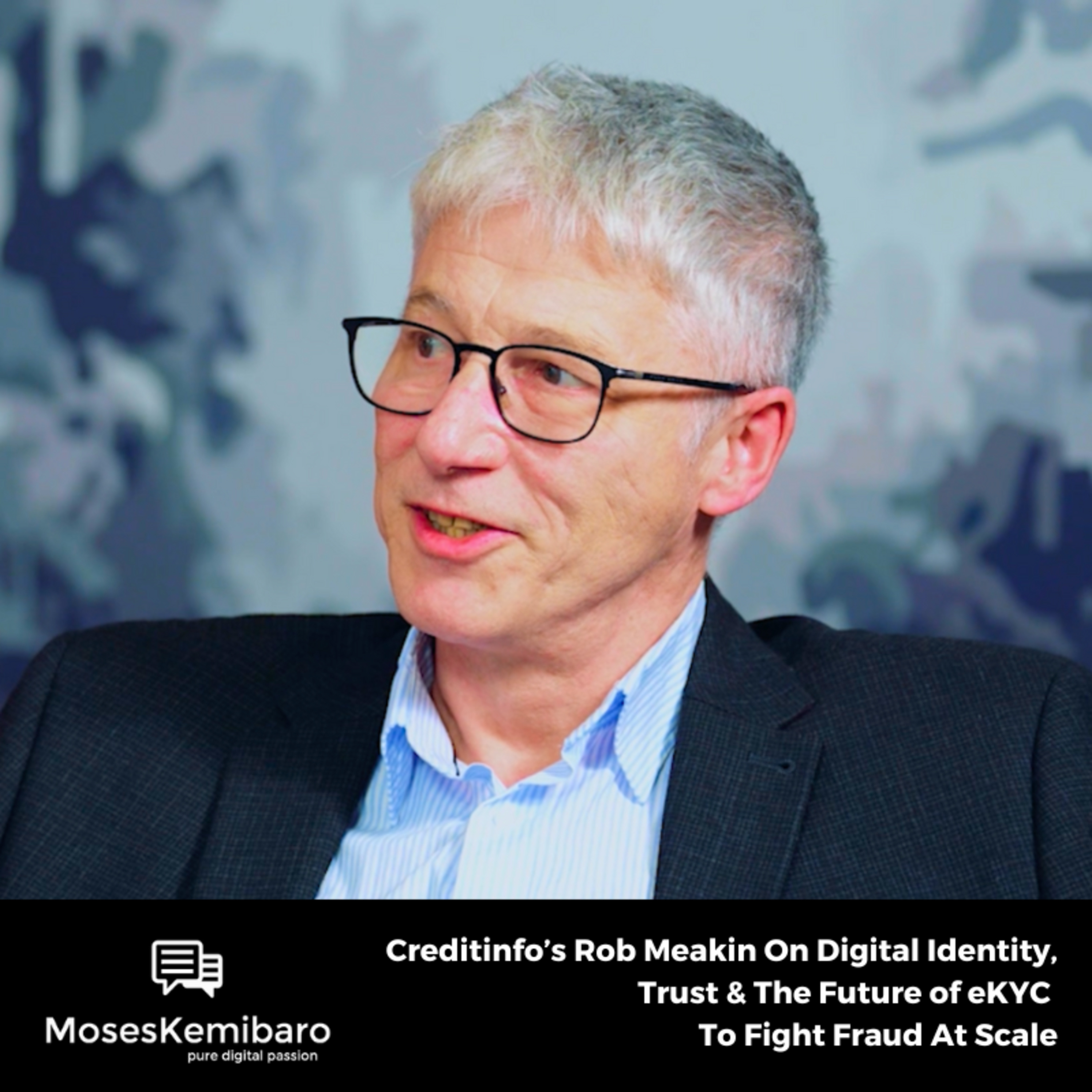
Episode 150 - Creditinfo’s Rob Meakin On Digital Identity, Trust & The Future of eKYC To Fight Fraud At Scale
Apr 7, 202500:28:25Tap to summarize🎙️ In this episode of the Pure Digital Passion Podcast, I sat down with Rob Meakin, Director of Fraud & Identity at Creditinfo Group, during the official launch of Creditinfo’s new Identity | KYC | Fraud platform in Nairobi.🇰🇪 Kenya is the first global market to roll out this next-gen eKYC solution — designed to help digital lenders, banks, and fintechs verify identities, prevent fraud, and build trust from the very first customer interaction.Rob shares insights from over 20 years in fraud management and digital identity innovation across the UK and global markets. We discuss:✅ Why trust in digital finance starts with multi-attribute identity verification✅ How AI is being used (and misused) in the fraud prevention space✅ Why simple ID checks are no longer enough in today’s environment✅ How Creditinfo’s platform uses cross-source analytics to detect anomalies✅ The cost of onboarding fraud — from bad debt to customer drop-off✅ Why Kenya’s ecosystem was chosen for the global rollout✅ What it takes to balance security with seamless customer experienceThis is a must-watch episode for anyone serious about building secure, scalable, and inclusive digital financial services in Africa.📍Want to learn more about Creditinfo’s new eKYC solution Visit: https://shorturl.at/TcVkJ
Transcribe →
Episode 136 - A Conversation with Eskimi's Paul Thompson on Why Creativity, Not Just Data, Wins in Digital Advertising
Feb 26, 2025Tap to summarizeIn this latest episode of Pure Digital Passion, I sat down with Paul Thompson, Chief Commercial Officer at Eskimi, to dive deep into the company’s groundbreaking transformation in digital advertising. Eskimi is moving beyond being just a DSP—it’s now a full-stack creative and media tech platform that places creativity at the core of digital advertising.Why Creative Comes FirstPaul emphasized a critical shift in the industry—moving from a data-first approach to a creative-first approach. While digital advertising has traditionally focused on hyper-targeting and automation, Eskimi’s philosophy is different: start with creative, not finish with it. Research has shown that 70% of a campaign’s effectiveness is driven by creative, not just data or targeting.“Who is the enemy? The enemy is boring. Boring ads waste money. Our goal is to make advertising more engaging, more creative, and ultimately, more effective.” – Paul ThompsonFixing the Attention Economy with Neuroscience & AIWith ad blockers, banner blindness, and short attention spans, brands are struggling to make an impact. Eskimi tackles this with AI-powered creative tools like:Neurons AI – Predicts audience engagement using eye-tracking heatmaps before campaigns go live.Lumen Attention Metrics – Measures real-time ad visibility to ensure ads get seen and drive impact.Full-Funnel Brandformance Strategy – A balance of branding and performance marketing for long-term brand recall and short-term results.Kenya & Africa: A Key Market for Digital GrowthEskimi sees Africa as the next frontier for digital advertising. Markets like Kenya, Nigeria, and South Africa are rapidly shifting ad spend from traditional media to digital, creating a huge opportunity for data-driven, creative-led advertising.Paul highlighted that Kenya is a testing ground for Africa—a place where brands experiment with new strategies before rolling them out across the continent.The Future of Digital AdvertisingEskimi’s ‘Don’t Be Boring’ rebrand is more than a tagline—it’s a call to action for advertisers to rethink how they approach digital marketing. Instead of chasing clicks and conversions, brands need to create engaging, emotionally resonant ads that capture attention.
Transcribe →