
Podcast
QSO Today Podcast - Interviews with the leaders in amateur radio
Hosted by Eric Guth, 4Z1UG · EN
QSO Today is a weekly conversation, or QSO, between amateur radio operators about ham radio. Eric Guth, 4Z1UG, hosts a new guest every week to talk about their ham radio journey, their specialized expertise in ham radio, and how amateur radio has impacted their personal and professional lives. QSO Today is targeted at anyone interested in amateur radio who wants to learn more about this fascinating hobby.
15episodes
Episodes
Newest firstAll episodes
Episode 539 John Burwell KI5QKX
1w ago01:18:01Tap to summarizeJohn Burwell, KI5QKX, found his way into amateur radio through 44Net, the Class A public IP address space set aside for amateur radio almost 50 years ago, now managed by ARDC. John's interest in connecting devices over the Internet led him to this remarkable ham radio resource. In this interview, we go deep into IP addressing and networking, opening the door to new ways licensed amateurs can learn, experiment, and build Internet-connected projects. KI5QKX is my QSO Today.
Transcribe →Episode 538 Will Everett N5OLA
Jul 1400:58:34Tap to summarizeBill and Pete at the SolderSmoke Podcast refer to my guest today as the Heathkit Guru of South Texas, a mantle that Will Everett, N5OLA, wears with pride. After returning from civilian life as a reporter and aid worker in Afghanistan in 2015, Will relicensed in 2019 and took his passion for vintage Heathkit amateur radio transceivers to a new level, restoring them to their former glory before sending them on to new owners. Operating from South Padre Island, Will enjoys CW on his Heathkit HW-101, finding quiet moments between running his coffee shops and pursuing his restoration passion. N5OLA is my QSO today.
Transcribe →Episode 537 Jim Hall AD4EB
Jun 2601:00:24Tap to summarizeJim Hall, AD4EB, discovered radio as a young shortwave listener and builder, then turned a lifetime of engineering, CW, RTTY, and contesting into one of amateur radio's most demanding operating specialties: mobile QSO party contesting. In this episode, Jim shares how his early Heathkit projects, teletype machines, and work with HAL Devices led him deeper into electronics and ham radio, and how he now combines two-radio contesting, station automation, careful route planning, and the steady driving support of his wife, Melody, to win state QSO parties from the road. AD4EB's story is a fascinating look at skill, preparation, partnership, and the pure fun of chasing pileups county by county.
Transcribe →Episode 536 Marty Young W4MY
Apr 1201:20:50Tap to summarizeMarty Young, W4MY, is a lifelong amateur radio operator whose 50-year journey began with a simple shortwave receiver as a child and grew into a deep passion for CW operation, homebrewing, and portable radio in the outdoors. From building his first Heathkit HW-16 as a teenager to leading roles in clubs, contesting, and Parks on the Air, Marty represents the classic self-taught ham who never stopped learning. His story reflects persistence, curiosity, and a hands-on approach to radio that has carried him from the early days of Morse code and QSL cards to modern portable operations and mentoring new operators today.
Transcribe →Episode 535 Michael Goldstein VE3GFN
Feb 2201:09:40Tap to summarizeMichael Goldstein VE3GFN has spent more than 70 years in the hobby spanning the full arc of amateur radio's technical evolution. Licensed in the 1950s, Mike began as a dedicated homebrewer and CW operator, later designing receivers published in Bill Orr's, W6SAI Radio Handbook and built a professional career in electronics instrumentation at the University of Toronto. In this interview, he reflects on his mentors, Morse code, classic and modern radios, contesting at 100 watts, and the transition from vacuum tubes to today's SDR transceivers, sharing practical insight and perspective earned over a lifetime on the air.
Transcribe →Episode 534 Cory Sickles WA3UVV
Jan 1201:25:01Tap to summarizeCory Sickles, WA3UVV, first licensed in 1973, explores radio from the inside out, including homebrew transmitters, vintage gear, and cutting edge digital modes that he highlights in his monthly Spectrum Monitor Magazine column, Digitally Speaking. Cory was a bleeding edge pioneer in desktop computing and applications for specialized business segments. He is a passionate club builder and mentor, helping grow one of the most active and welcoming amateur radio clubs in Western Pennsylvania, while serving the ARRL in key outreach and coordination roles. WA3UUV believes that strong clubs, digital innovation, and human connection are the future of amateur radio and is my guest in this QSO Today.
Transcribe →Episode 533 John Simmons NI0K Final
Dec 1400:57:05Tap to summarizeNo description available
Transcribe →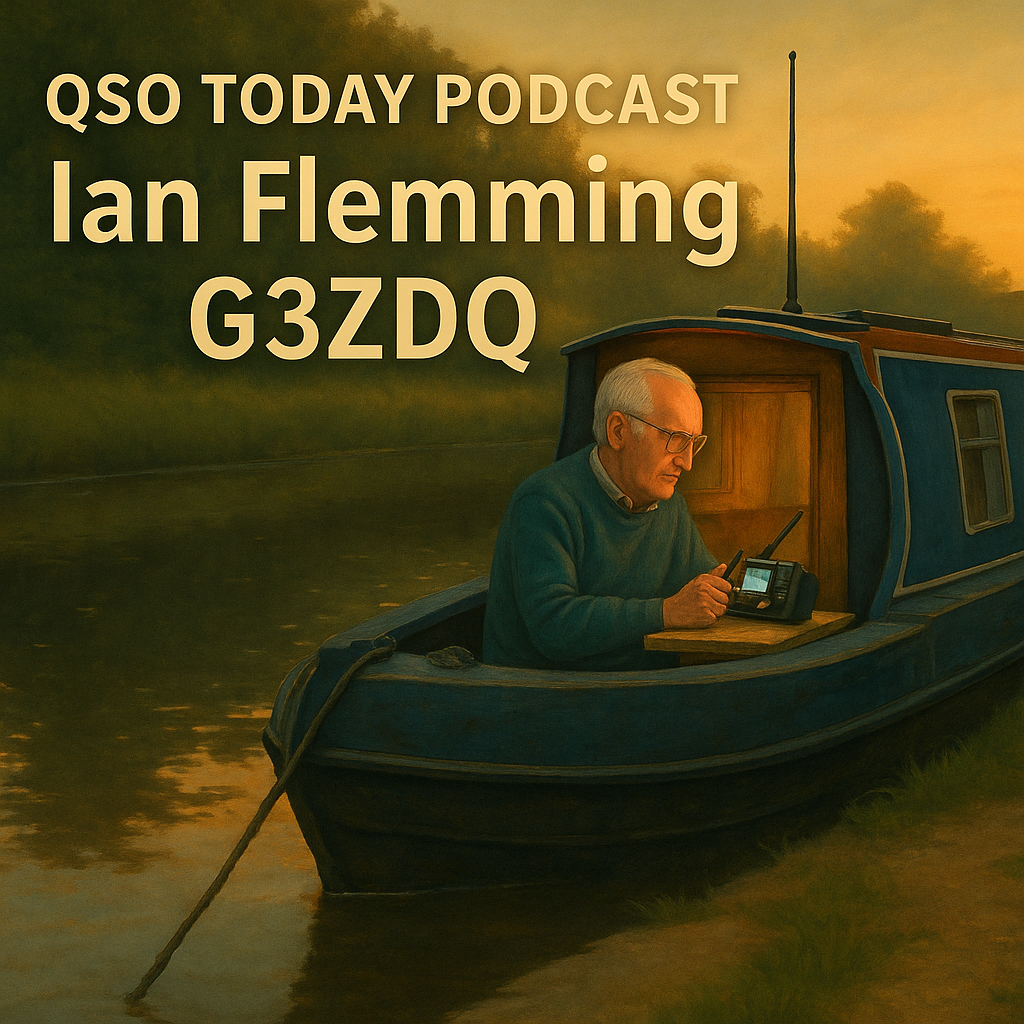
Episode 532 Ian Flemming G3ZDQ Final
Nov 2301:13:46Tap to summarizeIan Flemming, G3ZDQ, grew up tuning mysterious signals on his grandfather's radio in northwest England, a spark that led to a lifelong journey through classic gear, pioneering microprocessor work, Raynet emergency communications, digital modes, canal boat-portable QRP operation, and the restoration of iconic British radios from KW Electronics and Eddystone. His story weaves technical curiosity, professional engineering, and a deep love for radio's evolving technologies—from Hartley transmitters and 6146 finals to modern digital modes. G3ZDQ is my QSO Today. QSO Today Website: https://www.qsotoday.com/ HOST: Eric Guth, 4Z1UG Become a listener sponsor or make a donation to QSO Today here: https://www.qsotoday.com/donate.html Join our mailing list: https://www.qsotodaycommunity.com/amember/signup/nj73Jlm7
Transcribe →Episode 531 Norm Cantin WA1NLG
Nov 201:01:09Tap to summarizeNorm Cantin, WA1NLG, discovered amateur radio at age 14 through Boy Scouts in Massachusetts, got his Technician license in 1969 so he could get on 6 meters, and that early exposure led directly to his career in navigation electronics. Amateur radio Elmers in the Framingham Radio Club helped him get his first job at Northstar, a startup building LORAN navigation equipment, where he spent almost 30 years rising to Vice President of Engineering, later working on GPS development, differential GPS, and aircraft landing systems. After a period at Outerlink building satellite tracking systems, he spent more than a decade at Raytheon working on Patriot modernization and activities that contributed to Iron Dome. Now retired on Cape Cod, Norm is focused on VHF weak signal work, homebrews LDMOS amplifiers, is building a second tower for 2-meter EME, is active in the Barnstable Amateur Radio Club, youth outreach, public service, STEM, Boy Scouts, and believes ham radio is still a "hobby of a thousand hobbies."
Transcribe →Episode 530 Jack Schuster W1WEF
Aug 3101:05:06Tap to summarizeIn this episode of QSO Today, we sit down with Jack Schuster, W1WEF, whose amateur radio journey spans more than 73 years. From building his first crystal set at age 10 to contesting at the highest levels around the world, Jack shares stories of innovation, DX adventures, CW mastery, and a lifetime of dedication to the hobby. His perspective offers both history and inspiration, making this conversation a must-listen for hams of every generation.
Transcribe →