← Question Everything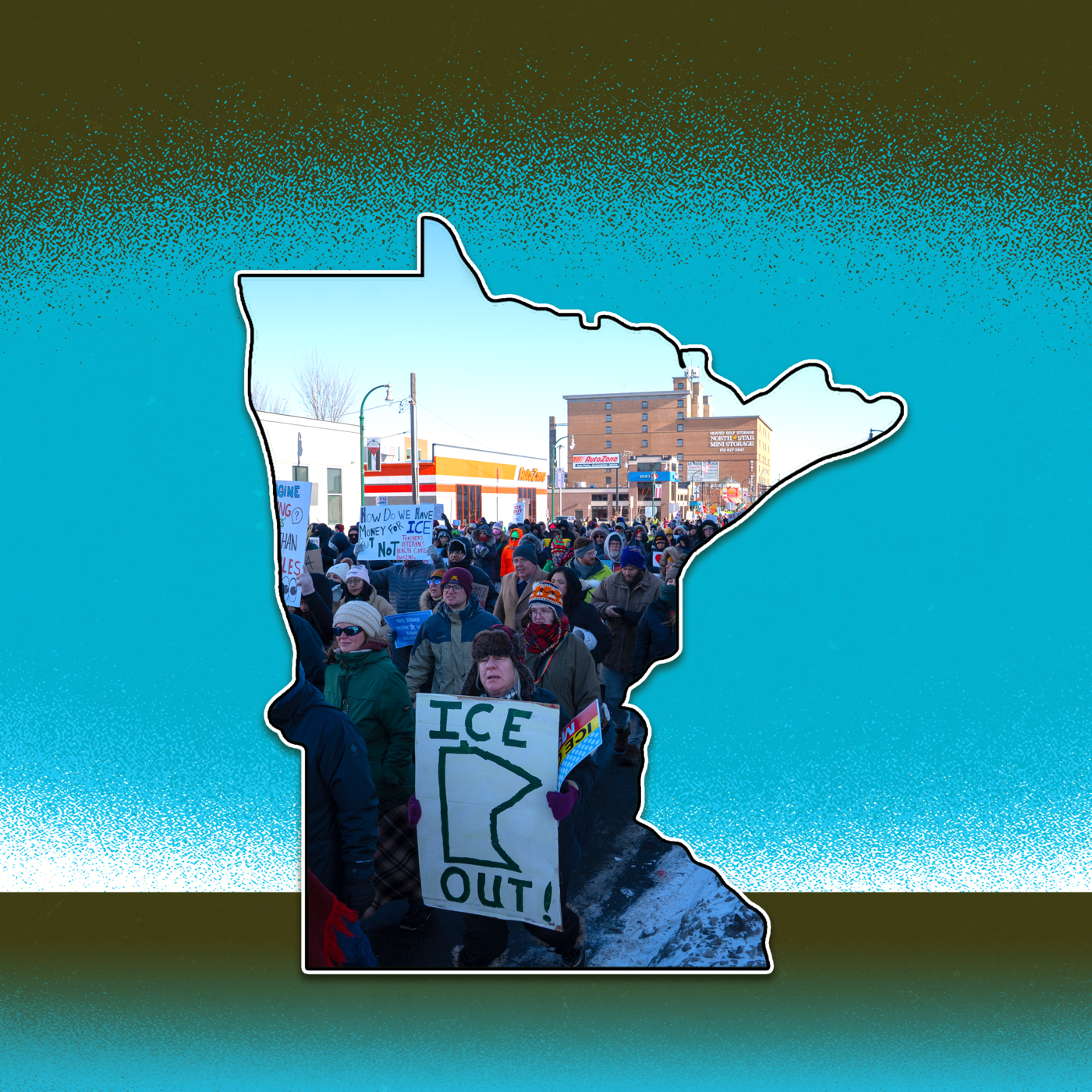
Question Everything
A Minnesota Dad Takes on ICE
00:23:33
A dispatch from a former journalist and local dad who's taking action in the Twin Cities.
Loading summary
Transcript40 lines
- [00:06]
Brian Reed
From KCRW and Placement Theory, this is Question Everything. Brian Reed here with a special episode off our regular schedule. Because of the snowballing constitutional emergency in Minnesota, ICE has killed American citizens in the streets. Now two journalists, Don Lemon and independent Minnesota reporter Georgia Fort, have been arrested for covering a protest. The government is going after people who are are documenting what federal agents are doing, both quote unquote official journalists and ordinary Minnesota residents who have reordered their lives to observe ICE agents. Our team has been talking to Minnesotans all week, trying to understand what life is like there right now, what people feel is important that we cover. And while doing this, our managing editor, Kevin Sullivan, he ended up on the phone with a former colleague of his named Michael Corey. Mike lives in St. Paul with his wife and two kids. He's a former data journalist. That's how he and Kevin know each other from the center for Investigative Reporting. Mike also worked for a while at the Minnesota Star Tribune, though these days he's a historian at a university. Kevin was calling Mike because he'd seen a Facebook post Mike had written hours after ICE agents shot and killed 37 year old ICU nurse Alex Preddy while Preddy was filming them a week ago today. In the post, Mike wrote about the fear he and his family were feeling. Even as a white family living in an affluent area, he had gotten involved in some local organizing efforts himself. And Kevin was reaching out to him to look for leads and ideas. But as he was talking to Mike, Kevin messaged me and said, I think we should just run this phone call and that's what we're going to do. Because hearing from Mike, he captures so much of what's happening on the ground right now in Minnesota. In this crucible, minute by minute, regular people are inventing new ways to get and provide information that they need to stay safe and that they can trust. They're trying, however they can to hold the 3,000 federal agents who swarm the Twin Cities accountable to document what they're doing. And Mike's become part of this since ICE began its operation. He's gotten involved in the group chats on Signal, the encrypted messaging app that in recent weeks, tens of thousands of locals have come to rely on for sharing information. Mike's shown up to record ICE agents after getting tips on signal that agents are going after somebody nearby.
- [02:24]
ICE Agent
I'm not doing anything. I'm not impeding you. You're embarrassing yourself. You're embarrassing this country. You're embarrassing this country. You are everything that is wrong with this Country. We're all just standing here, man. No one's impeaching anybody. Get back from what?
- [02:38]
Brian Reed
Mike doesn't consider himself a journalist anymore. He doesn't consider himself an activist either. Those terms feel like they're mattering less and less right now. Mike just believes in helping people, he says. Here's our managing editor, Kevin Sullivan, on the phone this week with Mike. Corey.
- [02:55]
Kevin Sullivan
Tell me again, like, what you were saying about how weird it is being there.
- [02:58]
Mike Corey
I need people to understand just, like, how overwhelming and intense this is, just, like, day after day after day. It's not just a story of protests. It's a story of ICE agents just completely disrupting the life of a whole state and just making everyone feel unsafe. And just like my kids having to live in this environment where we're somehow, like, trying to give them a normal childhood in this completely abnormal situation. It's just a very, very strange existence. And. And. And I, like, if I choose to be, I'm about as safe as anyone can be. But no one is safe because you have these guys, like, driving around, like, crazy and ramming people. I mean, they literally, like, ram people if they think they're. That you're following them or if they just, like, see that your name is Hispanic, like, they will ram you. You're just going about your daily life. You see abandoned cars every day, where presumably ICE had, like, picked someone up and just left them. Like, the other day, there was a car that had been left running for so long that there was an icicle going from the tailpipe to the ground, and it's just been left running.
- [03:57]
Brian Reed
Wow.
- [03:58]
Mike Corey
And that is, like, a daily occurrence to see that. So even when you don't see the ICE agents there, it's just, like, pervades every part of life. And it is just so bizarre feeling like you are taking on the US Government just by being even remotely compassionate. And that somehow, in some ways, we're winning. But it is utterly exhausting. And also, it's just like, we remember this from after George Floyd was murdered. That feeling of, like, just constant anxiety, adrenaline. Like, it's just so asymmetrical. Like, you both have to, like, somehow go on doing your job while this crazy invasion is happening.
- [04:39]
Kevin Sullivan
Just want to circle back to, like, that Facebook post you wrote. You know, you woke up exhausted, Dr. Cold by triumphant march. Then you saw news of another ICE shooting. We realized it was time to get the kids ready for basketball. And then you were wondering, should we go? And that's. That struck me because, like you said, you're a big corn fed Minnesota boy, like white guy.
- [05:02]
Mike Corey
Well, Wisconsin, but yeah, you know what I mean.
- [05:06]
Kevin Sullivan
But like to think that you and your family feel unsafe.
- [05:09]
Mike Corey
Yeah.
- [05:11]
Brian Reed
Why?
- [05:12]
Mike Corey
It's a couple reasons. One is because we, we live in a diverse city and we live in a diverse city intentionally. And so like if you're going to participate in public life in a diverse city, you're, you're going to be around people who are not white and so just like participating in life in the city, like you're, you're hidden spaces with people who are more at risk and intentionally so. But also like the rec centers in St. Paul, like where they play the basketball games. The city has invested a lot of money in building nice rec centers in neighborhoods that were traditionally underserved. And so just the rec centers specifically that we're going to go to, like, these are in neighborhoods that are like intensively being targeted by ice. So like one fear is, well, maybe they actually show up at the rec center just so they can do some numbers. But also like I said, they just like, they drive crazy and they ram people. And so like, you just have to like be aware of these super aggressive drivers that might be around. They're very unpredictable. They will do weird stuff.
- [06:08]
Kevin Sullivan
Right. So it looks like you're like being very active and kind of like the activist movement there.
- [06:15]
Mike Corey
What are you doing? It's kind of a mix. And I will be a little circumspect, but I will say that there's people doing mutual aid, there's people doing rapid response, there's people doing patrolling in different venues. Patrolling is like you have a planned time where you're going to show up and walk or drive around a specific area and, and your main job is to like alert people. If you do see ice and there's like commuting, which is like driving around and following ice. That's among the most dangerous things. I generally don't do that because it is pretty dangerous. And a lot of people are just doing a mix of all of those things. And it really did go like from those early weeks to like there's hundreds of people doing stuff to now. Like I said, there's tens of thousands, if not hundreds of thousands of people. It's so amazing like what people have organized and what people have done in a truly organic way. There is not a central organization. And I think that is like hard for people to believe. But like it, it really is self organizing, like set up a chat in your neighborhood with people you know. And that's largely what People do, and they're very local. Like the next neighborhood over there's a different chat that I, that I'm not in and I don't know anything about.
- [07:22]
Kevin Sullivan
Is this signal chat? Is that what you mean?
- [07:24]
Mike Corey
They're all signal? Yeah, it's pretty much all signal. It started out like people just like texting, and now there's like DIY dispatchers and there's people just doing plate checks. But organically, plate check basically is people set up forms for like, hey, if you have confirmed ice, like in a vehicle, take down their license plate and you add that to the database. So there's this database of like thousands of license plates that are allegedly ICE plates. And so now people can search that database. And so if you're either out on patrol where you just pass a plate, you can either text the chat, like, hey, do me a, give me a plate check on this one and someone else will look it up. Or now there's even bots that search that database. If you look in all these chats, it's just like, play check blah, play check blah, play check blah. And it's just thousands and thousands of them a day. And the problem was that, like, they changed their plates every day. They, like, move them around to different cars. So this got very complex. And so, like, the trick is just figuring out, like, okay, who do we trust? How, how much does this need to be vetted? There's always this risk that surveillance really is happen and you're going to get targeted.
- [08:31]
Kevin Sullivan
Well, they can monitor signal chats. I thought the whole point of signal was that they couldn't.
- [08:36]
Mike Corey
You don't really know who's in there. And so you have to assume that, like, people have managed to find the link because, like, one person giving away the link to the wrong person. Like, like the other day I was doing a school patrol and someone put in the chat for the school patrol was like, hey, give me a plate check on this plate. And then someone said, oh, actually that's my plate. Well, okay, now you just exposed like that this person has this license plate. And so if someone is in there, like, that's maybe a risk and it sounds paranoid, but again, like, theoretically, these people have the entire resources of the US Government, like, at their disposal. And so I think it's a real thing.
- [09:14]
Kevin Sullivan
I'm just curious, like your journalist hat on now, like, how are you able to communicate, organize, when it's hard to know who to trust?
- [09:23]
Mike Corey
Yeah, it's a good question. I mean, so after George Floyd was murdered, I was working for the Star Tribune. And in my sense then was that media was at the center of getting information out, like on a, on a momentary basis. And like Twitter was a big part of that. And this feels really different. Like I am getting my news from the Signal chats and maybe like hours later the Star Tribune will report on the same thing. But like this, it's happened more than once. When Alex Preddy was shot on Saturday, like that the thing I mentioned in my post, I was texting with one of my reporter friends and told her that that shooting had happened. Like, because the Signal chats know right away and there were hundreds of people on the scene so fast. And so I think like for people who are plugged in, they are getting their news from Signal, not, not from the media. We all know that local media just continues to get hollowed out and hollowed out and hollowed out and, and to me it's really fallen below the threshold of like, what it's really possible to cover these things at the level they should be covered at. Even in the Star Tribune. For a long time their homepage did not reflect to me like the gravity of what was happening. That we had thousands of federal agents, like unprecedented level invasion of a US City and they're still running like business stories over the scroll line. And I do think it contributed to the lack of understanding for a while that people had about what was really going on. I really think like the news is getting shared on Signal. That's, that's how people who are involved are getting all of their news. And you can see this now in like right wing groups being like, look at these Signal chats. Like clearly it's like George Soros or something, blah, blah, blah. And then I think all of us are just like, look, I'm as surprised as you are that this many people signed up, but it really is just like the soccer moms and the pto, like that's just doing it. One of the things I think is interesting is like, okay, so all this information I'm talking about is like, so there's this database of like thousands of interactions where ICE has like stopped people or arrested people. All that's completely unvetted. And so I think like, for me as a data journalist, if someone says, hey, can we do something with that data? That, that raises questions for me because like I can't verify that data. And I know, and I know that a lot of it is going to be wrong, but that's also really what's going on. And that's like the Best available source. And so I think, like, covering something like this has really been a challenge for the media because ideas about how you're going to document things or the reliability of sources, all of that's out the window. The federal government's not going to give you any information, and then the things they do give you are going to be a lie. And like, state and local are just not resourced to give you reliable data. It's a challenging story to cover. I saw someone the other day, say on Blue sky, like, wow, Star Tribune should really get like a special Pulitzer or something for their coverage. And I gotta say, like, and don't get me wrong, like, I have colleagues I respect very highly the Star Tribune, but I think that's bullshit. I think you should give signal a pull up, sir. Really what's most needed for me is just being places and like, and frankly using, using my whiteness that does convey some protection to just be present in the spaces and, and, and like, sometimes like, just directly meeting these guys. Because I have to say, like, some of the times when I have seen them, it does throw them off when it's like a white dude with a beard who is, who is yelling at them.
- [12:55]
Kevin Sullivan
Can you tell me about any specific incidents?
- [12:57]
Mike Corey
Yeah. So this is before Christmas. This was when there was more daily ICE activity in Cedar Riverside, where the Somali community is. And we just got a text that said, hey, ICE agents are here. They're arresting people. And so a bunch of us, like, all converged to the scene and it was wild because, like, we, we got like, it was like three or four blocks away. And we get there and within seconds, like, a small community member, like, flags me and several other people down and says, come in here. They're in the back of this building. And so we're like filming with our phone.
- [13:33]
ICE Agent
You're on private property.
- [13:37]
Mike Corey
And my reaction was just like, okay, I don't know this person. I'm going in the back of this building. I don't know what's going on. But I, but I go in there and with several other people and we're filming. And immediately we see that these two agents have like, shoved this young black man up against the wall.
- [13:56]
ICE Agent
Come on, let's just look at his id. Just look at his id.
- [13:59]
Mike Corey
And he was just screaming like, I'm a US Citizen. I'm a US Citizen. Have my id. I can show you my id. I'm a US Citizen. And they just keep saying, we don't care, we're going to find out. And they drag this Guy out, back up.
- [14:12]
ICE Agent
That's all you got to say is back up. I'm not doing anything. I'm not impeding you. You're embarrassing yourself. You're embarrassing this country.
- [14:20]
Mike Corey
We're yelling things like, he says he's a citizen. What are you doing? Like, you don't have a right to be here. Get out of our town. They dragged that guy into a car, drove him away, and he was held. I forget for how long. And he's. This is a story that's like, he appeared with Mayor Fry and with the police chief. Like, he was a US Citizen. He was not lying. Like, that was all completely true. And so just to, like, see them just directly targeting someone who was insisting the whole time, I am a citizen. I have id, and they were not interested was really galvanizing for me. And so then, like, about 20 minutes later, we were still. So everyone was just kind of, like, everyone who had responded to that was just kind of walking around the neighborhood to see if they would come back, and they did. And at that point, they, like, pulled into this one street and Cedar Riverside, which was a huge strategic mistake. And, like, something that if you were where here locally, you would know not to do, because there's really only one way in and one way out of Cedar Riverside. And there's also just, like, tons of traffic there. And so they immediately kind of got, like, parked in, like, there, and we're kind of stuck. And so they don't even know what to do.
- [15:20]
ICE Agent
What are you gonna do when you find out he's an American citizen? Are you ever gonna apologize? Are you gonna apologize to him and his family for putting him in the back of a car? Calm down.
- [15:28]
Mike Corey
And so we're all yelling at these guys, like, get out of our town. You don't belong here. Like, you're violating people's rights. And, like, what I feel like I always want to say to these guys and I was like, what are you going to do in 10 years? What are you going to tell your kids? What are you going to tell your grandkids? Are you proud of what you're doing right now? And some of them, like, will respond back, like, yeah, I am, actually, but not a lot of them. And my impression, like, that does make an impact on some of them. I'm not saying it changes their behavior.
- [15:56]
ICE Agent
But they know I'm right here. You tell your mom this is what you do with your time. What are you going to do? What are you going to do when.
- [16:03]
Brian Reed
This is all over?
- [16:04]
ICE Agent
What are you going to tell her 10 years from now, what are you going to tell your kids?
- [16:11]
Mike Corey
Look like we're not going to let this go. This is going to follow you for the rest of your life. I'm not saying that because I am concerned about you, but I want you to know that you are making a decision right now that is going to follow you the rest of your life.
- [16:23]
ICE Agent
What are you going to do when this is all over? Everyone's going to know you guys are doing this shit. Is this what you want with your life?
- [16:30]
Mike Corey
Just to have that experience of just saying this to somebody who has like a lot of guns and pepper spray and lots of ammo? It's, it's pretty wild. And, and so when, when the federal government's narrative is like, look at all this violence where like these brave agents are being met with all this violence. And I'm just like, they're the ones with guns, they're the ones with pepper spray. Using it indiscriminately again. And I saw them using it indiscriminately against people who were not threatening them. They're the ones who are like going out of their way to sh and be extremely confrontational. They're getting yelled at. And so for them to talk about violence I think is so telling, but like also just absurd that I feel like people here have been so incredibly patient and disciplined. And so just hearing these narratives over and over again that somehow like we are doing violence by yelling at somebody, I think is just, it's crazy. My dad's a retired police officer and so like I've spent my entire life around police officers who I respect and police officers who really scare me. I've seen the full gamut and as a journalist, like interacting with law enforcement like, and covering the border. And so it's like, I know how this stuff is supposed to work and nothing about this is how this is supposed to work. There's still like thousands of masked goons snatching people off the street, many of whom are perfectly legal to be here, and they're disappearing people, putting people on planes every day. So it just feels like what I'm feeling today is just this very like intense anxiety that we've done all this work, we've done so well. But is America going to get bored and bail on us?
- [18:10]
Brian Reed
That's Mike Corey in St. Paul, Minnesota. Thanks for listening. Today, the man that Mike videoed getting pinned against a wall and dragged into detention by ICE agents, he's a 20 year old Somali American named Mubashir Khalif. Hussein. He came to the US As a child and is now a US Citizen after ICE released him. Later that day, Mubashir held a press conference with Minneapolis Mayor Jacob Fry, where he told the story of what happened to him and how important it was that Mike and others raced over to witness and record it.
- [18:48]
Mubashir Khalif Hussein
I felt like I was getting assaulted, I was getting kidnapped, and that's exactly what it was. And the way they were treating me, it was inhumane. They dragged me across the road, they slammed me to the ground, choked me. I was uncalled for. They had a copy of my passport. And I told the agent, he has my passport copied. And he said, we don't care. We're still taking you in. And they kept me for two hours. And if this is what's happening to a US American citizen on camera, imagine what could happen to your loved ones when there's no one around to witness what they're doing.
- [19:25]
Brian Reed
The Department of Homeland Security gave a statement about this incident to Minneapolis Public Radio. They said that agents were talking to somebody outside of a restaurant. Movishear walked out of the restaurant, saw them and ran, and that that gave them reasonable suspicion to chase him. They claim Movie Sheer then violently resisted officers and refused to answer questions. And that a large crowd of, quote, agitators descended and began to threaten the officers. And they said this is why they decided to detain Mubashir to, quote, safely finish asking their questions. Along with other video, a security camera captured what happened. We'll share that on our substack question everything.substack.com and you'll see moveshir was not resisting officers. The folks recording him are, yes, shouting, but standing and walking peacefully documenting what happened. I feel like that official DHS response perfectly encapsulates how quickly things can just get out of control when you surge 3,000 plus heavily armed federal agents into a city. We will continue to cover what's happening in Minnesota and with ICE and with the escalating attacks on the press. If you're in the Minneapolis area and have any tips or something you want us to look at, you can reach me on signal at Brihread 45. That's B R I H R E E D45. Anyone can reach me there with tips from anywhere in the country. Today's episode was produced by managing editor Kevin Sullivan and Zach St. Louis and edited by me and Neil Drumming. Robin Semion and I are Question Everything's executive producers. Our team includes producer Sophie Kazis, contributing producer Sam Egan, contributing editor Jen Kinney, and associate producer Kevin Shepard. This episode was fact checked by Marisa Robertson, texter, mixing and sound design by Brendan Baker. Our music is by Matt McGinley. If you're interested in supporting Question everything as a partner or a sponsor, please write us at hey. H e-yacementtheory.com Our partners at KCRW include Arnie Seiple, Tejala Gemera, Natalie Hill, and Jennifer Farrow. See you.