← Question Everything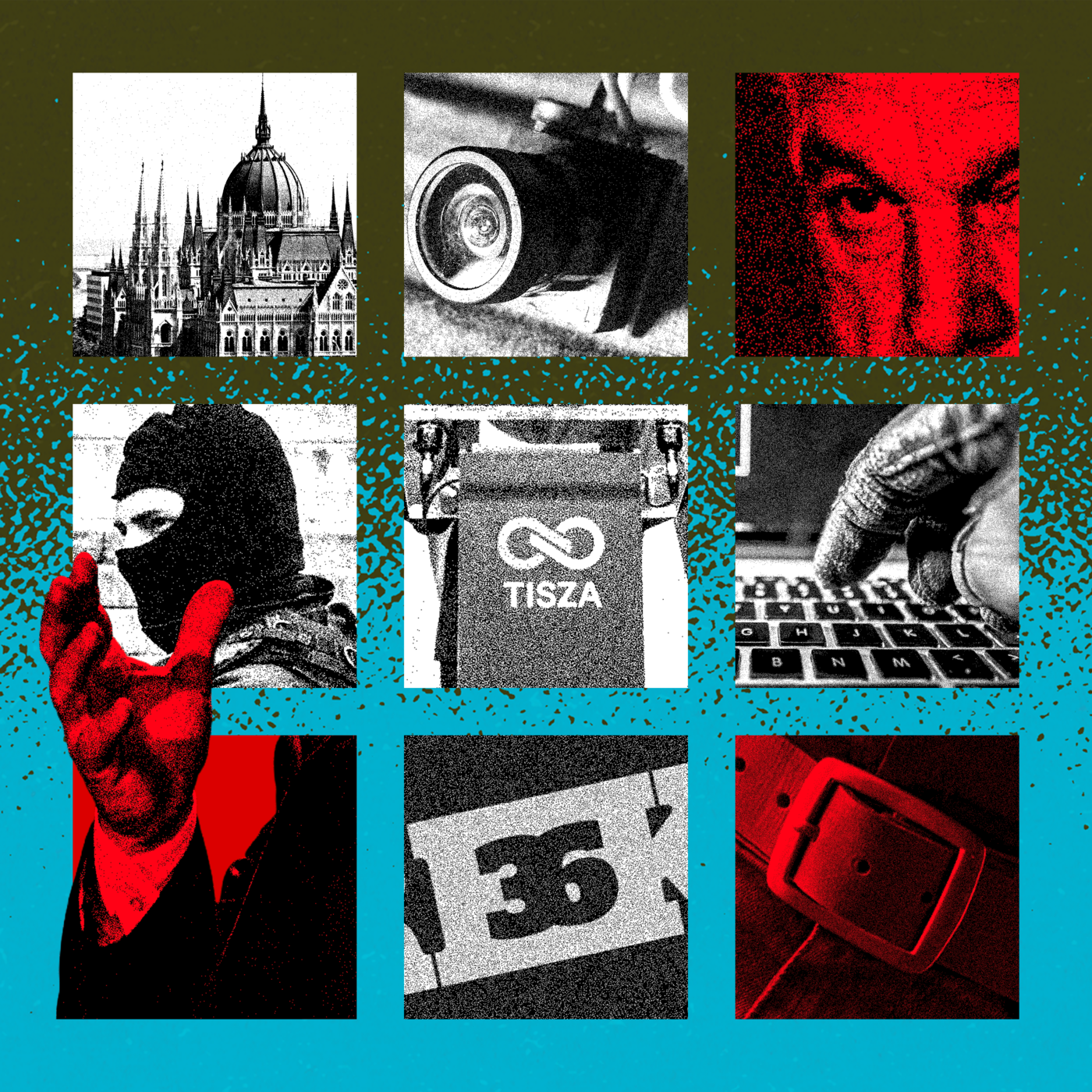
Question Everything
How a Tiny Newsroom Helped Bring Down Hungary’s Authoritarian Leader
00:47:21
A shadowy figure named “Henry” texts someone known as “Gundalf”. Political intrigue ensues.
Loading summary
Transcript127 lines
- [00:01]
A
If you haven't already, I hope you check out our sponsor, Ground News. Ground News was founded by a former NASA aerospace engineer in an attempt to solve the problems of our information ecosystem, where we're so overwhelmed by seemingly so much information and yet can leave reading those stories feeling as if we don't actually understand what's happening. Go check it out@groundnews.com? to get 40% off their unlimited vantage plan. Again, that's groundnews.com question. Make sure to use our link so they know we sent you. This episode is sponsored by Ground News. It's a platform that lets you see all the coverage of a news story in one place with ratings about how reliable each source is so you can draw your own conclusions. And I was surprised to learn Ground News was founded not by a journalist, not by a media executive, but by an aerospace engineer who became troubled by how hard it can be to find trustworthy news.
- [00:58]
B
How is it possible that we can see what's happening on Pluto with certainty, but we can't with certainty tell what's happening somewhere in our own world by reading a single news source?
- [01:09]
A
Her name is Harleen Corer. We're going to hear more from her throughout the show, but in the meantime, you can check out Ground News at the link in the show notes. In April, days before the election for prime minister in Hungary, Vice President J.D. vance traveled to Budapest to help Hungarian Prime Minister Viktor Orban as he was trying to cinch his next term after 16 years in power. And there was this awkwardly low tech moment where Vance stood on stage at a rally, held his phone up to the podium mics and dialed up Donald Trump right there.
- [01:48]
B
I'm sorry, the person you were trying to reach has a voicemail box that has not been set up yet.
- [01:52]
A
Okay, try one more time. He had to try him again. The second time he got through. You are on with about 5,000 Hungarian patriots and I think they love you even more than they love Viktor Orban.
- [02:05]
C
Well, I can't believe that. I can't believe that because I love
- [02:09]
D
Hungary and I love that Victor. I'll tell you, he's a fantastic man. We've had a tremendous relationship.
- [02:16]
A
Trump and the Maga movement have loved the Hungarian prime minister. They've all watched in admiration as over the last decade and a half, Orban and his party, Fidesz, pushed Hungary away from democracy and into autocracy. From co opting the judiciary to targeting universities, to stripping back the rights of LGBTQ people, asylum seekers and minorities, to corrupting much of the media and turning it into a government mouthpiece. Trump and the American right have looked to what Orban has accomplished as inspiration for what they can do here in the US cpac, the biggest gathering of American conservatives, even started holding a yearly conference in Hungary to cross pollinate ideas. And then on April 12, stunningly, Hungarians voted Orban out. Hungary's far right nationalist leader Viktor Orban was defeated in an election yesterday. This brings to an end his 16 years in office. Orban was heavily backed by the Trump administration. Peter Madyar from the opposition Tisa party beat Orban in such a big landslide that Orban didn't even try to cling to power, as lots of people expected he might, he conceded. Peter Magyar was sworn in a few weeks ago amid massive jubilant crowds celebrating the first day of democracy, as one writer put. So now, instead of looking to Hungary as a cautionary tale, democracy supporting Americans are turning to it for hopeful lessons. I know I am. How did Hungarians do this? How did they oust an autocratic leader and his party? Of course there are a bunch of factors. There's the way Magyar ran his campaign, visiting thousands of Hungarians in person across the country over two years. The specific issues he hammered home again and again, particularly the corruption of Orban and his cronies. The way a variety of grassroots movements came together was also important, from teachers to free speech proponents to LGBTQ activists,
- [04:20]
D
but also crucially, listening to independent opposition media.
- [04:26]
A
This is historian Timothy Snyder. He's an expert on authoritarianism in Europe, talking to Katie Couric about the lessons he thinks Americans should take from Hungary's election.
- [04:35]
D
In Hungary, the state media was completely corrupted, but there were a handful of reporters doing excellent work and they allowed scandals to become popular knowledge. So that was very important.
- [04:47]
A
Again and again in the weeks since Orban's ouster, I've seen this people saying that journalists played a major part in it and not in some high mindedly vague, you know, journalism is essential to democracy kind of way. There are two specific journalists who uncovered a specific juicy story about Orban and his allies that people have been saying truly helped bring the prime minister down. The journalists themselves who worked on the story say they've been hearing praise like this.
- [05:15]
C
Oh, a lot.
- [05:16]
E
A lot, yes.
- [05:17]
C
Yes.
- [05:18]
A
Their names are Andrash Petto and Zhujiana Wirth. They work at a tiny online investigative journalism outlet that somehow still exists in Hungary despite Orban's crackdown on the Press. It's called Direct 36. Andrash is an editor and Zhujiana is a reporter, and together they published an expose about a scheme inside the Orban regime that, that someone tipped them off to, which became a huge scandal in Hungary after Andrash and Zuzana revealed it. No less a journalistic icon than Marty Barron, former head of the Washington Post and of the Boston Globe, who we've had here on our show, posted a link to their story saying it, quote, played an essential role in the election and in safeguarding what was left of democracy. Peter Magyar called Andras and Zujana's story the Hungarian Watergate. All the flattery clearly makes the journalists squeamish.
- [06:06]
C
I mean, of course, it's nice to hear, but it's also even. I mean, at least it puts me a little uncomfortable because, you know, and I'm just telling everyone that it's. We were just doing our jobs. Of course, we understood over the years that the significance and, you know, the importance of this job increased over the years as all the other institutions were crumbling. But, yeah, we were just doing our job.
- [06:35]
E
Yeah, it's confusing, really. So many people write how grateful they are to us for doing what they do, but this is what we get paid for.
- [06:46]
A
Since Viktor Orban's shocking defeat, I've wanted to know, what was this story that helped bring him down? What was it about? How did the reporters uncover it? My colleague Sean Cole talked to Andrash and Jujana to hear it all from them.
- [07:00]
B
And.
- [07:00]
A
And I did not expect it to be such a hair raiser. From KCRW and Placement Theory, I'm Brian Reed. This is Question Everything, where we investigate how the truth gets buried, distorted, denied, and the ways people are fighting to make it matter again. Today on the show, the story of two humble, intrepid journalists in Hungary who discovered a shadowy figure who tried and failed to sabotage the election that. That may have just brought Hungary back to democracy. Stick around. Again. We're excited to have this episode sponsored by Ground News, which was founded by aerospace engineer Harleen Kaur. She was part of a team at NASA that sent a spacecraft to gather all sorts of data and information about Pluto. But then after the 2016 election, Harleen found herself struggling to find reliable information about what was happening here on Earth. She felt lost. She knew others did too. So she thought, what if I took my engineering skills and applied them to the problem of news, which is, by
- [08:04]
B
the way, much harder than rocket science.
- [08:07]
A
You can't be serious about that.
- [08:08]
B
I'm serious. It's very. It's just so fragmented and the problem is so complex.
- [08:15]
A
You think it's more complex than sending a rocket into space like past Pluto?
- [08:20]
B
Yes, I do believe that, because I think sending a rocket into space, you can break down it into smaller tasks and, and figure different bits and pieces out. Whereas the fragmented news landscape, it's not just that one team or one person can solve this. There are so many layers to this problem.
- [08:37]
A
After a lot of thinking, Harleen came up with an idea for how she might fix it. And that's what she's trying with ground news. We're gonna hear more about that during our next break. Okey doke. Without further ado, here's Sean Cole with our story.
- [08:53]
D
I sat down with Zujana and Andra just three weeks after the election in Hungary. Zujana was the lead reporter in the case. Andrash had brought in the story. I say with. They were in a studio in Budapest and I was in my apartment in New York where it was six hours earlier.
- [09:08]
C
How are you? I mean, I still feel bad that you had to.
- [09:10]
D
Don't feel bad. What? It's just a time difference, that's all. The sun is coming up over Manhattan.
- [09:15]
E
What? What's the time?
- [09:17]
D
It's 6:00am, I think.
- [09:18]
E
Oh, sorry.
- [09:20]
D
You know, this is what we do for the love of the medium. I was surprised how deferential they are for two people who are essentially being compared to Bob Woodward and Carl Bernstein. Andrash and Sujana's outlet, Direct 36, does a lot of hard hitting investigations. Its funding comes from individual donors and foundations. They made a documentary last year about how Orban's family enriched itself through shady business practices. They've also done a bunch of reporting on government surveillance of reporters and private citizens. A couple of their own staffers have been surveilled. But this story that helped Luz Orban the election was something else, like something out of a spy thriller. A mysterious operative tries to manipulate a young supporter of the opposition Tisa party into becoming a double agent over text message. The whole affair is so espionage y that Andrash was 100% opaque about where they even got the story. It was a tip, he said, from an intermediary, led them to some documents.
- [10:17]
C
Yeah, of course, I cannot tell who that person was or even like who the sources or, you know, the person was referring to. I have to tell you that, you know, when I first heard about this, I was very, very skeptical.
- [10:30]
D
Oh.
- [10:31]
C
But then when we had a meeting with Xuzhana and another colleague, another editor, we already took the, you know, some precautions. So we went down to the street. We left our devices back in the
- [10:43]
D
office so that no one could spy on them through their phones.
- [10:47]
C
Basically, I think we all agreed that this was in a way not a plausible story. But on the other hand, who would make up a story like this? Like, you know, it's so crazy and sometimes, you know, as reporters, we know that there are crazy stories and sometimes you have to pay attention.
- [11:03]
E
Yeah, I can remember how when, when I saw the files for the first time with my own eyes. My mind was rushing for weeks. I didn't really sleep because I was always thinking about what to do, who to contact, what to ask.
- [11:20]
D
The files Zhujian is talking about is a series of text messages, a back and forth conversation that went on for months starting in February 2025. This conversation is at the core of the so much of what they learned plays out in the text messages between this X Files like faceless villain and two relatively unassuming supporters of Peter. Basically, this 19 year old kid who used to do it work for Magyar's Tisa party, he gets a weird text from someone he doesn't know. In the article, the kid is just referred to by his online screen name, which is Gundolf. Like the wizard, but gun with a U and the sender. The person writing to him uses the name Henry. In that first message, Henry says to the birds have been chirping that you're organizing some serious meetings. Gundolf wasn't sure what that meant, although as the thread went on, it became clear that Henry knew a little bit about his background. Then Henry says explicitly that Gundol should stop supporting the Tisa Party, and if he does quote, neither you nor your friends will have any trouble. A day later, Henry follows up. TikTok buddy, have you decided yet? Stop supporting your political community in any form. We'll find out if you don't.
- [12:34]
C
He had this very dismissive style and he was, you know, he was teasing him.
- [12:41]
D
Occasionally, Gandalf isn't really sure what to do, so he reaches out to someone else in the teaser party for help,
- [12:47]
E
Gandalf showed the messages that he had gotten from Henry. So he showed the messages to Buddha.
- [12:56]
D
Buddha also his online screen name. Buddha's older, 38. He's an IT specialist for the Tisa Party, which is dangerous business. Again, the Tiza Party wasn't just any little political party rivaling the Orban regime. They were a genuine existential threat, with Peter Magyar, the Tisa leader, campaigning in rural villages, hammering home his message about governmental corruption and economic gloom so it makes a dark kind of sense that someone aligned with Orban would go to extreme measures to undermine Tisa. And reportedly, Buddha had been intimidated like this in the past. Strangers would accost him and try to convince him to leave the party. One time he was offered money, another time the strangers beat him up. And as a result, he had actually relocated at least part of Teaz's IT system, the servers and computers and everything, onto a boat moored in a remote corner of the Danube River. All of which might explain why Buddha and Gundolf were inclined to take Henry seriously instead of just writing him off as some crank. Because it just so happened that Tiza's IT system, that was Henry's and whoever he was working with, that was their real target. As he would reveal in later messages as this text conversation went on, what
- [14:09]
E
they were planning is to bring down the IT systems of the party before the elections, you know, in April 2026.
- [14:19]
D
That was the goal of all of this on Henry's part, was to hobble to the IT systems of the opposition party, the Tisa party.
- [14:27]
C
Yes. Basically their plan, according to these messages, was to cause chaos in the final stretch of the campaign.
- [14:35]
D
But instead of going to the police or anything like that, Gandalf and Buddha, which is what the 1980s TV show version of this story would be called, they decide they're going to try to figure out who Henry is on their own. And once they do that, to expose him and his plot, Gundolf and Buddha hatch a plan to get as close to Henry as possible, to play along. Gundolf started by telling Henry the truth, that he doesn't actually work for Tisa anymore. He'd stopped doing IT stuff for them months before this, though he was still close with people at the party. So Henry changes his tactic and tells Gandalf that he should go back as a volunteer. But this time, he would be Henry's mole. A double agent who can report back to him and. And give him backdoor access to Tiza's computer network. After a while, Henry is writing to Gundolf almost every day. And Gundalf screenshots all the texts and sends them along to Buddha.
- [15:31]
E
And they coordinated their response and they started to try to squeeze out some information about this so called Henry.
- [15:40]
D
Wow. It's so cloak and dagger. It's so, like, diabolical, these two sides kind of trying to play the other.
- [15:49]
E
Yes, exactly. It's very, very movie like. I think what they.
- [15:53]
D
It's very movie like.
- [15:54]
E
Yeah, and kind of brave as well.
- [15:57]
D
The Cat and mouse of all of this kept going back and forth. Henry starts plying Gundal for inside information about Tisa. Gandalf and Buddha actually conspire with people in the Tisa party to come up with what to say to him. They feed Henry real but inconsequential campaign intelligence, which keeps Henry believing that Gundolf is on the hook. But then Henry all but says straight out that he's physically watching them. At one point he claimed to know that Buddha was under the weather, that he quote, looked pretty bad on Monday. It's creepy. Plus there were times when he knew something was going to happen before it did. One day in June 2025. So five months after all this started, Henry texts Gundolf about this database that Tisa keeps of its supporters. All their names and information.
- [16:42]
C
Ernie was telling Gandalf that soon this database would be released, leaked, and that that exactly what happened the day after.
- [16:52]
E
So if I recall, well, Henry actually claimed that they, they were the ones who uploaded them online. He also showed signs that they had some insight into the email correspondence of the party. They also claimed to have momentary, at least momentary access to several IT systems or access to a Discord server. And why we think that is that there was one time when Henry offered some money to Gandalf if Gandalf can get him access to different IT systems of the party. And when Gandalf asked him if he needed some momentary access, then he said that, no, we already have that we need backdoors in order to take control of these systems when the right time comes.
- [17:50]
D
Backdoors. Just meaning a way to bypass the security of those servers, et cetera, secret logins. Not long after that, Henry ups the ante, tells Gundolph they should meet in person. We can meet at one of our facilities, he said, A quote, secure controlled base where we can discuss matters undisturbed. Which gives Gundalf an opening to ask Henry the thing he's wanted to know all along. Who is he? Are you some kind of official agency? Gundalf asked. We operate as a special operations unit, Henry texted, with top notch equipment and personnel, among the best in the country, possibly even all of Europe. And whether or not that was true, Gundalf and Buddha now had a plan. It was a little hairbrained. Gandalf jerry rigged this surveillance device that was a teeny tiny little camera, tucked. This is how tiny it was. Tucked into one of the holes in a belt. A belt, like you keep your pants up. Gundolf was gonna meet up with Henry, capture Him and whatever he said, presumably on video, and disseminate it to the world. But before that meeting could happen, both Gundolf's house, where he lives with his parents, and the boat on which Buddha maintains Teaza's IT servers were raided on accusations that they've been trading in child prot pornography. Coming up, the person in charge of that child pornography investigation, a dutiful cop just trying to do his job, ends up coming forward as a key source in Andrash and Sujana's story.
- [19:27]
A
This episode is supported by Ground News as its founder Harleen Corr was looking at the fragmented state of our media where no one source seems to have the full accurate story. She was reminded of something she observed
- [19:39]
B
as a kid growing up. I remember my father watching news about Gulf War and he would switch in between BBC and CNN and Deutsche Welle and it would be very, very different reporting depending on who's reporting on it.
- [19:51]
A
Why did he jump between the channels?
- [19:53]
B
Because it was clear to him there were different geopolitical agendas depending on what channel he's watching. And if he wanted the complete picture, he has to really stitch that together for himself.
- [20:05]
A
Harleen realized I can use tech to replicate my dad's homegrown fix. And that's what she built with Ground News. It pulls together all the coverage of a story that it can find, then shows you the full landscape. What's the political bias of each source? Are the sources biased in other ways like say pro tech or anti tech who owns each outlet? How factual are they? You get a truly informed view not just of the story but but of how people from different perspectives with different algorithms are seeing the same story.
- [20:36]
B
Like using the phrase walking in somebody else's news and feeling why they are thinking about things in a certain way.
- [20:45]
A
Of all the problems that you could have put your mind to and your experience to, why this problem of fractured news?
- [20:54]
B
I think because my true belief is until we solve this news problem, a lot of other problems in the world don't get solved.
- [21:03]
A
Question Everything is proud to be supported by Ground news. Go to groundnews.com? to get 40% off their unlimited vantage plan. Again, that's groundnews.com?. We'll also link to it in the show notes and make sure you use that URL so they know we sent you.
- [21:26]
D
I have to sort of pause at this point and introduce you to someone else. This is from a video interview that Andraj and Sujana recorded with their only public named on the record source for this Investigation. On the screen is just one guy against a blank background. Ribbed white sweater, smart gray sport jacket over it. He's got that haircut that's clearly very popular among men in Hungary, like a bottle cap. Neither it nor his beard have gone gray yet. He says, my name is Bensi Szabo, and explains that he's a police captain in a branch of a national police force that investigates sex crimes against children. You can think of it as a division of the FBI. Then he says, in an ideal situation, under an ideal system, I would not be sitting here. I would probably be sitting in the office or be on site, and I would be working to help as many children as possible. However, in the summer of 2025, a case was brought to the division, and because of that, unfortunately, it seems that I have to appear here. Captain Szabo basically tells the same story that's in the text messages, but he starts in a completely different place, from a different vantage point. He explains that in July of 2025, so now, five months after that cloak and dagger text convo started between Gundolf and Henry, Captain Szabo's division was contacted by an agency known as the Constitution Protection Office. It's a branch of the Hungarian Secret Service, sort of like the CIA, except for it works domestically instead of abroad. It says it's forwarding along an anonymous tip it found on this national hotline,
- [23:03]
C
the hotline where anybody can submit tips or pieces of information on suspicious activities and specifically, you know, child pornography.
- [23:13]
D
And this tip says that two men are conspiring to use a secret camera to record pornographic images of children and disseminate those images to pedophiles, which, frankly, was a head scratcher.
- [23:26]
C
Of course, child pornography is a very, very serious crime, but in general, it's not something that the secret services are dealing with, because their job is to find spies who are operating in Hungary or identify people or organizations that would pose a danger for the national security of the country. So this was really very, very unusual for this case.
- [23:54]
D
The Secret Service doesn't even usually monitor that hotline in the first place. Nonetheless, Bensasapo's police unit brings in the tip and organizes a raid. Actually, two raids carried out simultaneously, one of them at a house in a little town outside Budapest, Gundolf's house. The police announce themselves. Gundolf's parents go and wake him, saying the police are at the door. At the same hour, another group of officers arrives at a boat moored in a remote corner of the Danube River. In his interview, Captain Szabo says that when his officers arrived at the boat, the person called Buda told us that he was expecting us to arrive. Obviously this was very strange for the leading investigator, so he asked what it was about. When the person called Buddha read the order, all he said about child pornography was that it was very creative. In both cases, the police confiscate everything that could possibly hold a digital file. Laptops, desktop computers, hard drives, a bunch of phones, and of course, the servers that are on the boat which are running the IT system for TiSA, the only party with a chance of ousting the Orban regiment. And sure enough, the police find a jerry rigged secret camera belt contraption, just like the tipster told them they would. That's what I mean, it's so complicated. So like, so Gandalf has this belt that he's gonna try to wear so that he can meet Henry to secretly record him. And somehow Henry or somebody is surveilling these conversations between Gandalf and Buddha so they know they have a belt that they're going to try to use to record who Henry is. And then the anonymous tip mentions the belt and they say the belt is going to be used for nefarious child porn purposes.
- [25:47]
C
Yes, I think that's the, that's the sequence of the events as far as we know them. You know, of course, you know, we don't really know whether, you know, the Secret Services learned about that belt through surveillance or any kinds of means. And if that was the trigger to, you know, for the anonymous tip and also for the house raids, that's our working theory.
- [26:11]
D
So under that theory, Henry, whoever he is, and to this day we don't know, was either working for or with the Secret Service to undermine Tisa and Peter Maggiar's campaign. After seizing all of the devices from Gundolf and Buddha, which again include Tisa servers and computers, the police start going through them all. Nothing illegal turns up at all, let alone any child porn.
- [26:34]
E
And having not found any signs of child pornography, the police look the other files that they found. And that was the point when they stumbled upon a bunch of, I mean, hundreds of screenshots, recording chat messages, the
- [26:55]
D
whole text back and forth between Gundolf and Henry. Again, Gundolf had screenshotted all of it so that he could share it with Buddha. So now the police captain Bensasabo, is starting to put the pieces together. And when he figures out what likely happened, that his department was deployed as a pawn in a political conspiracy against Tiza, he becomes A, annoyed, since they could have been spending that time and energy trying to arrest actual pedophiles, and B, deeply curious himself as to who the hell Henry was. So Sabo and some of the other officers do what they're trained to do. They investigate. Here's Andras again.
- [27:32]
C
I think they even called it like a shadow investigation, which meant that actually they couldn't put their findings into the, you know, the official records of the police, but they did the investigation. So this is how they saw the scope of this operation against the opposition party. But they, they couldn't do any additional efforts like, you know, interviewing witnesses, potential suspects. So they, Their hands were tied in a. In a way, but as much as they could do, they. They did.
- [28:07]
D
So it's the little cops investigating the
- [28:09]
C
big cops kind of, in a way, yes. I mean, they basically. I mean, they technically, they were not investigating other police officers, but they were basically going against the wishes and the instructions, sometimes even the orders of their superiors.
- [28:29]
D
It's unclear at what point during the shadow investigation that Bensasabo got in touch with Andrash and Zujana. If he approached them, if they approached him, all they would say was that they were already working on the story when he agreed to sit down with them for 90 minutes and lay out his version back in February, all with the understanding that Direct 36 would keep that recording on ice until further notice.
- [28:49]
C
We agreed to. He would have to, you know, decide whether he wanted to go on record. Basically, you know, we told him that we were going to protect him as a source as long as possible, and, you know, we will, unless he wants to go on the record. That's his choice. That's not our choice. And he had to make that choice. And he knew that, you know, if the story breaks, there is a possibility that he would be exposed or he would be, you know, he would come under investigation. And, you know, and there was also the possibility that if he's under investigation, then maybe he's going to be detained, he's going to be arrested, and then he would be in no position to talk to journalists for, you know, 90 minutes. So he basically, this was like a safety option. Just like we were making scenarios, I think he was also making scenarios for
- [29:44]
D
himself, gaming things out, just like Gandalf and Buddha had done when dealing with Henry. And also, by the way, like Andrash and Shujana, the journalists had to do every step of their investigation. They said they had to be extra careful. Whenever you speak with a new source, you're essentially opening a window into your investigation.
- [30:02]
C
So we had to be really careful like whom we are approaching, what is it that we are telling them, how we are communicating with them. Because we knew that potentially we were up against the whole state, the whole national security apparatus.
- [30:20]
D
Jesus.
- [30:21]
C
In Hungary and what was widely described as an autocratic authoritarian regime that already had a track record in going after journalists. This is not Turkey. I don't think we were. We were ever in physical danger. Journalists didn't get jailed during the Orban regime. Of course. I think this is a low bar, so it's not like. Exactly, because it's a. But I think for me, like, personally, you know, and if you have families and it's really hard to plan your life in an environment like that.
- [30:57]
D
I'm still puzzled as to why Orban didn't go further, like you're describing with Turkey, like allowing the independent outlets to exist in the way that he did.
- [31:15]
C
You have to ask him. I don't know.
- [31:18]
D
Yeah, so I did. I called Victor Orban and he said, no, I'm joking. Oh, hi, Marius.
- [31:26]
F
Ah, yes.
- [31:27]
D
I called this guy, Marius Dragomir, director of the Media and Journalism Research Center. Brian's written about him on the question everything substack in the past. Marius lived and did his work in Hungary for four years until the Orban regime basically chased his whole university out of the country. And Marius said the answer to why Orban didn't go further really had to do more with optics than anything else.
- [31:49]
F
Orban, he had to be very careful about how he treated the media because Hungary is part of the European Union and to a large extent Hungary depends on EU funding. So I think he thought they should be careful how far I'm going with that, because Orban having such independent critical reporting was a very strong evidence in front of Europe that this is no dictatorship.
- [32:18]
D
Yeah, nothing to see here. Fine.
- [32:20]
F
Yeah, nothing to see here.
- [32:22]
D
And anyway, if you want to curtail the press, there's a less messy and strenuous way to do it than jailing or killing reporters. If you're a fan of this show, then you probably know about the concept of media capture. It's like a step by step process by which authoritarian regimes squelch or at least pacify the free press in their country. Marius is an expert in this stuff and developed a whole kind of playbook describing how it happens. First you take control of the federal regulator, then you shut down the public broadcaster, direct public funding to outlets that you control. Maybe you let your rich friends buy up private media companies and bring them to heel. All of which happened in Hungary and is happening here for that matter. Marius Playbook totally applies to the changes in the media landscape you're seeing in the us, although in Hungary it's more hands on than here. Marius says that on a given morning, someone in the Prime Minister's office might call the editor in chief of MTVA, the state media company that was founded in 2011, a year after Orban came into office.
- [33:19]
F
And this person in the Prime Minister's office would tell the editor in chief what stories to cover, what topic, and sometimes even telling him what headlines to choose.
- [33:31]
D
So Orban didn't have to kill or jail journalists. Capture is almost as effective and cleaner. And since state controlled media has been so dominant in Hungary, Marius Orban just didn't feel threatened by the smaller outlets like Direct 36. And there's a bunch of others, by the way. There's telex, atlazo, 444, all these ones, none of which are nearly as flush as the government mouthpieces, which would often aggressively counter anything they reported that was critical of the orban regime. Anyway, Direct 36 managed to persist. And whoever the intermediary Andrash mentioned was they must have known the outlet's reputation, that they weren't enthralled to Orban's government and trusted them enough to bring them the story. Three weeks before Hungary's parliamentary election, Direct36 published the article about Gundolf and Buddha and Henry and the conspiracy on its website. A few of the other independent outlets picked it up, amplifying it. Peter Magyar, the head of the opposition Tisa party, picked it up too, as a campaign issue. He called it a coup attempted against a free Hungary. He also called it Orban Gate, which the gate suffix in this case finally feels pretty spot on. One political party trying to infiltrate and undermine another before a crucial election. As they promised Bensasabo, direct 36 didn't quote him or name him in the piece. They held back on the video.
- [34:54]
C
So the day they published the story, it was, I think, the end of the normal shift, more or less. But officers from the internal investigation unit,
- [35:09]
E
also the prosecutor's office, also the prosecutor's
- [35:11]
D
office showed up and detectives all showed up at the offices of Bensasabo's police unit.
- [35:18]
C
Every member in the unit was told that nobody can leave until each and every person in the unit would be interviewed or interrogated.
- [35:28]
D
They wanted to know who had spoken to reporters about the Gundolf and Henry affair. It was a classic scene until one of you Fesses up, we're going to assume that all of you are guilty.
- [35:38]
C
That was the point when Ben Sassabo decided to stand up and he said that, okay, it was me. So basically he turned himself in. And then his workstation was searched, then his home was searched. And then the next day at 2:00am, you know, he was taken to the prosecutor's office. And then he was charged with abuse of office.
- [36:05]
D
And that's when Bensasabo's lawyer pulls the trigger and tells Andras and okay, you guys can go ahead and release that interview now. And whatever calculation Bensasabo had made about the benefit of doing that interview, it was spot on at this point, more than 2 million people have watched it on YouTube. Hungary is a nation of fewer than 10 million. There was the sense of outrage at the audacity of the black ops, but also this thrill that someone was speaking out, standing up for what was right. The hopeful spectacle of that. Captain Szabo became a national hero. The charges against him were ultimately dropped. He was still out of a job, so his family posted a crowdfunding campaign for him. The goal was €12,500. They raised to nearly 730,000. Captain Szabo's words and actions clearly resonated with people. He said he was going to give the bulk of the money away to charity.
- [36:59]
C
And I told these lot of people, friends and, you know, that colleagues that, you know, if you don't have time to watch the whole video, which is relatively long, then just watch the final five minutes. Because when he basically explains why he, why he was doing this, why he's stepping forward and why he's taking this big risk. And I think it's a really powerful statement at the end. And yeah, I think it was really something.
- [37:34]
D
Okay, I'm condensing this a bit, but he says, for me, it is unacceptable that the rule of law does not cover everyone equally. How is it possible that we prosecute people who didn't necessarily commit a crime and we don't even investigate those who actually committed a crime or crimes. He points out a couple of times that the Tisa party is supported by 40% of the Hungarian population. How can it be? He says the Hungarian secret service wants to destroy a party. And he says, quote, it is not a normal regime in which this can happen. So I can't think about what would happen to me when I come out to the press, because who should I tell? That's why I'm sitting here in a non ideal system, because who should I Tell that part kills me. Everyone who could possibly have helped him, the prosecutor's office, internal affairs, they were all complicit. So he had to turn to the press, by which I mean he had to tell everybody. I've been doing this work for almost 30 years, and I've wondered out loud sometimes why anyone talks to us, to reporters. I mean, what they could possibly get out of it. And this finally feels like such an energizing answer to that question. There are times when people don't have any other recourse, which is when they need a direct 36, an outlet that's maintained its independence against formidable odds. To turn to two weeks before the election, with Magyar pulling further and further ahead and so many eyes on this direct 36 story, Orban went into damage control mode. Whatever the political overlap may be, one thing he and Trump have in common is that they both give interviews to blurrily rightist podcast hosts, in this case, a guy named Andrash Hunt. This is also on YouTube. Chat. Orban's party line was that Gandalf and Buddha were Ukrainian spies here in Hungary to interfere with our politics. That's really what the raids were about, he said, to try to ferret out espionage.
- [39:41]
C
So when. When Orban gave that interview, then he called Ben Cebo like, you know, that he's not a hero, but he's. What's the. I need to find the. Find the word. Just a hapless guy, you know, that he's. He stumbled upon this Secret Service operation and that he. He ruined it, basically. That's what he's like.
- [40:07]
D
A meddler.
- [40:08]
C
Yes. Yeah. And then a loser. I think that would be a loser.
- [40:13]
E
Something like that.
- [40:14]
D
I mean, because it's like what a bully calls a. Calls like a nerd in high school.
- [40:18]
E
Exactly.
- [40:19]
C
Yeah, yeah, yeah. That's what I was looking for. The Hungarian translation is. Is different, but it's like, I think loser is a good.
- [40:25]
E
What's. What's the word that he used? Yeah, it means loser.
- [40:31]
D
For what it's worth, the translation I have here is sucker. In any case, to the interviewer's credit, he followed up with, fine, but how does a search for traces of child abuse on the target person's data devices arise in a counterintelligence case? Orban in part, answers, that's just how Secret Services work. If they could operate transparently, it would be easy to see through them.
- [41:00]
C
What really had an impact on the campaign, the final stretch of the campaign, was that this story, and especially the interview with Ben Cesabo, Started a chain reaction. And almost every day until the election itself, there was someone from the government agencies, even from the military, that stepped forward and shared stories about the corruption, about the incompetence, about the abuses of power in different branches of government.
- [41:38]
D
Like an army captain who again on camera said that the military was falling apart, both physically cruddy barracks, poor working conditions and morale wise. He was castigated as a tisa patsy. Also, Gundolf gave an interview on camera using his real name, Daniel Hrobotski. He looks hilariously younger than 19 or even 16. Sinister spy that he is. My favorite quote from that interview is when he says, I think Henry's people assessed that they were dealing with a weak, easily ensnared, young, inexperienced IT person who happened to have certain access opportunities they could obtain more cheaply than through a spy program. And that I would not resist the pressure. Then he says, they miscalculated that.
- [42:25]
C
Then who else? I think that was also like a former secret service official, to be honest. It was at some point it was just felt so much that I stopped actually I couldn't stay up to date on.
- [42:39]
E
Yeah, that was
- [42:42]
C
all the interviews that had a real. I mean, it was like basically, yeah, seeing like a house of cards collapsing. So I think that was when I thought that, okay, so however way this election will be decided. But the system, Orban system was maybe it was not collapsing entirely, but shaking, but shaking. And it was really fascinating to watch.
- [43:07]
D
I feel like it's like that prompt in Mortal Kombat where they go finish him. Orban and his Fides party were already on the ropes. Things were not looking good for them. And then some sunlight found its way into the cracks in its facade and just pried them farther open. How crazy this whole saga got, how clearly Hungary was yearning for a change at this point can be summed up in what is my favorite part of the story. It has to do with Bensasabo and the country's reaction to his interview.
- [43:34]
E
Two days before the election, there was a concert organized in Budapest. It was a free concert and there were, I don't know, like tens or hundreds of thousands of people attending. The concert was called like a system dismantling concert or something like that. And these two guys, Ben Cebo, and they mentioned soldier Sylvester Palinkas, the soldier
- [44:01]
D
that had gone on camera to say that the military was falling apart.
- [44:04]
E
They both appeared on stage and it is hard to describe the ovation and the uproar that they got from the audience.
- [44:19]
D
It's actually not that hard. Picture a sea of concertgoers outside at night. Young, young people. They're there to see bands and support Tisa. Some have signs, their faces painted. And then an enormously beefy army captain in fatigues and a beret and a 30something dad looking guy in an anorak and jeans come walking on stage looking possibly more humble, nay bashful than two kids at their first talent show. And yet people in the audience are freaking out. They're throwing devil horns. Imagine the crowd at Coachella cheering on Edward Snowden. The army captain speaks first, reading from his phone. Is he trembling? He looks at certain points like he's going to weep. And then Bensasabo, who does not need to read from anything, takes hold. Hello everyone. In an ideal system, I would not be standing here right now. In an ideal system there would be no need for a system breaking grand concert. And yet here I stand. And here you are too. So this is probably not an ideal system. Two days later, Hungary ended that system by voting Orban out in a landslide, opting instead for a system that maybe it won't be ideal, but hopefully at least a little more transparent.
- [45:54]
A
That was reporter Sean Cole. After Sean spoke with Andrash And Jujana of Direct 36, another news source, Atlatzo, reported that the person known as Buddha had been convicted in 2014 for blackmail. The article said he had hacked into someone's computer and threatened to upload explicit images they had on there if they didn't pay him. He denied the charges, but he was given a one year suspended sentence and a fine. Atlaso says he's now being considered for a post in the new Prime Minister Peter Magyar's cabinet. When they reached out to Tisa for comment, the party no one responded ironically or maybe expectedly. Andrash said at a conference a few weeks ago that Peter Magyar isn't too receptive of tough press coverage either.
- [46:36]
C
Peter Magyar is not a fan of journalism either. He can be quite critical, even sometimes aggressive with reporters. So we'll see. But to be honest, I don't want to be friends with any politicians. That's not our role. So of course, hopefully he and others will recognize the role that we play in a democracy.
- [46:57]
A
Thanks for listening today. Don't forget to rate and review our show on whatever app you use. And if you learned something from this episode, share it with a friend. I'm on Instagram, Riahad B R I H R E E D and also on signal at Brihread 45. Hit me up either place with tips. Today's show is produced by Sean Cole. It was edited by Neil Drumming. Robin Semion and I are the executive producers of Question Everything. Our managing editor is Kevin Sullivan. Our team also includes producer Zach St. Louis, contributing producer Sam Egan, contributing editor Jen Kinney, along with associate producer Kevin Shepard. This episode was fact checked by Annika Robbins, mixing and sound design by Matt Tierney. Our music is by Matt McGinley. Thanks to Anna Dicecky Qualis for helping us out with some Hungarian. And thanks also to our partners at kcrw, who include Arnie Seiple, Tejal Algemera, Natalie Hill and Jennifer Farrow. We'll see you next Thursday.