← Question Everything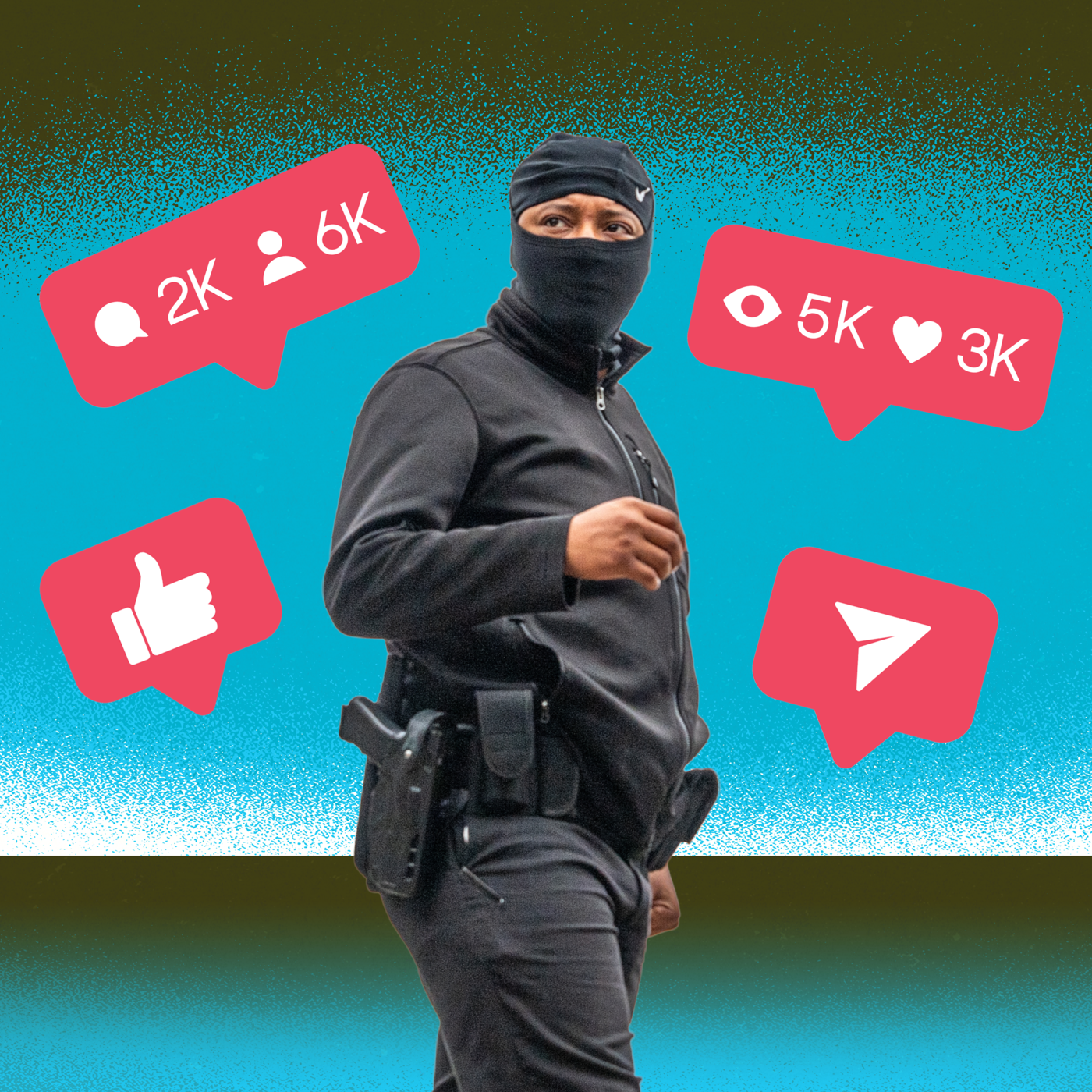
Question Everything
Inside ICE’s Push to Go Viral
00:27:20
ICE is filming arrests in an effort to control the narrative, recruit officers, and shape public sentiment.
Loading summary
Transcript38 lines
- [00:07]
A
I don't know if you've seen any posts on ice's social media accounts in the last year or the Department of Homeland Security's account, which ICE is part of. The posts are aimed at making ice's violence and aggression look cool, I guess. And to make fun of the people the agency's targeting, they've been posting memes that make crude jokes about immigrants. A meme with a white nationalist song. Lots of mug shots, lots of reposts of clips from right wing outlets, as well as short videos produced by ICE itself, showing masked ICE agents tackling, chasing, questioning, handcuffing and perp walking people in streets and parking lots across the country. They'll set these videos to pop or rap music, slap them with a hilarious caption like Minnesota's weather is cloudy with 100% chance of ice. Ha. Sometimes the agency will claim the people in the videos have serious criminal records, other times they don't. And it's not clear what, if anything, the people whose faces are being blasted across the Internet by the government have done wrong. We know ICE has been picking up lots of people who don't have criminal histories and also American citizens. These are mostly people of color in the videos and mugshots and memes. The Supreme Court said last year that for now, while they deliberate a larger ruling, ICE agents can use someone's race, the language they speak, or the fact that they work at a low income job as reasons to stop them. Congress and the Trump administration have tripled ICE's budget to nearly $30 billion, and a huge bucket of funds are being poured into the agency's content creation and media strategy. The government is using taxpayer money to to churn out videos and memes that valorize ICE agents acting like bullies, make immigration enforcement look like a violent game, and dehumanize immigrants and people of color. And lately Americans who are protesting in support of them. The Department of Homeland Security DHS has pumped out more than 400 videos on their account alone. And that was all before the ICE agent in Minneapolis killed Renee Goode this month. A 37 year old mom who was protesting ICE in her SUV. I've certainly been disgusted by the content that ICE has been putting out in recent months. But from the outside, I guess I assumed there was some 20 something who'd been given the X login or whatever and was churning out these memes and videos. But then a reporter was leaked a bunch of sensitive info from inside ICE that showed just how systematic this effort has been. Officials see themselves as fighting an information War over immigration enforcement, as one of them put it. Orders about ICE's social media strategy are coming from the White House today as thousands continue to protest ICE's killing of Renee Goode in Minneapolis. We find out how is this content from ICE getting made? What are the specific discussions about it down to music choice and catch captioning that are happening inside the government.
- [03:12]
B
They don't want videos that are just kind of like blah. They want somebody to be knocked to the curb and thrown in an suv.
- [03:20]
A
From Placement Theory and kcrw, this is question everything. I'm Brian Reed. Stick around. A few weeks ago, Drew Harwell, a tech reporter for the Washington Post, published a big scoop from inside ice. He'd been talking to anonymous sources in and around the agency's public affairs office. Again, this is part of dhs, Department of Homeland Security. And these sources, they were telling Drew and his colleagues that they were very concerned about things they'd seen happening inside that department, ICE Public affairs, since Trump took office again last year.
- [03:57]
B
These are not like crazy ideologues. They had been inside DHS because they believed in the mission and yet had been so disturbed by how much had changed over the last year that they just felt like they had to talk.
- [04:09]
A
Drew's sources were saying that the way ICE's public affairs division operates has been overhauled and is focusing on aggressive, violent, crude, memified content. Some of Drew's sources refer to it as propaganda. Straight up, Drew had been wondering what exactly had been going on inside the department. He'd been watching posts from official government accounts all year. Troubled. Is there one post from this time where you were just like, whoa, okay, that seems like a new line.
- [04:37]
B
There was one where this was a time when people were starting to post these studio Ghibli memes, which is like the very cozy Japanese anime, and they were using AI tools to make Ghibli Ified memes of anything. And the White House made a Ghibli meme of a crying immigrant woman who was actually a real woman who had been arrested and was going to be deported. But, you know, she's this large woman and she's very clearly like, bawling. And they made like this goofy meme of it, basically poking fun at her crying and turned it into like a big joke. And the White House posted this and it had tens of millions of views. And it just struck me as like, kind of beyond the pale. But also, you know, you saw a DHS post, it was like a Pokemon, gotta catch em all meme and it starts with like, you know, a real operation where they're blowing down a door and they're playing the Pokemon gotta catch em all music. And it's all about, you know, we gotta catch all the immigrants and deport them.
- [05:37]
A
The woman the White House depicted in the studio Ghibli Meme, ICE arrested her in Philadelphia. She had previously pled guilty to attempted possession with intent to distribute Fentanyl, been deported to the Dominican Republic, and had apparently re entered the U.S. the men being rounded up in the Pokemon video, it's unclear what, if anything, they've done wrong. The caption just says, gotta catch em all. At the end of the video, they flash through a bunch of mugshots with crimes listed, but they're on Pokemon cards. Are we supposed to trust that as an official rap sheet? It's demeaning and racist to depict human beings as creatures to be hunted. And it can warp the public's perception, making a mockery out of the work of law enforcement in this country.
- [06:21]
B
Obviously we have ideological differences, we talk about immigration, but it is a real issue. And so the that it was becoming basically like this music video thing. These are real people. They're getting rounded up and detained. We don't know who these guys are.
- [06:36]
A
Drew says that's the case with the people in a lot of these videos.
- [06:39]
B
They may be in the country legally, they may have no criminal history, and yet they've been put into this video that has a million views. That the caption is basically a joke. It's been shared by a government agency, government officials who are paid by all of us as taxpayers.
- [06:58]
A
These kinds of videos are what prompted Drew's sources in the ICE public affairs division to feed him inside info. And they ended up giving Drew something pretty explosive. A trove of thousands of chats and messages from their internal system. This is like ice's Slack or Microsoft Teams basically showing conversations between employees across the country over the course of 2025. Names, timestamps, detailed, real time discussions about ICE's video production and content strategy. Like this one video taken in Baltimore that the White House called an Epic Takedown on X with epic in all caps. So it starts in like an suv. You just see like an officer just like sprint out of the car and go tackle some guys basically on the side of a road. I guess this is near a Home Depot.
- [07:49]
B
Yeah. And in the caption they say, you know, watch the action packed arrest video. They don't want videos that are just kind of like blah. They want somebody to be knocked to the curb and thrown in an suv and for the agents to look really tough because they know those play really well. And that video did. Actually went viral for ice, and it did so well that the White House was really excited by it. We could see from inside the chats where, like, this ICE team was so excited that the video had done so well. Like, okay, we're, we're doing it. We're really gaining attention for these kinds of the sting operations.
- [08:22]
A
Who's filming this video?
- [08:24]
B
So typically in these scenarios, it's an ICE videographer or an ICE video producer who has gone out with this team, is in the backseat with them increasingly because they've been trying to do more of these videos. They'll ask, like, you know, more traditional, like spokespeople who, you know, handle calls from reporters. They're asking them to go out on the scene, hold up their phone and get this video.
- [08:48]
A
There's another video Drew was able to see behind the scenes conversations about. It shows just how callous ICE and DHS officials are being about the people the agency is targeting. This one was filmed in Houston. All right, so the caption of this video is ice on the roads. We made over 120 arrests in Houston on October 29th, clearing our roads of dangerous, often unlicensed and uninsured illegal aliens who should not be behind the wheel.
- [09:14]
B
Yes.
- [09:16]
A
You see ICE agents, perp walking men with their hands behind their backs, putting handcuffs on them, leading them into big black SUVs. The video production is not the only aspect of this that's new.
- [09:29]
B
ICE has traditionally always done these targeted operations where they know there are undocumented immigrants. They have started doing these more untargeted operations like this one, where they're basically doing traffic stops. They're stopping people who look undocumented, often, you know, by the color of their skin or some other indicator, and stopping them on the side of the road, checking them and then detaining them. So in this case, you know, this person was a video producer, had shadowed this operation. They had gotten 120 people who were detained. And so we can see from the chats where the videographer is sort of sharing the material, and the people back in the main office of the ICE Public affairs are like, getting kind of excited because they're hearing about, like, oh, we had all these arrests. They're all through the city. You know, we see people in handcuffs being put in the back of the car. And we can see from the chats being people like, yeah, great shooting.
- [10:21]
A
That's video shooting. To be Clear. It's bizarre to see law enforcement praising the work of officers as just more content.
- [10:30]
B
Like, we got great arrests. Like, this is the material we want.
- [10:33]
A
Those are literal quotes, like, from your story. You have an ICE official, October 29, 2. 10pm In a chat says, arrests are wonderful, exclamation point. And someone else a few minutes later says, great shooting, exclamation point.
- [10:46]
B
Great shooting. Yeah. So they're, they're excited because this is content to them. You could see them in real time strategizing over, like, the way to get the most views. Like, when can we post this? During the day, when it have, like, the maximum splash and maximum attention. I think I was surprised, though, to see that there were messages from people inside the unit who were not just, like, really energized to get this video of, like, immigrants being taken down in Home Depot parking lots and, like, excited to get that video, but, like, basically talking about it in a gleeful way and just like, making jokes about it too, like, let's kick more immigrants out of the country. But I think just seeing that in detail was pretty eye opening. One thing that I found really interesting from the conversation on this was because it was an untargeted operation, a lot of these people who are being detained, they don't know if they have criminal history. So, you know, ICE is always saying that they're picking up the worst of the worst.
- [11:43]
A
And to be clear, like, the worst of the worst is an actual slogan that ICE uses.
- [11:47]
B
Yeah, ICE has been sloganeering in the last year to neutralize the criticism that they're just rounding up, you know, working people and moms and whatever. They have tried to say that actually we go for the worst of the worst. But a lot of these people are, you know, again, they don't have any background. So you can see ICE kind of strategizing in the chats over. People are saying, well, we can't call these people the worst of the worst because they've done basically no crimes. So they're always looking for content that they can put out there to reinforce that slogan.
- [12:20]
A
Yeah. Reading your story about this, it actually surprised me to see that they kind of cared about accuracy, at least in this instance. Like, they didn't want to say worst of the worst or they seemed somewhat reluctant, I guess, to say worst of the worst if they didn't factually know that, you know, the people in this video that they were captioning had the worst criminal histories. One takeaway I had just from, like, watching a lot of these videos in all of them, either the ICE agents are wearing masks or they blur their faces. And so you have this feeling of like a ton of visibility into what ICE is doing, but yet none of them are individual people. It really is like this agency coming down on immigrants or people perceive to be immigrants. And I just was aware that like, oh, this is a subtle thing that like, they don't want us to know that these are individuals, you know, who are doing this to other individuals. They don't want us to think about it that way.
- [13:24]
B
Yeah, that jumped out to me as well because that was, that was a layer of the editing process for these videos that happened in every video where they would say, like, okay, a producer or an editor would say, okay, I'm going into the video and I need to redact and blur the face of every agent. They would very actively not blur. In some videos they do blur, but they'd very actively not blur. The people who were being detained, they were very clearly like, let's let these people be on video and let's let everybody see them getting arrested and thrown into the back of an suv. And you know, you know, these were people. Again, they had no due process at any point, right? Like they had just been arrested a couple minutes ago. They had not gone through court, they maybe weren't even charged. And yet they were the subject of this million view video. And who knows how many of their friends and family saw it or how that could affect their life. So for ICE to acknowledge the risk of having people be identified and to go to that extent of buffing out all of the agents faces because they understand the danger of it, but to then be so actively anti redaction for the faces of the people they were detaining, it just conveyed the cavalier attitude that they would have to this process where they were just like, okay, you know, these people, they're just going to be part of the content mill for us.
- [14:53]
A
After a quick break, the social media decrees coming down from the White House. Over the course of your lifetime, you will spend something like 80,000 hours at work. Imagine how much opportunity that is to make a positive impact on the world. There's a nonprofit called 80,000 Hours that exists specifically to help you figure out how to best spend that time in a way that is suited for you, that can do good for the world. 80,000 hours has spent over a decade researching and building a system of very practical tools to help you figure this out. And they're all free. There are guides, there's a podcast, a job board. There's Even coaching. It's just a very cool organization with a very cool mission to help the world by helping all of us figure out what to do in it. Visit 80,000 hours.org?everything to learn more. That's 80,000 80000 hours.org?everything and figure out what's next for you.
- [16:06]
C
This is Kim Masters, host of the Business on kcrw. Every week we take a deep dive into the deals and the drama that shape Hollywood. From the power plays in the boardroom to the creative battles on set, we bring you the inside stories behind the entertainment headlines. Check out the business part of the NPR podcast network.
- [16:31]
A
In the messages he was leaked, Drew could see one high level member of this ICE unit, the assistant director for Public affairs, a woman named Emily Covington, serving as a liaison between the team and the White House, bringing directives from above. Drew saw her asking in the chats for quote, good arrest videos and posts that would go viral. She's demanding lots of volume, lots of content. At one point she writes, what PR tactics can we deploy that we don't typically should we feed info to an influencer? And they do. ICE has let right wing influencers suit up in bulletproof vests and join ride alongs with ICE agents. DHS has provided access to Secretary Kristi Noem. The videos get shared with millions of followers on these accounts. Public affairs has also hired influencers, including a MAGA women's lifestyle influencer and an actor who played a mountain man in a cable TV show. In one chat, the mountain man suggested this tagline for ice. We are everywhere. We will find you. Music choice also plays a big part in these discussions. At one point, as officials are talking about whether to score a video with country music, assistant director Emily Covington says, I feel like we need something a little more hardcore.
- [17:48]
B
They want something that is explosive. Like if there's an ICE agent in armor looking tough, you know, in moonlight with a gun barging into a door, it'll make the ICE agents look badass. They are really leaning into the brutality of it all.
- [18:04]
A
I mean, there's been some particularly dark stuff like ICE put out a meme with the quote, we'll have our home again, which is a white supremacist song that groups like the Proud Boys sing. Did you see them discussing decisions to put out content like that?
- [18:19]
B
I didn't see specific messages about these, but you know, we, we did see like little inside jokes in our chats. There's one quote we have in the story where it's like they share a census story about how 2 million immigrants have left the country and they're like, okay, well great, 40 million to go. Like, they're really kind of excited about that in a way that I think would be pretty shocking to people. It's the same kind of attitude that leads to these memes.
- [18:46]
A
That stat about 2 million immigrants leaving the country. By the way, it's not reliable. The actual number's probably much lower. According to the center for Migration Studies, a big goal of this production machine is to drive the narrative to overwhelm us. And by us, I mean regular people and journalists with a deluge of content. During the protests over ICE raids this summer in la, according to people in the messages, the White House was ordering the Public affairs office to start, quote, flooding the airwaves with content from every ICE arrest. Officials wanted a post every 30 minutes. And the content strategy, it's also a big part of ICE's massive hiring push.
- [19:26]
B
We did another story that was based on some other internal documents that talk about recruiting. They want to hire 14,000 people. They basically want to like double the amount of deportation officers that they have. ICE has this hundred million dollar strategy. And so part of that is putting out these social media ads where, you know, they're using action movies and video games and like first person shooter posters and talking about this as like, these foreign invaders are coming in. You have to be the guard at the gates. And we saw this document that goes into their recruiting strategy and they said even more so beyond influencers that are doing like geo targeting, where they' geofence around like a UFC fight, a NASCAR race, a gun show, and anybody who has a phone and walks to one of those arenas will get an ad on their phone that says like, hey, join ice. Be one of these patriot warriors. That's part of how they feel like we're going to staff up the operation is by attracting that kind of mentality. And you know, ICE has always gone for law enforcement, military veterans. Like, there is kind of a pipeline for federal, federal agents getting local cops. They've rarely gone to this level where it's like immigrants are invaders and you have to fight the flood. Like there's a poster where they used like an image from the video game Halo where you play a super soldier and you're just killing aliens and they're basically just saying like the, the immigrants are, you know, invaders. You have to go out and stomp. You've just never seen that kind of advertising before, even from ice.
- [21:07]
A
In one of these Washington Post Stories. A colleague of Drew's went to a job fair in Texas where ICE was recruiting an MMA fighter, was there looking to sign up. He was amped. He said he couldn't wait to work with these agents, quote, that are going to arrest you, slam your face on the pavement and send you home.
- [21:26]
B
When I've talked to people who were inside DHS previously, they said it's no wonder that we're getting in these people who, that's how they see this job. Like they don't see this as, as a law enforcement job that we've always preached it as. They see it as like, let's go out and go into full combat, battlefield mode. And so they really worry about combining that with this influencer operation that is 100% about their own, you know, ideology around immigration. They worry that you're basically inflaming the work that you should be doing in non inflammatory way. Influencers will sell a product, will sell their personality, will be themselves. This is in service to an ideology and policies that are a lot more life or death. You're making this content, you're pissing people off and then you're asking agents to go into communities where people are worried they're going to be like the next video or the next person to be deported. I think back to the shooting in Minnesota of Renee Goode by an ICE agent. He was holding a phone, he was recording video basically the whole time. And when I look at these videos and think about that, it's like a question in my mind of why are now ICE agents getting video? Like why are they holding up their phone? What is the protocol that encourages them or at least allows them to have a phone in one hand and gun in the other.
- [23:06]
A
One last takeaway from Drew's reporting that I actually found very reassuring. This social media strategy by immigration enforcement, these mean hurtful racist posts. They may be backfiring. In July, about six months into ICE's crackdown and the content blitz about it, a vast majority of Americans said in a Gallup poll that immigration is good for the country. 79% of Americans said that, a record high. About 62% said they disapproved of how Trump was handling immigration. This was before ICE killed Renee Goode in the street. Since the shooting, I A new poll from YouGov and the Economist shows 46% of Americans support abolishing ICE altogether. That's never happened before. If you have come across these ICE videos or memes and felt alone in your revulsion, if you thought, well, a majority voted for Donald Trump. So most people must want this. Don't. That's the propaganda doing its job. And one piece of advice before we go if you feel this way, don't watch the videos. Don't juice the algorithm, don't add to the views. As Drew found, there are officials inside ICE celebrating as those numbers climb. That's what's so insidious about social media propaganda. Even watching it critically still counts. Every view becomes an incentive to make more videos and to push them further. We get implicated in the cruelty, so don't watch the videos. If one of these clips shows up in your feed, just keep scrolling fast. Thanks to Drew Harwell and his colleagues at the Washington Post, including Visual Forensics reporter Joyce Soyoon Lee, for their excellent reporting. We'll link to their stories in the show notes. Check them out. When the Post reporters contacted DHS about the internal messages they got, a spokeswoman said they were proud of their social media strategy. Asked separately about the white nationalist meme, she said it was a reference to the, quote, 20 plus million illegal aliens invading the country and quote, I don't know where you guys are getting this stuff, but it is absurd. Please follow Question everything on whatever app you use for listening Apple, Spotify, what have you and tell your friends about us. Rate and review the show on said Apple, we are working hard to bring you compelling independent reporting at a time when it's getting more difficult to do that, so we appreciate anything you can do to spread the word. Also, I just found out that we're nominated for Best Podcast of the Year and Best Reporting for the Ambi Awards, which is like the Podcast Academy, which is just awesome. So I don't know, tell your friends about that too. Today's show was Produced by Zach St. Louis and edited by me and our Managing editor, Kevin Sullivan. Robin Semion and I are the executive producers of Question Everything. Our team also includes producer Sophie Kazis, contributing producer Sam Egan, contributing editors Neil Drumming and Jen Kinney, and associate producer Kevin Shepard. This episode was fact checked by Annika Robbins and Marisa Robertson, texter mixing and sound design by Brendan Baker. Our music is by Matt McGinley. If you're interested in supporting Question Everything as a partner or a sponsor, please write us@heyestioneverything.com our partners at KCRW include Arnie Seiple, Tejal Algemera, Natalie Hill, and Jennifer Farrow. Please hang in there. Stay safe. We will see you next time.
- [26:42]
C
I just got my new phone and the KCRW app is the best way to get the music and shows you love from kcrw. And it's been totally redone to be cleaner, faster and more reliable. And there's two new music streams, Dance 24 and Vintage 24, and they're only in the app plus real time now playing so you never miss a track ID. Look up KCRW in the App Store and be sure to make a free account to use all the new features.