← Question Everything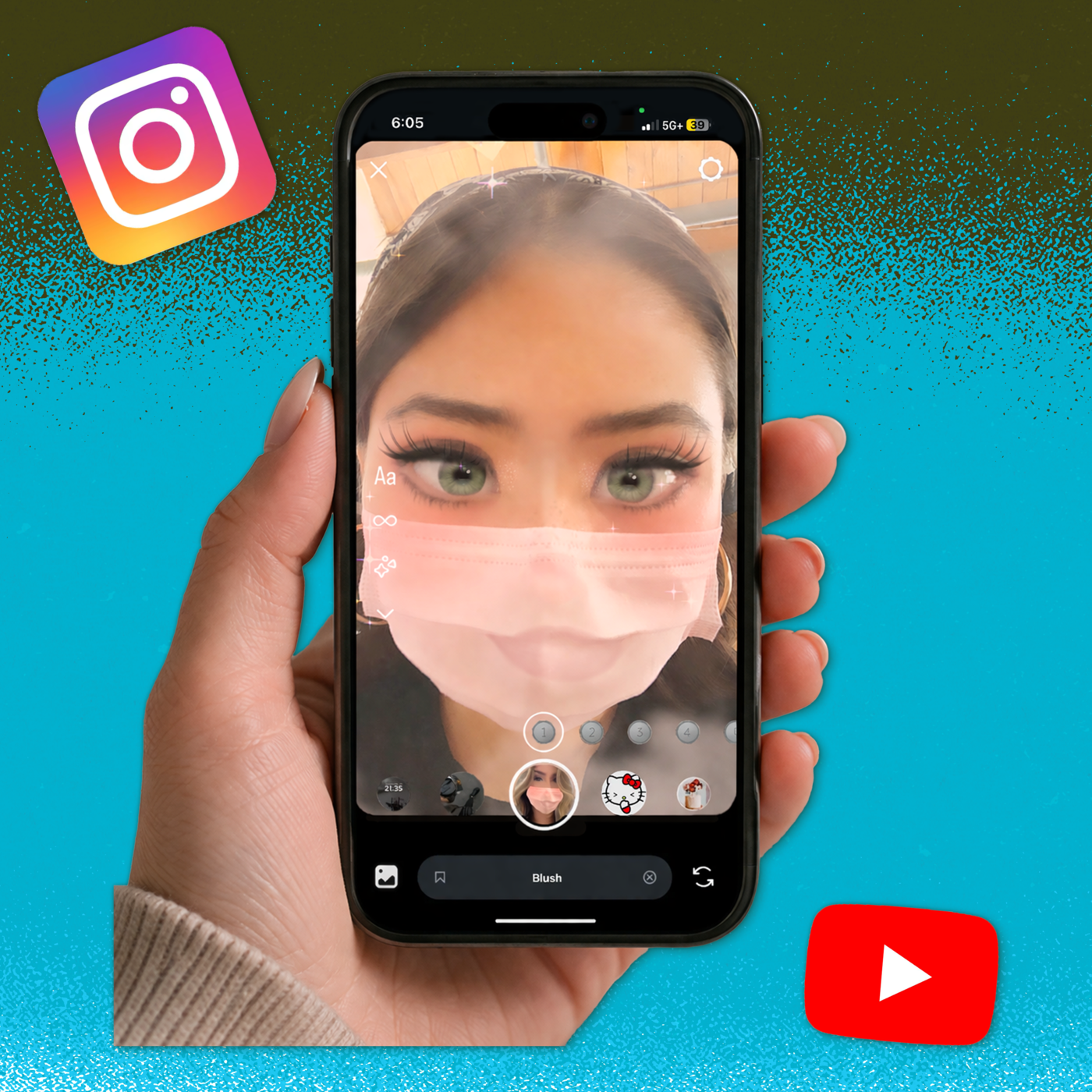
Question Everything
Meta Knew They Were Addicting Kids. Now They’re Paying for It.
00:32:37
Internal documents and a novel legal strategy helped a 20-year-old young woman beat Meta and YouTube in the social media addiction trial.
Loading summary
Transcript114 lines
- [00:01]
Brian Reed
Support for Question Everything comes from Loyola Marymount University. At lmu, curiosity isn't just encouraged, it's expected. Because the world doesn't change when we accept things as they are. It changes when we ask better questions. What if business could be a force for good? What if storytelling could spark real impact? What if the future of Los Angeles and beyond starts with bold thinking grounded in purpose? At lmu, students explore big ideas across disciplines, guided by a commitment to innovation, ethics and community. It's a place where asking why leads to discovering what's next. Because progress doesn't come from easy answers, it comes from questioning everything. Learn more at lmu. Edu. So paint the scene like where were you when you heard the verdict?
- [01:00]
Mariana McConnell
I was in the courtroom sitting next to our plaintiff, Kaylee, and I'm staring at my papers trying not to faint or throw up.
- [01:10]
Brian Reed
Huge news in recent days. A 20 year old in LA sued two ginormous tech companies, Meta and Google, for intentionally designing social media apps that addicted her as a kid. And she won. She's known in court just as Kaylee or by her initials, kgm. And who I'm talking to here is one of her lead attorneys, Mariana McConnell. This is a watershed case, the first of many from many thousands more young people who say apps like Instagram and YouTube owned by Meta and Google respectively, deeply harm them as teens caused or worsened their depression, addiction, suicidal ideation, body dysmorphia, self harm, even sometimes led to suicide, Mariana tells me when the jury filed back into the courtroom after eight days of deliberation with their verdict in hand, it was nerve wracking.
- [01:57]
Mariana McConnell
The foreperson of the jury has the forms in a manila folder and hands them to the judge. The judge reviews the forms and then hands it to the clerk who is very nervously reading.
- [02:10]
Brian Reed
This was a civil case, so it's not a guilty or not guilty situation. The jury had a list of questions they had to decide yes or no to the same list for Meta and for YouTube.
- [02:19]
Mariana McConnell
Was Meta negligent in the design or operation of Instagram? Yes. Was Meta's negligence a substantial factor in causing harm to kgm? The jury answered yes. Did Meta know, or should it reasonably have known that the design or operation of Instagram was dangerous or was likely to be dangerous when used by a minor in a reasonably foreseeable manner? And the jury answered yes. Then did Meta know or should it reasonably have known that users would not realize the danger? Yes. Did Meta fail to adequately warn of the danger? Yes. Would a reasonable platform designer or operator under the same or similar circumstances have warned of the danger or instructed on the safe use of the platform? Yes. Was Meta's failure to adequately warn or instruct a substantial factor in causing harm to kgm? Yes. So we got yeses all the way through for both meta and YouTube. A few people were crying on our legal team. I think I was just too stunned to have a reaction. The jurors really understood that Meta and YouTube intentionally designed their platforms in a certain way to addict. And they did addict. And they addicted Kaylee. It felt great to get these answers.
- [03:58]
Brian Reed
The jury decided the corporations have to pay Kaylee $6 million, which is probably lower than Meta and Google's annual toilet paper budget. But when you think about the thousands of similar cases that have already been filed in court as part of a mass litigation against them, and the many more young people who could feel emboldened to sue now, if this bellwether case is a sign of how those could go, it definitely adds up. But maybe most significant about this case, this David and Goliath win by a 20 year old against two of the biggest companies in the world. It is the first real dent in the legal armor that has protected social media companies and others on the Internet since the 1990s. For 30 years, the law known as Section 230 has made it extremely difficult to get a lawsuit against a social media company to even make it to court, never mind to win. As listeners of this show will know, this law, Section 230, which we've covered a lot and which I've been arguing no longer serves us and should change, has made it nearly impossible to have a successful lawsuit against social media companies. So how did you guys pull this off? Like, isn't this not supposed to be able to happen?
- [05:09]
Mariana McConnell
Well, wrong.
- [05:12]
Brian Reed
From placement theory and kcrw, I'm Brian Reed. Today on Question Everything, Mariana is going to walk me through how her team did it. The shrewd legal argument they used to do an end run around section 230, really, for the first time in any significant way, and the disturbing evidence they got from inside Meta and Google that allowed them to make their case. We've been tracking this trial all year, and now that it's decided, we're throwing away what we had planned for this week and next to explore the implications of what just happened. Stick around. Support for Question Everything comes from Loyola Marymount University. At lmu, curiosity isn't just encouraged, it's expected. Because the world doesn't change when we accept things as they are. It changes when we ask better questions. What if business could be a force for good? What if storytelling could spark real impact? What if the future of Los Angeles and beyond starts with bold thinking grounded in purpose? At lmu, students explore big ideas across disciplines, guided by a commitment to innovation, ethics and community. It's a place where asking why leads to discovering what's next. Because progress doesn't come from easy answers. It comes from questioning everything. Learn more@lmu.edu
- [06:34]
Narrator/Promotional Voice
it's hard to remember now, but the Internet used to be fun.
- [06:38]
Mariana McConnell
I can't believe how easy it is to surf the Net.
- [06:40]
Narrator/Promotional Voice
Surf sub on Long shadow Breaking the Internet, we'll trace how a tool that once fueled democracy, opposition activists organized the march on Facebook became a weapon aimed at the very heart of it.
- [06:52]
Brian Reed
You're watching the unraveling of our democracy
- [06:54]
Narrator/Promotional Voice
right now from longlead and prx. This is Longshadow Breaking the Internet. Subscribe now, wherever you get your podcasts.
- [07:05]
Brian Reed
When someone sues a social media company like YouTube or Meta, here's what normally happens. The company's Lawyers say Section 230 protects them because they can't be held liable for posts other people make on their platforms, even if the companies curate or moderate those posts. And inevitably the case is dismissed before it ever gets in front of a jury. So Mariana and her colleagues needed a legal theory that would bust through that shield, bust through section 230.
- [07:32]
Mariana McConnell
The theory is that these platforms have designed features that intentionally addict and they did it on purpose for eyeballs and to get people to keep looking at their apps because the more people look at them, the more money they make. The idea is that features endless scroll autoplay, the like buttons, like counts that instant gratification or what YouTube calls like a slot machine. Effect of you don't know what you're going to get next and you just like, can't stop. Those things are not protected by Section 230.
- [08:09]
Brian Reed
In other words, they framed Instagram and YouTube as products that Meta and Google intentionally designed to be addictive despite the dangers.
- [08:18]
Mariana McConnell
And they did it to children because, you know, quote, young ones are the best ones.
- [08:25]
Brian Reed
Young ones are the best ones.
- [08:26]
Mariana McConnell
That's right.
- [08:27]
Brian Reed
Who are you quoting there?
- [08:29]
Mariana McConnell
That's a meta document.
- [08:30]
Brian Reed
That's very creepy.
- [08:32]
Mariana McConnell
Extremely creepy.
- [08:34]
Brian Reed
Mariana and co argued the companies could be held liable for those actions the way a toy company that puts out a defective product can be held liable if the toy hurts kids. They built it as a personal injury case, not a speech case. In fact, Mariana is a personal injury lawyer, not a free speech attorney.
- [08:51]
Mariana McConnell
We're not suing for the content on the platforms. And that's where the judge really carved a path for us.
- [08:59]
Brian Reed
The judge, her name is Carolyn Kuhl, agreed with this premise. The companies tried four times to get her to throw out the case because of section 230. But she ruled that claims about the design features of the apps, those could move forward as long as Mariana and her team weren't veering into content posted by other people. This theory was not a clear slam dunk. Lawyers have tried product design arguments like this before without much success. Courts have read Section 230 and the First Amendment to give very broad protections to Internet companies. And some experts argue that social media design elements like algorithms or filters are inextricably linked with content and so they shouldn't be subject to lawsuits either.
- [09:39]
Mariana McConnell
Meta YouTube argue that no. Even the design of the platform and the features, they argue that those things are also protected by section 230. And we have always said, no, this is something different. And the judge has agreed with us. The judge let us walk that path without letting us, for example, put on the negative content that Kaylee saw on the platform. That was an evidence in our case. She said we cannot sue for saying, like, there's cutting content.
- [10:14]
Brian Reed
Cutting like self harm content.
- [10:15]
Mariana McConnell
Correct. Or pictures of skinny models glorifying suicide. And that's not what we are alleging. And that's not our case. Right. We're not saying children see cutting content or suicide content or skinny models then have suicidality or body dysmorphia or anorexia. That's not the case. The case is that the addiction to the platform causes mental health harms such as depression, anxiety, body dysmorphia and could lead to suicidality or suicide.
- [10:53]
Brian Reed
It's a fine line to walk, but they were able to do it.
- [10:56]
Mariana McConnell
For example, bullying. Let's take bullying. Our case is not about bullies on the platform calling you names or harassing you. It's not about unwanted sexual contact by adult. It's about the fact that even despite those things that might happen to you, despite the bullying that might happen to you on the platform, despite the fact that you could get creepy guys in your DMs, you're still coming back to the platform and you're still using it because you're addicted to it, despite negative consequences that could happen to you, you cannot get off and you don't like it, but you still do it. It's an addiction.
- [11:42]
Brian Reed
Kaylee's one of about 3,400 plaintiffs with similar allegations against the Social media companies, but it's not a class action suit. It's known as a consolidated litigation. Everyone has their own case. A small group was chosen at random to go first as bellwethers, to see how a jury decides and what kind of damage amounts they come to. And Kaylee ended up being case number one. An average story plucked from 3400 such stories. She grew up in Chico, California. Her parents divorced when she was about three. Kaylee's mom mostly raised her and her two older siblings alone. Money was tight. Her mom was a realtor. But Kaylee still got horseback riding lessons, dance lessons. She sang in the Chico children's choir. A relatively normal childhood from Kaylee's point of view. When she was six years old, her mom gave her an old ipod, which had YouTube on it.
- [12:34]
Mariana McConnell
She was at first just watching videos.
- [12:36]
Brian Reed
And this is like, 2012.
- [12:38]
Mariana McConnell
Yes, about 2012. And then once she turned 8 years old, she created her first YouTube account because she saw other content creators on YouTube, you know, making videos about, like, lip gloss collections or playing with little horse figurines. And so she wanted to start doing that as well. So she created her own YouTube account and started posting videos.
- [13:06]
Brian Reed
Are you allowed to create a YouTube account at 8?
- [13:09]
Mariana McConnell
You can if you just randomly select a birthday. But, you know, there's no verification, age verification, or anything else on YouTube. So you can literally just scroll and pick an age. I think that whatever she landed on made her 52.
- [13:23]
Brian Reed
Really?
- [13:24]
Mariana McConnell
Yeah.
- [13:25]
Brian Reed
About a year later, Kaylee signed up for Instagram, which at that point didn't even ask her age when she made an account. And so she's nine. She's nine at this point.
- [13:34]
Mariana McConnell
She's nine. Correct. So she starts posting photos on Instagram,
- [13:38]
Brian Reed
and when Kaylee posted these photos, she used one of Instagram's most popular features, beauty filters.
- [13:45]
Mariana McConnell
Beauty filters can do all sorts of things. You know, they can slim your face, slim your nose, make your eyes bigger, kind of fix blemishes. And experts will say that the use of these filters leads to body dysmorphia because someone doesn't want to see their unfiltered face anymore. They're just not used to it.
- [14:06]
Brian Reed
Since Meta created and provided the beauty filters as part of Instagram, Mariana's team argued that they're a feature of the product design that the company could be held liable for, that it shouldn't be shielded by section 230. Kaylee says she got addicted to beauty filters.
- [14:21]
Mariana McConnell
I mean, we used some of her Instagram photos at trial, including one where I think she was about 11. She posted a picture of her friends. They all look cute and happy. The caption of it is something like, you know, we look horrible. Just put a filter on it. So like, even at that age, she's already thinking, like, about how to make herself look better on Instagram.
- [14:47]
Brian Reed
Oh, my God.
- [14:48]
Mariana McConnell
I know. She had a medical record that said a classmate took a photo of her and she had a panic because she was afraid that that person was going to post the photo of her online with no filter. So this was something that was like, in her head all the time.
- [15:05]
Brian Reed
And again, she's like, 9, 10, 11 at this point.
- [15:08]
Mariana McConnell
Yes. We created a massive, I think it was like a 35 foot banner filled with Kaylee's selfies that she had posted with a filter on it. And we unrolled that a few times.
- [15:23]
Brian Reed
Wait, 35ft?
- [15:24]
Mariana McConnell
35ft, like, wide? Yes.
- [15:28]
Brian Reed
Okay, so thousands of selfies.
- [15:31]
Mariana McConnell
Thousands, yeah. Thousands of selfies that she had taken and put a filter on and posted. I mean, I think the jurors were just taken aback.
- [15:46]
Brian Reed
What effect did Kaylee's use of Instagram and YouTube start to have on her as she entered adolescence?
- [15:54]
Mariana McConnell
She reported not being able to be away from her phone, just tied to her phone, obsessed with seeing, you know, comments, likes, notifications from her YouTube videos that she had posted. Not being able to put her phone down, taking her phone to class, sneaking her phone in the bathroom at work. Starting to take a toll on her mental health in terms of depression, anxiety, body checking behavior.
- [16:23]
Brian Reed
What's body checking behavior?
- [16:25]
Mariana McConnell
So body checking behavior is where you could either take photos of yourself to, like, compare. Do your thighs look bigger or smaller than they did in the morning, for example, or mirror checking, which is when you stand in front of a mirror multiple times a day to see if the size of your body has changed.
- [16:44]
Brian Reed
Kaylee testified that she suffered from suicidal ideation, worsening body image, and she eventually started harming herself. She started cutting. After a quick break in the trial, Meta and YouTube argued that teen mental health is complex, dependent on all sorts of things that might be going on in a teen's life and can't be blamed solely on social media. But some pretty shocking discoveries that came out in Kaylee's trial statements from their own employees.
- [17:13]
Mariana McConnell
Instagram is a drug, y'. All. We are basically pushers.
- [17:17]
Brian Reed
Definitely make it look like meta and YouTube knew what they were doing. We'll be right back. I'm going to make a bet that a bunch of you have been putting off something that I also have put off in the past getting life insurance. Life insurance isn't something you buy for yourself. You buy it for the people who love and rely on you so that if something were to happen, they're not scrambling. They're covered. They have less to worry about. Fabric by Gerber Life is term life insurance that you can get done today made for busy parents like you all online on your schedule, right from your couch, you can be covered in under 10 minutes, often with no health exam required. Even if you have insurance through work, it may not really be enough and it could disappear if you change jobs. That actually happened to me. But term life insurance from Fabric follows you wherever you go. Join the thousands of parents who trust Fabric to help protect their family. Apply today in just minutes@meetfabric.com? and use my link so they know that I sent you. That's me. E-T fabric.com? policies issued by Western Southern Life Assurance Company not available in certain states Prices subject to underwriting and health questions it's
- [18:28]
Narrator/Promotional Voice
hard to remember now, but the Internet used to be fun.
- [18:31]
Mariana McConnell
I can't believe how easy it is to surf the Net.
- [18:34]
Narrator/Promotional Voice
Surf's up on Long Shadow Breaking the Internet, we'll trace how a tool that once fueled democracy, opposition activists organized the march on Facebook became a weapon aimed at the very heart of it.
- [18:45]
Brian Reed
You're watching the unraveling of our democracy
- [18:48]
Narrator/Promotional Voice
right now from Longlead and prx. This is Longshadow Breaking the Internet. Subscribe now wherever you get your podcasts.
- [19:03]
Brian Reed
One of the things that's frustrated me most about Section 230 is that because it's been so hard to bring cases against big tech companies to trial, we rarely get to break through the corporate fortresses and access internal documents, emails, studies, testimony that come during discovery in a trial. This allows the companies to operate with secrecy and a lot of impunity. So one of the groundbreaking things about Caylee's case is that because it bypassed Section 230 and went to trial, her legal team forced out a bunch of internal documents that matter way beyond just Kaylee's lawsuit showing how employees at Meta and Google have been talking behind closed doors about their products and how they affect kids.
- [19:45]
Mariana McConnell
The idea is that features endless scroll autoplay, the like buttons like counts giving what YouTube calls like a slot machine effect. Intermittent variable rewards are what are going to keep people coming back to YouTube.
- [20:00]
Brian Reed
And what is an intermittent variable reward?
- [20:03]
Mariana McConnell
You push a button and it might be something you like. It makes you happy. You push a button you don't know what it is? No, it turns out it's something funny. You like it, you push a button again. Oh, now it's something sad. But, you know, if you push the button again, maybe you're going to get the happy thing again. And so you just keep doing it.
- [20:21]
Brian Reed
So you got a PowerPoint presentation that you were able to extract from Google through the lawsuit that was, you know, before this private internal. And. And it basically showed that they were looking to slot machines specifically and the psychology built into them as a model for how they built YouTube.
- [20:38]
Mariana McConnell
Yeah, that's right. Same with Meta. I mean, the documents that we got in this case where you even had employees saying, like, are we the next big tobacco? You know, if we keep denying that our products aren't harmful, you know, what makes us any different than them?
- [20:55]
Brian Reed
Wasn't there one employee who compared their own company, Meta, to pushers, like drug pushers?
- [21:01]
Mariana McConnell
Yes. Instagram is a drug, y'. All. We are basically pushers.
- [21:06]
Brian Reed
That's an Instagram employee or a Meta employee.
- [21:08]
Mariana McConnell
Correct.
- [21:08]
Brian Reed
And then some other ones here from YouTube. This is a quote from an internal Google document. These are attention casinos. The house always WINS.
- [21:16]
Mariana McConnell
Right.
- [21:17]
Brian Reed
A YouTube presentation showed how the company courted children under the age of four, comparing itself to a short term babysitter.
- [21:23]
Mariana McConnell
Correct.
- [21:26]
Brian Reed
In a very rare occurrence, Mark Zuckerberg, CEO and founder of Meta, was forced to testify in Kaylee's trial. There's no recording, but he was asked a lot about his decisions related specifically to the beauty filters which had so consumed Kaylee's life. For a while, Meta had gotten rid of the filters because of concerns about their effects on teen mental health. But internal records show a debate then ensued among Meta's top leadership. Because they helped drive engagement, the filters helped the bottom line. And ultimately, against the finding of experts and against the pleas of some Meta employees with kids, Zuckerberg made the call to bring a good number of the filters back. Internal messages show that he thought banning them from Instagram was, quote, paternalistic. Sounds like something I would say and something I feel he said on the standard. And I genuinely want to err on the side of giving people the ability to express themselves. Anything else shocking from Meta about what they knew or Google?
- [22:27]
Mariana McConnell
Yeah, I mean, we talked a bit about Project Mist, which I think was pretty persuasive. This was an internal research study that Meta did which showed that even parental controls that they were putting out and touting as human, you know, effective, were completely ineffective.
- [22:49]
Brian Reed
Meta conducted this Project Mist study with the University of Chicago Mist stands for Meta and Youth Social Trends. They surveyed more than a thousand teens and their families about their Instagram use and the parents attempts to influence it. And they found that no matter what parents did, whether it was make household rules about using Instagram or using Instagram's own parental controls, like time limits, it had little to no effect on the teen's use of the app. According to this study by Meta, parents were essentially helpless in the face of the app's addictiveness. Yeah, this, I mean, I filed the trial and this is as a parent and a reporter, this is the thing that jumped out at me as like
- [23:29]
Mariana McConnell
the most illuminating, especially because they wanted to blame the parents in this trial and say the mom did something wrong. She should have done all of these parental controls. Very complicated, by the way, parental controls that they somehow wanted this single mother working multiple jobs to figure out how to use, but they wanted to say it was on her. She should have been able to navigate the parental controls to make sure that Kaylee's use was appropriate. All the while, they knew from this internal study that their parental controls were completely useless. From defendant's point of view, social media addiction is not real. It's not a diagnosis, it's not recognized, and therefore it's not a real thing.
- [24:18]
Brian Reed
This is what Meta and Google have argued, that unlike alcoholism or gambling addiction, which are recognized in the formal list of clinical psychological diagnoses, addiction to social media is not and so can't be considered an addiction at all. And also that social media shouldn't shoulder the blame for Kaylee's problems when she had other things going on in her life that influenced her mental health. Her dad was absent. There were allegations of Kaylee's mom being abusive towards her, though Kaylee testified that she doesn't see her mom's behavior as abuse. The companies claimed Kaylee turned to social media as a way to cope. Meta and YouTube didn't respond to our emails about the case, but here's Meta's chief Legal officer, CJ Mahoney, speaking on Fox News after the verdict. We recognize that teen mental health is an important and complex issue, something we spend a lot of time on. We try to make sure that the teens who use our accounts have a good and positive experience. But we're not the only ones who have responsibility in this area. Parents have responsibility, schools have responsibility. Trying to pin all of this on one social media, one social media company, or even the tech industry, I think simplifies the problem in a way that isn't helpful. But the jury didn't find this persuasive, the idea that you can somehow disentangle social media from the life of the kid who's using it compulsively. Yes. She has other factors going on in her life, and so that means probably that she's more susceptible to addiction to social media. And in fact, wasn't there internal evidence from Meta that showed that they had done studies demonstrating that they did have
- [25:52]
Mariana McConnell
an internal document at Meta which showed that they knew that people with pre existing mental health issues, or people or girls in general, people who are from, like, lower socioeconomic households, they are more prone to social media addiction and it creates a feedback loop, so they use it more.
- [26:15]
Brian Reed
So wait, are you saying that this document inside Meta, they acknowledge social media addiction as well, even though publicly and in the trial they're claiming it doesn't exist.
- [26:23]
Mariana McConnell
The word addiction is in their documents. And I believe it was Adam Masseri at trial who came and said that the word addiction, the way that they use it.
- [26:33]
Brian Reed
This is the head of Instagram, Adam Mosseri.
- [26:36]
Mariana McConnell
Correct. The way that they use addiction does not mean clinical addiction. It just means what they like to now term as, quote, problematic use. That's how he tried to distinguish it. He didn't mean addicted as in addicted. He means addicted as in you're using it too much and you can't put it down. Which sounds a lot to me, like addiction.
- [26:58]
Brian Reed
Got it. Wow. I know that they used the term problematic use. I hadn't realized that the internal documents used the term addiction.
- [27:05]
Mariana McConnell
Yep.
- [27:06]
Brian Reed
So he had to explain that on the stand in the trial.
- [27:08]
Mariana McConnell
He did, yeah. Just as an aside. It's kind of a funny aside. But the VP at Google, he was a YouTube executive who testified, said that his kids watch five hours of YouTube a day, and he was very, very proud that his kids watch five hours of YouTube a day.
- [27:35]
Brian Reed
One thing I'm taking away from this case, really what you and your team did, I think, and are in the middle of doing with this verdict now, where the jury, you know, agreed with your case, is really changing the way the public thinks about social media. Like how we even conceive of what it is by treating this as a product. Do you think this is like a real inflection point?
- [28:01]
Mariana McConnell
It was my generation that kind of started on Facebook. Right. Like during college, we were all so excited that we had that Edu email address so that we could get a Facebook account, and we dumped all of our photos on there with reckless abandon.
- [28:16]
Brian Reed
Yeah.
- [28:17]
Mariana McConnell
I really think that we allowed these companies to grow so large without any sort of regulation. And maybe it's because, you know, they've been hiding behind 230 for so many years. But I think that our case and the cases that are going to follow us are a huge inflection point of us saying, like, enough's enough. You've taken kind of all of our privacy, all of our mental bandwidth, all of our attention for a long time now, and it's time that you start treating kids with the respect and care that they are owed.
- [28:58]
Brian Reed
It does feel like something fundamental is shifting. Countries are banning teens from social media. School districts are outlawing phones. Lawmakers are passing tech legislation. You can imagine a time not too long from now when letting your 11 year old have an Instagram account might prompt the same reaction as lighting a cigarette for your kid. Meanwhile, Mariana's team is preparing eight more cases out of about 3,400 in total. Win or lose, the strategy will help them determine what the cases are worth and what factors affect a jury's decision. And their goal is to negotiate a mass settlement for thousands of families. Plus, there are other lawsuits around the country. The day before Kaylee's verdict, New Mexico won $375 million against Meta for exposing kids to predators on Instagram. This summer, thousands more cases go to trial in Northern California, where state attorneys general and school districts are suing social media companies the same way they once sued Big Tobacco for harming public health. A lot of pressure finally coming down on the tech companies that drive so much of our lives, which has me wondering, fresh off these decisions about the state of Section 230. For those of us who have thought that Section 230 should change to allow lawsuits to happen against these companies, to force some kind of accountability, some deterrent for bad behavior, transparency to get information out. The fact that you were able to win this case with Section 230 in place as is, does it mean, like, actually we don't need to change section 230? Like, I'm trying to think through this as someone who has thought we needed to. This seems like a moment to reevaluate whether, like, that's a fight still worth fighting or if there now is a real legal path that can solve a lot of the things that I was hoping you might be able to solve by rolling back section 230. What do you think about that?
- [30:43]
Mariana McConnell
I think that's a really good question. Right now, we're living in a world where we've been able to succeed even with section 230. So I would say we're good.
- [30:54]
Brian Reed
Okay. Meta and Google say they're going to appeal the verdict. It's possible they see this case, and specifically the fact that it punctured section 230, as something close to existential. So they will probably ask a higher court to weigh in on whether Judge Kuhl was right in letting the case move Forward past section 230 in the first place, whether it ever should have been tried at all.
- [31:18]
Mariana McConnell
If the court somehow comes down and says no, no, even this case case, which has nothing to do with content, which has to do with features that the defendants created themselves, infringes on 230. That means that we've created companies that are completely untouchable by negligence laws or common laws altogether, which is very frightening.
- [31:46]
Brian Reed
If that happens, Mariana says, then she'll no longer be saying we're good. And section 230 would need to change to allow people like Kaylee to have their day in court. I've been surprised in the wake of this verdict how many people are arguing that the onus should really be on parents to stop their kids from being hurt on social media, not the companies. One of my friends texted me after the verdict and said, isn't it my job as a parent to keep my kids from getting addicted to things? Should all of the chocolate candies in the world be sued by all the diabetic kids whose parents don't know enough not to feed chocolate to their kids 24 7? Well, next week on Question Everything, I talked to one of the young people who was in line to take Meta to court after Kaylee, a 23 year old named Taylor Little. And we're going to hear Taylor's story in their own words. And you can decide for yourself if the design of Instagram was harmful to them and if it was something their parents could have stopped.
- [32:49]
Mariana McConnell
It kind of came to me just all like overnight. I was like, I am addicted to Instagram. I can't stop. Like, I can't.
- [32:57]
Brian Reed
I have to stop.
- [32:58]
Mariana McConnell
Like, I'm spending so much time on
- [33:00]
Brian Reed
this app and it doesn't make me feel good.
- [33:02]
Mariana McConnell
I went from stable to acute in such a short amount of time. It was so rapid, it was so severe. And that was because of the. I mean, the feed I had basically on an IV to my brain being fed to me constantly. And that was due to the design of the app.
- [33:27]
Brian Reed
Today's show was produced by managing editor Kevin Sullivan, with help from Kevin Shepard and Sam Egan. Kevin Sullivan and I edited the episode. Robin, Simeon and I are the executive Executive producers of Question Everything. Please share our show with a friend. This week on our substack, we're going to release my extended interview with Mariana McConnell, all about the Verdict. You can sign up@question everything.substack.com if you're a sponsor interested in partnering with us, write us at hey h e y placement theory.com Our team also includes producers Sophie Casis and Zach St. Louis and contributing editors Neil Drumming and Jen Kinney. This episode was fact checked by Marisa Robertson, texter, mixing and sound design by Brendan Baker. Our music is by Matt McGinley. Our partners at KCRW include Arnie Seiple, Tejal Algemera, Natalie Hill and Jennifer Farrow. We will see you next time.
- [34:19]
Narrator/Promotional Voice
It's hard to remember now, but the Internet used to be fun.
- [34:22]
Mariana McConnell
I can't believe how easy it is to surf the Net.
- [34:25]
Narrator/Promotional Voice
Surf sub I'm Long Shadow Breaking the Internet. We'll trace how a tool that once fueled democracy, opposition activists organized the march on Facebook became a weapon aimed at the very heart of it.
- [34:36]
Brian Reed
You're watching the unraveling of our democracy
- [34:39]
Narrator/Promotional Voice
right now from Longlead and prx. This is Longshadow Breaking the Internet. Subscribe now wherever you get your podcasts.