← Question Everything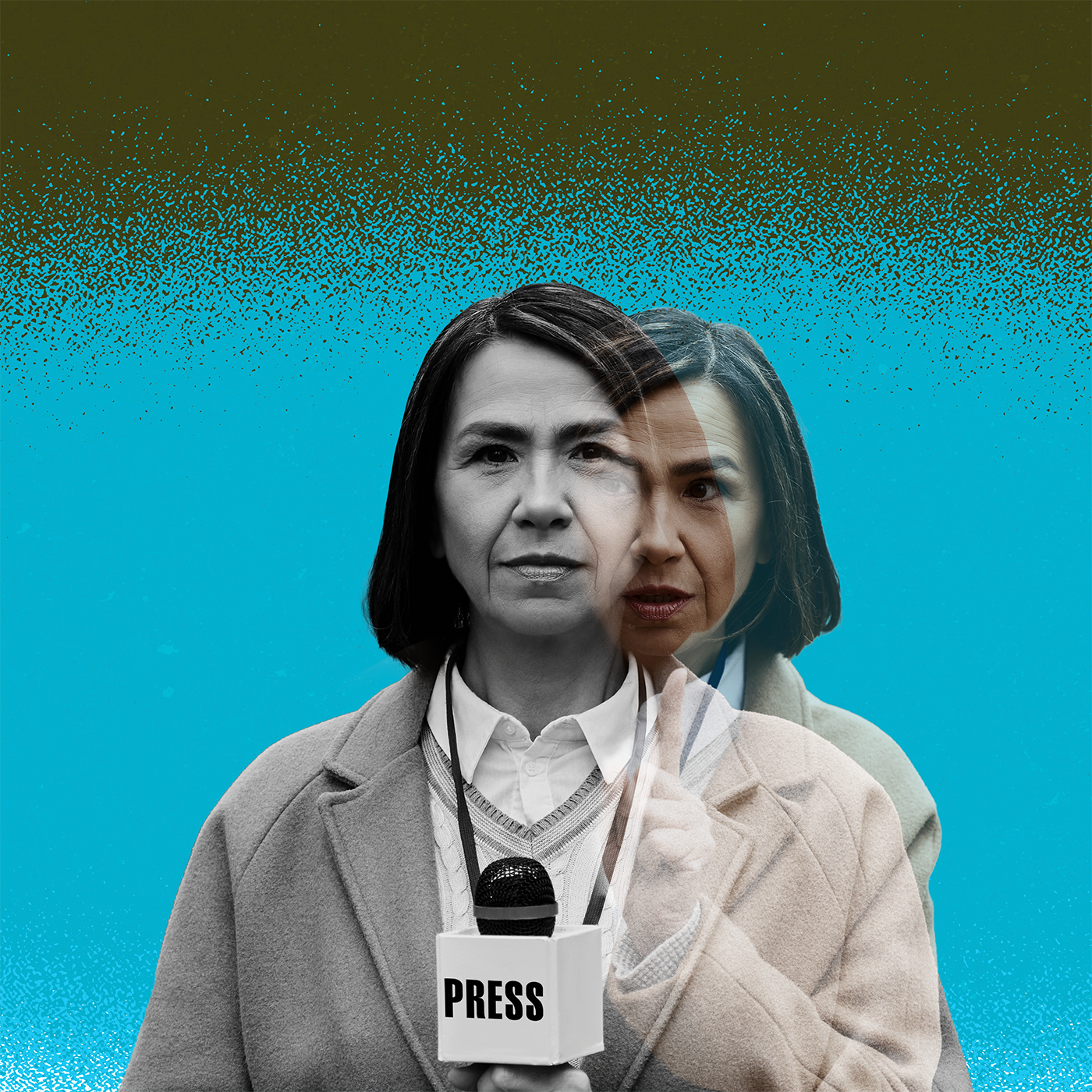
Question Everything
The Story She Reported, the View She Buried
00:39:54
A reporter questions whether she should drop the veneer of neutrality.
Loading summary
Transcript128 lines
- [00:06]
Brian Reed
You ever get frustrated with that charade? Reporters are supposed to keep up, where we pretend we don't have opinions or feelings or any kind of human thoughts about a story we're working on. And then the charade that you're supposed to keep up as a listener or viewer or reader or whatever, where you're supposed to pretend that you believe us. You're supposed to pretend that you believe that we're basically like emotionally vacant fact vessels. Plenty of reporters are frustrated with it and sick of it and have been breaking out of that charade for a while now, which I think is exciting. But what you may not know is that the decision to do that, it's often pretty fraught and personal when you're deciding as a reporter whether to reveal your feelings or not. And the choice you make about whether you share your point of view or not while reporting a story, it can have a real impact. It can affect the people you're reporting on. It can affect whether they're seen as guilty or innocent, trustworthy or not. It can have an impact on the policies you're covering, how people think about them. And it can affect you as the reporter, your credibility, your career. This is what we're going to explore today. We're going to go inside this decision that is both personal and journalistic, and we're going to do it by going behind the scenes of an investigative podcast called the Copernic Affair. We first aired this episode last year, but I've been thinking about it recently, and I know we have a bunch of new listeners here who've been finding question everything. So I wanted to share this one with you especially. The Copernic Affair is about an unassuming sociology professor in Canada who gets accused of carrying out a bomb attack on a Paris synagogue some 40 years after it happened. It's from the Canada Land Network. Copernic is the name of the synagogue that was attacked. Four people were killed, dozens were injured. The sociology professor is named Hassan Diablo. He's originally from Lebanon. Hassan has always claimed that he's completely innocent of this crime. He says he wasn't in France when it happened, that he never associated with the militant group from Lebanon that's suspected of being behind it. Still, Hasan's life is turned upside down while French investigators try to get him extradited from Canada so they can prove otherwise. And they do get him extradited.
- [02:19]
Hassan Diab
It was cold and I had practically no clothes on me, except maybe jeans, a T shirt and a dress jacket, and practically nothing more than that.
- [02:31]
Alex Atak
You didn't pack a bag or they would. They didn't allow you to bring a bag from Canada or anything.
- [02:37]
Hassan Diab
0 at night they put me on the plane and here we go. It's like you feel or you wish. If the plane goes down, I don't care anymore. Now
- [02:51]
Brian Reed
eventually they do get him to France where he's held in prison for years awaiting trial until two judges review his case and decide it isn't strong enough and they release him. He's sent home to Canada. Prime Minister Justin Trudeau says what happened to Hassan Diab never should have happened. And then French authorities bring a case against him again. On Monday, France's top court put Hassan Diab on trial in connection with a 43 year old bombing attack outside a Paris synagogue. This trial comes five years after a lower court set Diab free. This time though, they can't get him back to France, so they try him in absentia. Hassan stays in Canada and doesn't attend his trial. And despite multiple judges having already declared that the evidence against Hassan is very thin, a French court convicts him from afar. So now Hassan is living as a free man in Canada, yet is still a convicted terrorist in France. Actually, just as the podcast series was coming out these last few months, this cross Atlantic fight over an Arab man's culpability in a 40 year old attack against Jews has become an international flashpoint. A right wing Canadian lawmaker reposted an inflammatory article calling Hassan Diab a terrorist. He said they should send Hassan to France to face punishment. And then of all people, Elon Musk picked up on the story. He tweeted about Hassan saying a mass murderer is living free as a professor in Canada. 21 million people saw this. Just the other day. The Daily Mail sent a photographer to trail Hasan as he went about his daily routine. So the controversy is heating up again and Hasan's case is becoming a right wing outrage generator. I enjoyed the Kopernick affair. I liked learning about the case and the reporting is excellent, diligent. The reporters who co host it, Dana Belute and Alex Atak, get in depth interviews with most of the key figures in the case of across five or six countries, including with Hassan Diab. I had a conversation with the reporters Dana and Alex and we got to talking about this one part of an interview they did with Hasan. It's one of the more memorable moments in the series and Dana in particular had a really strong reaction to this section of the interview. So much so that the editorial team decided they should include her reaction as part of the show. It was dramatic. Everyone was on board. And then Dana decided to nix it.
- [05:16]
Dana Belute
There's one section in particular where I went on a little rant and we had it in there for a little bit and then we took it out because I was so self conscious about people perceiving me as biased towards Hasan.
- [05:33]
Brian Reed
For Dana, this choice about how much to insert herself into the story was especially wrenching. Like Hassan Diab, the man she was reporting on, she also is Lebanese. She grew up in Lebanon in the 90s, and while she wanted to believe this shared cultural background was an asset to her reporting this story, she also worried that people might use it against her and it could become a liability for her reporting. And that did end up happening. So she found herself having to make all sorts of calculations as a journalist as to when to express commonality with Hasan, when to hold back on today's question, everything from KCRW and placement theory. We're going to pull back the curtain on a single editorial decision and how the complex emotions surrounding it prompted me to revisit a decision a colleague and I made in our own work. I'm Brian Reed. Stick around. At Radiolab, we love nothing more than nerding out about science, neuroscience, chemistry, but. But we do also like to get
- [06:37]
Dana Belute
into other kind of stories.
- [06:38]
Brian Reed
Stories about policing or politics, country music, hockey, sex of bugs. Regardless of whether we're looking at science or not science, we bring a rigorous curiosity to get you the answers and hopefully make you see the world anew. Radiolab Adventures on the Edge of what We Think We Know Wherever you get
- [06:57]
Dana Belute
your podcasts,
- [07:00]
Brian Reed
here's the part of the Copernic affair that I asked Dana about. It takes place during an interview she and her co reporter Alex did with Hassan Diab, who's accused of the synagogue attack. Dana and Alex want to know whether or not Hassan associated with a specific Palestinian militant group that was based in Lebanon at the time. They're focused on this because the investigators in France claim this group was behind the attack on the Copernic Synagogue and that Hasan was part of the group and carried it out on their behalf. Hassan's alleged affiliation with this militant group is is central to France's case against him. Dana and Alex try to get at it by asking Hasan what his relationship was to these types of groups in general. Various political groups that were fighting in the civil war in Lebanon during Hasan's college years. And Hasan answers again. This is all from the series the Copernic Affair. You'll hear him first, then you'll hear the reporter Alex and then Dana.
- [07:55]
Hassan Diab
The university was a place where you see all these groups, from leftists to nationalists to few Islamists, and you have friends because they are in your class. So I was well known of person who was anti all these groups, but I was more concerned about, you know, going every day to the sea. I would swim in winter and summer and I have my motorcycle. I had my, you know, if you want to call it hippie life, call it hippie life.
- [08:29]
Alex Atak
You were in this context at university, where there were lots of young people interested in being part of these political groups, maybe even fighting with them, and you were able to stay away from all of that, is that what you're saying?
- [08:43]
Hassan Diab
Absolutely. Even some people would say, we envy you the way you can manage with all these different groups who fight for anything.
- [08:53]
Alex Atak
So just so I have it completely straight, you were never part of a group that could be considered a militia. You never fought with any of them. You never picked up arms.
- [09:03]
Hassan Diab
It's strange you ask this, because most of these groups, everybody thought I was, like, with another group. They just put the tag on you. Ah, he's with the Iraqis. He's with this.
- [09:15]
Dana Belute
But, Hassan, are you able to answer the question yes or no? So the question is, did you ever belong to any political party? Is there a yes or no answer?
- [09:24]
Hassan Diab
No, of course.
- [09:25]
Dana Belute
And then also, did you ever fight and pick up guns for any group?
- [09:30]
Hassan Diab
For any group? No, for myself, maybe. I used to shoot at birds, but I missed most of the birds, luckily.
- [09:39]
Dana Belute
So you didn't participate? You never fought in the civil war for one political party over another?
- [09:46]
Hassan Diab
I told you, I would go with all these people out and they would shoot. They would let me shoot, maybe at classes or whatever. And maybe if they consider me a fighter at the time, I would be with all the groups at the same time.
- [10:02]
Dana Belute
So the most correct answer is you had friends from all groups, but you're saying that you didn't belong to any one group in particular?
- [10:10]
Hassan Diab
Yeah. Correct. Yeah.
- [10:11]
Dana Belute
All right. Because sometimes, Hassan, it's hard to get you to answer yes or no.
- [10:16]
Hassan Diab
Oh, well, you have to explain because the situation in Beirut, it's really. It's not yes or no.
- [10:27]
Brian Reed
So that's the scene Dana and I talked about along with her co reporter, Alex.
- [10:31]
Dana Belute
I think a lot of people see that as him dodging questions and see it as suspicious. And that's totally fair.
- [10:38]
Brian Reed
I'll just say, like, my reaction, it
- [10:40]
Hassan Diab
was,
- [10:43]
Brian Reed
yeah, I don't know if. I don't know if, like, suspicious is the word. I'd use. But it's like. It seems like the answer should be simpler for him to give. And why isn't it, you know. Yeah, is that how you guys were feeling in the interview?
- [10:54]
Dana Belute
Even on our team, that was like, oh, my God. That's like, you know, so damning. And I think I viewed it in a different way. I understood why it wasn't yes or no. And this is the rant that I go on. And we ended up cutting it.
- [11:08]
Brian Reed
Okay, so here's what happened in the final story, the episode as they released it to the world. That scene ends with Hasan saying, you can't just give a yes or no answer.
- [11:17]
Hassan Diab
You have to explain, because the situation in Beirut, it's really. It's not yes or no.
- [11:25]
Brian Reed
And then there's music. And then Alex and Dana move on with the story.
- [11:29]
Alex Atak
While our conversations with Hassan circled a lot around the civil war, it was really just a few months that are at the heart of this story. The summer and autumn of 1980, from August to October, when the bombing in
- [11:41]
Dana Belute
Paris took place according to the French narrative. In this window of time, Hassan took a trip to Greece, then came back to Beirut.
- [11:49]
Brian Reed
Dana had lots to say about that exchange with Hassan, but in the story, she doesn't say it. No comment on Hasan's response to their questions or what it might mean or what it was like to ask him about this. But for a while in that spot, what they'd planned to do instead was include what Dana calls her little rant. It was a conversation she recorded with Alex in the studio where she did react to that moment in the interview. She did give her personal and emotional response to it. This is the part the team ended up cutting near the final hour. I have heard the recording. Dana shared it with me. It's never aired, and we're not gonna air it either. But I can tell you the way she described it to me when I talked to her about it, what you're about to hear, it's pretty darn close to what was in there and the tone of it, too. All right, tell me the rant that got cut. Let's hear it.
- [12:35]
Dana Belute
Yes. So Hassan does, like, why do we have to get into, like, shooting birds and this and that and hippie life? Like, just answer the question, you. And so my rant is that I agree with Hassan that in Beirut at the time, and actually even Beirut while I was growing up until this to today, there is no, like, black or white. There's no, like, I didn't know anyone that was from any militia And I am like, you know, I've never touched a gun. That is not the context in which he grew up. It's not the context in which I grew up. And I think a lot of people, I'll say in the west, want black or white. You know, you've either shot a gun with groups. You either are related to these groups or you're not. But in Lebanon, it's a tiny country. You have to remember, and he's right, that universities are a hotbed for political parties. So, yes, you do have friends from all sorts of groups, and some of them are the kind of shady groups, according to Americans and Europeans. So I understand the context in which it's hard to explain, and I empathize with the dance that he's doing, because sometimes I have to do that dance too. Right. Because that context, when you're living in a city like Beirut and when you're going to university, especially the one that he went to, it's totally normal that Hasan had friends from different political parties. It's just hard to explain to an American audience. I mean, it's totally normal that he probably shot guns. Not at people, but maybe, like, shot guns, you know, here and there, shot birds. I mean, I'll tell you, in my village, people shot, you know, birds. I shot guns for fun in rural villages, just like at glass bottles or whatever. It's changed now a little bit. But, you know, in the 90s, when I was growing up, like, it's a chaotic place. In the 60s or 70s, it was even more chaotic. It was the civil war. So, yeah, even if it frustrates me, and I just want him to be clear, I also empathize with the dance that he's trying to do.
- [14:31]
Brian Reed
Did you say any of this to him?
- [14:33]
Dana Belute
No. No, I didn't.
- [14:37]
Brian Reed
Why not?
- [14:38]
Dana Belute
I don't need to say it. I don't need to say it. He understood. I mean, he probably. Well, let's see. Why didn't I say it? Because we're journalists, and I want to make sure that there's, like, a little bit of a distance between us. That's probably why the only time where I was like, oh, I get you, is when he was talking about, like, foraging dandelions from the prison grounds to. To eat. Like, I foraged dandelions with my dad growing up, you know, Otherwise, I tried really hard to keep a distance a little bit.
- [15:14]
Brian Reed
It's interesting the way you're asking the questions there. It's like hearing you say this rant that you cut from the series I get to see, like, how you're really. How you're thinking in that moment, but in the. What you're actually saying is you're trying to help translate this very kind of like. Like a lifetime of cultural understanding, basically, and political understanding and all sorts of other understanding. You're trying to help ask questions in a way that translates it for the west. Basically.
- [15:44]
Dana Belute
Yes, a thousand percent, yes. I'm exactly that. I'm trying to translate it.
- [15:49]
Brian Reed
Yeah.
- [15:49]
Dana Belute
I like seeing. I can understand what he's trying to do. I empathize with it. And I'm also like, I just wanted a yes or no. Were you a member? Were you not? And I was like, hasan, the west needs yes or no.
- [16:05]
Brian Reed
It's funny because I think you could come away with the impression, without the rant, that you are suspicious of him in that moment, you know, which doesn't sound.
- [16:14]
Dana Belute
No, I wasn't suspicious. I was frustrated. I was really frustrated. And I get, you know. Yeah, Hassan answering questions for me was very frustrating because as you can hear, like, he just. He'll start off somewhere and then he'll end somewhere else. But it's true. Hassan does not. There's no such thing as a short answer. Like, at one point in the interview was like, you know, my parents, they always answer questions and stories. And I'm like, you are your parent. Like, so I think I was really frustrated in that moment. More than suspicious.
- [16:44]
Alex Atak
I also think you can read it in a couple of ways.
- [16:46]
Brian Reed
This is Dana's co reporter, Alex.
- [16:48]
Alex Atak
Like, it's. You could read it that it's like, to his credit that he's, you know, he could just say, look, I never went near guns. I never went near political groups, militia groups.
- [16:56]
Hamza Syed
Yeah.
- [16:57]
Alex Atak
And, you know, we probably would have aired that as well. Like, it's like, it's to his credit that he's like, sort of giving us these honest, quite sticky, nuanced answers, even if it takes a bit of explaining
- [17:10]
Brian Reed
and a bit of like, yeah, I understand that too. He's like, yeah, no, I do gotta tell you, like, I did shoot birds with some of these guys.
- [17:15]
Alex Atak
Yeah, right. Yeah, that's how I read it.
- [17:18]
Brian Reed
And it's not, in this context, easy to share.
- [17:21]
Alex Atak
Yeah. But we had a lot of editorial talks about that section because people on our team read it differently as well. I mean, if your conviction is that you're completely innocent, you'd be like, why are you asking me this stuff? It's not relevant. You know what I mean? Everything, I guess, can be read two ways.
- [17:40]
Brian Reed
Have you had second thoughts about maybe wishing that you did put that rant in, in the end, or, you know, and let's not call it a rant. It's context. It's drawing on your considerable, like, both life experience and professional analysis. It's transparency, you know, about you as a reporter. Like, have you thought about, like, oh, maybe on balance, it would have been better to put it in, possibly for the story, for people's understanding of that moment, for people's understanding of Lebanon, of this case. Like, have you thought about that?
- [18:15]
Dana Belute
Yeah, I did think about it a lot because pretty much everyone on our team wanted that in. And, you know, they left the decision to me in the end, but everyone on the team thought to keep it in.
- [18:26]
Brian Reed
Oh, really? So you're the one who cut it?
- [18:28]
Dana Belute
Yeah.
- [18:28]
Brian Reed
Okay. Why did you ultimately come down on the reason to cut it?
- [18:32]
Dana Belute
I think there were two things. One is that I felt like it wasn't in our style, and we weren't giving opinion. We wanted to just stick to giving opinions until the very last episode. And the second was that made me vulnerable. And I was, you know, ironically, like, you're asking everyone in the podcast to be vulnerable with you, and yet you, like, don't want to show your vulnerabilities. Yeah, you know, I got really passionate talking about it. And so I think to protect myself, to protect against, like, people thinking that I was somehow defending Hassan, I left it out.
- [19:08]
Brian Reed
For Dana, this wasn't a theoretical fear. Her shared background with Hassan was held against her during their reporting, specifically as she and Alex were reaching out to interview victims of the Copernic bombing in France and their families.
- [19:22]
Dana Belute
Some of the victims expressed that because they, although they had spoken to the press before, did not want to talk to Alex and I.
- [19:30]
Alex Atak
And, yeah, I had an interview lined up with the rabbi of the synagogue. He was going to meet me at the synagogue and show me round, and he was going to talk to me. He was there that night, and then the week before, he basically pulled out because he'd. I think there was sort of, like, a lot of discussion on sort of WhatsApp groups about who we were and what our intentions were and maybe a bit of a misunderstanding around what our intentions were. And loads of. Yeah, a bunch of people canceled interviews with us.
- [20:03]
Dana Belute
Yeah. And one of the victims said it was because I was Lebanese and that I couldn't possibly tell this story without bias because Hassan is also Lebanese, which is unfair, I think, because no one asks an American, you know, you can't report on an American story because you're American. So I had a lot of issues with that. I think I became overly self conscious about that as well.
- [20:29]
Brian Reed
Yeah, I feel like what you're talking about just is such a. Just a dilemma I've heard so many colleagues and friends talk about, you know, just when reporting on people from the same background as them and just trying to make those decisions and those calculations about when as a journalist it makes sense to invoke that connection, you know, and when it makes sense to downplay it or distance yourself from it. It's so tricky. This dilemma that Dana was talking about, I realized that I had lived through it in my own way and also witnessed a more direct parallel to Dana's experience up close with this podcast series I did called the Trojan Horse Affair. The Trojan Horse Affair, not to be confused with the Copernic Affair, was an investigative story I co hosted for the New York Times and serial in 2022. It was about a moral panic in England some years back, where the government came down hard on Muslims after a mysterious anonymous letter showed up at a government building in the city of Birmingham which looked to be plans for a radical Islamist plot to take over British schools. The letter was bogus and the government knew it, but they used it anyway to ban Muslim educators from teaching, to target majority Muslim schools and beef up counterterror policies across the country. The British press also played a big role in running with unsubstantiated claims about Muslim teachers printing scary headlines about a radical Muslim plot that they should have known was not real and really just driving this harmful narrative which they have clung to since. I co reported the story with a journalist named Hamza Syed. We were investigating who wrote the dodgy letter that started the whole mess and trying to correct the media narrative. But a big part of the eight episode series ended up being about Hamza and my differing perspectives on the investigation itself. The way our backgrounds influenced each of our approach to the journalism. Hamza's as a British Pakistani Muslim from the city where this happened, Birmingham, and me as a white non Muslim outsider from America. So we both put a lot of ourselves into the final story. Though Hamza in particular had many strong opinions and reactions because it was so close to home for him. Literally, it all happened across town from his flat. Here's one moment from the Trojan Horse Affair after one of our very first interviews with a city politician who told us he bought into the allegations that Muslims were running a plot to take over schools, even though the letter was fake, as soon as we left the City council building. Hamza could not contain himself. He went on a rant of his
- [23:09]
Hamza Syed
own to sit here and talk as if from day one, you received this letter, you accepted it, you went around and you tried to get other people to reflect your urgency. No one else was on board like you were. No bullshit, mate.
- [23:22]
Brian Reed
I love how mad you are, mate.
- [23:24]
Hamza Syed
I'm pissed.
- [23:25]
Brian Reed
Why?
- [23:27]
Hamza Syed
Look at the power that the letter had on officialdom, right? Look at it. Four years on. It is so ingrained in their mentality that, you know, all these things are sinister as fuck. All these things were happening. They had to be stopped. These practices, these bl. These steps. What the fuck was concerning? Tell me what's concerning, mate. Just break it down to me.
- [23:48]
Brian Reed
You're literally poking me in the chest right now.
- [23:50]
Hamza Syed
Hey, I am. I'm seething.
- [23:53]
Brian Reed
Unlike Dana and her colleagues, Hamza and I, along with our editors, made the decision to include this and all sorts of other personal takes from Hamza throughout the story. But it wasn't an easy decision for us either. We worried about it being cliche. We worried about it being a distraction from the complicated investigative reporting we were trying to explain. It took us some four years to make the Trojan Horse Affair, and I know Hamza and my feelings about the experience evolved over that long time. We still hang out and talk about it, so I have a decent sense of how he feels about it now. But it was hard to remember at the moment when we were really first talking about this. Should we put that rant of Hamza's in? And then following from that, a bunch of others, how he felt about it then? So I gave him a call to gut check.
- [24:38]
Hamza Syed
I had a very specific issue with including that tape.
- [24:44]
Brian Reed
That's after a quick break. There's this place in Cape Town, South Africa, that I didn't know about until I heard an episode of a new podcast called More Muslim. It's called Bukop, a neighborhood built in the 1600s by Indonesians the Dutch brought over as slaves centuries ago. It's been there for generations, and right now, the people who built it aren't sure they can hold onto it. Here's a clip from the episode.
- [25:13]
Dana Belute
But now this community built over 400 years is at risk of disappearing.
- [25:22]
Brian Reed
You know, we survived Dutch colonialism, British colonialism. We survived apartheid. I'm not sure if we're going to survive gentrification. That was a preview of the podcast More Muslim. Listen to More Muslim wherever you get podcasts. Were you ever against including that part where you're, like, poking me in the chest, kind of unloading your personal point of view and feelings. I'm talking to Hamza to find out what his feelings were back when we were deciding whether or not to include that part. I played you.
- [25:58]
Hamza Syed
Yeah, I had a very specific issue with including that tape.
- [26:03]
Brian Reed
Okay, remind me.
- [26:06]
Hamza Syed
I just was clear from the beginning that the second we use tape like that, we are deliberately pulling ourselves into the story. We are making ourselves characters, not reporters. And the second we do that, all the reporting that we do is going to be delegitimized because the character allows an easy target for people to aim at. And so I did not want to do that for that reason. The second you make us characters, they're not even going to pay attention to what we report. All they're going to do is focus on.
- [26:39]
Brian Reed
All right, just air this out a little bit. Because you're saying us, but do you mean us or do you mean you? Because you're a brown Muslim guy from Birmingham.
- [26:47]
Hamza Syed
Yeah, I mean me. You know, you were barely going to get mentioned as just like a, you know, useful idiot, you know, but like me. So what I was cognizant of is that I think this could potentially damage the story. We're giving people just easy reason to ignore the findings. And should that happen, should all the follow up be entirely focused on us? You know, it's. My primary concern was the way the British press were going to receive this story. I wanted them to focus on the report in. I suspected they were going to focus almost entirely on me, us, because of scenes like this. So that was my reluctance.
- [27:33]
Brian Reed
And just give me the headlines you were picturing that would come out in the coverage of this.
- [27:39]
Hamza Syed
It's going to be very easy to say this guy is a biased activist, Birmingham dangerous, brown guy, bearded, crazy, you know, irrational, completely. Just kind of like, twisted the narrative to fit his agenda.
- [27:59]
Brian Reed
You know, the classics that, like, you had a dog in the fight and you couldn't be trusted to report on this story.
- [28:05]
Hamza Syed
Yeah, precisely. Yeah. He's a Muslim from Birmingham, so what do you expect him to say about this? Full stop. I was trying to get this story to a point where they had to engage without reporting.
- [28:16]
Brian Reed
What I recall is, like, at some point you decided that it wasn't gonna work for you personally to withhold that stuff in your work, and instead you were gonna lean into it. Am I remembering that correctly?
- [28:29]
Hamza Syed
Yeah, precisely. Yeah, yeah. It was with my full consent that, like, that stuff got used in the end because I changed my mind, you know, and I changed my mind Realizing they're gonna come for you anyway, you know, so you might as well take advantage of who you are and bring that into the story. And when I say they, I mean the British media. I knew I was about to report the Trojan horse affair that Britain does not want to return to. Well, guess what, mate, you might as well make the most of this opportunity, you know, really say exactly what you want to say because you're not going to get that chance again. Story's going to come out and it's going to get trashed and ridiculed and then, you know, there you go, you just wave a goodbye. So make the most of it, mate. You have eight hours at the New York Times speak.
- [29:15]
Brian Reed
But is the benefit solely personal then? Or do you think actually there's value, journalistically or in the story to doing it?
- [29:22]
Hamza Syed
Here's the value. Here's the value. Think about the people who listen to your journalism and are reasonable enough to follow it along. Listen to the facts, listen to evidence and believe it, right? Think about them. The reason you should speak is because you want to motivate them. Your detractors are always going to fucking hate on you. Don't worry about what you've done. It's got nothing to do with your journalism, right? But the people who are motivated by your journalism, why you should speak passionately is because you're trying to engender a reaction in them. You don't want them to listen to your report and understand it and go, oh, that's sad, or that seems to be a miscarriage of justice. I'll move on. You know, you want to make an impression. You want to make something. Yeah, yeah. You want to make them feel something. So when the people who listen to your podcast and understand your podcast why you should speak full throatedly to them is because you want that passion to be imbued in them for them to maybe do something about it, the work that you've done. So I think it's an essential ingredient. Don't just do the journalism, make people feel something about it, so they go and do something in reaction.
- [30:31]
Brian Reed
I have no way to live out the alternate history where Hamza and I make the choice that Dana and Alex made to keep most of our point of view out of the series. So I have no way to know if Hamza is right, if critics would have come for us regardless, even if Hamza and I had played it totally straight. What I do know is that they definitely did come for us. I don't know if you and I personally were but our story was disparaged in the House of Lords.
- [30:57]
Hamza Syed
Were condemned. Yeah, we're condemned in the House of Lords.
- [31:00]
Brian Reed
Were we personally condemned?
- [31:02]
Hamza Syed
I don't remember hearing my name. I remember the podcast being referenced and, you know, whatever they said about us.
- [31:08]
Brian Reed
I thank my noble friend the Minister for her answer and pay tribute to her great diligence in having subjected herself to listening to all eight hours of the New York Times podcast on this subject. It was not a cruel, unusual punishment that I intended to subject her to when I originally intended to ask the question.
- [31:27]
Hamza Syed
That was exciting. Yeah, that was really exciting.
- [31:30]
Brian Reed
Definitely a bucket list. That was a conservative politician who did that. But the left came for us too. Probably the most influential takedown was from a columnist, Sonia Sota, who trashed our story in the Guardian Sunday publication, the observer, and she calls Hamza out for being open about his motivations. In the story, she writes, quote, syed's apparent determination to make the facts fit his precooked narrative is paired with Reid's meditations on race, which seemed to use Syed's experience of racism to excuse his questionable approach to journalism, the soft bigotry of low expectations. After that, there was a double page spread in the Times of London which suggested Hamza and I were at risk of going to jail for contempt of court. Not true. National politicians weighed in saying our work was shoddy journalism. And then, almost a year after our story came out, when we thought this had all quieted down, a hawkish think tank in Britain, the Policy Exchange, which was founded in part by the Secretary of Education who we had reported on, released a whopping 195 page report all about our series, claiming to refute it, though it didn't actually disprove the facts in our reporting. It did, however, have a section titled who is Brian Reed? That went into my career, my social media brought up my wife, her family, and with Hamza, they insinuated that he was an Islamist. Honestly, I'd repressed a lot of this until I pulled the report up while talking to Hamza. What did it say about you? Oh, here, here. I'm reading like the abstract here of the report.
- [33:05]
Hamza Syed
Okay.
- [33:06]
Brian Reed
Chapter 12 of the report provides an analysis of the podcast, noting the self confessed prejudices of Hamza Syed.
- [33:14]
Hamza Syed
Wow.
- [33:15]
Brian Reed
They spend pages picking apart Hamza's words from the podcast. Mostly from all the personal stuff.
- [33:20]
Hamza Syed
Yeah, that was that chapter.
- [33:21]
Brian Reed
That's exactly what we're talking about, this decision.
- [33:23]
Hamza Syed
Yeah, yeah.
- [33:24]
Brian Reed
Precisely to confess your prejudices in a story.
- [33:28]
Hamza Syed
Yeah, exactly.
- [33:30]
Brian Reed
I know. Hamza and I are Chuckling about this, but we're not patting ourselves on the back. It's one of those situations where I don't know. The best way I have for how to deal with the stress of major publications from a foreign country disparaging me with bad faith criticism is to laugh at it. I talked to Hamza about it, and we both empathize with the difficult choice Dana was faced with. And she made the decision she felt was right for her and for the story she and Alex were telling. There are pros and cons to either choice, personally and journalistically. Reaction is still coming in to the Kopernick affair, but so far, what press there has been is pretty positive. They're not getting the pushback Hamza and I did. Does that tell you something about the impact of the different choices we made? Honestly, I'm not sure. The podcasts aren't one to one like that. Dana did tell me that Hamza and my series, which came out a few years before, actually led her and Alex to feel some pressure to go the more personal direction.
- [34:31]
Dana Belute
Trojan Horse was one of the podcasts that was used as a comp for us. Why can't you be. Because we were two people reporting. Can you be more conversational in the way that Trojan Horse was and go back and forth off of each other? And obviously Trojan Horse did it so well. But we landed. We tried it. Alex and I tried it. It just wasn't good. And ultimately, it's not that it wasn't good.
- [34:57]
Alex Atak
It just felt like it was too revealing of, like, we did a bunch of conversations of me and Dana kind of talking candidly.
- [35:02]
Brian Reed
Wait, too revealing, you said?
- [35:04]
Alex Atak
Yeah, a bit too revealing of, like, how we. I don't know, Dana, maybe you can elaborate more on this, but, like, we had sections in there that was almost like sort of. Yeah, just us sort of debriefing about interviews and about. And of that. But it just felt like we were so giving away how we felt too early. And it just. We did.
- [35:25]
Brian Reed
We, we.
- [35:26]
Alex Atak
And then. So we kind of just radically went in the other direction, which was like, we just want to be completely straight and not kind of give away how we feel until we're ready to at the end. And, like, here are our conclusions. And it's based on our journalism and not how we feel. It's just like, maybe we sort of, like, worried that people wouldn't trust us as much if we, like, put our perspective in there, which I don't know what the answer is.
- [35:48]
Brian Reed
It's a paradox of journalism because it's like, journalism's supposed to be about sometimes brutal honesty. And yet what we're talking about is calculations made not to be dishonest, but to hide certain parts of the truth about ourselves to the world and the
- [36:05]
Dana Belute
people we're talking to.
- [36:07]
Brian Reed
So it is a paradox.
- [36:08]
Dana Belute
Yeah, it's like you're always taught in journalism, at least. Like, I don't know about now, but I mean, I got into journalism over a decade ago, so, you know, it's always like, it's never about you, it's about the story. And now everyone's like, oh, but the journalistic process is what's so interesting. And we've learned that, you know, people do want to hear about that, but it's still uncomfortable. You know, it's still an uncomfortable thing to do.
- [36:33]
Brian Reed
I realize it's tricky to pull back the curtain on a personal reaction that a reporter purposely removed from their story because they didn't want it public, because now we've essentially put that reaction into the public anyway. So I'm grateful to Dana for letting us do that. Vulnerability is so hard. She wrote me when I emailed her to ask if we had her blessing to run this, but she wrote, I asked that of the people I interview all the time, so I should be able to do it myself. She also wrote that as time passes, she's even more glad they cut the rant and that she maintained a more neutral relationship to Hassan Diab's story. Given the times we're living in. She said, I'm increasingly aware that my background and lived experience could be a reason I don't get hired or get my citizenship revoked or something. Which to me just brings home that the risks of bearing ourselves in the reporting are not the same for everyone and the stakes are not the same for every story. It's not fair, but sometimes for some reporters, it can feel like that scene in the Return of the Jedi where the Rebels are approaching Endor on a secret mission and Luke Skywalker realizes that his mere presence on board the shuttle is a liability.
- [37:47]
Hamza Syed
I'm endangering the mission.
- [37:48]
Alex Atak
I shouldn't have come.
- [37:49]
Brian Reed
His connection to Darth Vader might be putting the whole mission in danger. What should he do?
- [37:54]
Hamza Syed
It's your imagination, kid. Come on.
- [37:57]
Brian Reed
Let's keep a little optimism. Check out the Copernic Affair. It's six episodes. It's on podcast apps or@canadaland.com. it was executive produced by Julie Shapiro and Jesse Brown. We reached out to Hassan Diab for comment, by the way, when we first aired this a year ago. He didn't respond. Dana tells us he's still in Canada and still doesn't know if he'll be extradited. She also told us a year later that she's actually changed her point of view on this whole situation. Dana tells us, I question whether I feel the same as I did when recording the podcast. Over time, I think I'm becoming more comfortable with being open with listeners about my own biases and beliefs. Today's episode was produced by Sophie Kazis and edited by Neil Drumming. Our show is executive produced by me and Robin Simeon. It's also made by producer Zach St. Louis, managing editor Kevin Sullivan, Associate Producer Kevin Shepard and Contributing Editor Jen Kinney. Sam Egan is a contributing producer. Fact checking by Annika Robbins on this episode. Mixing and sound design was by Brendan Baker. Matt McGinley composed our music. If you're interested in being a sponsor or partnering with Question Everything in any way, please write us@heyheyacementtheory.com our partners at KCRW include Arnie Seifel, Tejala Jamera, Natalie Hill and Jennifer Farrow. We'll be back next week.
- [39:18]
Dana Belute
What's up LA? Want to hit LA's best live events for free live now in the KCRW app? It's a dedicated tab for ticket giveaways. We're releasing new giveaways every day, and now you've got one tap entry to giveaways for concerts, festivals, talks and more. Check the Win tab to browse, enter and win all from the KCRW app. Download it now or update in your app Store.