← Question Everything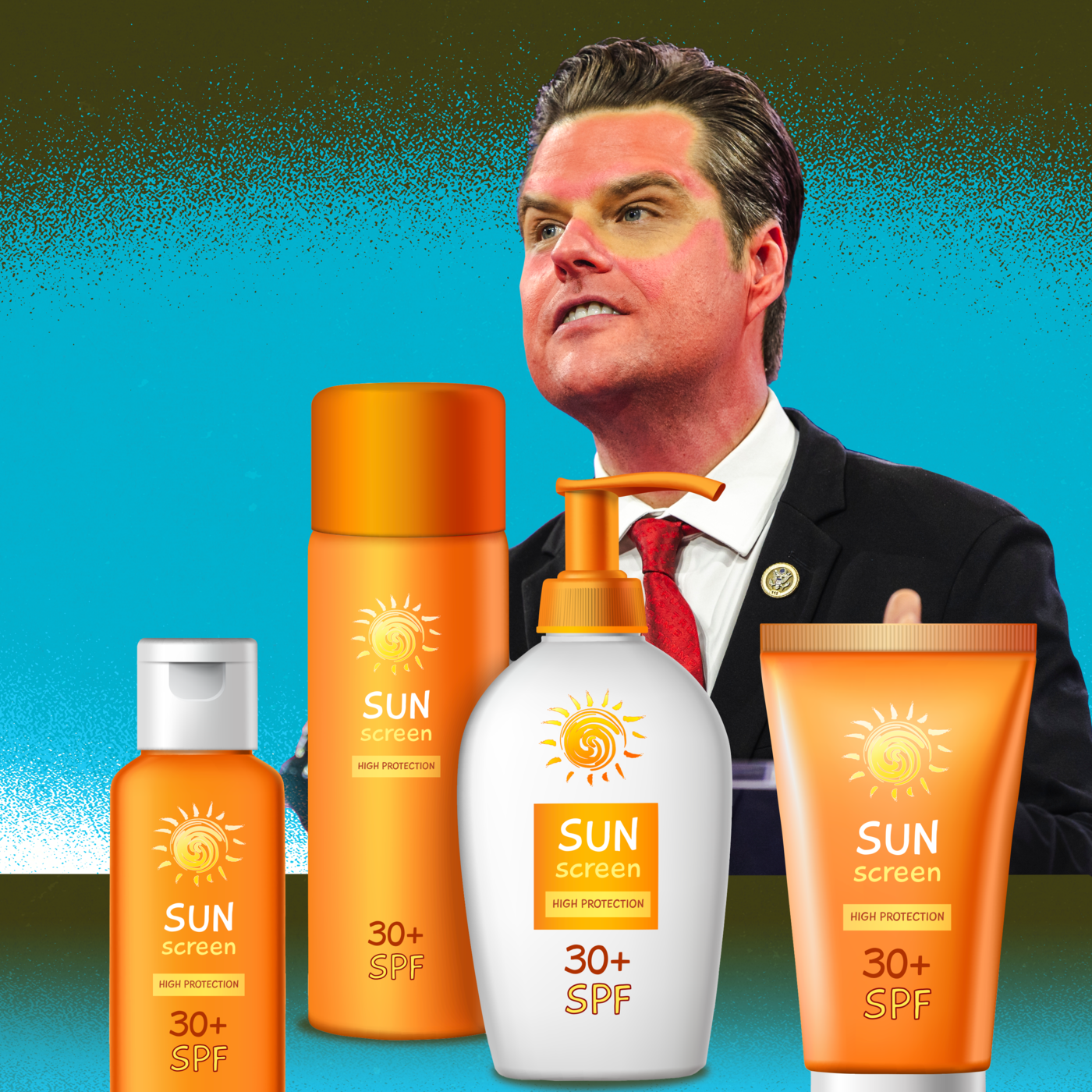
Question Everything
The Sunscreen Paradox
00:22:24
At the height of summer, a prominent medical misinformation purveyor is stoking fear about sunscreen usage.
Loading summary
Transcript51 lines
- [00:06]
A
There are these videos I saw last week on Instagram. A couple people I know told me they've been popping up in their feeds and they seem innocuous enough. Mommy bloggers showing how they prep their kids for the summer sun. Happy music playing One of them's using a makeup sponge to put sunscreen on her little kid. Caption My favorite hack for applying sunscreen to my kids. Another's brushing sunscreen on her blonde toddler's head. Cute. But then in the comments of all these videos, something strange and kind of alarming. People claiming that using sunscreen will give you cancer rather than prevent it. Do not put sunblock on your baby, says one commenter on one of these videos. It causes cancer. Another Recent scientific studies prove that there is a link between sunscreen use and cancer. Another commenter no, thank you. Skipping that toxic crap. Another Sunscreen is harmful for humans. And as one person said, rather simply, sunscreen is cancer. Sunscreen, for the record, is not cancer. It does not cause cancer. In fact, used properly, it can save you from cancer of the skin. So where the hell does this idea come from? And why is it gaining traction on the Internet right now? Because it has taken off in just the last few weeks, according to experts who monitor online misinformation. It turns out this is not some naturally occurring viral delusion that has sprung up organically as people head to the beach. There are actually two specific guys who are behind it. From placement theory and kcrw. I'm Brian Reed. This is Question Everything we investigate how the truth gets buried, distorted and denied, and the ways people are fighting to make it matter again. Today on the show, a little ditty about summer disinformation. We find out who's responsible for injecting this odd and dangerous lie into the social media bloodstream and the surprising scientific phenomenon they are weaponizing to do it. Stick around. I had three beers last night. I had this get together with my old college singing group, which was really fun and you know, I wasn't the sharpest this morning, but that's how it goes sometimes. You're having a few drinks and more and more you're finding the next morning it's just harder to get going. You might want to check out Zbiotics Pre alcohol. It's like a little shot that you take before your first drink. It's meant to help your body process the alcohol better. So the next morning you wake up feeling ready for work, your workout, whatever's on the schedule for the next day, go to ZBiotics.com to learn more and get 15% off your first order when you use question at checkout. Zebiotics is backed with 100% money back guarantee. So if you're unsatisfied for any reason, they'll refund your money, no questions asked. Remember to head to ZBiotics. That's Z B I O T I C S.com? and use the code QUESTION at checkout for 15% off. Now and again on this show, we like to check in with the folks over at News Guard, a fact checking company that each week chooses a false claim of the week and debunks it. When they do this, I like that you get to see where the false claims originate and how they grow online. The paths these things take often are telling. And last week I saw that the false claim of the week was a
- [03:33]
B
study found that sunscreen use increased your risk of skin cancer.
- [03:40]
A
This is John Gregory, a health editor at Newsgroup. He's worked there for eight years debunking health misinformation online. John says this claim that using sunscreen can give you skin cancer started flashing on the News Guard radar screens about three weeks ago. Their team regularly monitors certain search terms.
- [03:58]
B
Skin cancer, cancer is one of those that we monitor. And these posts started popping up, more
- [04:05]
A
than 17,000 posts to be exact, in seven languages across 44 countries, spreading this fabrication to millions of people. And as someone who spends every day ingesting health misinformation, John says this claim
- [04:19]
B
stuck out this kind of really out there health misinformation, one that is not focused on vaccines, not focused on kind of a core issue of RFK Jr and the MAHA crowd is a special kind of circumstance. We usually don't see conservative media telling you, hey, don't wear sunscreen, it might cause skin cancer. And the risk involved. I mean, you're telling people to potentially adopt a dangerous behavior, go outside in the sun unprotected for hours on end.
- [04:55]
A
Right. Like this could have real impacts on
- [04:57]
B
people in the world. Absolutely. That risk of harm also factors into how we pick the false claim of the week.
- [05:03]
A
As they looked at the activity on social media boosting this claim, John and his team saw that many of the posts were resharing or referencing this one clip from cable news.
- [05:13]
B
One America News Network featured it on Matt Gaetz's show. Former Congressman Matt Gaetz, who was at one point set to be President Trump's
- [05:22]
A
Attorney general, he has a show now on One America. He's an anchor.
- [05:26]
B
Yeah, he does have a show on Oan.
- [05:29]
A
If you don't know it. One American news network is like a more extreme and less factual network than Fox News. And Matt Gaetz, you might recall, is a former Florida congressman who eventually withdrew himself from the running to be attorney general because a House ethics committee found evidence that he'd paid women for sex and had sex with a 17 year old, which is statutory rape in Florida. He said these findings are untruthful and defamatory. Now he's a news anchor the guest Gates hat on to talk about sunscreen,
- [05:57]
B
a anti vaccine epidemiologist by the name of Nicholas Holser. Gates asked Holser, have I been lied
- [06:05]
A
to as a Florida man about sunscreen
- [06:08]
B
protecting me from cancer?
- [06:10]
A
Holser responded, yes, it appears we've all been lied to. Unfortunately.
- [06:15]
B
The claim that was being spread was based around a November 2023 study done in the UK.
- [06:22]
A
This massive study of over 470,000 people confirms it. We're when they compared sunscreen users to non sunscreen users, the sunscreen users faced increased risks of all the major skin cancers. We'll dig into that study in a bit, but that interview happened on June 26th. The guest Nick Holscher posted a clip of it on x and got 2.9 million views in four days. He also went on other shows like comedian Jimmy Dore's podcast, which has nearly 2 million subscribers on YouTube. Nicolsher was out there pushing this claim and did you know who that guy was?
- [06:57]
B
Oh yes. He's a very frequent purveyor of health misinformation, often in the anti vaccine space. He's also a big promoter of Ivermectin as not only a treatment for COVID 19, but also as a cancer treatment.
- [07:13]
A
Ivermectin used to deworm horses, also used to treat some conditions in humans not supposed to be used to treat COVID 19 or cancer. But since the pandemic it's become gospel among some people on the right that it's a go to cure for just about everything. John says Hoelscher got his master's in public health from the University of Michigan, and on paper he's sort of unremarkable. When you google him, he seems like a relatively normal researcher. He has a whole profile on a research website listing scientific journals he's published in, but it's who he works with that's noteworthy.
- [07:45]
B
He's one of the writers on a substack called the Focal points, has about 138,000 subscribers. Wow. The more famous author on that substack is someone that Holser has worked for for a number of years, named Dr. Peter McAuliffe, who's one of the big sources of misinformation from the COVID pandemic. If I was not listing them off, he'd be in the top five in terms of, like, sources of bad information, particularly about COVID vaccines.
- [08:18]
A
If you look at Nick Hulscher, the sunscreen guy's resume, John says his entire professional career as an epidemiologist since graduating just a few years ago, is working with Peter McCullough, who is a real doctor.
- [08:29]
B
He's a cardiologist. He had affiliations with major institutions like Baylor University prior to becoming this big misinformation purveyor. He left in early 2021, and Baylor later had to sue him in order to get him to stop mentioning his affiliation with them as if it were current because they didn't want to be associated with the claims he was starting to make about COVID vaccines.
- [08:59]
A
Together, Dr. McCullough, Nick Hulcher write this prolific newsletter on substack focal points.
- [09:05]
B
This substack alone is responsible for, you know, dozens of false health claims. I'm probably being conservative with that. It's not 100% in line with RFK Jr. They've had some articles that are a little critical of RFK Jr. For basically not moving fast enough on issues. They. I mean, these are people that want to see Covid vaccines 100% pulled off the market because in their eyes and their claims, it's killed millions of people.
- [09:35]
A
That's what they claim on this substack.
- [09:37]
B
Yeah, they have. They have actually claimed that it's killed more people than, you know, World War I, World War II and Vietnam combined, at least for the U.S. death toll.
- [09:48]
A
So back to the sunscreen. A few weeks before he went on Matt gaetz's show on June 9, amid all these other focal points, articles about vaccines killing people and the government doing biowarfare experiments with ticks and vaccines causing autism, Nick Hurscher published a substack post a about sunscreen.
- [10:07]
B
The headline is study finds sunscreen use linked to higher risk of multiple skin cancers. And then further down, he's got this graphic that says sunscreen use linked up to a 292% higher risk of multiple skin cancers.
- [10:25]
A
There's an image of a man and a woman in their bathing suits slathering sunscreen on their skin, oblivious to the danger. Next to them are dermatological sketches of the layers of skin with cancer in it. The substack post centers on a study of more than 470,000 people in the UK. And what did it find?
- [10:43]
B
So it did find that people who reported using sunscreen more frequently did also report having higher rates of skin cancers.
- [10:54]
A
What was that? It's not what it sounds like. We'll get into it after a quick break. When I spoke to the founder of Ground News a little while back, Harleen Corr, she dropped this line on me. Ground News helps you. I like using the phrase walking in somebody else's news. Walking in someone else's news. Pretty catchy, huh? You really get it if you start to use Ground News because we know two reasonable people can have very different understandings of the same event because they're reading different coverage. We may think people are ignoring facts, but sometimes they're just seeing different facts shown to them or emphasized. Ground News lets you step into that other perspective and see coverage the way people with maybe different algorithms, different backgrounds, different political perspectives are seeing it shown to them. It's less about changing your mind than understanding how someone else got to their perspective. Go to groundnews.com? for 40% off their unlimited access Vantage subscription. That's groundnews.com?. Make sure to use that link.
- [11:58]
B
So.
- [11:58]
A
So they know we sent you. So this epidemiologist, Nick Hur, who's spreading the claim about sunscreen causing skin cancer, he's basing his claim on a 2023 study in the UK which was investigating a very technical scientific question related to skin cancer. But as part of the research looked at the correlation between people who self report using sunscreen and the occurrence they have of skin cancer. This is a real scientific study conducted by real doctors and published in a peer reviewed journal called Cancer Epidemiology, Biomarkers
- [12:35]
B
and Prevention, but did find that people who reported using sunscreen more frequently did also report having higher rates of skin cancers. But the study was very clear right as they made that finding that this was a paradoxical finding. That's the exact terminology they use. It had been seen in similar studies because people who report using sunscreen more regularly also might tan more regularly and or a lack of reapplication of sunscreen throughout the day. This so called sunscreen paradox.
- [13:11]
A
Wait, this is a thing like in science, the sunscreen paradox? Yeah, apparently this is a recognized phenomenon that scientists have seen in multiple dermatological studies, not just this one. Just want to make sure I'm getting this right. Basically the sunscreen paradox is people who report higher use of sunscreen tend to have higher instances of skin cancer. But the understanding of scientists doing this research is that that might be happening because people who report a lot of sunscreen use might just go in the sun more, and so they have skin cancer for that reason, or they think they're using it properly, they stay in the sun a long time feeling they're safe and they don't reapply it. And so they do have higher instances of skin cancer. But it's not because of the use of the sunscreen, right?
- [13:54]
B
It's they've given themselves kind of a false sense of protection by just saying, oh, well, I use it. But like, you know, they're applying it once and then staying out for hours and hours on end and spend more time out in the sun without really using the sunscreen properly for the amount of time they're in the sunlight.
- [14:12]
A
John says in other studies where instead of simply asking people to say how regularly they use sunscreen, researchers are following people over time and checking that they're using it properly, applying enough, reapplying it over the course of the day, the sunscreen paradox goes away. And in fact, the results show that sunscreen used properly decreases instances of skin cancer. A study in Australia showed daily use of sunscreen reduced the incidence of melanoma by 50%. A Norwegian study found using SPF 15 lotion reduced melanoma risk by about 30%. There are similar findings for other skin cancers too. But Nick Holzer's substack post concluded the exact opposite, that sunscreen use can cause skin cancer. John and his team at NewsGuard contacted one of the authors of the UK study, Dr. Ivan Lipanoff at McGill University, who told them Holzer's take was a misrepresentation of their findings. He said, quote, the proper use of sunscreen combined with other sun protection measures reduces the risk of skin cancer. But again, he and his co authors also said this in the study itself, the very study that Nick Hurscher is supposedly reading and summarizing on the focal point substack and later on One America News. Does he ever report in this substack post that the authors of the study have said that their study should not be interpreted this way and should not be interpreted to link skin cancer to use of sunscreen?
- [15:41]
B
No, he never provides that countervailing information. There's no mention of what's in the study about the paradoxical finding or the comments they made since then. He cherry picked and just worked around that.
- [15:55]
A
So Nicholas Holser, do you have a sense like, does he believe that sunscreen
- [16:03]
B
causes cancer it's hard to discount with any single health misinformation source whether or not they believe this stuff. His motivation seems to be railing against vaccine and mainstream medical opinion. Whether he actually believes in it or not. I think someone would have to be inside his head to really get into it.
- [16:23]
A
The explanation here is he either didn't read the whole study or he did and specifically left out the really important information that the authors of this study said. The opposite thing is true than what he's saying, right?
- [16:40]
B
Yeah. And it's just, you know, only he would know whether he deliberately cherry picked or he just stopped reading at a certain point when he felt like he had his narrative set in stone.
- [16:52]
A
We emailed Hoelscher and McCullough to ask if they believed it or were purposely deceiving people. They didn't answer us. There is a profit motive behind a bunch of the disinformation Hoelscher and McCullough push on focal points. For one, they have subscribers to the newsletter, nearly 140,000 of them. Some portion of those paid. But more important, McCullough and Hulscher are involved in a for profit company called the Wellness Company which sells certain prescription drugs and other medical products online and on the substack. They're like encouraging people to go buy stuff from the Wellness Company.
- [17:27]
B
They do talk about their products, provide links to it, and they have put up stuff that we would consider frankly just advertising for the Wellness Company. It might be kind of couched in an article that's about like, you know, if they're talking about Ivermectin, they probably will insert. By the way, you can go buy it here and link out to their
- [17:50]
A
the Wellness Company site which of course sells Ivermectin. Any sense of how much money they're making
- [17:59]
B
for them? No, we don't know exactly how much money they pull in, but, but you know, you can look at their website and see they're selling drugs that are, you know, generic drugs that probably cost, you know, cents to produce at this point. Things like Ivermectin and they're selling them for hundreds of dollars. So I would imagine while I can't put a round number on it, their margins are extremely high.
- [18:30]
A
But here's the interesting thing about the shoddy sunscreen claim. Hoelscher and McCullough don't appear to be leveraging that to sell any specific product. It's not like Ivermectin where they're claiming falsely that it cures cancer and then directing people to go buy it from their website. I didn't see any skin cancer or sun related products that they might be trying to trick people into paying them for. They're not selling hats or rash guards. In fact, Hoelscher doesn't tell people to swear off sunscreen totally. He writes, sunburns are clearly harmful. Aim for sensible sunlight exposure, spending enough time in the sun to reap the benefits without reaching the point of burning. He suggests mineral sunscreens for long sun exposure. The takeaway is not to fear sunlight but to respect it, John says in his near decade covering health disinformation. This actually tracks.
- [19:23]
B
I think there's sometimes a misconception that health misinformation like this always has to be based on, for one, a consistent agenda that doesn't contradict itself or that it's selling something. And in this case it's not doing either of those things. It's really just about seems to be just about contrarianism that whatever mainstream medical science says, whatever health authorities say, people like Nicholas Holser have to have a counter narrative. They have to say no, they're lying to you and this is the real secret truth that you're being let in on. They are trying to keep that audience engaged with them that is expecting to hear a alternative view on everything that comes out of mainstream medicine and mainstream news. The misinformation itself is the product.
- [20:20]
A
That's John Gregory at NewsGuard. Since we're on the topic, a few quick tips for proper sunscreen application from the American Academy of Dermatology for adults use a broad spectrum formula, at least SPF 30 on all exposed skin 15 minutes before you head into the sun. Most adults need to use at least 1 ounce a shot glass for all skin that's not covered by clothing. Not as much as I thought, but that's why I'm not a dermatologist. The American Academy of Dermatology also says make sure to reapply every two hours or after swimming or sweating. If you found this episode edifying, please send it to a friend. And if you're new here, go check out our recent episodes about chatbots and conspiracy theorists Ashley St. Clair Meta and also our two parter from earlier this year about deported journalist Mario Guevara. Another request, please follow Question Everything wherever you get your podcasts. It helps us reach more people who should hear the reporting we're doing and follow us on instagramstioneverything Podcast. Today's show was produced by Sam Egan and edited by Jen Kinney. Robin, Simeon and I are the executive producers of Question Everything Our team also includes producer Zach St. Louis, managing editor Kevin Sullivan, contributing editor Neil Drumming, and associate producer Kevin Shepard. This episode was fact checked by Annika Robbins. Mixing and sound design by Brendan Baker. Our music is by Matt McGinley. Evie Kwong manages our social media. Special thanks to Dana Chivas. Our partners at KCRW include Arnie Seiple, Tejala Jamera, Natalie Hill, and Jennifer Farrow. We'll see you next.