← Question Everything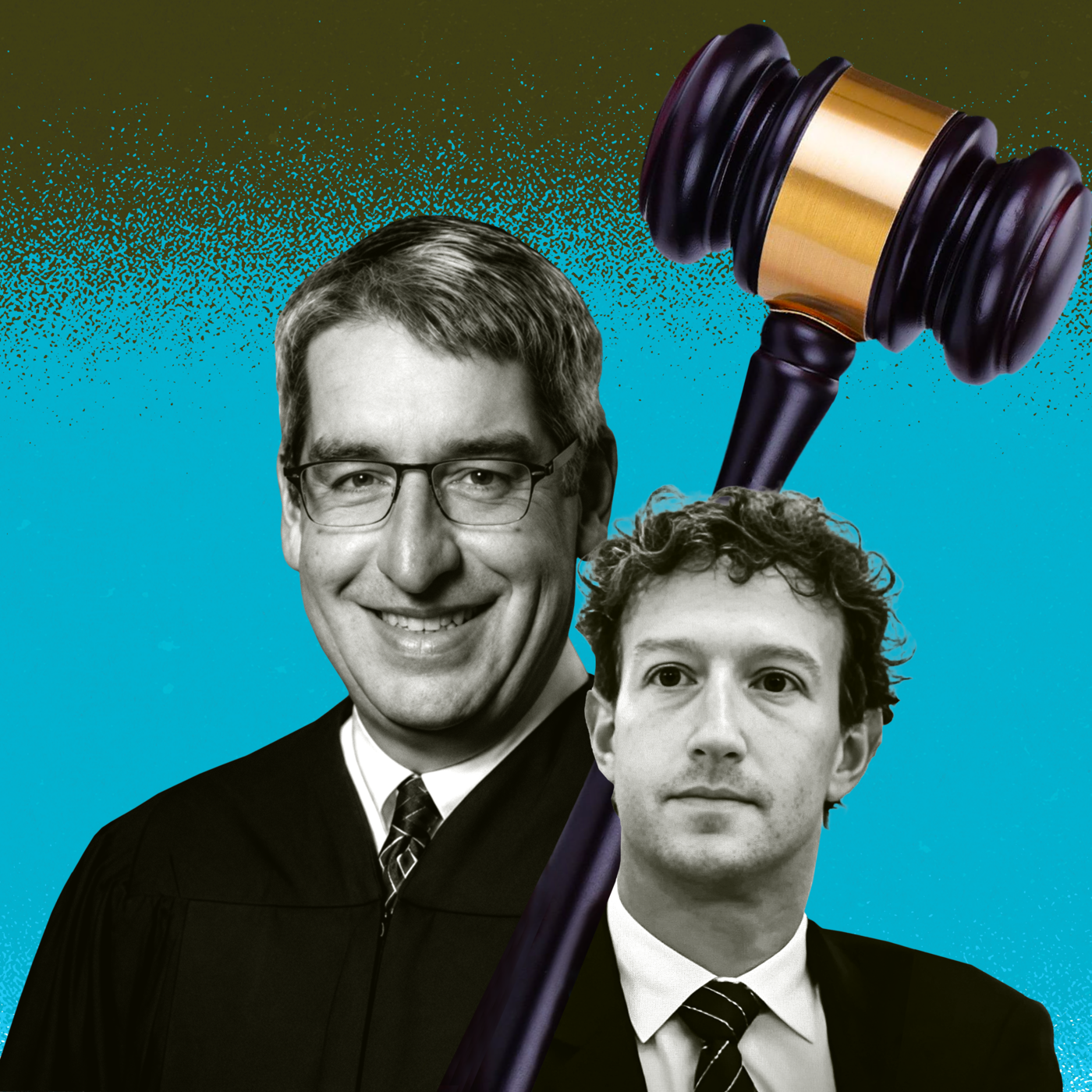
Question Everything
We Went to the Trial That Could Force Meta to Change its Ways
00:51:55
New Mexico is asking a judge – for the first time in the US – to force Meta to better protect kids on social media. We went to the trial to see how this showdown played out.
Loading summary
Transcript194 lines
- [00:04]
Brian Reed
I know that a lot of people rely on coffee, nicotine or other habits to get through the day. Ultra pouches are an alternative. They're completely nicotine free and caffeine free. Instead, they use a blend of nootropics and vitamins that are designed to support focus and steady energy. On the other side of the spectrum, they also have a pouch that promotes healthy sleep. They come in a bunch of flavors like Blue Razz, Cool Mint and Watermelon. If you're looking for a nicotine free pouch, check them out. New customers can get 15% off with code question@takeultra.com that's takeultra.com code question for 15% off and after you order, they'll ask where you heard about them. Please let them know. Question Everything sent you. Hair changes like thinning and shedding happen to everyone. Stress hormones and just getting older can all play a role. That's why OneSkin created OS1 hair. Powered by their proprietary OS1 peptide, it's a daily scalp serum because healthy hair starts at the root. Born from over 10 years of longevity research, OneSkin's OS1 peptide is engineered to support your hair to look visibly fuller and thicker at any age. For a limited time, Try OneSkin with 15% off using code question@OneSkin Co question that's 15% off OneSkin Co O n e S K I n with the Code Question after your purchase, they'll ask you where you heard about them. Please support our show and tell them we sent you. That's 15% off. OneSkin o n e S K I n co with Code Question. I'm not in the studio right now. I'm actually at my washer dryer. I started using Laundry Sauce, which is a set of premium smelling laundry detergent pods. I'm using the Egyptian Rose scent. I don't normally go in for scents, especially if they're overpowering, but this one is not at all. It's very subtle, it's very nice. But also these get stains out. I live hard. I have a kid. I get stains on my stuff all the time. So so it's leaving my clothes clean but also just smelling nice. For a limited time only, our listeners get 20% off your entire order. When you use code question@laundrysauce.com that's 20% off your order at laundrysauce.com with promo code Question after you purchase, they'll ask you where you heard about them. Please support our show and tell them we sent you. It's time to make Laundry Day the best Day of the week. Wait, what is that noise? I hope I didn't leave my pen in here again.
- [02:43]
Narrator/Host
Oh, that's hot.
- [02:48]
Brian Reed
From Placement Theory and kcrw, I'm Brian Reed. This is Question Everything, where we investigate how the truth gets buried, distorted, denied, and the ways people are fighting to make it matter again. Today on the show, a legal showdown out west with one of the world's biggest tech companies.
- [03:02]
Narrator/Host
People may not want to provide their ID to do things as simple as read the news, converse with friends and family.
- [03:10]
Dr. Brian Levine
I'm talking about Meta's platforms. My concerns are just for Meta's platforms where unlike any other company, we've been through a whole trial and there was a determination about just how unsafe it is.
- [03:21]
Brian Reed
Stick around. I'm not in the studio right now. I'm actually at my washer dryer. I started using laundry sauce, which is a set of premium smelling laundry detergent pods. I'm using the Egyptian rose scent. I don't normally go in for scents, especially if they're overpowering, but this one is not at all. It's very subtle, it's very nice. But also these get stains out. I live hard. I have a kid. I get stains on my stuff all the time. So it's leaving my clothes clean, but also just smelling nice. For a limited time only, our listeners get 20% off your entire order when you use code question@laundrysauce.com that's 20% off your order@laundry sauce.com with promo code question. After you purchase, they'll ask you where you heard about them. Please support our show and tell them we sent you. It's time to make laundry day the best day of the week. Wait, what is that noise? I hope I didn't leave my pen in here again. Oh, that's hot.
- [04:40]
Zach St. Louis
Good morning, you, Honor. On behalf of Attorney General Raul Torres, the New Mexico Department of Justice and
- [04:45]
Judge Brian Beadsheid
the trial team here, we appreciate the
- [04:48]
Zach St. Louis
opportunity to present evidence to you here in phase two.
- [04:51]
Brian Reed
Right now, as I speak, a state judge in New Mexico is trying to make a very consequential decision. It's in the second phase of the case that the state of New Mexico brought against Meta. The judge's name is Brian Beadsheid, and he presided over the first phase of the trial this winter, where a New Mexico jury heard weeks of testimony about state investigators who built these fake accounts of children and how those accounts ended up showing that the design of Facebook and Instagram let sexual predators target kids on a massive scale. New Mexico's attorney general called Meta's Apps, the largest marketplace for predators and pedophiles globally. We did an episode about that part of the trial a few weeks ago. If you didn't hear it, go to our feed and give it a listen. We'll also link in the show notes. It's called the Sting that Exposed How Meta Endangers Kids. All right, you all caught up? Good, because spoiler here. The jury sided with New Mexico in that phase of the case. They found that Meta was liable for endangering kids and ordered the company to pay $375 million in penalties. And now there's this second phase of the same case. That first phase was decided by a jury, but this one isn't. It's being decided by one person. Judge Beadsheid.
- [05:59]
Judge Brian Beadsheid
It's good to have you all back with that. Do you have something else that we have to decide?
- [06:05]
Brian Reed
Two things. How much more money Meta should have to pay to fund things like community health centers and counseling for kids. That could cost Meta another billion dollars. Plus, and this is arguably a bigger deal. Judge Beadsheid is going to decide what, if any, changes Meta should be required to make to its platforms, Instagram and Facebook and WhatsApp, in order to keep kids safe. The state has a seven page list of proposals, and these are significant changes. If the judge forces Meta to make even some of them, they'd be the first of their kind in the US and could have a huge impact on protecting kids. But also, they could really affect how all of us interact online and use Instagram and Facebook, especially as other states are starting to bring similar cases by looking to New Mexico as a model. Our producer, Zach St. Louis, went to Santa Fe for the second phase of this trial where the judge was considering all this and has spent weeks digging through documents and talking to people involved with the case. He's here now. Hey, Zach.
- [06:58]
Zach St. Louis
Hello.
- [06:59]
Brian Reed
Okay, so this list of recommendations that New Mexico wants to see Meta make to its apps, just give me an overview. Like, what are some of them?
- [07:06]
Zach St. Louis
Okay. Yeah, so it's things like eliminating addictive features on the apps.
- [07:10]
Brian Reed
No.
- [07:10]
Zach St. Louis
Infinite Scroll, No. Autoplay, Getting rid of push notifications during school hours, during sleep hours, mandatory time limits, A bunch of things like that just for kids. Just in New Mexico.
- [07:22]
Brian Reed
Under 18.
- [07:22]
Zach St. Louis
Under 18. Okay.
- [07:25]
Brian Reed
Are there any recommendations you expect the judge to probably agree to? I know we don't know for sure, but that seem like an easier yes for him.
- [07:34]
Zach St. Louis
Yeah, I mean, there is one that kind of stood out to me, and that is allowing law enforcement in New Mexico to be able to operate undercover accounts on Facebook and Instagram. Meta currently doesn't allow those accounts on their platforms. It's against their policy.
- [07:51]
Brian Reed
Right, these are all officers pretending to be teens, basically. Like we heard about in our last episode.
- [07:57]
Monica Bickert
Exactly.
- [07:57]
Brian Reed
They make a fake account for a 13 year old, and then if and when a predator contacts them, they lure the predator in and can use it to arrest them.
- [08:05]
Zach St. Louis
Yeah. And so Meta will shut down the account sometimes mid investigation. And that is obviously a challenge for these investigators. They lose a lot of the work that they've done. They lose the leads.
- [08:15]
Brian Reed
Okay, and so why do you think, like, the judge might rule in favor of the state on this one?
- [08:21]
Zach St. Louis
I think it's because the state's evidence was pretty clear. These accounts help us. So that was easy to understand. And then on the other side, Meta's defense of why we don't want these accounts, to me, seemed pretty thin. And you could hear the judge asking questions of Meta's witness, saying that these accounts were harmful in some way or they were bad. And he wasn't quite getting what she was saying either.
- [08:44]
Brian Reed
Can you play me any of this?
- [08:45]
Zach St. Louis
Yeah, I can. I can. And so this is the first voice you're going to hear is Judge Beadsheid asking the question of Meta's witness. And this is Meta's head of global policy. Her name is Monica Bickert.
- [08:54]
Judge Brian Beadsheid
Why is it not logical to let law enforcement on to try to do some of the policing? You can't.
- [09:04]
Monica Bickert
For a couple reasons. One is they would themselves normalize dangerous behavior just by having the accounts, and they would themselves post harmful content.
- [09:16]
Brian Reed
She's saying that having undercover cops normalizes bad behavior. What does that mean?
- [09:22]
Zach St. Louis
I think what she's trying to say is that by having cops pretend to be kids that are engaging in chats with predators, pedophiles, that it's somehow normalizing pedophilia on the apps, that it's creating a space where more of that conversation can happen, and it makes Facebook and Instagram seem to predators like places where they can have those conversations and therefore normalizes it.
- [09:45]
Brian Reed
But in the meantime, like these, these investigators are saying this is how we actually catch predators.
- [09:49]
Zach St. Louis
Yeah, exactly.
- [09:50]
Brian Reed
She got anything else?
- [09:52]
Zach St. Louis
Yeah. So she also says that it violates Meta's policy. That's a big one. She keeps coming back to that it violates the policy.
- [09:57]
Monica Bickert
One of our policies right now is literally, it says you can't have a fake account, and we go after it and we publish numbers on that, that we would have to change that policy line to Say you can't have a fake account unless you are law enforcement. It fundamentally changes the nature of the site.
- [10:17]
Judge Brian Beadsheid
Okay. Why?
- [10:19]
Monica Bickert
Because right now.
- [10:20]
Brian Reed
That's the judge.
- [10:21]
Zach St. Louis
Yeah, you can almost hear him squinting, like, why?
- [10:24]
Monica Bickert
Because right now, one of our core values is authenticity. I mean, a part of this site is, when you come to it, you know who you're talking to.
- [10:31]
Judge Brian Beadsheid
You're assuming that everyone is following your policy, everyone is authentic, everyone's doing a good thing. And law enforcement would enter some contamination or impurity into that ecosystem, which I haven't heard a lot of evidence to suggest that. It seems like you've already got problems with people doing inappropriate things on Facebook or Instagram. And I'm just trying to figure out what. What is actually the harm of an incremental. We're going to let on five undercover accounts in order to hopefully remove 10. Why is that so problematic?
- [11:14]
Brian Reed
Okay, so, yeah, it does seem like the judge is pretty skeptical of that one.
- [11:17]
Zach St. Louis
And to me, her answer isn't that great. It's just like they're violating our policies.
- [11:22]
Brian Reed
And also, I mean, we've reported on this show about, like, Reuters reporting about how many fake ads and scams and just, like, the amount of fakeness and inauthentic content that there is on Facebook.
- [11:35]
Zach St. Louis
Yeah.
- [11:36]
Brian Reed
So to say, like, oh, well, we can't let, like, undercover cops come on here and help find predators because we're so, you know, committed to authenticity, is kind of infuriating, actually.
- [11:47]
Zach St. Louis
Yeah, definitely.
- [11:49]
Monica Bickert
Okay.
- [11:49]
Brian Reed
And are there any proposals from the state that the judge seemed not as into or to have more questions about than others?
- [11:57]
Zach St. Louis
Yeah, well, there was one that seemed the most vague, I will say, and you could kind of hear them wrestling with that in court, and that's this request from the state for what they're calling a child safety monitor, which is a person who will be appointed by the court to make sure that Meta is complying with whatever the judge's order is, whatever of these recommendations from this menu that he picks up, this person will be in charge of making sure that Meta's holding up their end of the bargain.
- [12:24]
Brian Reed
Is this a regulator?
- [12:26]
Zach St. Louis
It's actually kind of unclear exactly what they think the parameters of the monitor will be, if they're going to act like a regulator or not.
- [12:33]
Brian Reed
What its authority is.
- [12:34]
Zach St. Louis
What its authority is. Meta pointed out over and over again that the state's plan was vague, and this all seemed like an overreach to allow this monitor to make decisions about how they run this massive company.
- [12:46]
Brian Reed
Yeah, that raises a whole other set of questions, I imagine for the judge like, okay, teens in New Mexico. If I am a teen on vacation with my family from Ohio in New Mexico, am I a teen in New Mexico? And suddenly my account gets shut down. And how does that work when I'm visiting Roswell?
- [13:04]
Zach St. Louis
Exactly. And the other way around too. If you're a teen that sets up their account in New Mexico, but you move to New Jersey, are you allowed to appeal to meta to get these restrictions lifted? And that is exactly the kind of question that the judge was trying to puzzle through. The judge was asking how would for someone visiting New Mexico. And when it came to the monitor, and the judge was asking the state's witness who came up with the monitor plan about the specifics, the witness's answer kind of repeatedly was, well, that would be up to you to figure out, judge. So it was like a game of hot potato, you know, like, who's actually gonna be responsible for coming up with exactly how this monitor would work?
- [13:39]
Brian Reed
Interesting. Okay, and then I know, like, there's kind of one proposal on this list that is maybe like arguably the most impactful and maybe the most controversial. Is that fair to say?
- [13:54]
Zach St. Louis
I think that's right.
- [13:55]
Brian Reed
And what is that?
- [13:56]
Zach St. Louis
I mean, it's the one that we're gonna spend the bulk of today's episode about. And it's because it seems, you know, maybe deceptively simple on its face, but if you start to pull on the thread, it really reveals a lot of far reaching implications that go way beyond. And that is age verification.
- [14:14]
Brian Reed
This is basically requiring people, including kids, to prove that they're of a certain age. To be able to use Instagram and Facebook.
- [14:26]
Zach St. Louis
Yes. Both to be able to prove that they're 13, which is the age required to use Instagram and Facebook, and to know the ages of kids between 13 and 17, which is the ages that you get put into these special teen accounts that have more restrictions on them.
- [14:40]
Brian Reed
And I'm just curious, like, did New Mexico ever put forward, like, the idea that they should just ban teenagers from Instagram and Facebook altogether? Like the way that Australia does for kids under 16 or the UK?
- [14:53]
Zach St. Louis
No, that wasn't a part of this trial. They were really focused on the changes. Some states have tried to pass laws about banning kids under a certain age from social media, but it wasn't a part of this trial.
- [15:03]
Brian Reed
It's more like a legislative thing.
- [15:05]
Zach St. Louis
Yeah, typically it seems like it's more of a legislative thing.
- [15:07]
Brian Reed
Okay, got it.
- [15:08]
Zach St. Louis
All right.
- [15:08]
Brian Reed
And then when it comes to age verification, I imagine it's kind of necessary to implement a lot of the other changes on the menu too, because if there are certain changes that only apply to kids, again, you need to really be certain who's a kid.
- [15:19]
Zach St. Louis
Yeah, exactly. So it kind of is the backbone of a lot of the recommendations and this change age verification, like all of the requests on the state's list, they all have this central tension at their core where it's about protecting kids online on one side and everyone else's right to privacy and free speech on the other. Some of the questions it raises are how do you verify kids ages? Like, how do you actually do it? If you're verifying kids ages, does that mean that you have to verify adults ages, too? What does age verification mean for adults contacting kids? Can an adult contact just any kid? Is that conversation private? That's a big question in all of this. And how will the judge's decision only contain all of that within the borders of New Mexico when there's people on social media connected way beyond state lines
- [16:08]
Judge Brian Beadsheid
all over the world?
- [16:10]
Zach St. Louis
So I think it's that recommendation, more than any of the others, that raises a lot of questions that reach beyond just teens in New Mexico and could have implications for all of us everywhere.
- [16:21]
Brian Reed
Got it. You heard the different testimony back and forth across examinations, and that's what you're gonna tell us about today, like what the judge heard that he's now basing his decision on.
- [16:30]
Narrator/Host
Yep.
- [16:31]
Brian Reed
And then also we're going to hear from this one expert witness for the state of New Mexico, who, you know, I've just found made a really moving and interesting and forceful argument for age verification that I had not clocked into yet. I'm excited for you to share what you found, Zach.
- [16:51]
Zach St. Louis
I first got to the courtroom in Santa Fe on a Monday morning in May where Judge Brian Beadsheid was presiding. He's the chief judge of New Mexico's First Judicial Court and the father of a teenage son, which, in a case that involves him ordering Meta to make changes to their apps to protect teens online, seems relevant. Prior to this trial, some of his most notable moments as a judge have been a handful of rulings that called for clearer regulation of cannabis in New Mexico. He even played a small role in the case involving Alec Baldwin, where Baldwin fired a prop gun on the set of a movie that killed a cinematographer. The judge granted a subpoena request to interview the assistant director, but this case against Mehta is the only one that has put him squarely in the national spotlight. Beadshot is in his mid-50s, gray hair, glasses, a friendly smile, self effacing, not afraid to crack jokes, and thoughtful about the case, yes, but also about his role in it. Deciding whether to accept or reject New Mexico's suggestions to change Meta's apps and the limits of that role. On the first day of this phase of the trial, before opening statements, he laid out his mission, what he's keeping in mind when it comes to this long list of proposed changes from the
- [18:01]
Judge Brian Beadsheid
state I am a judge. I am not a legislator, I am not a regulator. I'm just going to throw out there at the outset that I'm probably not the easiest sell on an idea where I would become a one person legislature judge and executive branch enforcer. So it did stand out for me as I looked at the requested relief. Some of these requests could amount to some of that overreach. So I want to make sure you all know I don't want to be mysterious and opaque and have those concerns and then not express them at the outset.
- [18:46]
Zach St. Louis
Addressing the two teams of lawyers, he reminds me of a high school teacher who talks to his students like adults, with a tone of okay, guys, I'm going to level with you here.
- [18:55]
Judge Brian Beadsheid
I do want to make sure that everyone's clear that what I need to do, just like we had to do in phase one, is remain cognizant of section 230 and free speech protections to make sure that whatever the decision is about the nature of the harm and ways to address it, that it is within those parameters.
- [19:22]
Zach St. Louis
Well, Your Honor mentioned Section 230. I need to go research what that is and then we'll yeah, that's a Section 230 joke from Meta's lawyer, Alex Parkinson. It's nerdy, but it gets some laughs. The joke is that he's acting like he's never heard of Section 230 before, when Section 230 is a pillar of Meta's defense. Even New Mexico's lawyers and Judge Beadshein chuckled.
- [19:45]
Judge Brian Beadsheid
That's right.
- [19:45]
Dr. Brian Levine
There you go.
- [19:46]
Judge Brian Beadsheid
I understand I'm talking about complicated First Amendment rights and things that you guys wouldn't be aware.
- [19:52]
Zach St. Louis
Clearly there's an existing rapport between everyone here, something that was no doubt established during the first phase of the trial. I was in the small courtroom for the whole first week of the second phase of this trial, the judge's bench in the center tables for the two legal teams across from him, and a few rows of benches in the back of the room, which is where our executive producer, Robin Semion and I sat each day. Scribbling into our notebooks. There was some other press there for the first day, but after that, Robin and I were usually the only two reporters in the room. Often we were the only two laypeople there. Most everyone else was on one of the legal teams, a witness or court staff. On the left side of the room was a jury box that sat empty. It was empty because, as we mentioned, the there was no jury for this phase of the trial. Everything that happened in this courtroom over these three weeks was for an audience of one. The only opinion that mattered. Judge Beadsheid. Meta's lawyer, Alex Parkinson, stood in front of Judge Beadsheid to make his opening arguments. And he argued that Meta shouldn't have to make any of the changes on the state's seven page list.
- [20:57]
Brian Reed
There is no legal regime on Earth
- [20:59]
Zach St. Louis
that is even close to the injunctive relief that the state seeks.
- [21:02]
Brian Reed
The injunctive relief the state seeks, if granted in full, would genuinely make it
- [21:06]
Zach St. Louis
untenable to continue offering Meta's products in this state. This is not a PR stunt. It is not a threat.
- [21:12]
Brian Reed
It is the reality of the seven page relief plan that they provided to your Honor.
- [21:16]
Zach St. Louis
The state is asking you to make
- [21:18]
Brian Reed
a series of the most far reaching
- [21:20]
Zach St. Louis
judicial decisions on these issues ever. He argued that what the state is asking for is an overreach of the law. Meta says they could choose to do some of these things if they want to, but they don't think they should be forced to do a single one pair that position, a giant company saying you can't force us with the mission of the witnesses the state assembled, who are mostly people who have dedicated their careers to protecting kids. Child safety experts, psychologists, researchers, people who want to see the court force Meta to change. The contrast was sometimes bizarre and off putting. Like, here's a Meta lawyer, Isaac Chaput, Cross, examining one of the state's witnesses. Her name is Fallon McNulty. She's a forensic psychologist who's currently the executive director of the Exploited Children division at the national center for Missing and exploited children, or NCMEC.
- [22:12]
Dr. Brian Levine
Ms. McNulty, have you ever designed a child safety tool for a social media company?
- [22:20]
Monica Bickert
I have not.
- [22:21]
Dr. Brian Levine
And you've never built a machine learning classifier, right?
- [22:25]
Monica Bickert
I have not.
- [22:26]
Dr. Brian Levine
You have never tested the accuracy of a machine learning classifier?
- [22:31]
Monica Bickert
No, I have not.
- [22:32]
Dr. Brian Levine
You have never built a heuristic to identify accounts involved in potentially suspicious behavior?
- [22:40]
Monica Bickert
No, I have never worked for a social media company.
- [22:43]
Zach St. Louis
She was on zoom, projected into the courtroom and she was so composed. In contrast to Meta's lawyer Who was fuming, sometimes shouting at her, like when he tried to drive home the point. Shouldn't Congress address these issues instead of the courts?
- [22:58]
Dr. Brian Levine
In spite of NCMEC's advocacy in 2023, 2024, 2025, and as recently as 2026, Congress has not passed the Stop CSAM act, correct?
- [23:10]
Monica Bickert
Not at this time.
- [23:11]
Zach St. Louis
Okay.
- [23:11]
Dr. Brian Levine
And so because Congress won't change the law, NCMEC wants this court to order Meta to do what the Stop CSAM act would require. Isn't that true?
- [23:21]
Zach St. Louis
I get that. Meta's lawyer is supposed to be a forceful advocate for his client, but still, hearing him cross examine a child exploitation expert in this way, it was kind of like watching someone punch a nun in the face. The expert witness who the state called to back up its proposal for age verification on Meta's apps was Dr. Brian Levine. Dr. Levine is a computer science professor at UMass Amherst, where his research focuses on thwarting child sexual exploitation online. He co directs something called the Rescue Lab, which creates tools that are used by investigators across the country to track down predators, including predators on social media platforms like Instagram and Facebook. Dr. Levine has provided reports and testimony about his research in several trials, and the state of New Mexico paid him to do that here. Right now, when new users sign up for Meta's apps, Facebook, Instagram, the company simply asks them to state their age. The honor system, essentially. Then if Meta gets clues from the user's behavior that maybe they lied about their age, that they're under 13, they might look into it, do some more checks. As an expert in how to prevent child exploitation, Dr. Levine says that Meta should now be legally required to confirm everyone's ages when they sign up for Instagram or Facebook in New Mexico. No more honor system.
- [24:46]
Dr. Brian Levine
They have elected to put up a platform for 13 above that they say is not safe for children under that age. And as I've said, the teen accounts and other mechanisms that they have in place are dependent on knowing the person's age. So you can't protect kids if you don't know that they're kids. You can't protect them from adults if you don't know that adults are adults. It's just a base fact of where we are.
- [25:06]
Zach St. Louis
Levine and the state want Meta to do with social media what we do with bars. Check everyone's ages at the door, not just ask them to promise the bouncer that they're old enough to come in. Meta's lawyer, Dan Doris, went hard on Dr. Levine. He tried to impeach Dr. Levine as a witness by getting him to contradict some of his prior testimony.
- [25:26]
Narrator/Host
Dr. Levine, at trial, earlier in phase one, you were asked, have you named any company today in the entire world that does a better job? Answer. That was not what I set out to do in this report, nor was I asked to. This is a case about Meta, not other companies. Is that correct?
- [25:40]
Zach St. Louis
But like he did throughout his testimony, Dr. Levine fought back against the attorney's jabs.
- [25:45]
Dr. Brian Levine
So can I point out the obvious, counsel, that this question was not a yes or no question, and I was clarifying why I could not do that. I wasn't saying that there was a better company. I mean, you're. You're miscar.
- [25:57]
Monica Bickert
You're.
- [25:58]
Dr. Brian Levine
I'll just leave this for every.
- [25:59]
Judge Brian Beadsheid
I will just cut this off right now and say I do not believe that constituted in that.
- [26:04]
Narrator/Host
Okay, fair enough. Dr. Levine. My apologies on that. Dr. Levine, I did not mean to twist your words. Sorry.
- [26:11]
Dr. Brian Levine
I think you did.
- [26:12]
Narrator/Host
I don't think I did, but that's okay.
- [26:15]
Zach St. Louis
A big part of the discussion when Dr. Levine was on the stand was how would this whole age checking thing actually work? Does a user always need to show an ID? How many 13 year olds have IDs? Levine suggested more things could work here besides an idiot, like maybe credit cards or other documents. But Judge Beadsheid pushed back on Levine, saying those don't seem so easy for 13 year olds either.
- [26:38]
Judge Brian Beadsheid
Credit card, not sure how effective that will be. Driver's license. Pretty advanced at 13.
- [26:44]
Dr. Brian Levine
Correct, your honor.
- [26:45]
Judge Brian Beadsheid
So other than the face recognition, which I heard some testimony difficult as well at that age. What are your thoughts for providing insurance?
- [26:58]
Dr. Brian Levine
So thank you, your honor. Meta just released a press release that said that they're looking at the. I believe it was like hands and other body parts or height of a person. Like those kind of clues can be available to them here.
- [27:11]
Zach St. Louis
Dr. Levine is talking about an announcement Meta made just two days before this testimony. They announced new AI tools that could scan photos and videos of users on their platforms to look at height and bone structure to estimate age. They said it was designed to keep kids under 13 off their apps. Dr. Levine had no problem with this idea, but he would like Meta to use these tools to get their accuracy rate higher. And he said that Meta shouldn't be trusted to do it on their own, that the court should force Meta to do it, and continued to hold them accountable for years. If none of these other options work, Levine said teens could get a trusted adult to vouch for their ages.
- [27:50]
Dr. Brian Levine
This is a waterfall method where you move on from there. You say, okay, well then specifically let's go to parents, for example, or let's go to teachers or let's go to judges. And I think, you know, and then, and then you do the best you can. But to not even if that level of specificity is not perfect, it's better than just saying, let's just ask them.
- [28:08]
Zach St. Louis
Even as a last resort, a 13 year old having to go in front of a judge to get on Instagram, as Judge Beadsheid Riley noted, that's a whole thing.
- [28:18]
Judge Brian Beadsheid
I'm sure your average 13 year old is very excited to come to my courtroom and interact with me, but it is possible that that would seem like quite a hurdle. So I'm just wondering, I get Parents would not be a hurdle, right?
- [28:31]
Dr. Brian Levine
Teachers may not be either.
- [28:33]
Judge Brian Beadsheid
I am trying to figure out if I order something, is it reasonable? Is it reasonably likely to work?
- [28:41]
Zach St. Louis
Another thing that makes this complicated is that Meta would have to know the ages of adults too. But it's one thing to flash your ID to a bouncer to go get a beer and another thing to upload it to a big tech company that could have data breaches or get subpoenaed by the government. But as Dr. Levine made it clear to the judge, there is technology that makes it possible to verify your age without your personal information getting stored somewhere. He talked about third party companies like Yoti that use a technology called Zero Knowledge Proof, which looks at your ID to prove your age, but then deletes all of your identifying details so all that anyone can see is whether you are of age or not. Proof with zero knowledge about your private information. Dr. Levine said that there are other ways to assure people's ages without using an id. YOT offers some of those too. Meta actually uses YOT already for its Facebook dating service. This is all very feasible. Dr. Levine said. When it was Meta's turn to call witnesses, they brought out their chief compliance and privacy officer to explain how the company enforces their age policy. Now, Meta says that no one under 13 is allowed on their apps. And since 2025, after New Mexico first filed this case, anyone between 13 and 17 gets put into a teen account that's a special account that has more restrictions. The judge asked Meta's executive, Michelle Prati,
- [30:09]
Judge Brian Beadsheid
how does Meta know who is a T?
- [30:12]
Monica Bickert
There's three main things we do under age assurance to get that knowledge. One is obviously we collect their stated age at registration. That's then supplemented by what we call age prediction. We essentially use our machine learning capabilities and the data we have to make predictions on what their actual age is.
- [30:36]
Zach St. Louis
Meaning if people on Instagram start wishing someone a happy 15th birthday and the account is registered as belonging to someone over 18, Meta's AI should catch that.
- [30:45]
Monica Bickert
When we have signals that their actual age may differ from their stated age, we interject with them and prompt them to verify with and we accept multiple means of verification. Could be government IDs, could be facial selfies, and so on.
- [31:02]
Zach St. Louis
But New Mexico argued that meta doesn't have a very good track record when it comes to checking ages for one Remember from our last episode about this case where undercover investigators made a fake account for a 13 year old girl named Issa B. They entered a birthday that would make her over 18 and Facebook approved her for an adult account. But then investigators uploaded photos of what looked like a 13 year old girl who posted about being in 7th grade. Meta's age detection tools never flagged Issabi as being underage, even after a post where she said she'd just lost her baby tooth. That was back in 2023. Meta's chief compliance officer, Michelle Prati, testified that Meta has since improved how it checks kids ages. He said that Meta's methods are 89 to 90% accurate at determining when a minor has lied about their age to avoid having a teen account, and that they have roughly doubled the number of accounts that they've been able to identify as being under 13. How accurate is accurate enough when it comes to finding kids under 13 who are on Facebook and Instagram is a question that came up a lot in court. The state recommended Meta get to 99% accuracy for rejecting accounts of New Mexico kids under 13 who are pretending to be older. Judge Beadsheid asked the state's expert, Brian Levine, if that's possible.
- [32:20]
Judge Brian Beadsheid
Your view is that 95 would not be a reasonably acceptable standard, that 99 is accomplishable and would be the threshold
- [32:34]
Dr. Brian Levine
because they've set up. Yes, your honor, because they've set up the platform for 13 and above, and because of the dangers that we've seen.
- [32:45]
Zach St. Louis
A question I had for Meta the whole time I was watching the trial, watching them fight these changes wholesale, shout at child safety experts in court, threaten to pull their apps from New Mexico altogether, was why do you think Meta shouldn't have to make any changes? Are you really saying with your history of child sex exploitation on your platforms that you don't even want to consider what Internet and child safety experts have to say at all? It's a terrible position to have to defend and the people I most wanted to ask about it were or met as lawyers. During a break in the trial one day, I walked up to one of their attorneys, Kevin Huff, to ask if he'd talk to me. Hey, Mr. Huff, can I ask you a quick question? I'm a reporter. I'm working a story about this, and I can't commit. Sorry. Okay, thank you. I can't comment. Sorry, he said. Later, Robin asked him if he could point us to Meta's strongest defense witness. He said no. It was the same with the other attorneys. When Robin and I tried to talk to them, one after another, they shut us down. One of them literally turned and ran from Robin. Another lawyer nervously told me they didn't know how many people were on their legal team. Then later, even more nervously approached me to ask that. I don't say they spoke to me at all. Stumped, we scribbled our main question on the back of a handful of our question Everything business cards they read. Can you give me one reason Meta is resisting the state's changes to protect kids? It isn't at all clear from cross examinations. We handed them out to every Meta lawyer we encountered everywhere we could. Okay, I'm shamelessly bothering you in the bathroom. I know. We're sitting next to each other. Yeah, I'd love to talk to you. My time. I wrote a question on the board. We'd really like to talk to someone from the team. We're here to the end of the weekend. We're definitely going to talk to some of them. Of course, it's not that strange for lawyers from a big corporation to avoid reporters during a trial, but if they felt passionately about their defense, I thought maybe they would offer something. Instead, the sense I got from their attitudes, from their briefs and arguments, was that they didn't think they should have to be in court in the first place, because for the most part, they haven't had to. For decades, Section 230 has allowed meta and other tech companies to get cases like this one tossed out before they ever have to face trial. So this was a very new experience for Meta, and their attorneys seemed a bit annoyed, sometimes making an exasperated gesture, like actually throwing up their hands, listening to some of the state's witnesses. At one point, I saw a Meta lawyer roll his eyes at Dr. Levine. But eventually, Meta's lawyers did lay out their reasoning in front of the judge when they confronted Dr. Levine with evidence that hundreds of his colleagues, respected academic experts in technology, disagree with his proposal on age verification. That's after the break.
- [35:43]
Brian Reed
There are some small things you can do in the evening that really make the next day better, like laying out tomorrow's outfit, making sure your phone is charged, putting the coffee maker on auto brew, and if you're planning on drinking in the evening, one more easy thing to add to the list is Zebiotics Pre Alcohol Probiotic Drink. It's designed to break down the byproduct alcohol creates in your gut. That's to blame for rough mornings after drinking. So by making Zebiotics your first drink of the night before you have that cocktail and then also drinking responsibly, of course, you can wake up feeling like yourself, ready to throw on that outfit, drink that coffee and carpe diem. Especially in the summer, which is packed with barbecues, fireworks, lake weekends and late nights with friends. Keep the good times rolling into the next day. Drink pre alcohol before you go out and wake up ready for whatever tomorrow brings. Remember to head to zbiotics.com? and use the code QUESTION at checkout for 15% off. That's zbiotics.com?
- [36:49]
Zach St. Louis
On the fourth day of the trial, after Judge Beadsheid sat through over a dozen hours of testimony, meta attorney Dan Dorris was questioning State's witness Dr. Brian Levine about his age verification proposal, and Doris pulled up a letter and displayed it on the big screen above the judge's head. It was a joint statement signed by hundreds of security scientists and privacy researchers around the world, Dr. Levine's peers, who came to a consensus about requiring age verification online.
- [37:17]
Narrator/Host
The joint statement, Privacy and Security Scientists, was signed by 438 scientists across 32 countries and came out in March 2026 of this year.
- [37:30]
Zach St. Louis
Isn't that correct?
- [37:31]
Dr. Brian Levine
Okay?
- [37:32]
Narrator/Host
Is that correct?
- [37:33]
Dr. Brian Levine
That's correct.
- [37:34]
Zach St. Louis
These scientists and researchers are against requiring age verification on Internet services, including on social media apps. They make a handful of arguments that the technologies for checking ages right now are too easy to get around, that they're vulnerable to data breaches, and even if they do work, there's not enough research showing that restricting kids access to social media will help them. And they seem to worry that once certain platforms like Instagram and Facebook are required to do age checks, it'll be a slippery slope to governments mandating widespread identity verification across the Internet. Which would make the Internet a very different place where adults will have to prove who they are to use platforms, not just metas, to do all sorts of things that can currently be done anonymously, or at least more privately, like sources reaching out to journalists or activists trying to organize without the government tracking them, the 438 experts call for a moratorium on age verification policies, quote, until the scientific consensus settles on the benefits and harms that age assurance technologies can bring and on the technical feasibility of such a deployment. Meta's lawyer, Dan Doris, confronted Levine with this.
- [38:44]
Narrator/Host
That letter, Dr. Levine had signatories from the United States, including professors from Princeton, Yale, mit, Carnegie Mellon, Brown, and a whole host of other universities. Right.
- [38:57]
Dr. Brian Levine
Okay.
- [38:58]
Narrator/Host
Is that correct?
- [39:00]
Zach St. Louis
Sure.
- [39:01]
Narrator/Host
Okay. And Ronald Rivas signed that letter. Do you know who? Is that correct?
- [39:06]
Dr. Brian Levine
I think you're referring to Ron Rivest.
- [39:07]
Narrator/Host
Rivest. So thank you for that. Okay.
- [39:09]
Zach St. Louis
Yeah.
- [39:09]
Narrator/Host
He's a professor at mit, right?
- [39:11]
Dr. Brian Levine
He is.
- [39:12]
Narrator/Host
And he's a pretty prominent computer science professor.
- [39:14]
Judge Brian Beadsheid
Right.
- [39:15]
Dr. Brian Levine
He's. He's a. He is.
- [39:17]
Zach St. Louis
As you're about to hear, the conversation started to drift from age verification to another big topic that's at issue in this case. End to end encryption. That's the technology that means in a dm, only the sender and receiver can view their messages. Even the platform itself can't read them. They're encrypted. The testimony moved this way as Mehta's attorney brought up that guy, Ron Rivest.
- [39:40]
Narrator/Host
He literally wrote the introduction to algorithm book that every computer science student uses. Right.
- [39:47]
Dr. Brian Levine
He wrote a popular textbook, for sure.
- [39:50]
Narrator/Host
You think he probably knows what he's talking about?
- [39:53]
Dr. Brian Levine
Are you referring to the cryptographer Ron Rivest? Is he an expert in child safety? No. So I think his opinions should be in the context of his expertise.
- [40:03]
Zach St. Louis
Cryptographers like Ron Rivest create the technology that's used for end to end encryption. End to end encryption is good if, say, you're messaging your bank about your money or your doctor about your health, but not good if predators are reaching out to children on Facebook, for example, and asking them to send nude photos of themselves or meet up in person in chats that predators know no one else can see into, not even law enforcement, when they need to. As Levine put it, encryption creates a black box of abuse. New Mexico is asking Judge Beadsheid to ban end to end encryption on Meta's platforms for kids in the state under 18. In the letter, the security experts address proposals to limit end to end encryption on certain apps, saying they won't solve the problem because the technology is so widely available.
- [40:49]
Narrator/Host
So the joint statement directly addressed what you're asking this court to do. Is that correct?
- [40:55]
Dr. Brian Levine
So, again, these are a set of scientists who are concerned about privacy online. I am concerned about privacy online. It's My experience that with a particular set of scientists who care a lot about cryptography and, and privacy online, that they have a myopic view that children's privacy should be flat out stomped over by the privacy of adults. Now, I think adult privacy is also important, and that's why my recommendation is not to end or ban cryptographically supported end to end encryption for adults, which Mr. Or Professor Rivest and I agree upon. And I believe these scientists that you're quoting in particular have a myopic view of how to protect children. Ron Rivest is not an online safety expert. Should have brought him here if you felt that he was.
- [41:41]
Zach St. Louis
Dr. Levine argued that any private communication involving minors should not be end to end encrypted. But adults can still have that level of encryption unless they're talking to a minor. But in order to do that, of course, you need to know who's a teen and who's an adult, which is how this all ties back to age verification. After the testimony in the trial wrapped, I talked to Dr. Levine about his time on the stand and his experience with the meta legal team.
- [42:13]
Dr. Brian Levine
I mean, I think maybe their goal is to frustrate me or, you know, my, my goal up there is not to be frustrated. I sound pretty frustrated listening to the playback, so I guess I didn't achieve that.
- [42:25]
Zach St. Louis
I wanted to talk to Levine because after hearing his testimony where he disagreed with hundreds of his peers, and having seen other people who oppose age verification and limits to end to end encryption, myself, tech writers, the aclu, even listeners of this very podcast who've written us as much, I wondered, does he really have no concerns about these proposals?
- [42:47]
Dr. Brian Levine
There's a group of scientists that are focused on just encryption everywhere. You know, information should be free. Technologists who just say, encrypt everything, don't trust anyone. No one knows better than the two people talking how to protect them. This is so outdated now. The world has changed extraordinarily, and the way you protect adults and, you know, provide freedom to people around the world is just not how you protect children, full stop. And protecting adults freedom at the expense of children is particularly without nuance. So I just think this letter that was signed, it's typical of my field. When we look back at what a terrible science I'm in, computer science and how we've wronged the world, like this will be one of the notes. Like, we're doing such a bad job in computer science.
- [43:41]
Zach St. Louis
Is this like a quite a heated debate in your fields? The child safety at the expense of privacy debate I like no, because I
- [43:51]
Dr. Brian Levine
think I'm one of the few people on the children should be safe side of it. Like I have given talks at major conferences in my field where I say, what are you doing? There shouldn't be end to end encryption for children on these platforms. And I introduced myself as a privacy researcher and it may be funny to hear or counterintuitive to hear that why would a privacy researcher say what we need least is end to end encryption? And I think that when people say that, that is applying the adult safety lens to a problem that's specific to children. There's no situation in real life other than in the minds of people who want to get rich where it's okay to algorithmically introduce children to strangers and allow them to talk in secret. That's just not safe parenting. And I don't see why this should be true on social media. Sometimes the best way to protect children is with solutions that are not appropriate for adults. Similarly, we have cars that are built for adults and the way we protect children is to give them infant seats. It's to give them booster seats until they're at such an age that the machinery is appropriate for what they do.
- [45:08]
Zach St. Louis
There was one more moment in the courtroom that was pretty memorable. It made me wonder whether Meta was perhaps talking out of both sides of their mouth when it came to end to end encryption. It happened when that Meta VP we heard from the beginning named Monica Bickert, took the stand to testify against New Mexico's proposal that messages remain encrypted end to end for adults, while getting rid of end to end encryption for teens.
- [45:30]
Monica Bickert
If you were to try to carve out New Mexican teens, that would fundamentally change the overall product experience. Anytime that you add complexity into an encrypted system, you weaken the entire system and you make it more vulnerable to attacks.
- [45:52]
Zach St. Louis
Her argument boiled down to having a feature that is turned off for teens and turned on for adults. A carve out for some users makes the whole system of private messages less secure. Bickert is very familiar with the pros and cons of secured versus unsecured messages, which a lawyer for New Mexico asked her about on the stand.
- [46:12]
Narrator/Host
To your credit, you understand there is a safety cost to end to end encryption, right?
- [46:18]
Monica Bickert
I think that trade off is very real. As a former prosecutor and it's one that I highlighted internally and continue to highlight internally. I did not want us to roll out end to end encryption on messenger and Instagram directs.
- [46:31]
Zach St. Louis
You might remember this. It came up in our last episode about this case, Bickert was a part of the decision making team in 2019, when Meta was first weighing whether to offer end to end encryption across Facebook and Instagram messages. Some employees were concerned that encrypting Meta's messaging this way would block the company from being able to see and report about 7.5 million instances a year of child sex abuse materials. Mark Zuckerberg eventually decided to go through with the encryption plan anyway, and during that time, a Meta employee warned that the move was wrong. In an internal chat, they wrote, we are about to do a bad thing as a company. This is so irresponsible. That employee was Monica Bickert, the same Monica Bickert who was now on the stand arguing in favor of end to end encryption on Meta's apps, saying that the company should be able to keep it for adults and teens. Sometimes on the stand, Bickert even went confusingly against her earlier stance that unencrypted messages protect kids.
- [47:34]
Monica Bickert
You know, my view is that teens are also entitled to secure communications because when we think about end to end encryption, there is a safety and security argument in favor of encryption as well.
- [47:47]
Zach St. Louis
In Monica Bickert, Meta has someone who was staunchly against default end to end encrypted messages saying it was a terrible idea for protecting kids, now testifying for it. As a business that's dependent on collecting our information for profit, it's easy to imagine Meta wanting to do away with this level of encryption wholesale. That way they could read everyone's messages and get more information from their users. Data that is extremely valuable to sell to advertisers, which is the main way Meta makes its money. But saying that out loud, that they want open access to all of our conversations, even our direct messages with another person, that's not a very winning argument in the court of public opinion or in an actual courtroom. It occurred to me that Meta could see an opportunity in this trial, a way to get something that would be very valuable to the company, access to all of its users, discussions, unencrypted messages, without saying that it wants that. Maybe this was why Monica Bickert's testimony in defense of end to end encrypted messages was so thin.
- [48:53]
Monica Bickert
The safety argument four is, you know, as any cybersecurity expert would say, when you have end to end encryption, you have fewer vulnerabilities in the system.
- [49:05]
Zach St. Louis
Even more confusing, during this case, Meta, in fact got rid of fully private end to end encrypted messages, not just for kids, but for everyone on Instagram, on Instagram. Meta can now read all of our private messages. It's not what New Mexico wanted or recommended. They just proposed getting rid of it for teens in the state and keeping this level of privacy in place for adults. But Meta did away with all end to end encryption on Instagram anyway before the judge could make a recommendation either way. Monica Bickert didn't respond to our request for an interview on the stand. She said they nixed end to end encryption because people on Instagram just weren't using it. At the courthouse, Robin and I kept trying to get the lawyers to talk to us. Excuse me, Terry. Are you with Mela's team? Okay. Can I give you a card?
- [49:56]
Monica Bickert
Thank you.
- [49:56]
Zach St. Louis
I really appreciate it.
- [49:57]
Monica Bickert
Thanks.
- [49:59]
Zach St. Louis
After four days of this, during a recess, one of Meta's attorneys made a beeline for Robin and me in the courtroom for a second. I was excited. He'd told us no comment the day before, but was he going to answer our questions now? Nope. I'm sorry for not talking to you. I still won't talk to you. He told us he had something in his hands, but would you like a cookie? He asked. And he presented us with a container of pecan cookies. We politely declined, but told him to reach out to us if he changed his mind. Later that day, I got an email from a Meta spokesperson named Aaron Simpson. Hey, Zach, he wrote. One of my colleagues passed along your contact. Great. I thought maybe we were finally getting somewhere, but he was just sending me the company's boilerplate statement on the New Mexico trial. Quote, the New Mexico Attorney General's focus on a single platform is a misguided strategy that ignores the hundreds of other apps teens use daily. Rather than providing comprehensive protections, the state's proposed mandates infringe on parental rights and stifle free expression for all New Mexicans. Regardless, we remain committed to providing safe, age appropriate experiences and have already launched many of the protections the state seeks. Right now, Judge Beadsheid is sequestered in his chambers in Santa Fe thinking about everything he heard in this trial, weighing the pros and cons of each of the state's recommendations and Meta's rebuttals. Will he mandate age verification? How is end to end encryption on the chopping block? What features will he say Meta has to implement or remove? What will the enforcement of these mandates look like? These are questions that no American judge has ever had to answer on their own. But he does, and I do not envy him. Naturally, it's taken him a long time to reach a verdict. Testimony wrapped on May 22nd and both sides submitted their closing arguments on June 12th. The Attorney General's office told us they thought the judge could decide by mid to late July. It's now August and still no verdict. I'm not sure if there's anything to read into that delay either way, but everyone's wondering what will he do?
- [52:15]
Judge Brian Beadsheid
I mean, I will foreshadow my ruling.
- [52:17]
Zach St. Louis
At one point during the trial, Judge Beadsheid went on a bit of a rumination from the bench, giving us a peek into his thinking.
- [52:25]
Judge Brian Beadsheid
I would love to sit up here and play the omniscient jurist who is just going to exude wisdom throughout and knows everything. And I cannot honestly do that. I think that these are very complicated arguments. I think that beyond the arguments I think it's a complicated system and you may have noted and I realize, hopefully being a little self aware that I was peppering met as witnesses, I think more with questions than I certainly did some of the plaintiff's witnesses. And I just want you all to know that that is not a signal of, you know, intending to be harsher towards one side's witnesses the other. But that is what is going through my mind up here is this is my opportunity to do what I think has been suggested on both sides I should be doing, which is finding out from within Meadow what's thoughts to to be feasible and why not or why.
- [53:32]
Zach St. Louis
We'll be back with the judge's verdict once it happens.
- [53:42]
Brian Reed
That was our producer, Zach St. Louis. Please share this episode with a friend Rate and Review Question Everything Wherever you you listen to podcasts, follow us on Instagram Question Everything Podcast I know, I know it's Instagram, but we're putting reporting that is critical of Instagram and Meta on there. It's been interesting to see how it goes. Please check us out. Today's show was produced by Robin, Simeon and Zach and edited by Kevin Sullivan and me. Our team also includes Associate producer Kevin Shepard, contributing producer Sam Egan, contributing editors Neil Drumming and Jen Kinney, and contributing reporter Sean Cole. This episode was fact checked by Annika Robbins and Marisa Robertson, Texter mixing in sound design by Matt Tierney. Our music is by Matt McGinley. Evie Kwong runs our social media. Thanks to Emma Grillo and also to Eric Mennell for contributing to this episode along with Sean Cole and also thanks to Courtroom View Network for the trial audio. Our partners at KCRW include Arnie Seiple, Tejel Algemera, Natalie Hill and Jennifer Farrow. We'll see.