Podcast
Race Unwrapped
Hosted by Louisville Public Media · EN
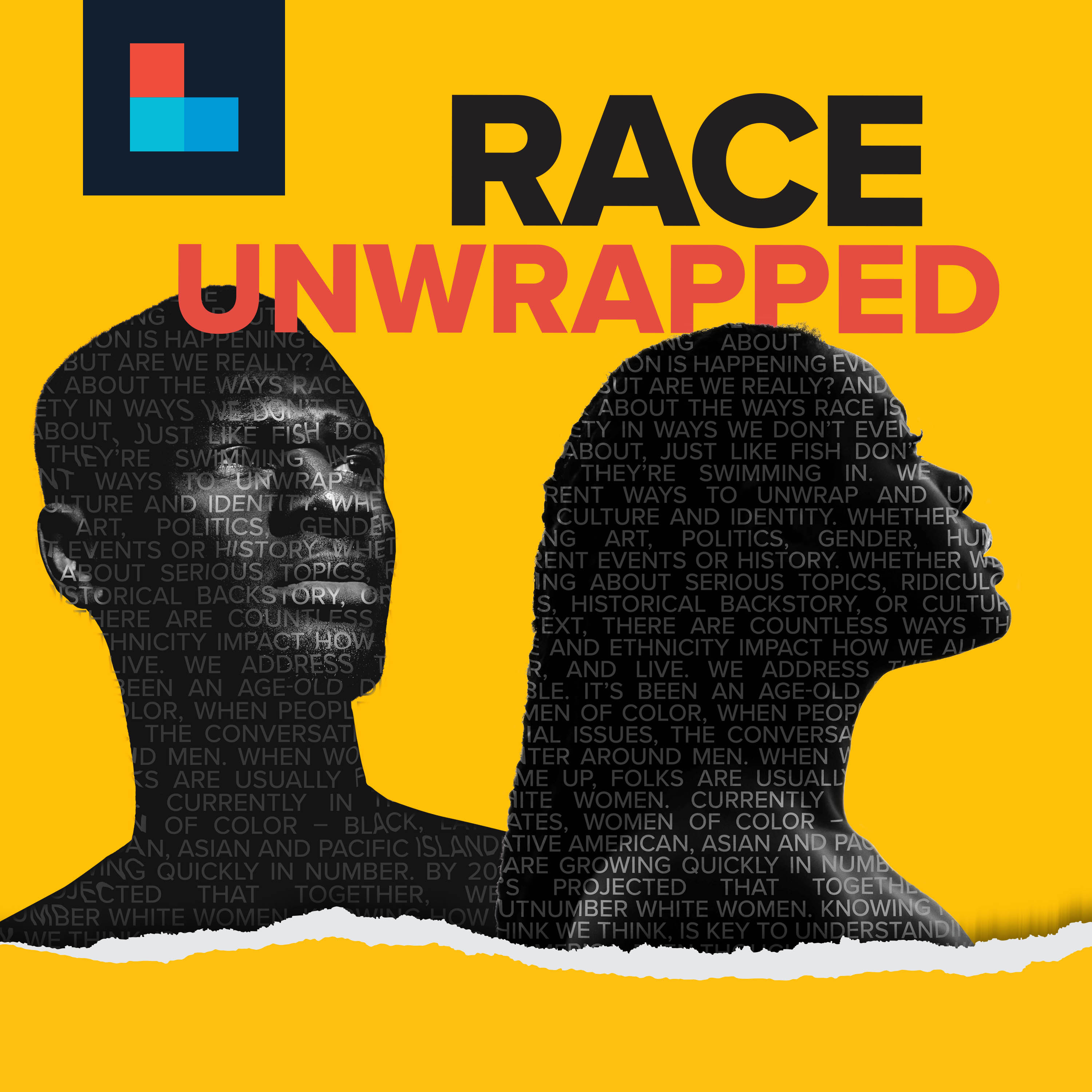
In America, we like to think that we're always talking about race. Like the conversation is happening everywhere, all the time. But race is embedded in society in ways we don't even think about -- just like fish don't see the water they're swimming in. In Race Unwrapped, host Michelle Tyrene Johnson tackles different ways to unwrap and unpack race and identity.
20episodes
Episodes
Newest firstAll episodes
‘Artists are still crossing those boundaries.’ Dr. Minkah Makalani on the legacy of the Harlem Renaissance
2w ago00:32:24Tap to summarizeYou can't tell the story of art and social change without visiting the brilliant minds of the Harlem Renaissance. For Dr. Minkah Makalani, Associate Professor and Director of the Center for Africana Studies at Johns Hopkins University, that's an area of particular interest and scholarship. He joins us to illustrate how the co-mingling of art and politics was present then, and draw a throughline to how artists and creators interact with our political systems today.Learn more about Dr. Makalani’s work here.This season of Race Unwrapped is supported by the Kentucky Center for African American Heritage, and by our listeners. Click here to help make this work possible (and we’ll send you a Race Unwrapped sticker)!
Transcribe →'No longer am I shrinking to make somebody else comfortable.' A conversation with knitting icon Gaye "GG" Glasspie
3w ago00:35:22Tap to summarizeWhen you think of knitting, you might think of a little old white lady in a rocking chair. Our host, Michelle Tyrene Johnson, and her extensive collection of self-made knitwear, would disagree. Or as our guest on this episode might say, "I beg your finest pardon." Gaye Glasspie, known online as GGmadeit, is an icon in the knitting community. She joins us to talk about navigating the fiber arts space as a Black woman, why orange is her favorite and signature color, and her call for would-be allies to “stand in the gap.”Learn more about GG at GGmadeit.com, or on Instagram: @ggmadeitThis season of Race Unwrapped is supported by the Kentucky Center for African American Heritage, and by our listeners. Click here to help make this work possible (and we’ll send you a Race Unwrapped sticker)!
Transcribe →‘Who's telling the story about us?’ A conversation with curator Onaje Henderson
4w ago00:34:07Tap to summarizeSo far this season, we’ve been talking to people who create art. But art also needs an audience — people who receive it, and let it change how they think and feel. So in this episode, we’re talking to someone whose role is to create an environment where folks can bear witness to art. Onaje Henderson is a co-owner and curator of ZuCot Gallery, a Black art gallery in Atlanta, Georgia. He joins us to talk about the world of fine art, and who decides what art we get to see at all.Learn more about ZuCot Gallery at zucotgallery.com, or on Instagram: @zucotgalleryThis season of Race Unwrapped is supported by the Kentucky Center for African American Heritage, and by our listeners. Click here to help make this work possible (and we’ll send you a Race Unwrapped sticker)!
Transcribe →‘The body is telling our own story.’ Ananya Chatterjea on dance and revolution
Jul 800:24:15Tap to summarizeWhen you dance in protest, or to ask for justice, you’re putting your body itself on the line. And our guest on this episode says if you can move, you can dance. Ananya Chatterjea is a choreographer, a dance maker, and an educator. She’s a professor of dance at the University of Minnesota, and founder and artistic director of a dance company of all BIPOC women and femme artists called Ananya Dance Theatre. She lives and works in Minneapolis and her creative work has been part of the racial justice and anti-ICE protests there. She joins us to talk about the methodology of dance that she's created, the spirituality of dancing in community, and how her cultural background infuses her own work. Find more of Ananya Chatterjea’s work at ananyadancetheatre.org and on Instagram at @ananyadancetheatre.This season of Race Unwrapped is supported by the Kentucky Center for African American Heritage, and by our listeners. Click here to help make this work possible (and we’ll send you a Race Unwrapped sticker)!
Transcribe →‘My weapon is my keyboard.’ Nkechi Okoro Carroll on the power of TV
Jul 100:38:25Tap to summarizeTelevision writer, showrunner and Nkechi Okoro Carroll is a strong believer in the power of her medium to reach people’s hearts. “When people are watching TV, they're watching it to relax,” she says. “So their guards are down. Their minds are open. That’s where the beauty and the magic gets to come through.” Carroll is the showrunner and executive producer of “All American,” and creator, executive producer and showrunner of “All American Homecoming” and “Found.” She talks with our host (a proud TV junkie herself) about how real-world frustrations inspired her to create “Found,” about a crisis manager who searches for missing people whose cases have been ignored by law enforcement and the media. This season of Race Unwrapped is supported by the Kentucky Center for African American Heritage, and by our listeners. Click here to help make this work possible (and we’ll send you a Race Unwrapped sticker)!
Transcribe →'I see my work as insistence.' amara tabor-smith reframes the concept of protest art
Jun 2400:36:35Tap to summarizeWhile her work is often rooted in choreography and movement, amara tabor-smith calls herself a performance maker. She’s the founder of Deep Waters Dance Theater and an educator at Stanford University, where she teaches not just dance, but a very sought-after class called Conjure Art 101: Performances of Ritual, Spirituality and Decolonial Black Feminist Magic. Amara challenged us to reframe our entire thinking about art and protest, by moving from resistance to insistence. “Protest… still centers what you’re protesting against,” she points out. “How do we recenter our awareness on what it is that we are wanting to affirm and insist upon?” She also shared her belief in art as a spiritual practice that can shift vibrations around real-world issues, and we talked about cultivating joy, even while we grieve. Learn more about amara tabor-smith at deepwatersdance.com.This season of Race Unwrapped is supported by the Kentucky Center for African American Heritage, and by our listeners. Click here to help make this work possible (and we'll send you a sticker)!
Transcribe →'They know how dangerous it is when artists start cooking.' Playwright Gabriel Diego Hernández on the power of theatre
Jun 1700:42:33Tap to summarizeThere's something so human about live theatre. Real people are telling a story in a shared space, while you share space with other people watching. It’s intimate. For playwright Gabriel Diego Hernández, it’s also a way to tell truths about, and poke fun at, race in the United States. His play “Quarter Rican” explores his worldview as a mixed-race Puerto Rican man and father. In this episode, we talk about the power of the stage to be its own brand of protest, which includes talking about representation. And since our host is a playwright too, they had a lot to say about how we tell stories on stage to make bigger points about the world we live in. Learn more about New Jersey hip hop artist, actor, poet, educator, and playwright Gabriel Diego Hernández on Instagram: @gabriel_diego_hernandezThis season of Race Unwrapped is supported by the Kentucky Center for African American Heritage, and by our listeners. Click here to help make this work possible!
Transcribe →'It's about speaking life into people.' Chelsey Green on musicians as changemakers
Jun 1000:34:50Tap to summarizeThere’s nothing like the right combination of music and lyrics to crystalize a moment... or a movement. It’s why we’re asking every guest this season their favorite protest songs: everyone has an answer to that question, because we all instinctively understand music’s power. In this episode, we talk with Dr. Chelsey Green, musician, educator, and the first Black woman to chair the Board of Trustees for The Recording Academy, the organization behind the Grammy Awards. She helps us unwrap why music, and representation in music, is such a big part of the quest for justice. Learn more about Dr. Chelsey Green’s work at chelseygreen.com.And if our conversation inspires you, let us know what your favorite protest song is at raceunwrapped@lpm.org. We’re making a playlist, and it’s already gooood, y’all. This season of Race Unwrapped is supported by the Kentucky Center for African American Heritage, and by our listeners. Click here to help make this work possible!
Transcribe →'How do I tell the story of the world we want?' Stacey Abrams on writing thrillers to save democracy
Jun 300:22:00Tap to summarizeMost people know her as a political juggernaut. She’s a former minority leader of the Georgia state House, whose coalition building in that state became a blueprint for campaigns across the country. But Stacey Abrams is also a New York Times bestselling author, and NOT just of political nonfiction. Her series of legal thrillers follows protagonist Avery Keene through the inner workings of the U.S. Supreme Court and beyond. And while you’re turning the pages well into the night, you may also start thinking in new ways about democracy and justice. Abrams joins host Michelle Tyrene Johnson to kick off our fifth season, which is all about art as protest.Learn more about Stacey Abrams’ work at staceyabrams.comThis season of Race Unwrapped is supported by the Kentucky Center for African American Heritage, and by our listeners. Click here to help make this work possible!
Transcribe →Coming Soon: Race Unwrapped Explores Art as Protest
May 2000:01:49Tap to summarizeRace Unwrapped returns on June 3, with a season about art as an agent of social change. Over ten episodes, host Michelle Tyrene Johnson will speak with artists of color from many disciplines. Music, movement, literature, poetry, television and more. They’ll talk about how they use their art to foster social change, and how their art form has historically played a role in resistance and revolution. A new episode drops every Wednesday, from Louisville Public Media.Support for this season of Race Unwrapped comes from the Kentucky Center for African American Heritage.
Transcribe →