← Radical Candor: Communication at Work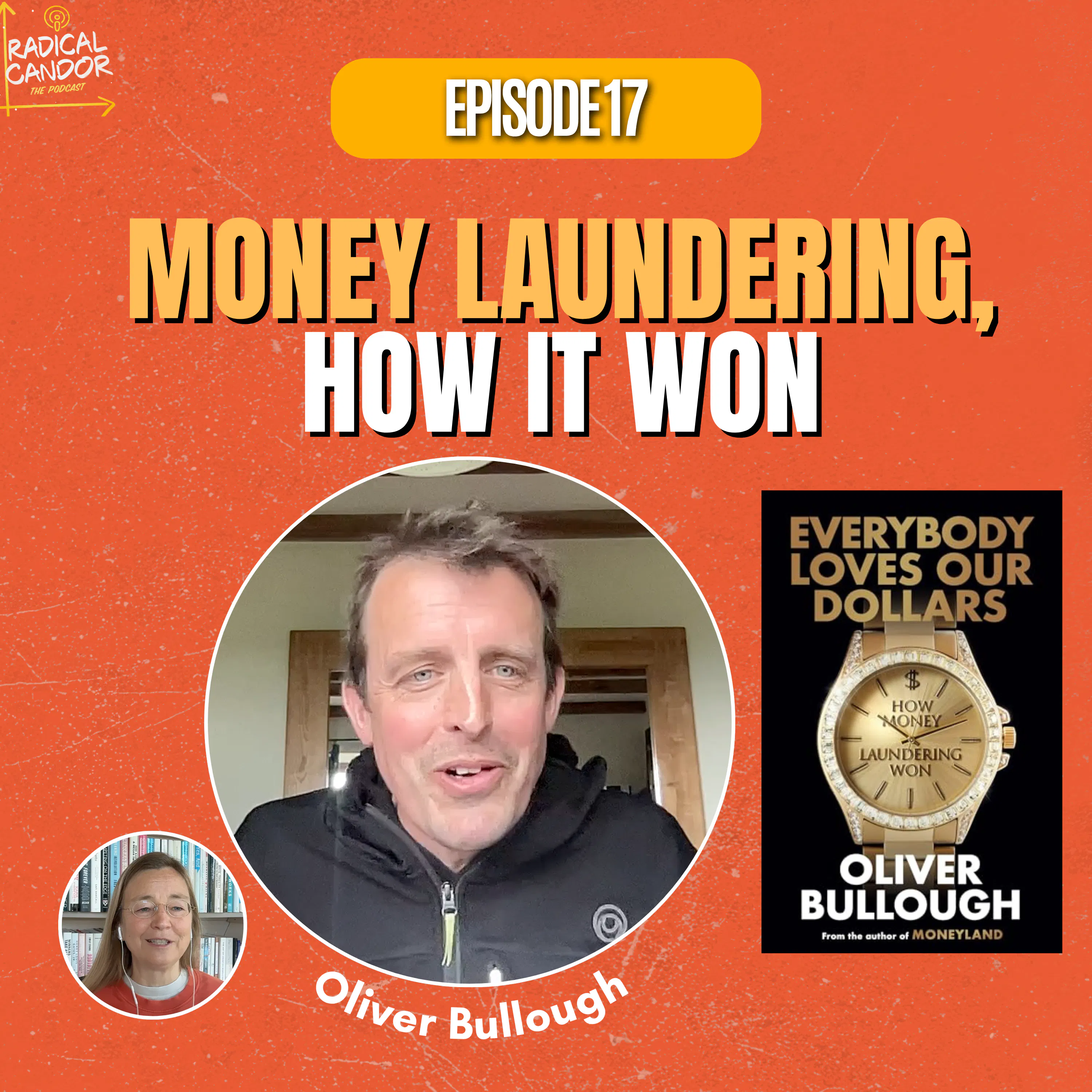
Radical Candor: Communication at Work
Where the World's Dirty Money Actually Goes (with Oliver Bullough)
01:01:40
How Money Laundering Won
Loading summary
Transcript166 lines
- [00:00]
A
Trading at Schwab is now powered by Ameritrade Unlocking the power of thinkorswim. The award winning trading platforms loaded with features that let you dive deeper into the market. Visualize your trades in a new light on thinkorswim desktop with robust charting and analysis tools all while you uncover new opportunities with up to the minute market news and insights. ThinkOrSwim is available on desktop, web and mobile to meet you where you are. It's built by the trading obsessed to help you trade brilliantly. Learn more@schwab.com trading if you've ever blasted synth beats from your boombox or burned CDs for your besties, this one's for you. As people get older, much like their music tastes, their health needs change. AG1 is the simple daily health drink designed to deliver over 75 essential daily nutrients in pre and probiotics to support
- [00:49]
B
energy, digestion and mood so you can
- [00:52]
A
make the most out of every decade and dance break.
- [00:55]
B
Learn more@drinkag1.com foreign. Hello everybody, I'm Kim Scott here with a radical sabbatical. Today I'm talking to Oliver Bululo, who wrote two books that I have read and loved, Moneyland and Butler to the World. And he's got a new one coming out. Everybody Loves Our Dollars. Welcome Oliver.
- [01:25]
A
Thanks very much for having me on the show.
- [01:27]
B
Thrilled that you are here. I have read your both of your books twice and I'm very excited for Everybody Loves Our Dollars. I'll tell you why I love the books and you can tell me if this is a strange analogy, but each of the times I've read your books, the Heart of Darkness comes to mind. There's the scene where the narrator tells the Kurtz's fiance that he's died and she says, what did he say as he was dying? And of course he said the horror. The horror. But the narrator tells her that he said her name and I sort of feel like for those of us who grew up thinking we live in a non corrupt society and things are basically reasonable, maybe there is a sink. You said at one point there's a sinkhole opening up at your feet. So how do you feel about that? The horror. The horror.
- [02:27]
A
Yeah. I hadn't really thought of myself as voyaging up a river to try and retrieve.
- [02:32]
B
No, I think you and I are just the fiance.
- [02:36]
A
Okay. Yeah. I mean, I mean a it's a fantastic book. Obviously one of the, one of the great books. And I think, you know, obviously at the beginning of the Heart of Darkness, it's situated on the River Thames. You know, they're sitting on, on a boat on the River Thames. And then he tells the story about going up the Congo and there's always all the way through. There's that sort of implied analogy between the, the heart of darkness, the river going up into Congo and sort of the, you know, darkest Africa as it was then understood as this sort of unknown, savage, constant. But the, but the parallel that's drawn with the Thames going up into the city of London, which is where the capital was coming from to fund the kind of raping and pillaging of these colonies. So, you know, actually there is a, you know, a real parallel with a lot of how I think about the world about this. The period I'm, I'm sort of obsessed by begins in the 1950s and particularly in the 1960s with the creation of offshore finance. The reinvention of the city of London as a, as an offshore financial centre rather than a colonial centre. The, the development of places like Nevada, South Dakota, Delaware, as, you know, offshore centers, obviously the famous tax havens throughout the Caribbean. And this form of globalized, unaccountable money that became a new phenomenon. We've all become completely accustomed to it, but it was a really new invention in that post colonial era. And so, you know, it does, you know, it ties into, I suppose, what Conrad was writing about because it is that this new iteration of colonialism, you know.
- [04:24]
B
Yeah.
- [04:25]
A
Karl Marx said, you know, that colonialism was the, you know, the last form of capitalism, which I felt quite optimistic of the old guy, you know, the idea that it couldn't get more rapacious. But actually it turned out that it could.
- [04:37]
B
It could. Yeah, yeah, yeah. And you talk a lot about sort of the naughty money and the evil money. So, so talk a little bit about what you mean by the naughty money and the evil money. And then I want to jump you, you're such a great storyteller, so I want to jump into some of these stories first.
- [04:55]
A
But so, so I mean this offshore finance now, you know, is, tends to be talked about in the context of, you know, how the cartels move their money or, you know, terrorist groups move their money. But that isn't where it came from. Across all, you know, tax dodging. Right, Tax dodging and particularly in, in, in the Caribbean, so Cayman Islands, Bahamas and so on. We're talking about Americans dodging taxes and, and, you know, and a sort of surprisingly wide range of people dodging taxes. I mean there's a, there's a, a book with a really Detailed account of how Credence Clearwater Revival dodged taxes back in the 60s, which is so improbable that, you know, they had their own kind of tax shelter. And you know, and meanwhile, on our side of the Atlantic, we had, you know, Switzerland, obviously, Jersey, Guernsey, other tax havens that helped Europeans dodge taxes. And then in other parts of the world, they have different places. So, you know, it's this desire from, you know, wealthy citizens of, you know, the US and European countries to opt out of that kind of new Deal, post war arrangement whereby there was a sort of, you know, more or less social democratic system whereby, you know, people would be supported if they fell on hard times and taxes would be high to pay for that. And there was a sort of understanding that money and democracy were in opposition to each other and we needed to protect democracy from the influence of money. You know, fortunately for the owners of money, they were able to, by using modern technologies, the telex, jet aircraft and so on, to kind of opt out of that by moving their money overseas and outside the reach of their national governments. And this created this whole network of offshore money, you know, in the city of London, in Switzerland, in the Bahamas and so on, which gradually eroded the ability of governments to police what wealthy people were doing. I mean, it's kind of amazing if you look back to the 1960s, what the federal government used to do in terms of controlling what rich people could do. There were limits on, on, you know, the amount of debt you could take out to buy shares, like, really strict limits. There were limits on the interest rates that banks could charge. There were, you know, really ferocious limits on. On, you know, I mean, the taxes were very, very high.
- [07:14]
B
Yeah. Income tax was 91%.
- [07:17]
A
Exactly. I mean, you know, that, that, you know, Beatles song, you know, taxman. You know, it's a marginal tax rate here in the UK at the top rate of 95%.
- [07:26]
B
Yeah.
- [07:26]
A
Which is extraordinary. And then, but then gradually, fortunately for the owners of, of lots of money, they, they got these services offshore which, which dissolved, you know, these restrictions. And that's what I call naughty money.
- [07:40]
B
Yes.
- [07:40]
A
You know, and.
- [07:41]
B
Which had a pretty bad effect. Yeah.
- [07:44]
A
I mean, but, but, but still, I mean, you know, I think you need to make a distinction between tax dodging.
- [07:49]
B
Yes.
- [07:50]
A
And cartels, terrorists, that kind of thing. You know, they are. One's worse than the other. Yes. And so, but it is naughty money creates the pathways. And then the people who were selling the services realized they could offer them to, you know, corrupt dictators, to terrorist groups and so on. And they did. And then that. Then. Then that's when the rock really, really set in.
- [08:12]
B
Yes, yes. So let's go back to your tour of Yanukovych's palace, because you had. There's such good story, so you ask the question, and we got to remind people who Yanukovych was. But. But you ask your guide, how did they let their president get away with it? And he gave you a very interesting answer.
- [08:33]
A
I mean, so to put it. Put it in context, I'm. I'm a Russianist, really, by inclination. I don't live in Russia anymore for fairly obvious reasons, but I lived in Russia for seven years or something. I traveled there a lot, even after I left permanently. And I'm very. Traveled very widely in the. In the old Soviet empire. And I became, well, fascinated after the 2014 Ukrainian revolution by the fact that there was this sudden window when no one really knew who was in charge. In fact, no one was really in charge. It was just sort of. If you. If you were sufficiently confident and you had the chutzpah, you could get away with almost anything, which, I mean, and
- [09:16]
B
you could go anywhere and see anything.
- [09:18]
A
I mean, the Russians famously took advantage of this to annex Crimea. I took advantage of this to just go and poke around all the president's palaces he had. President of Ukraine, Victor Yanukovych had been astonishingly corrupt, you know, a really.
- [09:32]
B
And he was a Russian puppet, basically.
- [09:34]
A
Well, I mean, he was a kind of. I mean, he was Russia allied, but he was. He was his own kind of thug as well. He wasn't just a bought thug, you know, he was a thug on his own account. He was just a nasty piece of work. His press secretary. His press secretary once bit me, which is the only time I've ever been bitten by a person.
- [09:50]
B
Oh, my God.
- [09:51]
A
Yeah, it was. It was very weird. Quite painful.
- [09:53]
B
Why did he. But wait, wait, wait. I didn't. I don't remember this story.
- [09:58]
A
No. She. She was trying to stop me asking a question and trying to hold me back, but I was stronger than her, so I was just pushing forward. And so in order to try and prevent me from getting to him, she. She bit me really hard on the shoulder. So anyway, that. That. That kind of gives a. A bit of. A bit of a sense of the. Of the General Yanukovych vibe.
- [10:15]
B
Right?
- [10:15]
A
But. But he had fled the. This popular uprising and leaving behind stuff he couldn't carry, which included his palace, which was a sort of. It's a log cabin, but a log cabin on, you know, Monstrous steroids, I mean, of an astonishing proportion, sort of, you know, set in a park that had stolen, with all these kind of temples. He had a kind of like a kind of cod Spanish galleon thing down by the water, which, you know, where they hung out, there was a, an enclosure for shooting wild boars. They'd bring in wild boars and put them in this enclosure and then kill them. It was just grotesque. And, and then he also had a hunting lodge in a forest outside Kyiv. And, and I went there with, with one of the revolutionaries who was also interested in this stuff and we were just poking around and that was, I mean, it was a slightly less tasteless, but still pretty grim. Um. Yeah, and, and that was when I said, you know, it was so extraordinary, you know, that these, these palaces, it wasn't like they were hidden behind high walls. You could see them, you know, it was pretty obvious what was going on. And. Yeah, and I said, you know, yeah, how did you let him get away with this? And, and he replied, you know, in a degree of, of, you know, I mean, not furious, but with a degree of crossness, he said, you know, listen, we didn't know what was happening. You know, this, this, you're not even standing in Ukraine at the moment, you're standing in England. Look it up. And I didn't really know what he meant by that, but I went back and I did look it up. And you can look up on the, on the registry of who owns what. And indeed, that piece of land was owned by a company which was registered in London. It was open owned by a completely legitimate looking company, registered on Harley street, which is a really, you know, pretty posh street in central London where, which is famous for private healthcare and just off Oxford Street. And, and then that was in turn owned by a foundation in Liechtenstein. And it was all completely opaque and murky. You couldn't tell who owned it. But, but what was amazing about it was this was the first realization that for me, that Ukrainian corruption isn't Ukrainian, it's global. That it uses all the tools of the global financial system. And you can't understand it as a Ukrainian phenomenon. You need to understand it as a global phenomenon and as this outgrowth of this, you know, incredibly complex, murky, ever shifting financial system that allows people to hide their money and move their money and spend their money without anyone knowing what they're doing. And Yanukovych had been deeply plugged into this. But he, you know, he was a thug, you know, a mob boss. He didn't know how to structure a shell company.
- [12:52]
B
Right.
- [12:53]
A
And he had. But he had all these people, you know, lawyers in. In the UK and Austria and places who did this for him, you know, famously political consultants, you know, from the us who were helping him win elections. He, you know, he was a. Basically, he had bought all these services, kind of corruption services, and embedded himself in the global economy. And it was the first insight I had really into how modern corruption, you know, what we call kleptocracy, how that works, the extent to which this is not the old kind of corruption where there's just a deal between someone pays a bribe and someone takes the bribe and you. You slip it in their handshake or you give them a brown envelope or whatever. It's not that this is talking about huge amounts of money moving via bank accounts in totally different countries, all of it owned by shell companies that you never know who owns it. And. And it's completely unaccountable. And. And that was that. It just appalled me and fascinated me and I decided to try and just understand what was going on and how this had happened and how this was possible and what it meant. And so that's what I do now. I mean, it's, you know, I thought it would. To be honest, it's quite funny looking back at it now. I thought that what I was describing was so appalling that the only reason it could possibly exist is. Was because people didn't know about it. Right. It was just. It wasn't possible that this could be tolerated. And I kind of assumed a lot of the problems would be solved before I could finish writing the book. But then.
- [14:21]
B
Yeah. And you, you, you probably had no idea. It's like up upwards of 10% of the wealth of the world is in these. Yeah.
- [14:31]
A
Out there somewhere.
- [14:31]
B
And there's all kinds of, like, reasonable seeming, you know, lawyers and accountants and clerks, like, supporting all of this.
- [14:40]
A
Yeah, yeah. But it's, but it's, you know, the. But the impacts are extraordinary and dreadful.
- [14:45]
B
Yeah. Yes.
- [14:46]
A
So, yeah, I naively assumed all I had to do was write a book and then someone would read it and
- [14:51]
B
then everybody would say, oh, this is horrible, we'll fix it.
- [14:55]
A
Yeah. Yeah.
- [14:56]
B
Not.
- [14:57]
A
Not so much now. And then I wrote another book and again. And now I've written another book and I mean, it just carries on. It's a very lucrative business for, for a lot of people in, in both of our countries in the UK and increasingly now the us.
- [15:15]
B
Well, I think always in the. There. There's. We. I interviewed David Gellis a few weeks ago, who wrote a book called Revolt of the Rich about how a lot of this stuff started getting legalized under Nixon and Carter. And then of course, Reagan and Clinton really opened up.
- [15:35]
A
I mean, so, so, but one thing, one thing the US has always been very, very good at. There are some ways that the US is sort of behind European countries in, in the kind of direction I'd like to go, so, particularly around transparency of shell company ownership and stuff like that. But there are other ways in which the US was traditionally miles and miles ahead, and that was particularly around investigation and prosecution of financial criminals, partly because of the history of prosecuting the Mafia, but, but for lots of reasons, the US Was always way ahead of European countries on that. You know, that has sadly declined and particularly with the developments around crypto currencies. Now the, the, the US is pioneering a whole new financially innovative form of corruption and money laundering, which I don't think understood the consequences of.
- [16:31]
B
Yeah, and probably more like 60% of crypto is this kind of evil money, not just naughty money in.
- [16:38]
A
It's. Yeah, I mean, it's, it's hard to say because crypto, there are lots of different kinds of crypto. So, you know, people use it for speculating and I suppose that's, I mean, it's a bit pointless, but fine, people use, people use it for straight fraud and then there's people who use it for money laundering. And there are different kinds of crypto being used in different ways, but, you know, it is, it's certainly enabling an incredible growth of particular kinds of crime, particularly fraud. You know, these things like these romance frauds, you know, what they refer to as pig butchering scams, which are growing, you know, inordinately in, I mean, all over the world.
- [17:18]
B
And so explain, explain a pig butchering scam for folks who have been fortunate enough not to read about it yet.
- [17:26]
A
Sort of. All of these scams, they all kind of work in a similar way, which is that someone will reach out to you via social media or over the telephone and will find a way to you from your money. They might claim that your computer is at risk and then you need to move your money to a safe bank account, or they might pretend to be in love with you and that you need to give them money to pay for the visa. Or, or they might claim it's an investment opportunity or whatever, you know, it is, it's very, very sophisticated and, and you know, and it is an industry which is run, you know, in a centralized way by very, very sophisticated organized crime groups. But what's particularly dark and distressing about it is that a lot of the people who are actually contacting you to claim to be in love with you or to claim to have an investment opportunity, they are also victims. They have often been trafficked to be imprisoned in compounds surrounded by barbed wire. And if they step out of line, they get zapped with cattle prods and so on. So there is victims all the way down. These are trafficked people who are defrauding vulnerable people. And all of this is enabled by the ease of moving money in cryptocurrencies. There are huge growths of these kind of scam compounds, particularly in Southeast Asia, places like Cambodia, but also in other parts of the world. You see it in Georgia, for example, in other places, too. And this is how modern criminality works. It's so easy to move money and, and so hard to then find it or, or to recover it after it's been moved that basically you, you know, there's no disincentive for the criminals. They're never going to get caught. They're never going to get prosecuted.
- [19:21]
B
Yeah. And. And then the. The investigatory arms of government are either being disinvested or corrupted themselves.
- [19:31]
A
Yeah. I mean, you know, in. I mean, in the US which is the only country that really ever investigated this stuff much to begin with, there has been definitely a. An effort to push efforts away from that kind of work and in. In other directions. But then, you know, over on our side of the Atlantic, we never really did it in the first place very much. I mean, it's been, you know, it's been a source of sort of shame for a long time that, you know, none of these kleptocrats and oligarchs who, who established themselves in London and bought property and, and everything, that none of them ever get prosecuted.
- [20:07]
B
Yes.
- [20:08]
A
You know, this is a very safe place for them.
- [20:11]
B
Yeah. Yeah. Well, hopefully you're going to change all that, Oliver. No, no pressure. So talk about Woodbury Grove, where Manafort, like in your. Your description of going there was so fat. It's like, you know, the banality of evil kind of.
- [20:30]
A
I mean, it is. You know, one of the things that's always quite entertaining about doing this work is how. Yeah, like you say, how banal so much of it is. You get in your head, particularly if you've read about these places on paper, the idea that these, these, these particular addresses are kind of, you know, they're sort of almost, you know, epic destinations of criminality. And then and so Woodbury Grove was the home of a company formation agent that was used by Paul Manafort to hold some of his business interests when he was operating.
- [21:06]
B
And Manafort supported Yanukovych, Right?
- [21:09]
A
Manafort supported Yanukovych and was, of course a Republican operator in the US of great controversy. But yeah, Woodbury Grove was just a really dull office building. I mean, just like of the, of the fourth rank, you know, you know, good. A really quite substantial walk away from the final stop on the Tube line on the Northern Line. You go all the way to the end and then you keep walking for 15 minutes and you finally turn off the main road onto this side road and you find this squalid little office block. And that was where his companies were. But it was a sort of, you know, just one of these funny things. You know, you've got a few hours spare. Why not go and have a look and then, and, and you know, and you get there and all of your visions of the sort of, you know, the, the, the glamour of crime are just dispelled because you could, you know, you could imagine there are some poor people working in there for the minimum wage doing this menial drudge work, you know, but, but the crimes that they're enabling are, you know, world class are huge. And you see this again and again. I mean, you know, so many of these, you know, company, company formation places are just like that. I mean, you go to the British Virgin Islands, which is a, you know, a major center of shell companies used in, in crimes all over the world. And it's, and it's similar. I mean, it's perfectly nice. But, but these are just boring office blocks with just boring work being done in them, you know, and everything. There's the glamour just, it's just not there. There's nothing. I mean, I, you know, I, you know, have the same in, in, in Nevada. Talking to a company formation guy in Nevada, and he just lived in a. Yeah. You know, in attractive houses next to, you know, sort of about 45 minutes drive outside Reno. And. Yeah, and there was just nothing there. And that's what's so weird about it all is it's just these multiple nodes in this system, none of which are really very interesting in and of themselves, but collectively they add up to this incredibly potent kleptocratic wealth moving machine. And, you know, and the amount of money involved is just, you know, awe inspiring. I mean, you know, the effort. People who try to estimate how much money is laundered every year, you know, it could be up to $5 trillion. You know, that's a. You know, if you.
- [23:27]
B
If you.
- [23:28]
A
If you had a trillion dollars and you wanted to, you know, to try and count them, that would take you 30,000 years, you know, so, you know, $5 trillion is 150,000 years worth of counting of individual dollars to get to $5 trillion. It's so much money, and it's all of it moving through these kind of banal places like Woodbury Grove.
- [23:46]
B
Yeah. And I think it's part of what makes it hard to understand. I mean, the. The combination of evil and boring is real. It's hard to penetrate the boring parts in order to elus. To illuminate the evil parts. Yeah, but, like, what. Go ahead.
- [24:02]
A
I mean, I was going to say just partly, it's very well defended. You know, there is a. You know, there is a whole industry of people whose job it is to prevent you writing about stuff.
- [24:12]
B
Yeah.
- [24:13]
A
You know, I had a. In. In my. My first book about money. I wrote a couple of books before about Russia, but my first book about money, Moneyland, you know, I wrote about this reality TV show, say yes to the Dress, which is just in case the listeners haven't ever watched it. I highly recommend it. It's fantastic. And it's set in a bridal boutique and brides go in, you know, three a week, and they buy their dresses and they look fantastic. And it's. There's drama and tears and, you know, and all the. All the stuff you get around a wedding. And there's, you know, one episode when they have these vip. VIP brides with unlimited budgets. And it's all very exciting because there's so much money involved. And, you know, one of the VIP brides is introduced as, like, being like a. Almost a princess from Angola. You know, she's got so much money and. And every penny she spends is. Is, you know, marked up on the screen. You know, it's like, you know. Yeah, whatever it is.
- [25:10]
B
Yeah. And everybody's celebrating it. Nobody's asking anything.
- [25:13]
A
Isn't this great? And isn't she going to be happy? And doesn't she look beautiful? And. And don't her bridesmaid look amazing? And, you know, fair play. They do. They look great, if you like that kind of thing. It's a bit. It's a bit over the top for me, but. Okay.
- [25:23]
B
Yeah.
- [25:24]
A
And then what was wild about it is then her father, who at the time was the vice president of Angola, sued me for having revealed you. Yeah, sued me in. In Portugal and. And in. And in Germany, and they also tried to sue me in Scotland. That didn't amount to anything for having exposed, you know, this and presented him as a bad person. But I was just, you know, as I was telling the. The judges who fortunately decided that he. I had no case to answer and that he should go away, that I was saying. I didn't. This is not investigative journalism. I didn't do any investigative journalism.
- [26:00]
B
It was a TV show episode of
- [26:02]
A
say yes to the Dress. Like, like, you know, I'm not. There was no whistleblower threw the whistle on herself by doing this on television. And.
- [26:11]
B
Yeah.
- [26:11]
A
And that. But what was so strange about that was that, I mean, that it took years for this case to finally wrap up and, and, you know, there was all these lawyers who were willing to take his money to find a jurisdiction where he could bring this case and, you know, and to. And to try and sue me for having revealed his secrets, even though the secrets had already been revealed. And, you know, and that, you know, scaled up. You see that again and again and again. You have to be. It's something that a lot of American journalists don't really understand because it's a different tradition. But in. In. In Britain and other European countries, the libel laws are really strict, and you have to be very careful about what you're saying and how you're saying it, because not so much because you think you might lose a case, because you can be very confident in the work you've done, but just the expense of fighting a case means that you're just bankrupt before you even begin. And this whole industry is built up to protect the money in Moneyland from being exposed. And it makes. It makes it quite difficult to try and do the work I do.
- [27:17]
B
Yeah. I mean, and in that case, you won. But there was another case when you were following another. An oligarch's child, and you spent two years investigating.
- [27:27]
A
Yeah.
- [27:27]
B
A case. And you were not. And you were not able to publish it.
- [27:32]
A
Yeah, that came.
- [27:33]
B
I don't know what you can say about that, but it was.
- [27:36]
A
Yeah, that was a dispiriting case. There was a, you know, a. A oligarch, you know, being generous, calling him an oligarch. I mean, you know, there are ruder words you could use and, and, you know, and he had. He had made his money in lots of ways, but including in the sale of knockoff designer clothes in. In colossal quantities. So. Fake designer clothes. Yeah, including, like, Dolce and Gabbana or the brands that you would expect.
- [28:03]
B
Yeah.
- [28:05]
A
And. And it was amazing. Because I figured out who his children were who were living in Western Europe very happily and spending daddy's money. And one of them, his daughter, was living this very luxurious life and had a, you know, she shared a lot of stuff on Instagram, including photos of her selfies, actually, with Dolce and Gabbana. Like the people and Dominique.
- [28:28]
B
Why are they, why are they supporting her?
- [28:31]
A
Well, because she, she was, you know, she was buying clothes and she was at fashion shows and she was in that.
- [28:36]
B
But her father is like, robb them.
- [28:38]
A
But that's the thing. They didn't, they didn't know, obviously. I mean, she's just a rich person. But it was this sort of amazing connection between the fact that you're making money by essentially ripping off Dolce and Gabbana and spending the money on actual Dolce and Gabbana. And, you know, and it was. Anyway, that piece, sadly, that, that, that, that piece never, never got anywhere because of the, the legal, legal risks. And it was one of one of several that never really, never really made it, which can be frustrating, but it's just part of the work really. And I'm trying to figure out my way around it.
- [29:13]
B
But that is the story, like, I think celebrate every time you get, you know, shut down. Like you build a case. Why you need to change these libel laws.
- [29:23]
A
Yeah, absolutely.
- [29:25]
B
So I have another question for you. You were 13 years old in 1991 when there was. The Soviet Union had already collapsed and then there was this coup. So why at age 13, were you so fascinated by, by the coup in Russia and the collapse of the Soviet Union?
- [29:47]
A
It's always been a great source of mystery to my family. I grew up in, in, in mid Wales on a sheep farm in mid Wales. And yet I always had a apparently irrational and, you know, kind of from nowhere obsession with Eastern Europe in general, in Russia in particular. I read lots about it. I used to listen to the radio. I remember we went on a. On a sailing holiday in, off the coast of Scotland, and that was when the coup was happening, actually. And we didn't have a radio on the boat or television or anything to follow the news, but we did have this device that you used in a fog to find radio beacons. And, and it was very directional. So you put headphones on and you would point it and it would find the, the pulse of the radio beacon and you could keep it pointed and see what the, what the compass bearing was. And I figured out that you could point this thing and find radio masts in the mountains and point it and if you kept it very still, you could listen to the radio, which isn't what it was supposed to be for. So, you know, I'd be there desperately trying to hear the news from Moscow. This is such a nerdy thing. You're all right. And I'm listening to the news to Moscow. And then the boat would move and I would lose my position, and I'd have to find it again because it was very, very, very precise. So, yeah, I was always just obsessed by. By Russia, Eastern Europe. And then in the 1990s, you know, as you remember, I mean, you were there. It was just one thing after another. Coming from Eastern Europe, it was so. It felt like the cockpit of history. And there was this. This real opportunity to. To go to Russia and see its transformation, you know, from dictatorship to democracy. It just felt so exciting, you know, you'd never have that opportunity again. It was like being able to go to, I don't know, Germany in. In the 1920s or something. Just so exciting. And. And, yeah, so I did. I. I arrived in Russia after university in the autumn of 1999. And I mean, they'd just appointed a new prime minister. They were going through the prime ministers a lot in that day, but his name was Vladimir Putin. And, yeah, he's still around. And so I never knew Russia before Vladimir Putin, but I did see what he did. I witnessed, you know, his gradual. You know, it was gradual the way he reshaped the country to his specifications in, you know, more or less brutal ways. And so that. And then he. The way he enriched his friends.
- [32:23]
B
Yeah.
- [32:24]
A
I'm always amazed by the way that there are still purportedly leftish politicians in. In Western countries who talk about the Russian regime as if it's somehow admirable. Yeah, this is a regime so, you know, so capitalist. It makes, you know.
- [32:40]
B
Yeah.
- [32:41]
A
What's happening in. In the United States look. You know, look like North Korea. I mean, it's just the degree of. Of brutality is extraordinary. That. The way that they will just. Just steal and rob everything.
- [32:54]
B
Yeah.
- [32:55]
A
So, yeah, I got a real insight into that early on. I mean, I didn't stop loving the place. I still. I loved living in Russia. It was fascinating. I had very, very good friends and I had traveled very widely, had a great time. But, yeah, it's a difficult story to tell because it's quite depressing.
- [33:12]
B
It is very. And it started out with such optimism. So I got there in 1990. I was there 90 to 94. And when I left, I left because I picked up the paper One day and I read about. And by the way, this is a lot of what happened there then was fueled by American neoliberalism. Like, oh, just privatize. Once you get all this money into private hands, it'll be fine. It was not. It was not. That's the. But. But there was one. There was one banking group competing with another, and they beheaded their competitors and left people's heads, the bankers heads on stakes in a suburb of Moscow. You. And I remember thinking, oh, I have to leave. I have to go back home where it's safe, you know. And so I went back to the States. I went to business school.
- [34:10]
A
I don't know if you've, if you come across. Did you know Jameson Firestone when you were in Moscow? Do you know Jameson?
- [34:16]
B
I did not. I did not.
- [34:17]
A
He's written, he's written this book. He's. He's a. There's a. I mean, it's terrible case slightly later. Guy called Sergey Magnitsky, who was, yes, tortured there. So Jameson was his employer. Um, and he, he. So he moved. I mean, he has a wild and amazing life. If ever you're looking for a fun guest to have on the podcast, I'd really recommend him. He, he, he moved to Moscow in, in the same time as you, basically, and, and then established a legal practice which persisted until it became impossible because they'd tortured his lawyer, his colleague to death and he had to leave. But he's a lovely guy. Um, but, but yeah, the similar stories to tell as you in terms of just the, the insanity of, of that time. Yeah, I can remember I was, I first lived in St. Petersburg and, and there was one of the tabloids had a, A feature, the Assassination of the Week. And you know, that was just. I mean, I can remember really clearly there was one guy who was the business director for a beer company and had been in the kitchen of his apartment feeding his children and just been shot by a sniper through the window. And, and just. I just think, how is this. What. Yeah, what's going on? You know? Yes, it was very like that. Strange times.
- [35:27]
B
Yes. Yeah. And I, I was talking. I think part of the reason why it's important to read about what happened then and there is. And what is happening then and there now is because I was talking to someone, you know, who had covered the, the presidency in the United States for a long time, and she said, oh, it, it really can't get any worse. And I was like, oh, yes, it can get so much worse if we don't. If we don't do something.
- [35:55]
A
I always get very frustrated by that expression that it can't get any worse. It's like, you've got no idea.
- [36:02]
B
Oh, yeah, you have no idea. I mean, hopefully it won't. Hopefully we'll stop it, but it will get worse unless we do something. And we had done something in, after, after World War II to prevent this from happening a good. Again. And that was Bretton Woods. So get a couple of minutes on Bretton woods and then we'll move back into Moneyland. But I mean, the Bretton woods kind of closed the sinkhole.
- [36:26]
A
So, I mean, Bretton woods is an amazing time. I mean, it is a, it's a place in New Hampshire. So, I mean, you know, that, that's the place where this arrangement was agreed. It's always referred to as the Bretton woods system, but, you know, it's not actually Bretton woods, but the.
- [36:40]
B
Yes.
- [36:41]
A
So there had been obviously a degree of soul searching about what had caused the Second World War, like why you had one World War and then shortly after you have another one. I mean, they'd really, really messed up and they'd come to some pretty, you know, profound understandings of the connection between the sort of irresponsible finance that led to the Wall street Crash of 1929 and the Great Depression and the rise of fascism and nationalism and extremism, you know, and, and they had a, you know, a real desire to prevent that from happening again, essentially, you know, to, to make democracy safe from money. Yeah, you know, the, the, you know, this, the idea that, you know, money is, is power and, and it isn't. You can't have democracy if some people have more power than others. So you need to try and, and make that, to create a degree of fairness. And, you know, and it was all part of that, you know, the New Deal system of. And which spread, you know, to the, you know, the Great Society and all that. So those kind of ideas about creating a new kind of democracy, which is for everybody, Right. And really what they did was to, to severely limit the ability of the owners of wealth to move it around the world. You, you could move money, but you needed to have permission to move it from one country to another. Money essentially was a dollar didn't really make sense outside of the United States, or a pound didn't make much sense outside of the UK or at the time, what was left of the British Empire, you know, and so that essentially meant the owners of wealth were. Their wealth was subject to the laws in which that wealth was Generated, that wealth was generated, and therefore there was a democratic accountability.
- [38:31]
B
Right.
- [38:32]
A
And it was, you know, for a time, an incredibly successful system. If you look at, you know, most indicators in terms of your economic growth, equality figures, you know, everything was moving in the right direction while Bretton woods existed.
- [38:50]
B
Yeah. Economic growth was twice in that period what it is now under neoliberalism.
- [38:56]
A
You know, I mean, let's not pretend it was a perfect period. I mean, you. Obviously, the civil rights battles in. In your country and mine were. Were severe.
- [39:04]
B
Yeah.
- [39:04]
A
And, you know, so equality was very much not for everybody.
- [39:08]
B
Yeah. There was the color of law. I mean, it was. Yeah.
- [39:10]
A
But I do think that that, you know, the. The direction of travel was positive, I think, in most places. So. And that was threatened, very threatening to the owners of wealth and particularly threatening to people who made money from moving wealth around. And this is why the invention of offshore finance, the invention of a system that allowed you to keep your wealth outside of your country, essentially to give a dollar, meaning outside the United States, they created something called the euro dollar, which is essentially an IOU for a dollar. It isn't an actual dollar, but it says, I owe you a dollar. And as it turns out, an IOU for a dollar is basically as useful as a dollar if you. If you're, you know, just using it to buy things with. It's kind of what they're doing now with. With some forms of cryptocurrency. They've kind of done that again, dollar denominated.
- [40:07]
B
Yeah.
- [40:08]
A
Yeah, exactly. They now have an IOU for an IOU for a dollar. So it's actually like. It's almost even further away. But. But that system, the offshore finance, the euro dollars, then bond market that sprung up for the euro dollars, essentially allowed an unaccountable form of wealth to appear, which then could be filtered back into the original countries and gradually to buy influence to undermine the restrictions. And you see that throughout the 1970s and then into the 1980s, the restrictions on what you could do with wealth, the restrictions on what big banks could do, all of this begins to be, you know, liberalized, deregulated, and all the nice words that we have, you know, and that system, the kind of, you know, associated always very closely with Ronald Reagan and Margaret Thatcher, also Helmut Kohl in West Germany. That system of essentially freeing wealth to move around the world to do what it liked was, you know, was a response to the fact, a legal response to the fact that de facto, that had already happened because of offshore finance. You were already able to do that if you wanted to. So they were just, essentially the governments were just catching up with what the bankers had already allowed to happen. And then the effect that this had on Western countries was not great, but we at least had developed institutions which were able to withstand the sort of inflow of corruption. But in countries with weaker institutions, so former colonies in sub Saharan Africa, particularly the republics of the former Soviet Union, when they became independent, it was devastating because you had no institutions able to withstand the corrupting effect of this kind of money. You know, the oligarchs in Russia who, thanks to the various advisors from the US Got to privatize everything very quickly. You know, they were able to move their wealth out of Russia immediately and move their wealth to keep it in London or Switzerland or whatever, which meant that they were not accountable to anybody. They could keep stealing and keep doing what they liked. And. And there was none of the. The. The idea behind the rapid privatization was it would. Would eventually create the rule of law. It did the opposite. It just created predatory class who essentially colonized their own country. And this is the. The effect of offshore finance. And, and what I think we're seeing now is that corrosive, corrupting, sort of criminogenic effect of that money, which we saw the impact of it on places like Russia and Nigeria and so on. I think we're beginning to see the impact of that on Western countries, too. We're seeing it in. In the US In a lot of European countries. And that's a real worry, you know.
- [42:50]
B
Yeah, it's. To you. You had this great analogy of the oil tanker and, you know, and all these. Explain the oil tanker analogy, all these compartments. But it feels like now there's enough money sloshing around that might sink even the formerly stable places.
- [43:07]
A
Yeah, I mean, I'm. I'm always. I'm always quite guilty of coming up with quite hokey metaphors because it actually,
- [43:14]
B
it was really good.
- [43:16]
A
It actually helps me to understand when I'm writing it, because I'm not an economist, I'm a journalist, so it helps me to understand. But. But the, the idea of the Bretton woods system was that, you know, that there had been. The world economy had been like an oil tanker. If it gets into a storm, it. The oil. You know, with one big tank, the oil sloshes backwards and forwards and it picks these big waves inside the boat and they get so. So powerful, the boat waves inside the boat that they can essentially, you know, make it fall over and sink and collapse. So what they did by. By Keeping money locked up behind national borders was essentially create compartments within the hull of the oil tanker so the oil could still slosh about, but it can slosh about a small amount and not sufficiently to. To harm the integrity of the whole vessel. That's what, you know, essentially that was my metaphor for what they tried, which was very helpful. Prevent the oil from sloshing from one end of the boat to the other and basically sinking it. That was what they were trying to do. What was done with the creation of Offshore finance was to create essentially drill holes in those partitions to allow the oil to go back and forth unmonitored, uncontrolled, and do what it likes. So you ended up with. Initially those holes were quite small, but then they get bigger and bigger and bigger, and then, then the partitions are abolished altogether. And so you end up with a situation like we have now with the money which is sloshing around in the same way that it did in the 1920s. Yes.
- [44:36]
B
Or maybe even more so. Yeah.
- [44:38]
A
Because we're not. We're not. It's not moving, you know, by letter now. It's moving by, you know, instantaneous, you know, and, you know, I mean, it's kind of extraordinary how, you know, we talk about the impact of artificial intelligence. You know, the impact of artificial intelligence on corruption is a whole new model. I mean, I was talking to a bank compliance guy last year who had seen coming out of Vietnam a whole sequence of transactions that individually looked completely normal, like totally normal. But then when they trained their new, new amazing AI model on them, they could see that all these transactions were actually related, that it wasn't possible that they could be moving this kind of money in these sort of related ways without a single controlling intelligence, that this had to be actually one gigantic money laundering scheme. And they were amazed because it was only possible for them to find this with artificial intelligence. And they were like, isn't this incredible? Isn't AI wonderful? And then they thought about it and looked at it and they realized that this scheme was so complicated it could
- [45:39]
B
only have been their AI versus RA
- [45:41]
A
yeah, like the robots are fighting the robots, you know, and. Yeah, and so they cancel each other out. So we just end up back, back where we began. And that's the way with all these sort of great new innovations. Yeah, they're always equally of use to the criminals as the law enforcement agents. In fact, probably of more use to the criminals because they adopt them quicker.
- [45:59]
B
Yeah, yeah. So steal, hide and spend is speeding up. I will help you steal, hide and Spend.
- [46:07]
A
Absolutely. And I combined with crypto, I mean, you know, we have this, the amazing phenomenon of these prediction markets now, which is, you know, I mean, it used to be that corruption was, was quite, you know, it was quite sort of retail. You know, you, you wanted to do something, I demand a bribe. You know, I can use power, but I can only use it on a case by case basis. The amazing thing about a prediction prediction market is it kind of wholesales corruption. You know, I can use the knowledge, the preferential knowledge I have all the time. And you know, prediction markets are being, you know, you can, you can use crypto to bet on them. You can obscure the wealth, move it around.
- [46:45]
B
Yeah.
- [46:45]
A
And it's, it's extraordinary how that's happening. I mean, and, and again, I mean, going back to the concerns that I have and many Europeans have about what's happening in the US at the moment, you know, it's extraordinary that Donald Trump Jr. Is an, is an advisor to both Polymarket and Kalshi, you know, yes. Vicious competitors with each other and yet they both have this, you know, they're united by the fact that they both, you know, have a good friend in Donald Trump Jr. And you see this, you know, across the crypto space as well about, you know, that the involvement of the First Family or, or the family members of senior administration officials, it's really alarming and quite, quite, you know, radically new.
- [47:27]
B
It's, yeah, and, and just blatantly corrupt. And Richard Palmer, the CIA Chase station chief, you said like back in, what was it like, 99, he warned that profits from theft due to offshoring were going to be a threat to the stability of the U.S. he was right. How did he know back then?
- [47:49]
A
Well, it's really interesting that actually I do think, I mean, going back to Russia and I know, you know, there's a bit of a risk of thinking if all you've got is a hammer, every problem looks like a nail. You know, if all, you know is Russia, you just think Russia is this answer to everything. But, but I do think that there are, that there is a lot of value in looking at what's happened in Russia as a sort of canary in the coal mine, to use a rather tired metaphor for the rest of the world, that the way that democracy was undermined in Russia does present a playbook for other authoritarian minded governments to do the same thing. I mean, I have a good friend called Peter Pomerantsev who wrote a fantastic
- [48:31]
B
book, such a great book.
- [48:32]
A
And you know, and he's a, you Know, he's a very gifted writer and a very, you know, clear thinker about this kind of stuff. But, but it's, I think it's absolutely right that the, that the, the erasing of sort of trust and the erasing of belief in truth and really goes hand in hand with corruption and the undermining of the rule of law and legal norms and so on, you know, and they make it all easier and they, they confuse everybody and they make it really hard to know, you know, what's true and what isn't anymore. And that's just a great environment to be corrupt because then, you know, you can get away with, with so much more. And so I do think that, that there's a lot to be said for, for reading around what's happened in what Happened in Russia. There are lots of good books about it, fortunately.
- [49:18]
B
Yes.
- [49:19]
A
You know, and, you know, Catherine Belton's book is another really, really good one. You know, David Hoffman's book on the oligarchs. You know, there are lots of good books. And, and, and I think it is,
- [49:28]
B
it is Christy of Freeland's Sale of the Century.
- [49:31]
A
I love that book. Yeah. Really, It's a great book. Yeah, it's very, very instructive, I think, to, for, for what we're all up against a bit now in, in Western countries.
- [49:41]
B
So there's three services you describe, I think, in Butler to the world. The money laundering, the reputation laundering, and the Golden Visa. I want, I want to double click on the. I got somebody gave me some feedback. They hate that term. I want to dig in deeper on reputation laundering and the story that you told about Dimitri Firtash. It's so. It's infuriating and also really, it's like a universe through a grain of sand.
- [50:11]
A
Yeah. I mean, so Dimitri Firtash is a. Is a Ukrainian gentleman who made his money selling gas. So before 2014, Ukraine had another revolution before that, the Orange Revolution 10 years earlier, and it brought to power a pro Western government who were opposed to Russian influence in their country. And Russia didn't like this. And they had one weapon that they could really use against the Ukrainians, which was that Ukraine was completely dependent on Russian gas. Not just dependent for itself, but it was also a big source of revenue. The revenue, the transit fees of moving gas through its territory. And essentially they weaponized that control to essentially increase the prices they were charging Ukraine. And then they cut the gas off when Ukraine wouldn't pay. And eventually in the middle of winter,
- [51:03]
B
when it was middle of winter, minus 30 degrees or something.
- [51:07]
A
It was pretty brutal and essentially the Ukrainian government backed down and this destroyed the revolutionary coalition and it was really bad. The person who profited from that, well, lots of people profited from it, but the Ukrainian guy who profited from it was Dmitry Firtash, who was the intermediary who was negotiating this deal. He made hundreds of millions out of this. He really did very well indeed. And what are you going to do if you've got that much money and you want to spend it? Well, he came to London because it's a good place to spend money. And it's kind of amazing how quickly he managed to become integrated into the establishment. He bought himself a really nice house, like properly nice house near Harrods, if, you know, Harrods, big department store. And. And he bought himself a Tube station, which was next door. Not because he wanted a tube station, it was a disused tube station, but. But simply he didn't want anyone else to have it. He gave a, you know, a decent amount of money, but what was for him, pocket change to Cambridge University to fund a Ukrainian studies program, which got him onto their, you know, sort of lovely group of benefactors. And he got to meet the Queen's husband, the Duke of Edinburgh, may he rest in peace. He did various sort of stuff in Parliament. He got to meet the speaker of Parliament. All this. It was extraordinary how he, like, yeah,
- [52:24]
B
within years, how quickly money bought him access.
- [52:27]
A
Yeah, he had gone, you know, he'd gone from being a guy who, just to put this on the record, he has always denied business connections with Simon Mogilevich, who is a notorious Russian mobster. And I have no reason to doubt him, but it is definitely the case that there had been in. In serious publications published allegations that he was a business partner. Simon Mogilevich, that was what people knew about him. He was right, you know, Putin's guy in Ukraine. He was supposedly the business partner of Seymour Mogilevich, even though he denies that, and I have no reason to think he was. And then he went within five years to being noted philanthropist, owner of spectacular house in London and all this. And it is kind of extraordinary how quickly he managed to achieve this. Sadly for him, there were some energetic prosecutors and investigators in the FBI in Chicago who didn't think that he was a philanthropist and thought that he was a corrupt businessman. And they were investigating a titanium deal that he did in India, which they. They claimed jurisdiction over because of various transactions that happened through the United States financial system. And so they indicted him in. In early 2014. Just after he'd closed the deal on the tube station, actually, in London. So he ended up.
- [53:44]
B
Does he still own it?
- [53:45]
A
He does, but I think he has a pretty substantial mortgage on it now, so I'm not sure there's much he can do with it. But basically I've spoken to some various people who are involved at the US end who don't speak publicly about it, but they were really concerned because the countries where Firtas tended to hang out were Ukraine, obviously, the uk, France, and none of those places the US thought were likely to extradite him. You know, there'd been this really long extradition battle over Julian Assange. You know, they were like, we don't want that again, France never does anything that the US wants, obviously, because they're, you know, they're kind of wonderful like that. And, and, and then the Ukraine, the Ukrainians wouldn't, wouldn't do it either. So, so they waited till he was in Austria and then they unsealed the indictment and got. Well, you know, then hopefully the Austrians will, will. But they were, they overestimated the willingness of the Austrians to help. So he remained, he managed to keep this tradition battle going for 10 years and Austrians have finally rejected it. He's not going to be extradited to the us but, but it is just a really extraordinary demonstration about the difference between the US and the UK approach to a guy with money. The US was like, that looks a bit dodgy. Should we investigate that? The UK was like, how much of that can we get for ourselves?
- [55:03]
B
Yes.
- [55:04]
A
And, you know, and that's, that's the butler to the world story kind of in a nutshell. It's just such an extraordinary example of, you know, the British willingness to, to just take money from anywhere to make a, to make a buck from anywhere, which, you know, which was, you know, very different to what was happening in the us. But sadly, certainly in the current administration, there seems to be more of a, you know, a bit even bigger butler to the world philosophy thing going on now.
- [55:36]
B
And. Yeah, yeah. And it's not, I mean, this, what he did is not so different from what Epstein did at MIT and Harvard. I, I would say, in some senses, I feel like we have, in addition to money land, we have money brain in which all the, you know, the, the Koch brothers get. Gave so much money to think tanks, which convinced everybody that neoliberalism was this wonderful thing for them. And it's just wrong. I mean, the, the, the reputation laundering has, has given us money brain. I think we need to that may. Maybe that's your after. After Everybody Loves Our Dollars. Maybe that's your next book, so.
- [56:20]
A
No, I agree. It is. It is definitely a. There is a. A sort of equating of wealth and virtue.
- [56:29]
B
Yeah. Like. Like, yes to the dress. And nobody asks any questions because she spent a lot of money on the dress. Like, let's ask the questions, you know, so tell, tell us about Everybody Loves Our Dollars. And I know we're almost at time, but I'm excited.
- [56:47]
A
Everybody Loves, Everybody Loves Our Dollars is. Is my story of what. Why the world's battle to stop money laundering has failed. Right. It just basically goes through how the world has tried to stop money laundering and it's failed completely. And why is that? And, I mean, I had a lot of fun researching it. I always like to go to places I haven't been before. I got to go to the Marshall Islands, the Marianas Islands. But actually, one of the places I enjoyed going to most was Texas.
- [57:16]
B
The.
- [57:17]
A
The Origin of Money Laundering, all money laundering legislation, in fact. The origin of the idea of fighting money laundering is a, I think, unjustly forgotten U.S. congressman called Wright Patman, who was one of these extraordinary, slightly contradictory guys. He was a Southern Democrat, so not, you know, very much not perfect. He, you know, he opposed desegregation of schools in the 50s, but by the standards of Southern Democrats, he was a good guy. And he grew out of that populist tradition of the American south and Midwest. Populist in the original sense, that was in the late 19th century, when they were very fiercely opposed to monopolists of the Gilded Age and so on. He grew out of that tradition, had a huge distrust of financial interests. One of the first things he did on arriving in Congress in 1928 or within four years, he tried to indict Andrew Mellon, the Treasury Secretary, you know, and completely by his own initiative. I mean, he was in his 30s and he was like, right, that guy is a crook. And he was a hell of a crook.
- [58:20]
B
And yes, he was.
- [58:21]
A
And he launched impeachment proceedings to the complete bewilderment of everyone else in Washington. And Andrew Mellon only survived being impeached by being packed off to be ambassador in London. You know, so, I mean, Patman did not care whose toes he trod on. He was a scrapper. And anyway, he eventually rose to be chair of the House Banking committee in the 1960s, and he convened a series of hearings on money laundering and the misuse, particularly of Swiss bank accounts by criminals and so on, which led to, in 1970, the passage of the first piece of money laundering legislation. It's called the. It's always referred to as the Bank Secrecy Act. That's not actually what it's called, but that's what people always call it, which is the origin of all global efforts to stop money laundering. So I really enjoy. I had spent a lot of time in the LBJ Library in Austin, where Wright Patman's papers are as well. I spent a lot of time in Texarkana in the, in the. Up on the northeastern corner of the state. And it was just great. I had a really interesting time and that, you know, it was wonderful. So. And I mean, also while in Texas, I got to visit the. The factory where they print the dollars, which is in Fort Worth. And, you know, one of these, one of the most fascinating things to write about in the book is the strange paradox of why it is that we're using cash less and less and less, and yet we are printing more and more of them every year.
- [59:41]
B
And where is it and where could it be going?
- [59:43]
A
Where's it all going? Let's. You know, that's a question it's very important not to ask, because printing cash is super profitable business. And if we were to stop doing it, we would all be out of money.
- [59:55]
B
Wow. Wow. Well, maybe. Maybe the cashless. Well, I don't know. I mean, crypto may be worse than cash.
- [60:02]
A
Well, it's. Sadly, it's not an either or 10 to be a yes. And you get.
- [60:05]
B
Yes, that's true. You get the crypto and then you go get the cash. Yeah.
- [60:10]
A
So, yeah, they tend to just make each other worse. But, yeah, sadly not published in the US Yet. It's come out in the uk, it's coming out in Holland shortly and various other places. But, you know, not in the US yet. But fingers crossed that someone else.
- [60:23]
B
Well, you know, it's possible to get a book to cross the ocean. I'm gonna do that.
- [60:28]
A
I'm told. I'm told.
- [60:31]
B
Thank you so much, Oliver. And keep doing the work you're doing. The world needs these books.
- [60:36]
A
Thank you so much for having me on the show. It's been really, really fun. And thank you for getting up early in California to talk to me late in the afternoon in the uk it's not always easy.
- [60:47]
B
Thrilled to chat. Thanks so much. The Radical Candor podcast is based on the book Radical Be a Kick Ass Boss Without Losing youg Humanity by Kim Scott. The Radical Candor podcasting music was composed by Cliff Goldmacher. Follow us on LinkedIn. Radical Candor the company and visit us@radicalcandor.com.