Podcast
Radical Cooperation
Hosted by Radical Cooperation · EN
Welcome to Radical Cooperation, the podcast in which higher education leaders explore collaboration as the key to lasting change. Host Dr. Michael Horowitz, together with presidents, chancellors, and trailblazing experts, dives into thought-provoking conversations about solutions to some of the most pressing issues in higher education. From fostering partnerships across institutions to leveraging innovation over tradition, each episode unpacks how cooperation, not competition, drives success. If you're ready to embrace bold, forward-thinking ideas that unite and inspire, you’re in the right place.
12episodes
Episodes
Newest firstAll episodes
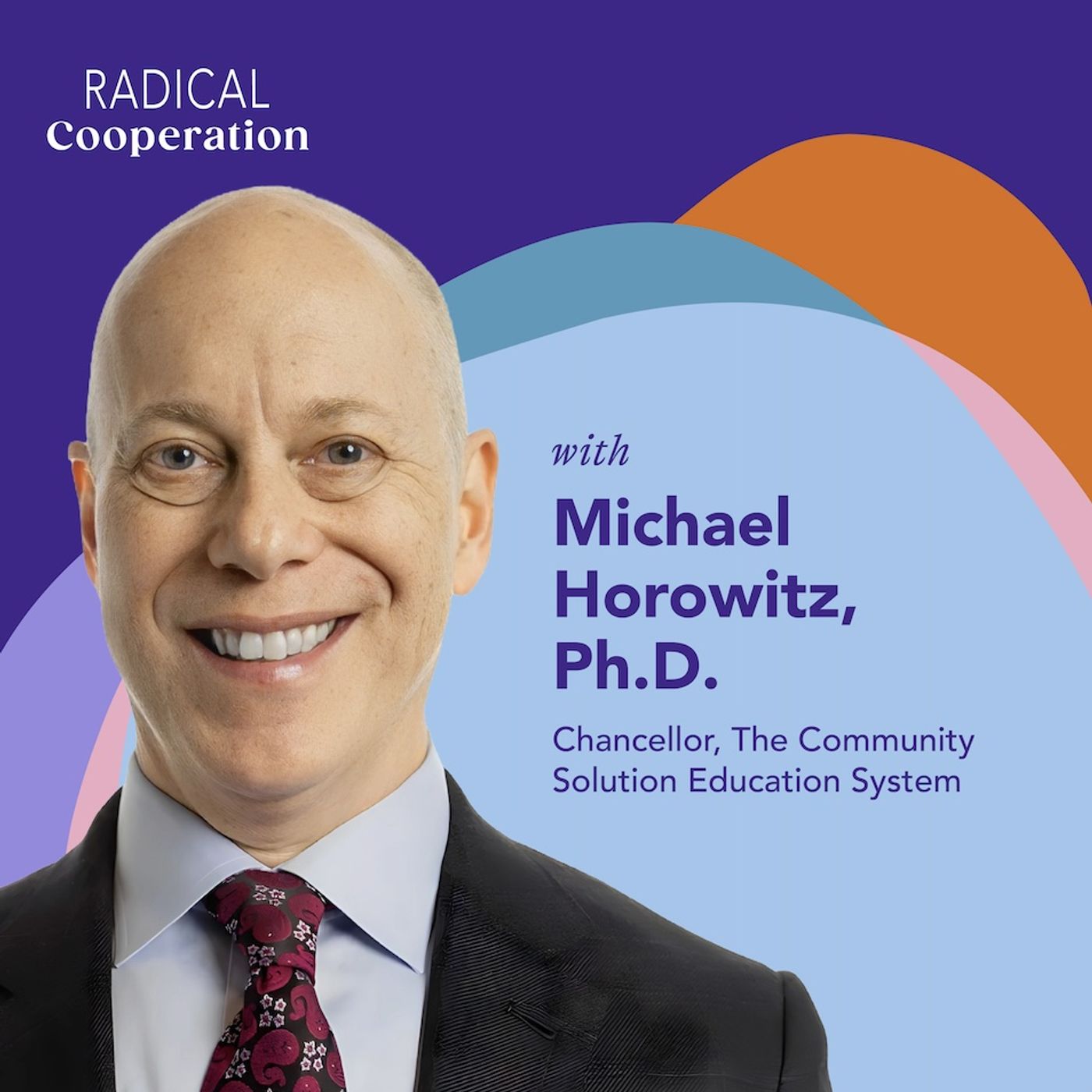
Two-Way Learning: The Superpower Higher Ed Overlooks
3w ago00:33:19Tap to summarizeHigher education has long prized individual expertise. Scholars master their fields, faculty are rewarded for their own research, and institutions often assume their job is to pour knowledge into students and guide the communities around them. But when learning moves in only one direction, institutions stop growing, and they miss what their peers, their communities, and their own students could teach them.In this role-reversal episode of Radical Cooperation, Stephanie Bihr, Associate Director of Communications at The Community Solution, turns the microphone around and interviews Dr. Michael Horowitz. Their conversation centers on two-way learning, one of the seven superpowers of radical cooperation that Dr. Horowitz introduces in his book, The Community Solution: The Power of Radical Cooperation in Higher Education. He shares candid examples from across his career, from rebuilding programs at The Chicago School to launching KansasCOM in Wichita, and explains why the strongest institutions treat learning as a two-way street with their peers, their communities, and their students.Rather than positioning the university as the sole expert in the room, this episode focuses on how a culture of continuous, reciprocal learning makes institutions more responsive, more connected, and more effective. It is a practical look at what it takes to keep learning, no matter how senior your role.In this episode:What two-way learning is and why it is one of radical cooperation's seven superpowersWhy higher education's focus on individual expertise makes collective learning so difficultHow institutions can learn from students, especially adult learners who bring real-world experienceWhat KansasCOM's work in rural and underserved communities reveals about learning from a placeWhy the best leaders, and the best accreditation teams, stay open to many ways of doing things
Transcribe →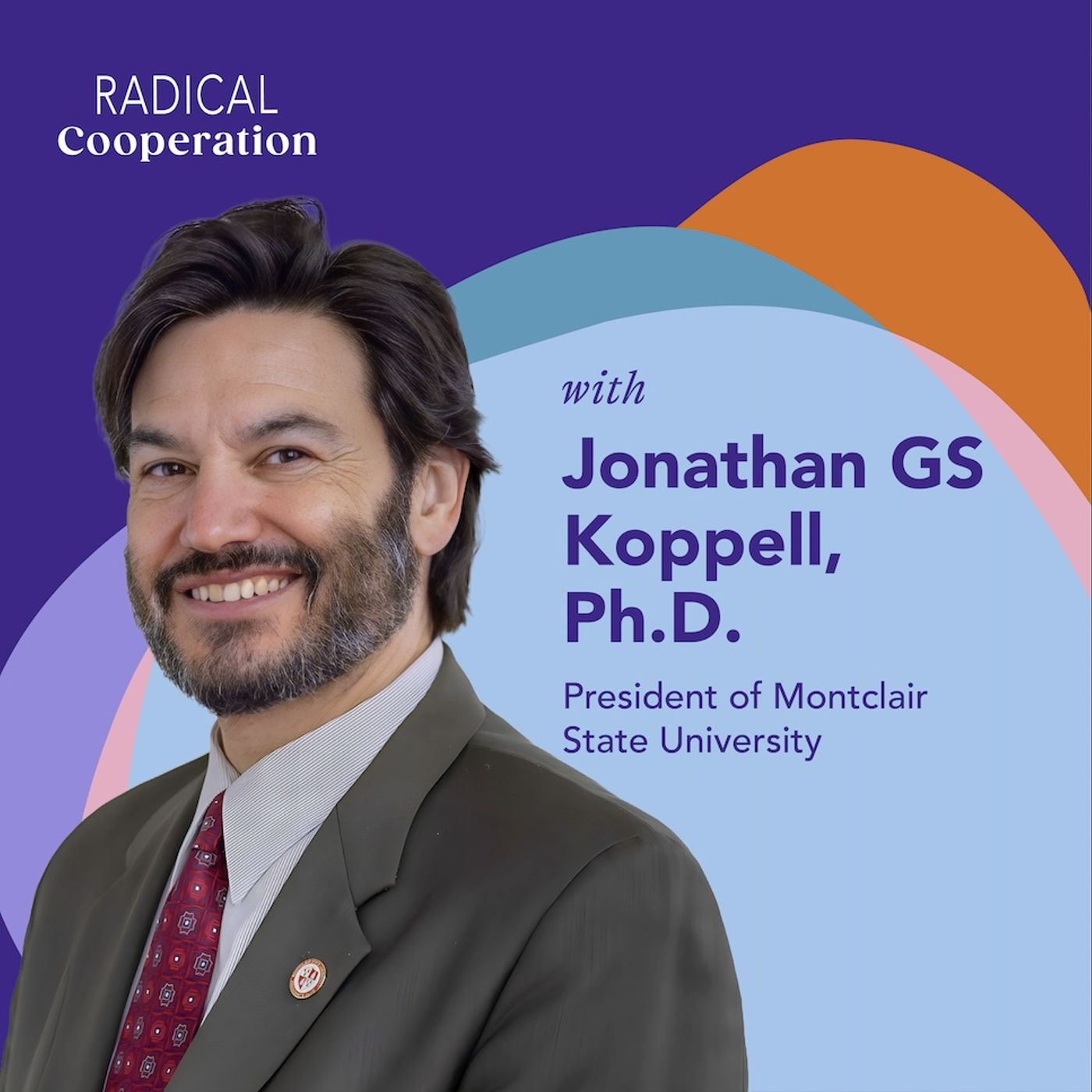
The Case Against Higher Education's Obsession With Selectivity
Jul 800:38:56Tap to summarizeAmerican higher education has long equated quality with exclusivity, treating the number of students an institution rejects as a measure of its worth. That logic puts enormous pressure on the colleges that open their doors widest, and it frames struggling institutions as inevitable casualties of a shrinking market. But what if access and excellence were never actually in conflict?In this episode of Radical Cooperation, Dr. Michael Horowitz speaks with Dr. Jonathan Koppell, President of Montclair State University, the second largest university in New Jersey and one of the nation's leading institutions for economic opportunity and student success. Drawing on more than a decade of experience at Arizona State University, Dr. Koppell explains how a majority-minority, majority Pell-eligible university can deliver research-level excellence without sacrificing access. He also shares how Montclair made the decision to absorb the historic Bloomfield College, the only four-year predominantly Black institution in New Jersey, instead of allowing its distinctive mission to disappear.At a time when many assume distressed colleges have no choice but to close, this conversation explores how cooperation, thoughtful mergers, and a genuine commitment to community can preserve what makes institutions valuable. It is a candid look at why the strongest universities measure the impact they create, not the applicants they turn away.In this episode:Why access and excellence are not a trade-off, and how Montclair proves it at scaleWhat the "delta," the value a university adds, reveals about real quality versus selectivityHow the Bloomfield College merger preserved a distinctive mission while gaining economies of scaleHow Montclair's full-merger approach compares with the Community Solution's federated modelWhy cooperation among institutions, and partnership with local communities, matters more than competition
Transcribe →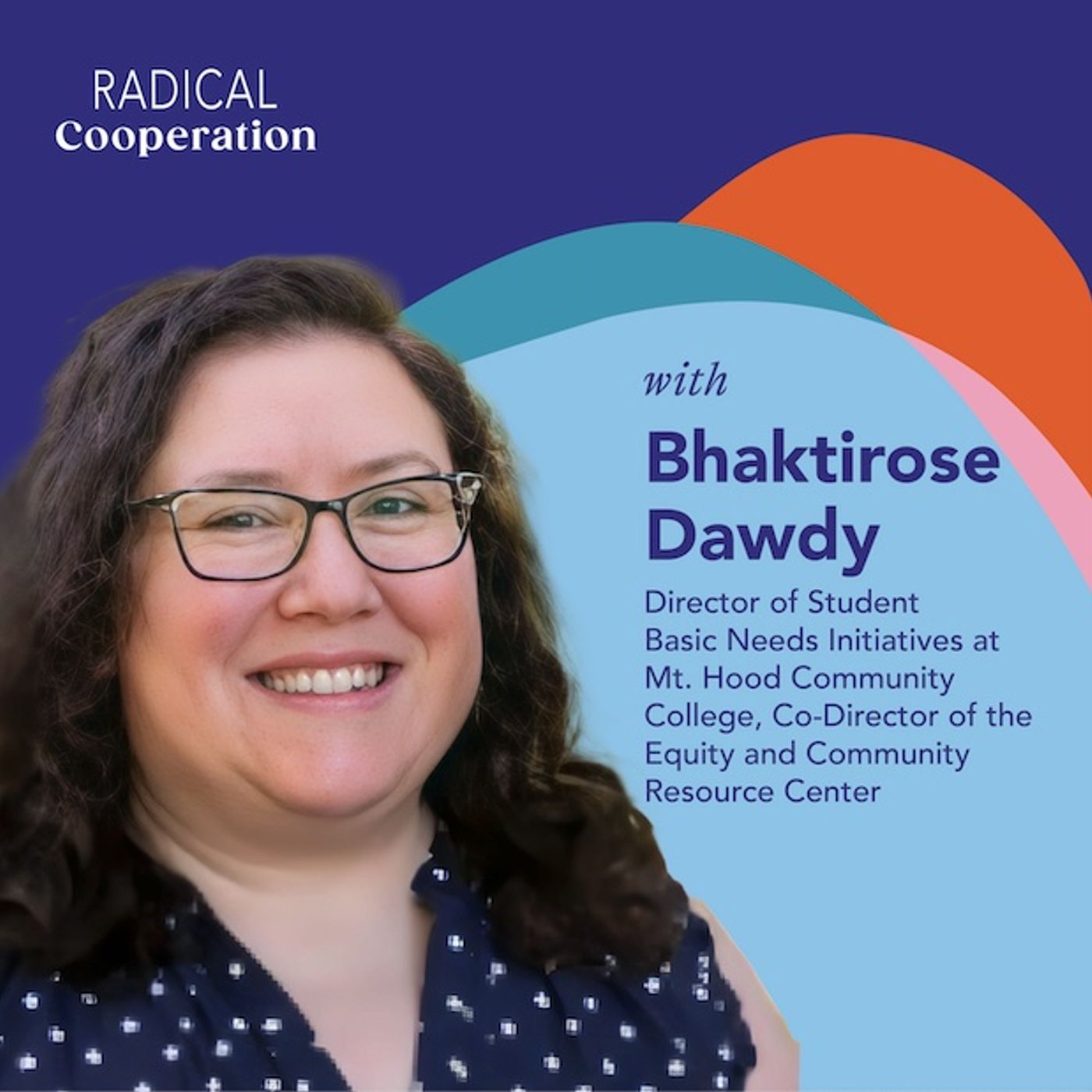
Why Basic Needs Are the Next Frontier in Student Success
Jun 2400:28:46Tap to summarizeHigher education measures success in grades, credits, and completion rates. What those metrics rarely capture is what gets in the way: a broken-down car, a missed bus, a laptop the student doesn't own, or twenty dollars that the family can't spare. For a significant share of students, the difference between persisting and stopping out has nothing to do with academic ability and everything to do with circumstances no syllabus accounts for.In this episode of Radical Cooperation, Dr. Michael Horowitz speaks with Bhaktirose Dawdy, Director of Student Basic Needs Initiatives at Mt. Hood Community College, about the emerging discipline of basic needs work in higher education. Drawing on Bhaktirose's 31-year career bridging social services and education, the conversation explores what students actually need to participate in college, how Mt. Hood's Equity and Community Resource Center was co-designed with students, and why small interventions, sometimes as small as twenty dollars or a one-month bus pass, can drive double-digit gains in retention.Rather than framing basic needs as a peripheral student-services function, this episode focuses on what it looks like when basic needs are treated as central to institutional strategy. The conversation also examines the under-told story of community colleges, the role of national accreditation standards in legitimizing this work, and why the real first question for any college serious about student success may not be how to teach better, but how to remove the obstacles that keep students from showing up at all.In this episode:What "basic needs" actually means and why technology and transportation often outrank foodHow co-designing with students changes the model of student supportWhy small dollar interventions can drive significant retention gainsHow community colleges serve populations the rest of higher ed underestimatesWhat national accreditation standards are emerging around basic needs work
Transcribe →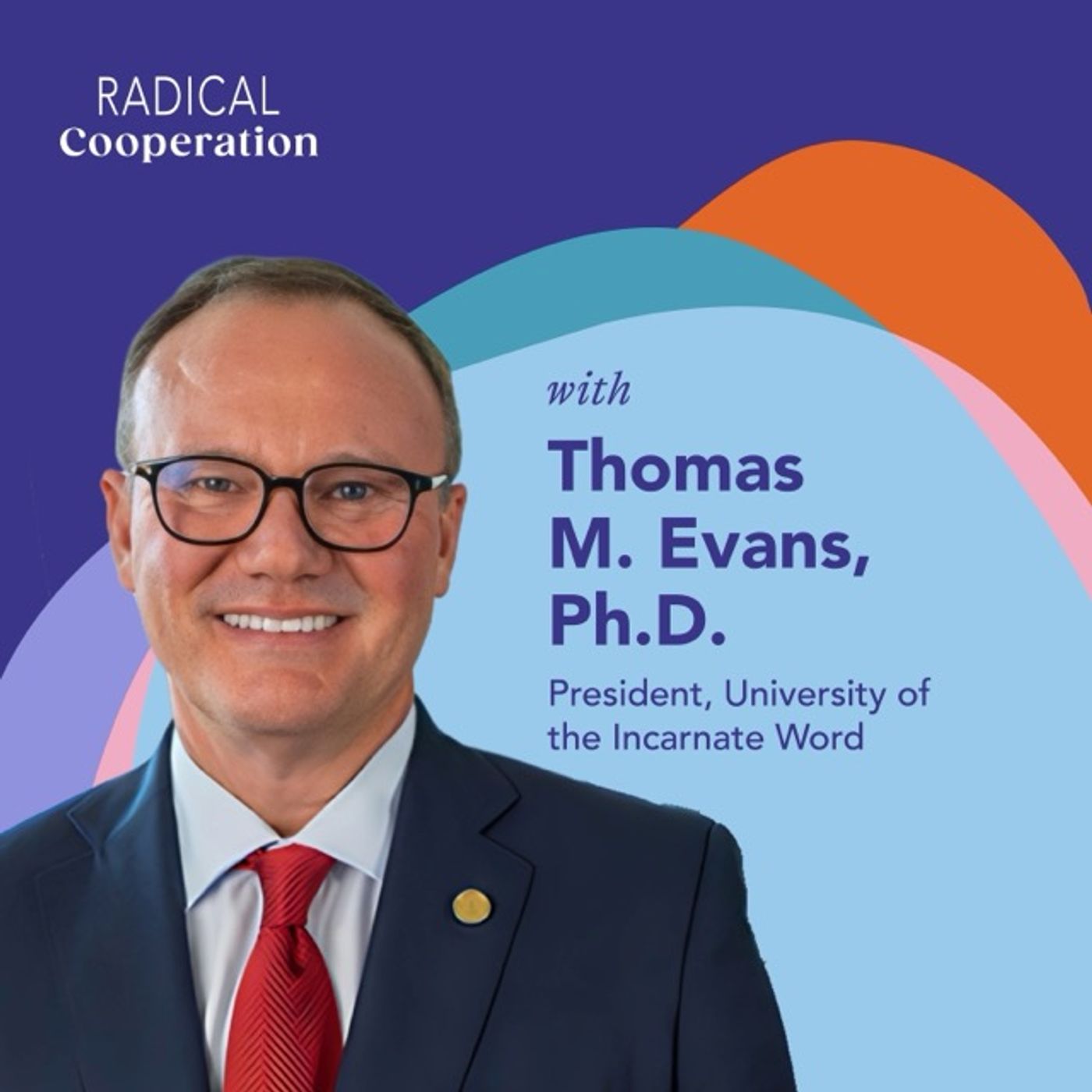
How Four Catholic Universities Built a New Kind of Alliance
Jun 1000:41:00Tap to summarizeHigher education is often framed as a competition for students, rankings, and resources. But as financial pressures grow and the challenges facing colleges become more complex, some institutions are exploring a different path — one built on partnership rather than isolation.In this episode of Radical Cooperation, Dr. Michael Horowitz speaks with Dr. Thomas Evans, President of the University of the Incarnate Word, about the creation of CHARISM, a new alliance of four Catholic universities across San Antonio, New York, Chicago, and San Juan. Together, they discuss how mission-driven institutions can collaborate to expand opportunity, strengthen sustainability, and preserve institutional identity while building something larger together.Grounded in the principles of The Community Solution, the conversation explores the practical realities of building trust across institutions, launching shared initiatives, and creating partnerships rooted in shared values rather than competition.In this episode:How CHARISM came together and what it means for its founding institutionsWhy long-term leadership matters in building successful partnershipsThe growing importance of bilingual and bicultural educationWhat other colleges can learn from CHARISM’s collaborative modelAdvice for presidents and trustees considering institutional partnerships
Transcribe →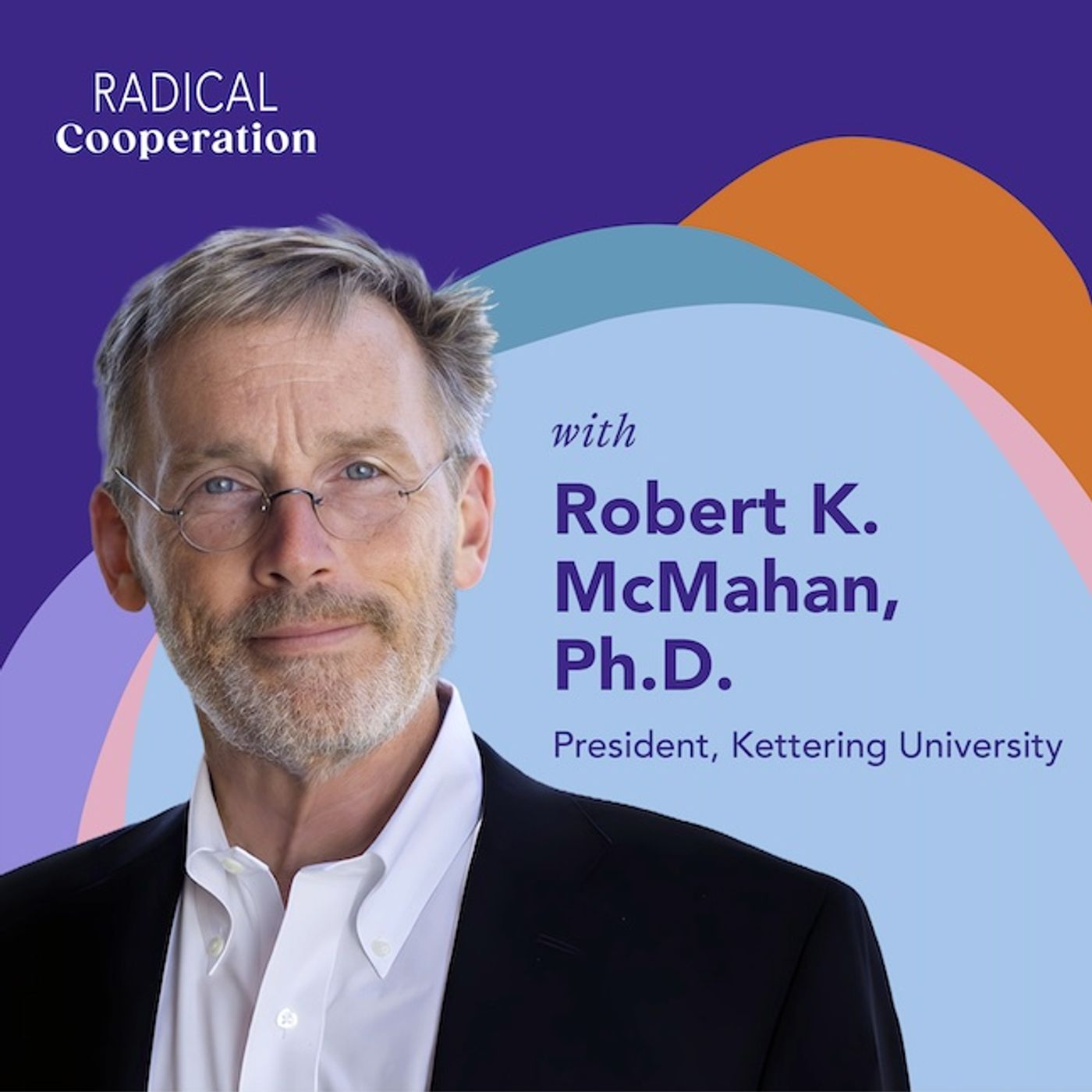
What Real Industry-Integrated Education Looks Like
May 2700:38:14Tap to summarizeThe disconnect between higher education and the workforce is widely acknowledged but rarely addressed at the institutional level. Most universities respond by adding internships, expanding career services, or launching new programs. Few are built on the premise that half of what students need to learn cannot be taught in a classroom.In this episode of Radical Cooperation, Dr. Michael Horowitz speaks with Dr. Robert K. McMahan, President of Kettering University, about what it looks like when a university makes industry integration central to its identity. Drawing on Dr. McMahan's 15 years leading Kettering and the institution's century-long cooperative education model, the conversation explores how universities can build real professional experience into every student's path, why long-tenured presidencies make structural change possible, and what colleges owe the communities they sit in.Rather than defending the traditional academic model, this episode focuses on what becomes possible when universities are willing to reinvent themselves. The conversation also looks at higher education's resistance to change, the rapid disappearance of entry-level roles in an AI-driven economy, and what genuine collaboration between universities, industry, and community looks like in practice.In this episode:Why long-term presidencies make meaningful institutional change possibleHow Kettering's cooperative education model integrates classroom learning with professional experienceWhat universities can do to support the cities and communities around themWhy higher education often treats change as a threat rather than a needHow AI is reshaping entry-level roles and what it means for higher ed
Transcribe →
The Real Formula for Collaboration That Works
May 1300:33:19Tap to summarizeRadical cooperation is the key to building stronger, more resilient institutions—and in this episode, you’ll learn exactly how it works. Radical cooperation isn’t just a concept; it’s a practical framework made up of seven elements that can transform how teams collaborate and succeed. If you’ve ever wondered why some organizations thrive together while others struggle, this conversation reveals the structure behind real collaboration.Hosted by Dr. Horowitz and Associate Director of Communications for The Community Solution Education System, Stephanie Bihr, this episode explores the 7 elements of radical cooperation from Dr. Horowitz’s book, The Community Solution: The Power of Radical Cooperation in Higher Education, and how they apply. From niche superpowers and two-way learning to productive humility and continuous urgency, you’ll hear how these principles help institutions navigate uncertainty, strengthen partnerships, and drive meaningful outcomes. Whether you're leading a team, managing change, or building community, this episode offers a clear framework for working better together.In this episode, you’ll learn:The 7 elements that make radical cooperation actually workHow to identify and leverage your organization’s niche superpowerWhy two-way learning strengthens teams and communitiesThe role of humility and risk-taking in effective collaborationHow continuous urgency drives real impact and momentumDon’t risk operating in silos while others build stronger, more adaptive partnerships. Learn how to apply radical cooperation to create lasting impact.
Transcribe →
How Collaboration Is Unlocking New Opportunities
Apr 2900:27:10Tap to summarizeWhat is radical cooperation, and why is it becoming a powerful solution in higher education? In this episode of Radical Cooperation, Dr. Horowitz and Associate Director of Communications for The Community Solution Education System, Stephanie Bihr, explore the core concept at the heart of his book, The Community Solution: The Power of Radical Cooperation in Higher Education and why it offers a new path forward for institutions facing growing complexity and change.Drawing on nearly two decades of leadership experience, Dr. Horowitz explains how radical cooperation enables colleges and universities to maintain their unique identities while sharing resources, aligning around a common mission, and working together to scale impact. Through real-world examples, this conversation brings the ideas from the book to life and offers practical insight for leaders looking to apply them within their own organizations or teams.In this episode, you’ll learn:Why radical cooperation works when traditional collaboration failsHow shared infrastructure creates growth across institutionsThe role of leadership and governance in making cooperation succeedPractical ways to break down silos within your organizationHow culture drives long-term collaboration success
Transcribe →
Public Trust, Media Narratives, and the Future of Higher Ed
Apr 1500:43:05Tap to summarizeHigher education leadership is under more pressure than ever—and in this episode, we explore how media narratives are shaping public trust in the sector. Today’s leaders must navigate misinformation, political scrutiny, and financial instability while still delivering meaningful outcomes for students.In this episode of Radical Cooperation, host Dr. Michael Horowitz sits down with Sara Custer, Editor-in-Chief of Inside Higher Ed, to examine the growing tension between media coverage and institutional reality. Together, they unpack how public perception is formed, why trust in higher education is increasingly fragile, and how leaders can respond with clarity and strategy in a rapidly shifting landscape.From leadership transitions after founders step down to the rise of AI-generated content and its impact on journalism, this conversation offers a nuanced look at the forces reshaping higher education. Grounded in the principles of The Community Solution, it also highlights how collaboration, transparency, and shared strategy can help institutions build resilience and better serve students.What you’ll learn:How media narratives shape public trust in higher educationThe most pressing leadership challenges facing colleges and universitiesWhy financial pressures and institutional closures are acceleratingHow journalism—and AI—are transforming the information landscapeWhat it takes to successfully step into leadership after a founder exits
Transcribe →
What College Athletics Really Cost Institutions
Apr 100:37:37Tap to summarizeAthletics often sit at the center of campus identity, yet decisions about sports programs are rarely examined through the same strategic lens as academics, enrollment, or finance. As costs rise and the landscape shifts, leaders face increasingly complex choices about whether athletics strengthen institutional health or quietly strain it.In this episode of Radical Cooperation, Dr. Michael Horowitz speaks with Dr. Daniel Mahony about how presidents and senior leaders navigate the real trade-offs behind college sports. Drawing on Mahony’s experience leading institutions through financial, cultural, and competitive pressures, the conversation explores why most athletic programs operate at a loss, how even the largest conferences face sustainability challenges, and why collaboration across leadership teams matters more than scale or prestige.Rather than debating whether athletics belong in higher education, this episode focuses on how leaders make deliberate, mission-aligned decisions and when athletics can become a strategic asset rather than a liability.In this episode:The institutional costs and benefits of college athleticsHow athletics shape campus culture and identityWhen sports programs support mission and when they complicate itWhy athletics decisions require system-level leadershipHow institutions align athletics with long-term priorities
Transcribe →
Why Some Colleges Survive—and Others Don’t
Mar 1800:41:07Tap to summarizeRisk in higher education rarely announces itself. It accumulates gradually through delayed decisions, familiar assumptions, and governance processes that struggle to keep pace with changing conditions. By the time a crisis becomes visible, leaders often discover that their range of options is far narrower than they expected.In this episode of Radical Cooperation, Dr. Michael Horowitz speaks with Jim Long about how colleges move from perceived stability to real vulnerability and how boards and senior leaders can recognize those shifts earlier. Drawing on Jim’s work with institutional risk models, enrollment data, and governance practice, the conversation examines why enrollment alone is a misleading signal, how discounting and net revenue quietly reshape risk, and why certain governance patterns delay action.Rather than forecasting which institutions will struggle, this episode focuses on strengthening judgment helping leaders interpret data more honestly and ask better questions before pressure turns into urgency.In this episode:How institutional risk builds gradually over timeWhat enrollment and financial data reveal and concealWhy governance structures matter in moments of uncertaintyHow boards can improve oversight without creating alarmWhat strong institutions do before challenges escalate
Transcribe →