
Podcast
Radio Atlantic
Hosted by The Atlantic · EN
The Atlantic has long been known as an ideas-driven magazine. Now we’re bringing that same ethos to audio. Like the magazine, the show will “road test” the big ideas that both drive the news and shape our culture. Through conversations—and sometimes sharp debates—with the most insightful thinkers and writers on topics of the day, Radio Atlantic will complicate overly simplistic views. It will cut through the noise with clarifying, personal narratives. It will, hopefully, help listeners make up their own mind about certain ideas.
The national conversation right now can be chaotic, reckless, and stuck. Radio Atlantic aims to bring some order to our thinking—and encourage listeners to be purposeful about how they unstick their mind.
98episodes
Episodes
Newest firstAll episodes
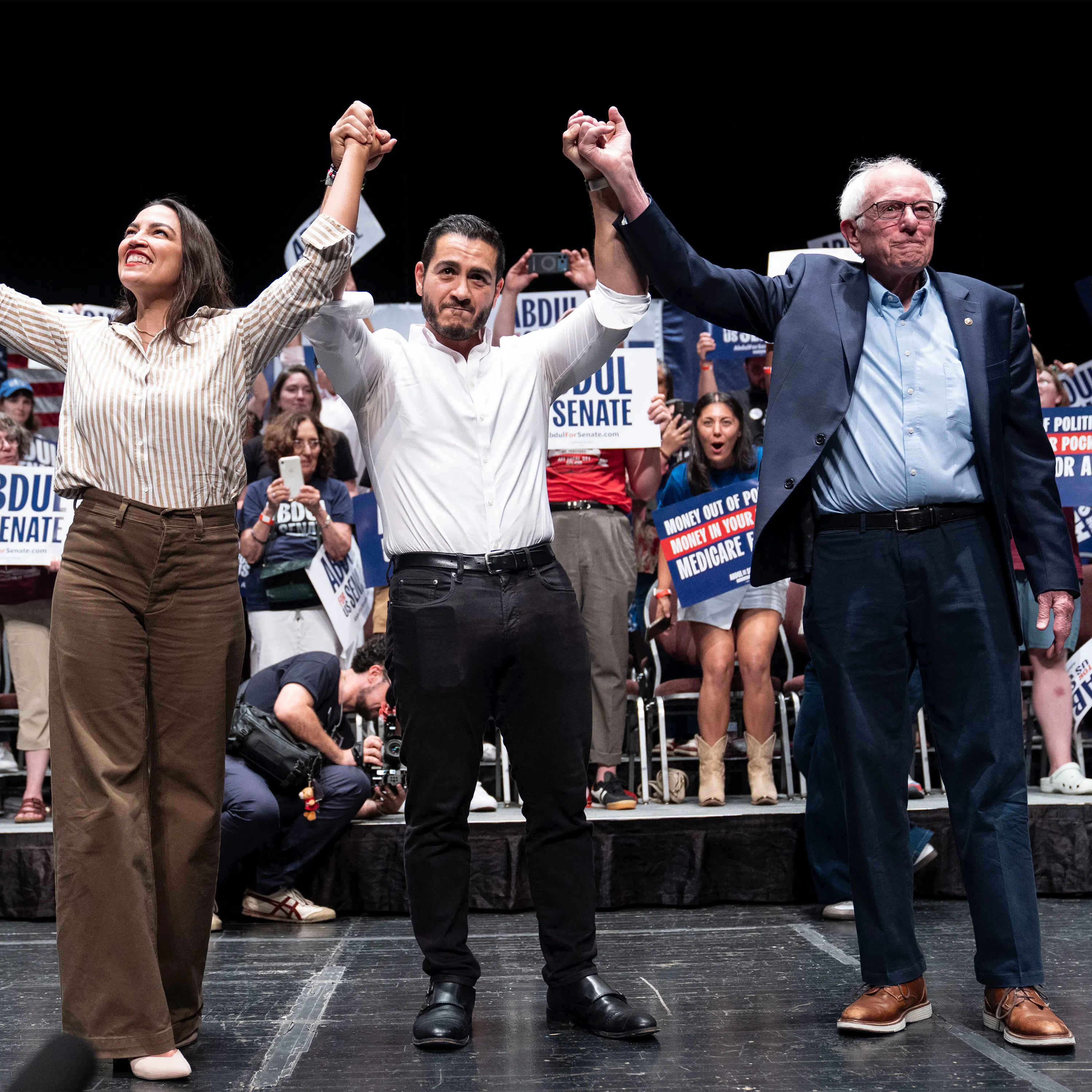
Can a Progressive Win a Purple State?
Yesterday00:25:00Summary readyNationwide attention and endorsements are flooding into Michigan as voters get ready to pick their Senate candidates Aug. 4. Why is everybody from President Trump to Bernie Sanders so interested? The path to win the Senate runs straight through this purple state, and that has Democrats battling over whether the progressive candidate Abdul El-Sayed or the more centrist U.S. Representative Haley Stevens is the right candidate to put forward. Host Adam Harris talks to Atlantic writer Russell Berman about why Michigan matters and what the outcome of this race could mean for the future of the Democratic Party and the Senate at large. --- Get more from your favorite Atlantic voices when you subscribe. You’ll enjoy unlimited access to Pulitzer-winning journalism, from clear-eyed analysis and insight on breaking news to fascinating explorations of our world. Atlantic subscribers also get access to exclusive subscriber audio in Apple Podcasts. Subscribe today at theAtlantic.com/listener. Learn more about your ad choices. Visit podcastchoices.com/adchoices
Summary
Is the Age of Reading Over?
5d ago00:30:00Summary readyPeople may be reading now more than ever (emails, texts, social-media posts). But fewer and fewer people are reading actual books. The Atlantic’s staff writer Rose Horowitch, who wrote the August cover story, “The End of Reading Is Here,” explains what might be lost in a “postliterate” age—and it’s a lot more than books. - - - Get more from your favorite Atlantic voices when you subscribe. You’ll enjoy unlimited access to Pulitzer-winning journalism, from clear-eyed analysis and insight on breaking news to fascinating explorations of our world. Atlantic subscribers also get access to exclusive subscriber audio in Apple Podcasts. Subscribe today at TheAtlantic.com/Listener. Learn more about your ad choices. Visit podcastchoices.com/adchoices
Summary
What We Know About the Recent ICE Killings
1w ago00:23:13Summary readyThe fatal shootings of two men in Texas and Maine by immigration officers have put the Department of Homeland Security back under renewed scrutiny. Host Hanna Rosin is joined by Atlantic staff writer Nick Miroff to discuss the recent killings and what role traffic stops played in them. --- Get more from your favorite Atlantic voices when you subscribe. You’ll enjoy unlimited access to Pulitzer-winning journalism, from clear-eyed analysis and insight on breaking news to fascinating explorations of our world. Atlantic subscribers also get access to exclusive subscriber audio in Apple Podcasts. Subscribe today at theAtlantic.com/listener. Learn more about your ad choices. Visit podcastchoices.com/adchoices
Summary
The Election Deniers Are in Charge Now
2w ago00:49:38Summary readyToday’s episode is a dispatch from Georgia, where election skeptics run elections. Lately, the president has gone into an election frenzy, trying to spread the idea that elections are rife with fraud. He seems to be laying the groundwork for the argument that if Republicans lose the midterms, it can be only because someone cheated. The place to truly advance the idea that elections can’t be trusted, however, is in the states, where officials have authority over the building blocks of elections. We travel to Georgia, a once-red state quickly turning purple, where election skeptics are not just inside the building; they have taken over several floors, settled in, and put their feet up on the table, and now they are trying to change all of the locks. Get more from your favorite Atlantic voices when you subscribe. You’ll enjoy unlimited access to Pulitzer-winning journalism, from clear-eyed analysis and insight on breaking news to fascinating explorations of our world. Atlantic subscribers also get access to exclusive subscriber audio in Apple Podcasts. Subscribe today at TheAtlantic.com/Listener. Learn more about your ad choices. Visit podcastchoices.com/adchoices
Summary
The War Trump Can't Control
2w ago00:24:00Summary readyThough President Trump has said he would not enter any “forever wars,” America seems to find itself headed toward one. With the latest cease-fire “over,” is there a way out of the conflict with Iran? Host Adam Harris is joined by Tom Nichols and Nancy Youssef, who cover the military and diplomacy for The Atlantic, to discuss the conflict that is beginning to feel more like a permanent condition. --- Get more from your favorite Atlantic voices when you subscribe. You’ll enjoy unlimited access to Pulitzer-winning journalism, from clear-eyed analysis and insight on breaking news to fascinating explorations of our world. Atlantic subscribers also get access to exclusive subscriber audio in Apple Podcasts. Subscribe today at theAtlantic.com/listener. Learn more about your ad choices. Visit podcastchoices.com/adchoices
Summary
Another Fatal ICE Shooting
3w ago00:35:28Summary readyThis week saw the first fatal ICE shooting since Minnesota. In Houston, an ICE officer shot and killed Lorenzo Salgado Araujo. It’s been six months since the deaths of Renee Good and Alex Pretti, and the federal government hasn’t properly investigated either one. And it has stood in the way of state agents trying to find out what happened—failing, for example, to give state investigators access to Good’s car. The face of this federal response is Todd Blanche, the acting attorney general who is facing a Senate confirmation hearing next week. For a system that assumes the federal government keeps state and local law enforcement from committing civil-rights abuses, what happens when the roles are reversed? How far can states such as Minnesota go? The Atlantic’s staff writer Quinta Jurecic discusses the Good and Pretti investigations, how Blanche has warped the Justice Department, and how state prosecutors and federal judges are pushing back. - - - Get more from your favorite Atlantic voices when you subscribe. You’ll enjoy unlimited access to Pulitzer-winning journalism, from clear-eyed analysis and insight on breaking news to fascinating explorations of our world. Atlantic subscribers also get access to exclusive subscriber audio in Apple Podcasts. Subscribe today at TheAtlantic.com/Listener. Learn more about your ad choices. Visit podcastchoices.com/adchoices
Summary
The Black Patriots Pushing for a Better American Future
3w ago00:28:12Summary readyThe military has historically been a powerful force for integration in America—even as its top ranks have been slow to reflect the racial makeup of the country. Host Adam Harris speaks with the Atlantic staff writer Clint Smith, who wrote in the July issue of the magazine about what it means that the gradual, visible racial progress in the military is being degraded as Black officers are pushed out. Get more from your favorite Atlantic voices when you subscribe. You’ll enjoy unlimited access to Pulitzer-winning journalism, from clear-eyed analysis and insight on breaking news to fascinating explorations of our world. Atlantic subscribers also get access to exclusive subscriber audio in Apple Podcasts. Subscribe today at TheAtlantic.com/Listener. Learn more about your ad choices. Visit podcastchoices.com/adchoices
Summary
American History as Rorschach Test
4w ago00:38:00Summary readyThe Florida Department of Education recently announced an alternative to the Advanced Placement history course that it described in a press release as “free from ideological bias or indoctrination.” For its new curriculum, Florida recommends one textbook: Land of Hope: An Invitation to the Great American Story, by Wilfred McClay. As American patriotism plummets, McClay partly blames history class, which he thinks isn’t teaching students a “love of country.” Ahead of July 4 and America’s 250th, Hanna talks with McClay about whether teaching should background or foreground the sins of a country—and what might be lost or gained. --- Get more from your favorite Atlantic voices when you subscribe. You’ll enjoy unlimited access to Pulitzer-winning journalism, from clear-eyed analysis and insight on breaking news to fascinating explorations of our world. Atlantic subscribers also get access to exclusive subscriber audio in Apple Podcasts. Subscribe today at TheAtlantic.com/Listener. Learn more about your ad choices. Visit podcastchoices.com/adchoices
Summary
Trump’s Battle for Washington
4w ago00:20:04Summary readyThe drama around the algal bloom in the Reflecting Pool may seem like a shallow issue. But it’s part of a much broader pattern as President Trump tries to “beautify” Washington, D.C., and cement his legacy. Host Adam Harris talks to the Atlantic staff writer David Graham about Trump’s attempts to remake the city physically, culturally, and politically. Get more from your favorite Atlantic voices when you subscribe. You’ll enjoy unlimited access to Pulitzer-winning journalism, from clear-eyed analysis and insight on breaking news to fascinating explorations of our world. Atlantic subscribers also get access to exclusive subscriber audio in Apple Podcasts. Subscribe today at TheAtlantic.com/Listener. Learn more about your ad choices. Visit podcastchoices.com/adchoices
Summary
How the World Cup Explains the World
Jun 2500:34:37Summary readyIn his classic book How Soccer Explains the World, the Atlantic staff writer Franklin Foer theorized that the sport was a mirror of the world, particularly in its shift from tribalism to interdependence. More than two decades after the book came out, the world is different in many ways, but he says the title still holds true. Foer joins to discuss the World Cup. Who he’s excited to watch. How the global game has changed over the years. And how this year’s World Cup offers global audiences a gentler form of nationalism—one that we may not be used to lately, and may indeed learn from. - - - Get more from your favorite Atlantic voices when you subscribe. You’ll enjoy unlimited access to Pulitzer-winning journalism, from clear-eyed analysis and insight on breaking news to fascinating explorations of our world. Atlantic subscribers also get access to exclusive subscriber audio in Apple Podcasts. Subscribe today at TheAtlantic.com/Listener. Learn more about your ad choices. Visit podcastchoices.com/adchoices
Summary