Loading summary
Transcript79 lines
- [00:04]
Narrator
It's this sound that provides so much awe and wonder. If you've never listened to Ludens before, here you go.
- [00:14]
Hanna Rosen
I'm Meghna Chakrabarti. Join me Enpointe for a week of Wonder to explore what captivates our minds, illuminates our humanity, and both delights and confounds us. Five episodes, one each day. Listen and follow onpointe wherever you get your podcasts.
- [00:32]
Asia Sarwari
Foreign.
- [00:36]
Narrator
This episode is brought to you by Progressive Insurance. Fiscally responsible financial geniuses, monetary magicians. These are things people say about drivers who switch their car insurance to Progressive and save hundreds. Visit progressive.com to see if you could save Progressive Casualty Insurance Company and affiliates. Potential savings will vary. Not available in all states or situations.
- [01:14]
Hanna Rosen
Usually when a kid encounters a Lego set, they know what to do. Put the driver in the race car, the flamingo in the pond, the astronaut in the spaceship. But the Lego set this kid is playing with, it's not so obvious what it is or who goes where.
- [01:31]
Asia Sarwari
Try.
- [01:36]
Hanna Rosen
Features a lot of random characters. Chef, painter, a robot, a knight. The kid picks up the knight, turns him over and pops off the helmet. Muy pelon moy pelon, moy pelon. Very bald. He shows the pirate to our producer Kevin, also bald. He sticks the pirate behind one of the desks. That's where the lawyers would sit. He tries the knight at the witness stand and the robot on one seat that's higher than all the rest. That is where the judge would sit.
- [02:22]
Asia Sarwari
It's really cute. But this is exactly what an immigration court would look like. So the stenographer would be there and that's where they have to go and talk. And so that's where the judge comes from.
- [02:32]
Hanna Rosen
This is Asia Sarwari, managing attorney at the Atlanta office of the International Rescue Committee, or irc. She and her staff built this Lego court as a makeshift solution to an impossible problem. How do you explain to a six year old what immigration court is?
- [02:49]
Asia Sarwari
I mean, immigration court is frightening for everybody across the board, adults and kids. But this is a way for the kids to understand that this is a time for them to be able to tell their story and also to just give them some comfort. It really calms the kids down because when they go to court, then they're like, oh, okay, this is where the judge sits. This is where I sit sort of thing.
- [03:27]
Hanna Rosen
I'm Hanna Rosen, this is Radio Atlantic. Today, Trump's immigration policy meets a six year old boy. Many of you listening might remember the phrase family separation from Trump's first term Images of babies being torn from their mother's arms, hysterical parents, children in what look like cages. We haven't seen a spectacle like that yet, mainly because there aren't as many families crossing at the border. But that doesn't mean that things are any better for unaccompanied minors. This time around, the Trump administration is going after special protections for these kids, protections that have been carved out over the last decade.
- [04:11]
Nick Miroff
The United States government, by and large, takes care of children and affords them a special treatment regardless of how they enter the country, even if they enter illegally.
- [04:21]
Hanna Rosen
That's Nick Miroff, an Atlantic staff writer who covers immigration.
- [04:26]
Nick Miroff
There was no need for them to try to evade capture by the US Border Patrol. As minors, they could simply cross over and seek out the first Border Patrol agent they could find, turn themselves in, and knowingly be treated differently than other illegal border crossers because there have been some very horrible cases of deaths of children in U.S. border Patrol custody. Border Patrol agents who are effectively border cops know that they have to be careful and handle these children with sensitivity, and they generally do.
- [05:01]
Hanna Rosen
The way the system is currently set up, children who cross the border without a parent find their way to a Border Patrol agent who then quickly turns them over to another agency called the Office of Refugee Resettlement, or orr. ORR tries to place them quickly with a sponsor who's typically a relative. ORR is part of Health and Human Services. The idea being to keep minors out of the ICE system, or that was the idea before the Trump administration.
- [05:30]
Nick Miroff
They have for the longest time wanted to kind of break down that firewall between ice, Immigration and Customs Enforcement, which is looking to arrest and deport immigrants who are here illegally, and Health and Human Services, whose mandate is to take good care of these kids, make sure nothing happens to them, get them to sponsors safely. You know, it's a pivot toward an all out, kind of enforcement only oriented model whose goal is to, you know, carry out the President's mass deportation campaign and to really to break up the model that has been in place for much of the past 10 years.
- [06:06]
Hanna Rosen
What specifically are they doing to break up the model?
- [06:10]
Nick Miroff
They have stripped the funding for the legal aid organizations that represent children and minors in federal custody and have worked with them. You know, they've just really deprived the system of resources.
- [06:22]
Hanna Rosen
One of those was the nonprofit that funds ASEA's office. Earlier this year, as part of an executive order titled Protecting the American People Against Invasion, funding was cut and these legal service providers received a stop work order, which would have affected about 26,000 kids.
- [06:40]
Nick Miroff
You know, conservatives have been very adamant that federal tax dollars should not go to defend and advocate for illegal immigrants and to help them get funding to stay in the United.
- [06:51]
Hanna Rosen
Legal aid groups went to court, citing a law passed by Congress in 2008 creating certain protections for unaccompanied minors. A federal judge in California ordered the funding temporarily restored until a final judgment expected in September.
- [07:05]
Asia Sarwari
If it happens again, or if the litigation doesn't work the way we want it to, it's going to be very difficult to help these kids.
- [07:15]
Hanna Rosen
What percent of your funding is this government funding?
- [07:19]
Asia Sarwari
99.9%.
- [07:21]
Hanna Rosen
Okay, okay. Yeah, it's a lot.
- [07:23]
Asia Sarwari
We do have some private backing, but the needs are so great that it's just not feasible to move forward without programmatic funding.
- [07:34]
Nick Miroff
There aren't the resources to hire lawyers for every single person that comes across and makes a claim. We're talking about hundreds of thousands of unaccompanied minors just in the Biden administration.
- [07:45]
Hanna Rosen
The Trump administration has said that it wants to save money. Another reason to cut the funding might be that it's effective. It increases the chance that the kids get legal status.
- [07:56]
Asia Sarwari
If a person has a lawyer, they're five times more likely to win their immigration case. So these kids qualify for legal status. They just need someone to guide them on the path.
- [08:09]
Hanna Rosen
And just to clarify, five times as likely does not add up to likely. How hard is it to get asylum? Like, what percent of people who apply for asylum get asylum?
- [08:20]
Asia Sarwari
Well, for immigration court in Atlanta, it's less than 2% approved.
- [08:26]
Hanna Rosen
Oh, it's really hard.
- [08:28]
Asia Sarwari
Yes. And so nationwide, if a person does not have an immigration attorney, they're five times more likely to lose.
- [08:35]
Hanna Rosen
Asylum is a many step process. It can take years and years, and all of it is predicated on proving convincingly that you've been persecuted in your own country.
- [08:46]
Asia Sarwari
We do have kids who have physical scars of what happened to them, why they had to flee their home country. You know, we have kids who were beaten by military in their home country because of who they're affiliated with or who their parents or extended families are affiliated with. I mean, just for example, we had a 14 year old who had a 6 week old child and that's because she was fleeing extreme danger in her home country and then she was assaulted on the way over. So that's the type of cruelty that our clients are facing. We really do see some graphic signs of violence and abuse.
- [09:23]
Hanna Rosen
Absent the obvious signs, the lawyers have to find a way to get kids to describe what they've been through.
- [09:30]
Asia Sarwari
So we just, you know, try to get some information from the kids. And we had a little four year old who every time we ask her just some basic questions, but she would get scared and turn off the lights and hide under the table. And so then she had a little fake phone. And so she would hand the phone to the little girl and ask the questions and go back and forth. But a lot of the kids are. So they just don't want to discuss what's happened in the past, whether they're very young or very, you know, older. So we spend a lot of time to not re. Traumatize them.
- [10:00]
Hanna Rosen
Hopefully the majority of the kids who go through the system are preteens or teens. The boy we met in the office that day crossed the border with his younger sister. They were five and two when Assia first met them.
- [10:12]
Asia Sarwari
What was the most difficult, at least for us, was trying to talk to them about what happened to them. The little girl couldn't share any information, of course, because she was only two years old. But the older child, the five year old, he was able to express fear, but not exactly what happened.
- [10:33]
Hanna Rosen
Here's what she learned. The family was targeted by gangs and experienced severe violence in their home country. They made it to the US Mexico border, but the situation there became dangerous for the kids. So the mother sent them ahead with a group crossing to the U.S. she had to wait for her own papers.
- [10:51]
Asia Sarwari
They had to cross in a makeshift raft and they fell into the river and they were fished out. And so the children were. I keep using the word traumatized. Were deeply traumatized. But you could tell from the Office of Refugee Resettlement documents. Cause usually the kids are pretty calm when it's time for them to take their picture. So there's a little passport photo that's attach and the kids were just crying. You could tell in the photo that they were sobbing in the photo.
- [11:21]
Hanna Rosen
To help kids understand the process and feel safe enough to tell their story, Ossie and her staff try to make their Atlanta offices as child friendly as they can. During our visit, the siblings sat in a room full of toys and stuffed animals, including a cow named Bacalola. And they tried very hard to sit still while they received what's called a know your rights presentation.
- [11:43]
Asia Sarwari
Voya ser unas preguntas. Yo soy una de las assistantes legales aqui que esta TRA vajando and tu caso.
- [11:50]
Hanna Rosen
An IRC legal assistant talks with them as they squirm on two beanbag chairs as unaccompanied minors. The Brother and sister need to know the basics about their rights and about the legal process. But the result is like a surreal kindergarten law school where little kids are learning about things like attorney client confidentiality.
- [12:35]
Asia Sarwari
To information.
- [12:37]
Hanna Rosen
Being there in the room really underlines how absurd it is to think of kids like this navigating this situation without an attorney. The staffer asks the kids if they remember what a lawyer does. The little girl answers, I want vacalola.
- [12:53]
Asia Sarwari
Te requerdas lo que hace un abogado. Si, si. Que hace una we have a.
- [13:12]
Hanna Rosen
After the break, how the system isn't just getting defunded, it's being turned against the people it's supposed to help.
- [13:29]
Narrator
Right now at the Home Depot, you'll find storage solutions made to fit your needs. Grab an HDX Tuff tote to protect your tools, or keep your sports equipment contained with reinforced snap fit lids. Or stack up and make better use of your space with bins and totes built to last. Whatever your storing, we've got the gear to keep it organized and protected at the Home Depot. How doers get more Done.
- [14:04]
Hanna Rosen
The US Immigration system as it currently stands has two goals. One, to manage immigration itself, who gets to enter the country, when, where and for how long. The other is to ensure the welfare of children that cross the border, make sure they're not subject to trafficking, bring them to safety, return them to relatives once those relatives have been vetted as so called sponsors. As Nick Miroff describes, those two goals are sometimes intention.
- [14:35]
Nick Miroff
Up until now there has existed basically a firewall between the sponsorship process and immigration enforcement by ice. The idea being that if you have a kid in custody and you're looking for a sponsor in order to get them out of government custody, then you shouldn't have that sponsor fear arrest and deportation by coming forward and saying I will take custody of this child.
- [15:01]
Hanna Rosen
The idea was to make it as easy as possible for a sponsor to come forward so the child would be safe. But that idea seems to be fading.
- [15:10]
Nick Miroff
Stephen Miller and the aides around him who are leading this broader immigration crackdown have had in their sights for a long time this system of unaccompanied minors who are crossing the border, going through the sponsorship process, and in many cases are being reunited with their relatives who are already here. They view this system as basically a broader kind of trafficking scheme, and they want to attack it at its weak point, so to speak.
- [15:42]
Hanna Rosen
That weak point is reunification, the moment where the government has your child and you have to show proof in order to get them back under the Trump administration, the requirements have changed. Before, a sponsor might have taken a DNA test to prove they were related to the child. Now, though, they're required to take a DNA test. And they also need to prove they're living and working in the US Legally, which means they have to show an American ID or a foreign passport with proof of entry. It means proof of income, like a letter from an employer. The way the Trump administration explains these changes, they are protecting children from being picked up by people who don't have their best interests at heart. But there are signs that in practice, these changes are keeping kids from landing in a safe place. Our colleague Stephanie McCrummon reported that one family had submitted baby photos, baptism records, text messages, all to try and get their kid back, and all not enough. As she reported, the family had been rejected for three months and counting.
- [16:51]
Nick Miroff
And obviously the concern is that if sponsors are too scared to come forward and take custody of the child, then the child will remain in, you know, the custody of the government for far longer than they should.
- [17:03]
Hanna Rosen
Just that already appears to be happening. It varies from case to case, but the Office of Refugee Resettlement has typically housed an unaccompanied minor for about a month before they're released to a sponsor. After Trump took office, the average stay for children released each month started rising. 49 days, 112 days, 217 days, all in facilities never intended to house children for so long.
- [17:31]
Nick Miroff
As we know, in a lot of these group home settings, it can be very stressful. It's not a good environment for children. There's tons of pediatric literature about the impact on the psychology of children to be kept essentially in a kind of government custody in which they're living under very strict rules and they're separated from their loved ones. And so no one until now has really wanted to prolong this process. But I think with this administration, we're seeing a willingness to do that and to really try to deter families from potentially using this route in order to do the kind of phased migration that they are so opposed to.
- [18:11]
Hanna Rosen
For Trump officials who want to slow this pipeline of unaccompanied minors, it's a win win. Either families get their kids and the government gets data they could use to pursue immigration enforcement, or they don't get their kids, and the pain of the situation creates deterrence on its own. It's a kind of family separation 2.01 that seems more carefully constructed than the first one. Americans aren't regularly seeing children in what look like cages or videos of agents Taking babies from their mothers instead, it uses the system that already exists, and it generally does so away from cameras and microphones.
- [18:51]
Nick Miroff
You know, preventing them from reuniting is part of an enforcement mindset that is similar to zero tolerance, family separation, and that there's a willingness here to, you know, potentially inflict trauma on children to achieve an immigration enforcement purpose or some kind of deterrence. It's not the same thing as physically pulling a child away from its parent at the border, but the willingness to leave a child in a group home in the government's custody for weeks and weeks and weeks and scare their parents into not coming to get them is also a very serious thing.
- [19:30]
Hanna Rosen
The White House says they're doing this in the name of child welfare. And children getting exploited is, in fact, a vulnerability of this system. In 2023, a New York Times investigation showed that amid a huge influx of unaccompanied minors, many ended up working unsafe jobs in places like factories and slaughterhouses. They also showed that in 2021 and 2022, the Office of Refugee Resettlement couldn't reach more than 85,000 children. Now, that was during a period when the system was overwhelmed by this huge influx of unaccompanied minors. But losing contact like that simply meant they couldn't easily reach the kids by phone, which could happen for any number of reasons. And ultimately, it's maybe not so surprising that a family that got their child back has less reason to pick up when the federal government calls. During his campaign, though, Trump spun these statistics into a much more sinister and much more certain story.
- [20:29]
Donald Trump
88,000 children are missing. You know that. 88,000. Think of that. 88,000 children are missing under this administration.
- [20:38]
Hanna Rosen
In a matter of weeks, Trump's number grew.
- [20:41]
Donald Trump
The Biden Harris administration has lost track of an estimated 150,000 children, many of whom have undoubtedly been raped, trafficked, killed, or horribly abused. I think of it. 150,000 children are missing. 325,000 children are missing. Many are dead. Many are involved in sex operations. Many are working as slaves in different parts of the probably this country and probably many others.
- [21:18]
Hanna Rosen
Now, in his current immigration crackdown, the administration has leaned into this story as a rationale for how it's treating undocumented minors.
- [21:26]
Asia Sarwari
What's frustrating with that is that I think on both sides, everybody believes that there should be anti trafficking initiatives, but our program is an anti trafficking initiative. If these kids have a way forward, if they have a legal status, they're less likely to be put in dangerous situations.
- [21:44]
Nick Miroff
We have seen Tom Homan, the White House border czar, in particular, talking about finding the children, what he has told me in interviews, that this is as much a priority for him as carrying out the president's mass deportation campaign. And that he believes that hundreds of thousands of minors have been trafficked into the United States and may be in danger and that he wants to mobilize the resources of ICE and the Department of Homeland Security to do essentially wellness checks on this group to make sure that they're not in some kind of danger. However, I think that, you know, the underlying message of those checks by the authorities is very clear in that, you know, it's part of this broader effort that they have going to gather information on families living in the United States illegally who have come across illegally who have participated in some of these arrangements so that they can take enforcement action against them.
- [22:43]
Hanna Rosen
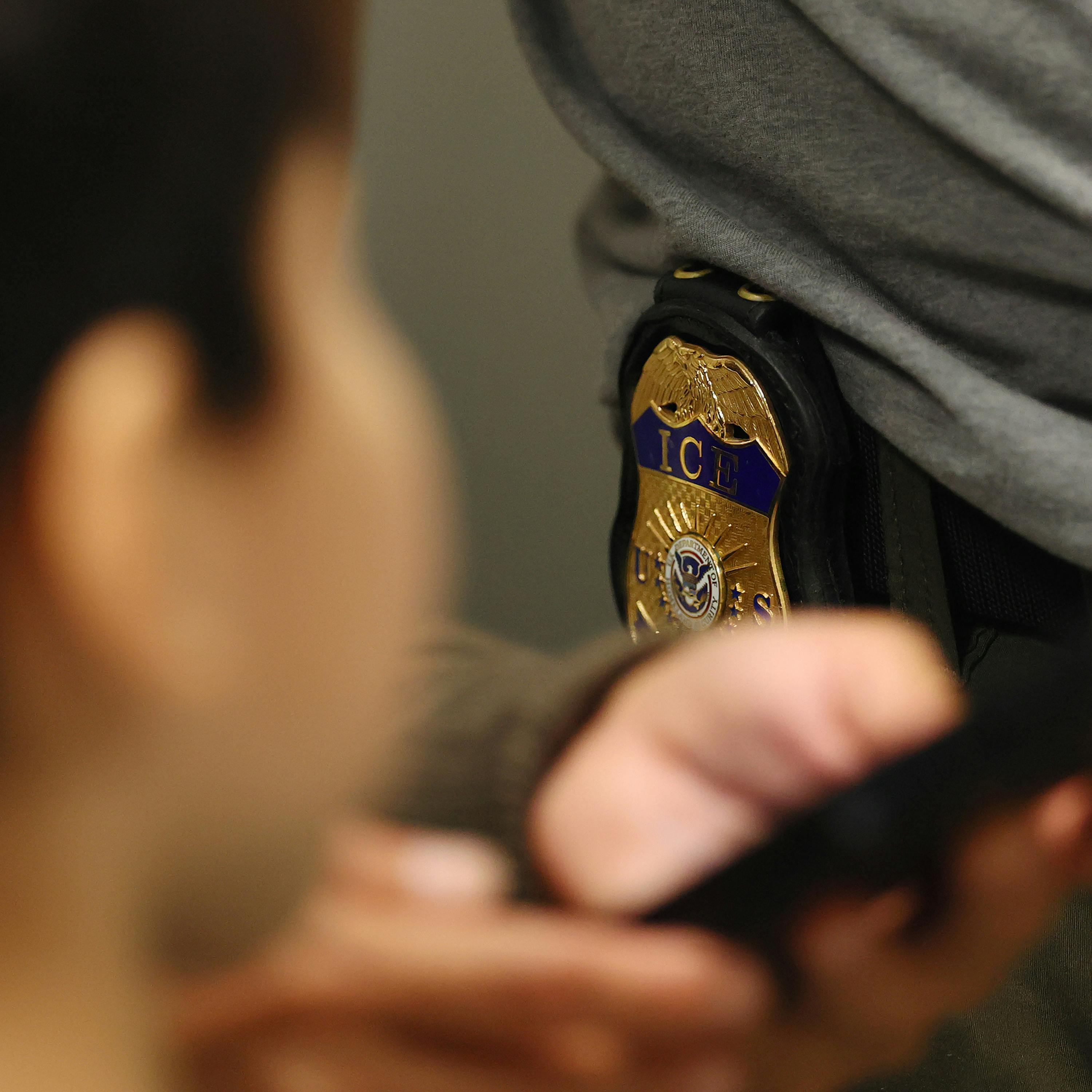
The wellness checks are done by ice, but carried out with help from a hodgepodge of law enforcement, including the FBI and even the dea. Asia told us that some clients her team works with have had agents show up at their door.
- [22:57]
Asia Sarwari
What's happening now is there are these wellness checks where people from various law enforcement agencies show up at the sponsors homes, bang on the doors. They're masked, they don't show any identification. And also the wellness people who are conducting the wellness checks are not contacting us, their attorneys, so we can provide them the information that they need.
- [23:18]
Hanna Rosen
And then. So what is the purpose then, do.
- [23:20]
Asia Sarwari
You think, to frighten them? I guess because we have reached out, we've had other clients who have had wellness checks, and we've driven out to go speak to whoever is there. But then they're gone by the time we get there. And then we leave our information, nobody will contact us. There doesn't seem to be any rhyme or reason to them, and it's not making anybody safer. What if it's just some strange person who is not affiliated with law enforcement agencies? None of them show any badges. None of them show any official paperwork. They're masked. How are we supposed to know that one person is a law enforcement agent versus a bad actor? We're not hiding our clients, so it just doesn't seem to result in what they want.
- [24:10]
Narrator
Want.
- [24:10]
Asia Sarwari
It's not really a wellness check.
- [24:14]
Hanna Rosen
About the wellness checks, which the White House officially calls a national child welfare initiative. An ICE spokesperson said in a statement. Our agents are doing what they should have been doing all along, protecting children. I'm trying to think of this from an oppositional point of view. Like if I'm listening to this and thinking like, why should the US Government provide funding for lawyers for people who cross unlawfully?
- [24:44]
Asia Sarwari
Well, I would say this is the overall focus is the kids need help and we're able to provide this help. We're trying to protect children. But then I also say seeking asylum is a basic human right. These kids and their sponsors, their parents or whoever is guiding them, they're trying to do things the right way. Most of them qualify for legal status. They just need someone to guide them on the path.
- [25:12]
Hanna Rosen
And when you say doing things the right way, what do you mean?
- [25:15]
Asia Sarwari
Well, you know, I use this phrasing because I've heard this, but the right way is that they have presented themselves to the government. They're not hiding, they are trying to find a legal status.
- [25:30]
Hanna Rosen
I think about this often, just kind of, what is the nature of a country that opens itself up for asylum versus the nature of a country that doesn't? Like, what decision are you making when you decide, oh, yes, we are a country that's going to support a process, a legal process through which you can apply for asylum. What does that say about you as a country versus if you. Because many countries don't. I mean, well.
- [25:55]
Asia Sarwari
And I also think that if you look at the other countries, they don't have the opportunity, it's not safe there either for them to seek asylum. So they really are coming to the first country that they are able to have some semblance of safety.
- [26:14]
Hanna Rosen
In this family's case, that's the country they came to. One where there was a system of protections in place, where they had an attorney to guide them. A known asylum process, even if not an easy one. But now the game has changed. This episode of Radio Atlantic was produced by Kevin Townsend. It was edited by Claudina Baid. Erica Wong engineered, Rob Smirciak provided original music and Sarah Krolevsky fact checked. Claudina Baid is the executive producer of Atlantic Audio and Andrea Valdez is our managing editor. Listeners, if you like what you hear on Radio Atlantic, you can support our work and the work of all Atlantic journalists when you subscribe to the atlantic@theatlantic.com listener. I'm Hanna Rosen. Thank you for listening, mom and dad. The school supplies you buy me this year will mostly end up in my mouth. Maybe shop low prices for school at Amazon so I don't eat up all your money, just something to chew on. Amazon spend less, smile more.