← Radio Atlantic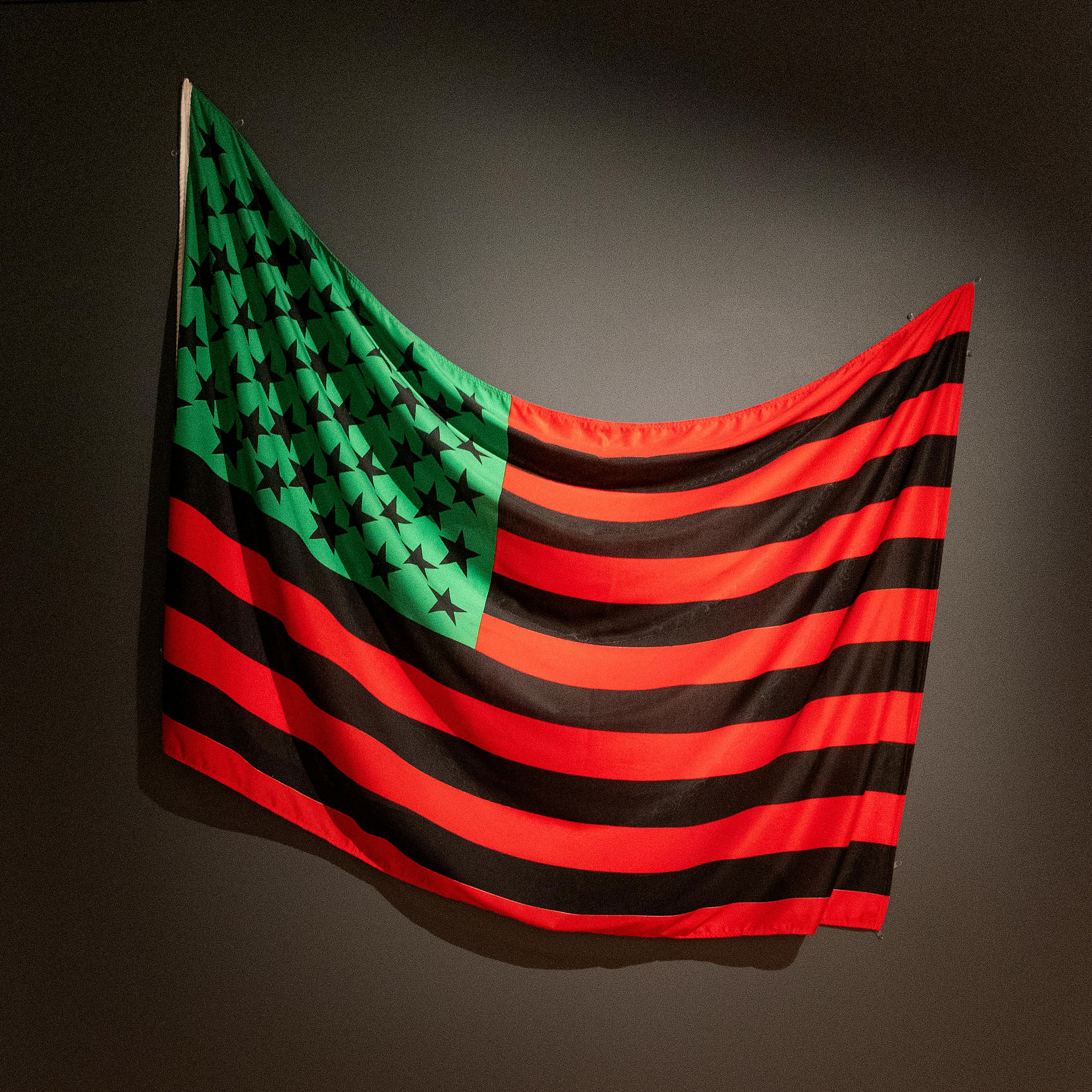
Radio Atlantic
Black History Month Is Different This Year
00:27:30
The efforts to whitewash history call for a new approach to memorializing Black history.
Loading summary
Transcript48 lines
- [00:06]
A
Over the many years of raising kids in D.C. public schools, I've experienced Black History Month the way many Americans do. I've helped my kids make poster boards and as they got older, PowerPoint. Celebrating the achievements of many famous black Americans. Jackie Robinson, Booker T. Washington, Harriet Tubman, Rosa Parks. Black History Month celebrations tend to follow what the Atlantic's Adam Harris calls a formula. But this year might call for something more radical.
- [00:37]
B
And our country will be woke no longer.
- [00:45]
A
I'm Hanna Rosen. This is Radio Atlantic. Here is a missive from President Trump that typifies his attitude about black history. Quote, the Smithsonian is all cap, where everything discussed is how horrible our country is, how bad slavery was. He posted over the summer, the president has restored Confederate names to army bases and removed lessons and images about slavery from federally funded institutions. Well, the fight to restore a slavery exhibit in Philadelphia, it is ramping up after it was dismantled last week. Just this week, a federal judge ordered the administration to restore panels at what's known as the President's House in Philadelphia that discussed, quote, the dirty business of slavery. The federal judge wrote, an agency cannot arbitrarily decide what is true based on its own whims or the whims of the new leadership. Today we talk to two of my Atlantic colleagues, writer and podcast host Adam Harris and staff writer Clint Smith, who's also the author of how the Word Is A Reckoning with the History of Slavery Across America. Adam, welcome to the show.
- [02:01]
C
Thanks so much for having me.
- [02:02]
A
Clint, welcome to the show.
- [02:03]
B
It's great to be here.
- [02:04]
A
So, Clint, as someone who has studied the presentation of history and specifically black history, how would you characterize this administration's approach?
- [02:14]
B
Antagonistic. I think we are witnessing an administration working with an unsettling intensity to attempts to distort, erase, manipulate the history of this country and within that, manipulate the history of black Americans, role, contributions and experiences in America. And what I mean by that is I think, you know, let's take slavery, for example. The President of the United States said that the Smithsonian museum, for example, spends too much time talking about how bad slavery was. For me, my sense of things is that it is not the case that this administration believed slavery didn't happen, or not even that they believed that slavery wasn't bad. I think they understand that it was bad. But what happens is if you talk honestly about the horror and the brutality and the cruelty of what slavery was, you then have to talk about how the residue of that system continues to inform the contemporary landscape of inequality today. And I think it would fundamentally reorient people's relationship to not only the history of this country, but the contemporary reality of this country. And that's something that I think that so many folks in this administration want to avoid because they want to be able to tell themselves that the America that they believe to be true, the America that exists today, is one that. That is the result singularly of people's hard work or deservedness, when there's obviously another story to be told there.
- [03:49]
A
And what is that desire about. Cuz Adam Trump talks about wanting monuments to be uplifting, not to cause people shame. What does that mean?
- [03:58]
C
Yeah, I think so. When you think about the idea of uplifting, right. It's sort of this notion of celebrating the positives of someone's character, right. So as to say George Washington was. Was the founder of the nation and led the revolution, was one of the greatest men of his time. And if you do that and you sort of say this clean history of George Washington without the additional stories, right. The fact that George Washington rotated his enslaved workers from Philadelphia to Mount Vernon in Virginia so that they would not earn their liberty under Pennsylvania law, right. Because after six months, you started to get your freedom. And so if you start to add that complicating narrative, it doesn't paint this sort of clean image of our leaders.
- [04:49]
A
And that just feels bad. Like, what's the.
- [04:51]
C
So there are a couple of things that that does, right? When you start to question one of the decisions, it also makes you question the other things, right? If you start to say, well, this person that we've painted as someone who did an unqualified good did also unqualified bads.
- [05:07]
B
And I think the other part of this, too, is that if you have to tell a new story about Washington and you begin to tell a new story about Jefferson, that includes the sort of unsavory, so to speak, parts of their legacy, which is to say, the more honest parts of their legacy, if you have to tell a new story about these men, it also means you have to tell a new story about America's founding. If you have to tell a new story about America's founding, it means you have to tell a new story about this country. And if for many Americans, if you have to tell a new story about America, it means you have to tell a new story about yourself. And that taps into something that is, like, existential, that serves as a catalyst to, like, a fundamental crisis of identity. Because who people believe they are is consciously and subconsciously tied to a story of America that they have been told over the course of generations, through school, through family, through community. And when you untether them from that notion of reality that they've come to believe, it's incredibly jarring.
- [06:05]
A
Yeah, I can see it's disorienting. I feel like we need to ground this conversation in a few examples. You started by using the word intensity of the things that the Trump administration has done. Which one has stuck out to you or which. Just give us a few examples.
- [06:19]
C
Yeah, There are a handful, right. It's the renaming of Confederate memorials and Confederate monument. It is the US Naval Academy removing books from their library. It's the Air Force stripping back the teaching of the Tuskegee. And actually, one of the things that Clint was saying about people having to reassess their own legacies. Right. I remember we had a conversation about his book where he's saying, if you are having to ask questions about the ways that your grandparents, the people who took you fishing, and the people who you sat on their laps and they read books to you when you were younger, and you have all of these great memories of them, if you have to reassess how they got to do the things that they got to do, then it really does jar you and makes you fundamentally reassess your own sort of standing in the world. And so this sort of broader project of saying, well, if we pare back some of the things that the Tuskegee Airmen had to do to become the Tuskegee Airmen. Right. Black History Month sort of calls us to remember that these great people did great things. But the question is, like, why did they have to do those great things? Why did Jackie Robinson have to integrate baseball? Why did Martin Luther King have to deliver his speech at the March on Washington?
- [07:32]
B
Right.
- [07:32]
C
It is because the nation did not have this clean story of progress.
- [07:37]
A
Clint, I'm curious to put this in some kind of context. What the Trump administration is doing now, which you described as having a certain degree of intensity versus previous eras in American history versus Trump won, because there's always a push and pull. I mean, I imagine countries rarely do just clean memorialization of their sins, you know?
- [07:57]
B
Yeah. You know, what's interesting is that this is the pushback against black progress. Black history, that in and of itself is not new. What scholars of black history and historians talk about all the time is that in moments in which there are periods of black social, political, and economic progress, there is often pushback to that progress. So after the Civil War and after Reconstruction, there was obviously an intense sort of pushback to the progress that was made following the Civil War through Reconstruction, then after the civil rights movement, there was an intense pushback. And what we're seeing now is a pushback to much of the era, both of Barack Obama's presidency, but then later the Black Lives Matter movement, which sort of intensified following the murder of George Floyd. But it is important to note that even while we are experiencing the echoes of this history and we're experiencing the sort of nature of the sort of cyclical elements that are there, this also is a pretty unique iteration of it in the way that it is state sanctioned. In the context of the civil rights movement, there was intense pushback or even during the civil rights movement. So much of the pushback, it would come from states and it would come from extrajudicial forces, but it was what the civil rights leaders were appealing to was the federal government to come and protect them.
- [09:26]
A
Oh, that is so important. I get that. So what you're saying is mostly the pushback is cultural. Like it's cultural. It comes from state governments, but this is completely top down.
- [09:36]
B
Oftentimes. Yeah. I don't think that we have seen a level of antagonism from the federal government who historically, you know, the federal government or the Supreme Court in the context of the Warren Court, have been the thing that allowed black folks to have some sort of support outside of the context of their specific geographic and political reality in a certain state or in a certain community. And that now is gone. There is no federal government to appeal to. In fact, the federal government is the antagonist.
- [10:13]
A
After the break is a time to start practicing Black History Month differently.
- [10:29]
D
Hi, I'm Van Newkirk, senior editor at the Atlantic. When I publish a story, my hope is that it's illuminating enough that you'll want to share it with others. Because I know that when I read a great article, I want to give that experience to someone else. That's the spirit behind the Atlantic's new Premium plus subscription, which includes unlimited access for you and three other people, maybe their family, maybe their friends, whoever they are, you can now share all of our journalism with them for less than $4 a week for a limited time. You'll also get the beautiful Atlantic scrapbook and a special tote bag. Subscribe to Premium plus today@theAtlantic.com Plus, or that's Plus.
- [11:26]
A
So given everything you both have said, which is we're in this unusual position where the federal government is a major actor in. What do we want to call it? Storting? Whitewashing history, both prettifying has proved any of those, it's Black History Month, which is this month, in this year, in this moment. Is there an argument for thinking of or practicing Black History Month differently?
- [11:52]
B
You know, I've been thinking a lot about this. I was recently in New Orleans for Mardi Gras. And I bring my kids. I'm from New Orleans. That's my hometown. My parents still live there.
- [12:03]
A
Happy Fat Tuesday.
- [12:04]
B
There you go. And I want my kids to have. I bring my kids often to New Orleans. Cause it's a place that means a lot to me, and I want them to have a connection to that city. And one of the things that we did, kind of between the celebrations and the festivals and the parades, is we got in the car with my mom and went to her elementary school, which is no longer there. It's a school that was called T.J. semmes. And we went there because my mom was among the first black students to desegregate that school or to integrate that school. She was there after, you know, there were the four little girls, including Ruby Bridges, who integrated New Orleans schools in 1960. And I brought my kids there with my mom in this moment because I've been thinking a lot about what it means for people to understand black history not only as something as, like, about Rosa Parks and Frederick Douglass and Martin Luther King, but also as this thing that's the people who are right next to us, right? Like their grandmother. Not Martin Luther King, not Rosa Parks, not these people in the books. Like, their grandmother was among the first wave of students to integrate a school in New Orleans. And I want them both to understand that because of their proximity to it. But also in this specific moment, I think it's a reminder that, like, they can. The Trump administration can try to change a museum. They can try to change how things are taught in school. They can try to take away DEI in higher ed. They can try to do all of these things. But we still, within the sort of micro units of families and communities, still have the power to share this history in ways that I think can be really meaningful for all of us and for young people. And it wasn't just for my kids. Like, I got to hear my mom talk about her experience going into this school. I think all of these things, for me, when I think of Black History Month, it's about both understanding and appreciating the sort of Jackie Robinsons and the like. But it's also about remembering that those larger figures are only possible because of the sort of what's happening on the most granular level.
- [14:12]
C
Actually, to that point, Right. It is to say that it's the actions of each individual. Right? It is. You think historically, it's like, oh, well, Frederick Douglass actually didn't have to write those things that he wrote. And they praised him because it was like, oh, that was a really brave thing of you to do. Our grandparents didn't have to send our moms and dads to the schools that they sent them to. A lot of people didn't, where it's like, actually, it's a little bit too dangerous to do that. And similarly, right. My mom was born in 1963 in Alabama. Four little girls were killed in a church. The sanctuary, the place where you're supposed to feel safest. This is living history that individuals experience and continue to experience, and it's the individual actions that people take.
- [14:58]
A
And why is it important to remember history in its difficulty? Even within families, people keep secrets for decades and decades, and they don't like to talk about the bad things that happen. It's a common human impulse. So why is it important to remember something like what your mother went through?
- [15:22]
B
I tell people all the time, america is a place that has provided unparalleled, unimaginable opportunities for millions of people across generations in ways that their own ancestors could have never imagined. It has also done so at the direct expense of millions and millions of other people. And both of those things are the story of America. It's not one over here and one over there. You get to pick this one and not pick that one. Both of those things are the story of this country, and you have to hold both of those realities alongside one another.
- [15:49]
A
Why?
- [15:51]
B
Well, I think when we think of ourselves, when I think of who I am as a person, I'm someone who's done things in my life that I'm proud of, and I'm someone who's done things in my life that I'm not proud of because I'm human and I make mistakes. And what I try to do and what I try to teach my children is you acknowledge those mistakes, you try to learn from those mistakes to become a better version of yourself in the future. And so if that's the standard that I hold myself to, the standard I hold my children to, the standard I hold my friends and loved ones to, why would I not hold my country to that same standard? And I think the implications for it are that if you don't like. I remember being a kid growing up in the 90s in New Orleans and being inundated with these messages about all the things that were wrong with black people, that the reason there was no. There was so much violence and poverty and inequality in the black community was because of something that black people had done or had failed to do. And it was coming from the media, it was coming from politicians, it was coming from celebrities, it was coming from, you know, everywhere. And I remember this feeling of hearing these messages and not having the historical context or intellectual toolkit with which to push back against it. And what I felt and experienced as a child was a sort of paralysis. It was like an emotional paralysis where I knew what I was hearing was wrong, but I didn't know how to say it was wrong. I didn't have that language. And it wasn't until years later, when I encountered the scholarship and I encountered the art and I encountered the film and I encountered the history that explained that, like, oh, the reason one part of New Orleans looks one way and another part of New Orleans looks another way is not because of the people in those communities. It's because what has been done to those communities or what's been extracted from those communities generation after generation after generation. And when you learn that history, it is so profoundly freeing and so profoundly liberating, because this country can't lie to you anymore.
- [17:39]
A
Adam, this week, there was a pushback against this trend we're describing from a federal judge who ruled about the panels at what's known as the president's house in Philadelphia that were taken down. It was quite a strong ruling. She quoted Orwell. She said, an agency cannot arbitrarily decide what is true, because how significant is that ruling? Like, have you seen other kinds of pushback like that?
- [18:03]
C
We have seen federal judges push back pretty forcefully against the Trump administration's dictates, their executive orders and maneuvers that they made, right? Whether that is removing the placards without consulting the city in an effort to sort of say that the history that they want to say is a true history. Right? The order functionally says, right. This is. It can't just hinge on whether there's a transfer of power, what we actually believe about what we're saying, right? It is a very Orwellian view of the way we do history. Right? And it is, I think Americans, people generally think of history in a different way than scholars think of history, right? Where, yes, there are places and dates and names, but how those things are remembered is sort of subject to your interpretation oftentimes. But there are realities. The fact that George Washington transported people back and forth and wrote to other people to say that hey, how can I get around this law that says that I can't keep people here for longer than this period of time? Those are just realities. You cannot change the facts of the situation. You can only change how you remember those facts. And if you decide to publicly display those facts. And in a sense, Right. What we have seen over the last year and change in a really aggressive fashion, is that effort to remove those public memories of the facts that happen in this country.
- [19:43]
A
Although that conversation about facts does often confuse me a little bit. Like, what we do do is decide which facts we're gonna present, which is what the Trump administration is saying. Like, why do we have to put those on display?
- [19:57]
B
I mean, I think it goes back to what we were saying before. Part of what you. I was a high school teacher, and so I feel very strongly about the idea that the Trump administration would suggest that the part of why you shouldn't teach so much about Washington owning slaves or Jefferson owning slave people or why the presidential house should remove these things is because they. They don't want. They would say, because they don't want so much emphasis on it. And they would say that teachers and museums are attempting to indoctrinate students. They use the language of indoctrination. And what I find to be true is that there is this attempt to conflate or to make it so that the teaching of empiricism, like of primary source realities, to suggest that that is somehow an ideological project rather than an empirical one. Right. The idea that what you have to do, what I tried to do when I was a teacher and what I try to do as someone who writes about history, is not necessarily to convince the reader to believe X or believe Y, but it is to lay out all of it. I'm actually not interested in if you think Thomas Jefferson was evil or good. What I do want you to do is sit with the fact that he both wrote the Declaration of Independence, and he also wrote notes to the state of Virginia that black people are inferior to whites in both endowments of body and mind. What I want you to do is to sit with the fact that he wrote, you know, that all men are created equal and that he enslaved 600 people, including four of his own children. My role is not to tell you what to think, but what I do have to do is present the evidence. What a teacher does have to do is present the evidence. What a museum does have to do is present the evidence to say, this is the totality. This is the full picture. My understanding is that the presidential House doesn't say anywhere. George Washington was an evil man. George Washington was bad. What it says is that George Washington did XYZ in the context of founding America, that he stepped down after two terms, you know, et cetera, et cetera. And also says, and there's this other part of him that he owned a plantation in Mount Vernon that, as Adam said, he brought his slaves back and forth to avoid having to emancipate them. And what we as Americans have to do is to sit with all of that.
- [22:28]
A
As you both know, this week, Jesse Jackson died. Did you find yourself thinking differently about him as we start to hear his voice on the radio this week? Cause I imagine, like most people, you just haven't thought about him in a minute.
- [22:41]
B
You know, the thing that I thought about more than anything after I heard about his passing, you know, we've been talking about what it means to have these conversations with your children and to attempt to ensure that they understand their proximity to black history. You know, when I told my daughter who just turned 7, about how Jesse Jackson was with Martin Luther King when Martin Luther King was killed, it blew her mind, right? Because in her mind, Martin Luther King is this guy from, like, long, long time ago, right? Like, Martin Luther King and Jesus were around at the same time, right? And so for her, just to watch her little eyes be like, oh, there was a person who was alive until just now who was with Martin Luther King, like, who worked with him, who was an adult with Martin Luther King when he was killed. What it did, I think, was, again, helped remind her that this history that many people say was a long time ago, just, in fact, wasn't that long ago at all.
- [23:51]
A
Yeah, I was surprised at my reaction to the I am somebody speech, which I heard when I was in college. He came to my college campus. He spoke to us. I may be poor, but I am somebody. And I realized it settled in my memory almost like a song, like a rhythm. I am somebody. But just listening to the words, you know, I am poor. I am unemployed. I am in prison. I may be in jail, but I am, and I am somebody. I was really moved by it. Like, I actually listened to what he was saying. I think probably for the first time, you know.
- [24:31]
C
Yeah. This idea that history isn't so far away, that we are not living outside of history, that we really are living inside of history, and that his passing really signals that that truth continues, and it becomes incumbent on that next generation to pick up the mantle of carrying that truth forward.
- [24:52]
A
I sought to make America better and
- [24:57]
B
how do you make America better?
- [25:00]
A
By challenging America to be better and to be good. Thank you, Adam.
- [25:07]
B
Thank you so much.
- [25:08]
A
Thanks, Glenn.
- [25:09]
B
Thank you.
- [25:09]
A
It's dark, my friends. With all surrender, the morning comes. I know it's dark, but the morning comes. This episode of Radio Atlantic was produced by Janae west and Rosie Hughes. It was edited by Claudina Baid. Rob Smirciak engineered and provided original music. Genevieve Finn, fact checked. Claudina Baid is the executive producer of Atlantic Audio, and Andrea Valdez is our managing editor. Listeners, if you enjoy the show, you can support our work and the work of all Atlantic journalists when you subscribe to The Atlantic. @theatlantic.com listener I'm Hanna Rosen. Thank you for listening.
- [26:11]
D
Hi, I'm Van Newkirk, senior editor at the Atlantic. When I publish a, my hope is that it's illuminating enough that you'll want to share it with others, because I know that when I read a great article, I want to give that experience to someone else. That's the spirit behind the Atlantic's new Premium plus subscription, which includes unlimited access for you and three other people, maybe their family, maybe their friends, whoever they are. You can now share all of our journalism with them for less than $4 a week for a limited time. You'll also get the beautiful Atlantic scrapbook and a special tote bag. Subscribe to Premium plus today at theatlantic.com plus that's P, L U S.