← Radio Atlantic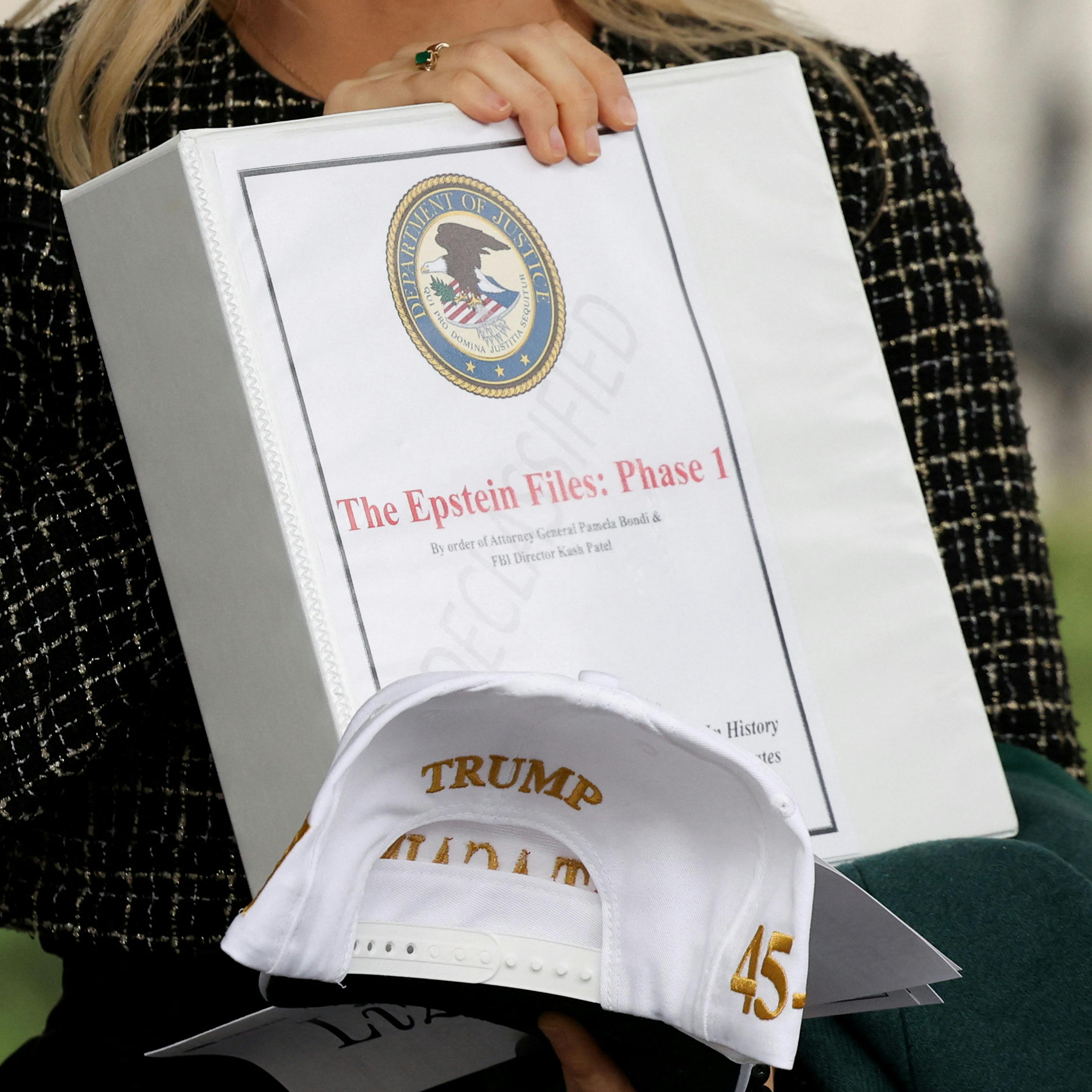
Radio Atlantic
Epstein Conspiracy, or Epstein Conspiracy Theory?
00:29:32
Julie K Brown broke the Epstein story seven years ago. She saw this latest twist coming.
Loading summary
Transcript58 lines
- [00:04]
Adrienne LaFrance
It's this sound that provides so much awe and wonder. If you've never listened to Ludens before, here you go.
- [00:14]
Meghna Chakrabarti
I'm Meghna Chakrabarti. Join me Enpointe for a week of wonder to explore what captivates our minds, illuminates our humanity, and both delights and confounds us. Five episodes, one each day.
- [00:28]
Julie K. Brown
Listen and follow onpointe wherever you get your podcasts.
- [00:36]
Adrienne LaFrance
This episode is brought to you by Avid Reader Press. Legendary investor Ray Dalio's new book, How Countries Go the Big Cycle, explains the mechanics behind big debt crises. Larry Summer says Dalio's brilliant, iconoclastic approach is an invaluable resource. And Hank Paulson says it provides a solution to what is the biggest and most certain threat to our prosperity. Read it to understand the greatest economic issue of our time. Available now wherever books are sold.
- [01:15]
Meghna Chakrabarti
The.
- [01:15]
Adrienne LaFrance
DOJ may be releasing the list of Jeffrey Epstein's clients. Will that really happen?
- [01:21]
Meghna Chakrabarti
It's sitting on my desk right now to review. That's been a directive by President Trump.
- [01:27]
Julie K. Brown
Would you declassify the Epstein files? Yeah. Yeah, I would.
- [01:31]
Meghna Chakrabarti
All right.
- [01:31]
Adrienne LaFrance
I guess I would. I'm not ever gonna let this story go because of what I heard from a source about Bill Clinton on a plane with Jeffrey Epstein. I'm not letting it go. Why is the FBI protecting the greatest pederast, the largest scale pederast in human history?
- [01:45]
Julie K. Brown
We have flight logs, we have information.
- [01:48]
Meghna Chakrabarti
Names that will come out.
- [01:50]
Julie K. Brown
Is it gonna be shocking?
- [01:53]
Meghna Chakrabarti
I don't see how it's not shocking. This is Radio Atlantic. I'm Adrienne LaFrance, executive editor of the Atlantic, filling in for Hanna Rosen, who is away this week. For years, President Trump and his allies have promised to make bombshell news on the Jeffrey Epstein case. Many conspiracy theory obsessed Americans are preoccupied by Epstein. And Magaworld has long promised that Trump would be the one to release secret files about him. The saga is catnip for conspiracy theorists. The thing is, there are legitimate questions about Epstein, so it's hard to tell what's real and what's made up. Until recently, Pam Bondi, the attorney general, repeatedly said that she had specific new information about Epstein. But over the past two weeks, things got a lot more interesting and a lot more complicated. The Department of Justice and FBI released a memo today saying there was no Jeffrey Epstein client list, contradicting previous promises to provide it. Last week, the FBI released a memo saying it had reviewed all of its evidence on Epstein. Some 300 gigabytes of material and it announced that it does not plan to release any more information. The Department of Justice now says there is no Epstein client list and they say there's no evidence that Epstein blackmailed prominent people. This is pretty much the exact opposite of what Trump world has been claiming all along. Now, Americans are accustomed to Trump and his allies making outrageous claims without evidence. But this particular about face has MAGA tearing each other apart with some major influencers turning on previous allies and many Trump supporters criticizing Trump himself for what seems to them like a cover up.
- [03:37]
Adrienne LaFrance
President Trump facing unprecedented criticism from some of his biggest supporters. He's dead for a long time. He was never a big factor in terms of life. I don't understand what the interest to what the fascination is.
- [03:52]
Meghna Chakrabarti
This is a wild story politically. So wild that it can be easy to lose sight of the fact that there are real crimes underlying the larger scandal. Like many people, I feel like I'm losing the thread on all of this. It's extremely hard to understand which aspects of this are known to be true, known to be false, or somewhere in the muddy middle. So on this episode, we're going to try to make as much sense of this as we possibly can.
- [04:16]
Julie K. Brown
This is going to be like the JFK assassination. Long after you and I are gone, there's going to be people that are going to be writing and looking at this and writing books about it. I just know it.
- [04:28]
Meghna Chakrabarti
That's Julie K. Brown. She's an investigative reporter at the Miami Herald and she probably knows more than anyone in the world about this case. In 2018, Julie published a series of deeply reported stories about Epstein that led to the effective reopening of the case. The next year, Epstein was indicted on federal sex trafficking charges. Then a month after his arrest, he was found dead in his jail cell. Julie, hi.
- [04:53]
Julie K. Brown
Hello.
- [04:54]
Meghna Chakrabarti
Let me start by asking you about the last week. Are you surprised by all of this drama or have you been basically sort of like waiting for this moment where Trump world says, oh, just kidding, nothing to see here.
- [05:06]
Julie K. Brown
I've been waiting for this moment. I could see this like it was a train wreck that you can't take your eyes from because you know it's going to happen. And this does not surprise me. What would have surprised me is if they had really released files, because I really didn't think they were going to.
- [05:25]
Meghna Chakrabarti
And is that because there aren't files to release or because of what might be in them?
- [05:31]
Julie K. Brown
Both. I mean, there are files to release, but I knew that they probably contain a lot of sensitive information and that there Would be, you know, a lot of hand wringing over what they could release, if they could release them. You know, the other thing is there is an ongoing criminal appeal of a criminal conviction attached to some of these files, which is the files that contain the Maxwell, the Gaitland Maxwell case. And so I would think that legitimately, there might be some things there that they probably couldn't release because it's. The case is still on appeal. But nevertheless, there's still a lot of files that date back to probably 2005, even, that they could have released if they elected to do so.
- [06:21]
Meghna Chakrabarti
And the Maxwell case is the affiliate of his who is in prison now, is that right?
- [06:25]
Julie K. Brown
That's correct.
- [06:27]
Meghna Chakrabarti
Let's establish some of the basics. I find myself watching all of this unfold and beginning to sort of lose sight of, like, what actually is true, what is speculation. Talk about what Epstein was accused of, what he was indicted for. What do we know for sure?
- [06:44]
Julie K. Brown
Well, let's start with something that almost no one really starts with in this whole scandal that's been happening over the past week, and that is the victims. Jeffrey Epstein abused probably at least 200 young girls, some of them reportedly as young as 12 years old. Over a span of decades. He also sexually abused young women who are in the area of 18 to 25 years old. But this is a case about a man who used these women as pawns to further his own ambition and finances, in that he used them not only for his own sexual gratification, but also for the sexual gratification of others that he had hoped to do business with. And this was all part of the sex trafficking operation. He had several different, you know, offices, so to speak, with this operation. He had a whole staff that helped him with this. He had legal people that helped him with this. So this was just not Epstein having sex in his. In his mansion with a couple of underage girls. This was a whole operation. And I think people sometimes lose sight of the fact that he was able to continue doing that because our federal government and our criminal justice system failed these victims and never really pursued this case with the seriousness and intensity that they should have from the very beginning. And that's why he got away with it. It's why he was released way back in 2009, and he was able to continue doing the same things all over again after his release from this plea deal that he initially negotiated two decades ago with the federal government.
- [08:53]
Meghna Chakrabarti
Well, and talk about that time period, when you think about the lag in, you know, taking this operation seriously, which you know, does that cross different presidential administrations in terms of the doj, or is there one period in which it was particularly egregiously ignored? How should we think about that?
- [09:11]
Julie K. Brown
Sexual assault doesn't discriminate based on political party. There were bad people on both sides of the political aisle in this story. And focusing on the political part of it misses the point. And the point is that our justice system, system is terribly broken. Our system is weighted unfairly in favor of people who have a lot of power, a lot of money, and a lot of influence.
- [09:41]
Meghna Chakrabarti
It's such an important point. And when you hear all these conspiracy theories, I mean, how do you sort between the theories that are just like totally outrageous and you think are not worth dwelling on versus, you know, perhaps an example of what might be called a conspiracy theory, but you as an investigative reporter think is actually, you know, a legitimate line of questioning?
- [10:05]
Julie K. Brown
You know, that is this scandal in a nutshell, in that we have some competing forces here. We have the forces of truth and facts versus the forces of conspiracy that want to fan theories in order to further some kind of agenda. Whether it's a political agenda or there's a million agendas. Some of these influencers, their agenda is to get more viewers or more listeners. So there's these competing forces here with journalism today, and it's not just with the Epstein story, but with almost everything. And it's a real struggle, to be honest with you. That's why I always try to bring these questions back to, to what I know, based on my reporting, based on court records, based on, you know, police records, based on interviews that I've done. And so when I'm asked about some of these so called conspiracy theories, I sort of direct it toward. Here's what I do know.
- [11:10]
Meghna Chakrabarti
Let's talk about the client list, or what's sometimes called the Epstein client list. Is it real? Where did this idea that it exists come from? What do we know?
- [11:21]
Julie K. Brown
That whole thing about the so called list is really a red herring. I think it morphed out of this sort of a phone directory that Ghislaine Maxwell absolutely is responsible for compiling on a computer way back in 2005, 2006. It's public pretty much. The phone numbers are redacted out of it, but if you Google it, you could find, they used to call it, quote unquote, the black book. That was sort of the nickname that it was given. And it was these copies that were printed out from a computer. And every time Epstein or Maxwell met somebody important, they would get their Contact information, and they would put it on in this file. And there were people like Donald Trump on that list and celebrities on that list. But there were also his gardeners were on that list, his hairdresser, his barbers, his electrician. I mean, it was a comprehensive list. So it was pretty clear that this was not a black book in the sense of these were all his clients. It was just a phone directory. But the reason why they called it a black book is because when the FBI first got its hands on it, there was someone who was trying to sell it to one of the lawyers who represented the victims. He sort of circled some names on that list of people that he was trying to say were somehow connected to Epstein in a more nefarious way. Whether it was business or whether it was sex trafficking, people just started then on social media started to refer to something called a client list. It took a life of its own into that. Oh, Epstein had a client list. He actually had a list of clients that he sent girls to or, you know, that he sent women to. I never believed that there was ever a list like that because quite frankly, Epstein didn't need to do a list like that. He, you know, the bad actors here, the people that he sent some of these victims to, they know who they are. And he. He really only used this whole sex trafficking operation as a way to pressure them to help him in some way to either invest in or give them his money. To invest or just to make money. So as long as they were cooperating with him and doing that, there was no reason to say, I have you on a list. That wasn't the way he operated. But that said, there are still names in those files of people who were involved with Epstein's operation. He could never have done this all by himself. He had people we know he had assistants, we know he had lawyers. We know he had people helping him get visas for women that he was recruiting from overseas countries. So there was a. A network here of people that were working for him and helping him.
- [14:40]
Meghna Chakrabarti
We're going to take a quick break. More with Julie in just a moment.
- [14:49]
Adrienne LaFrance
Right now at the Home Depot, you'll find storage solutions made to fit your needs. Grab an HDX tough tote to protect your tools or keep your sports equipment contained with reinforced snap fit lids. Or stack up and make better use of your space with bins and totes built to last. Whatever your story, we've got the gear to keep it organized and protected at the Home Depot. How doers get more done.
- [15:19]
Meghna Chakrabarti
You know that one friend who somehow knows everything about money.
- [15:23]
Julie K. Brown
Yeah.
- [15:23]
Meghna Chakrabarti
Now imagine they live in your phone. Say hey to Experian, your big financial friend. It's the app that helps you check your FICO score, find ways to save, and basically feel like a financial genius.
- [15:35]
Julie K. Brown
And guess what? It's totally free.
- [15:37]
Meghna Chakrabarti
So go on, download the Experian app. Trust me, having a BFF like this is a total game changer. Let's talk for a moment about the Donald Trump of it all. There are some conflicting data or information to reconcile here, and I'm really interested to hear how you think about this, because we're talking about a man in Trump who has bragged about grabbing women without their consent, who is credibly accused of rape and sexual assault. And so, on one hand, you have this. You point out that the Epstein list is a red herring that Elon Musk claimed without evidence that Trump is on this list, which you're saying probably doesn't even exist. On the other hand, there's good reason, empirically grounded reason, to question Trump's record of sexual or alleged sexual abuse. And so I'm curious how you think about in this moment when you have the Trump administration waving this away, saying, there is no list, Trump saying, this whole line of questioning is boring. What do you make of this? How should we think about how he fits in or doesn't to this larger scandal?
- [16:59]
Julie K. Brown
Well, it's hard to know. We don't really know how he fits completely into this scandal. I was finally forced to say something during the election when there was so many of those conspiracy theorists out there on the left who were trying to directly link him with Epstein's crimes. And there's absolutely no evidence that he was involved in Epstein's crimes. That's just. There isn't. And I've pretty much have read almost everything that's out there. But that doesn't mean that it's not possible. I mean, and I would say that with everything that's happened the past week, it certainly raises suspicions that maybe there is more to his friendship with Epstein than maybe we know.
- [17:51]
Meghna Chakrabarti
Right. And to your point about them having had a relationship, you know, Trump himself has said that they were friends. In 2002, there was an interview that Trump did with New York Magazine. I'm going to read this quote from Donald Trump at the time. He says, quote, I've known Jeff for 15 years. Terrific guy. He's a lot of fun to be with. It is even said that he likes beautiful women as much as I do. And many of them are on the Younger side, no doubt about it. Jeffrey enjoys his social life. So given that and given everything, you know, more importantly, do you think there's. It's possible that Donald Trump didn't know what Epstein was up to?
- [18:30]
Julie K. Brown
No, he had to know. I think he absolutely knew. The reason why he knew is one of the impetuses for their alleged falling out was Epstein went to Mar A Lago at one point and he hit on one of the young daughters of one of the other club members. And we were told by multiple sources that that's why Trump and him broke it off, because Trump banned him from Mar A Lago because of that. So I honestly think back in the culture that existed back then and to some degree, of course, still today, that some of these powerful men really believed they were helping these girls and women. They really felt that by paying them, this was a good thing. We're helping this woman. We're helping this girl to get an education. They still sometimes look at these cases and say, what's the problem here? The women got paid. They had to know what they were doing. There is still this cultural problem that we have in this country that powerful men who take advantage of vulnerable women or younger women don't do anything wrong.
- [19:49]
Meghna Chakrabarti
You're someone who has spent years trying to understand the truth about all of this. If you had a magic wand and could wave it and get the question you most want answered answered, or see the document or whatever it is, what is the thing that you most wish you could know once and for all about all of this?
- [20:09]
Julie K. Brown
I think the one nagging question for me, because I know so much about the case, to be honest, goes all the way back to 2008. And I want to know the person in the Department of Justice who said, don't charge Epstein. If you're going to charge him, charge him with just something minor and let's get this done.
- [20:34]
Meghna Chakrabarti
And that 2008 case, just sort of remind us how that came about.
- [20:39]
Julie K. Brown
Well, there was intense political pressure because initially the case was a local police case. It was the Palm beach police who found a litany of girls that were going in and out and having sex with Epstein at all hours of the day and night. And they wanted to, of course, charge him with sexual battery or rape or, you know, something like that on a local charge. And initially, the state attorney in Palm beach county, where this happened, was completely on board with the police case and their investigation said, go after him. We're going to nail him. We're going to arrest him. And then somebody got to him. Epstein lawyered up with some pretty powerful lawyers, including Alan Dershowitz. And they started getting dirt on the girls, trying to show that they didn't live, you know, the best lives. It was intense. What Epstein, he mounted an unbelievable pressure campaign, and I think he thought that it would end with the local police. Once the state attorney, which the state attorney finally did sort of say, I'm not going to charge him. But the police, to their credit, never gave up on it. They did everything they possibly could have done to try to move the needle and get him put away. And of course, at that point, once the feds took over, then Epstein had a bigger problem, and then he needed to hire more lawyers who were politically connected in Washington. And it was then, at that point, it rose and rose to the White House, really, where the case just kept rolling. And that was part of my. Really, the biggest part of my investigation was looking at how Epstein and his lawyers manipulated our Justice Department in a big way. They basically got almost everything they wanted, except they wanted the case to completely disappear. They wanted him to walk away without anything. And what they ultimately got was this sweetheart deal that they kept secret for a year. You know, the victims never even knew exactly what happened until a year later when finally a judge unsealed the agreement.
- [23:04]
Meghna Chakrabarti
So for you, it's not, you know, the Epstein list or the jail cell video or the circumstances around his death, but really, who was that person in the first place who decided that he should walk? Basically, yeah.
- [23:18]
Julie K. Brown
Yeah. Who were the people behind that in the beginning? Because if they had done their jobs, all these people in 2006, 7 and 8, if all those people working for us, the American public, had done their jobs, we wouldn't be sitting here right now. A lot of those victims would have never been victimized.
- [23:41]
Meghna Chakrabarti
So it sounds like under the Bush administration primarily. Or does this go into Obama's DOJ as well?
- [23:48]
Julie K. Brown
No, it was primarily initially Bush's administration.
- [23:53]
Meghna Chakrabarti
What should happen now? If there's any possibility of justice or truth or any sense of closure in this scandal, what is it going to take and what do you think should happen next?
- [24:08]
Julie K. Brown
I go back to when I took up this case. Initially, it had been written about. A lot of people knew. There had been tons of stories about, you know, the Lolita Express, Epstein Island. You know, this conspiracy theories cycle started way back before I even took up the investigation. But I was looking at it from a different vantage point as a journalist about exactly what happened. I looked at it sort of like a cold case detective. Just pretend I know nothing about the case and start all over. And I think, think at this point, that's probably the same thing that the Justice Department in an ideal world, should do, because this is never going to end. This is going to be like the JFK assassination. Long after you and I are gone, there's going to be people that are going to be writing and looking at this and writing books about it. I just know it. And so I think in an ideal world, we should just step back and look at everything from the start and. And examine what happened. I just don't think there's the courage or the political will to do something like that, because a hearing where you're bringing a couple people before Congress isn't going to do that. Is it going to get you those answers? What will get your answers if you get a really good prosecutor to really examine this?
- [25:36]
Meghna Chakrabarti
I want to end where we started, which is with the victims. And we're talking here about some 200 people whose lives are forever changed by these crimes. Have you talked to any of those victims in the past week or so? I'm curious what they're saying now, how they're responding to this latest drama. What have you heard?
- [25:58]
Julie K. Brown
I try not to bother them every time you call them. Even one of the lawyers I spoke with who represented nine victims I spoke with this morning, I said, have you spoken with your clients? And he said, no. He said, I do not call them unless it's something really big, because you just open that wound every time they get that phone call. And so I've been very respectful of their privacy. I rarely ever call them. I figure if they need me, they'll call me. I did think about them after Trump made the comments that this was boring, and I can't remember the other word he used to, but I just cringed because I thought, oh, gosh, you know, I felt their pain when he said those words. This is just a nightmare for them. You know, this is just a horrible nightmare for them because all they want is for the government to do its job. You know, I might get emotional here because I feel bad for them because I know them so well, some of them. And the interviews that I did with them were very painful to do. And I just feel that our government is just failing them over and over again. And even though I'm a journalist, I'm a human being, too. And I just think that what they went through and they're still continuing to go through is painful. Painful.
- [27:25]
Meghna Chakrabarti
Well, Julie, thank you so much for all of your extraordinary reporting and especially for your time today.
- [27:32]
Julie K. Brown
Thank you.
- [27:41]
Meghna Chakrabarti
This episode of Radio Atlantic was produced by Rosie Hughes and Kevin Townsend. It was edited by Claudia Baid. Rob Smirciak engineered this episode and provided original music. Sam Fentress fact checked this episode. Claudina Baid is the executive producer of Atlantic Audio. And Andrea Valdez is our managing editor. Listeners, if you like what you you here on Radio Atlantic, you can support our work and the work of all Atlantic journalists when you subscribe to the Atlantic at theatlantic. Com Listener. I'm Adrienne LaFrance. Hanna Rosen will be back next.