← Radio Atlantic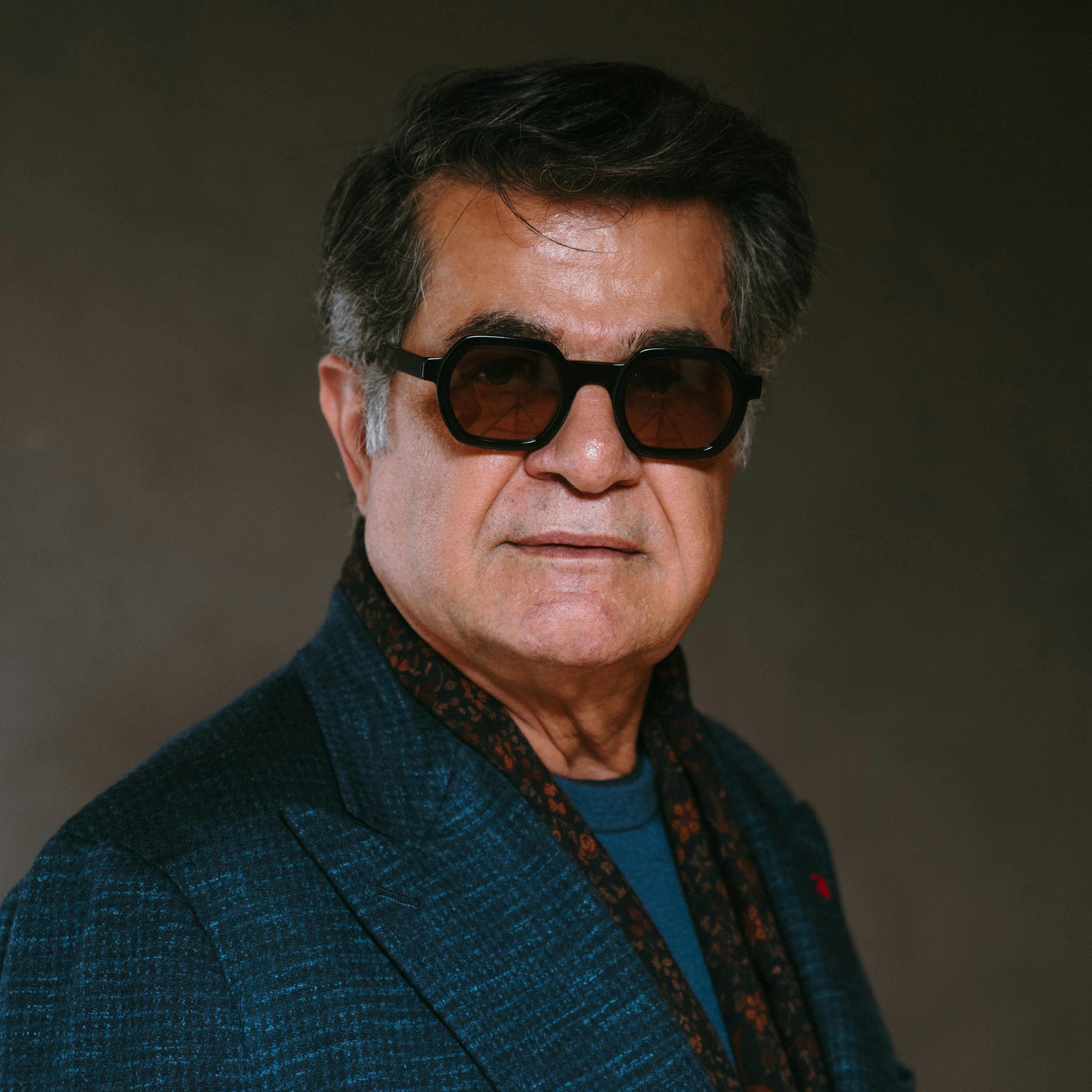
Radio Atlantic
Iran Wants Him Arrested. He's Going Back Anyway.
00:29:22
After Jafar Panahi is done promoting his Oscar-nominated film, It Was Just an Accident, he plans to return to his home country—despite the threat of a prison sentence.
Loading summary
Transcript47 lines
- [00:00]
Narrator/Advertiser
New Year, New Me. Cute, but how about New Year, New Money? With Experian, you can actually take control of your finances. Check your FICO score, find ways to save and get matched with credit card offers, giving you time to power through those New Year's goals. You know you're going to crush start the year off right. Download the Experian app based on FICO's Score8 model offers an approval not guaranteed. Eligibility requirements and terms apply subject to credit check, which may impact your credit scores. Offers not available in all states. See experian.com for details.
- [00:28]
Jafar Panahi
Experian.
- [00:35]
Hanna Rosin
Iranian director Jafar Panahi's latest movie, it Was Just An Shot in secret in Tehran, is nominated for two Oscars. In it, a group of misfits roam around in a white van trying to figure out what to do with the person they just kidnapped. One of the women is wearing a wedding dress the whole time. One of the men is a hothead Perpetually at 11, they bicker about what to do with their victim, who is sedated and locked in a box. It's the setup for a caper and lots of ridiculous things do happen. But at its core, the movie is driving towards the country's real open wound. The man locked in the box is someone they all suspect to have been their torturer in prison, a sadistic agent of the regime named Iqbal, who ruined each of their lives in distinct ways. The dig at the Iranian regime is not subtle. I'm Hanna Rosin. This is Radio Atlantic. Today we're talking to Panahi. He's in the US in the to the Oscars, and he joins us at a moment when Iran is seeing some of the largest protests in the country's history met by some of the most violent government crackdowns. Estimates of protesters killed range from the thousands to the tens of thousands. In recent days, the government has started arresting even moderates and extended the sentence of an activist and Nobel Peace prize winner to 17 years in prison. Panahi's co writer was recently arrested, and Panahi himself has been sentenced to one year in prison in absentia. His lawyer has said they intend to appeal the sentence. It seems like once again, Iran, still potentially a nuclear power, has the world on edge. Does he like to be called by his like Jafar or Panahi or.
- [02:47]
Jafar Panahi
Whatever? You're comfortable?
- [02:48]
Hanna Rosin
Okay. All right. Well, Jafar, we talked to Panahi about all of this and his film. It was just an accident earlier this week through his interpreter, Shaida Dayani. What did you want an audience either Iranian or international, to understand or be thinking about when they're watching this movie. Mahmudan in no Film Harm.
- [03:20]
Jafar Panahi
Usually these types of films are made after the fall or the change of a regime, because then that's when people go back to see what happened. And based on their understanding of the past, then they make a film. And it's also very important for people to make films in a secure fashion. But I wanted to make this film now because I wanted to have the audience think about the future and I wanted to prepare the audience about what is about to come. To me, it was very important to raise this question to the audience about whether the cycle of violence going to continue or if we can be hopeful that at some point it's going to end.
- [04:19]
Hanna Rosin
Shopkeepers and market stall holders began protesting against rocketing food prices on Sunday and today they were joined by university students demanding political change. Speaking of the cycle of violence, where were you when you heard about the protests in late December in Iran? Like who told you about them and what were you hearing from friends and family?
- [04:49]
Jafar Panahi
I have been outside Iran for some time because of the Oscar campaign for this film. But as I have said before, as soon as the campaign ends, I will return to Iran. When the protests broke, I was in Paris and when they shut down the Internet. Iran is in a near total Internet.
- [05:11]
Hanna Rosin
Blackout amid widespread anti government protests.
- [05:14]
Jafar Panahi
My friends and I issued a statement and said when they do shut down the Internet, it means that they're going to commit a big massacre.
- [05:24]
Hanna Rosin
One human rights group based in the US has now confirmed the killing of over 6,000 people. It's also investigating 6,17,000 more deaths.
- [05:40]
Jafar Panahi
Of course, with the complete telecommunications blackout, I also lost touch with my family members. My son, my sisters and brothers all lived there and I was not in touch with them after the Internet came back. I don't remember how long it took. I was also in touch with with close by family members. My immediate family members are okay, but distant family members are not.
- [06:12]
Hanna Rosin
Your co writer Mehdi Mahmoudian was just recently arrested. How did you hear about that?
- [06:29]
Jafar Panahi
When Meti got arrested, it was when the Internet was more or less back and we were sending messages to each other. I sent him a message around 3:30am Paris time and the message was not seen and it was not delivered either. And I waited until noon of the next day and it still was not seen. And that's when I was suspicious that something has happened. So I started contacting my friends and it was around 4 or 5pm That I heard through BBC Persian that he has been arrested. It seems that they arrested Mehdi because of a statement that we co signed together with other activists, human rights lawyers, and in total 17 of us, among whom we have people who have won the Nobel Peace Prize, we have people who have won the Saharov Prize. And these were all acknowledged and known Iranians inside Iran, and some of them were outside. After that statement, they arrested Mehdi and a few other people. And it's a statement that puts the fault and the blame of the massacre on Masar Khomeini.
- [07:54]
Hanna Rosin
And when someone is arrested, do you know what happened to him? Does your imagination fill in the blanks? Sort of. What happens next when a friend is arrested?
- [08:03]
Jafar Panahi
Does he know? Meaning can he imagine or does he have information?
- [08:09]
Hanna Rosin
Well, I guess does he have information? And if he does not, does his imagination fill in the blanks?
- [08:35]
Jafar Panahi
They usually never announce in the beginning who has taken these people, where they have been taken to, and for what reason. We have to wait for the person who has been arrested to contact the family members. Mehdi was able to contact his family after two or three days, but only for one minute. And he had only one minute to say that he is alive and he's okay and he has been arrested. And then the phone got shut off. Now we know that he is in Noshach City and he is kept in a cell of 17 by 17 meters with 30 other prisoners, none of whom are political prisoners. The they have crimes of drugs, drug trafficking and murder.
- [09:27]
Hanna Rosin
I'm asking because this movie is so much about what happens to people after they get arrested.
- [09:39]
Jafar Panahi
At different times, prisoners have been treated differently. But of course, with every movement, when people take to the streets, with every protest, things become much harder. Inside the prisons, and especially this time, with the number of dead and wounded and arrested, they have become extremely harsh inside. This time the protests were peaceful. But then the trolls of the regime penetrated voice protests and they started committing acts of violence in order to make the protests violent. And that gave the agents of the regime and the regime itself an excuse to crack down violently and commit the atrocities that it did. The protests first began because they were peaceful. Family members went with their children, even babies in strollers, because there was not going to be anything violent happening. But the government could not even tolerate that. And in about 10 hours, only 10 hours, within two days, the first day four hours, and the second day six hours, they started killing the protesters blindly. And the number of the dead has now risen to over several tens of thousands of people.
- [11:25]
Hanna Rosin
Is there anyone that you're especially Worried about. Now.
- [11:43]
Jafar Panahi
You cannot think about individuals, you cannot think about specific people because the numbers are so high and the pain is so strong that people feel that they're each other's family members. So when one person is dead, one person is killed, one person is made, disappeared, everyone feels the pain and everyone is in mourning.
- [12:18]
Hanna Rosin
After the break, Jafar Panahi has a warning for America, and he breaks down the meaning of the end of his film. You haven't been to the US in 20 years or so. As an Iranian, what do you notice that's different now?
- [13:00]
Jafar Panahi
Well, in fact, the atmosphere here is also very different than what I had seen before. Sometimes I see signs speaking to the fact that here too, things are becoming very difficult. The US Is different. When the political atmosphere changes in this direction in the U.S. it will also be contagious in the rest of the world.
- [13:26]
Hanna Rosin
What do you mean contagious? What do you mean?
- [13:48]
Jafar Panahi
Whether we accept it or not, what happens in the world is affected by the great powers, including the U.S. the more repressed the greater powers are, the more you see its effect in the other countries. It is as if it has been tested and then it's decided that it is now the time for the world to move in this certain direction.
- [14:17]
Hanna Rosin
I think I want to make sure I understand what he's saying. I mean, so that I'm reading between the lines correctly. What he's saying is sort of we're moving in a more repressive direction, and that can be a model for other countries.
- [14:38]
Jafar Panahi
Not that they model themselves after the US but that they get affected by it.
- [14:46]
Hanna Rosin
I mean, you've been on tour while the two American protesters were killed here by government forces. Two is not tens of thousands. But were you surprised? What were your thoughts when you heard that news?
- [15:04]
Jafar Panahi
The killing of even one person anywhere in the world is too much. As soon as this happens, you can be sure that there is a problem. And that problem will grow, and one day it will reach tens of thousands of people.
- [15:39]
Hanna Rosin
I did not want to hear that from an Iranian with experience.
- [15:51]
Jafar Panahi
This is what I'm talking about when I'm talking about signs, because we have seen and experienced these signs. We know exactly what happens. We know exactly what's coming at the end. It is true that when it happens in certain countries, it's going to affect the rest of the world more, but it doesn't really matter where it happens. We as people have to stand against it with any kind of job, profession, work that we do, whether we're an artist or filmmaker or Writer or doesn't matter what we do, if in our own work we cannot stand against repression, it's going to get out of control. When they gave me a ban of not working for 20 years, I had to choices. Either I could just sit at home and do not work because they had told me not to work, or I had to look for solutions. I remember back then, a lot of students would come to me and say that the situation is very difficult, they cannot work, and they were immersed in hopelessness. I said to myself one day, should I be like them and keep nagging and keep saying it's not possible, or should I think of a solution and do something? There was a time that when I wanted to make a film, everything was in the hands of the government. It was not as easy. But now, with all the technological advances, you could even make a film on a cell phone camera. Because the authorities had told me that I cannot make a film. My friend and I started making a film in my home. And we said, this is not a film. And then I thought to myself, what can I do if I cannot work in film? And I thought, there are a number of things, including driving, that I could do as a profession. But then, because I knew myself, I was sure that even if I start driving, I'm going to hide a camera somewhere in a taxi. And that's exactly what happened. I hid a camera and started making the stories of my passengers. And that became the film Taxi.
- [18:40]
Hanna Rosin
Hey, listeners, this is Hana interrupting with a spoiler warning. If you remember, It Was Just An Accident is about a group of Iranians kidnapping a man they suspect to have been their interrogator and torturer in prison. My next question is about how the movie ends. If you want to avoid hearing that, you can skip ahead four minutes. So I want to ask about the end of this movie. It was just an accident. It has a very hopeful moment where it seems like everything's going to go back to normal. And it also the end of the movie suggests that the cycles of violence may continue. Is that how you feel?
- [19:40]
Jafar Panahi
Happiness and sorrow are part of everyday work. And this is also part of the realism sense of the film. I consider myself a socially engaged filmmaker, and I try to speak about the realities of the society. So first my audience has to believe the film and it has to believe that it's watching a semi documentary. Omitting any of those elements can harm the sense of realism in the work. The humor that you see in the film at some point was intentional, and I wanted the audience to Move along quite comfortably throughout, at least up until the last 20 minutes of the film. And then in the last 20 minutes, I intentionally took out the humor from the film and I wanted the audience to hold its breath and to think about the film. Under any circumstances. Hopefulness will help people. It will help human beings to continue to live. When you hear the sound of the footstep at the end of the film, it first shocks you and you think that the interrogator is here to arrest him. And then there is some silence, and then the sound of footsteps goes away as if it starts getting further and further. So at some point, the audience can think that even the character of the interrogator could change. The fact that the interrogator might have been moved as little as it might be, is that point of hope and hopefulness that the cycle of violence could end at some point.
- [22:21]
Hanna Rosin
So that's why you wanted to capture the humanity of the interrogator.
- [22:34]
Jafar Panahi
These people, like the interrogator, may be very different people in their family settings. Their family members may not even know who they are and what kind of work they do. These people to their family members are fathers, they're spouses, and they might look very different than what we see. The problem is not with the individual. The problem is with the system, and it's with the situation and the conditions. If we put the blame on these little parts of a system, then we lose our way into understanding what the fault is actually and who is to blame and what is to blame.
- [23:25]
Hanna Rosin
You have repeated that you are going back to Iran after award season, even though you've already been sentenced to a year in prison, even though you've been to prison before? Is that just because you can't figure out how to live anywhere else or just don't feel comfortable anywhere else?
- [23:45]
Jafar Panahi
At the end of the day, I want to have the sense of living, and I know it's in a certain place that I can have a sense of living. I could come here in the US and make a commercial film and make a film that could make a lot of money. But then when it's me and myself in my solitude, I would ask myself if I am embarrassed by making that film. This is not to say that commercial films are bad, not at all. The question is the calling of the director. And once a director makes up their mind, they have to be truthful to that decision. I can easily say that in my own solitude, I have not been regretting any of the films that I have made.
- [24:44]
Hanna Rosin
This is the last question. This moment is so serious and dangerous around the world. Is there anything specific or even small that makes you feel like you're living as you said, or brings you joy that you hold onto?
- [25:11]
Jafar Panahi
Was your question only about what gives him joy, or was there another part to it?
- [25:15]
Hanna Rosin
I don't. I hate that question, the joy question. I tried because he said, you know, living. I'm trying to pull out a thread of how he continues to pull through, you know, what it is that he hangs onto that has him, you know, joy is a little much.
- [25:33]
Jafar Panahi
Right, Right, Right.
- [25:34]
Hanna Rosin
It's not quite the right.
- [25:35]
Jafar Panahi
No, but I got it. But this helps. Because I have made my choice about what type of filmmaker I want to be and who I want to be. I will find a way around it, no matter what. I'm not a captive of moments or days because I see a greater future I see from above.
- [26:45]
Hanna Rosin
Jafar Shaida, thank you so much for talking to us and joining us today.
- [26:49]
Jafar Panahi
Of course. Thank you.
- [26:50]
Hanna Rosin
Thank you. This episode of Radio Atlantic was produced by Janae West. It was edited by Kevin Townsend. Rob Smirciak engineered and provided original music. Sam Fentress fact checked. Claudina Baid is the executive producer of Atlantic Audio. And Andrea Valdez is our managing editor. Listeners, if you enjoy the show, you can support our work and the work of all Atlantic journalists when you subscribe to the Atlantic. At theatlantic.com listener I'm Hanna Rosen. Thank you for listening.