← Radio Atlantic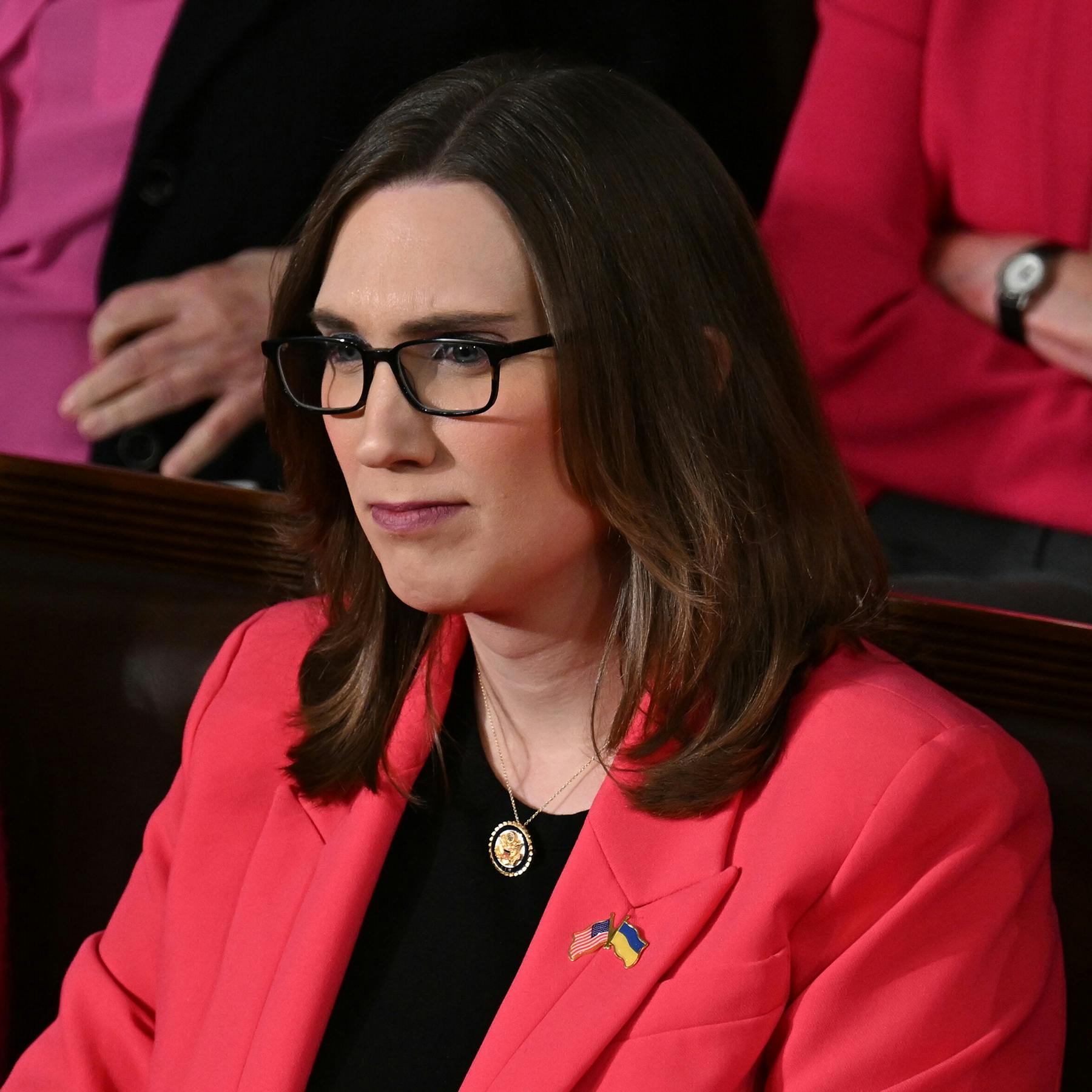
Radio Atlantic
Sarah McBride Is Used to the Hate
00:34:38
The first openly trans member of the House has been purposely misgendered before. But “it is a different thing when it’s in the congressional record.”
Loading summary
Transcript75 lines
- [00:01]
Hanna Rosen
This episode is brought to you by Shopify. Upgrade your business with Shopify, home of.
- [00:05]
Sarah McBride
The number one checkout on the planet.
- [00:07]
Hanna Rosen
Shop pay boosts conversions up to 50%, meaning fewer carts going abandoned and more sales going cha ching. So if you're into growing your business, get a commerce platform that's ready to.
- [00:17]
Sarah McBride
Sell wherever your customers are.
- [00:19]
Hanna Rosen
Visit shopify.com to upgrade your selling today. In November, two weeks after Representative Sarah McBride of Delaware became the first trans member of Congress, Representative Nancy Mace of South Carolina introduced a bill that would forbid transgender women from using female restrooms in the US Capitol, which was McBride's new workplace. And when asked if this was in direct response to McBride's win, Ms. Mace responded with, quote, yes and absolutely and then some. I'm not gonna stand for a man. You know, if someone with a penis is in the women's locker room, that's not okay. Then last month in March, at a House hearing, I now recognize the representative.
- [01:12]
Sarah McBride
From Delaware, Mr. McBride.
- [01:15]
Hanna Rosen
Representative Keith Self of Texas introduced McBride by misgendering her, to which she replied.
- [01:22]
Sarah McBride
Thank you, Madam Chair. Ranking Member keating, also wonderful.
- [01:26]
Hanna Rosen
Mr. Chairman, could you repeat your introduction again, please?
- [01:30]
Sarah McBride
That is the biggest takeaway for me. One of the biggest takeaways for me is how much Congress is, sadly, a.
- [01:35]
Hanna Rosen
Reality TV show, meaning that it's performative.
- [01:40]
Sarah McBride
And meaning that the goal of the day is to get airtime. And in order to get airtime, the easiest way is to use the strategies of folks on Bravo TV shows where to get airtime. You pick a person, pick a fight with them, throw wine in their face, and that gets airtime. And that's the. Not only the strategy, but really the defining feature of what is a win versus a loss for a lot of the Republican members of Congress.
- [02:14]
Hanna Rosen
This is Radio Atlantic. I'm Hanna Rosen. Sarah McBride was making models of the White House in her room when she was six years old. Her big birthday wish as a Delaware kid was to meet Joe Biden. She did, by the way, and he later ended up writing the foreword to her memoir. When McBride came out as trans in college, she worried that it would kill her political dreams, but it didn't. She became the first trans speaker at the 2016 Democratic National Convention. She was elected state senator in 2020, then elected to Congress in 2024 at precisely the moment when trans issues became a singular fixation for her opposing party. On President Trump's first day in his inaugural speech, he proclaimed that the government would no longer really recognize trans people. As of today, it will henceforth be the official policy of the United States government that there are only two genders, male and female. Trump has signed executive orders that would ban transgender people from serving in the military, defund gender affirming care for trans youth, block funding for schools that promote ideas of gender fluidity or transitioning. And just yesterday, the Trump administration announced that it was suing Maine for not complying with its push to ban transgender athletes in girls sports. So Here is Sarah McBride living her childhood dream at the most inconvenient moment. And I wanted to know what that experience was like.
- [03:52]
Sarah McBride
So I always knew when I decided to run for this seat that there would be some members of Congress who would use my service to score political points and gain attention. And I always knew that that would include misgendering. Very likely. I just assumed that the performative nature of federal politics would result in people misgendering me. And one of the things I said to people during the course of the campaign is they're going to try to do this, and my job is going to be not to give them the response that they want. And I go in every day, you know, focused on my job, focused on serving Delaware, focused on introducing now two and soon to be three bipartisan bills. But I also go in recognizing that at any moment, a member could decide to use my presence in a space to gain attention. It doesn't feel good when it happens. And, you know, the first time it happened was on the floor in my first floor speech. There had been some signs people had sort of talked amongst themselves that it probably wouldn't happen.
- [05:05]
Hanna Rosen
What do you mean? You mean your allies had, like, in a comforting way or.
- [05:09]
Sarah McBride
Yeah, I think there had been maybe some conversations among some staff and the tea leaves they thought suggested that it wouldn't happen. So when it did happen the first time on the floor.
- [05:22]
Hanna Rosen
Thank you, Madam Speaker. And I yield back.
- [05:25]
Sarah McBride
When I was introduced as the gentleman from Delaware, Mr. McBride.
- [05:29]
Hanna Rosen
The chair recognizes the gentleman from Delaware.
- [05:33]
Sarah McBride
Mr. McBride, for five minutes. Thank you, Madam Speaker. When I was elected, I've been intentionally misgendered. I don't. I didn't get. Before I came to Congress, I wasn't getting misgendered pretty much ever. And occasionally I would get misgendered intentionally. Someone trying to score points. You know, I'd be in a parade and someone would yell something out. And that doesn't bother me. Right. Like, I know they. They're doing it in a way that's crude, but, like, it's not news to me that I'm trans. Right. I'm proud of who I am. That's my problem. I didn't think it would be sort of emotionally heavy for me. It is a different thing when it's coming from the dais of the United States House of Representatives. Right. It is a different thing when it's in the Congressional Record. And that does. That does hurt more than it would typically. I think for me, in that moment, what hurt on the floor was I could see people in the gallery snickering. And I'm a person, right. This is the first time I'm on the floor of the House of Representatives. I'm nervous to deliver my first floor speech. And so I just went into my speech and delivered it. In the instance in committee where I did respond by saying Madam Chair to a man who was presiding, that was a good.
- [06:49]
Hanna Rosen
I was wondering, did she have that in her head already prepared, or did that just come spontaneously when you called him Madam Chair? Because that was pretty good.
- [06:58]
Sarah McBride
I truthfully regretted saying Madam Chair right after I said it.
- [07:02]
Hanna Rosen
Did you?
- [07:03]
Sarah McBride
I went back to my office and was not happy with myself. It's just not my style. I'm really here to focus on the job and to be serious and, like, you can have humor and, like, sometimes it's right to just sort of respond in kind. But I don't think I fulfill my responsibilities to anyone, whether that's Delawareans or any other community I'm a part of by consistently sinking to their level.
- [07:31]
Hanna Rosen
It is a lot of pressure. It immediately popped into my mind, Jackie Robinson, tour of the south, sort of having to play. I mean, the amount of. It's a lot of pressure, I think, for you to be perfect, like, look perfect, be perfect, act perfect, do everything perfectly. I mean, it seems like that's. Maybe that's the pressure on a first, and you somehow recognize that, or you're a naturally diplomatic person. I'm not sure.
- [07:57]
Sarah McBride
But I think that there is no question that there are added responsibilities. There is added pressure to a first. I would never compare myself to Jackie Robinson. But one thing that after I started, people Recommend I watch 42, and there is a really powerful scene in the start where the owner of the Dodgers says to Jackie Robinson, if you respond to a slur with a slur, they'll only hear yours. If you respond to a punch with a punch, they'll say, you're the aggressor.
- [08:27]
Hanna Rosen
Right.
- [08:28]
Sarah McBride
And I think that that is a apt description of the challenge that really most marginalized people face when entering a workplace. You know, at the end of the Day. The way I try to think about it, though, is the only way that I can guarantee that while I may be a first, I'm not the last, is to just quite simply be the best member of Congress that I can be and to do the nuts and bolts of the job to the best of my ability. I'll make mistakes. There'll be times where I should respond to things, and there are times where I shouldn't respond to things, that I won't strike the right balance. I am going to make mistakes and I think giving myself the same grace that I'm willing to extend to other people in navigating what is a reasonably unprecedented situation where, you know, I've tried to look at other examples to learn from, and I haven't been able to find someone who has entered Congress as a first when the identity that makes them a first is at the center of political debate and the district they represent isn't significantly or predominantly made up of that identity.
- [09:28]
Hanna Rosen
Right. It is very unusual. You're entering Congress at a time when trans people are at their most visible and their most vulnerable. Those two things are simultaneously true. And so that creates a maximum pressure cooker, it seems, from knowing your biographies for a while, everything, like, went well. Like the boxes were getting checked, like, you came out. American University people were supportive. 2013, you have a big role in the Gender Identity Non Discrimination act in Delaware. There was a sense that we were at trans 101. America was at trans 101. We were just learning the language, understanding what transgender. There was a lot of much younger kids, my own included, had a lot of experience with transgender friends, and that we would move along to the graduate studies. And then it didn't. Well, do you still think that? I mean, do you think. Do you still think it's marching forward in that way?
- [10:29]
Sarah McBride
I think we are experiencing a significant moment of regression culturally in this country on all issues of gender.
- [10:36]
Hanna Rosen
Mm.
- [10:36]
Sarah McBride
Public opinion is worse now than it was on almost every issue than it was five years ago.
- [10:43]
Hanna Rosen
Meaning what? Like, to what questions?
- [10:45]
Sarah McBride
For example, almost every conceivable question, like trans rights, there are still trans rights issues that have majority support, but every single poll I have seen shows less support now than there was five or six years ago on pretty much every issue, from non discrimination protections, which still maintain majority support, military participation, which still maintains majority support, to other issues that either don't have, never have had, or now don't have majority support. And I think that there are a couple of reasons for that. One, it's a sustained Right wing disinformation, misinformation and fear mongering campaign that has an effect. And I think one of the things that people would say in 2015, 2016 to me is, oh my goodness, it feels like we're moving so quickly on trans rights in a good way.
- [11:41]
Hanna Rosen
Right.
- [11:41]
Sarah McBride
And we'd praise it. And my reason for that was, I think I said at the time, and I still think this is true. I think there's sort of a transfer of momentum from the LGB to the T, from marriage equality to trans rights, where people in 2015, 2016, right after marriage equality became the law of the land, they went, you know, I remember being wrong on marriage. And so there was that lesson of just because you don't understand something doesn't mean that you won't ultimately support it. And they kind of took that lesson and transferred it at the time to trans rights. And I think what it did was it created a false sense of security. It created a dynamic where public opinion was sort of a mile wide, but an inch deep. It was sort of a house built on sand. In some ways. I think that because of that, we perhaps as a community, didn't do enough public education to build the foundation that the gay rights part of the movement had built when they got to 2010, 2012, 2014, with progress on the issue of marriage, were that public support was rooted in a knowledge foundation, an understanding of who gay people were. And I don't think that that foundation existed or to this day exists for trans people.
- [13:09]
Hanna Rosen
It's interesting because that's also about the speed of information. I mean, the way information about gay people and gay rights happened was at a much slower pace, like will and grace through television. It just kind of happened in this ambient way. And that's not how information moves anymore. I mean, I'm thinking you, in 2016, which is only a few years after that Delaware bill was passed, had that viral post where you wrote, I'm just a person. We're all just people trying to pee in peace when you took that selfie from the North Carolina bathroom. But I feel like you learned a lesson that was maybe the first time that you learned, or maybe not the first time, but you learned something from that that might inform what you're saying now. Like what happened after that? Yeah, yeah.
- [13:57]
Sarah McBride
I mean, the torrent of hate that came in after that was really frightening and traumatizing for me. And after that experience first off, you.
- [14:06]
Hanna Rosen
Know, like more than you expected?
- [14:09]
Sarah McBride
Much more. I mean, I just had never experienced that level of Hate. Now, it's essentially an everyday occurrence, but really, I mean, online, it's pretty incessant to what though?
- [14:20]
Hanna Rosen
Like anytime you have a picture or you're, oh, anything. I do.
- [14:23]
Sarah McBride
I mean, I said the other week, I live rent free in some folks heads. And it's. I mean, I will say stuff that have nothing to do with me and literally just saying it will result in a torrent of anti trans commentary. But like, I mean that it doesn't bother me anymore because of that experience that I had then where I realized. So I got this hate. Including a lot of people telling me I should kill myself.
- [14:54]
Hanna Rosen
Yeah. What was the phrase?
- [14:55]
Sarah McBride
It's kys, kys, kys, Kys, kys. And I never would have expected that people telling me that I should do that would ever actually impact me. But at a certain point, the volume and velocity of it became so much that I couldn't help but feel it. And I remember after this, I remember thinking, I don't know that I can do this, do this work. And I went on this sort of information adventure to understand the psychology and bullying of trolling. And I came across a this American Life episode that really just allowed things to click for me. It was Lindy west who wrote about her body and her weight a lot, and she would get trolled, and then she wrote about how much that trolling hurt her, and the troll reached out and apologized.
- [15:53]
Hanna Rosen
Oh, was this the episode where they actually talked to the troll? And I will remember that episode forever because they talked to the troll. And it was very weird, that episode. It was like the troll was like, yeah, I don't know. No biggie. I was just doing my thing.
- [16:06]
Sarah McBride
No biggie. I was just doing my thing. And he acknowledged that he was struggling with his own weight. You know, there's the old cliche that, like, the biggest closet cases are the biggest bullies. And in some cases that's true, but it underestimates a larger, more universal truth, which is that everyone has an insecurity. And the thing about LGBTQ people is that if we are out, we have taken that insecurity, that fear, that thing that society has told us we should be ashamed of, and we have not only accepted it, but in many cases, walk forward from a place of pride in it. And the bullies see that power. They see that individual agency in conquering our own fear, and they're jealous of it. And so when I see the things that people say about me writ large, the MAGA movement writ large, to me, I just think, I hope they find healing. And truthfully, it's one of the reasons why I do this work is because I think in this country, we so desperately need politicians who recognize that they don't have to believe that people are right for what people are facing to be wrong. And we don't have to believe that people are right for us to try to right that wrong. And I want to fight for people who look like me and think like me and people who don't look like me and don't think like me and might even be saying really, really, really hurtful things about me. Cause we will all be better off if all of us heal a little bit.
- [17:36]
Hanna Rosen
I think I. I'm trying to decide in my head if you're trying to convince yourself. I mean, that's a very generous position, and I'm sure it costs you some. It's like it's a sort of generosity from on high, you know, I mean, maybe you're all the way there. I don't know. It's a really hard position to embody.
- [17:54]
Sarah McBride
There are times where I struggle with it, but one, I truly believe it. And it, frankly, makes it easier for me to deal with things, to know that when people are saying those things, it is saying more about them than it is about me. And I don't believe what they're saying. So then I can sort of dispassionately remove myself from it and look and just say, what you're saying is, yeah, it's not nice to me or people like me, but it's about you. But it is not about me.
- [18:28]
Hanna Rosen
Yeah.
- [18:28]
Sarah McBride
I do think for some folks, the cruelty can be the point. But I do believe that hurt people hurt people. And I do believe, yes, we've sort of gone down this rabbit hole of disinformation and misinformation, and it radicalizes people. But I think people are so much more susceptible to being radicalized when they are hurt and in pain and in fear.
- [18:56]
Hanna Rosen
After the break, what happens to idealism when the vibes are bad? And how Sarah McBride thinks the Democrats can take back power. So Trump's executive order about there being only two biological sexes, have you developed any theories about why that is so important?
- [19:25]
Sarah McBride
I mean, I try to. Look, I don't really think Donald Trump cares about this stuff. It's. Donald Trump cares about what gets him more power and what gets him more money. I don't think Donald Trump cares about trans people or LGBTQ people. I think people on his orbit do. I think he sees that some people on his base do it's probably part of a legal strategy to lay the foundation to obviously not only eliminate the conception of non binary folks in law, but to create a definition that lays the foundation for the government no longer validating or acknowledging or respecting binary trans identities.
- [20:13]
Hanna Rosen
You know, you've mentioned in this conversation, hope you've given a vision which is extremely idealistic, particularly for someone your age in general, though. I mean, the vibes are off right now.
- [20:30]
Sarah McBride
The vibes are bad.
- [20:31]
Hanna Rosen
The vibes are bad. I mean, you've also said that. How do you hold those two things? Like, once again, you know, if you look at you in 2013, things were looking like they were moving in a certain direction. You yourself have said they've kind of veered totally backwards. So how do you make sense of that larger historical arc and find your idealism in it?
- [20:55]
Sarah McBride
Look, there are a lot of reasons right now not to be optimistic, but, you know, I think we often think of history and humanity as cumulative. We feel like we are the beneficiary of hundreds of years of lessons of history. But the reality is, is that unless you have lived it and experienced it, it's pretty easy not to know it. You know, my generation, we grew up, we were born after the fall of the Soviet Union. Right. We have existed in a world post civil rights, post 1960s. And one of the things that I take comfort in in this moment, having tried to take time to listen and learn about what it felt like to live in the times prior to the 1960s, is that the sense of inevitability that with hard work, change will come, that we have felt in a post1960s world, the sense that we were on this sort of unending cresting wave of cultural momentum that is all the exception in our history. Right? Yes. We have every reason to fear that change won't come right now. But you can't tell me that the reasons for hopelessness now are greater than the reasons for hopelessness for an LGBTQ person. In 1965, before Stonewall, when they maybe never knew of a reality where they could live openly and authentically as themselves without violating the law. Every previous generation, especially those generations prior to the 60s and 70s, faced seemingly impossible odds. They could not see the light at the end of the tunnel, yet they persevered. They summoned their hope, they found the light, and they changed the world.
- [22:52]
Hanna Rosen
Right. I think what you're saying is a. Like a zoom in, zoom out. It's like, how broadly do you wanna see, like, the polls you mentioned maybe belong to the more narrow realm of optimism. But then you can put yourself in the broader, spiritual, larger historical arc of hope, which is a different time span. I wanna drag you, though, back into this time span. So we have four years ahead of us. There's a lot of legislation. What are you tracking and watching? What are you looking at and what are you worried about?
- [23:26]
Sarah McBride
I'm looking, frankly, beyond. I'm looking at everything, because we've got to recognize that all of these attacks are interconnected. I'm looking at the money that's being stolen right now from farmers, from health officials, from federally qualified health centers, from food banks, from infrastructure funds in Delaware and across the country by the federal government. I'm looking at the effort to implement the largest cut in American history of Medicaid. I'm looking at the federal workers who are being summarily fired in Delaware and across the country because this administration is trying to grind government to a halt. All of that comes together to try to create a world where people continue to be hungry and scared and fearful, which then lays the foundation for those fears and that insecurity to be exploited to eliminate due process for both undocumented immigrants and legal immigrants in this country, legal residents, for them to target and scapegoat and fear monger around trans people. All of this is interconnected. And I don't think that we can single out one of these areas. I certainly don't have the luxury of doing that as a member of Congress.
- [24:49]
Hanna Rosen
And so even though some of these issues are real things Republicans care about and some, as you said, are performative and things maybe they don't care so much about, is it your instinct the Democrats need to focus more on the things they really care about, like, say, the shrinking of government versus the performative. You know, as you started out saying real housewives y kinds of stuff.
- [25:09]
Sarah McBride
Well, I think there are two different worlds there. I think there's their performative fights that are offensive, but the hurt is more narrow. Then there's things that they don't care about that they're doing that hurt a lot of people. Right? Like, I don't think Donald Trump himself cares about trans people, but he's hurting trans people. I do think Donald Trump cares about hurting immigrants. I think he wants to hurt immigrants because I think Donald Trump is the through line of his entire political philosophy for 40 years has been anti immigration. But I think those are two different things. Things he doesn't care about that have widespread harm and things that he doesn't care about that's performative, that's just about riling up the base and where the harm is more limited. I think obviously we should be pushing back against the efforts to sanction or mandate discrimination against trans people writ large in this country. We should be fighting back against efforts to insert government between patients, providers and families. We should be protecting trans service members who are serving this country. And in all of that, we should recognize that the most important thing for anyone who is being targeted by this administration is for us to slow this administration down. And unfortunately, because of the results of the last election, the main lever at our disposal is public opinion. We do have to recognize that we have to fight hard and fight smart, which means fighting and focusing on the issues where the public is with us. And therefore we can turn the public as quickly as possible against Donald Trump. And doesn't mean we don't fight on other things, but it means we put focus on the central case that Donald Trump made to voters and the issue that voters care about the most, which is their economic well being. And if we can shift public opinion against Donald Trump as quickly as possible, it throws sand in the gears of Donald Trump's authoritarian machine. Because right now we do live in a democracy that is at risk. But we do live in a democracy, public opinion still matters.
- [27:27]
Hanna Rosen
So am I reading between the lines here to kind of stay quieter on culture war issues? Like don't fight those fights right now, like don't get into it. Don't feed that fire right this.
- [27:39]
Sarah McBride
I think we have to fight those fights in a smart way and we need to message in a smarter way. Sometimes the message that is viscerally comforting to someone like me is not helpful and sometimes even counterproductive in reaching and convincing a person who is just tuning into this conversation or who has a diversity of thought. We have to create space for some imperfect allies. We have to recognize that if we're going to have 50% plus one in support of basic non discrimination protections, if we're going to have 50% plus one in support of protecting access to medically necessary care, that by definition will have to include some people in the 70% who oppose trans people participating in sports. That conversation needs to continue with people. But we can't dismiss them as bigots or remove them from our coalition because then we will have a ceiling of 30% on any coalition in defense of anyone's rights.
- [28:41]
Hanna Rosen
Okay, a last thing. How have you learned to navigate Congress? The incidents we talked about were a couple of weeks ago. I'm really just curious. Are there like places you avoid, people you don't get in the elevator with, like. I'm actually curious what your day to day life is.
- [28:58]
Sarah McBride
My strategy is not to let any of this get in the way of me doing my job to the best of my ability to the fullest.
- [29:06]
Hanna Rosen
So you just, like, walk to your office?
- [29:08]
Sarah McBride
I don't avoid anyone. Listen. I don't give them opportunities to punish me because I violate the rule that Johnson put in place. I use the restroom in my office.
- [29:20]
Hanna Rosen
Which she knew you would have.
- [29:22]
Sarah McBride
Yeah. I don't go out of my way to, to aggravate things, but I just do my job right if they're going to misgender me on the floor. Look, a lot of folks, they're like, sarah doesn't make a stink when we just say member from Delaware, Representative McBride. It's a way to respect Sarah and doesn't make them feel like they're saying something that they don't want to say or that they feel like they'd get politically punished for saying by gendering me correctly, like, fine, fine. But there's always a risk that someone wants to make a thing out of it. I'm not gonna not go to committee. I'm gonna go and I'm gonna speak. I'm not gonna not go to the floor. I'm gonna go to the floor and speak, and I'm not gonna let them derail that work because they want 15 minutes of fame on social media. I'm gonna go in the elevator, I'll say, hi. If some of these folks pass me, I'll say, hey, how are ya?
- [30:15]
Hanna Rosen
In that folksy tone.
- [30:17]
Sarah McBride
Absolutely. How are ya?
- [30:19]
Hanna Rosen
How are you, sir? Oh, boy.
- [30:22]
Sarah McBride
Well, it's just, you know, it's. I'm not saying it's the easiest thing and I'm not saying I don't get nervous, but, you know, it's what I'm there to do and it's what I signed up for.
- [30:41]
Hanna Rosen
Well, thank you for coming today. Thank you for being honest and somehow remaining idealistic. I appreciate it. Always somebody's gotta do it.
- [30:53]
Sarah McBride
We've gotta have hope.
- [30:54]
Hanna Rosen
Yes. This episode of Radio Atlantic was produced by Janae west and edited by Andrea Valdez. We had engineering support from Rob Smirciak, fact checking by Sam Fentress. Claudina Baid is the executive producer of Atlantic Audio and Andrea Valdez is our managing editor. Listeners, if you like what you hear on Radio Atlantic, you can support our work and the work of all Atlantic journalists. When you subscribe to the Atlantic at theatlantic.com podsub that's theatlantic.com P O-S U B I'm Hanna Rosen. Thank you for listening. To preserve democracy, one has to believe in it. To believe in democracy, one has to understand it, where it came from, how it works, what's true, what's not true, what others did before you, how it could be better, how to make a difference. I'm David Frum, a staff writer at the Atlantic. I'm starting a new show where each week I'll dig deep into the big questions people have about our politics and our society. I'll explain progress that the peoples of the democratic world have made together and remind you that the American idea is worth defending. Listen to or watch the David Frum show wherever you get your podcasts.