← Radio Atlantic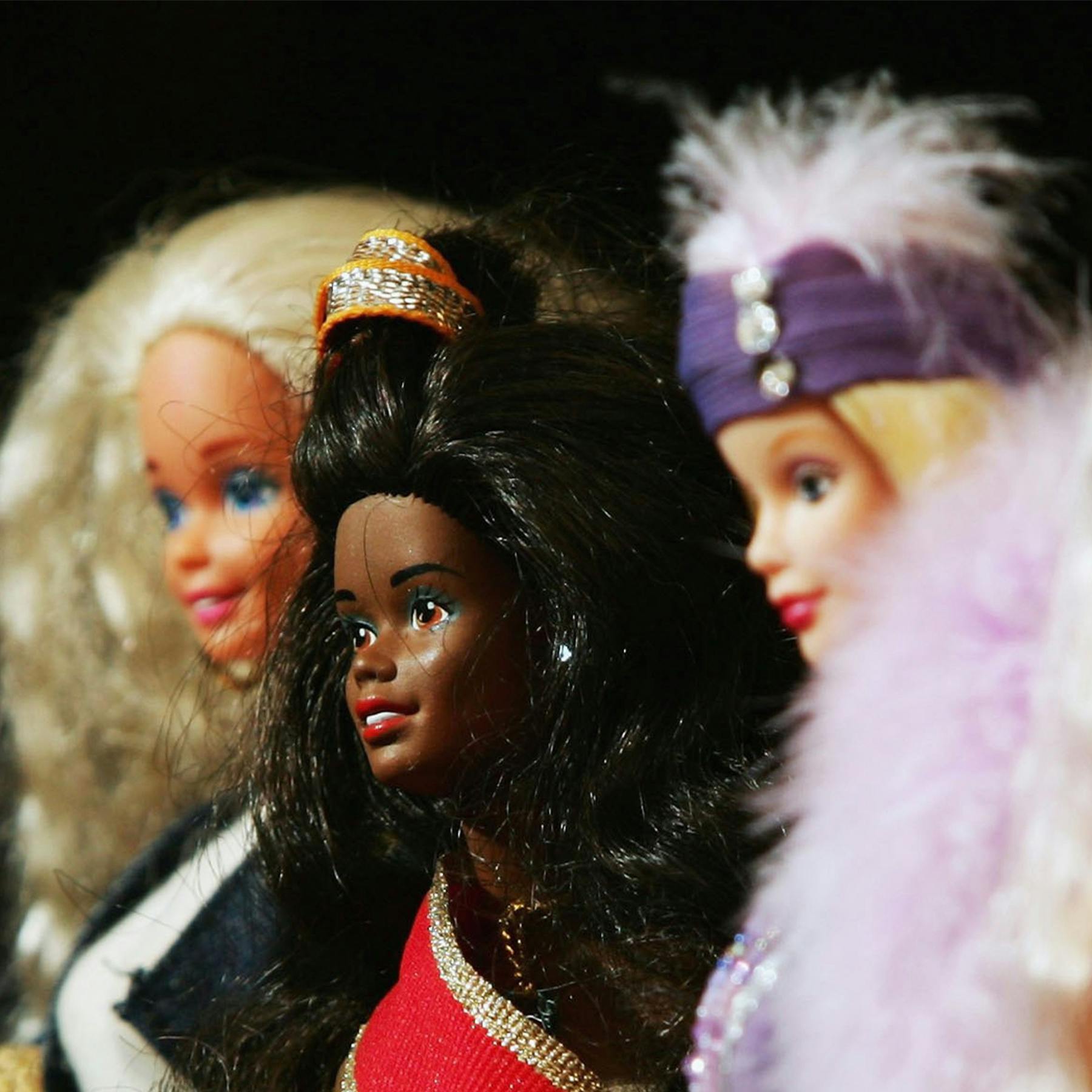
Loading summary
Transcript101 lines
- [00:01]
Sponsor Announcer
This episode is brought to you by Lifelock. Not everyone is careful with your personal information, which might explain why there's a victim of Identity theft every five seconds in the U.S. fortunately, there's LifeLock. Lifelock monitors hundreds of millions of data points a second for threats to your identity. If your identity is stolen, a US based restoration specialist will fix it, guaranteed or your money back. Save up to 40% your first year by visiting lifelock.com podcast terms apply. Your gut affects everything, even your mood. So Ollie created two brand new products to take care of your insides. Olly Big 10 Probiotic has 10 strains of probiotics, their most ever, to support a healthy gut, microbiome, immune system and stress response. And Ollie Super Good Superfoods delivers 15 superfoods in tasty gummy form. Find them at ollie.com and exclusively at Walmart. Ollie these statements have not been evaluated by the Food and Drug Administration. This product is not intended to diagnose, treat, cure or prevent any.
- [01:07]
Hanna Rosen
Last week at a Cabinet meeting, while answering a question about tariffs, President Donald Trump mentioned dolls. Well, maybe the children will have two dolls instead of 30 dolls, you know, and maybe the two dolls will cost a couple of bucks more than they would normally. But we're not talking about something now. This wasn't any deep social commentary, just an offhand statement. But it did get me thinking about how kids today, including my own, do have a million dolls versus, say, when I was a kid. Do you remember your first doll?
- [01:44]
Eleanor Mack
Oh, of course. My first doll was Ada. I took Ada with me everywhere, like to the park, to dim sum. You know, I tried to bring her to school, but I also remember she was beautiful. Beautiful in a way that I felt I never could be.
- [02:01]
Hanna Rosen
This is Eleanor Mack.
- [02:03]
Eleanor Mack
She had these beautiful blonde curls. She had big blue eyes. She had that porcelain skin. And even then, you know, I think I was, you know, somewhere five or six years old. Remember thinking like, I wish I looked.
- [02:17]
Hanna Rosen
Like Ada when Eleanor was a kid. Like when I was a kid. What she didn't have was that much choice. But even after Eleanor grew up and had her own kids, the options were still pretty meh. There were basically blonde dolls, some brunettes, and some that Eleanor describes as, quote, vaguely Asian.
- [02:38]
Eleanor Mack
You're not really sure what they're supposed to be. And the only reason I knew some of these dolls were intended to be Asian was because they had a name like Ling, or they were holding panda bears or had a really bad haircut and, you know, like that bowl cut my mom did give me. But as An Asian American mother. Like, I don't relate to any of that.
- [03:02]
Hanna Rosen
So when Eleanor had her daughter, she did not want her to have the bowl cup model. She wanted a doll that her child could actually relate to. So Eleanor did the thing that most people do not do.
- [03:15]
Eleanor Mack
Oh, of course.
- [03:16]
Hanna Rosen
She started a company to make her own dolls. It's called Jilly Bing, partly named after her daughter Jillian.
- [03:24]
Eleanor Mack
Jillian is now five. Jilly, Jillian.
- [03:27]
Hanna Rosen
She wanted to create them in the U.S. but she couldn't find a doll manufacturer here who could do it.
- [03:32]
Eleanor Mack
Every lead led to the same thing, which is they've closed. They no longer create dolls.
- [03:38]
Hanna Rosen
So Eleanor looked outside the US and found a factory in China that she developed a close relationship with.
- [03:45]
Eleanor Mack
Doll manufacturing is a heavily manual process. The rooting of every doll's hair is done manually.
- [03:53]
Hanna Rosen
Wow.
- [03:53]
Eleanor Mack
They would weigh the hair, right, to make sure there's consistency. And somewhat with free form, like putting through the sewing machine until, like, the doll's head was fully rooted. There is tremendous precision required. You know, there's someone who's manually placing these tiny little doll's head, right? So my doll is 14 inches. So the head, I'm. You know, I'm guessing it's like 2 to 3 inches. So someone is manually putting this onto the assembly line, which then, you know, then they stamp the eyes and the blush. And even if it's like, just, like, 1 100th off that doll, suddenly, like, I have some Jilly dolls that look like party Jilly. Cause her eyeliner is like, I save those. Like, I save those. A special edition. But, like, the eyeliner's just a little bit off. On. Suddenly it's like, okay, this is not the adorable, like, you know, wholesome Jilli.
- [04:43]
Hanna Rosen
Was out late last night.
- [04:44]
Eleanor Mack
Jilly. I call her the Party Jilly.
- [04:48]
Hanna Rosen
Things were going okay for Eleanor. She got some good press in places like cbs. Eleanor Mack, good morning and Bravo and the Today Show.
- [04:57]
Eleanor Mack
How many dolls in this house right now? 3 or 400. We started out with close to 2000. So she has a little chef's hat.
- [05:04]
Hanna Rosen
But then came the tariffs, just in.
- [05:08]
Sponsor Announcer
The last few moments. The BBC has confirmed that US tariffs against China add up to 145.
- [05:18]
Eleanor Mack
My husband texted me. I remember him saying, have you seen the tariffs? And I was like, what are you talking about? My head spun.
- [05:28]
Sponsor Announcer
That is including the existing 20% tariffs that were already imposed on the country at the beginning of the year. And also after yesterday's.
- [05:37]
Eleanor Mack
Our doll retails for $68, so that is considered a premium dollar already. To think that I would charge, you know, 150 plus dollars for this doll, I just. If it was like putting a nail to the coffin of our business.
- [05:58]
Hanna Rosen
This is Radio Atlantic. I'm Hanna Rosen. Tariffs are no longer an abstraction. They're showing up in shopping carts, supermarket and virtual. And they're forcing a lot of Americans to reckon with a way of living that we've taken for granted. Products get made cheaply somewhere else, giving us an abundance of choice over here. We'll talk more later about how tariffs have the potential to change American culture. But first, the Jilly Bing emergency. What tariffs look like from the side of the American producer who's determined to give us more choice. Before the most restrictive tariffs on China went into place last month, Eleanor Mack was already in emergency mode. A factory she developed a good relationship with announced that they had plans to close totally unrelated to the impending trade war. So, like every good entrepreneur, Eleanor hustled.
- [06:54]
Eleanor Mack
And that whole process nearly broke us. Right? Just really kind of rushing inventory in and starting work with a new factory. And I thought that was gonna be the worst of it. So when the tariff announcement came, it was almost like, wow, it just felt debilitating.
- [07:16]
Hanna Rosen
And when you heard about the tariffs, did you immediately go into action? Like, call the staff, sit back of the envelope, figure it all out, or did you call people? How did you move through that process?
- [07:27]
Eleanor Mack
Yeah, I think there was a part of, you know, speaking to a lot of founders who are also in, like, consumer products sourcing from China, Vietnam. I think a lot of us just said, this can't be right. This won't pass. This is a political move. You know, this won't actually go through. So I think it was disbelief. But there was also a need to start actioning.
- [07:46]
Sponsor Announcer
Right.
- [07:46]
Eleanor Mack
Calling our factory, calling the freight forwarders, trying to understand what the impact was. And I would say it was just chaos. No one really knew.
- [07:56]
Sponsor Announcer
Right.
- [07:56]
Eleanor Mack
There was speculation this is what it could look like, or if you get it in by this date. But the end of the day, there was this risk that by the time our imports came in, we would be hit with this 145% price increase.
- [08:11]
Hanna Rosen
So the decision. I understand. So the decision is even about putting in orders because you don't know what's going to happen at the back end. It's about the uncertainty. Cause you just can't predict the entire process. Like, you can't predict it from beginning to end. So you could be stuck with this inventory that you then have to pay so much more for.
- [08:30]
Eleanor Mack
Absolutely. So for me, you know, now that you're. I'm walking down memory lane. We were about to sign a purchase order. Right. So April. And then that way we would get the goods in by sort of August, September. Right. Right before the holidays to have it arrive into our warehouse. But once we sign that purchase order, that becomes binding. And then, you know, once it arrives on the port, whatever the prices are, I am responsible for that. So for me, the decision was to not issue that purchase order.
- [08:57]
Hanna Rosen
I see. Okay. So it's, April, you've got a decision to make. So I see why you had to do this. Really quickly. Numbers are going through your head, like, how much more is this going to cost? Everything that you mentioned. But on the other side of it, is your company like, this thing that you've built? That's very personal. So how did you weigh all that?
- [09:20]
Eleanor Mack
Yeah, so I. You know, I think it was pure exhaustion. It was a feeling of like, oh, my gosh, how many more of these, like, boulders coming downhill can the small business. Right. The sort of. It's largely me who was full time on the business. And I think just from a mental capacity, I was burnt out. And to think about, you know, signing that po, waiting for my shipment to come in, and being, like, holding my breath until it arrived at the port to figure out what the price could look like, it was just, I think, more than I could bear. And I was devastated. Right. Because I think for us, you know, it was always about giving more families choices.
- [09:59]
Sponsor Announcer
Right.
- [09:59]
Eleanor Mack
I think one thing I wanted to share is this doll is meant to be Asian American. And our doll has brought joy to a lot of kids and adults. And it was devastating to think, you know, this if I'm forced out of business. But for me, in the short term, we have inventory, we have the silver lining, and I can ride this out for some time, but that inventory also will not last forever.
- [10:25]
Hanna Rosen
You know what? I don't. I don't know that I have a good sense of maybe this is just how entrepreneurs are. Like, I don't know that I have a good sense of whether. Do you think you'll weather this? I can't tell, like, how realistic a hope is that.
- [10:44]
Eleanor Mack
I can only weather this if the policies change in the next year. And so as an entrepreneur, I think I'm hopeful, I'm optimistic, but I'm also practical when I look at my numbers.
- [11:00]
Hanna Rosen
Right.
- [11:00]
Eleanor Mack
When I see my inventory, the trends. So, yeah, maybe that's why you're not. It's like, part of me is optimistic things will sort itself out before my sort of, you know, self imposed deadline of when we would need to place a PO comes out.
- [11:14]
Hanna Rosen
So before the last doll is out of your house or wherever you keep the dolls, things have to shift politically.
- [11:23]
Eleanor Mack
Yes, because with the current tariffs there's just I cannot survive.
- [11:32]
Hanna Rosen
That was Eleanor Mack, founder of the doll company Jilly Bing after the break. The other side of the equation Us, the consumers, our coffee, our toasters, our cars, our assumption that all things are available to us instantly. That's in a moment.
- [11:59]
Sponsor Announcer
Lowes knows to bring your vision to life, it's important to find the right color. That's why Mylo's Rewards members get a free paint or exterior stain sample to test your look and find the perfect color to confidently refresh your space. Lowes we help you save Offer Valid in store only 58 through 514 limit one per customer while supplies last. Discount taken at time of purchase. See Associate for details. Program subject to terms and conditions details@lowe's.com terms subject to change are you still quoting 30 year old movies? Have you said cool beans in the past 90 days? Do you think Discover isn't widely accepted? If this sounds like you, you're stuck in the past. Discover is accepted at 99% of places that take credit cards nationwide. And every time you make a purchase with your card, you automatically earn cash back. Welcome to the now it pays to Discover. Learn more@discover.com credit card based on the February 2024 Nielsen my name is Martha Gimbel. I'm the executive director of the Budget Lab at Yale, which is a nonpartisan think tank that analyzes the impacts of federal economic policies.
- [13:15]
Hanna Rosen
So Martha, I know the Budget Lab has been busy telling up how Trump's tariffs are going to change the prices of all kinds of goods for Americans. I myself am thinking about the long term, like how our consumer culture around cheap products might change. But first I want to talk about some specifics. We just talked to an independent doll manufacturer, so I want to use that industry as an example. Say it's my kid's birthday coming up and I want to buy them a doll. What is the landscape I'm looking at?
- [13:45]
Sponsor Announcer
It's not ideal, I think is the technical term. We just don't produce that many toys in the United States anymore. And you know, I think people sometimes get a little bit itchy about that and they think, oh, we should be making things in the good old usa. But that makes things much more expensive. And it also means that if you're making toys, you can't do other types of jobs which may be more highly compensated.
- [14:15]
Hanna Rosen
Right. And just to dig in, like, let's say you have to buy a toy in three months. Like, are we talking twice as much? Like, do you have any projections, since I know this is what you guys do? Like, how much more expensive would I expect it to be?
- [14:29]
Sponsor Announcer
So one, it depends a little bit on where specifically the toy is made, how much the producer of the toy was able to get inventory into the country ahead of time, how much they feel they can try to pass the price onto their consumers, et cetera. Just as an example, we think that in the short run, rubber and plastic products overall, so obviously a lot of dolls are made out of plastic, will increase their prices by about 22%. But obviously, given the tariffs on China, if something's entirely in China, it will likely increase by much, much more.
- [15:03]
Hanna Rosen
Yeah. So for a few weeks now, we've been warned that we should expect prices of certain goods, mostly made in other countries to go up, like rice, toasters, coffee. I mean, plastic goods, like you just said. Can you project overall how much a household budget of an average American family is likely to go up?
- [15:21]
Sponsor Announcer
Yeah, so we find that, we think that, you know, on average, households will pay about $5,000 more a year.
- [15:30]
Hanna Rosen
Wait, that is $5,000. That's.
- [15:32]
Sponsor Announcer
It's a lot of money.
- [15:33]
Hanna Rosen
Yeah.
- [15:34]
Sponsor Announcer
You know, most people can't easily absorb that in their household budgets. Right. If you say to people all of a sudden, to consume what you consumed last year, that's going to cost you $5,000 more, that makes people a little bit itchy, understandably. One thing I should say is that it is a, as a share of income, it is a higher percent increase for households at the bottom. And that is because poorer households tend to spend more of their income on goods.
- [16:04]
Hanna Rosen
Right.
- [16:04]
Sponsor Announcer
If you are a lower income household, you are spending much more as a share of your income on shoes for your kids, food, things like that.
- [16:12]
Hanna Rosen
Right.
- [16:13]
Sponsor Announcer
Whereas higher income households may be buying vacations which are not tariffed.
- [16:18]
Hanna Rosen
Right. Are there some surprises that Americans might have in store? Like things that you found are likely to go up way more than we expect. You know, things that I maybe don't even associate with China or know are made in China.
- [16:32]
Sponsor Announcer
To some extent. A lot of this is, quote, unquote obvious. Right. Like we're expecting the big hit to be on clothing, for example. I think a lot of people realize that their clothes are not made in the United States. I think the thing that is going to be harder for people is even things that are made in the United States may buy inputs from abroad. Right. So just because you've made the effort to find something that is produced in the United States doesn't mean that they're not getting cotton, silk, wood, whatever it is from outside the United States.
- [17:10]
Hanna Rosen
So when you look at the landscape, are you thinking very few things are exempt from this? Like, most things are going to be more expensive.
- [17:19]
Sponsor Announcer
I mean, services technically should be exempt from tariffs, although we did just see the President announce that they're going to be tariffing movies. I'm not entirely sure how that would work. But in general, I think there are very few parts of the goods producing economy that we are expecting not to be hit. And I think one thing that's important to keep in mind is say that you are by some miracle a domestic producer who is totally insulated from this. Right. You buy your fabric from a nice fabric producer down the road who gets everything in the United States, et cetera. Why would you not raise your prices? Right. So all of your competitors have to raise their prices by, let's say, 10% in the face of tariffs. You can raise your prices by 8%.
- [18:09]
Hanna Rosen
Right.
- [18:09]
Sponsor Announcer
Still get a lot of market share and get the benefit of those higher prices. And so we do also expect even domestic producers to raise their prices.
- [18:18]
Hanna Rosen
Oh, okay. That I hadn't thought of. So everything, all prices get raised. I mean, that just makes economic sense. Like you're just increasing your profits.
- [18:26]
Sponsor Announcer
Yeah, why not? I mean, in the face of tariffs, it really is one of those no place to run, no place to hide kind of thing for the consumer.
- [18:32]
Hanna Rosen
Right, right. I want to talk about the problems that President Trump says he's trying to solve with tariffs because he talks about like short term pain is worth it for the long gain and that we'll see factories reopening in America. What do you make of this conversation we've been having for decades now about manufacturing shifting overseas?
- [18:53]
Sponsor Announcer
I think that there is a lot of nostalgia for manufacturing. I think one of the things that I find really bizarre about this entire conversation is that the United States is this incredibly rich country. And yes, to be clear, that there were jobs lost in response to the China shock in response to automation. But even so, if you can think about which country in the world has one of the strongest economies, most vibrant economies, where you can succeed, it's the United States. Other countries want to be us. They are trying to make their economies more like our economy. Why are we trying to be like other countries?
- [19:44]
Hanna Rosen
I see. So you, you're seeing it as a positive evolution away from manufacturing. So it's hard to understand what the nostalgia for manufacturing is.
- [19:53]
Sponsor Announcer
Yeah. I mean, in 1902, we all used to work in farms. Right. And you know, yes. There are people still in the United States who work in farms today. A lot of their work looks very different than it did in 1902. And those jobs were really, really hard. And we've evolved to a version of the United States where we get to buy goods produced cheaply by other people who do really physically painful work, and we get to provide services and be paid in the realm of the world, a pretty high wage for that. That seems like a really good deal to me.
- [20:33]
Hanna Rosen
Interesting. Do you think that that's a perspective from an expert looking on high and doesn't take into account people's feelings about service work or people's connection to factories or, you know, all these kinds of things that Trump talks about, the things that people are missing? Because it sounds so easy when you say it.
- [20:50]
Sponsor Announcer
I mean, I want to be very clear. Economists are not always great about people's emotions. And so I do not want to deny that.
- [20:56]
Hanna Rosen
Yeah.
- [20:57]
Sponsor Announcer
It is also the case. Right. That there are people who used to work in manufacturing who have lost those jobs, have found it relatively hard to adjust to the new economy. And I do not want to dismiss the pain those people have experienced. And it's been very acute pain for those specific people. For our overall economy, though, the shift to services has been really, really positive. And so I think there's a couple of things that kind of all get jumbled together here. Some is the specific acute pain that the people who were not winners from the shift to a services economy have felt. And the other is like a desire for what is seen as like a more old fashioned version of America. And people are using manufacturing as some kind of proxy for that. I don't want to come across as if I'm like, there are no problems here. You know, the hollowing out of the middle class has been a real issue. But I think it's really important not to accept the premise that the problem is that manufacturing moved to China.
- [22:11]
Hanna Rosen
Right. I see. The problem is way more complicated than that. And from someone like you who looks at the big picture of the economy, it feels like an evolution, and it's a little confusing why we would want to undo it.
- [22:23]
Sponsor Announcer
Yeah. I mean, there are things that you can do to fix the economy. Make it more equal, make people feel like they have more opportunities, et cetera. Putting giant tariffs on China in an Attempt to bring back jobs that are legitimately hard and relatively low paid jobs to the United States is not going to end the way I think a lot of people want it to.
- [22:45]
Hanna Rosen
Okay, here's another big question. Americans are in fact used to cheap prices and infinite options. Is that fair to say?
- [22:55]
Sponsor Announcer
Yeah, I mean, we love cheap prices and we love being able to just pop over to the store and pick whatever doll out we want for our kids.
- [23:02]
Hanna Rosen
Oh, it's funny you should mention dolls. So Trump did make the statement about dolls. Kids could have two instead of 30. And I am not pretending that Trump was making some kind of well developed policy statement, but it is a diagnosis that people on all sides of the political spectrum have also made over the years. So what do you think about that sentiment in the context of this tariff heavy moment?
- [23:27]
Sponsor Announcer
I mean, look, we can have a cultural conversation about do we have too much stuff that is different than the economic conversation of, like, should the government be putting strictures in place such that it makes it hard for people to buy the stuff that they want? I think one of the things that's been sort of confusing to people is that the Trump administration has started to say some of these things that sound a little bit, you know, for lack of a better phrasing, central planner y, which is not something people have traditionally associated with government in the United States, much less the Republican Party. And so it will be interesting to see how the American public responds to that. You know, I think on the do we all have too much stuff Thing, I think again, it is easy to be nostalgic for, you know, quote unquote, a simpler time. And my version of the story is that, you know, I had an Easter egg hunt for my daughter and, you know, other small children a few weeks ago. And my mother and I were out there in the morning scattering plastic eggs. If any small children are listening to this, The Easter egg bunny was scattering the eggs and my mother said, you know, when I was a child, we didn't have this. My mother died literal eggs and hid them in the backyard. And then we hunted for eggs and we hoped we found all of them, because otherwise it smelled terrible.
- [24:57]
Hanna Rosen
Yeah.
- [24:58]
Sponsor Announcer
And, you know, I think there's just a lot of things like that that we just don't think about. Like, do the children need plastic eggs? No, they'll be fine. They'll survive. Is it kind of nice? Yeah, it is.
- [25:13]
Hanna Rosen
That's an excellent example. I totally see what you're saying by central plannery. That's that I got that concept immediately. It's like shifting culture from the pulpit, as it were. But like, why not go back to dying X? Like, don't you need to be forced into artificial scarcity? Like, is there a universe in which higher tariffs do have a potential to shift consumer habits and maybe help out this addiction to cheap? Because we all know that the addiction to cheap encourages bad labor practices and pollution all over the world. So it is a big problem that's hard to shift.
- [25:52]
Sponsor Announcer
You know, if there's something that you think is bad, you can tax it. Right. So, you know, this is one thing that economists are in favor of, but almost no one else likes, is a carbon tax, where you put taxes on the amount of carbon that it takes to produce something. Because there are externalities to that. The thing about tariffs, right, is they're just like a blunt, inefficient tool. So maybe there are things that are just to stick with the carbon example, very high carbon intensive that are being produced that were happening to hit with tariffs. But we're also hitting bananas. Why are we tariffing bananas? We can't grow bananas in the United States. Certainly not at scale. Why are we tariffing coffee? None of this makes any sense.
- [26:41]
Hanna Rosen
I see. So it's just too crude an instrument.
- [26:45]
Sponsor Announcer
Yeah, we're just, we're hitting everything. Rather than trying to think about what is the behavior that we are actually trying to do here. Are there things we are trying to disincentivize? Is there revenue we're trying to raise? Is this the most efficient way to raise revenue? And we're just saying everybody's tariffed. We don't like it when we buy things from other people and that's where we are.
- [27:08]
Hanna Rosen
Right, right. So there isn't any intentionality. If you wanted to shift consumer culture, improve the environment, you would be doing it in an entirely different and more targeted way.
- [27:19]
Sponsor Announcer
Yes. I mean, I will say I'm a little itchy on using taxes or economic incentives to shift culture. I think that's a broader conversation. But there are places where there is behavior that has spillover effects, like carbon to society and the economy. And we do think about taxing those kinds of things, but we are taxing that specifically rather than just a broad everything's gonna hurt now approach.
- [27:48]
Hanna Rosen
Right. Like the very obvious example is higher gas prices, less driving, like what they do in Europe, you know, can you see any scenario where this all unfolds in the way Trump imagines, which is short term pain for long term gain?
- [28:05]
Sponsor Announcer
No.
- [28:06]
Hanna Rosen
No scenario in which the American manufacture more things are manufactured in The US People figure out how to make an American doll factory. None of that seems realistic to you?
- [28:20]
Sponsor Announcer
No, it doesn't. And first of all, you have to think about the trade offs here. So sure, if you do the tariffs, it is likely that some manufacturing jobs come back to the United States. That is absolutely the case. You are almost certainly going to lose a ton of construction jobs, just as an example, just in that one sector, because construction relies on a lot of inputs from abroad. And if those become much, much more expensive, they're not going to build as much and people are going to lose jobs. And so you have this focus on this one specific, relatively small part of the economy and you're going to ding the rest of the economy for that one small sector. And even within that sector, right, there are going to be some manufacturers, as we were discussing before, who are going to suffer because they rely on inputs from abroad. And so what you're going to do is have a very, very expensive way of creating relatively few jobs in small industries. But everyone else loses.
- [29:28]
Hanna Rosen
Who do you think is going to be hurt the most in the next year or two?
- [29:34]
Sponsor Announcer
As we were discussing earlier as a share of income, this is going to hit lower income people harder. But the real answer is everyone. This is going to hurt everyone. Everyone's going to be paying more money at the grocery store. They're going to be paying more money for children's clothes. Jobs are going to be lost. There will be impacts for the stock market. There are no wins here. This is not good. And I think because it seems so insane, people want to say or find some something that will be better because of this. And that's just very, very, very unlikely.
- [30:13]
Hanna Rosen
Well, Martha, I really don't relish ending an interview on no Silver lining and no wins for anyone. But I think that's just the reality. So thank you for delivering us this medicine. I appreciate it.
- [30:31]
Sponsor Announcer
Anytime.
- [30:34]
Hanna Rosen
This episode of Radio Atlantic was produced by Kevin Townsend and Janae West. It was edited by CL Claudina Baid. We had engineering support from Rob Smirciak. Fact checking by Sarah Krolevsky. Claudina Baid is the executive producer of Atlantic Audio. Andrea Valdez is our managing editor. Listeners, if you like what you hear on Radio Atlantic, you can support our work and the work of all Atlantic journalists when you subscribe to The Atlantic at theatlantic.com podsub that's theatlantic.com/podsub. I'm Hanna Rosen. Thank you for listening.