← Radio Atlantic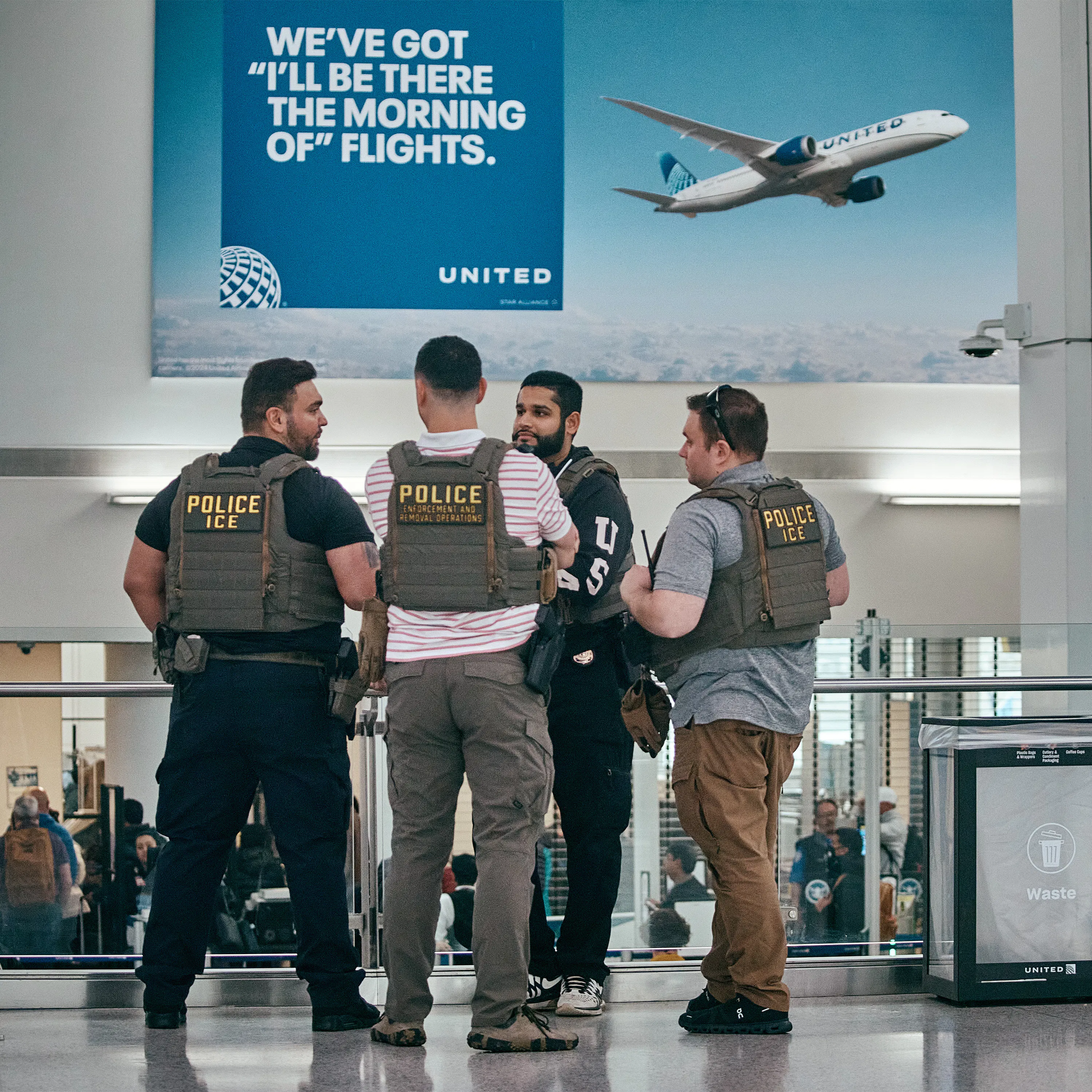
Radio Atlantic
The Department of Homeland Security Theater
00:28:25
ICE at airports. TSA lines out the door. And a new boss at DHS amid its funding shutdown.
Loading summary
Transcript89 lines
- [00:01]
TikTok Advertiser
So good, so good, so good.
- [00:03]
Nordstrom Rack Advertiser
Spring styles are at Nordstrom Rack stores now and they're up to 60% off. Stock up and save on Rag and Bone, Madewell, Vince, All Saints and more of your favorites.
- [00:12]
Nick Miroff
How did I not know Rack has Adidas?
- [00:14]
Radio Atlantic Host
Why do we rack for the hottest?
- [00:16]
Nick Miroff
Still just so many good brands.
- [00:18]
Nordstrom Rack Advertiser
Join the Nordy Club to unlock exclusive discounts. Shop new arrivals first and more. Plus buy online and pick up at your favorite Rack store for free. Great brands, great prices. That's why you rack.
- [00:31]
Venmo Advertiser
Score more with the College branded Venmo debit card and earn up to 5% cash back with Venmo Stash. Got paid back with the Venmo debit card. You can instantly access your balance and spend on what you want like game day snacks, gear, tickets and more. The more you do, the more cash back you can earn. Plus, there's no monthly fee or minimum balance. Sign up now@venmo.com collegecard the Venmo MasterCard is issued by the Bancorp Bank N.A. select schools available. Venmo Stash terms and exclusions apply at venmo me stashterms max $100 cash back per month.
- [01:06]
Hannah Rosen
The Department of Homeland Security is now weeks into its funding lapse. Last Friday, with TSA lines at airports growing, a woman named Linda called into a conservative radio show to offer a thought.
- [01:18]
Linda (Caller)
Clay, I think I have a solution to the TSA problem. What we need to do is we need to supplement where we're missing out on TSA agents who can't afford to work for us anymore. We need to bring in ICE agents.
- [01:31]
Hannah Rosen
The host, Clay Travis, loved the thought.
- [01:34]
Clay Travis
Linda, that's I'm going to say it's
- [01:36]
Nick Miroff
kind of a brilliant idea.
- [01:37]
Hannah Rosen
He loved it enough that he brought it up on Fox News later that day.
- [01:41]
Clay Travis
I had a caller on the show, the Clay and Buck show today. Charlie had an interesting idea. What if President Trump announced that ICE agents were now going to be supplementing TSA agents inside of all of the
- [01:54]
Hannah Rosen
airports by the next morning? Trump floated the idea on Truth Social, threatening that if Democrats don't give in and fund dhs, he'd send ICE agents into airports, which he soon did.
- [02:09]
Radio Atlantic Host
The White House deploys ICE agents to
- [02:11]
Hannah Rosen
airports around the country today.
- [02:13]
Clay Travis
Happening now. ICE agents have arrived at Hartsville Jackson International Airport and they love it because
- [02:19]
Tom Homan
they're able to now arrest illegals as they come into the country. That's very fertile territory, but that's not why they're there. They're really there to help.
- [02:29]
Hannah Rosen
Trump took credit for the ICE idea himself.
- [02:33]
Tom Homan
Mine. That was mine. That was like the paperclip. You know the story of the paperclip? 182 years ago, a man discovered the paperclip. It was so simple. And everybody that looked at it said, why didn't I think of that? ICE was my idea. I called. First person I called was Tom Homan. I said, what do you think?
- [02:54]
Hannah Rosen
I'm Hanna Rosen. This is Radio Atlantic. If ICE is now showing up at airports helping out tsa, then what even is ice? Their new role comes at a time when DHS has a new head. Mark Wayne Mullen.
- [03:08]
Tom Homan
We're in. Our new Secretary of Homeland Security. Great American patriot, to put it mildly,
- [03:13]
Hannah Rosen
who took a more conciliatory position during his confirmation hearings. When the Kristi Noem, Greg Bovino era of shooting citizens on American streets has come to an end. An act of domestic terrorism, the ICE officer fearing for his life, and the other officer. So does this mean that we're heading into a new era for ICE and dhs? And if so, what will it look like? To help me think through this, I talked to staff writer Nick Miroff, who covers immigration. Nick, welcome to the show.
- [03:43]
Nick Miroff
Thank you, Hannah.
- [03:44]
Janae West
Good to be with you.
- [03:45]
Hannah Rosen
Okay, let's start with airport hell. As we know, there's a shortage of TSA agents, and then this idea comes seemingly out of nowhere to deploy ICE at airports to help alleviate these security lines. What did you think when you first heard this idea?
- [04:01]
Nick Miroff
Well, my first thought was, this isn't gonna help. Second was that this is consistent with the way the President views ICE as more than like, a personal army, kind of like a personal errand corps, where if he needs some kind of, you know, job done and he wants the optics of toughness, he just calls on ice, which, once again, is just a gross misunderstanding of what that law enforcement agency's role is. And so over the course of last weekend, I initially wrote to some of my ICE sources, and they had no information about it. They had no idea what the operational plans were going to be. And then you kind of saw it take shape over the course of the weekend with the border czar, Tom Homan, going on the Sunday shows and seemingly doing a kind of damage control, like, oh, we're going to have them watching the exits and supporting tsa, which was an acknowledgement that they are not trained to do the core functions of tsa, which are the things that obviously slow the lines down.
- [05:04]
Tom Homan (continued)
We're simply there to help TSA do their job in areas that don't need Their specialized expertise, such as, you know, screening through the X ray machine, not training that we won't do that, but there are rules.
- [05:15]
Nick Miroff
All week, what we've seen is imagery of ICE officers mostly standing around. And ironically, it's kind of a nice PR opportunity for an agency that has obviously been widely vilified over the past year for its role in places like Minneapolis. They are in the airports without masks. They're handing out water bottles, they're smiling, and of course, they're getting some of the favorable coverage from people saying, oh, wow, they're actually really nice. They just walk by, hey, they're here to help, and I'm all for it.
- [05:47]
Janae West
No problem.
- [05:49]
Nick Miroff
You know, a lot of people have rightly commented that ICE officers in the airports remind them of the role that the National Guard is playing on the streets of Washington, D.C. because they just see National Guard troops kind of standing around and not really doing anything. You know, the kind of darker interpretation of this is that this is a test run for the President to deploy ICE officers to polling stations and intimidate voters in November. That's yet to be seen, but it is a reminder of the way the President views dhs, but specifically ICE as a kind of personal federal force that is at the beck and call of the President. And he can just deploy whenever he needs a tough job done.
- [06:32]
Hannah Rosen
Right. Okay, so I want to split the darker and lighter interpretations, because I'm sure even at the airport, there are some people who are freaked out by the presence of ICE and other people who are happy and going over and shaking their hands. So to start with the freaked out, we did see, and then this polarization shows up in social media. So in the first days was this video of a woman at the San Francisco airport being pinned down by ICE agents while her daughter looked on. I'm asking for your badge number, sir. And then later, reports that TSA had shared information about this woman with ice. So, which brings up the specter of, oh, are airports going to become like, Minneapolis Streets or something? Like, you're not safe anywhere. ICE could just pop up at any place where all Americans do their business. So what do you think of that?
- [07:25]
Nick Miroff
Yeah, good question. Let me try to add some context here. So, first thing to keep in mind is that there are already or were already ICE officers in international airports. Just like Customs and Border Protection is in the international airports, there are ICE officers there. In most cases, they're there for a specific purpose. But since the start of this administration, they have fulfilled the President's executive orders for DHS agencies to cooperate more on sharing information about potential immigrant targets that they want to arrest. Right. So you already have TSA doing more to share information with ice, flagging for ICE passengers who may have outstanding deportation orders or maybe people who ICE is looking for. And that was the case of this mother and daughter traveling through the San Francisco airport. It's important to point out that their arrest took place the day before the President sent the ICE officers out into the airports. And the tell that I noticed immediately was that the ICE officers who carried out this arrest were not only in plain clothes, they were undercover officers. They were wearing, like, hoodies and backpacks. And the presence of undercover ICE officers in international airports is not new. And in this case, they had been alerted to this family by tsa. The mother and her daughter reportedly had a final deportation order. So they're on this wider list of people who ICE is looking for. And so this was what the administration and Tom Homan calls a targeted enforcement operation, a targeted arrest.
- [09:05]
Hannah Rosen
Okay. So if there's anything to fear there, in the long term, it's the increased data sharing between government agencies. It's not this temporary story about ICE agents at airports.
- [09:17]
Nick Miroff
Yeah, ICE agents are not gonna be, like, sweeping through the airports looking for people to arrest.
- [09:23]
Hannah Rosen
How do you know?
- [09:25]
Nick Miroff
Because those are not their operational orders. Look at the images that we've seen so far. They're standing around chatting with each other, and they're handing out water bottles, and they're doing a soft PR campaign. What would be the political backlash after Minneapolis of having ICE agents sweeping through the airports, grabbing people and confronting U.S. citizens and harassing U.S. citizens? There doesn't seem to be a lot of appetite in the White House for that right now.
- [09:53]
Hannah Rosen
Right. Okay, so everything you're suggesting, what I'm picking up is that this is kind of a PR campaign, a new part of a PR campaign. And I want to get to that in a minute. But first I want to close this off, which is this is just because of a temporary partial government shutdown. You know, Congress is currently negotiating. So are they just going to leave? Like, is this very temporary, is your impression? Sort of. Once we resolve the TSA funding, ICE will just leave?
- [10:22]
Nick Miroff
Yeah, I mean, I think there's some long term damage being done to tsa. Right. This is like, what, the third time that they've not gotten paid? You know, reportedly hundreds of officers have quit. And what kind of message does this send as a recruitment? I mean, one of the crazy things about this is that TSA officers, they're not really, law enforcement officers, they're performing this vital function, but. But they're making like 40 to 50 grand a year. Meanwhile, you have ice, in some cases Homeland Security special investigators who are making 150 to $200,000 a year and who are supposed to be investigating drug cartels and human traffickers. And they're out there standing around in the airport making five times as much as the TSA agents are supposed to be replacing. So this is not a good solution and it's certainly not a long term solution. And yes, I would think that once they come up with a fix, ICE will get pulled back out of the airports because let's not forget, they're supposed to be carrying out the President's mass deportation campaign.
- [11:21]
Hannah Rosen
Okay, so back to your specialty. Let's talk about ways that ICE is evolving, like the new leader of dhs, Mark Wayne Mullen. He was confirmed by Congress this week, sworn in. Who is he? What do you know about him?
- [11:36]
Nick Miroff
Well, Mark Wayne Mullen was a senator from Oklahoma. He was a five time congressman from Oklahoma before that. He's got hardcore conservative credentials. And most importantly, he is someone who is personally close to President Trump and who obviously President Trump thinks fondly of and has served as a kind of go to ally. And you know, Mullen, his profile is that of a tough guy fighter, kind of a macho man.
- [12:07]
Mark Wayne Mullen
You want to do it now?
- [12:08]
Nick Miroff
I'd love to do it right now.
- [12:09]
Mark Wayne Mullen
Well, stand your butt up then.
- [12:10]
Nick Miroff
You stand your butt up. Oh, hold up.
- [12:13]
Tom Homan
Stop it.
- [12:13]
Hannah Rosen
Is that your solution?
- [12:14]
Tom Homan
Every.
- [12:14]
Mark Wayne Mullen
Pull it.
- [12:15]
Nick Miroff
He was an MMA fighter. He's one of the only senators who didn't go to college for four years. He inherited his father's plumbing business and then, you know, expanded it. And he's attracted scrutiny for some of the investments that he's made over the years that have made him personally wealthy while he's been in Congress. But one thing that was notable during his confirmation hearing is that if you looked past the kind of personal animosity between Mullen and the chairman of the committee, Senator Rand Paul, fellow Republican, those two have a simmering beef. You offer no apology, sir, and you
- [12:53]
Tom Homan
offer no apology today and no regrets.
- [12:58]
Nick Miroff
If you look beyond that, he got a lot of kind of warm, supportive statements from Democrats. He obviously has friends among the Democrats. Are you a yes or a no on Senator Mullen's confirmation? Well, I came up with an open mind and I'm going to maintain that. That was always my. He got Senator Fetterman and Senator Heinrich from New Mexico to support his confirmation. And he does have this reputation as a kind of jocular, back slapping, friendly guy. And I think that that is the Persona he's trying to bring into DHS at a time when the department is looking for a kind of, you know, reset and a rebranding of its own. And most importantly, the career workforce at the department that has been demoralized by what they've seen over the past year where a lot of people were very disgusted with Kristi Noem and most importantly her chief advisor Corey Lewandowski. A lot of those people have been telling me that they're very eager for a fresh start and that Mullen is saying all the right things to kind of win them over so far.
- [14:09]
Hannah Rosen
After the break how this next phase of DHS and ICE could be just as effective in the campaign of mass deportations without as many people noticing.
- [14:30]
Janae West
Are you stuck staring at your W2? Are tax refund worries holding you back? You probably have FOMO the fear of messing up the fix. Using TurboTax on Intuit credit Karma, they find every credit and deduction to help you get every refund dollar you deserve or your money back. It's time to overcome your fear of messing up and get your taxes done right. Start filing today in the Credit Karma app.
- [14:58]
Hannah Rosen
Chronic migraine is 15 or more headache days a month, each lasting four hours or more.
- [15:03]
Radio Atlantic Host
Botox Onobotulinum Toxin a prevents headaches in adults with chronic migraine before they start. It's not for those with 14 or fewer headache days a month. It prevents on average 8 to 9 headache days a month verses 6 to 7 for placebo.
- [15:16]
Botox Advertiser
Prescription Botox is injected by your doctor. Effects of Botox may spread hours to weeks after injection, causing serious symptoms. Alert your doctor right away as difficulty swallowing, speaking, breathing, eye problems or muscle weakness can be signs of a life threatening condition. Patients with these conditions before injection are at highest risk. Side effects may include allergic reactions, neck and injection site pain, fatigue and headache. Allergic reactions can include rash, welts, asthma symptoms and dizziness. Don't receive Botox if there's a skin infection. Tell your doctor your medical history, muscle or nerve conditions including als, Lou Gehrig's disease, Myasthenia gravis or Lambert Eaton syndrome and medications including botulinum toxins as these may increase the risk of serious side effects.
- [15:52]
Hannah Rosen
Why wait? Ask your doctor, visit botoxchronicmigraine.com or call 1-800-44-BOTOX to learn more. Let's get into the rebrand because that could be superficial. It could be at the level of staff happiness, or it could be at the level of genuinely shifting policies. So what's his relationship with Tom Homan?
- [16:15]
Nick Miroff
Well, it's been very interesting because, you know, Mark Wayne Mullen has never run a federal bureaucracy. He doesn't have a law enforcement or military background. And so he's coming into dhs, you know, as a newbie and clearly needs some kind of mentor. It's no surprise that the border czar, Tom Homan, who retains a lot of support among the kind of DHS workforce and represents a kind of institutional continuity at dhs, and who clashed bitterly with Noem and Lewandowski. So it's no surprise that Homan seems to be kind of taking Mullen under his wing. He's been talking to Mullen multiple times a day. And so I think this signals that, you know, Homan is going to retain a lot of influence at DHS this year. And what has been Homan's job since the President put him in charge of Minneapolis after the debacle there? Homan has been trying to turn down the temperature. He's been trying to make these kind of conciliatory statements. He's been trying to reassure Americans that the uglier scenes that have been politically damaging to the White House and the President's deportation agenda are gonna go away. And that's why you saw Mark Wayne Mullen during his confirmation hearing say, look, in six months, my goal is for DHS not to be at the headlines every day.
- [17:34]
Mark Wayne Mullen
My goal is for people to understand we're out there, we're protecting them, and we're working with them. My goal is to make every one of you guys proud. My goal for those that don't support me, regret not supporting me.
- [17:47]
Nick Miroff
And so this is about delivering on the President's mass deportation agenda, but more quietly, you know, without the kind of spectacle that the GNOME team has been producing.
- [17:59]
Hannah Rosen
Okay, that's complicated. First of all, you said delivering on the agenda. I mean, do any of these personnel changes then matter if the person setting the agenda is still Stephen Miller, who still has quota demands?
- [18:14]
Nick Miroff
Yes and no. I mean, you know, what I'm talking about is a tactical change in the politics of immigration enforcement.
- [18:22]
Hannah Rosen
In the visuals or the politics in
- [18:25]
Nick Miroff
both in the visuals and the way that it's talked about. Right. I mean, during Nome, we saw the public affairs office of the Department of Homeland Security issuing these, like, weird white nationalist tweets, you know, about American history and culture and, you know, delivering nativism and delivering these sermons on, you know, what Americans should think about their history. I mean, just this kind of stuff that is just way out, you know, outside the norms.
- [18:52]
Hannah Rosen
For example, calling on potential ICE recruits to, quote, defend the homeland from outsiders while featuring heroic images of white men, often from a bygone era.
- [19:02]
Nick Miroff
I don't think we're going to see that anymore. At least this year. I mean, I think that we are moving into a second year midterm political strategy that seeks to produce high numbers of deportations so the White House can point to results and say, look, I'm doing the thing that I said I was going to do, that President Trump said he was going to do, but no longer is geared to satisfying the President's base. And the most hawkish right wing forces that delighted in the scenes of ICE agents and Border Patrol agents going around these liberal cities and kicking ass. The politics of that have changed. And so it isn't like they're going to really back off of mass deportations. And they can't. They have $170 billion from the one big beautiful bill. That's the law. They have to hire all these ICE officers. They have to build out the detention capacity of ice. They have to build the border wall. The money has already been appropriated and they are going to fulfill this agenda. They're just going to manage the politics much differently.
- [20:16]
Hannah Rosen
I guess I'm still trying to gauge if that's a genuine policy shift because Tom Homan, who we now talk about as the calm professional, was very involved, as this magazine reported, in family separation policies. So I don't know what he represents actually politically when he's executing mass deportations. Like, does he just represent the. Not Greg Bovino, but actually his policies are pretty similar, his tactics.
- [20:46]
Nick Miroff
Yes. So what does it mean when Tom Homan says they want to do targeted enforcement? It means you're not going to have Greg Borvino strutting around Los Angeles and Chicago like a rooster. But Tom Homan has been an advocate of mass deportations pretty much his entire 40 year career in federal law enforcement. He knows how to pull the levers. And what he represents is this institutional. Think of it as like institutional ICE on steroids. You don't have to go out and troll people visually or online with the mass deportation agenda you're trying to carry out. You just can go and do it because you have the money and you have the personnel and you know how to execute these deportations. And that's what Tom Homan represents. So when some of the border hawks who were lamenting the demise of Greg bevino described Tom Homan as like, some softy. It's almost comical because, yeah, he was one of the architects of the family separation policy during the first term. Everyone who has seen him on Fox News for the last several years knows that he's an unapologetic, unabashed enthusiast for mass deportations and for what President Trump wants to do. But I think he can both be more effective because he knows how to actually make the machines run. And he's not backing off of this. He's just managing the politics and the optics differently because the broader public has turned. Has soured on mass deportations since Minneapolis. It's. The optics of it are bad.
- [22:25]
Hannah Rosen
So the era we are entering is one in which ICE could have a gentler face, but is actually more effectively carrying out the President's policies.
- [22:35]
Nick Miroff
Exactly. But it isn't even a gentler face. It's just like, what does targeted enforcement mean? It means they're gonna use all their resources, all the money that they have, to develop target lists to go and find the people that they want to arrest, who they can arrest, and take them into custody. They're just going to do it in a less visible way and in the way that ISIS has traditionally operated. And that's why the Kristi Noem, Corey Lewandowski, Greg Bevino approach of the first term was also really disorienting for most career ICE officers, because it wasn't the way they're used to operating. They didn't like it. They don't want to be performing for television cameras and social media. That's what the masks were about in a lot of ways. And so if you tell ICE officers you're just gonna do the job that you have been doing for most of your career, but with less of the spotlight on you, they'll be like, great.
- [23:29]
Hannah Rosen
That's what I signed up for.
- [23:30]
Nick Miroff
That's what I signed up for. And I think they will. Ultimately, they will get bigger numbers. You will see a lot more deportations.
- [23:39]
Hannah Rosen
Okay, all right, so some specifics, because in the negotiations to fund dhs, the Democrats have made a handful of specific demand to reign in ice. And I don't know that any of them have been met or will be met. They're still being negotiated. But I'm curious about what you're hearing about whether in this new era, some of these things might or could change, like wearing masks. Like, is that a thing of the old era? Or what happens to that?
- [24:06]
Nick Miroff
Well, you know, it's funny. Like, the White House, the Republicans, ICE leaders, seem to have already given ground on some of the other items on the Democrats wish list. You saw Mark Wayne Mullen, during the confirmation hearing say that he would return to the policy requiring ICE to have a judicial warrant to go into someone's private home.
- [24:29]
Mark Wayne Mullen
I have made it very clear to the staff, and I think when you and I spoke, that a judicial warrant will be used to go into houses and a place of businesses unless we're pursuing someone that enters in that place.
- [24:42]
Nick Miroff
Firing Kristi Noem was high on that list, restoring some of the oversight authorities. Mullen said that he would do that. So even in his confirmation hearing, outside of the scope of the negotiations, they were already agreeing to a lot of the stuff on the Democrats list. But what seems to be the big sticking point? It's the masks.
- [25:00]
Hannah Rosen
Interesting. Why would they want to keep the masks if they're operating in the way that you described, which is the traditional ICE way of, you know, a name on a list and you go after the name on the list?
- [25:12]
Nick Miroff
I think that this is something that in the course of their recruitment effort to more than double the size of the ICE workforce and add more than 10,000 new deportation officers, that this is something that has been a promise to the new recruits.
- [25:29]
Hannah Rosen
Why? Why is this?
- [25:29]
Nick Miroff
Because they're worried about being doxxed and they're worried about, you know, their families being harassed. And, you know, I'm sorry, but that's a real thing.
- [25:35]
Hannah Rosen
Okay, so we're in this moment. ICE is about to do, you know, better job at mass deportation. What do you, as a reporter, track to see whether this is happening humanely in a way that, you know, protects rights or doesn't protect rights? Like, what are you watching in this new phase of ice?
- [25:55]
Nick Miroff
I'm watching the plan that was set in motion several months ago to overhaul the ICE detention system. The agency has spent the last few months acquiring large warehouses around the country. They've already spent a billion dollars to buy 11 properties. They're planning to convert them into large mass detention centers with capacity for, in some places, for up to 10,000 detainees. I mean, this is stuff we've just never seen in this country before. They have $38 billion to convert these facilities and to operate them through the rest of Trump's term. These are central to their plan to carry out mass deportations and to reach their goal of a million deportations a year, which they fell far short of in Trump's first year. And yet Kristi Noem, Corey Lewandowski, as they were acquiring these warehouses and implementing this plan, didn't do any of the local political work. It would reassure jurisdictions, even in Republican dominated jurisdictions, to reassure local residents about what they were doing. And so they have been facing this backlash to the ICE plan from people who voted for Trump, but don't necessarily want a 5,000-person ICE detention center in their county. And ICE needs those jurisdictions to approve their permits for water and sewer and all of the renovations that they're planning to do. And so this is what I'm tracking, this plan and the possibility of, you know, mass detention centers being built out around the United States that are really going to facilitate their broader goals.
- [27:46]
Hannah Rosen
Right, right. That's the next story. Well, Nick, thank you so much for joining us.
- [27:51]
Nick Miroff
Pleasure. Thank
- [27:55]
Tom Homan
you.
- [27:56]
Hannah Rosen
This episode of Radio Atlantic was produced by Janae West. It was edited by Kevin Townsend. Rob Smersiak engineered and provided original music. Sam Fentress and Genevieve Finn fact checked. Claudina Baid is the executive producer of Atlantic Audio. And Andrea Valdez is our managing editor. Listeners, if you enjoy the show, you can support our work and the work of all Atlantic journalists when you subscribe to The Atlantic. At theatlantic.com listener, I'm Hanna Rosen. Thank you for listening.
- [28:40]
TikTok Advertiser
Pet owner Save this TikTok has free training guides and behaviour tips. Potty training tricks, healthy diet ideas. No expensive classes needed. Just scroll and learn. Download TikTok now.