← Radio Atlantic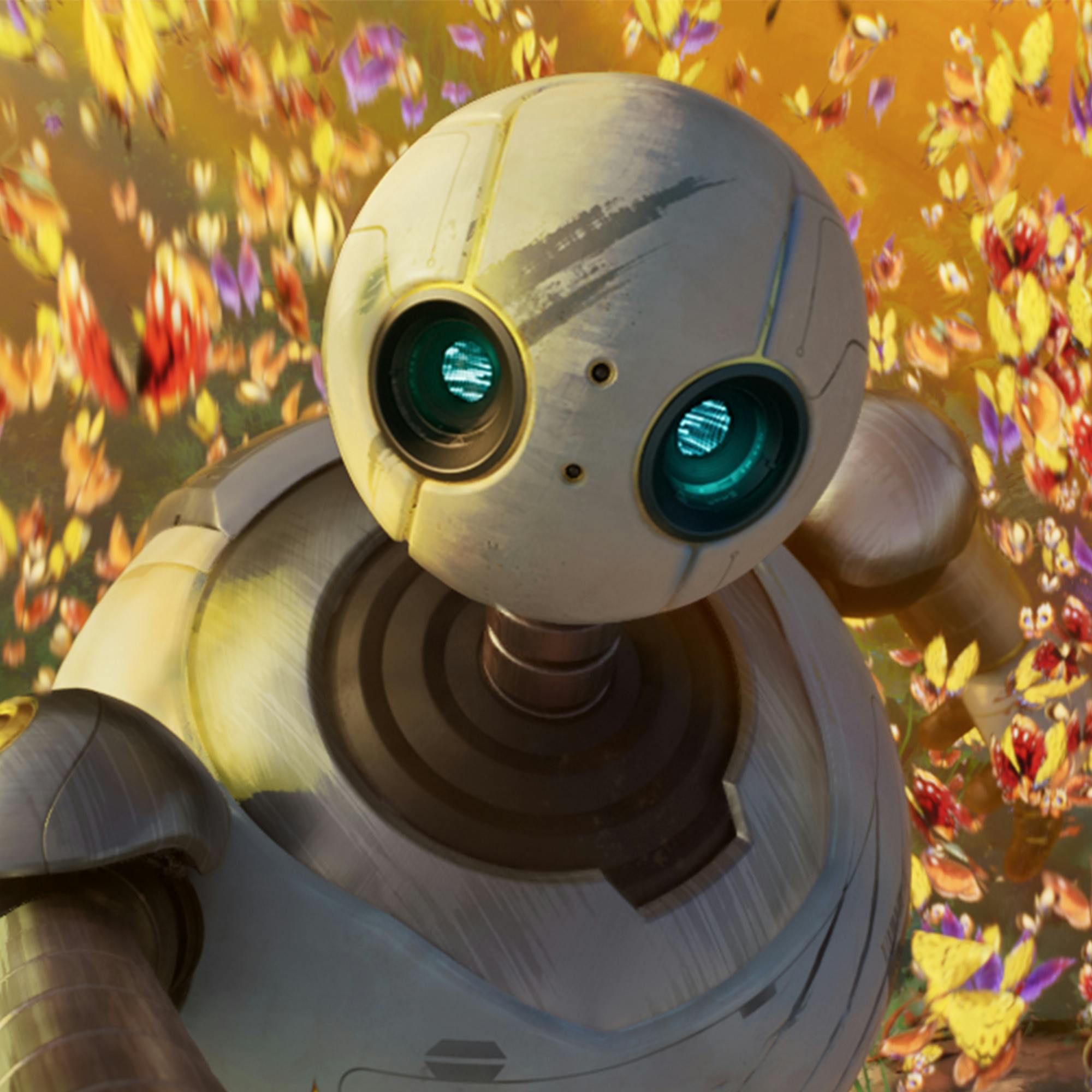
Radio Atlantic
What Does a Robot With a Soul Sound Like?
00:21:39
The Wild Robot sound designer breaks it down.
Loading summary
Transcript89 lines
- [00:02]
A
With the Venmo Debit card, you can turn the spa day that your friends paid you back for into concert tickets that you can earn up to 5% cash back on, where a spa day with the girls becomes concert tickets. Visit Venmo Me Debit to learn more. The Venmo MasterCard is issued by the Bancorp Bank N.A. pursuant to license by MasterCard International, Inc. Terms apply Dosh Cashback terms apply. Pro Savings Days are back at Lowe's with limited time savings on the supplies pros need. Get up to 40% off select major.
- [00:38]
B
Appliances, plus save an additional $100 on every $1,000 you spend on select major appliances.
- [00:44]
A
And don't miss your chance to activate.
- [00:46]
B
And earn three times the points on select DeWalt and Klein tools Lowes. We help you save valid the 328 selection varies by location while supplies last. See associate or lowe's.com for more details.
- [00:58]
A
On qualifying it hey, it's Hannah again. So last year we did an episode with the sound designer behind the Zone of Interest, which ended up winning the Oscar for Best Sound. We thought we'd do a similar episode with one of this year's nominated films, which is the bonus episode you're about to hear. Enjoy. Hello, Bonjour, Guten Tag, Bujambo.
- [01:25]
B
Hola.
- [01:26]
A
Congratulations on your purchase of a Universal Dynamics robot that is the voice of Ra's from the animated film the Wild Robot, up for three Oscars this weekend, including for Best Sound. Raz, who's voiced by Lupita Nwongo, is a helper robot, a kind of turbocharged Siri who gets stranded on a deserted island and learns to communicate with the animals that live there. She also finds a goose egg, the only one left after she accidentally destroyed its nest, and she decides that her task is to raise this gosling and basically become its mom. But that means she has to do all the parts of becoming a mom.
- [02:06]
B
She doesn't, but she remembers one thing, you.
- [02:11]
A
And when she finally sees you, she feels crushing obligation.
- [02:16]
B
Very lucky to be a mother.
- [02:19]
A
This all created an interesting challenge for the movie's sound design team, which is what should this robot sound like and what should it sound like? If it has a soul, how do you know if you love something? Someone?
- [02:37]
B
If you do, you should probably tell them.
- [02:42]
A
What if it is too late? This is Radio Atlantic. I'm Hanna Rosen. Today we're talking about how a movie handles our complicated feelings about robots with the guy who had to figure that out in sound.
- [03:00]
B
My name is Randy Thom and who.
- [03:03]
A
Did it well enough to get an Oscar nomination.
- [03:05]
B
And I'm the supervising sound designer on the Wild Robot.
- [03:12]
A
There is a long history of robots in film from him. Here he comes to him. Wally to her.
- [03:29]
B
Hello.
- [03:30]
A
I'm here. What do I call you? Do you have a name? Yes. Samantha. And Randy and the Wild Robot filmmakers knew they had to include Samantha. Some element of that classic robot feel for Ra's voice, like a little bit of monotone.
- [03:50]
B
If I were to say, let me adjust this microphone and then we decide we want to flatten it, it would be, let me adjust this microphone.
- [04:02]
A
Ah, that was pretty good.
- [04:03]
B
So it's all kind of one note.
- [04:05]
A
And then some extra processing in the voice.
- [04:08]
B
As good an example as any would be C3PO.
- [04:12]
A
Can you speak Bodgie?
- [04:13]
B
Of course I can, sir. It's like a second language to me. I'm all right. Shut up.
- [04:16]
A
I'll take this. Shut it up, sir.
- [04:18]
B
His voice, when C3PO was speaking English, was processed, you know, quite noticeably in terms of restricting its bandwidth. So it sounds a little bit like you're hearing it over a telephone. Doesn't have many, you know, low frequencies in it or extremely high frequencies. What makes you think there are settlements over there? Don't get technical with me. There's this thing called audio phasing where a signal, a sound, gets combined with itself but slightly out of sync with itself and it makes this kind of swishing sound. And so a little bit of that is typically added to a voice to make it sound a little more like a robot. I've just about had enough of you.
- [05:07]
A
Go that way.
- [05:08]
B
You'll be malfunctioning within a day, you nearsighted scrap pile.
- [05:12]
A
By the way, Randy would know all of this because I'm the director of.
- [05:16]
B
Sound design at Skywalker Sound. Are you looking for that kind of title?
- [05:20]
A
I mean, if you had that title, would you ever introduce yourself in any other way? Anyway, back to Ra's and the Wild Robot.
- [05:31]
B
One of the things that Gary Rizzo, the dialogue mixer on the film did, I think, to very useful effect, was to dial up a reverberation algorithm that makes it sound like her voice is inside a metal container.
- [05:52]
A
Congratulations on your purchase of a Universal Dynamics Robot. I am RossM7134.
- [05:59]
B
And the effect of it, if you use it, that kind of processing subtly enough.
- [06:04]
A
Congratulations on your purchase of a Universal.
- [06:06]
B
Dynamics robot, is that it feels like you're hearing her metallic body resonate when she speaks.
- [06:17]
A
I am Rosm 7134. A Rosm always completes its task. Just ask.
- [06:25]
B
We did initially think that there might be quite a bit of robotizing of Lupita's voice. But the more we tried that, the more we realized that, you know, we really need this character to express emotion. Because what's kind of going on in the story is that this robot develops a soul.
- [06:49]
A
Can you explain again what we are doing? I don't know. I'm just making stuff up. I don't know what I'm doing. And I have to. I have to, because he's relying on me.
- [07:01]
B
And so what you hear in the film is something that does sound very much like a robot for the first six or eight things that she utters.
- [07:12]
A
Was this task accomplished to your satisfaction?
- [07:19]
B
But then fairly quickly, we dial out the processing and so that what you're left with is Lupita's performance as a robot.
- [07:32]
A
They cut my power, but I still heard you because I was listening with a different part of myself, wherever that is. Now, of course, Ra's is not the only robot you voiced a robot. In Wild Robot, you play essentially the equivalent of a stormtrooper, like muscle, Bad muscle robot. How did you think about those robots differently?
- [07:57]
B
Well, this is a case where my big bassie voice was useful. These are very large military robots. And so I just tried to manifest that as well as I could. Your target is RossM7134. Deploy. But even my voice needed to be augmented to make it sound even bigger. And so I pitched my voice down almost an octave. You do not belong here. This is a wilderness. And put some of that kind of metallic reverberation on it. You do not belong here. This is a wilderness. And I just needed to perform it in as kind of aggressive and intimidating a way as I could muster.
- [08:56]
A
Okay, give us one line. I'm trying to imagine your voice an octave deeper than I'm listening to.
- [09:01]
B
Yeah, I won't be able to simulate that part of it. This is a wilderness. You do not belong here.
- [09:08]
A
That was excellent. That was excellent.
- [09:12]
B
Oh, thank you.
- [09:13]
A
Thank you.
- [09:14]
B
You do not belong here. This is a wilderness.
- [09:18]
A
And I am a wild robot. When we come back, Randy has breakthrough.
- [09:32]
B
Damn, that's gonna work.
- [09:36]
A
That is Meghan Trainor, laundry retrainer. Meghan Trainor. You're tossing out my gunky laundry detergent bottle. Ooey. It's got that booty that juicy boom boom that don't hide alive Arm and hammer power sheets Toss like this. Cause I toss like this. I wash like this. It's a no mess. Laundry Bl arm and hammer power sheets. More power to you still getting around to that fix on your car. You got this on ebay, you'll find millions of parts guaranteed to fit. Doesn't matter if it's a major engine repair or your first time swapping your windshield wipers. Ebay has that part you need ready to click perfectly into place for changes big and small, loud or quiet. Find all the parts you need at prices you'll love. Guaranteed to fit every time. But you already know that. Ebay things people love. Eligible items only Exclusions apply. So one thing Randy Thom had to figure out is what Roz's voice would sound like. But he also had to figure out how Roz would sound when she moved. Like when she twisted her body or extended her arm and when she walked around.
- [11:02]
B
The tradition for doing robot movement sounds for movies is to use recordings of servo motors. Servo motor is a kind of electric motor that's often used in robots. And the sound that it makes is when the robot walks is sort of sounds like that were used in the Star wars films. R2D2 really rolls rather than walks. But C3PO is, you know, anthropomorphic, has arms and legs, and you hear servo motors when C3PO walks.
- [11:48]
A
He tricked me into going this way.
- [11:50]
B
But he'll do no better. So, you know, that approach had been done well, but at this point, it seemed like a bit of a cliche, and so I wanted to stay away from it for that reason. But probably the more important reason I wanted to not use servo motors is that Roz is supposed to be very high tech, so she had to sound elegant and smooth and subtle when she moved.
- [12:27]
A
RossMs are programmed for instant physical mimicry. So as to.
- [12:33]
B
So I started listening to pneumatic systems. And in a pneumatic system, air under pressure is used to propel certain kinds of things. And as I listened to those, I was thinking, wow, yeah, that's gonna work. Something like, that's gonna work.
- [13:02]
A
And what does a pneumatic system sound like? I actually tried to YouTube yesterday pneumatic systems, because I saw you, and mostly what you see is video images, but I couldn't find one that had any kind of elegant sound, you know?
- [13:14]
B
Well, they're often something like that sort of thing.
- [13:28]
A
Oh, that's what a pneumatic system is. It's like a tube going through a thing.
- [13:33]
B
If you can imagine a kind of cylinder being pushed through a tube. Yeah, it has air in it. And what you're hearing is sort of the air escaping around the edges of the cylinder inside the tube. It's like that. The more I listen to those sounds and, you know, edited them in to be in sync with Roz's movements on the screen, the more it occurred to me that they were a little like breathing. So I decided to try, you know, actual breath sounds. Inhales and exhales. Not for Roz breathing, because she doesn't breathe, but for her movement sounds, for her walking. So every time you would take. She would take a step, you would hear this, that sort of thing. And so I performed some of the breaths.
- [14:37]
A
Were they slow, like meditation, yoga class breaths, or what kind of. Or were they?
- [14:43]
B
It depends a little on what she's doing. There's one moment early in the film where she reaches into a cave that a bear, who's voiced by Mark Campbell of Star wars, by the way, she reaches into this cave and her arm has to extend quite a distance. I had to do a fairly long breath for that arm movement. So it was like. And I have to be careful that I don't pass out doing that too much. But the trick, of course, is to do it subtly enough so that it doesn't literally sound like breathing. And so we don't want the audience to think, well, we're hearing her breathing as she's walking. It has to be quiet enough so that it's mostly subliminal.
- [16:05]
A
You know, what's philosophically as you're talking, that the symbolism of this, of breathing life into the robot is very interesting.
- [16:15]
B
Yeah, that's the little light bulb that got turned on in my head once I started listening to these breath sounds. So for me, it was probably the most fun activity that I had working on the film, figuring out a new kind of paradigm for robot movies movement.
- [16:37]
A
In his past work, Randy has figured out sounds for much bigger and less, shall we say, aerodynamic kinds of robots like the Iron Giant.
- [16:46]
B
Well, I did use some servo sounds for the movement of the Iron Giant, which is an animated film. See this?
- [16:56]
A
This is called a rock. Rock.
- [17:01]
B
But I also use some hydraulic sounds for that. Giant robot.
- [17:08]
A
Yes. No, no, that is a tree. And early in his career, Randy also helped to come up with the sound for an even bigger kind of robot, which he found in recordings of a huge metal shear think like a metal guillotine.
- [17:28]
B
And it made this really great multisyllabic, syncopated sound. So it made this sort of. And, you know, that's the sound that the Imperial Walkers make in the Empire Strikes back. Echo Station 3. Ta. We have spotted Imperial Walker.
- [18:05]
A
So you're moving essentially from something that is metallic to something that's a little more organic to something that feels fairly human, like. Like that does feel like an evolution.
- [18:16]
B
Yeah, I think it is.
- [18:17]
A
Do you have a sense now, after working on Wild Robot, what an ideal robot would sound like? Like, do you think we could ever go back to the days when robots sounded metallic? Or are we just living in a world where our expectation is that robots have a humanish feel of some kind?
- [18:38]
B
I don't think we're there yet. It depends in movies, of course. So if you see a robot in her.
- [18:48]
A
Was that funny?
- [18:50]
B
Yeah.
- [18:51]
A
Oh, good. I'm funny.
- [18:53]
B
Then. You certainly don't expect to hear servo motors. But if there's a kind of retro look to the robot, then I can certainly imagine a movie being made next year where it would be appropriate to go back to servo motors.
- [19:13]
A
Right. So we're not firmly in the era of the humanoid robot. Who knows how it could go?
- [19:17]
B
Yeah.
- [19:18]
A
We could start having nostalgia for the robot robot as we knew it.
- [19:23]
B
I'm sure we will.
- [19:25]
A
Yeah. One day. Well, thank you so much for joining us and for explaining this so patiently. I really appreciate it.
- [19:45]
B
It was my pleasure. Nice to talk with you.
- [19:56]
A
This episode of Radio Atlantic was produced by Janae west and edited by Claudina Baid. It was engineered by Rob Smirciak and fact checked by Genevieve Finn. Claudina Baid is the executive producer of Atlantic Audio and Andrea Valdez is our managing editor. I'm Hanna Rosen. Thank you for listening.