Loading summary
Transcript76 lines
- [00:00]
Bank of America Private Bank Announcer
You're cut from a different cloth. And with bank of America Private bank, you have an entire team tailored to your needs with wealth and business strategies built for the biggest ambitions like yours. Whatever your passion, unlock more powerful possibilities@privatebank.bankofamerica.com what would you like the power to do? Bank of America official Bank of The FIFA World Cup 2026 bank of America Private bank is a division of bank of America, NA member FDIC and a wholly owned subsidiary of bank of America Corporation.
- [00:31]
K Jewelry Announcer
This holiday, discover meaningful gifts for everyone on your list at K. Not sure where to start. Our jewelry experts are here to help you find or create the perfect gift in store or online. Book your appointment today and unwrap love this season only at K.
- [00:55]
Brian Culp
I've always been a sucker for the four square with the front porch. You know, like you can just kind of sit out, have your morning coffee, you know, have your drinks in the evening.
- [01:04]
Hanna Rosen
This is Brian Culp.
- [01:06]
Brian Culp
I'm born and raised in Chicago. My dad was actually a Chicago firefighter. So I grew up in the far south side in a neighborhood called Beverly. It's super safe, it's super close knit, and I kind of always wanted my kids to have the same thing, but I wanted them to have at least a little bit more exposure to, you know, kind of the rest of the city and the rest of the world. And I think you get a little bit more of that up on the north side than you do on the south side.
- [01:31]
Hanna Rosen
One day this fall, he and his kids did get a little more exposure to the world, although not in a way he had planned for.
- [01:40]
Brian Culp
Yeah, so it was Saturday, October 25th. At 10:30 that morning, there was supposed to be a neighborhood Halloween parade where basically the families would just kind of walk in a line around the neighborhood, you know, an opportunity for the kids to kind of strut their stuff in their costumes and then end at a local park where there would be some activities and stuff for them. It was what was supposed to be a very normal day became, you know, probably honestly one of the craziest days of my life. I sit on my couch like I am often one to do on Saturday mornings, you know, drinking my coffee, watching the news. Something caught my attention. It was like something quick moving through the window. And I looked out my window and saw two CBP agents in full military fatigues tackling a guy to the ground.
- [02:27]
Hanna Rosen
At that point, Operation Midway Blitz, the Trump administration's name for its immigration crackdown in Chicago, had been going on for about six weeks. There had already Been scores of social media videos circulating of agents tackling people. So Culp guessed what this was about.
- [02:45]
Brian Culp
Before I could even put my shoes on, before I could even grab my phone, I ran out in my pajama pants, and, you know, the rest kind of unfolded from there.
- [02:58]
Nick Miroff
Never thought this would happen in my neighborhood.
- [03:01]
K Jewelry Announcer
This man walking barefoot in the Chicago Blackhawks pajama pants is Brian Culp. He lives on Kildare, a picture perfect area of old Irving park, which turned into what looked like a war zone Saturday morning.
- [03:13]
Hanna Rosen
Online, Culp became known as the Blackhawks pajamas guy. That's Chicago's hockey team, and he's a fan. He's also a lawyer, formerly a prosecutor, and he began his career as a city attorney defending Chicago cops in civil rights cases. So he's familiar with things like wrongful arrest and excessive force. And here's how he described what happened that day. Some agents went after a guy in a construction crew. The guy climbed down the ladder, and.
- [03:42]
Brian Culp
Then as soon as they started to go after him, he fled on foot. And then that chase ended on my front lawn.
- [03:47]
Hanna Rosen
And then he says, the agents tackled the guy. Neighbors were out of their houses watching and filming. The agents then put him in the car, and that should have been the end of it. Instead, that's when the mayhem really started.
- [04:05]
Nick Miroff
Michael.
- [04:06]
John Dick
Michael.
- [04:07]
Hanna Rosen
One of the agent's cars got blocked in by another car. Culp walked over to the other end of the block, where things were were quickly getting out of control.
- [04:15]
Brian Culp
It was a pretty chaotic scene by the time I got out there. Another agent was getting ready to deploy a chemical agent at the end of the block that I was at.
- [04:26]
Nick Miroff
The Department of Homeland Security is again the target of anger in Chicago after they deployed tear gas against civilians. A DHS spokesperson says it was done for crowd control.
- [04:38]
Brian Culp
And I yelled out to him when I saw it, and I said, are you seriously about to throw that in the middle of a neighborhood?
- [04:46]
Hanna Rosen
The crowd got rowdier, the police more aggressive.
- [04:49]
Brian Culp
They took two people to the ground, broke their ribs. They threw chemical agents, you know, the tear gas canister, the pepper spray canister, whatever it was, to the ground. You know, I mean, in my entire time defending Chicago police officers, never once did I have to justify that level of force, ever. These agents, these Border Patrol agents, are acting in ways that are bringing disrepute to law enforcement generally, and that is leaving minority communities and undocumented communities and some of the most vulnerable communities feeling as though they have nowhere to turn.
- [05:26]
Hanna Rosen
How did you know it was Border Patrol?
- [05:28]
Brian Culp
I mean, again, I'M a former prosecutor. I pay attention to the distinctions between the various federal agencies. Most folks are not making that distinction right at this point. They just say ice, even if it is cbp.
- [05:44]
Hanna Rosen
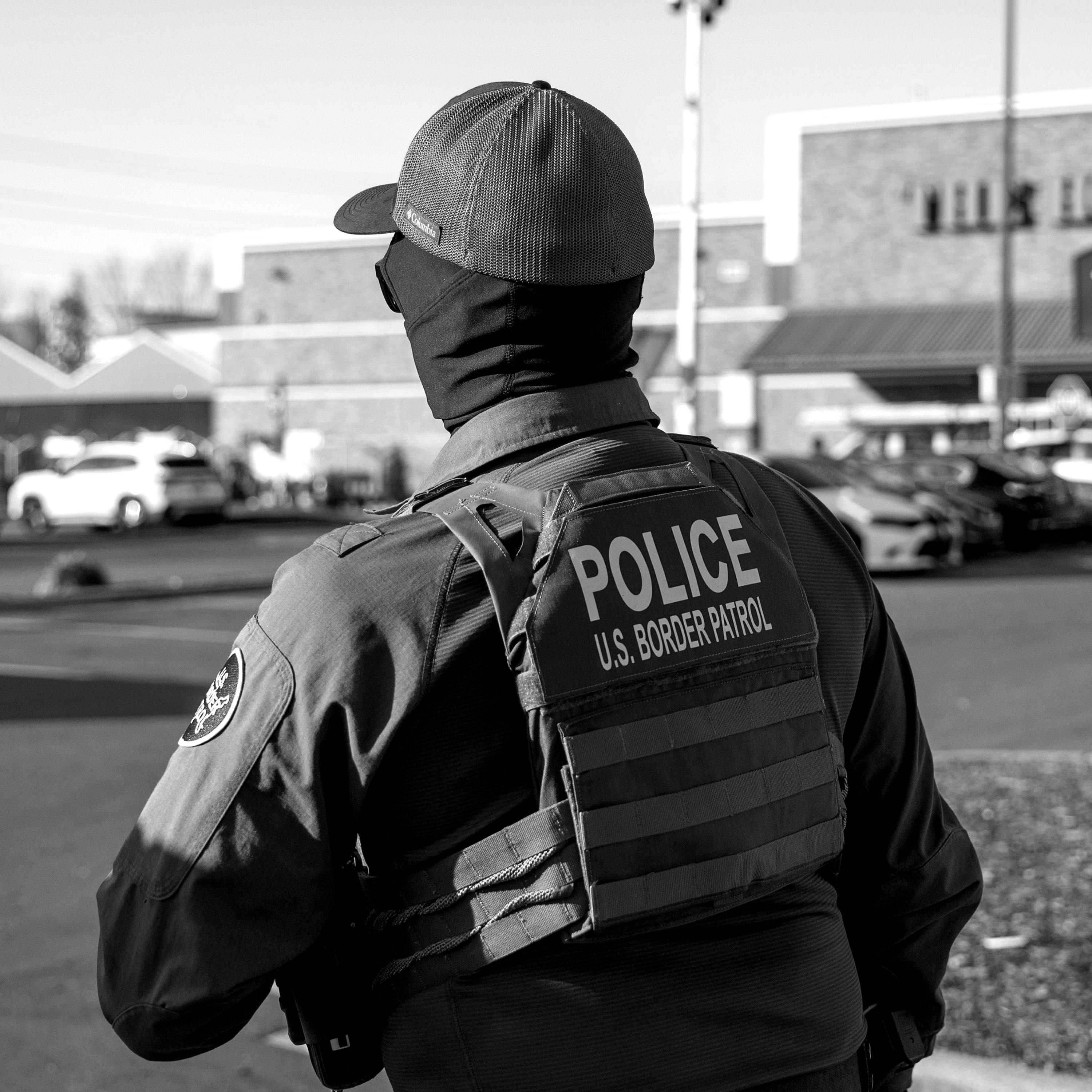
I'm Hanna Rosen, this is Radio Atlantic. And today, Border Patrol, the new face of the Trump immigration crackdown. What happens when an agency trained to operate at the desolate and sometimes dangerous border shows up in crowded American cities? One of Trump's main campaign promises was that he would deport millions of criminal aliens, as he called them, once he was in office.
- [06:11]
Nick Miroff
Almost from the beginning, there was this kind of disappointment with ICE's ability to deliver the kinds of numbers that would get to, you know, a million deportations a year.
- [06:22]
Hanna Rosen
That's Nick Miroff, who covers immigration for the Atlantic.
- [06:26]
Nick Miroff
ICE has never deported even half that many people in a year. You know, it just requires an enormous amount of resources and efforts. And the agencies involved, especially ice, were not set up for that kind of scale.
- [06:41]
Hanna Rosen
So in order to speed up the process, the administration turned to a different agency.
- [06:46]
Nick Miroff
What we've really seen in the last few months is the growing role of the Border Patrol, first in Los Angeles, then Chicago, and now in North Carolina. The most confrontational imagery, the most violent imagery that's on social media and is often blamed on ICE is the actions of Border Patrol. The White House and the Department of Homeland Security are using them kind of as like a, you know, shock troops or like a strike force that is going from, you know, city to city, escalating the pressure and trying to make as many arrests as possible. And it's a. Just a completely different way of operating than the way that ICE officers are trained to conduct themselves.
- [07:34]
Hanna Rosen
What is the difference between ICE and Border Patrol?
- [07:38]
Nick Miroff
That's a great question. So the simplest answer is that ice, Immigration and Customs Enforcement, is responsible for enforcing immigration law within the interior of the United States away from border areas. And often that requires enforcing compliance with immigration court orders from immigration judges. There are more than 6 million people who are on what's considered the non detained docket. That means they have some kind of immigration claim or case pending in immigration courts. And ISIS job is to ensure that they fulfill their, you know, their obligations to appear at the court. And if they're ordered deported from the country and don't leave voluntarily, then it's up to ICE to go and arrest them and, and deport them from the United States. There's a much smaller population of people who are in ICE detention, but that population has been growing rapidly under the current administration. In contrast, the Border Patrol is really focused on defending the borders of the United States and protecting the country from illegal migration and illegal narcotics and really anything that is coming into the United States outside of the legal border crossings. And so Border Patrol agents are out there, often in remote desert and mountain areas, watching the border, patrolling, looking for smugglers, traffickers, that type of thing. And they have a very kind of defensive mindset. Their number one job is to make sure that nothing sneaks past them that could harm the United States. And Obviously, since the September 11th terrorist attacks, that role took on even greater importance with the level of concern that somebody who could really do a lot of damage would try to sneak into the United States. And it was really. It's just the Border Patrol's responsibility to stop them and make sure that doesn't happen.
- [09:24]
Hanna Rosen
So when you mentioned ice, you talked about courts. When you mentioned Border Patrol, you talked about defense and 9, 11. So how are those two agencies different in tactics, and how are they different in culture?
- [09:35]
Nick Miroff
Well, ICE has to work in US Cities and communities, many of which are run by Democrats. And so ICE officers have to do their jobs with a relative degree of caution and restraint. They practice what is called targeted enforcement. And so over the years, as they've been accused of carrying out sweeps and roundups, they have insisted they do not engage in those tactics and that what they do is called targeted enforcement. They know who they're looking for, they do research in advance, and they plan the best way to take that person into custody. That's one of the reasons you have seen ICE over the years really emphasize that it's going after criminals, particularly those who have committed violent crimes, that it's not just randomly going out and grabbing people or racially profiling people on the streets. The difference here is that the Border Patrol, which has this kind of defensive mindset, the mentality of its agents, is that someone who comes into my area, I need to make sure that they're not a threat. And I think that that has carried over into the contrasting ways that the two agencies are trying to conduct the President's mass deportation campaign. That is why there's a frustration with ISIS inability to generate huge numbers. Again, because its agents are trained to know who they're looking for and to go for specific individuals. That does not get you millions of deportations a year. Unlike the Border Patrol, which is trained to police general areas and treat anyone that they encounter in that area as a potential suspect, and I think generally feel much more entitled to stop that person and want to check their status.
- [11:10]
Hanna Rosen
We'Ve seen a lot of videos come out of cities like Chicago and now Charlotte that seem to show more aggressive tactics, and it's actually hard to understand. Is this ice, like, ICE is a shorthand that we tend to use, or is this Border Patrol? Can you interpret some of what we're seeing for us?
- [11:31]
Nick Miroff
Sure. You're absolutely right. There are a lot of videos circulating on social media that show federal agents using force, whether it's against protesters or people they're seeking to detain on immigration violations that everyone is just referring to as ice, when often it's Border Patrol agents who are in the video. That said both agencies have been directed to be much more aggressive in their enforcement tactics under this administration. We saw very early on the Trump administration lift the restrictions on ice, for example, operating in sensitive locations, so schools, hospitals, around churches, that type of thing. That's a big reason why we're seeing so many videos from the hallways of courthouses where ICE officers have been assigned to basically take people into custody as they come out of court. Some of the most appalling imagery that we have seen has come from ICE officers in those situations where there are distraught families and they're trying to arrest one of the parents and children are crying. On the streets. You know, many of the videos we've seen that have been attributed to ICE are actually Border Patrol agents who are conducting the kind of broad, less discriminating enforcement tactics that I was describing earlier. Those are often agents in camouflage. They have, you know, ballistic helmets, vests, masks, obviously, and often, you know, much heavier weaponry than you would expect for this kind of enforcement operation.
- [13:08]
Hanna Rosen
Hundreds of federal agents rappel from Black Hawk helicopters, use drones and flashbang grenades to storm an apartment building in the city's South Shore neighborhood, where Border Patrol.
- [13:20]
Nick Miroff
Agents arrive, especially in public places like Home Depot parking lots and car washes. The specific locations that Stephen Miller told them that he wanted to target, really kind of flooding a zone or a neighborhood to conduct more kind of sweeping tactics to make a large number of arrests rather quickly, to aggressively question people that they encounter. We often see crowds gathering as people, some activists, some just, you know, bystanders, start to film what the agents are doing, often, you know, yelling at them. This is how we've gotten so many of these clips of confrontations out on the streets, and some of them show agents behaving, you know, quite violently and using a lot of force. And that is also what has led to some of the litigation that has found the Border Patrol at fault. Border Patrol using tear gas excessively or pepper balls, which are these munitions that they shoot at people.
- [14:19]
Hanna Rosen
So what I hear you saying, it's both that ICE is behaving more aggressively than they typically do and that Border Patrol has newly arrived into cities and introduced their tactics that they usually use at the border.
- [14:32]
Nick Miroff
That's right. With the caveat that I would say ICE officers, because they have more experience operating in cities and communities, are trained to think about their actions in advance, to use more caution. There's, I think, a greater awareness that they're being filmed and that they're going to be accountable for their actions.
- [14:52]
Hanna Rosen
Nick, what about this hundred mile rule I've heard that the Border Patrol shouldn't actually operate so far from the border? Is that not actually a limit on their actions?
- [15:03]
Nick Miroff
It isn't a limit. It's more like within 100 miles they have additional authorities to stop vehicles, to question people. There's a lower bar to the standard that they need to meet, which is that they have to have a reasonable suspicion that someone is in the country, is present illegally. And so within that hundred mile zone, they have more powers. But, you know, they do have broad authority to enforce U.S. immigration law across the country. And so what's different is that ICE officers by and large get more training in meeting that reasonable suspicion standard. ICE officers are really trained to avoid US Citizens, to avoid hassling US Citizens. And when an ICE officer takes a US citizen into custody and detains them for a period of time, that's really considered like a screw up within the agency. Whereas the Border Patrol, because it has this mentality that anybody who gets past them is a potential threat. The default for Border Patrol agents is to stop someone and detain them and question them until they're satisfied. You know, acting first and working out the details later isn't considered, you know, bad operating policy for Border Patrol agents.
- [16:13]
Hanna Rosen
Right. And it sounds like from what you're saying, it's actually considered the right way to operate because anybody is a potential threat. And letting a potential threat in brings about the specter of terrorism or drug trafficking or sort of much more dangerous things in their culture.
- [16:28]
Nick Miroff
That's exactly right. Yeah, that's exactly right. In Border Patrol, you're faulted for failing to act, whereas I think in ICE you can get in bigger trouble for making a mistake. And I think there's just generally for an ICE officer working in a US City, if you are trying to go for somebody and they duck into a daycare or if they go into a church or something and you didn't get them, well, you come back a couple hours later, you come back the next day. It's not like the Border Patrol. Whereas if somebody sneaks past you, you're not going to get them again. And who knows who they are?
- [17:01]
Hanna Rosen
After the break, Greg Bovino, the Border Patrol commander who is leading this effort and who just loves a good propaganda video.
- [17:20]
John Dick
They say if you're the smartest person in the room, you're in the wrong room. The idea being that we only get better when we surround ourselves with people who are brighter, more experienced, or more talented than we are. My name is John Dick, and I'm never, ever in the wrong room. At my company, Civic Science, the brightest minds in the world are studying people, culture and markets in revolutionary new ways, providing glimpses into a future you've never seen before. Me, I drank my way through a party school in college and only became an entrepreneur because I couldn't get a real job doing anything else. I owe everything to a long list of colleagues, mentors, and friends who made me better, or at least made me look better. So I started a podcast to introduce you to some of the brilliant people I've encountered along the way. You'll meet visionaries in business, technology, media, entertainment, even politics. They'll tell us how they see the future and how they're making it happen, but we'll also keep it real. You don't go through life with the last name Dick without learning how to laugh at yourself. So we'll ask these incredibly successful people to share some of their most embarrassing stories, their dumbest mistakes, and how they made them into the people they are today. And we'll do all of that with data at the center of everything, because the world has never been in greater need of truth. And you can only get there with honest, objective and reliable data, which is what civic science is all about. So please subscribe to this show on your favorite podcast player. Come listen to some of the smartest people I've ever met. And me, the dumbest guy in the room.
- [18:57]
Hanna Rosen
A face of the Border Patrol presence has been Greg Bovino. Who is he?
- [19:03]
Nick Miroff
Greg Bovino was the chief of the El Centro Border Patrol sector in California's Imperial Valley. It's sort of a lower tier border sector, not one of the higher profile jobs at the agency. And he's a nearly, you know, 30 year Border Patrol veteran who in this administration, you know, has taken on this kind of extraordinary role that is almost, you know, outside of his own agency. He is now, as he said, under oath, reporting directly to Homeland Security Secretary Kristi Noem and to her, you know, kind of de facto chief of staff, Corey Lewandowski, the longtime kind of Trump world famous. And so Bovino is leading this kind of roadshow of Border Patrol enforcement that started in Los Angeles, went to Chicago, and is now arriving in North Carolina. Within the Border Patrol, Bovino has been viewed as kind of an extreme figure, you know, an attention seeker. He is the only Border Patrol chief who in his social media profile photo was carrying a weapon. Right. He's holding a big military grade rifle. For years now, he's been at the forefront of making social media videos, kind of Border Patrol propaganda videos, initially with an eye, I think, on trying to boost recruitment and depicting the job as something akin to kind of military service with a lot of action and, you know, a lot of guns and vehicles and things like that. Get out of the way for the Bear Shaft. Get out of the way for the Bear Shaft. Increasingly, you know, as he travels around the country with his own film crew, they're making videos that are almost akin to kind of, you know, trolling operation where they're. They're using, you know, certain songs like, you know, they would take, like a Kendrick Lamar song and, you know, and use it in Los Angeles as they were rolling through the streets. I got, I got, I got, I.
- [21:10]
Hanna Rosen
Got loyalty got royalty inside my DNA.
- [21:13]
Nick Miroff
I got power, you know, making themselves out to be like action figures. What's going on? Why are you following us? And so the presence. The most ardent supporters love these kinds of videos and love to see these guys deployed on the streets, almost like kind of MAGA action heroes. But a lot of people are upset by them. And a lot of people within the Department of Homeland Security, including the Border Patrol, think that it's gone too far and that he's inviting a big backlash against the agency. A good example of this, and probably the one action that most typifies Bovino's approach was this raid on a South side Chicago apartment building at the end of September in which Bovino and hundreds of agents, primarily from the Border Patrol, including the Border Patrol's elite kind of SWAT teams, they raided this apartment building looking for alleged Venezuelan gang members. And they flew a Black Hawk helicopter and used, you know, fast rope techniques to rappel down onto the roof of this building. They set off flashbang grenades and they kicked down doors. They went apartment to apartment, pulling people out of this building, including minors and children in the middle of the night. And they made 37 arrests and touted the operation as a huge success. But they ended up you know, for a period of time, detaining and zip tying a number of US Citizens, and weeks later, they haven't released the names of the people that they arrested. They haven't produced evidence of narcotics or weapons. That operation was viewed within the Border Patrol as very risky, with the potential that something could have gone badly wrong if one of the agents had slipped or if, you know, worse violence had erupted as part of that raid.
- [23:02]
Hanna Rosen
So what is the story then they're telling with these videos?
- [23:05]
Nick Miroff
Well, if you listen to Bovino's, the kind of speeches that he makes to agents that appear in some of the videos, the message is very much that no one is going to stop us, that they're empowered to do this mission, that this is their country. Nobody can tell them where to go, where not to go. They view this very much as taking out criminals and kind of taking back the streets. So there's like a kind of vigilante undercurrent to it. And I think that's the most probably exciting part to a lot of the President's supporters. I think they view themselves almost kind of like an untouchables, where they are taking back some territory that has been occupied or taken over by criminals. And obviously, that's not what a huge part of the American public sees. When they see these images of heavily armed, masked agents arresting women or grabbing families, smashing people's windows, grabbing gardeners on quiet streets, they see something that is just absolutely foreign and beyond the pale of any domestic law enforcement operation.
- [24:12]
Hanna Rosen
They're familiar with the story the administration tells in these videos and in other ways was that they are focusing on the worst of the worst, the criminals. But the percent of people they pick up who have criminal records does not seem to match that. There are varied numbers coming out of Chicago, but it's definitely not anywhere close to the majority. How big is that gap, and what does it mean?
- [24:36]
Nick Miroff
The gap is big, and it's growing. When ICE was responsible for domestic interior enforcement, the statistic that ICE officials were always emphasizing was the percentage of people they arrest who either have criminal convictions or have pending criminal charges. Now, oftentimes, ICE had all the incentive to overstate that. And a lot of the pending criminal charges were for things like traffic violations or immigration violations. But it was a big part of. Of the way ICE has justified its role in carrying out immigration enforcement. And what we're seeing with the Border Patrol, and to the extent that Border Patrol is playing a bigger role in the deportation campaign, that a growing share of the people who are arrested do not have criminal records. The percentage that have criminal records or have criminal convictions or even criminal charges is dropping. Probably the best example is these court filings out of Chicago in the case involving, you know, excessive use of force by the Border Patrol that show that of more than 600 suspects whose names were provided to the court, only 16 had criminal records that led them to be considered public safety risks by ice.
- [25:47]
Hanna Rosen
Right. So that is a small percentage.
- [25:49]
Nick Miroff
A small percentage. Again, that is a sign of a less discriminating approach. They continue to insist that they are doing targeted enforcement, but, you know, numbers like that tell a different story. From the beginning, they've been trying to have it both ways. They say that they're going after the worst of the worst, but that anybody who is present in the country illegally is fair game. I think it's helpful to try to think about this in terms of the message they're seeking to send. And you have to look at what the Biden administration's policy was, and the Biden administration, what they were trying to do with ice after a period in which a lot of people within the Democratic Party were calling for isis, you know, abolition, was to direct ICE officers to really focus on public safety threats, people who had come into the country recently, and national security threats, really to be even more discerning, but not to go after immigrants who were living in the country long term and, you know, were basically keeping their heads down and staying out of trouble. And so as the Trump administration came in, they continued to say that criminals were going to be their priority and that they were going after the worst of the worst, because that was the imagery that the president had really leaned into on the campaign trail, depicting cities as being overrun by immigrant gangs. And so in reality, they were going after the worst of the worst. But then they would say anybody who is in the country illegally is fair game, that they were going to conduct more what they call collateral arrests, in which they are specifically targeting an individual. But then once they arrive at a location, they will check the immigration status of other people they encounter and potentially arrest them. And over the course of the last few months, I think we've seen them get further and further away from that type of tactic and toward what we discussed earlier, in which agents arrive at a general geographic area and then just start questioning anybody they encounter. And that's a big reason why the percentage of people who have criminal records who are being arrested has been going down. What immigration enforcement veterans would say is that, you know, these agencies have limited resources, and so it's a Matter of who do you prioritize for enforcement? Is it more important to arrest fewer people but get higher quality arrests? That being, you know, people with violent, you know, histories or violent criminal records, who. I think, you know, there's broad bipartisan consensus that those types of people should be deported from the United States. Or are you going for just raw numbers? And what we've seen with this administration is that the priority is getting to high numbers and to meeting the president's really kind of arbitrary desire to get millions of arrests, which appears to sound better, but leads to a more kind of indiscriminate immigration enforcement approach. And that's what we're seeing increasingly play out with the Border Patrol.
- [28:41]
Hanna Rosen
So one thing we haven't covered, there was a recent Supreme Court opinion that opened up new options for Border Patrol. Can you explain what it is and how it works?
- [28:50]
Nick Miroff
Yeah. Well, when the Border Patrol first deployed to Los Angeles quickly, there were a number of complaints about agents racially profiling people on the streets and disproportionately going for people who appeared Hispanic or Latino or who spoke Spanish. And so activist groups in the city brought this lawsuit against the government and initially won some victories at the district court level. And by the time it made it to the shadow docket of the Supreme Court, it came back with a ruling in favor of the administration and an opinion from Justice Brett Kavanaugh that agents could continue to use racial and ethnic appearance as a factor in determining a reasonable suspicion to stop and question someone. And it couldn't be the only factor, but that they could continue to use that as a factor. And the administration, and particularly the Border Patrol, I think, interpreted that really as a green light to lean even more heavily into the kinds of tactics that we've seen from Bovino in Chicago and now in North Carolina, in which they use speaking Spanish or ethnic appearance as some of the primary factors in determining who to stop in question.
- [29:55]
Hanna Rosen
Yeah, I mean, the words Kavanaugh used were, do not speak speak much English, apparent ethnicity. And then he said it was common sense that these factors constitute at least reasonable suspicion of illegal presence in the United States. Is that now the settled law of the land, that that is permissible?
- [30:15]
Nick Miroff
No, this was a shadow docket decision written by a single justice, you know, an emergency docket decision. The case is still working its way, you know, through the courts and, you know, is scheduled to be revisited, you know, on the merits and to be heard on the merits. But it's certainly an indication of the way, you know, the court seems to be Leaning.
- [30:35]
Hanna Rosen
Nick, we talked about Bovino turning a size from Chicago to now North Carolina. Do we know why he left Chicago? Like, do we understand why they leave one city and choose another city?
- [30:48]
Nick Miroff
So DHS and Bovino himself haven't given a great answer to this question. But I think it's a series of factors. The biggest ones are that, like, this district court found that he had repeatedly and his agents had repeatedly used excessive force and put limits on their ability to deploy tear gas and things like that. And then I think that they were also getting diminishing returns. I mean, once they operate in a city this way for a long period of time, you start to see activist groups and neighborhood groups really mobilize in defense of their neighborhoods and communities and really kind of resist with tactics include like, you know, blowing whistles whenever they see ICE officers or border patrol agents, you know, filming them, following them around, sending out notices of where they're located. And I think it just gets harder and harder for these federal agencies to operate when the community gets so stirred up. And the administration also, you know, it's important to keep in mind, you know, really wanted, I think, a bigger National Guard deployment and a more robust National Guard role. We've heard the president talk about wanting to use active duty troops in these cities, and the courts have really pushed back at that. And as we know, the Posse Comitatus act really limits the ability of armed troops to operate in a domestic law enforcement capacity. And the courts, I think, have really tried to uphold that. And so they didn't get the kind of military force that they were wanting in Chicago. And so Bovino, after getting this kind of adverse ruling from the court and wanting to go to a new city where they could make kind of a new splash, ended up going to North Carolina, which, you know, coincidentally is Bovino's home state.
- [32:29]
Hanna Rosen
And does going to North Carolina reset things like, the federal judge issued a pretty specific order. You have to issue warnings before you use tear gas canisters at protests. But does that all just reset once he goes to Charlotte?
- [32:43]
Nick Miroff
That's my understanding. I mean, plaintiffs could bring a lawsuit, a similar lawsuit on similar grounds in North Carolina. And I think we should probably expect that'll happen soon. But I think that they view it as a reset. And, you know, given the way that they are treating this both as an immigration enforcement campaign, but also as like a social media campaign, I think that they view this almost episodically. You know, you hear about, you know, Trump saying, we're going to do this city next or we're going to go into that city. And so, you know, the point isn't to stay forever in a particular city. I think they're looking to go to new cities to get kind of a new narrative, get new images. They like to give these operations cute names. That's why their North Carolina deployment is called Charlotte's Web. And, you know, they've talked about going into New Orleans after North Carolina. And there's, you know, I would say that at this point, there's widespread expectations within the Department of Homeland Security that Bovino and the Border Patrol are going to target New York City next once Mayor elect Mamdani takes office on January 1st. No one has officially confirmed that, but I've spoken to several officials within the Department of Homeland Security who say that that is the expectation at this point. We know that the White House is setting up Mandani to be a kind of, you know, political foil for the President. The White House has long wanted to do a big enforcement operation of this kind in New York City. But given how combustible that could potentially be and the challenges that agents will face operationally in a dense urban environment like that, where they can't easily maneuver their vehicles in and out, again, these are Border Patrol agents who are used to working down along the desert in these wide open spaces where they can drive wherever the hell they want. And so if they are in a tightly packed urban neighborhood where vehicles get blocked and whatnot, it's not hard to imagine things really spiraling out of control. And so that would, I think, weigh against whatever decision they make. But I can say at this point, there's an anticipation that that's going to happen next year.
- [34:52]
Hanna Rosen
How scalable is this operation? How big can this operation get?
- [34:58]
Nick Miroff
Well, I've covered the Border Patrol for more than a decade, and I would say there aren't a lot of other Bovinos within the leadership of the Border Patrol. He's something of an outlier even within his agency. The Border Patrol says that it has about 2,000 agents right now assisting with this deportation campaign in 25 US cities. But I think that in most of those locations, it's not the kind of high profile deployment that Bovino is engaged in. It's more of an auxiliary support for ice, which continues to take the lead. That said, the White House continues to be disappointed and frustrated with ice's ability to deliver the numbers that the President wants. And they have started replacing ICE regional office directors with Border Patrol commanders. And so the Border Patrol is going to expand its role in this campaign, there will be more agents out on. On US Streets. It's creating tension between ICE and the Border Patrol, and a lot of senior ICE officials are frustrated and demoralized. But given that, you know, border crossings are so low and the White House sees a need for more manpower in these cities, I think we can expect that more agents are going to deploy over the coming months.
- [36:17]
Hanna Rosen
You're talking about this in terms of ICE v. Border Patrol, but where does it ultimately go for immigration enforcement? I can see a scenario where DHS and ICE start to slowly take on the style of Bovino.
- [36:31]
Nick Miroff
I mean, I think that by promoting Bovino in this way, the White House is definitely signaling that this is what the President wants. These are the kinds of tactics that he wants to see. When 60 Minutes asked the President, you know, what he thought of the operation in Chicago led by Bovino and whether it was too violent, he said he didn't think that they had gone far enough. It's also crucial to keep in mind that the President's, you know, big, beautiful bill provided $170 billion for Customs and Border Protection and for ICE, just this extraordinary amount of money. And so that funding is going to allow ICE to more than double the size of its workforce and to expand its detention capacity to more than 100,000 beds. That means it can basically hold more than 100,000 people in custody at any given time awaiting deportation. And so they certainly have the resources to work toward the President's stated goal of, you know, at least a million deportations a year. And I think that they're trying to signal to the ICE and Border Patrol workforce that what they want is more Bovinos. The question I think is going to be, you know, does the pushback to that become so great that there's a bit of a reset or a pause? You know, if it becomes so politically untenable for the White House to continue in this way. Given what we've seen in the polling about diminishing public support for the President's immigration enforcement campaign, it seems like this.
- [37:56]
Hanna Rosen
Is an immigration crackdown. But it also seems like this is part of Trump asserting himself in just a more militarized way on US Soil, particularly in Democratic led cities. Is that a fair assessment?
- [38:09]
Nick Miroff
Yeah, I think that's spot on. I mean, you know, Stephen Miller has talked for years about imposing the power of the federal government on sanctuary cities that have adopted these policies to limit cooperation with ice and that Democratic officials in these jurisdictions are akin to kind of insurrectionists. He has long mused about using the Insurrection act to call in troops and to unlock kind of extraordinary emergency authorities that would allow for the deployment of even more troops and federal forces in places where the government is getting pushback. And so I think this kind of militarization is targeted both at protesters, at Democratic officials that have resisted this campaign in California and Chicago, and then as part of a desire to just mobilize the entire federal government on behalf of this effort to deport as many people as possible.
- [39:18]
Hanna Rosen
Thank you to Nick Meroff for joining us on the show. And thank you also to Brian Culp for sharing his story from Chicago. By the way, his neighborhood did end up holding their Halloween costume parade. What were your kids gonna be, by the way?
- [39:34]
Brian Culp
They were, ironically, they were both police officers.
- [39:39]
Hanna Rosen
Really? You're kidding. Yeah.
- [39:41]
Brian Culp
No, no joke. No, I'm not even kidding. Yeah, not even kidding.
- [39:45]
Hanna Rosen
This episode of Radio Atlantic was produced by Kevin Townsend. It was edited by Claudina Baid. Rob Smerciak engineered and provided original music. Susan Banta, fact checked. Claudina Baid is the executive producer of Atlantic Audio. And Andrea Valdez is our managing editor. Listeners, if you enjoy the show, you can support our work and the work of all Atlantic journalists when you subscribe to the Atlantic. At theatlantic.com listener, I'm Hanna Rosen.
- [40:15]
Nick Miroff
Thank you for listening. Sam.