← Radio Atlantic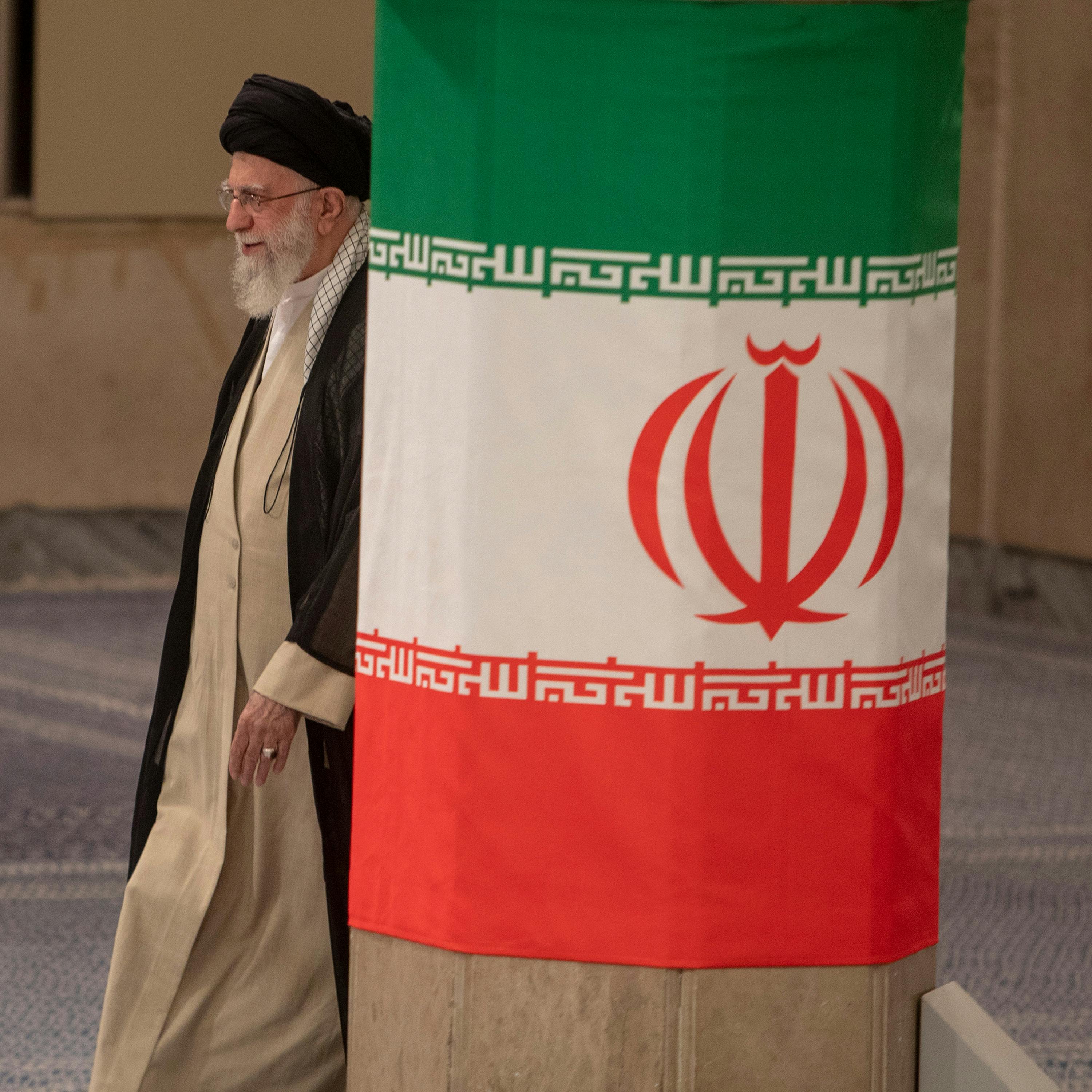
Loading summary
Transcript67 lines
- [00:00]
Carl Zimmer
This podcast is supported by the World as you'll know it, a podcast about the forces shaping the future. In this season, host and science journalist Carl Zimmer speaks to some of the most respected scientists in the field of aging research about the massive changes in human longevity and what comes next. Is our lifespan set or will a breakthrough add decades to our lives? Can older brains be rewired to function like younger ones? Which so called biohacks actually work? The world as you'll know it is available now.
- [00:31]
Lululemon Ad
This is the way it feels to move through summer in Lululemon iconic Align softness without the front seam for our smoothest look and feel ever. Summer won't know what hit it. Stretch your limits in the non stop flexibility of the new Lululemon Align no line pant in select stores and@lululemon.com.
- [01:04]
Hanna Rosin
Donald Trump has said two very memorable things about Iran in recent days.
- [01:09]
Donald Trump
First this we basically have two countries that have been fighting so long and so hard that they don't know what the fuck they're doing. Do you understand that?
- [01:21]
Hanna Rosin
The second one was more subtle.
- [01:24]
Donald Trump
We're going to talk to them next week with Iran. We may sign an agreement. I don't know. To me, I don't think it's that necessary. I mean, they had a war, they fought. Now they're going back to their world. I don't care if I have an agreement or not.
- [01:39]
Hanna Rosin
I'm Hanna Rosin, this is Radio Atlantic. That was Trump in yesterday's NATO press conference after a reporter asked if he was gonna talk to Iran. Now the memorable part of what he said was they're going back to their world, as in we're back to regularly scheduled programming. And what about their world? Today we talk to an Iranian about how the nine days of war could change everything in that world or nothing at all. Arasha Zizi was born in 1988, a year after the current Supreme Leader, Ayatollah Khamenei came to power.
- [02:19]
Arash Azizi
So I was born the last year of the Iran Iraq war. And that's really the last that Iranians had seen seen war and what it looks like they had, I think, forgotten it. Perhaps this terrible feeling that there are bombs in the skies that might fall on you.
- [02:33]
Hanna Rosin
Azizi is a contributing writer to the Atlantic and the author of what Iranians Want. In that book, he writes about a future that Iranian activists want to build for themselves as opposed to the precarious future they're facing right now.
- [02:48]
Arash Azizi
I think a lot of Iranians will feel helpless because it's clear that decisions that are determining their lives, I know, are made in a lot of different places, but not by them.
- [03:00]
Hanna Rosin
When Israel bombed Iran, Prime Minister Benjamin Netanyahu said something which really stuck with me. He said, the people of Iran must understand this is their moment. A light has been lit. Carry it to freedom. Did it feel that way to you, like this sudden opportunity? Or was your first thought, this is gonna make things worse?
- [03:19]
Arash Azizi
Just initially, definitely it was that it's gonna make things worse. And it's because something that is not hypothetical. We've thought about it for a very long time. You know, there were elements in the Iranian opposition who openly or semi openly had been hoping for that to happen. And not just in the Iranian opposition, if I'm honest. There were people in Iran, people that I have known sometimes who were thinking, well, wouldn't it be great if Israel or United States came out and took care of this regime and we could move on to a better life. I was always, I had not only just as skeptical, I basically thought that frankly a little foolish because I just, you know, it was clear to me that this is not gonna happen.
- [03:56]
Hanna Rosin
What? This is not gonna happen. That it's not gonna topple the regime necessarily.
- [03:59]
Arash Azizi
That it's not gonna topple the regime. Certainly not gonna topple the regime in a good way. Right. As in leading to a democracy. It's very fascinating when we talk about these issues and people have debates. I always like to ask people, you know, walk me through it, like, what do you think is gonna happen? So Israel starts hitting this heads of the regime, he kills these military commanders, which he did, what's the next thing that will happen? Now, if we did have, hypothetically, right, if we had a large organized opposition that was really ready to take power, you could imagine, okay, they could use this opportunity to take power. And even then they could have still been against the war and everything. But you say, okay, realistically this is the evil way of getting to something good, but you can. But this was not the case in Iran. In fact, it was always clear to me, and I think it's clearer now that it is the opposite actually. The attacks help sort of militarize the situation. They help sort of strengthen the security bodies. And while me and other democracy activists, we are always looking for a way out, the best way out of the bad conditions today, conditions are in many ways worse because of the attack. I'm trying not to be hopeless about it. And I still think, you know, I think there is a moment of change in Iran that is still going on. And there are positive ways about it. But, yes, Netanyahu's claim that this would lead to some sort of a social uprising or that this would give an opportunity for people to topple the regime were always baseless. And if he really believed them, it would show that if Israel has great intelligence penetration of Iranian society, obviously sort of Iranian security services and all that shows that it lacks understanding of Iranian society and politics. Although my suspicion is that I don't think he actually believed that.
- [05:38]
Hanna Rosin
So let's give people a better understanding of Iran and what's actually happening. Ayatollah Khamenei has been in power for 36 years, is that right?
- [05:47]
Arash Azizi
He's been in power since 1989.
- [05:49]
Hanna Rosin
Yeah.
- [05:50]
Arash Azizi
I was born in 88, so that's like, my entire life.
- [05:53]
Hanna Rosin
Yeah, that's what I was gonna ask you. Is he the only leader you have ever known?
- [05:57]
Arash Azizi
You know, I was one year old when Khomeini passed away. There are stories that I was one year old and everyone was sort of. A lot of people around us were celebrating and all that, but I don't remember it.
- [06:07]
Hanna Rosin
And so what was your impression of him growing up or how did it evolve over time, those 36 years, your whole life?
- [06:14]
Arash Azizi
I mean, I think Ayatollah Khamenei has been a total failure. And Iranians really think about their history in terms of hundreds of years and thousands of years. Right. So when I say he's been a failure, I don't mean he's been a worst leader of, like, since the 20th century. I think he's been one of the worst, like, trying to find someone worse. We need to go back to the last king of the Safavid empire in 18th century, you know, perhaps. And the reason for that is. Is his track record. It's quite clear to me what happens. He was a young revolutionary in the 60s and 70s, and like a lot of people in that era, they wanted to change the world, and they were happy to sort of destroy human societies on their path, sometimes with good intentions, you know, sometimes. Otherwise, he happened to be part of one of the few experiments in the 70s, 60s and 70s that actually won the Iranian revolution. And he comes to power as part of 1979 revolution and later on as leader in 1989. And he borrowed our country for his Islamist cause.
- [07:09]
Hanna Rosin
Did you say he borrowed our country?
- [07:11]
Arash Azizi
Yeah, that's sort of the expression I use because, you know, the revolution had genuine popular support in 79, but throughout the year, certainly, I would say since the 90s, since mid-90s population are not revolutionary. They're not supporting these goals of Ayatollah Khamenei. Which is what? Which is two things really. To turn Iran, first of all to a model Islamist society. A society. This model society of Ali Khamenei is one in which women happily wear the veil. Men and women don't look each other in a way that would be attracted to each other, is one in which everyone is working toward good Islamic values as he understands them. And it's been utter failure on that count. Right?
- [07:54]
Hanna Rosin
How do you know? I mean, how do you know that it's an utter failure that the population is not in support of him?
- [07:59]
Arash Azizi
Oh, I think number one, the thinkers of the regime themselves say that. And Iran, not only Iran, is not a model Islamic society, it's one of the most anti religious societies in the world. I think people will be shocked and they are shocked when they go to Iran and see it. Now, of course there are devout Muslims, my grandmother included, but the kids born after us, I mean, they don't care about religion at all. Sometimes, frankly they're even a little nihilistic. I would say they could not be further from the image that Ayatollah Khamenei wanted of this Islamic sort of model. And look, I don't wanna. Iran is a country of 90 million. There are differences. There are, you know, there are obviously devout people, there are people with different texts. But by and large this is a society that really couldn't be furthered from what Ali Khamenei wants. I mean, you know, according to his ideals, they wanted to ban most forms of music in some way. You know, like the Korean pop bands are super popular in Iran, like everywhere else. There is just like a total cultural defeat. And they've recognized that. I mean, if you read regime bodies, they basically what they're saying is we need to give up on this. We know we've lost because they see they know what their own sons and daughters are doing.
- [09:11]
Hanna Rosin
It's funny cuz from a distance, like if you just take the flattest image of Iran, I'm not saying many Americans know that much. It's like a country where there are older clerics who rule and death to Israel, death to America. That's sort of the, you know, the shorthand for what happens in Iran.
- [09:28]
Arash Azizi
Yeah. So that's. And that is the sort of ruling regime. Right. I would say that's not even necessarily a good picture of the ruling regime. And we can talk about it a little bit because yes, Khamenei believes In Death to America and Death to Israel, I have no doubt. Right. But that's not true of the rest of the Iranian regime. I would actually say that, you know, figures in the Iranian regime that I talk to sometimes, right. For my reporting, they're actually, you know, they always send their kids to Europe and America. And this actually goes back to your earlier question as well. Right. So how do I know this? Total culture failure. Where are the sons and daughters of these leading figures of the regime go? They come here, they go to Europe. Let's go look at their Instagram. You know, what are they doing? They're like posting about Justin Bieber. Right. And there are tons of examples like that the anti Westernism is total culture failure.
- [10:15]
Hanna Rosin
And is this just the upper classes you're describing? Like, are you describing just, you know, rich Iranians?
- [10:20]
Arash Azizi
Absolutely not. I'm describing Iranians across the board. In fact, it's sometimes the other way around because, you know, if you're college educated, like I am stuff, you might be a bit more skeptical of the west, like as a college, actually as a very Western thing. Right. Like a college educated Westerner would be on different levels. No, I think, look, so I mean, I think there is a base for, let's say radical anti Westernism has a base in Iranian society. I think if it organized itself politically, it could be like maybe 10, 15% of Iranian society. But there's such a small minority. You know, you can look, for example, in the last couple of years on the anti Israel issue, you know, isn't it interesting that genuine, like mass organized, let's say, anti Israel demonstrations, they happened in dozens of cities in the United States, they happened in dozens of cities in Europe. They obviously happen all over the Middle East. They did not happen in Tehran last. Just a few weeks ago, before the current war, a group of students, sort of leftist students at University of Tehran tried to organize a sort of anti Israel demonstration. And with very beautiful good intentions on a large part. Right. I don't want to seduce them. You know, they want it as a very global cause. Like they made sure that people come without the hijab. Right. They didn't want it to be a pro regime thing. And like 20 people showed up.
- [11:38]
Hanna Rosin
That is very telling that at the exact historical moment when it is perhaps the easiest to organize an anti Israel demonstration, the country that is the originator of Death to Israel can only get 20 people to an anti Israel rally. Yes.
- [11:53]
Arash Azizi
Because people don't support it. Yeah. And people don't support it, by the way, for very Basic reasons, I think they don't support it because first of all, they don't see Iran as party to the Israeli Palestinian conflict because we're not, regardless of what we think about it. So Dariush Ashuri, these Iranian intellectual socialist intellectuals after the 1967 war, he's in a debate with someone else and he says the Israeli Palestinian conflict to us is like, I think he says Ethiopian, Sudanese conflict, something like that.
- [12:20]
Hanna Rosin
Meaning what? It's like something happening over there, far away.
- [12:22]
Arash Azizi
Exactly. And it's not something that we don't have as taken the people. Well, yeah, Iranians. I mean, he's saying it from a perspective of Iranian, you know, Iranian people.
- [12:32]
Hanna Rosin
Wow. This is like a very different picture than the picture you get just reading headlines. So.
- [12:37]
Arash Azizi
And you don't need to take my word for it again, all you need to do is talk to an average Iranian. They talk about it like someone in Europe. So you have people who become very anti Israel perhaps and criticize and become very pro Palestine or not. Right. But you also have the opposite, just like somewhere in Europe. My point is people don't have a direct stake. And the other thing that is important related to that, they surely don't want the regime to spend their treasures on this conflict and to bring them now, as it has in the last two weeks, to a direct conflict. It's not that because they don't care for people of Gaza. It's that they don't like the way they're being used and they don't see it as inlining with Iranian national interest because it isn't.
- [13:20]
Hanna Rosin
So the leader and the people are at odds and now the country's in a crisis point. What does that mean for Iran's future? That's after the break.
- [13:37]
Claudina Baid
Hey there. I'm Claudia Baid and I lead the audio team here at the Atlantic. I think a lot about what makes great audio journalism. It commands your attention but isn't noisy. It brings you closer to the subject, but leaves room for you to make up your own mind. And when you hear someone tell their story in their own voice, you understand it in a deeper way. When you subscribe to the Atlantic, you'll be supporting this kind of journalism. You'll also enjoy new benefits just for Atlantic subscribers on Apple podcasts. Think ad free episodes of our shows and subscriber only audio articles. To join us, go to theatlantic.com listener. That's theatlantic.com listener. If you're already a subscriber, thanks. You can head to the Atlantic's channel page on Apple Podcasts and start listening right now.
- [14:40]
Hanna Rosin
Okay, so let's understand what this adds up to. You're saying cultural alienation from what the priorities are of the leadership. Just visually right now, the leadership, by which I mean Khamenei himself, seems pretty isolated. Like, literally, he's in a bunker somewhere. Many of his top generals are dead. What are you hearing from Iran, then? About what his state of mind is? Because on the one hand, you said the activists are not organized. Like there isn't some organized internal opposition ready to overthrow. Overthrow him. On the other hand, he's pretty isolated, both from his own culture, his own generals. So where is he?
- [15:19]
Arash Azizi
So we were talking on Wednesday morning, a few days after United States finally attacked Iran and a few days after the ceasefire, and the commander in chief, the head of state, the Grand Ayatollah Khamenei, the leader of the revolution, he's hiding like a little mouse somewhere. We don't know where he is. He hasn't shown his face. He's given two speeches since the war began. Like the war with Israel began on June 13th. If you look at the headlines there, it was all about the defiant speech. But if you actually listen to the speech and you speak Persian, he does not appear anything like defiant. He really looks like someone who they forced to record, almost like a forced video. And to come out, he looks tired and defeated.
- [15:59]
Hanna Rosin
So you just mean his tone. Like, his tone didn't match his words.
- [16:02]
Arash Azizi
His tone didn't match his words. And he, you know, he just didn't appear. Especially if you remember this guy, Right? You asked me, sort of. I grew up with him, remember a time when he was an impressive figure in some ways, right? He was a good rhetorician. And I think he's. I mean, and he's 86, so, I mean, he was gonna die soon anyways, right? We are all waiting for that, frankly. Iran has been now in a total waiting for years for this guy to drop dead.
- [16:26]
Hanna Rosin
There was a term I heard that someone used which was a zombie regime.
- [16:30]
Arash Azizi
No, Certainly. Yeah, a zombie regime. And when I go, like, take a shower whenever I come out in half an hour and I haven't looked my phone, I always have this fantasy that I opened and Khamenei has died. Right? So we're really waiting for this moment to arrive. Right? So. But he's now finished in some very real ways. There is a ferocious conflict in Tehran over the future, some of which we've reported on in the Atlantic. You know about some of the plots that are going on, you know, to replace him. So he is finished. But you actually posed that accidentally. So the opposition is not organized. Khamenei as a person is finished. His policies are total failures. Right, let me just recapture it very quickly. His policies have brought Iran economic destruction, international isolation, domestic repression, and now a direct war. And hundreds of Iranian civilians are dead because of that war. Right, so he's finished. The opposition is not ready to take over. So who, you know, so who's gonna take the.
- [17:26]
Hanna Rosin
Yeah, like does he have a success? So tell us the options. Like does he have a succession plan?
- [17:32]
Arash Azizi
So according to the letter of the Iranian constitution, the Supreme Leader, this is a very strange position. So very briefly if I explain, actually, the Supreme Leader is a sort of made up English term that we use. The real term there is the guardian jurist. It's basically the closest example to it is not an Islamic text, but it's from Plato's Republic. It's a philosopher king. The reality is there is nobody with those qualities really who could be the third Supreme Leader. So there's a very real possibility that Khamenei will actually end up being the last one, that this position will somehow be abolished and there would be a constitutional transition. But if it wasn't abolished, some of the main candidates that are being talked about, surprise, surprise, one of them is Mojtaba, his son. Mojtaba Khamenei, Khamenei's son. But further surprise, supporters of Mojtab Al Khamenei are not selling him as a continuity candidate of his father, knowing that that would be a losing bet. They're actually doing the mirror opposite of that. They're comparing him to mbs, the Crown Prince of Saudi Arabia, as someone who would be a rejuvenating figure, who would take Iran away from the clerics and from the anti Westernism to a more sort of nationalist path and, you know, would open things up. They're just selling him as a change candidate.
- [18:42]
Hanna Rosin
And you who call yourself a democracy activist, can you get on board with that? Do you see him as a change candidate?
- [18:48]
Arash Azizi
I don't know. I can't get on board with Mojtaba because we don't know anything about him. He's an entirely shadowy figure. You know, like when I say we don't know anything about him, like there is not a single speech of this guy you can find anywhere he. There's a speech of him. He teaches at home. That's what is a cleric. That's what you do. Right? So you teach others Religious stuff in seminaries in the holy city of Qom, near Tehran. And he stopped teaching, actually, mysteriously last year. So it's entirely vibes, right? And actually, it's funny. In 2009, when they say mojtaba, it really felt like something that, like your weird uncle or, like, taxi driver would say, right? But now it's a serious thing, so.
- [19:25]
Hanna Rosin
They'Re coming up with a narrative about him. They're trying to package him or sell him. Okay, so that's over there. That's a mystery. What's another option?
- [19:31]
Arash Azizi
So there's a possibility of an actual hardliner who would actually be Khamenei. Continuity, as in anti Westernism, anti Israelism, Dracunian domestic policy and repression. But I think it's quite likely that they're gonna have to move in a pragmatic direction. And what do I mean by pragmatic? I think they're gonna lessen domestic repression. Not politically, but socially, if you know what I mean.
- [19:55]
Hanna Rosin
Which would look like what?
- [19:57]
Arash Azizi
Which would look like most authoritarian countries in the region that are politically, you can't organize, but you want to go out and have a drink, that's okay. You want to not cover your hair, that's okay. You're the kind of domestic repression that exists in Iran and frankly, doesn't really exist elsewhere in the world to the same degree, right?
- [20:13]
Hanna Rosin
So there's some release. This is what people say, like, Iran is a country where you can't even have a cultural release, a social release, dance, drink, whatever. So that gets loosened.
- [20:22]
Arash Azizi
And that's the very important part of, you know, it's very important to remember, right. Iran is a country in which, like, all of us have these memories, right? You're, you know, you're walking with a woman, and you could be arrested, you know, asking, what is your relationship? In fact, I was once stopped walking with my mother and asking, what's your relationship? My mother was very happy.
- [20:43]
Hanna Rosin
Yeah. That's like a compliment to your mother.
- [20:45]
Arash Azizi
Yes, it was, but it was sort of a horrifying thought. I also remember my mother and father getting once stopped, and then they started fighting. And then the guy said, well, only a real married couple could fight like this. Definitely genuine. But so, I mean, so it's very important. So it's like the daily humiliation and repression in Iran is very important, and that will be lifted. And I think the foreign policy of Iran, I think ultimately these guys, they don't share the revolutionary aspirations of Khamenei. They want integration into the Western economy. That's really what they want. But I'll tell you why it is delicate because. So they want integration to the Western economy. However, the part that introduces other element to it is that they've also been restrained effectively by Khamenei, who was the grand ideologue of anti Westernism, but he was also very cautious, actually I would say cowardly man who said all these things but never got Iran into a conflict with these countries. So these guys are less cautious, sometimes more trigger happy, as it often happens with younger generations of military folks. And they're Iranian nationalists as opposed to Islamists. But that also means that they would want Iran to play a role in the region and to, you know, to sort of stand for something.
- [21:55]
Hanna Rosin
Let me just summarize, so I understand. So we have on the one hand the kind of the nepotistic regime that's the sun. On the one hand, we have the hardliners. That's the least possibility. This last category you're describing, we'll just calling pragmatics of all kinds. They can be military, they can be businessman. They're just the sort of people advocating for a pragmatic future, which would mean economic integration also might mean a little bit regional arrogance.
- [22:22]
Arash Azizi
Let's call them developmentalist. I mean, that's. I think what they really want is Iran to be developed. They were salivating at the top. Like when Trump was in Riyadh, right, and gave his speeches, the entire Iranian political sphere was looking to Riyadh and thinking this is who we want to be. Like, we want the American president to come and say, you know, invest in us and we'll invest in you and we'll do AI and we do nanotechnology. I mean, this is who these people are. And I want to clarify in the Mojtaba nepotistic part, you know, that's a bit of a dark scenario. We don't know. But the people who are supporting him are also some of these developmentalists. So some of the developmentists are supporting him, some of them are not. So there really is, I would say majorly there's two future, right? There is the hardliners, which I see as a little possibility, and there is a developmentalist. But developmentalism can go in different directions and can lead to different choices. And also the contradictions need to be understood. So a lot of these developmentalists, for example, would have traditionally been in favor of nuclear talks and nuclear deal like we had in 2015, like the talks were going on earlier this year and hopefully they might go on again. But some of them are Actually in favor of having a nuclear weapon. Because, you know, they say, well, maybe this is the only way, you know, Iran can be sovereign, you know, blah, blah. What I'm hoping is that they'll understand the contradiction in that position that, you know, as an Iranian, for me, I think pursuit of nuclear weapon is gonna be disaster for Iran.
- [23:41]
Hanna Rosin
So in all the scenarios that you've laid out, you haven't really mentioned democracy. Like you've mentioned the lifting of cultural repression, a better life, but the thing that you seem to care about is democracy. So what's the future of that?
- [23:56]
Arash Azizi
That is an excellent point, an excellent question. I will always fight. I have one life and to the day I die, I will fight for democracy for Iran and figures that I support in the Iranian political scheme, if you will, now, I mean, and that I'm supportive of people like Mostafa Taj Zadeh, a former deputy interim minister who is now a political prisoner in Eben prison. His reaction to the war, he called for ceasefire and a democratic transition. So there are people who are calling for these things. I hope those of us, when they run in a position, can get organized and offer a real alternative and bring this vision to the true. But you would notice of that hope is doing a lot of work in that sentence. So do I think this is a vision that could happen in the next few years? I hope with all my being that I'm wrong, but I don't. I think the movers and shakers of Iranian power are now these factions of the regime and they're not interested in democratization because why would they be interested in giving power away? And frankly, they also know it's. Let's be honest with each other, Hannah, right? This is not exactly a moment of democratic flourishing anywhere in the region, right? Anywhere in the world, actually, but also anywhere in the region. The Arab Spring, after all, did not lead to the establishment of democracy anywhere but Tunisia, and that got overthrown. Now, I do think there are more pro democracy aspirations in Iran. But I think before we can have democracy, we first of all need two things. We need basic safety and security of our bodies, right? And secondly, we need prosperity. We need a way to make a living. You know, it's funny, I used to ask my students always, like, you know, which one would you prefer? Prosperity and democracy. And of course, a lot of them high minded, they would say democracy. Then I say, you know, where would you prefer to leave? Like Senegal or uae? And of course they all say uae, right? So, I mean, I think that those are the realities I think that democracy is sometimes not a. It's not necessarily a priority.
- [25:50]
Hanna Rosin
Last question. Just as we've been talking, President Trump was speaking at a NATO conference and insisting that the strike completely obliterated Iran's nuclear program, which he's been saying all along, despite some US Assessments that it was only set back a few months. So what does it change in terms of Iran and its future if it is only set back a couple of months?
- [26:12]
Arash Azizi
It's not true that the Iranian nuclear program has been destroyed. I mean, that much is clear. Iranian enriched uranium remains at large, and Iran has different pathways. And the most dangerous thing is that Iran now has pathways to not collaborate with international atomic energy agencies. So people wouldn't know even what it was doing. And it gives huge sat down vibes. And we know where that ended and where that went. And I mean, sat down from like the 90s onwards. So I think the proponents of Iranian nuclear weapon do exist in Iran. They exist even, surprisingly, in sections of the establishment who might not be hardliners, even some on the Iranian street. But I think this shows the necessity of nuclear talks. The only durable way to get the nuclear threat of Iran defanged is a nuclear deal. Right. That would commit Iran to not go for a nuclear weapon and that would incentivize Iran not to do that.
- [27:08]
Hanna Rosin
Right. So the real solution is not a military strategic solution, it's a political solution.
- [27:13]
Arash Azizi
Absolutely, because it's the only way that Iran could commit into not getting nuclear weapons. And look, this will also include seriously degrading Iran's nuclear capabilities. No one is saying, you know, not do that. Any part of a deal is that, you know, you've got to close off a couple of nuclear plants. There's no doubt about it. Most importantly, you've got to increase inspection by the iaea, the UN nuclear watchdog. But it ultimately is to be that whoever is ruling Tehran should not want to have nuclear weapon. If they do want to have nuclear weapon, they'll find pathways to it.
- [27:46]
Hanna Rosin
Arash, thank you so much for giving us the view from inside Iran.
- [27:50]
Arash Azizi
Thank you so much.
- [27:54]
Hanna Rosin
This episode of Radio Atlantic was produced by Janae west and edited by Claudina Baid. We had engineering support from Erica Wong. Claudina Baid is the executive producer of Atlantic Audio, and Andrea Valdez is our managing editor. Listeners, if you like what you hear on Radio Atlantic, remember, you can support our work and the work of all Atlantic journalists when you subscribe to the Atlantic. At theatlantic.com listener I'm Hanna Rosen. Thank you for listening.