← Radiolab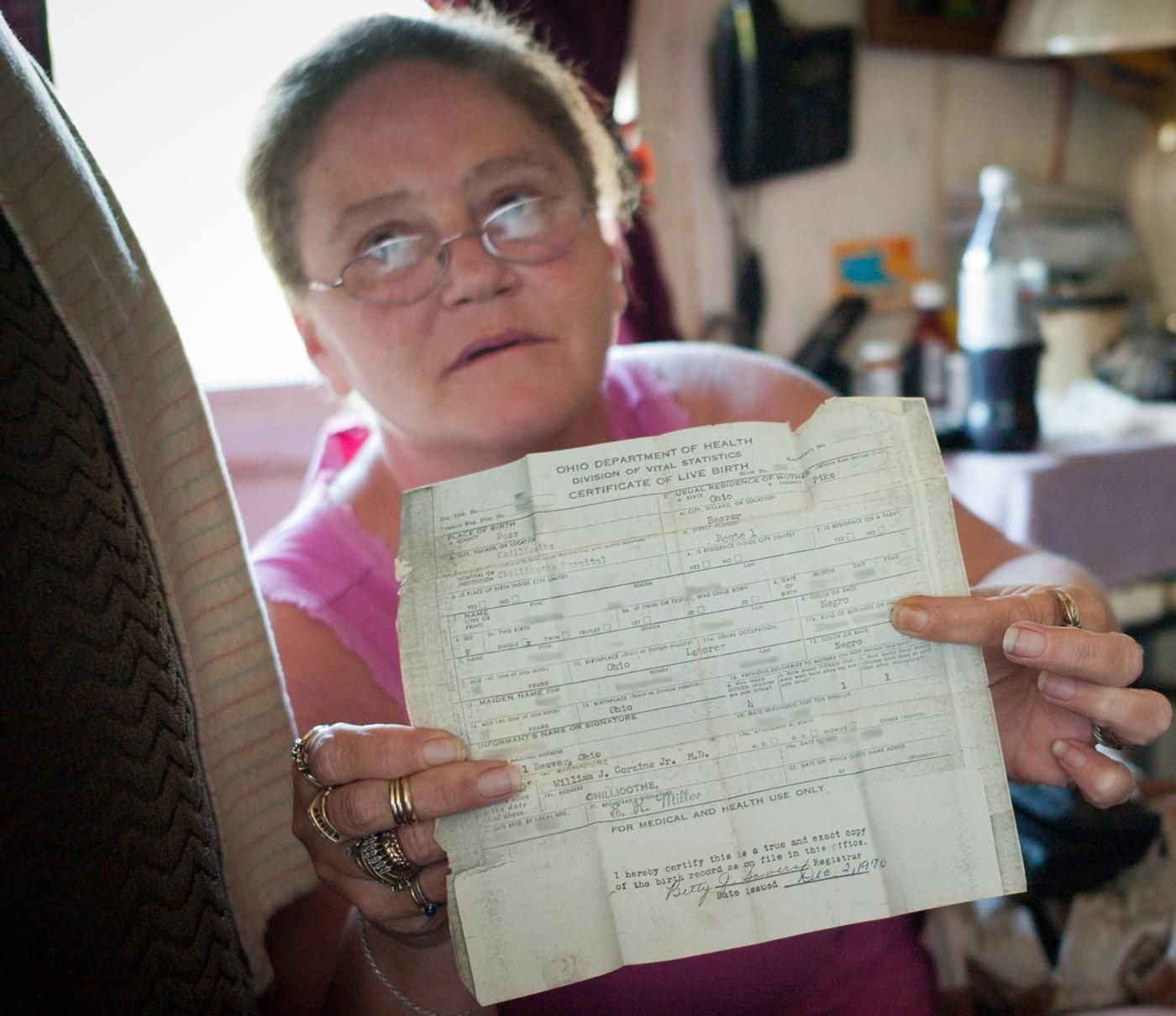
Radiolab
Ally's Choice
00:17:53
Producer Lu Olkowski brings us the story of a tightly-knit family caught on opposite sides of a very big divide. If you ask Ally Manning's mom and sister, they'll tell you there's no question: they're black. But as a teenager, Ally decided that what was true for them didn't make sense for her.
Loading summary
Transcript169 lines
- [00:01]
Jad Abumrad
Oh, wait, you're listening. Okay.
- [00:03]
Robert Krulwich
All right. Okay.
- [00:06]
Jad Abumrad
All right.
- [00:08]
Allyson
You're listening to Radio Lab.
- [00:10]
Lou Olkowski
Radio Lab shorts from WNYC and npr.
- [00:20]
Jad Abumrad
How did you actually bump into this whole thing?
- [00:23]
Lou Olkowski
Do you want the long winded version or the short winded version?
- [00:26]
Jad Abumrad
Split the difference.
- [00:28]
Lou Olkowski
Okay.
- [00:29]
Jad Abumrad
This is our friend Lou Olkowski. She's a radio producer.
- [00:32]
Lou Olkowski
I was there 2008.
- [00:34]
Jad Abumrad
And where is there?
- [00:35]
Lou Olkowski
Southern Ohio. Pike County, Ohio. An Appalachian part of Ohio.
- [00:40]
Jad Abumrad
When you say Appalachian, I think mountains and stuff. Is that the wrong image?
- [00:44]
Lou Olkowski
No, it's the right image. It's country.
- [00:46]
Jad Abumrad
And why were you out there?
- [00:47]
Lou Olkowski
I knew someone working on the campaign.
- [00:49]
Jad Abumrad
So this is 2008. So this is Barack Obama part one.
- [00:52]
Lou Olkowski
This is Barack Obama part one. And that's why I went.
- [00:56]
Jad Abumrad
Lou says it was the end of.
- [00:57]
Lou Olkowski
October, one week before the election.
- [00:59]
Jad Abumrad
And in the final days, the Obama campaign was pressing deeper into parts of rural Ohio than almost any other campaign before it.
- [01:06]
Lou Olkowski
So I went and I followed Barack Obama volunteers around just to see how is it gonna play?
- [01:11]
Jad Abumrad
Like, how's this race gonna play in a part of the country that's so white? So she went town to town to town with a campaign, eventually ended up in a tiny little hamlet called East Jackson, not even on the map, population 400 or so. It's right in the foothills of the Appalachian Mountains. And it's a place where who you are, what color you are, well, that just gets real complicated.
- [01:34]
Robert Krulwich
I mean, I've got white, Irish, German, Indian, and all this, but if anyone would walk up to me today and say, what race are you? I would say Negro. I'd stand in front of the president today and tell him, hey, I. I am a Negro, and I am a proud American. I'm not black as in color, but I am a Negro. I mean, that's just the way I feel.
- [01:56]
Lou Olkowski
This is Claricey.
- [01:57]
Robert Krulwich
Clarice Schreck.
- [01:58]
Lou Olkowski
Clarice was one of the first people I met in East Jackson.
- [02:01]
Clarissey
So legal documents ain't supposed to lie, Right?
- [02:03]
Lou Olkowski
Okay, tell me what you're doing.
- [02:05]
Clarissey
And Clarissy, I'm getting a birth certificate.
- [02:07]
Robert Krulwich
Out to show you.
- [02:08]
Lou Olkowski
I think her experience has taught her that enough people think she's white that she goes out of her way when you meet her.
- [02:14]
Robert Krulwich
This is a legal document. Come on.
- [02:16]
Lou Olkowski
To let you know she's black.
- [02:17]
Clarissey
Okay, this is how it reads.
- [02:19]
Allyson (younger self or perspective)
Do you keep this in your purse?
- [02:21]
Clarissey
Yes, I keep this in my purse. And yes, it says Harley Harris.
- [02:28]
Lou Olkowski
That's her father.
- [02:29]
Clarissey
And then it comes over and it says, call her. Erase and it says what?
- [02:33]
Lou Olkowski
Negro.
- [02:34]
Clarissey
It says Mary Marguerite Simmons. What's it say?
- [02:37]
Robert Krulwich
Negro.
- [02:39]
Lou Olkowski
Okay, so you go as black. So introduce to me your two daughters.
- [02:43]
Carlotta
Okay, you gotta go and go there, don't you?
- [02:46]
Robert Krulwich
My oldest daughter, okay.
- [02:48]
Carlotta
I'm Carlotta.
- [02:48]
Robert Krulwich
Carlotta Hickson.
- [02:49]
Carlotta
I'm from East Jackson in Pike County, Ohio.
- [02:52]
Lou Olkowski
Carlotta lives right next door to her mom.
- [02:54]
Carlotta
Yes.
- [02:54]
Lou Olkowski
And like her mom, if you met her, you'd probably just assume she was white.
- [02:57]
Carlotta
The only thing you could tell is black on me is my hair. I mean, it's frizzy. That's it. But I've went as black all my life. And I guess I was just raised that way.
- [03:07]
Robert Krulwich
She stuck by it. Carlotta will stand and fight to the end.
- [03:11]
Carlotta
I don't think you should deny a part of you that is there.
- [03:14]
Robert Krulwich
Now, my youngest daughter, Allyson, Hmm, that's a whole different story.
- [03:18]
Allyson (younger self or perspective)
I'm way too white to be black.
- [03:20]
Robert Krulwich
She denies the fact that she's a Negro.
- [03:22]
Allyson (younger self or perspective)
Look at my hair. Look at my skin. I mean, really creamy. Cream, cream, cream. Lots of cream. You know, let's just go really white.
- [03:32]
Carlotta
Don't ask me why, but she decided that she's white.
- [03:35]
Allyson
No, not decide a few years ago.
- [03:37]
Allyson (younger self or perspective)
That I was gonna be white. I have been white since I've been 12. Old enough to say that I've been white, you know?
- [03:41]
Clarissey
See, and that aggravates me. That aggravates me. It really just. God, it just makes me so mad.
- [03:50]
Lou Olkowski
To understand, like, why their thing is so intense. Please, I think you just need to unpack what this area is all about. Okay. Like, about five miles from where Clarissy lives is a town called Waverly. And Waverly was settled, like, before the Civil War by a group of white folks who came up from Virginia with the express purpose that it should be an all white town, even though it was in the North. So to kind of achieve this, one of the things that happened is that a sign was put up on the outskirts of town warning black people to stay out of Waverly after dark. And to this day, Waverly is still something like 96% white, according to the census. So that was Waverly. Meanwhile, right next door, you had this place called East Jackson, where Clarissy now lives. And, you know, back in the day, a completely different situation was happening there. You had Irish and German timbermen who were mixing with runaway slaves and Native Americans who were running from the Trail of Tears. All these different cultures were blending and intermarrying and having these kids, and then grandkids who were Racially, very, very mixed. But to the folks back in Waverly, all those people in East Jackson, they were just all black.
- [05:12]
Jad Abumrad
No matter what they looked like, didn't.
- [05:14]
Lou Olkowski
Matter what they looked like, they were the other. And for people in Waverly, the other was black. And so if you lived in East Jackson, you were black.
- [05:22]
Robert Krulwich
So imagine your Clerisy, my dad's mother, was a full blooded white woman. My dad's dad was a German.
- [05:28]
Lou Olkowski
She's a mixture of all of these things. And if you look at her family tree, you could say she's only 1 16th black.
- [05:35]
Robert Krulwich
But when you are raised from a child up and you're told you're black, that's all you are, you're a nigger.
- [05:41]
Lou Olkowski
Well, she says, at a certain point, that just becomes who you are.
- [05:45]
Robert Krulwich
And I'm not ashamed one bit. I'm proud to be a Negro. Very proud.
- [05:53]
Lou Olkowski
So you had these kind of twin communities right next door to each other, largely separate. They both had their own schools. Waverly, of course, was, you know, bigger and multiple schools. And in East Jackson, we used to.
- [06:03]
Robert Krulwich
Have a school in our area and it was called the East Jackson School.
- [06:06]
Lou Olkowski
Little one room schoolhouse. And then in the late 60s or early 70s, the school board voted to close that school.
- [06:15]
Robert Krulwich
And all of a sudden all of those kids had to go to Waverly.
- [06:19]
Lou Olkowski
Where pretty much everyone was white.
- [06:20]
Robert Krulwich
When we went to Waverly schools on Martin Luther King's day, the white kids at that school would hang up signs saying, go home niggers.
- [06:29]
Lou Olkowski
And this was in the 80s.
- [06:31]
Jad Abumrad
What?
- [06:31]
Robert Krulwich
And so that's when they decided, well, on Martin Luther King's day, we won't.
- [06:35]
Jad Abumrad
Have school in the 80s.
- [06:37]
Lou Olkowski
Yeah, I heard that story from Clarissy, her sister Juanita, from the neighbors across the road. And even more surprising, you know, Allie told me when she and her sister got to school in the late 90s, things hadn't changed that much.
- [06:51]
Allyson
I got made fun of all the time. It was really, really bad. I would have kids, you know, come up to me in class and say, you know, well, she's, you know, she's dirty, you know, because she's from East Jackson and they're all dirty out there. And you know when they would do the little check in your head at school thing, they'd be like, oh, you know, she gonna have it because she's black. Because I was black, I'm gonna have head lice. I, I, you know, I'd come home and cry mom, and be like, oh, don't even worry about what they say. They're you know, you got to be better than them, blah, blah.
- [07:22]
Lou Olkowski
She says she couldn't ignore it, so she started to fight back.
- [07:25]
Allyson
I would punch him, you know, just punch him. Mom was constantly in the office because I was fighting.
- [07:31]
Lou Olkowski
But at some point during the eighth grade, Allie says something shifted.
- [07:35]
Allyson
We were sitting in class.
- [07:37]
Lou Olkowski
Two white girls were sitting behind her.
- [07:39]
Allyson
And I didn't even know these girls. And I was just sitting there minding my own business. And they came up from behind me and just threw this deodorant at me, literally. And they said, here, we thought you might need this. Don't black people need deodorant? Keep in mind, this is in the middle of class. Everybody is in there, and the teacher's there, doesn't say anything, just tells them to calm it down. And I was just like, you know, I tried to ignore them, but they just kept poking me. Hey, hey. They just kept, you know, poking me and telling me I was dirty. Black people are dirty. You're dirty. You know, we know where you come from. You're dirty. Everyone's dirty out there. You're all dirty.
- [08:23]
Lou Olkowski
And she said at that moment, she just kind of gave up.
- [08:27]
Allyson
I didn't like having to fight. I didn't like feeling like everybody was out to get me. I wanted to be part of the.
- [08:35]
Robert Krulwich
Group.
- [08:38]
Allyson
Not the outsider. It sucked being the outsider. I got sick of it.
- [08:43]
Lou Olkowski
Shortly after that class, she decided, I.
- [08:46]
Allyson
Don'T want to be black. I don't have to. When I went into high school, I had a break, you know, the summer break. And over the summer, I decided that I was going to transform myself, my life. It was going to be a new start for me.
- [09:02]
Lou Olkowski
That summer, Ali dropped a bunch of.
- [09:04]
Allyson
Weight, grew her hair long. I started wearing makeup.
- [09:06]
Lou Olkowski
And when school started up again that.
- [09:08]
Allyson
Fall, I didn't even look like I did when I was in grade school, you know, or middle school.
- [09:14]
Robert Krulwich
What did you do?
- [09:16]
Allyson
Well, I started hanging out with the older crowd.
- [09:22]
Allyson (younger self or perspective)
The, you know, juniors and.
- [09:24]
Allyson
Seniors, so they didn't even know who I was. People would ask what color I was. I was white. What color are your parents? They're white, you know, and if anyone asks, well, can we meet your parents? Well, she's gone on business. Oh, my dad, he works a lot, you know, Great. I have two hard working white parents, and you're never gonna meet them.
- [09:47]
Robert Krulwich
She came home that night and she said, I had a wonderful day at school. And I said, you did? That's nice to hear somebody that's black tell me that. And she Said, I told you I wasn't going as black.
- [09:56]
Allyson
I didn't talk to my sister very much either.
- [09:59]
Allyson (younger self or perspective)
Just because every time I would talk to her, I'd have to explain who she was.
- [10:02]
Robert Krulwich
Carlotta would be telling her friends and pointing at Allie, saying, that's my sister. And Ally be telling her friends, that's not my sister. This girl's crazy, you know? Don't believe nothing she's saying.
- [10:12]
Lou Olkowski
Whenever Ally's new friends did run into.
- [10:14]
Allyson
Her sister, they picked on her.
- [10:16]
Carlotta
They tormented her, teased, and throw things at you.
- [10:20]
Lou Olkowski
Same way they once picked on Ally.
- [10:22]
Allyson (younger self or perspective)
You know, calling her the N word.
- [10:24]
Carlotta
Nobody likes you.
- [10:26]
Allyson
Black people are dirty. You're dirty. But did I dare say anything about it? No way.
- [10:33]
Carlotta
Actually, Allie would lead a lot of the teasing. Yes, she would help him out.
- [10:37]
Allyson
I'd mock her, too.
- [10:38]
Carlotta
Making fun of me could make her popular. Then she would do it.
- [10:41]
Lou Olkowski
But she would make you cry at school.
- [10:43]
Carlotta
Well, sure she would.
- [10:44]
Allyson (younger self or perspective)
I saw her cry so many times, and I stood and did nothing.
- [10:50]
Carlotta
And she wonders why we're not close now. And, you know, you don't forget things like that. You don't forget who made your life miserable.
- [10:58]
Allyson (younger self or perspective)
She hated high school. She would never go back if you paid her. And then you have me. I loved it.
- [11:13]
Allyson
I had all these friends, and I really felt like everybody loved me. Granted, I don't know how good of friends they were because, you know, in a different situation, they probably wouldn't have. But I didn't care. I didn't care how they liked me. I just cared that they liked me.
- [11:28]
Carlotta
And still this day, Allie is that rotten little child inside. And I love her to death. I do. But still inside, she's still that little insecure child that wants to be friends with the popular crowd.
- [11:42]
Lou Olkowski
After high school, Allie moved across town.
- [11:44]
Carlotta
She lives in Piketon.
- [11:46]
Lou Olkowski
It's on the other side of Waverly.
- [11:47]
Carlotta
Yeah, it's on the other side of Waverly.
- [11:48]
Lou Olkowski
Into a predominantly white neighborhood. Carlotta stayed in East Jackson, and she stayed black.
- [11:54]
Carlotta
To be honest, the way I feel about that, it really doesn't bother me one way or the other. Bothers my mom more than it bothers me.
- [12:02]
Allyson
Oh, yes.
- [12:03]
Lou Olkowski
Allie says it comes up whenever she brings a friend over to her mom's house.
- [12:07]
Allyson (younger self or perspective)
As soon as they walk in the door, the very first question out of her mouth is, did Ally tell you she was black?
- [12:11]
Robert Krulwich
If she brings a guy or a friend, I tell them we're Negroes. I want him to know what we are. I do.
- [12:16]
Allyson (younger self or perspective)
I'll call her to the Site or whatever. And I'm like, do you have to.
- [12:19]
Allyson
Do this every time?
- [12:19]
Allyson (younger self or perspective)
Well, what, you're ashamed of us now? I am not ashamed of anybody, but I am not black. You know, I am white. Stop doing that.
- [12:29]
Lou Olkowski
As much as Allie and Clarissy argue, they're actually pretty close.
- [12:33]
Clarissey
Mommy's on the phone, kids. Come here, Nessie.
- [12:36]
Lou Olkowski
Clarissy takes care of Allie's kids a lot.
- [12:39]
Robert Krulwich
Come here. Mommy's on phone.
- [12:40]
Lou Olkowski
They speak on the phone every day.
- [12:41]
Robert Krulwich
Caleb wants to talk.
- [12:42]
Clarissey
Come here, Caleb.
- [12:43]
Robert Krulwich
Come here, baby. This is Lanessa.
- [12:46]
Clarissey
Here, take this.
- [12:47]
Robert Krulwich
Talk to mommy.
- [12:48]
Allyson (younger self or perspective)
Mommy.
- [12:50]
Robert Krulwich
And that's Caleb. These are Allie's two children I've got now. Allie's two children. They'll cry if you tell them that they're a Negro. Caleb believes that he's white.
- [13:02]
Allyson (younger self or perspective)
He's got blonde hair, blonde hair. And you know, he's really pale like me.
- [13:09]
Robert Krulwich
And when you say, excuse me, you know you're black. He will cry and say, no, I'm not either, I'm white.
- [13:16]
Allyson (younger self or perspective)
And she's like, you just ruined those kids. Why don't you want them to be.
- [13:19]
Allyson
Proud of where they came from?
- [13:20]
Allyson (younger self or perspective)
I said, I told him he has black in his family, but he is not black. When I got married, my husband knew.
- [13:31]
Allyson
Beforehand what he was getting into.
- [13:33]
Lou Olkowski
He lived in Waverly and he knew she lived in East Jackson, that I.
- [13:37]
Allyson
Came from a black community. He'd met my family and said that that was fine with him. And the further we got into our marriage, the more I could see him becoming more and more racist.
- [13:49]
Lou Olkowski
So they split up, but he still had the right to see his kids.
- [13:53]
Allyson (younger self or perspective)
And during one of the visits, I overheard a conversation that he was having with Caleb. And Daddy joined a new group and he wanted Caleb to join it. He said, you can't right now, but when you get bigger, Daddy's going to introduce you to him. And he said, we get to wear white hats and sheets and we get to beat people up. And I walk in the room and I'm like, what are you talking about? And he goes, oh, I didn't tell you about that. And there was nothing I could do about it. You know, he had visitations on the weekend. Caleb would come back and he would say the God awfulest things. He would tell my mom, you're a nigger, you're a nigger, Grandma.
- [14:36]
Robert Krulwich
We were sitting there, we were one day, and I don't remember exactly, it was a black show on TV that we were watching. I'm thinking it was a Tyler Perry movie. But anyway, Caleb came up to me and he said, grandma, you're a nigger. I said, no, honey, I'm not a nigger. I'm a negro. And he said, no, you're a nigger. I said, who told you to say that? Caleb? He said, well, my dad said he's going to get to KKK and come up here and what he's going to do.
- [15:01]
Allyson (younger self or perspective)
And I said, my son saying that in a community where people are all black, that doesn't give him much of a fighting chance. Finally, he stopped saying it. Thank God he was young enough to where it could be stopped.
- [15:16]
Carlotta
But Caleb is definitely a mini me.
- [15:19]
Lou Olkowski
Of Ally Allie's sister, Carlotta.
- [15:22]
Carlotta
Yeah, I mean, honestly, he. He acts just like her and Lanessa. And even though she's only 2 years old, she'll go around telling y' all time, I'm black, I'm black. So I think, you know, that will be another Ally Carlotta situation. As they're growing up, they kind of.
- [15:40]
Allyson (younger self or perspective)
Want more for my family. I'm not going to say why and let them be treated the way my sister was treated. They don't deserve that. So as long as I can pass for white, I go by white. Sometimes. I thought about moving away, but I love my mom so much and I could never leave her. But in the event that something ever happens to my mom, me and my kids will pack up and we will leave the state and we won't come back. And I will no longer be associated with this area. With East Jackson, it'll all be just a blur. I mean, I want out now, but I can't leave her. She knows that. I told her, when you're gone, I'm gone.
- [17:06]
Jad Abumrad
Producer lou okowski. That story was sponsored by Ohio's Hill Country Heritage Area and made possible with funding from the Ohio Humanities Council. I also want to give a huge thanks to the radio show State of the Reunion, hosted by the brilliant Al Letson. State of the Reunion initially broadcast a version of the story, which just won a big award. They're an amazing show. You should definitely check them out. Stateofthereunion.com I'm Jad Abumrad.
- [17:43]
Robert Krulwich
I'm Robert Krylwich.
- [17:44]
Jad Abumrad
Thanks for listening.
- [17:47]
Robert Krulwich
It.