← Radiolab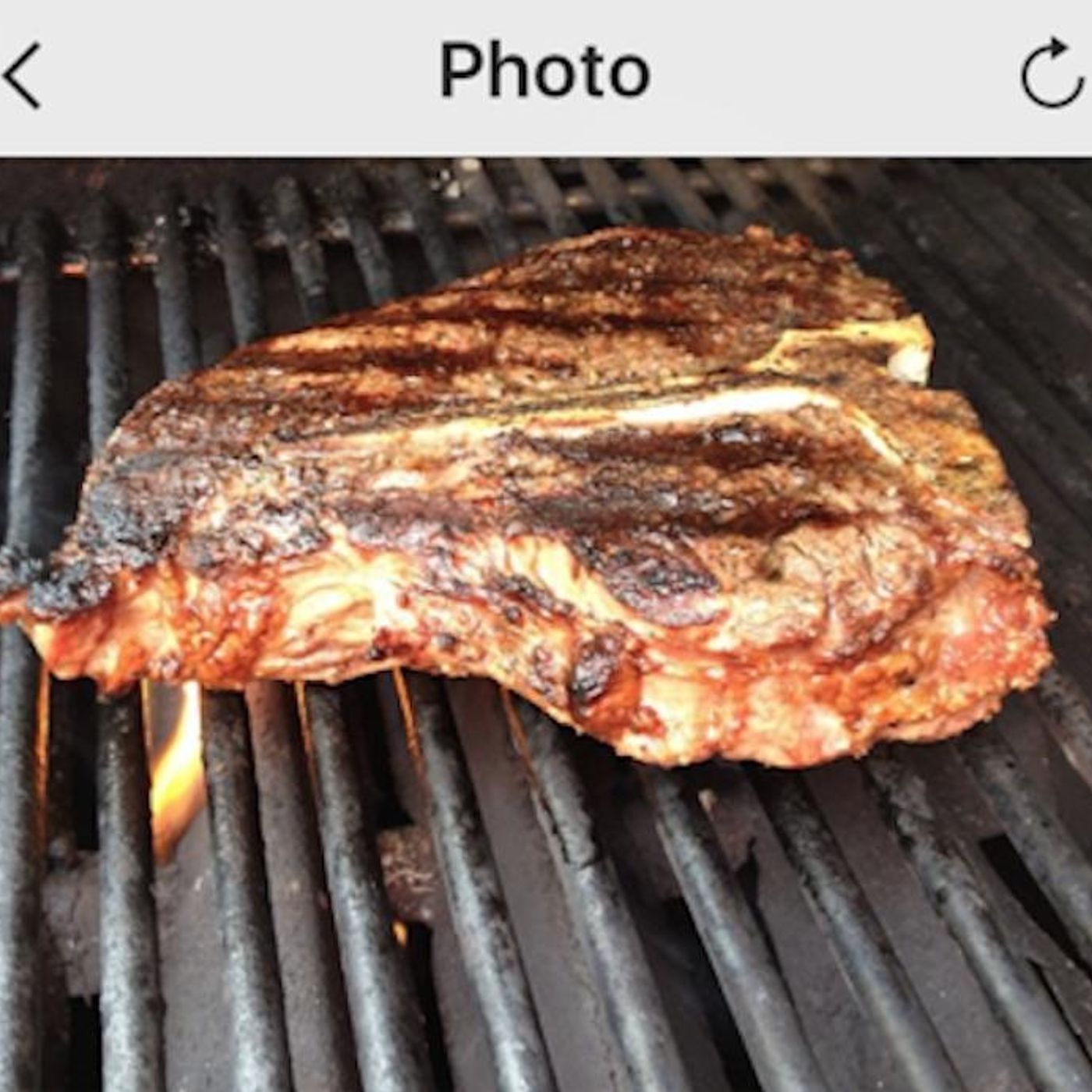
Radiolab
Alpha Gal
00:34:07
Tuck your napkin under your chin. We’re about to serve up a tale of love, loss, and lamb chops. For as long as she can remember, Amy Pearl has loved meat in all its glorious cuts and marbled flavors. And then one day, for seemingly no reason, her body wouldn’t tolerate it. No steaks. No brisket. No weenies. It made no sense to her or to her doctor: why couldn’t she eat something that she had routinely enjoyed for decades? Something our evolutionary forebears have eaten since time immemorial? The answer involves mysterious maps, interpretive dance, and a collision of three different species. Support Radiolab by becoming a member today at Radiolab.org/donate.
Loading summary
Transcript286 lines
- [00:00]
Amy Pearl
I don't know about you, but when.
- [00:02]
Molly Webster
I'm using AI for my business, I.
- [00:04]
Amy Pearl
Don'T need it to tell me what to do. I know what I want.
- [00:07]
Molly Webster
I just need help making it happen. With wix, I finally have an AI.
- [00:12]
Amy Pearl
Tool that gets things done the way I want.
- [00:14]
Molly Webster
I just have to describe the type of website I need and it's ready.
- [00:19]
Amy Pearl
I can even ask it to manage my inventory, plan my next marking campaign.
- [00:23]
Molly Webster
Or help out my customers. Wix gives me AI wherever I need it. Try it out@wix.com Limu Emu and Doug.
- [00:33]
Robert Krulwich
Here we have the Limu Emu in its natural habitat, helping people customize their car insurance and save hundreds with Liberty Mutual.
- [00:43]
Dr. Thomas Platts Mills
Fascinating.
- [00:44]
Robert Krulwich
It's accompanied by his natural ally, Doug.
- [00:47]
Graham Hickling
Uh, Limu is that guy with the binoculars watching us.
- [00:51]
Robert Krulwich
Cut the camera. They see us.
- [00:52]
Producer/Interviewer (possibly Latif Nasser)
Only pay for what you need@libertymutual.com Liberty Liberty Liberty.
- [00:56]
Robert Krulwich
Liberty Savings Ferry Underwritten by Liberty Mutual Insurance Company and affiliates. Excludes Massachusetts.
- [01:00]
Peter Smith
Massachusetts.
- [01:02]
Robert Krulwich
At Lowe's, loyalty is royalty. With Christmas right around the corner, Treat yourself for less during the holiday season. Rewards members get early online only. Access to Black Friday doorbuster deals on Thanksgiving Day. Like the Hisense Side by side fridge. Just $799. Not a member. Join for free today Lowes, we help you save. Valid 1127 only on Lowe's.com member only doorbusters and Midnight Eastern loyalty programs subject to terms and conditions. See lowe's.com terms for details. Subject to change.
- [01:32]
Producer/Interviewer (possibly Latif Nasser)
Oh, wait, you're listening.
- [01:33]
Amy Pearl
Okay. All right.
- [01:36]
Robert Krulwich
Okay.
- [01:37]
Amy Pearl
All right.
- [01:39]
Peter Smith
You're listening to Radio Lab Radio from wny.
- [01:52]
Amy Pearl
Good. Okay.
- [01:57]
Producer/Interviewer (possibly Latif Nasser)
Is your mic on?
- [01:58]
Amy Pearl
Yeah, I'm getting. This is making me nervous. Maybe I should get my EpiPen.
- [02:04]
Producer/Interviewer (possibly Latif Nasser)
Are you allergic to radio greatness?
- [02:07]
Amy Pearl
Not that I know of. I haven't been really exposed to it yet. Anyway, let's go.
- [02:12]
Producer/Interviewer (possibly Latif Nasser)
Are we rolling? We're good. We're going.
- [02:13]
Amy Pearl
We are rolling.
- [02:14]
Producer/Interviewer (possibly Latif Nasser)
Okay.
- [02:16]
Robert Krulwich
I'm Robert Krolwich, this is Radiolab. And today we're gonna begin with a conversation between Dan Pashman.
- [02:22]
Producer/Interviewer (possibly Latif Nasser)
Okay.
- [02:23]
Robert Krulwich
Host of a podcast here at WNYC called the Sporkful. It's about food and Amy Pearl.
- [02:29]
Producer/Interviewer (possibly Latif Nasser)
Amy, yes.
- [02:29]
Robert Krulwich
A digital producer here at the station who likes food. And the conversation they had was about something that happened to Amy, which she never expected, certainly didn't want. And yet it could happen to any of us at any time.
- [02:44]
Producer/Interviewer (possibly Latif Nasser)
So, years ago, before any of this happened to you, just tell me, what was your relationship with meat?
- [02:50]
Amy Pearl
My relationship with meat?
- [02:51]
Producer/Interviewer (possibly Latif Nasser)
Yeah.
- [02:52]
Amy Pearl
Well, you know how when you're little and your mom is like, you could have any special dinner for your birthday? My dinner was meatballs. And she was like, except meatballs, they're so hard to make. So it was pot roast and then Peter Luger.
- [03:08]
Producer/Interviewer (possibly Latif Nasser)
You know, Peter Luger is a famous steakhouse in Brooklyn.
- [03:10]
Amy Pearl
Yeah, I used to go there quite often and I lived there and I have a Peter Luger credit card.
- [03:16]
Producer/Interviewer (possibly Latif Nasser)
Are those hard to get?
- [03:18]
Amy Pearl
You know, I don't know how they give them out, but nobody seems to have one. I don't think they give them out anymore. But I mean, I was very into Peter Liquor. I was living in Williamsburg and it just. It opened at like one o' clock every day and you could just walk in at 1. They had an amazing bar. There's no tablecloths on the table. These old German waiters, they bring out your porterhouse for three. They put a little plate upside down and then put the big platter on top of it so it's tilted and all the juice runs to the end. And then they like have the special double spoon thing that they somehow like scoop juice onto your steak and oh, so good. And also like the smell of burning fat from a hamburger.
- [04:01]
Robert Krulwich
What about hot dogs?
- [04:02]
Amy Pearl
Oh, my God, I love hot dogs so much. When you bite into them and they're like clack and have like a snap and like, having a weenie roast out in the open air is just. It's like the. Oh, God, it's so good. Anyway, I was always very into meat.
- [04:22]
Producer/Interviewer (possibly Latif Nasser)
What changed?
- [04:23]
Amy Pearl
Oh, my God, it was terrible. What happened was I was having this beautiful. It was springtime. I was having a beautiful leg of lamb with some neighbors. And we put it on the grill and it was just a delicious, beautiful dinner. And I had served with it some ramps that I foraged in my mom's yard.
- [04:43]
Robert Krulwich
A ramp, by the way, is just a wild onion.
- [04:45]
Amy Pearl
And so. So we had this delicious meal and then I went home and I was going to sleep at midnight a few hours later, and I just felt weird. I was like, God, something's wrong. I feel really anxious. Something's wrong with me. And I went in the bathroom and I look in the mirror and my face was all weird looking. And I was like. I kept laying down be like, I'll just sleep it off, whatever it is. But every time I lay down, I felt like I was gonna faint. So I was like prop myself up and I was like, oh, God, I was having terrible stomach cramps and just like a weir feeling of impending Doom, you know, but just like anybody, I'm just like, just get a good night's sleep, this'll pass. I like splash a little water on my face. I mean, I don't know what made me think this, but I thought like maybe a snail, a tiny snail was on one of the ramps that I ate. And it was like poisoning me somehow, you know, Snails, I mean, they probably poisonous. So I called my friends in the morning. I was like, hey, how you guys doing? How was dinner? And they were like, oh, so great. I was like, really so great. Nothing weird, no horrific panic attacks. And they were like, oh, that was so lovely. Thank you so much. Let's do it again, blah, blah, blah. And I was like, wow, I really had a rough night, but I didn't think anything of it. And I went on with my life, you know, just like, whatever. And then about a week or two later, I made some cheeseburgers and I ate a cheeseburger. And I was watching Goodbye Mr. Chips. Really tear jerking movie and a good book too. And about a couple of hours after I ate, I was like, started to feel really weird again. I was like feeling like, I was like, had to stand up. I was like, I think I'm gonna faint. I feel really lightheaded. I can't catch my breath. I feel like really woozy. But if any time I lay down, I really felt like I was gonna faint. So I was like trying to stay still and I was like, oh my God, this is very similar. And I ran into the bathroom and I was like looking in the mirror and lo and behold, I had hives all over my stomach. And then they started coming out of my hands and I was like, oh my God, something's happening. And at one point I did get up and unlock my door because I did feel like I'm gonna pass out, call an ambulance, and then they're not gonna be able to get in. So I mean, I was a little bit afraid of what was happening. And when I woke up in the morning, the first thing I did was Google sudden meat allergy. Cause I was like, this seems like an allergy. And the only thing that was the same was meat. And I'm going through. And like the second thing that came up was this article that was like, florida man has sudden meat allergy. I was like, oh my God, I think, is it possible I could have this? And so I made an appointment with my doctor. I brought in the article. I'm like, I'm gonna be this person, but I can do it. And I had the article in my pocket.
- [07:36]
Producer/Interviewer (possibly Latif Nasser)
Be what person?
- [07:37]
Amy Pearl
You know, the person who goes to their doctor with something I found on the Internet. So I bro the article. It was in my pocket, and, like, I got through the whole, like, checkup, and I was too chicken. I went when I was paying the receptionist, I pulled it out and gave it to the receptionist, and I was like, could you give this to the doctor? So that was, like, the best I could do. And then I did call my doctor and had a conversation with him on the phone, asking him if I could get tested. And he was like, no, there's no such thing as a meat allergy. Blah, blah, blah.
- [08:10]
Peter Smith
So some people think allergies are just, like, in your head.
- [08:14]
Robert Krulwich
This is science writer Peter Smith. We got in touch with him after we heard Amy's story because Peter is an investigator of many things, including strange allergies.
- [08:25]
Peter Smith
And people are like, mushrooms hurt them. Or they think wifi hurts them. Yeah, wi fi hurts them.
- [08:30]
Robert Krulwich
And I don't know. And when our producer Latif Nasser and I got into the studio and we told him about Amy's story, he said, yeah, all right. I know exactly who you need to talk to.
- [08:39]
Dr. Thomas Platts Mills
Hello?
- [08:40]
Producer/Interviewer (possibly Latif Nasser)
Yeah, hi, Tom.
- [08:41]
Peter Smith
This is Thomas Platts Mills.
- [08:42]
Dr. Thomas Platts Mills
This is Thomas Platz Mills.
- [08:44]
Peter Smith
That's right.
- [08:44]
Producer/Interviewer (possibly Latif Nasser)
How are you?
- [08:45]
Dr. Thomas Platts Mills
I'm very well.
- [08:46]
Robert Krulwich
Dr. Platts Mills is down at the University of Virginia in Charlottesville. He's a professor, and he works at an allergy clinic.
- [08:52]
Dr. Thomas Platts Mills
In an allergy clinic, we are constantly sifting through stories which not only you don't believe, but are actually nonsense, simply.
- [09:01]
Robert Krulwich
And he told us in the last 10 years or so, he started hearing lots of stories just like Amy.
- [09:06]
Dr. Thomas Platts Mills
Right.
- [09:07]
Robert Krulwich
Somebody shows up at the office convinced that they're allergic all of a sudden, for no apparent reason, to red meat.
- [09:13]
Dr. Thomas Platts Mills
The first time I heard it was probably as early as 2004.
- [09:19]
Robert Krulwich
And every single time he heard the story, he would tell the patient exactly what Amy's doctor told her.
- [09:24]
Dr. Thomas Platts Mills
No.
- [09:25]
Robert Krulwich
No way.
- [09:25]
Dr. Thomas Platts Mills
No, no, no.
- [09:26]
Robert Krulwich
It's not possible.
- [09:27]
Dr. Thomas Platts Mills
Right.
- [09:28]
Robert Krulwich
So what was wrong with these complaints, you know, in an orthodox medical way?
- [09:32]
Dr. Thomas Platts Mills
Oh, everything.
- [09:33]
Robert Krulwich
Everything.
- [09:33]
Dr. Thomas Platts Mills
Adults don't become allergic to something they've eaten for 40 years out of the blue, and certainly not red meat.
- [09:42]
Robert Krulwich
So you're basically saying to these patients, I think you must be making this up because I can't explain.
- [09:47]
Dr. Thomas Platts Mills
Well, I don't use language like that. I say, they're there.
- [09:53]
Robert Krulwich
I was trying to give you your inner voice.
- [09:55]
Dr. Thomas Platts Mills
Oh, you don't want to know what doctors are thinking in Their inner voices. You know, you often think in the middle of an interview, is it possible that he's got, you know, some ghastly disease?
- [10:05]
Producer/Interviewer (possibly Latif Nasser)
Mad cow.
- [10:06]
Amy Pearl
Yeah.
- [10:07]
Robert Krulwich
You know, the point is that when he'd hear a story like Amy's, he just didn't believe it. But then everything changed. Thanks. Oddly enough, to a cancer drug.
- [10:18]
Peter Smith
This new cancer drug called Cetuximab.
- [10:21]
Amy Pearl
In New York today, Martha Stewart was indicted on criminal charges relating.
- [10:26]
Robert Krulwich
This is the very drug that got Martha Stewart in all that trouble for insider trading, remember that?
- [10:31]
Dr. Thomas Platts Mills
And went to jail for six months. Yeah.
- [10:33]
Robert Krulwich
Anyway, very promising, exciting new drug. But then.
- [10:39]
Peter Smith
Doctors were giving people this injection and they would just like end up on the floor of the doctor's office in shock. Yeah, they would be in anaphylactic shock.
- [10:47]
Robert Krulwich
Their hearts would start beating faster, they'd get short of breath, they'd get stomach cramps, their immune system would start to overreact to something new and alien that came in with the drug. Basically a classic allergic reaction.
- [11:00]
Peter Smith
So the mystery lands on Thomas Platz Mills desk.
- [11:04]
Dr. Thomas Platts Mills
Yes. So we were asked to look at Cetuximab to see if they could figure.
- [11:09]
Robert Krulwich
Out what was causing the reaction.
- [11:10]
Peter Smith
And he tests two groups of blood, a control sample, and then people that have this allergy.
- [11:15]
Robert Krulwich
And he quickly zeroed in on a particular molecule, a sugar that was part of the drug.
- [11:20]
Dr. Thomas Platts Mills
This sugar, galactose, alpha 13 galactose or alpha gal.
- [11:27]
Peter Smith
Alpha gal, yeah.
- [11:29]
Robert Krulwich
As in a particularly great lady.
- [11:31]
Producer/Interviewer (possibly Latif Nasser)
Yeah.
- [11:32]
Robert Krulwich
Better than the beta or gamma gal.
- [11:34]
Producer/Interviewer (possibly Latif Nasser)
It's like alpha male but alpha female. Didn't quite have a ring to it. It's the Alpha gal.
- [11:39]
Robert Krulwich
Anyway, it seemed like Alpha gal was the culprit.
- [11:42]
Dr. Thomas Platts Mills
Yeah. And if you told me four years earlier that there's a whole lot of people out there who are allergic to this sugar, I'd have thought you were smoking, you know, vaping again.
- [11:54]
Robert Krulwich
Because not only does this sugar, Alpha Gal show up in the cancer drug, and this is where we get back to Amy, it also shows up in the blood of mammals.
- [12:06]
Dr. Thomas Platts Mills
All non primate mammals.
- [12:09]
Robert Krulwich
So every time you eat lamb or.
- [12:12]
Dr. Thomas Platts Mills
Beef, goat, camel, even tripe or pig's.
- [12:16]
Robert Krulwich
Kidneys, you're also eating Alpha gal.
- [12:22]
Amy Pearl
So I'm reading this article and it says like it's this thing called alpha galactase or Alpha gal or whatever.
- [12:28]
Robert Krulwich
So it made no sense that someone like Amy, who'd been eating meat all her life, would suddenly somehow be allerg.
- [12:35]
Amy Pearl
I just was like, this was so stupid. So one day it's getting to be barbecue season I usually have, like, a couple of barbecues where I just do a whole pork butt and a brisket and, like, hang out all day doing it. And I was, like, very wanted to do that. And I was like, I'm just gonna not eat meat and not even know. So I was like, forget it. My doctor will test me. I'm gonna test myself. So I was going to be very careful. I got a thing of Benadryl. And I was like, I'm not going to do it alone. I'll do it with my mom. My poor mom. And so I went up to my mom's, and she's really into food, too. So she was like, oh, this is so exciting. I got two porterhouse steaks on salad stews.
- [13:19]
Producer/Interviewer (possibly Latif Nasser)
Did you explain to her what you were testing?
- [13:21]
Amy Pearl
Yeah, I did, because I had talked a little bit about it with her. So, like, fire up the grill, do the porterhouse. I even think I, like, Instagrammed it as a joke. Like, ha, ha, ha. This might be the last time you hear from me. But so, you know, we're having a nice summer day, just me and my mom having our steak. I only ate, like, a couple bites. Cause I was slightly nervous, and I was, like, sitting in the grass with my dog and reading a book and trying to think, like, do I feel normal? Which. Try it, folks. It's hard to figure out when you start asking yourself, do I feel normal? Does this. Am I breathing? Does my stomach hurt? Is something wrong? And I was like. After a while, I was like, ugh, I feel pretty good. And the neighbor came over and was, like, chatting with us. And it was in the middle of that conversation where I was like, I kind of feel like I have to go to the bathroom, but maybe I just have to go to the bathroom. So I went to the bathroom, and I was sitting there, and I was like, oh, God, something feels bad. And then I was like, oh, God. I definitely. This is not right. Something's wrong. And I went in to get the Benadryl, and I took the Benadryl, and I went on my bed and in the guest room at my mom's, and I was, like, sitting on there, and I was like, I just don't feel right. Maybe I just take a deep breath. I'll just stand up. Maybe I just put my hands over my head like this. Oh, that does feel slightly better, I think. Then I was finally like, I think we should go to the hospital. And I went outside. I was like, mom, I think you have to drive me to the hospital. She Was like talking to her neighbor like, what? Oh my God, honey, what? Let me go change my clothes. Change my clothes. Like, mom, you know she's not wearing the hospital level clothes. So I'm like, okay, hurry up. Mom. Mom, are you ready? Mom? And then I was like, while she was changing her clothes, I suddenly was like, oh my God. Got my wallet out and my cell phone and I like threw it towards my mom's bedroom door. And I was like, here's my insurance card. Call an ambulance. And I just like hit the floor. Eventually the ambulance arrives and I got stabilized. I was strapped to the thing. I was in the emergency room, like they were shooting me full of I don't know what, epinephrine and adrenaline. And the little like 12 year old emergency room doctor runs in and he was like, I looked it up on the Internet. Alpha Gal. Fascinating. What? That's terrible. I've never heard of that. Could it be true? Yes, it's true. Having this discussion there. Then when I went back to my doctor after that and I was like, hey, just get out of the emergency room. Because they tested me for Alpha Gal and I'm allergic to meat.
- [16:08]
Robert Krulwich
So this is an allergy? Yeah.
- [16:10]
Producer/Interviewer (possibly Latif Nasser)
So all of a sudden you're looking at the quote, crazies and they're not so, quote, crazy anymore.
- [16:15]
Dr. Thomas Platts Mills
Absolutely. We suddenly had a blood test and of course what turned out is all these patients who'd been telling us this story were allergic to, to Alpha Gal.
- [16:28]
Peter Smith
But it's still like a mystery, right?
- [16:31]
Robert Krulwich
There are Thomas Platt's mills couldn't figure out why people like Amy, who had lived for 40 years eating porterhouse steaks at Peter Luger's with a credit card. Why would she suddenly develop an allergy now? There gotta be some kind of trigger.
- [16:46]
Dr. Thomas Platts Mills
Yes. So we were looking for anything that could explain it.
- [16:49]
Peter Smith
It could be a mold, it could.
- [16:50]
Dr. Thomas Platts Mills
Be a nematode, a worm or, or a fungus.
- [16:54]
Robert Krulwich
But then he looked again and noticed that all the people who had had bad reactions to the cancer drug, they.
- [17:00]
Dr. Thomas Platts Mills
Were in a particular area of the country. It was Virginia, North Carolina, Southern Missouri, Tennessee, Arkansas. No cases in Salt Lake City, no cases in Denver. Just smatterings down the west.
- [17:12]
Robert Krulwich
So he turned to his technician, Jake.
- [17:14]
Dr. Thomas Platts Mills
And he said, I said, you've got to Google every map you can find and say what matches that area, creatures.
- [17:22]
Robert Krulwich
Or diseases that appear wherever the allergy appears. So Jake starts googling, googling and googling and googling and eventually he comes across.
- [17:32]
Dr. Thomas Platts Mills
A map that matches where the cases are very beautifully. The maximum Area for Rocky Mountain Spotted Fever.
- [17:39]
Peter Smith
So he made this little map and it's like the shaded dark areas of the country are places with Rocky Mountain Spotted fever. And then there's like some stars where, you know, this allergy had appeared.
- [17:49]
Robert Krulwich
Yeah.
- [17:50]
Peter Smith
And they overlap.
- [17:52]
Dr. Thomas Platts Mills
Ah, very interesting.
- [17:54]
Peter Smith
And then all of a sudden it clicks. Rocky Mountain Spotted fever is a tick borne disease.
- [18:02]
Dr. Thomas Platts Mills
This is the distribution of the Lone Star tick.
- [18:05]
Robert Krulwich
And actually just a little before this, it turns out an allergist down in Australia, Cheryl Van Neunen. First name Cheryl. S H E R Y L Van Noonen. Van and then Nunen. And I'm from the Tick Induced Allergies Research and Awareness Centre in Sydney, Australia. She says she was now being visited by all kinds of people who claim suddenly to be allergic to meat. And whenever I take a history, so for example, I'd ask them, was there a family history of rhinitis, eczema, asthma, stinging insect allergy? And they say they've all been bitten by ticks.
- [18:38]
Dr. Thomas Platts Mills
When we started asking patients, we suddenly heard the stories just out the kazoo.
- [18:47]
Robert Krulwich
But at this point, Dr. Platts Mills, all he has is a map, some stories and a hunch.
- [18:53]
Producer/Interviewer (possibly Latif Nasser)
Right?
- [18:54]
Robert Krulwich
So what does he do?
- [18:55]
Peter Smith
He decides, well, maybe I'll just do this to myself.
- [18:58]
Robert Krulwich
He does what?
- [18:59]
Peter Smith
He decides to test it on himself.
- [19:01]
Robert Krulwich
Oh my God.
- [19:03]
Peter Smith
He sort of like denies that he did it intentionally.
- [19:05]
Dr. Thomas Platts Mills
I know, I had no intention.
- [19:07]
Peter Smith
I mean, I think he also likes to walk and amble and think about things.
- [19:11]
Dr. Thomas Platts Mills
Right?
- [19:12]
Peter Smith
So he goes for a long walk along the Blue Ridge Mountains and I.
- [19:16]
Dr. Thomas Platts Mills
Knew I wanted to be off trail because I'm actually rather allergic to humans.
- [19:22]
Robert Krulwich
So he's walking and walking and walking and along the way he bumps into a whole bunch of ticks.
- [19:27]
Dr. Thomas Platts Mills
And if you walk into a nest of those things.
- [19:30]
Producer/Interviewer (possibly Latif Nasser)
Oh my God, this sounds like a nightmare.
- [19:32]
Dr. Thomas Platts Mills
Yeah, absolutely. I got 200 seed ticks.
- [19:35]
Robert Krulwich
Oh boy.
- [19:36]
Dr. Thomas Platts Mills
And then in November of that year, I was taken out to dinner and the lamb chops were particularly delicious and the French wine was delicious. And six hours later I woke up covered in hives.
- [19:49]
Peter Smith
He's got an allergy to red meat.
- [19:52]
Robert Krulwich
All just because of a tick bite.
- [19:54]
Peter Smith
Tick bite, that's right.
- [19:59]
Robert Krulwich
We'll bite you right back after this.
- [20:02]
Amy Pearl
Hi, this is Sarah calling from Asheville, North Carolina. Radiolab is supported in part by the Alfred P. Sloan foundation, enhancing public understanding of science and technology in the modern world. More information about Sloan@www.sloan.org.
- [20:19]
Producer/Interviewer (possibly Latif Nasser)
Radiolab is supported by BILT. Nobody wants to pay rent, but if you have to Bilt works to make it more worthwhile. By paying rent through Bilt, you can earn flexible points that can be redeemed toward hundreds of hotels and airlines, a future rent payment, your next Lyft ride, and more. But it doesn't stop there. You can dine out at your favorite local restaurants and earn additional points, get VIP treatment at certain fitness studios, and enjoy exclusive experiences just for Built members. Every month, earn points on rent and around your neighborhood, wherever you call home, by going to joinbuilt.com Radiolab that's J-O-I-N-B-I-L-T.com.
- [20:53]
Molly Webster
Radiolabs Hey, I'm Molly Webster and this is an ad by BetterHelp. So it happens every year. The seasons are changing, the days are getting shorter, and basically once it becomes dark outside of my window, I feel like the rest of the world disappears and I'm just alone and there's nothing left to do but watch television. This November, Better Help is asking everyone to reach out to our people. That could be your family, your friends, your neighbors, and to resist this call of the cocoon. And yeah, reaching out can take some courage. I've got text messages from January I haven't responded to and you know what? I'm gonna write them back right now. Hi, sorry I've been missing. How are you? Why don't we all do this sooner? Therapy is the same way. BetterHelp makes it easier to take that first step. You just fill out a short questionnaire and they find a licensed therapist who they think you'll like. Our listeners get 10% off their first month at betterhelp.com Radiolab that's betterhelp.com Radiolab.
- [22:02]
Producer/Interviewer (possibly Latif Nasser)
Radiolab is supported by Rippling Finance. Teams often spend weeks chasing receipts, reconciling spreadsheets, and fixing errors across disconnected spend tools. This can be frustrating. And that's not software as a service. That's sad software as a disservice. If you've been thinking about replacing stitched together tech stacks with one platform for all departments, Rippling can help. Rippling is a unified platform for global hr, payroll, IT and finance, helping people replace their mess of cobbled together tools with one system. Designed to help give leaders clarity, speed and control. By uniting employees, teams and departments in one system, Rippling works to remove the bottlenecks, busywork and silos in business software. With Rippling, you can choose to run hr, IT and finance operations as one, or pick and choose the products that best fill the gaps. Right now you can get 6 months free when you go to rippling.com Radiolab learn more at r-ip p l-I n g.com Radiolab terms and conditions apply. Radiolab is supported by Planet Visionaries, the podcast created in partnership with the Rolex Perpetual Planet Initiative. The show is hosted by Alex Honnold, who you may recognize from Free Solo, where he climbed El Capitan without ropes. Now he's turning his focus to the biggest challenge of protecting the only planet we've got. Every episode brings you stories that prove climate optimism isn't naive, it's a strategy. The episodes span the globe, from Arctic scientists and Amazon forest guardians to entrepreneurs reimagining fashion and food systems. You'll hear from explorers, scientists, activists, and storytellers who are working to reshape the future in practical human ways. In one episode, Alex sits down with wildlife photographer Bertie Gregory to discuss how animals can teach humans resiliency, empathy, and hope in partnership with the Rolex Perpetual Planet Initiative. Check out Planet Visionaries Listen or watch on Apple, Spotify, YouTube, or wherever you get your podcasts.
- [24:17]
Robert Krulwich
I'm Robert Krulwich. This is Radiolab. Now we go back to Amy, just when she's discovered that the allergy to meat that she's developed comes from a tick bite.
- [24:28]
Amy Pearl
A tick bite. Hang on a second. Because, like, a few weeks before all this started happening, as I said, I was foraging for ramps in my mom's backyard and I had a tick on my. On my arm.
- [24:44]
Robert Krulwich
Now, it turns out that not only was that tick bite a terrible thing for Amy, it was a kind of double tragedy hidden from view amongst the.
- [24:53]
Dr. Thomas Platts Mills
Trees.
- [24:55]
Robert Krulwich
And in the undergrowth. And I think it's only right at this point to back up is a fascinating world of wonders and consider the story from a tick's point of view.
- [25:07]
Graham Hickling
Okay, so I'm Graham Hickling. I'm a wildlife disease ecologist at the University of Tennessee.
- [25:14]
Robert Krulwich
So I was wondering if you could help us tell the story of, in this case, the Lone Star tickets. That bit Amy.
- [25:22]
Graham Hickling
Oh, yeah, sure. So they start off in this little pile of eggs, perhaps a mass of 2,000 eggs under the leaves.
- [25:30]
Robert Krulwich
The proud mom who just gave birth.
- [25:32]
Graham Hickling
At that point, she's just a kind of a withered husk, meaning dead. But anyway, a few weeks later, those eggs will hatch, and this mass of 2000 baby ticks emerge from under the leaves.
- [25:45]
Robert Krulwich
And could I see them with my naked eye?
- [25:48]
Graham Hickling
If you ran into a mass of them all up together, you would feel like you've got a little smudge of dirt and then the dirt starts walking. And so they'll just climb up and they'll, you know, potentially all be on the same leaf or the same twig, looking for something to feed on.
- [26:03]
Robert Krulwich
Now one teeny little tiny problem for.
- [26:05]
Graham Hickling
These teeny little tiny ticks is that they dry out.
- [26:08]
Robert Krulwich
So when they come up from under the leaves, they come up briefly and then they go back down, get a little water, come back up, get thirsty.
- [26:15]
Graham Hickling
Go back down and rehydrate.
- [26:17]
Producer/Interviewer (possibly Latif Nasser)
So they like commute.
- [26:18]
Graham Hickling
Exactly. And we refer to the behavior as questing.
- [26:21]
Producer/Interviewer (possibly Latif Nasser)
Oh.
- [26:22]
Robert Krulwich
So if you were one of these little baby ticks up, questing for food.
- [26:26]
Graham Hickling
While you're up there, you are essentially.
- [26:28]
Robert Krulwich
Velcro, because on each one of your.
- [26:30]
Graham Hickling
Little legs you have little kind of hook like structures. And so you're flat against the leaf.
- [26:36]
Robert Krulwich
Sort of sniffing in the air with your two little front legs that can.
- [26:39]
Graham Hickling
Detect CO2 heat movement.
- [26:42]
Robert Krulwich
So let's say one day you're sitting there on your leaf and you pick up the scent of a nearby mouse.
- [26:47]
Graham Hickling
Mice are the potato chips of the ecosystem.
- [26:49]
Robert Krulwich
Everything eats them, which means you might be about to have your very first meal. So you basically stand up, stretch out.
- [26:56]
Graham Hickling
All your little legs and do a tick dance. And so it's kind of interpretive dance.
- [27:01]
Robert Krulwich
Like movements while you're waiting for that mouse to come just close enough that you can grab onto it. So you're dancing and you're waiting and you're dancing and you're waiting and you're dancing and you're waiting and you're dancing and you're waiting.
- [27:19]
Graham Hickling
To be honest, you are probably going to wait your entire life and die unfulfilled. Because there are 2,000 of you starting off and a stable tick population. There's only going to be two of you that survive.
- [27:36]
Robert Krulwich
Oh my gosh. So 1,998 little baby ticks are born.
- [27:40]
Graham Hickling
And then that's it for them.
- [27:42]
Robert Krulwich
But let's say that you're one of the lucky ones. And one sunny day, there you are hanging out on your little leaf when you detect two incoming mammals. One is a 40 year old hominid, the other is her dog. So you perk up, you thrust your.
- [28:00]
Graham Hickling
Legs out, wave, do the tick tocks.
- [28:02]
Robert Krulwich
And say that you're waving and you're dancing and you're hoping and you're waving and you're dancing and you're hoping and you're waving and you're dancing and you're hoping. And slowly the dog's getting closer and closer and Closer and you reach out with one of your tiny little limbs so you can grab on and eat and survive.
- [28:19]
Amy Pearl
But the reason that tick ended up on me was I slept in bed with my dog naked. I mean, she's always naked, but I was also naked. I mean, that's not gross. I don't. I mean, does that sound weird?
- [28:32]
Producer/Interviewer (possibly Latif Nasser)
No.
- [28:33]
Robert Krulwich
But how do you know that's when it happened?
- [28:36]
Amy Pearl
Because I know that, like, I did a good tic check on myself and I took a shower and everything. And then in the middle of the night, I woke up with an itching sensation and I went to the bathroom and I couldn't really see what was on. Like something was on the back of my arm and it was a tick.
- [28:53]
Robert Krulwich
So as the tick is biting, what is it giving Amy that's gonna make her allergic to meat?
- [29:00]
Graham Hickling
Well, actually, I need to stop you there, Robert.
- [29:02]
Robert Krulwich
Difficult one, Robert.
- [29:03]
Graham Hickling
I don't know the answer to that.
- [29:06]
Robert Krulwich
That's Peter Smith. And rejoining us is Cheryl Van Noonan, the scientist. It's all up for speculation.
- [29:12]
Peter Smith
We don't really know, but here's the theory.
- [29:15]
Robert Krulwich
So normally when you eat a piece of meat, you put Alpha Gal in your stomach and your stomach digests it, and it's in your body and it's no big deal, but the tick cunningly.
- [29:23]
Graham Hickling
Will drill into you, poke into you.
- [29:27]
Producer/Interviewer (possibly Latif Nasser)
It's saliva, we'll call that tick spit.
- [29:29]
Peter Smith
Tick spit into its victims, straight into.
- [29:32]
Robert Krulwich
Its victim's largest organ, the skin.
- [29:34]
Graham Hickling
And tick spit has an anti clotting factor, an anesthetic, anti inflammatory compounds.
- [29:40]
Robert Krulwich
And we think the Alpha Gal. Now Peter says the thing about the.
- [29:44]
Peter Smith
Skin is the skin is like this enormous like surveillance system.
- [29:48]
Robert Krulwich
It's always on the lookout for invaders. So when the Alpha gal comes through your skin covered by all that bad, bad tick spit stuff, that's gonna really.
- [29:57]
Peter Smith
Like set off your immune system.
- [29:59]
Robert Krulwich
The immune system freaks out like, oh, uh. And the Alpha Gal, covered now in bad spit, almost sort of by mistake, gets labeled bad. And now it's on the bad guy watch list. So therefore, the next time you eat meat, the meat comes in and then the body unleashes wave upon wave upon wave of chemical attacks to do battle.
- [30:21]
Peter Smith
Against this Alpha Gal.
- [30:23]
Robert Krulwich
And this reaction gets way out of hand. You got so many antibodies multiplying, multiplying, multiplying, multiplying. Making you rather, in this case Amy, feel just.
- [30:34]
Peter Smith
Horrible, right?
- [30:36]
Amy Pearl
I mean, it's very weird. It sounds like a science fiction movie. It sounds like the beginning of a science fiction, at least kids book. Let's not go to movie. But, like, it's just strange.
- [30:49]
Robert Krulwich
Which all goes to say that this really is a kind of double tragedy for Amy and her tick.
- [30:54]
Peter Smith
Yeah. Cause tics didn't evolve to bite humans.
- [30:58]
Robert Krulwich
Right.
- [30:58]
Graham Hickling
We're a mistake.
- [30:59]
Peter Smith
Like, we have opposable thumbs.
- [31:01]
Graham Hickling
We're either gonna pull them off.
- [31:02]
Amy Pearl
I actually woke my mom up, and she helped get it off.
- [31:05]
Graham Hickling
Or if they drop off, they're gonna drop off in an airport terminal or a Walmart car park or somewhere like that.
- [31:11]
Robert Krulwich
Or a shag carpet or something.
- [31:12]
Graham Hickling
Or a shag carpet indoors.
- [31:14]
Producer/Interviewer (possibly Latif Nasser)
And.
- [31:14]
Graham Hickling
And they're doomed.
- [31:15]
Robert Krulwich
And for us, well, we lose something that historically, anyway, is a big part of who we are.
- [31:21]
Peter Smith
Yeah. Because we adapted in the grand evolutionary scheme of things to, like, eat flesh, to eat meat.
- [31:33]
Producer/Interviewer (possibly Latif Nasser)
Yeah.
- [31:33]
Robert Krulwich
Yeah.
- [31:34]
Amy Pearl
I mean, I'm actually sitting here picturing a steak. But actually, the thing. I mean, hot dogs, like, wrap ramps around a weenie and roast. Yum. That sounds so good. My mouth's watering. Weenies and ramps.
- [31:52]
Producer/Interviewer (possibly Latif Nasser)
Yeah.
- [31:53]
Amy Pearl
But I am going to my allergist tomorrow because I did. You know, I was reading about this allergy a lot when I first got it, and I read that for some people, the allergy can fade away. So I'm gonna get a blood test to see what my blood level of Alpha Gal is. So I'm a little.
- [32:08]
Producer/Interviewer (possibly Latif Nasser)
So what are you hoping for tomorrow?
- [32:10]
Amy Pearl
I want to be normal again.
- [32:18]
Robert Krulwich
That was the end of the Dan and Amy conversation. She was gonna go to the doctor, get herself tested, find out whatever. So we asked her back in.
- [32:29]
Amy Pearl
Okay.
- [32:29]
Robert Krulwich
To find out what happened.
- [32:32]
Amy Pearl
So I actually did get an appointment with my allergist, Dr. Korn. Her name is Dr. Korn. She's really nice. So I got the appointment, I got the blood draw, whatever. And a few days later, my doctor called me, and she said that my numbers were still really high. And I was like, well, how high are they? And she was like, three. And I was like, three. That's not high. And she's like, they're supposed to be, like, one or something. So they had gone down, but they were still, you know, many times more than they should be. So.
- [33:06]
Robert Krulwich
But when you left and you were waiting for the call, were you waiting with the hope that you would soon be eating a bit of hot dog?
- [33:15]
Amy Pearl
I mean, honestly, I was hoping. No, no, no.
- [33:19]
Robert Krulwich
Wait a second. You are the big. The great you.
- [33:21]
Amy Pearl
No, but I was afraid that she would be like, oh, my God, your numbers are so low. I think you could probably eat meat. Let's do a Food challenge. I would be like, ah. Cause, like, that's such a scary memory. Yeah, I don't. You know, actually, just the other night, I was eating at an Indian place, and I was eating vegetarian. But, like, I felt something, and I pulled it out. And in the dim light of an Indian restaurant, like, why are they all lit like that? I was like, was this bacon? And I suddenly, you know, like, you just get this drop in your stomach, and I'm like, what time is it? Four hours from now. If I. You know, because it's. There's something about it being delayed that makes it so difficult. It just is like.
- [34:02]
Robert Krulwich
Like a suspense movie with you.
- [34:05]
Amy Pearl
It's like, it could happen in the next three hours or maybe not. I don't know. I mean, honestly, the only thing that. The real reason I want to be able to eat meat is so that I will be prepared to eat it in case of emergency. I mean, I went on a canoe trip in the Adirondacks, and I was like, well, what happens if I get stranded out here? And, like, what if I have to hunt, but I can't even eat meat? I would have to hunt fish. But then when the lake freezes, what would I eat? I can't survive. Something's wrong with me. I feel evolutionarily challenged. This is what I think about before I go to bed every night. Would I be able to survive if I had just what's on me right now? A pen, underwear, my dog? And so, yeah, I mean, that's a real issue. Is, like, it's not a real issue. Obviously, it's never gonna happen and live in Brooklyn, but I do. For some reason, I always think, like, I want to be prepared in case. But, yeah, you know, I don't think I would go back to eating meat necessarily.
- [35:07]
Robert Krulwich
Like, you are still more. More frightened than game, so to speak.
- [35:13]
Amy Pearl
Well, also, like, I wish I could be a vegetarian for ethical reasons, because it's not so much just the eating meat, but just, like, you know, the factory farming and that kind of stuff. So I feel, like, morally superior now. I can be like, well, I don't eat red meat. Of course I'm forced to not eat it, but at the same time, I would. If I had the. If I had the willpower, I'd probably go that way anyway. And then also, I think it's great. It's like, we're all evolving to be on this planet, which is getting harder to be on. And we know that meat takes a lot of resources. And, like, now I don't Now I'm not doing that. So, like, the tick is helping me evolve into a better human being.
- [35:57]
Robert Krulwich
So one could. Instead of thinking of the tick as your teeny weeny, irritating enemy, you could think of it as a guiding light making the world safer to share with your fellow earthlings.
- [36:11]
Amy Pearl
Yeah.
- [36:14]
Producer/Interviewer (possibly Latif Nasser)
So you may have lost your relationship with meat, but at least you have your moral superiority.
- [36:19]
Amy Pearl
Yeah. I mean, I am superior. Yeah.
- [36:34]
Robert Krulwich
So huge thanks to Amy Pearl for telling a story which never stopped, never stopped being scary and wonderful. And to the fellow who brought her into the room, Dan Pashman, whose podcast the Sporkful Is it's all about food in every conceivable way. Like, he talks about eating it, preparing it, worrying about it, as you've heard, getting sick from it, getting fat from it, whatever. And you can find his show on itunes or Stitcher or on the Internet@sporkful.com and this story was produced by Annie McKeown and Matt Kilty, with reporting help from Latif Nasser. See you next time.
- [37:21]
Amy Pearl
Received Thursday at 9:50pm this is Dan Pashman from the Sporkful podcast. Hi, this is Amy Pearl. I'm allergic to meat. And I'm Susie Von Eggers, Amy Pearl's mom. Radiolab is produced by Jad Aburad. Dad Abumra. Dylan King is our director of sound design.
- [37:43]
Robert Krulwich
Doran Wheeler is senior editor.
- [37:44]
Amy Pearl
James Jamie Jamison York is our senior producer. Our staff includes Simon Adler, Brenna Farrell, David Gable, Matt Kielty, Robert Krulwich, Annie McEwen, Latif Nasser, Melissa O' Donnell or Melissa O'. Donnell.
- [37:57]
Robert Krulwich
Arianne Wack.
- [37:58]
Amy Pearl
Arianne Wack. And Molly Webster, with help from Tracy Hunt, Nigar Fatali, Phoebe Wang, Katie Ferguson, Alexandra Lee, Young Debbie, Harry Potoona and Percy of Verlin. Percy of Erlin, Percia Verlin and Percy of Erlin. All right, that's, like, all the options.
- [38:14]
Robert Krulwich
I could come up with.
- [38:15]
Amy Pearl
Our fact checkers are Eva Dasher and Michelle Harris.
- [38:19]
Robert Krulwich
Yeah, all right, I think I got that one.
- [38:22]
Graham Hickling
Bye.
- [38:22]
Amy Pearl
Bye.
- [38:23]
Robert Krulwich
Okay, bye.
- [38:23]
Amy Pearl
Good night. End of message. If I get, like, cut off from the group when I'm out on a tour of the woods or something and I have to sleep overnight and I could eat like, a frog, a bug, but I couldn't eat, like, a squirrel, a mouse, I guess I could eat a bird. I mean, I don't know.
- [38:43]
Producer/Interviewer (possibly Latif Nasser)
Like, another option too, though.
- [38:44]
Amy Pearl
Amy. What? Kill myself? No, but you.
- [38:48]
Producer/Interviewer (possibly Latif Nasser)
The alpha gal is in all mammals.
- [38:50]
Dr. Thomas Platts Mills
But not in primates.
- [38:52]
Amy Pearl
I know. It's so like a chimp. Burger? No.
- [38:58]
Robert Krulwich
Well, maybe think even more darkly.
- [39:01]
Amy Pearl
A human. Another human. Baby.
- [39:03]
Robert Krulwich
Baby. No, it didn't say baby.
- [39:06]
Amy Pearl
I don't know.
- [39:08]
Robert Krulwich
It's good old ordinary cannibal knife.
- [39:10]
Amy Pearl
Yeah, but if I'm really gonna go for it. I mean, Chinookia baby, But turkey meatballs are awesome.