← Radiolab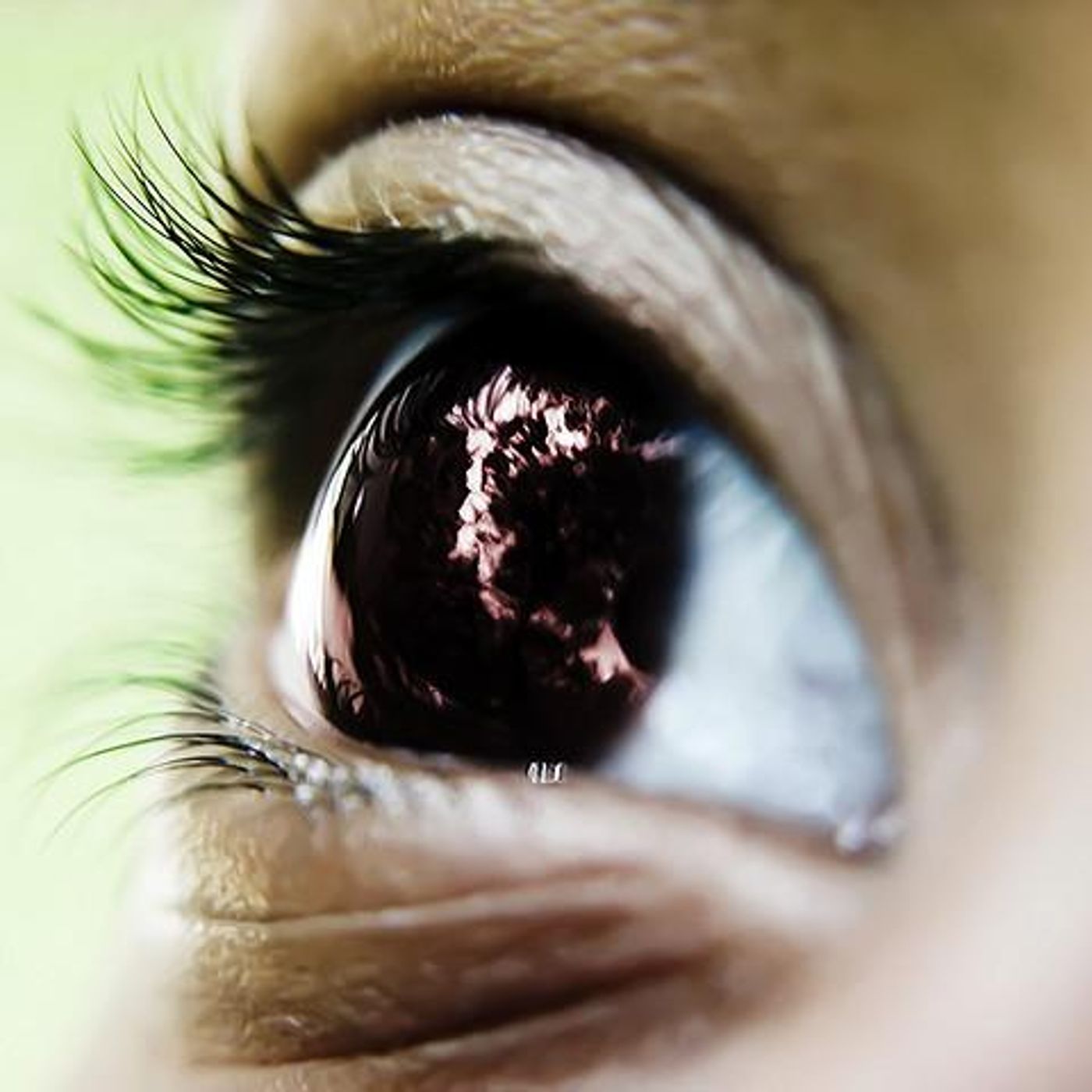
Radiolab
Blink
00:14:33
We ask a question we thought was a no-brainer in this podcast: why do we blink?
Loading summary
Transcript114 lines
- [00:00]
Ross Advertiser
Every holiday shopper's got a list. But Ross shoppers? You've got a mission. Like a gift run that turns into a disco. Snow globe, throw pillows and PJs for the whole family. Dog included. At Ross, holiday magic isn't about spending more. It's about giving more for less. Ross, work your magic with Venmo.
- [00:16]
Venmo Advertiser
Stash a taco in one hand and ordering a ride in the other means you're stacking cash back. Nice. Get up to 5% cash back with Venmo stash on your favorite brands when you pay with your Venmo debit card. From takeout to ride shares, entertainment, and more, pick a bundle with your go tos and start earning cash back at those brands. Earn more cash when you do more with Stash. Venmo stash terms and Exclusions apply. Max $100 cash back per month. See terms@venmo me stashterms.
- [00:47]
Lowe's Advertiser
Lowe's early black Friday deals are going fast. Don't miss. Up to 50% off. Select major appliances, plus up to an extra 25% off when you bundle. Select major appliances. And man, with Christmas around the corner, you're gonna need more string lights. Right? Save $4 on GE LED 100 count string lights. Now just $5.98 Lowes we help you save. Valid through 12. 3. Selection varies by location. Select locations only while supplies last. See Lowes.com for more details.
- [01:15]
Interviewer
Wait, you're listening.
- [01:16]
Jad Abumrad
Okay. All right. Okay. All right.
- [01:22]
Tamami Nakano
You're listening to Radiolab.
- [01:25]
Jad Abumrad
Radio Lab Sharks from wnyc.
- [01:30]
Walter Murch
Yes.
- [01:32]
Jad Abumrad
And npr. Let's just do it. You gonna do it?
- [01:36]
Robert Krulwich
Okay.
- [01:36]
Jad Abumrad
Let's just freaking do it. Hey, I'm Jad Abumrad.
- [01:39]
Robert Krulwich
I'm Robert Krylwich.
- [01:40]
Jad Abumrad
This is Radiolab. The podcast.
- [01:42]
Robert Krulwich
The podcast.
- [01:43]
Jad Abumrad
Today's topic is. Well, you know what? Something you just did.
- [01:47]
Robert Krulwich
I didn't. I had my eyes closed the whole time.
- [01:49]
Jad Abumrad
Oh, you gave it away. You know what I'm about to say. Pretend you don't know what I'm saying. Okay, today's topic is something you just did, actually.
- [01:58]
Robert Krulwich
What?
- [02:00]
Jad Abumrad
Yeah, you did it again. There and there.
- [02:03]
Robert Krulwich
I don't know what it is. Something with my fingernails?
- [02:06]
Jad Abumrad
No, no. And there.
- [02:08]
Robert Krulwich
Something. What? Tell me.
- [02:10]
Jad Abumrad
Okay. You blinked.
- [02:11]
Robert Krulwich
Oh.
- [02:12]
Jad Abumrad
Do you ever wonder?
- [02:14]
Robert Krulwich
I know this about blinks. This is interesting.
- [02:16]
Jad Abumrad
What?
- [02:17]
Robert Krulwich
When you blink, you should, if you really understand what's going on, sense a little bit of darkness. Because after all, your eyes are closed for an instant of time. But you don't. Because your mind erases the darkness of the blink. So you can blink away, but the world will seem seamless and blinkless to you. Even though your observers will see you blinking, you will not feel the blink inside.
- [02:39]
Jad Abumrad
Do you ever wonder what is the actual purpose of the blink?
- [02:42]
Robert Krulwich
To wetten your eyeball, I assume.
- [02:45]
Jad Abumrad
Well, that's what they tell you in ninth grade. But actually, you would think, if that is the case, that on really humid days, or let's say in the sauna, you would blink less because it's very humid in there, you don't have to wet.
- [02:57]
Robert Krulwich
That's what I think. On very dry days, I would blink more.
- [02:59]
Jad Abumrad
Yeah, they've actually done studies where they put people in saunas and they've measured the rate of their blinks, and it doesn't change. Oh, so there's something else going on. And so that's what we want to explore in this podcast. Why do we blink? Actually, the answers are completely fascinating.
- [03:16]
Robert Krulwich
Who are you going to ask this question to? A great scientist. A blink.
- [03:20]
Jad Abumrad
You will meet a blinkologist shortly. But first, I want to take you to a guy who. Well, he's a blinkologist of a different sort. Let's say he doesn't really study blinks, per se, but he. Well, he sort of stumbled into it.
- [03:33]
Walter Murch
My name is Walter Murch. I'm a film editor, and I've been working both as a film editor and as a sound mixer since the late 1960s.
- [03:42]
Jad Abumrad
Walter Murch has edited some amazing films. Apocalypse now, the Godfather, Cold Mountain. He's really one of the great editors in modern cinema.
- [03:50]
Walter Murch
Oh, well, thank you. Thank you.
- [03:52]
Jad Abumrad
He's also a great thinker about editing.
- [03:54]
Walter Murch
Thank you.
- [03:54]
Jad Abumrad
And he tells the following story about a discovery that he made while working on one of his early films.
- [03:59]
Walter Murch
Well, this was many years ago when I was editing Francis Coppola's the Conversation.
- [04:11]
Jad Abumrad
Which, by the way, is another great, great movie.
- [04:13]
Walter Murch
It was, I think, 1972. 1973.
- [04:16]
Jad Abumrad
And in the movie, Gene Hackman plays a surveillance expert who spends the whole movie, essentially, to decode this one conversation that he's recorded. So Walter Murch is there. He's in the editing suite trying to put it all together.
- [04:29]
Walter Murch
And I was working late at night.
- [04:33]
Jad Abumrad
All by myself on this old editing machine, making the tape go, Making it.
- [04:36]
Walter Murch
Go backwards and forward. Stop.
- [04:41]
Jad Abumrad
Oh, look, that's terrible.
- [04:43]
Walter Murch
Cut.
- [04:44]
Ross Advertiser
Tap dead on a park bench.
- [04:46]
Walter Murch
Stop. And I was editing the scene when Gene Hackman is assembling get him for Christmas.
- [04:53]
Jad Abumrad
Yet he's already got everything, the tapes.
- [04:57]
Walter Murch
That he's listening to in his laboratory.
- [05:00]
Jad Abumrad
It's a bit Of a meta moment, actually, because on screen, Gene Hackman is editing tape. And in his room, Walter Murch is editing tape of Gene Hackman editing tape. A lot of fun.
- [05:13]
Tamami Nakano
You are.
- [05:14]
Jad Abumrad
Now every scene in a movie, even simple scenes, require tons of cuts. Because as a viewer, you're constantly being bounced around from one camera angle to the next into the next. And though it seems like what you're watching is a continuous performance from the actor, it's actually been cobbled together by the editor from dozens of takes. So Walter Murch is doing this. He's editing this scene cut by laborious cut. And it's important to understand he's making every cut by feel.
- [05:42]
Walter Murch
What I will do is run the film at full speed and try to feel the rhythm in an almost musical way.
- [05:51]
Jad Abumrad
And right when he's ready, he'll there.
- [05:54]
Walter Murch
Hit the cut button and then rewind, run the film again and cut. And if I've hit that cut button on the same frame twice in a row, that tells me that I'm probably where I should be.
- [06:11]
Jad Abumrad
So he is editing this scene together. Takes many days, he says. And somewhere along the way, he begins to get this creeping sense.
- [06:21]
Walter Murch
You know, when you're in a room and maybe there's a leak outside and you. There's a little drip, drip, drip going on. I began to get the sense that. That there was some collaboration going on between myself and in this case, Gene Hackman.
- [06:43]
Jad Abumrad
Cause he would find, he says that every time he made a cut, he would see that on the screen, Gene.
- [06:48]
Walter Murch
Hackman would have blinked.
- [06:51]
Jad Abumrad
You mean your cuts kept falling smack in the middle of his blinks?
- [06:56]
Walter Murch
Uh, yeah.
- [06:58]
Jad Abumrad
Wow.
- [06:58]
Walter Murch
And I thought, well, this is peculiar. Am I responding to him blinking? That didn't seem like that. It was possible. And yet the alignment was consistent.
- [07:12]
Jad Abumrad
So Walter Murch developed a theory that maybe blinking has very little to do with moisture or any of that. Maybe it's a kind of hidden punctuation to thought or storytelling. Thank you so much for agreeing to do this. Now, this is a very cool idea, but it's just an idea. And we wanted to know if there's anything to this scientifically. Can you do me a favor to introduce yourselves?
- [07:37]
Interviewer
Yes, yes. Tamami first.
- [07:38]
Jad Abumrad
But then we found out about these two Japanese researchers. Introduce me, who were nice enough to Skype with us.
- [07:44]
Tamami Nakano
My name is Tamami Nakano. I research in the cognitive neuroscience.
- [07:51]
Interviewer
My name is Shigeru Chita Zawa, and she was a student of mine. Okay, Tamami is going to talk.
- [07:59]
Tamami Nakano
No, no. Blink is very common. Very common phenomenon, but purpose of ring is mystery.
- [08:11]
Jad Abumrad
The reason we had called Tamami and Shiguro is because they had just completed an experiment which they hoped would solve this mystery of blinking. What they did was they got a bunch of subjects together and they hooked each person up to a kind of gizmo.
- [08:25]
Interviewer
We put two electrodes, one above and one below the eye, and when we blink, we can record very strong electrical signal. And we can later analyze automatically when the subject blinked.
- [08:45]
Jad Abumrad
This is actually what it sounds like when a person blinks. Once they had everybody hooked up, they played them a movie.
- [08:52]
Tamami Nakano
In each person, I present the movie for three times.
- [08:59]
Interviewer
What movie did you use, by the way, Mr. Bean? British comedy.
- [09:03]
Jad Abumrad
Okay, Mr. Bean, if you don't know the movie, I didn't. It's kind of like a farce.
- [09:09]
Tamami Nakano
So that Mr. Bean is. I select the Mr. Bean because the story is easily understandable without sound.
- [09:20]
Jad Abumrad
The reason she took out the sound was for. Well, it's actually not that interesting why she took out the sound. What they did was they watched people watching movies, recorded their blinks each time they watched. And what they found, it was really weird. First thing they noticed within each person.
- [09:40]
Tamami Nakano
They blink at the same time point in the movie.
- [09:44]
Jad Abumrad
Meaning people, when they watch the movie many times tend to always blink in the same spots.
- [09:50]
Tamami Nakano
But weirder than that, also the timing of blink occur at the same time between people.
- [09:57]
Jad Abumrad
They found that a large percentage of their subjects actually fell in sync. They began to blink at the exact same moment in the movie. How often did synchronization occur between people?
- [10:15]
Interviewer
According to our analysis, one third of blinks contributed to synchronization.
- [10:23]
Jad Abumrad
Just to appreciate that, I mean, imagine you're sitting in a movie theater with 200 other people. It's dark, the movie starts, action gets on the way, and you're just there watching. And with each unconscious blink that you make, 70 people make that blink right with you. Like all these little butterfly wings fluttering at the same time. Wow. And so they. So the question was, why? Why does this happen? And they analyzed their data with that question in mind. What they found is that what seems to be happening is that people, as they watch the movie, get in sync with the story. They intuit the narrative flow sort of peaks in the valleys of the tale, and they're able to align their blinks so that they fall right in the gaps, those little micro beats where nothing happens.
- [11:19]
Tamami Nakano
Yes. We found that ring synchronization occurred at the conclusion of action by the actor, by Mr. Bing.
- [11:29]
Jad Abumrad
She gave a bunch of Examples.
- [11:31]
Tamami Nakano
One example is the empty street.
- [11:34]
Jad Abumrad
There's a moment in the film, she says, where all you see is this empty street for just a few frames, just a beat. In that moment, everybody blinks. Or you know, when Mr. Bean walks into a room, closes the door. Right as the door finishes closing, everybody blinks.
- [11:50]
Robert Krulwich
So these sound like rest stops. If they were the New Jersey Turnpike, this would be where you'd go in to get your coffee.
- [11:55]
Jad Abumrad
Exactly.
- [11:56]
Robert Krulwich
Say if it's an eyeball, you just blink.
- [11:59]
Interviewer
One reason is that we don't want to miss very important point in the story. Tamami's hypothesis is that, you see, blinking is related to the punctuation, our ways of thinking. Maybe there is some kind of synchronization of the thinking of the editor or filmmaker that might, you see, make us blink at the same time.
- [12:28]
Jad Abumrad
But still there's a why question here. Because why would we even need to do that to blink? And no one knows really. But it may be that we blink at all because we can only process life in chunks.
- [12:46]
Tamami Nakano
Blink might be chunk. Make a chunking of the flow of information for effective processing. Information processing or effective memorizing in computer terms.
- [12:59]
Walter Murch
It's like that moment when we saved a disk. There's enough information in our buffer, so to speak. And now we think, I've got to remember this. And that's at that moment that we blink.
- [13:11]
Jad Abumrad
That's what Walter Murtz thinks. But who knows?
- [13:13]
Robert Krulwich
So it's popping a new tape every time you blink. Yeah, because I noticed that culturally, when you feel that you're done, you know, enough changes over time. Like my daughter will watch a Cary Grant movie and the character played by Cary Grant will be in bed, throw off the covers, put his feet on the floor, get up and then walk to the door, the whole thing. And she's thinking like, come on, come on. She wants it to chunk and go, chunk and go. And so I don't know if she's blinking madly through this thing, but she's clearly frustrated because she no longer. I'm not sure that the chunking isn't an artifact of how you see when you're alive. When you're alive. Yeah.
- [13:54]
Jad Abumrad
I wonder if the blink rates have changed over generations.
- [13:58]
Robert Krulwich
I'm sure they have.
- [14:02]
Jad Abumrad
How would you even measure that? I guess you'd have to start now and just kind of measure into the future. And as a side note, they measured the time that we blink, the sort of cumulative time that we would blink, say through a two hour movie. Yeah, Each blink is somewhere around what is it like 200th of a second. So that means that every minute we're losing about six seconds to darkness, every 60 seconds. This is an average, of course. So in a two hour movie you're missing total 15 minutes.
- [14:42]
Robert Krulwich
So in an 80 year life, you're missing two years.
- [14:48]
Jad Abumrad
Two years of darkness, which you are.
- [14:51]
Robert Krulwich
Thanks to your lovely brain, you are totally unaware of missing. Thank you Brad.
- [14:56]
Jad Abumrad
Thank you Brad. I'm janapumrad.
- [14:59]
Robert Krulwich
And I'm Robert Colich.
- [15:00]
Jad Abumrad
Radiolab is supported in part by the Sloan foundation, the Corporation for Public Broadcasting and one other. We have one other, the biggest one.
- [15:08]
Robert Krulwich
Of them all, the National Science Foundation.
- [15:11]
Jad Abumrad
Yes. Before we close, I just want to thank Tim Howard for production help on this podcast and I want to urge everyone listening right now, if you're only a podcast listener, I don't know, call your NPR station or check their website for listings because we might be on your radio right now.
- [15:50]
National Forest Foundation Announcer
Radiolab is supported by the National Forest Foundation, a nonprofit transforming America's love of nature into action for our forests. Did you know that national forests provide clean drinking water to 1 in 3Americans? And when forests struggle, so do we. The National Forest foundation creates lasting impact by restoring forests and watersheds, strengthening wildfire resilience and expanding recreation access for all. Last year they planted 5.3 million trees and led over 300 projects to protect nature and communities nationwide. Learn more at nationalforests.org Radiolabs NYC now.
- [16:29]
Ross Advertiser
Delivers breaking news, top headlines and in depth coverage from WNYC and Gothamist every morning, midday and evening. By sponsoring our programming, you'll reach a community of passionate listeners in an uncluttered audio experience. Visit sponsorship.wnyc.org to learn more.