← Radiolab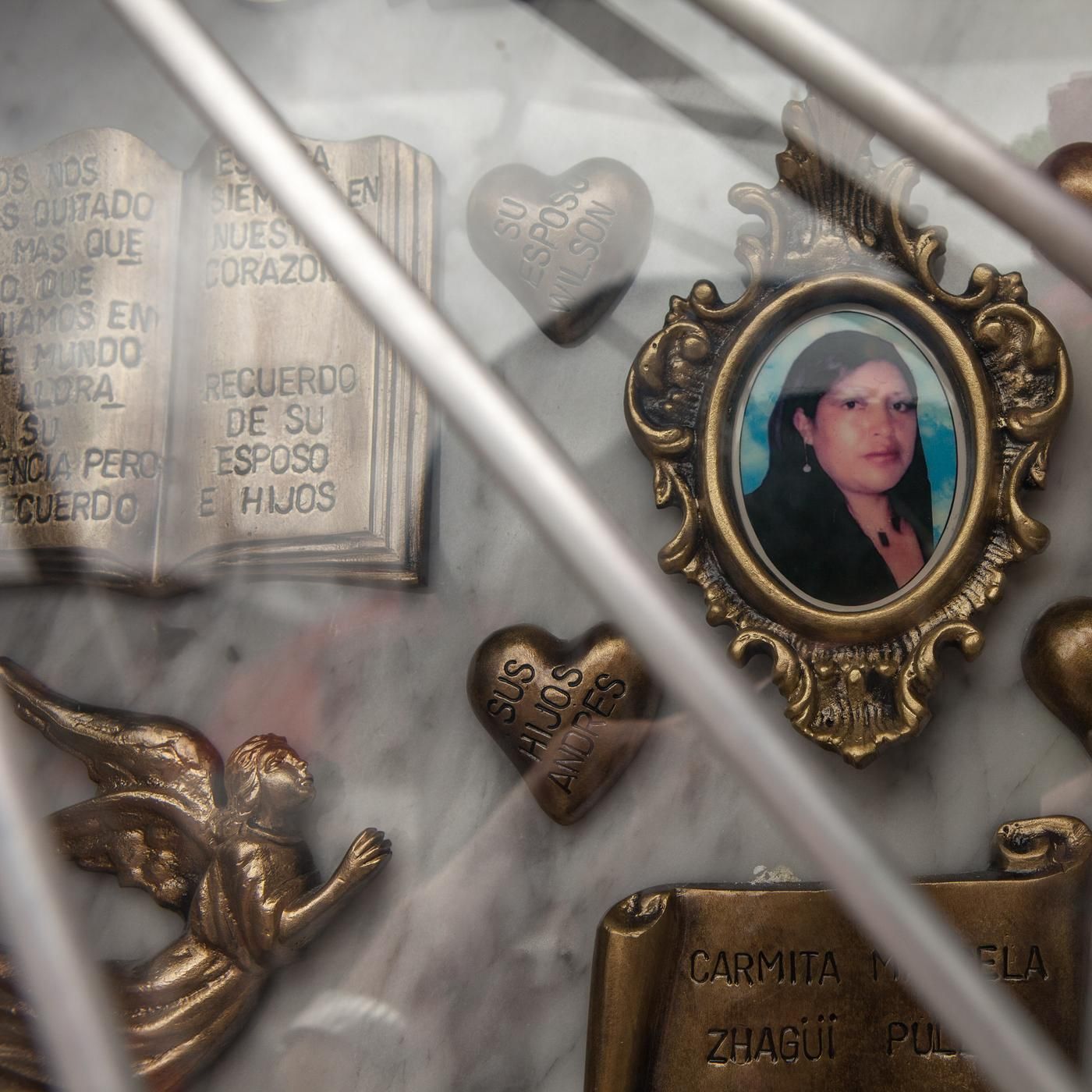
Radiolab
Border Trilogy Part 3: What Remains
00:35:43
Border Trilogy While scouring the Sonoran Desert for objects left behind by migrants crossing into the United States, anthropologist Jason De León happened upon something he didn't expect to get left behind: a human arm, stripped of flesh. This macabre discovery sent him reeling, needing to know what exactly happened to the body, and how many migrants die that way in the wilderness. In researching border-crosser deaths in the Arizona desert, he noticed something surprising. Sometime in the late-1990s, the number of migrant deaths shot up dramatically and have stayed high since. Jason traced this increase to a Border Patrol policy still in effect, called “Prevention Through Deterrence.” Over three episodes, Radiolab will investigate this policy, its surprising origins, and the people whose lives were changed forever because of it. Part 3: What Remains The third episode in our Border Trilogy follows anthropologist Jason De León after he makes a grisly discovery in Arivaca, Arizona...
Loading summary
Transcript199 lines
- [00:02]
Jad Abumrad
Amazon Black Friday Week deals are here with everything for everyone on your list. Like your Uncle Ricky, who ruined every single one of your wedding photos because his fly was open. Get him a three pack of new underpants. And right now, with Amazon Black Friday Week deals, you can save up to 40% on the gifts everyone wants, like the latest toys and housewares. And the gifts they need, like underpants and Ricky. Wear them, please, for delicious meals. You could go out to eat, or.
- [00:33]
Latif Nasser
You could just make a Marie Callender's meal. Marie Callender's classic chicken parmigiana bowl is so good. It has marinara sauce that's made from scratch and creamy mozzarella cheese over pasta. It's delicious with no artificial flavors, colors or preservatives. And 30 grams of protein. You can find it in the frozen aisle.
- [00:51]
Jad Abumrad
Marie Callender's what having it all tastes like at Lowe's. Loyalty is royalty.
- [00:58]
Fernando (Marisela's family member)
With Christmas right around the corner, treat.
- [01:00]
Jad Abumrad
Yourself for less during the holiday season. Rewards members get early online only access to Black Friday doorbuster deals on Thanksgiving Day. Like the Hisense Side by side fridge. Just $799. Not a member. Join for free today. Lowes, we help you save valid $11.27 only on Lowe's.com, member only. Doorbusters and midnight Eastern loyalty programs subject to terms and conditions. See lowe's.com terms for details. Subject to change. Okay, before we start, New York, New York City. If you're listening and you live in New York, you know somebody who lives in New York or New Jersey, you know, Long Island. Yeah. Wherever New York ish, know that we have a live show on Wednesday, May 16. We are taping a new episode of a series that is shortly to be here from amazing producer Molly Webster. It's all about sex. This particular event, particularly Sex Ed. Come join Molly and company for a night of stories, debate, and nervous laughter. You can get tickets@radiolab.org sex ed. It's gonna be good. Also, what you're about to hear is gonna be good. But we should warn some of you that there will be descriptions in this upcoming podcast right now that are kind of grim and about people dying in the desert. So if there's kids in your house or you don't wanna listen to that, maybe take a break.
- [02:20]
Tracy Hunt
But.
- [02:20]
Jad Abumrad
But otherwise. Here we go. Oh, wait, you're listening.
- [02:23]
Tracy Hunt
Okay. All right.
- [02:26]
Jad Abumrad
Okay.
- [02:27]
Tracy Hunt
All right. You're listening to Radio Lab.
- [02:32]
Latif Nasser
Radio Lab from wnyc. So we come back here where you see you had another case.
- [02:43]
Jad Abumrad
Oh, and this. What is, what are those hairs?
- [02:49]
Latif Nasser
That's dried muscle.
- [02:50]
Jad Abumrad
Oh, that's muscle.
- [02:51]
Latif Nasser
Closest I can. The closest thing I can say is the muscle dries out so it gets stringy and shredded.
- [02:58]
Jad Abumrad
Okay, wait, wait, let's actually, let's just start from the beginning. Okay, so we are in. What room is this again?
- [03:03]
Latif Nasser
We're in the special procedures room at the Pima County Office of the Medical Examiner. And what we're looking at here is a case, mostly skeletal remains.
- [03:14]
Jad Abumrad
So we have a skull, we have a few. We have some parts of the spine, it looks like, and then just two.
- [03:22]
Latif Nasser
And all three major bones of the lower limb. So the two thigh bones, the femurs and the two tibias and the two fibulae, we know it's the male. He's an adult 20 to 30 to 40 year old migrant. He came in in late January, early February, and animals found him. Maybe 50% of his skeleton is missing. His upper limbs and his pelvis and most of his spine are missing and his hands and feet are missing. We have evidence here that a vulture was feeding, was feeding on the person.
- [03:54]
Jad Abumrad
I don't know if this is.
- [03:55]
Latif Nasser
That's a beetle. That's a dermestid beetle.
- [03:57]
Jad Abumrad
That's a beetle.
- [03:57]
Latif Nasser
It's called a hide beetle. They're found globally and these hide beetles specialize in eating dried hard tissue.
- [04:05]
Jad Abumrad
So he's still eating?
- [04:07]
Latif Nasser
Yes, he is.
- [04:08]
Jad Abumrad
Wow.
- [04:08]
Latif Nasser
He was in the body bag. He and his colony would have been on the body. Wow. In the body bag. And although we try to get most of them off during our exam, you can see there's lots of little crevices where a single bug could be.
- [04:23]
Fernando (Marisela's family member)
Wow.
- [04:24]
Jad Abumrad
Oh, wow, that's so. Yeah.
- [04:26]
Tracy Hunt
Wow.
- [04:30]
Jad Abumrad
I'm Chad Abumrad. I'm Robert Krulwich, this is Radiolab. And today we present the final episode of our Border trilogy with producers Latif Nasser and Tracy Hunt. And this is episode three, which we're calling what Remains.
- [04:47]
Tracy Hunt
Yeah.
- [04:47]
Jad Abumrad
Okay, so just to catch everyone up, here's Latif, the person I was just talking to. His name is Bruce Anderson. He's a forensic anthropologist at the Pima County Office of the Medical examiner in Arizona, which is where when they find a body of a unidentified migrant in the Sonoran Desert, that's where they bring them. And, and Bruce had been working there, you know, on and off since the 1980s. But he told me that it was only in the early 2000s that he started seeing, you know, just more and more and more of these migrant bodies. Being brought in and we're just crushed.
- [05:23]
Latif Nasser
By the weight of all the dead and all the missing persons reports. And, you know, you're. It's like working a mass disaster when people are still dying and planes are still crashing around you and you, you throw your hands up in the air sometimes and you just think, when's it gonna stop?
- [05:40]
Jad Abumrad
And it hasn't stopped. The number of bodies found last year was in the same range as the year before. The number of people crossing did go down after Donald Trump's inauguration, but traffic has basically rebounded. So people are still coming through the desert. They're not being deterred. Which made us wonder, is deterrence that fundamental idea behind our current border policy? Is it even possible now? In some ways, that's a policy question which we talked about in our last episode, but it's also a human question. Is Jason still there?
- [06:14]
Latif Nasser
I'm still here.
- [06:15]
Jad Abumrad
And that's what led us back to the person who we started this whole journey with, the anthropologist Jason De Leon. Alright, can you hear Latif too?
- [06:22]
Latif Nasser
I sure can.
- [06:23]
Jad Abumrad
Good morning. Oh, good morning. Fantastic. Well, I feel like maybe we should just start off where we left off, which is that you were going to tell us the story of Marisela.
- [06:35]
Latif Nasser
Sure.
- [06:36]
Jad Abumrad
When was this, by the way?
- [06:37]
Latif Nasser
This would have been June of 2012.
- [06:40]
Jad Abumrad
Okay.
- [06:41]
Latif Nasser
So we had been about two weeks into the pig experiment.
- [06:45]
Jad Abumrad
This is a series of experiments where Jason and his team, mostly students, looked at how pigs decompose in the desert in order to understand how people decompose in the desert.
- [06:54]
Latif Nasser
And it wasn't until about two weeks into this experiment where we were out hiking one day with a group of.
- [07:00]
Jad Abumrad
About nine people down in Southern Arizona.
- [07:03]
Latif Nasser
And so on this particular day, on this trail that I had hiked many, many times, a student had run ahead to check stuff out and was taking pictures of us as we were walking up this hill. He turns around, starts yelling at us, he says, hey, you gotta come up here. Something has happened. So I threw my backpack down and I race up this hill. And by the time I get up there, I see that, that he's kind of staring at this body that's just laying face down in the dirt on this trail.
- [07:31]
Jad Abumrad
Like a fully intact body. Yeah, a woman's body.
- [07:35]
Latif Nasser
You could tell it was a woman because she had long hair. You know, she's wearing camouflage clothes, stretch pants, women's running shoes on, she's got a scrunchie around her wrist. But the rest of it, I mean, her body was incredibly bloated. I mean, to the point where it looked like it was about to. To pop from all of the gases that had built up inside of her body cavity. I didn't know what to do at this point. I mean, you know, the students start walking up. I mean, these are young students. We had someone in the group who was 18, 19.
- [08:05]
Jad Abumrad
For some of the students, this is the first time they've seen a dead body. One of them was crying.
- [08:09]
Latif Nasser
I tell everyone, I say, hey, look, you got to go sit down and give me a second here to figure out what it is we're going to do here.
- [08:16]
Jad Abumrad
So first he called the police.
- [08:17]
Latif Nasser
We did that, and then we kind of had a conversation. Are we going to photograph this person? Are we going to record any information? Are we still doing research right now?
- [08:25]
Jad Abumrad
And Jason decided, yeah, we should. We should document this.
- [08:29]
Latif Nasser
You know, we took some notes down. Gray to green discoloration about what she was wearing. Brown to black discoloration of arms and legs.
- [08:35]
Jad Abumrad
Took some pictures of the body.
- [08:36]
Latif Nasser
Her fingers have started to curl. Her ankles are swollen to the point that her sneakers seem ready to pop off. There's a steady hissing of intestinal gases. And then it just got to the point where I was like, okay, this is enough. I don't want to do this anymore.
- [08:49]
Jad Abumrad
And so they covered her with a blanket because Jason noticed the birds circling overhead. Four turkey vultures. And so at that point, they just sort of sat down and waited for.
- [08:59]
Latif Nasser
The police to come, the sheriff.
- [09:01]
Jad Abumrad
An hour went by, two, three, four.
- [09:04]
Latif Nasser
Just waiting with the body.
- [09:06]
Jad Abumrad
It was about five hours in that a sheriff and three border patrol agents show up. And they had hiked three miles to get to Jason with a stretcher. And so they bring the stretcher. The sheriff puts on gloves. He asks them a few questions, like, did you guys put the blanket on there? And then they roll her into this white body bag. And as the authorities do that, Jason. Because she was face down, Jason gets to see her face for the first time. And so he writes a paragraph in his book, and it's pretty gruesome, but I'm gonna read to you the paragraph that he writes about it in his book. As her body turns, I see what is left of her face. It is frightening and unrecognizable as human. The mouth is a gnarled purple and black hole that obscures the rest of her features.
- [09:56]
Latif Nasser
I can't see her eyes because the mouth is too hard to look away from. The skin around the lips is stretched out of shape as though it had been melted. Her nose is Smashed in and pushed up. She died face down. And the flesh on the front side of her skull has softened and contorted to fit around the dirt and rocks beneath her. The scene is a pastiche of metallic gray and pea green. Whatever beauty and humanity that once existed in her face has been replaced by a stone colored ghoul stuck in mid scream. It's a look you can never get away from. After this thing had happened. And it really, it just shook me in a lot of different ways.
- [10:41]
Jad Abumrad
Jason says he just couldn't shake the question, who was this woman? How did she end up face down in the desert?
- [10:50]
Tracy Hunt
So that night, I remember Jason calling me.
- [10:53]
Jad Abumrad
Jason called a friend of his, a woman named Robin Reinecke.
- [10:56]
Tracy Hunt
Him being really clearly shaken and, you know, asking for advice.
- [11:01]
Jad Abumrad
Robin actually runs this nonprofit when Toussaint.
- [11:03]
Tracy Hunt
Called the Colibri center for Human Rights.
- [11:05]
Latif Nasser
Calibri center for Human Rights. And they do a lot of work with the missing and with bodies that have been recovered. So Jason tells her, look, today we had this thing, we found this person.
- [11:14]
Jad Abumrad
Out here and could you help us ID her? Now the thing is, Robin's office is actually in the medical examiner's office. So that means that just down the hall from Robin is the guy we met at the beginning, Bruce Anderson.
- [11:30]
Latif Nasser
Probably a couple hundred people, or at least bones of a person are in here.
- [11:35]
Jad Abumrad
So Bruce is working on the medical examiner's side. So anytime an unidentified migrant body comes in, Bruce tries to piece together who this person is. Looking at the dimensions and the shape.
- [11:45]
Latif Nasser
Of the skull markers, robustness of the.
- [11:48]
Jad Abumrad
Bones, like looking at the length of the bones or the density of the.
- [11:51]
Latif Nasser
Bones by the non fusion of these separate bones.
- [11:54]
Jad Abumrad
Looking at whether some bones in the body are fused together, which is something that happens right after puberty, Bruce can actually figure out a process, approximately what age the person is, their sex, their weight, their height. And in the case of the woman that Jason found, her body was surprisingly in relatively good condition. So pretty quickly they were able to determine, you know, she's probably in her 30s, she's 5 foot 4. They were actually able to get fingerprints from her as well. Meanwhile, on the other side, on Robin's side. Wow. So each of these tabs is a person, is that right? Yeah, she's dealing with hundreds of missing persons reports all day, every day. She spends her days taking calls, going through voicemail, which is full of relative searching.
- [12:38]
Tracy Hunt
I'm looking for my uncle. He disappeared in 2010. Or I'm looking for my daughter, she crossed two weeks ago.
- [12:44]
Jad Abumrad
We haven't heard from her and she's also getting tips from different people, different aid organizations. And it's actually one of those calls that leads to a break in the case of the body that Jason found.
- [12:55]
Tracy Hunt
Huh. Okay, so this is an email from me from 2012. Hi Jason, just a quick update regarding the woman that your group found. The case number is 121567 and as of yet she has not been identified.
- [13:08]
Jad Abumrad
But Robin tells Jason that she got a call from an aid organization that had spoken to a guy who had crossed the desert with a big group of people around the same time and around the same area where Jason found the body.
- [13:21]
Tracy Hunt
He said that he had recently left behind two fellow travelers who were in serious medical distress.
- [13:26]
Jad Abumrad
He said one of them was an elderly man, 70 years old, and the other was a woman, maybe from Guatemala or Ecuador, late 30s, early 40s.
- [13:35]
Tracy Hunt
It isn't certain that this group is related to ML 1215 67, but it's highly likely. I will contact Guatemalan and Ecuadorian consulates regarding new missing persons cases.
- [13:47]
Jad Abumrad
And eventually, using all the information that got gathered, Robin was able to determine that the body that Jason found, it's the body of a 31 year old Ecuadorian woman named Marisela Aguipoya. Marisela Zaguipuyas. Robin gets in touch with Jason to tell him. Jason then asks her, I would just.
- [14:07]
Latif Nasser
Would appreciate if you could help me at all connect with this family.
- [14:23]
Jad Abumrad
That request would, oddly enough, lead Jason to New York City. That story in just a moment.
- [14:34]
Tracy Hunt
Hey, it's Mae from Cincinnati, Ohio. Radiolab is supported in part by the Alfred P. Sloan Foundation, Enhancing public understanding of science and technology in the modern world.
- [14:44]
Jad Abumrad
More information about Sloan@www.sloan.org. radiolab is supported by Rippling. Finance teams often spend weeks chasing receipts, reconciling spreadsheets and fixing errors across disconnected spend tools. This can be frustrating, and that's not. Software is a service. That's sad. Software as a disservice. If you've been thinking about replacing stitched together tech stacks with one platform for all departments, Rippling can help. Rippling is a unified platform for global hr, payroll, IT and finance, helping people replace their mess of cobbled together tools with one system. Designed to help give leaders clarity, speed and control. By uniting employees, teams and departments in one system, Rippling works to remove the bottlenecks, busywork and silos in business software. With Rippling, you can choose to run hr, IT and finance operations as one, or pick and choose the products that best fill the gaps. Right now you can get 6 months free when you go to rippling.com Radiolab learn more at r I p p l-I n g.com Radiolab terms and conditions apply. Radiolab is supported by Planet Visionaries, the podcast created in partnership with the Rolex Perpetual Planet Initiative. Stay tuned for a trailer and subscribe wherever you get your podcasts.
- [16:11]
Latif Nasser
I'm Alex Honnold, professional rock climber and founder of the Honl Foundation. I wanted to let you know about a brand new season of the Planet Visionaries podcast in partnership with the Rolex Perpetual Planet Initiative. This is the podcast exploring bold ideas and big solutions from the people leading the way in conservation. Join me in conversation with the likes of climate champion Mark Ruffalo, biologist and photographer Christina Mittermeier, and one of the.
- [16:33]
Fernando (Marisela's family member)
Most successful conservations of our time, Chris Tompkins. Join us on Planet Visionaries wherever you get your podcasts.
- [16:41]
Tracy Hunt
Radiolab is sponsored by OMG yes.com There is new research on pleasure that's actually fascinating and the site OMG yes makes it accessible to everyone. OMG yes shares finding from the largest ever study into women's pleasure and intimacy in partnership with researchers at Yale and Indiana University. They asked tens of thousands of couples what they wished they'd discovered sooner. They found the patterns in those discoveries and all that wisdom and pleasure and intimacy is organized as hundreds of short videos, animations and how tos on omgs.com and guess what? Half of OMGS users are men. Hooray for generous lovers, right? You'll find specific research backed techniques. It's the science of sexual generosity in action. See what they discovered today@omg yes.com that's OMG yes.com.
- [17:34]
Jad Abumrad
How does the brain process memories? Why is AI a solution and a.
- [17:39]
Tracy Hunt
Problem for our climate? What is leadership in 2025 and beyond?
- [17:45]
Jad Abumrad
The TED Radio Hour explores the biggest.
- [17:47]
Tracy Hunt
Questions and the most complicated ideas of our time with the world's greatest thinkers. Listen now to the TED Radio Hour from npr.
- [18:02]
Jad Abumrad
Chad Robert Radiolab we are back with the third installment of our border trilogy, what Remains. And when we left, Jason, along with Robin from the Calibri center, had managed to ID the body of the woman he found in the desert. And so now he was trying to get in touch with her family.
- [18:19]
Latif Nasser
I don't know when people disappear or when they die in the desert, I think that the families make up, you know, lots of stories run through people's heads. And so I was hoping that if I could find this person's family, I could at least say this is what it was like, when we found her, this is what we think had happened.
- [18:32]
Jad Abumrad
So Robin was eventually able to get Jason the contact information for Maricela's brother in law, who will call Fernando.
- [18:38]
Latif Nasser
And I make the awkward phone call that says, hey, I'm the person that found Maricela in the desert, and I would like to come and see you if that's possible.
- [18:51]
Jad Abumrad
Turns out Fernando actually lives in New York City. But he had spoken to Maricela just before she left. And when we heard his story, we decided, okay, we better send a reporter, Tracy Hunt, to talk with him.
- [19:07]
Tracy Hunt
Yeah, so I went to visit Fernando at his apartment in Queensland. Kimberly, please. He lives there with his three dogs. Friendly guy, a little shorter than me, neatly dressed, he's got, you know, dark hair, longer on the top, shorter on the sides. And when I got there, he pulled out a bunch of photos of Maricela. So this is their marriage, their wedding photo. She was his brother's wife. Oh, they look so young. Were they 19 when they got married? So in this picture that Fernando's showing me, it's his brother and Maricela. They're in a church and they're posing at the altar. She's in a white satin gown. Her hair is long and dark and shiny, and she's got kind of like an oval shaped face. And, you know, she looks beautiful. But even though it's her wedding day, the thing that struck me is that she's not smiling, not even a little bit. Was she serious like that? Yeah.
- [20:14]
Fernando (Marisela's family member)
Actually, that's part of the reason why my mother said she didn't like her as much in the beginning. She said, you know, she always has an angry face on. She looks like somebody who doesn't have a lot of friends.
- [20:28]
Tracy Hunt
And on top of that, Fernando says she also had a habit of getting his brother in trouble.
- [20:36]
Fernando (Marisela's family member)
You know, she would tell my brother to sneak out of the house to go see her, go out dancing, to parties without permission, you know, those kinds of things.
- [20:45]
Tracy Hunt
But. Fernando says she eventually won the family over.
- [20:52]
Fernando (Marisela's family member)
She helped out at home.
- [20:53]
Tracy Hunt
She treated my mom really well, especially his mother.
- [20:59]
Fernando (Marisela's family member)
Actually, I think my mother loved her more than she loved us.
- [21:03]
Tracy Hunt
So Maricela and Fernando's brother, they got married. They ended up having three kids, two boys and a girl. Maricela had a job in a factory that made counterfeit jeans, I think Levi's. And Fernando's brother, he would go around to different villages selling sodas. And they just couldn't really manage to make ends meet.
- [21:24]
Latif Nasser
They were living real rough at the time. I Mean, when I went to the house and saw where they had lived.
- [21:30]
Jad Abumrad
So Jason, after he connected with Fernando, he actually ended up going down to Ecuador to meet Maricela's family before she had left.
- [21:38]
Latif Nasser
I mean, they were living in a one room plywood shack with a dirt floor and animals running through the house. And, you know, and she had told her relatives, she's like, look, my kids are literally starving here.
- [21:55]
Fernando (Marisela's family member)
At the time, I wasn't able to help out as much financially because I was also helping build a house for my parents where they were also going to go live. And so I wasn't able to support them as much or help out with things like school. And so, you know, what she really wanted to do, you know, in order to, like, send her kids to school and all that, she really wanted them to have what she never had, because she never had anything. And so that was really the pressure that she was under.
- [22:23]
Tracy Hunt
So Fernando says in 2012, he called home.
- [22:31]
Fernando (Marisela's family member)
One time. When I called home, my mom said that she wanted to talk to me.
- [22:34]
Tracy Hunt
So I said, ok. Marisola got on.
- [22:36]
Fernando (Marisela's family member)
The phone and she told me that she wanted to come here.
- [22:39]
Tracy Hunt
She told him that she and his brother, they wanted to follow in his footsteps, that if they could come to New York like he had, they could make money, send it back home and help out their kids, that that was the only way. And immediately Fernando was like.
- [22:55]
Fernando (Marisela's family member)
Absolutely not, no.
- [23:01]
Tracy Hunt
So Fernando told her no, because he didn't want her to go through the same thing he went through 10 years before 2001. He was 17 years old, about to turn 18, and his aunt was about to go to New York, and she convinced him and his parents that if he went to New York, he'd be able to get a job, make more money, and support his family from there.
- [23:29]
Fernando (Marisela's family member)
To have a better life, to have the things we needed. So my father thought about it and gave his permission, but he told me not to stay here too long.
- [23:39]
Tracy Hunt
And so he used his grandfather's land as collateral and took out a loan for $12,000.
- [23:46]
Jad Abumrad
$12,000?
- [23:47]
Tracy Hunt
Yeah.
- [23:48]
Jad Abumrad
Do you know what the interest rate was on the loan?
- [23:50]
Tracy Hunt
10%.
- [23:51]
Jad Abumrad
10%?
- [23:52]
Latif Nasser
Yeah.
- [23:52]
Tracy Hunt
So one thing that a lot of people have talked about is the fact that prevention through deterrence, it professionalized the human smuggling business. Because not only did these migrants need, you know, guidance from all these south and Central American countries, they also need guidance through the desert. So now you have this smuggling business that's more expensive and. And also more dangerous.
- [24:18]
Fernando (Marisela's family member)
Yes. So the coyote told us that 15 days maximum to get here.
- [24:23]
Tracy Hunt
Fernando says he and his aunt took a bus from Ecuador to Peru. And then from Peru they flew to Panama, got on another bus, and then somewhere in Costa Rica.
- [24:37]
Fernando (Marisela's family member)
I remember the path had been really mountainous, there was river, all that.
- [24:42]
Tracy Hunt
This bus pulls over and the coyote who was with them at that point just said, okay, you have to get off here.
- [24:50]
Fernando (Marisela's family member)
When we got out, they took our luggage and they threw them on the ground towards the river. And they said, you have to cross the river and someone will find you there and signal to that person. And we were left there like that with my aunt saying, hold on, that wasn't the deal. The deal was to take us all the way to Mexico in cars. But from that point when we started crossing mountains on foot, that's when horrible things started to happen.
- [25:19]
Tracy Hunt
From that point on, they were packed into the trunks of taxis, hidden in basements, chicken coops and huts, totally filled with rats. And three months into this journey, a journey that was supposed to take just 15 days, somewhere in Mexico, Fernando says that he and his aunt are taken to this run down hacienda, this just sprawling ranch house. Inside the ranch house, habilla mas de dosienta cincuenta Personas. Ay.
- [25:50]
Fernando (Marisela's family member)
There were more than 250 people there from all over the world. Chinese, Central Americans, from every country, from all over South America.
- [26:00]
Tracy Hunt
There's all these rooms filled with people. And Fernando actually says that there were all these armed guards all over the place. Nobody was allowed to leave.
- [26:11]
Fernando (Marisela's family member)
And so we were casio mes encerados a pending there for about a month.
- [26:21]
Tracy Hunt
And while he was there this part.
- [26:23]
Fernando (Marisela's family member)
I didn't tell Jason what happened to me there. I was abused sexually.
- [26:32]
Tracy Hunt
Fernando says that he was sitting outside the hacienda one day with his aunt when a group of men approached him and told him that he had to go inside with them. And he said no, that he was fine sitting there, you know, outside.
- [26:53]
Fernando (Marisela's family member)
My aunt begged them not to hurt me, to please not abuse me or do anything to me. And they said, no, don't worry. That they only wanted to ask some questions inside. But that wasn't what they wanted.
- [27:05]
Tracy Hunt
They told Fernando, look, you can come with us now or you can come with us later after we beat up your aunt. So finally Fernando relented and went with them. And when they got inside the hacienda, they went into a room and once.
- [27:21]
Fernando (Marisela's family member)
We were inside, they raped me three times.
- [27:30]
Tracy Hunt
How many of them were there?
- [27:33]
Fernando (Marisela's family member)
Like six. After that, I went to. I just wanted to die.
- [27:44]
Tracy Hunt
After a couple of weeks, Fernando and His aunt finally got out of this hacienda, and they start their trek into the desert. Fernando thinks that he went through the same desert that Maricela would try to cross. Ten years later, he's actually caught by the border patrol and held for about a month before he manages to bail himself out of detention and make his way to New York. And Fernando says he shared all of this with Maricela, except his own rape. But he did tell her that migrants do get raped. That he's seen it happen, that he knows it happens.
- [28:21]
Fernando (Marisela's family member)
Even when I told her all of that, she said none of that would happen to her. She knew how to defend herself. And, you know, if she had to.
- [28:28]
Tracy Hunt
She would hit people. And then he told her, you might have to go without food or sleep outside. But.
- [28:37]
Fernando (Marisela's family member)
She said that it didn't matter, that all that mattered was getting here. Because the kids are the ones that matter most. Any sacrifice made is worth it for your kids.
- [28:47]
Tracy Hunt
And then he doesn't talk to her anymore. That's actually the last phone call they ever have because he thinks that if he cuts her off, maybe she'll just give up. But she goes to one of her brothers, and her brother says that he would only pay for her to go, but he's not gonna pay for her husband to go. When you found out that she was gonna come by herself, did you try to tell your brother, look, she. You shouldn't let her come here by herself. Come at all, I should say.
- [29:14]
Fernando (Marisela's family member)
Yeah. Yeah, I called, but my brother said that there wasn't another option and that he wanted to go first. But her brother had put the condition that she go first. And because they didn't have another option, she said she would go.
- [29:28]
Tracy Hunt
In May of 2012, Maricela left Ecuador. About three weeks later, right before she walked into the desert, the Maricela sent her family a message on Facebook. She told them, I don't know how I'm going to get there, but I am going for my family. God willing, I will get there. When did you finally hear what actually happened to her?
- [29:53]
Fernando (Marisela's family member)
Someone called me, told me they were from the consulate. And I said, okay, finally, she's been found. And then they told me. Maricela was dead. And they didn't know what day exactly she died, but that she'd been dead for about a month.
- [30:15]
Latif Nasser
It was just really difficult wondering if I'm going to do more damage than good by going to meet these folks.
- [30:25]
Jad Abumrad
Eight months after Marisela's death, Jason came to New York to meet Fernando. And he brought with him the pictures of Maricela's body that he took when he. When he found her in the desert.
- [30:36]
Latif Nasser
You know, he was like, just right now, show me the photos. And I was just dancing around that for over an hour.
- [30:47]
Fernando (Marisela's family member)
Jason warned that the photos were really upsetting. There were so many like that. But I said that it's okay to show them to me.
- [30:53]
Latif Nasser
And I give him this book of photos that I've printed out. And it's got pictures of this shrine that we built for her in the desert. It's got pictures of my students who were there. And then eventually, it's just pictures of, like, the back of her head. So it's her hair, it's some of the clothing, it's her hand.
- [31:13]
Fernando (Marisela's family member)
I saw all the photos. And the truth is that it tore me to pieces to see or imagine everything she had to endure in the desert. She tried to keep going, dragging herself. Brought me photos of how she was found and her body outstretched, trying to keep going.
- [31:52]
Tracy Hunt
Before Maricela's body was sent back to Ecuador, Fernanda decided they should have it sent to New York first.
- [32:02]
Fernando (Marisela's family member)
When I talked to my family, I said, you know, her dream was really to arrive here. And so I thought, at least we can fulfill that dream with her body, to be able to have a wake for her here.
- [32:20]
Tracy Hunt
They held a wake at a funeral home in Queens. Almost 100 family members and friends came to celebrate Maricela's life.
- [32:27]
Jad Abumrad
Life.
- [32:28]
Tracy Hunt
They were told to keep the coffin shut. The next day, her body went back to Ecuador. Fernando had to stay in New York because he knows if he were to go back to Ecuador, it would just be way too hard to try to come back to the United States. He says that, you know, right now he's just trying to fulfill a promise.
- [32:51]
Fernando (Marisela's family member)
The promise that I made to Maricela's body when it arrived here, that I was going to look after her children. I was going to try to give them what she had wanted for them.
- [33:04]
Tracy Hunt
When you think about that conversation, do you think that there's anything you could have said that would have made her stay?
- [33:12]
Fernando (Marisela's family member)
I told her what could happen along the way. I thought that would be a way of deterring her.
- [33:22]
Latif Nasser
No, no, no.
- [33:40]
Jad Abumrad
And it's worth pointing out, you know, I mean, more generally, prevention through deterrence as a strategy, it hasn't deterred people from coming to the US Either. The annual budget for the Border patrol is roughly $3.5 billion bigger than it was in 1990. We have about five times as many Border Patrol agents, and yet the number of people, immigrants living here, undocumented has more than tripled during that time, from three and a half million to about 11 million. And more people are coming every year, every day. And more people are dying along the way.
- [34:32]
Latif Nasser
Yeah, let's just do it here.
- [34:34]
Jad Abumrad
About a year after Marisela died, Jason got a call from her family again.
- [34:39]
Latif Nasser
Do you want, you want Maverick or Iceman? You have to name the drones.
- [34:44]
Tracy Hunt
You guys are top gun fans.
- [34:46]
Jad Abumrad
Another family member had disappeared in pretty much the same place Marisela did.
- [34:52]
Tracy Hunt
So which is this?
- [34:53]
Latif Nasser
I think that's Maverick.
- [34:54]
Tracy Hunt
That's Maverick.
- [34:55]
Latif Nasser
I'm going back to the Arizona desert, basically because Marisela had a cousin, a 15 year old cousin named Jose Tacuri, who disappeared almost one year to the day that she died. I was able to kind of triangulate, based on interviews with people who he was with and with information from various folks where we think he went missing. I mean, I told his mom that I would not stop looking. And it took me a couple of years to figure out a way to do that. But right now it's, we'll go back and we'll use these drones and see what we can come up with.
- [35:48]
Tracy Hunt
And you know better than anyone what happens to bodies in the desert now, I think, I mean, why are you still looking for him? Or why, you know? Yeah. As callous as that question sounds, I.
- [36:00]
Latif Nasser
Guess for me part of it is I just don't know what else to do. You feel so hopeless. I told his mom I won't stop looking for him. I'll do whatever I can, whatever little thing that I can do. And if I can't find him, well, maybe I'll find somebody else. Getting mad at me now. So we will.
- [36:27]
Tracy Hunt
What was that?
- [36:28]
Latif Nasser
It's getting mad at me because it's running out of batteries. We'll do one.
- [36:33]
Jad Abumrad
We'll do one more.
- [36:35]
Latif Nasser
One more run. The immigration issue poses real problems and.
- [37:10]
Jad Abumrad
Challenges and as always, provides great opportunities.
- [37:13]
Latif Nasser
For the American people.
- [37:15]
Jad Abumrad
It is a commonplace build a great wall along the Southern where 40% of the babies born on Medicaid.
- [37:27]
Tracy Hunt
Based on my Fifth Amendment constitutional rights.
- [37:29]
Jad Abumrad
On the advice of counsel, I invoke my fifth amendment. This mythical division between these two cities. They can't just arbitrarily stop you just because.
- [38:09]
Latif Nasser
People being apprehended.
- [38:41]
Jad Abumrad
This episode was reported by Latif Nasser and Tracy Hunt. Produced by Matt Kilty and Tracy Hunt. Jason De Leon's book, which inspired this series is called the Land of Open Graves. Special thanks to our interpreter, Alison Corbett and for giving voice to Fernando in English, Carlo Alban, and Carlo's manager, Ted Brunson. Thanks also to Hayden Stewart, Raul Raspastrana, Paulina Alonzo Chavez, and Ambassador Jacob Prado from the government of Mexico and to the staff at the Pima County Medical Examiner's Office and the Ghilibri center for Human Rights. I'm Jad Abumran. I'm Robert Krulwich. Thanks for listening.
- [39:39]
Tracy Hunt
This is lori from katona, new york. Radiolab was created by jad abinrod and is produced by soren wheeler. Dylan keefe is our director of sound design.
- [39:47]
Jad Abumrad
Maria mattis arpedilla is our managing director. Our staff includes simon adler, maggie bartolomeo.
- [39:53]
Tracy Hunt
Becca bressler, rachel cusick, david gebel, bethel.
- [39:56]
Jad Abumrad
Haptay, tracy hunt, matt kielty, robert krulwich.
- [39:59]
Tracy Hunt
Annie mckeown, lad of nassar, melissa o', donnell, arian wack, pat walters, and molly webster, with help from amanda aronczyk, shima oliai, jake arlo, and reid cannon. Our fact checker is michelle harris.