← Radiolab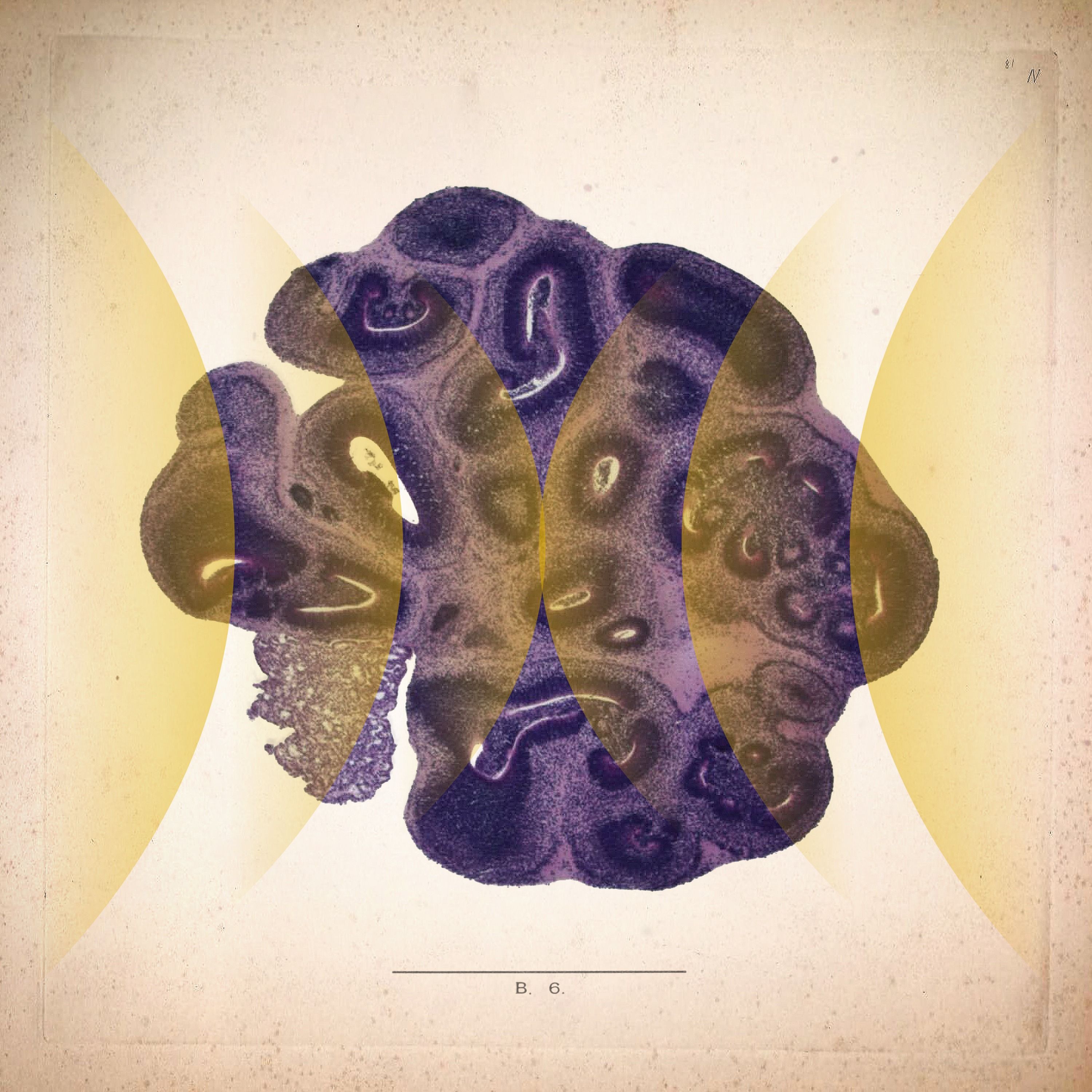
Radiolab
Brain Balls
00:41:27
When neuroscientist Madeline Lancaster was a brand new postdoc, she accidentally used an expired protein gel in a lab experiment and noticed something weird. The stem cells she was trying to grow in a dish were self-assembling. The result? Madeline was the first person ever to grow what she called a “cerebral organoid,” a tiny, 3D version of a human brain the size of a peppercorn. In about a decade, these mini human brain balls were everywhere. They were revealing bombshell secrets about how our brains develop in the womb, helping treat advanced cancer patients, being implanted into animals, even playing the video game Pong. But what are they? Are these brain balls capable of sensing, feeling, learning, being? Are they tiny, trapped humans? And if they were, how would we know? Special thanks to Lynn Levy, Jason Yamada-Hanff, David Fajgenbaum, Andrew Verstein, Anne Hamilton, Christopher Mason, Madeline Mason-Mariarty, the team at the Boston Museum of Science, and Howard Fine, Stef...
Loading summary
Transcript455 lines
- [00:01]
Latif Nasser
Radiolab is brought to you by Progressive Insurance. Do you ever think about switching insurance companies to see if you could save some cash? Progressive makes it easy to see if you could save when you bundle your home and auto policies. Try it@progressive.com Progressive Casualty Insurance Company and affiliates. Potential savings will vary. Not available in all states. Wait, you're listening.
- [00:23]
Madeline Lancaster
Okay.
- [00:24]
Lulu Miller
All right.
- [00:26]
Latif Nasser
Okay. All right.
- [00:29]
Lulu Miller
You're listening to Radiolab Lab.
- [00:31]
Latif Nasser
Radio lab from wnyc. Okay, Lulu.
- [00:40]
Lulu Miller
Yeah.
- [00:41]
Latif Nasser
We're gonna start Today back in 2010 in a lab in Vienna.
- [00:46]
Lulu Miller
Oh, jumping right in.
- [00:47]
Latif Nasser
Yeah, just picture sort of a lab with microscopes, computers, experiments. And off in one corner.
- [00:54]
Madeline Lancaster
Hello.
- [00:54]
Latif Nasser
Hi. How's it going? Wearing glasses and a white lab coat is this scientist named Dr. Madeline Lancaster.
- [01:01]
Madeline Lancaster
Call me Madeline. Okay.
- [01:02]
Latif Nasser
Madeline has just finished her PhD and moved to Austria. Just joined the lab to start her postdoc research.
- [01:08]
Madeline Lancaster
I was still sort of making friends.
- [01:10]
Latif Nasser
Still trying to make a good impression.
- [01:11]
Madeline Lancaster
Getting to know people, you know, and.
- [01:13]
Latif Nasser
One of the first things her boss asked her to do was something called a screen, just basically looking for specific genes in mouse neural stem cells.
- [01:23]
Lulu Miller
So that's like baby brain cells of mice.
- [01:25]
Latif Nasser
Yeah. Now, she hadn't done exactly this kind.
- [01:29]
Madeline Lancaster
Of gene screen before, and that's probably why I didn't really. You know, I was kind of naive about it all.
- [01:37]
Latif Nasser
But. So, anyway, she got to work.
- [01:39]
Madeline Lancaster
Put this enzyme on, it just cuts.
- [01:40]
Latif Nasser
Preparing the baby mouse cells.
- [01:42]
Madeline Lancaster
The cells all become loose and apart from each other.
- [01:45]
Latif Nasser
That part she'd actually done before. So, you know, easy enough.
- [01:47]
Madeline Lancaster
Yeah.
- [01:48]
Latif Nasser
But then something she hadn't done before, she needed to get those cells to stick flat to the glass bottom of her dish so that she could do that screen. And to do that, she needed to use special organic proteins as a glue.
- [02:04]
Madeline Lancaster
And I hadn't. They hadn't come in yet. I'd ordered them, but they hadn't come in yet.
- [02:08]
Latif Nasser
And instead of just, you know, waiting for them to arrive, I don't know.
- [02:11]
Madeline Lancaster
I was so anxious to do the.
- [02:13]
Latif Nasser
Experiment, she decided to improvise.
- [02:15]
Madeline Lancaster
And so I just kind of, like.
- [02:16]
Latif Nasser
Rummaged through the freezer, found a random tube of glue, like proteins, I don't know how old.
- [02:22]
Madeline Lancaster
And anyway, and I used those, squirted.
- [02:24]
Latif Nasser
It on the dishes, pipetted in the cells, popped them in the incubator, and went home for the night. Next morning, came in, took a look in her petri dishes, hoping to see a nice, clean, clear layer of cells.
- [02:38]
Madeline Lancaster
Like, flat on the dish.
- [02:40]
Latif Nasser
But instead, everything in there was really cloudy. Hmm.
- [02:43]
Madeline Lancaster
Shouldn't Be cloudy.
- [02:44]
Latif Nasser
Cloudy means those cells are floating freely around in there, which means that those tubes of protein glue she used, you.
- [02:51]
Madeline Lancaster
Know, were no good and the cells hadn't stuck.
- [02:53]
Latif Nasser
And if the cells aren't stuck in the protein, that means they're probably dead.
- [02:56]
Madeline Lancaster
Yeah, all the cells are dead. I'll just throw it away. And I don't know why I did.
- [03:02]
Latif Nasser
This, but right before she tossed it, she thought, you know, but I'll check it. I'll just take a peek. Why not? So she slides these cloudy dishes under the microscope, peers into the eyepiece, and. And in the circle of light, she.
- [03:16]
Madeline Lancaster
Sees these weird blobs.
- [03:20]
Latif Nasser
The cells weren't dead. They were alive and healthy and plumped into three or four blobs. Yeah. Can you. As vividly as you can describe them.
- [03:28]
Madeline Lancaster
I mean, they're like a sort of beige color, like an off white.
- [03:32]
Latif Nasser
Tiny, about the size of a grain of sand.
- [03:34]
Madeline Lancaster
These floating balls of cells.
- [03:38]
Latif Nasser
And she's like, huh, weird. So she zeros in on one of these blobs, turns the dial on the microscope to zoom in until she's looking basically inside the blob. And that's when she sees a tube.
- [03:52]
Lulu Miller
A tube?
- [03:53]
Latif Nasser
Yeah. So she's, like, looking down into, like, one end of the tube, so it.
- [03:58]
Madeline Lancaster
Looks almost like a donut shape.
- [04:01]
Latif Nasser
Had you ever seen anything like that before? No. No, huh? Yeah. I mean, as far as she knew, if the cells weren't in that protein stuff, stuck, you know, flat to the bottom, they should sort of die and fall apart and make a big random mess. But these ones seem to be coming together to make this shape. So she gets up from the microscope.
- [04:27]
Madeline Lancaster
And starts sort of going around the lab a little bit subtly at first, kind of just like, hey, has anybody ever, like, seen cells do funny things, you know, like, clump up together?
- [04:40]
Latif Nasser
And everybody was just sort of like, oh, well, they're supposed to be laying flat. If they're not laying FL you screwed it up. Like, they just weren't that interested.
- [04:48]
Madeline Lancaster
No. So I just kind of like, put it in formaldehyde, put it away in the fridge for a little while, and.
- [04:54]
Latif Nasser
Was like, okay, let's try this gene screen again. But this time, no floaty clumps. Gonna get those cells to stick flat on the bottom. And eventually she decides to try something new.
- [05:05]
Madeline Lancaster
This thing that I had read about called Matrigel.
- [05:08]
Latif Nasser
Basically cellular crazy glue. Like, she's not taking any chances.
- [05:12]
Madeline Lancaster
I'm just gonna put a whole bunch in my dish.
- [05:14]
Latif Nasser
So she squirts a lot of it on There.
- [05:17]
Madeline Lancaster
Okay.
- [05:17]
Latif Nasser
She puts her cells on top and again pops them in the incubator, crosses her fingers and goes home for the night. She comes back in the morning.
- [05:26]
Madeline Lancaster
You know, same thing. You go to the incubator, you take it out of the incubator, you look at it. And I was like, okay, this is weird once again. There's a bunch of stuff floating in there, huh? I was like, okay, well, the matrigel didn't work like it was supposed to.
- [05:42]
Latif Nasser
Again, it seemed like the cells had started clumping together.
- [05:45]
Madeline Lancaster
And that's when I then took them, put them on the tissue culture microscope, looked down the eyepiece, and again there they were. Funny shaped balls.
- [05:56]
Latif Nasser
These ones were also beige, ish off.
- [05:58]
Madeline Lancaster
White kind of color, but they were bigger and they sort of have like bulges coming off of them.
- [06:03]
Latif Nasser
And this time when she looked inside, she saw full on architecture. There was a tube, but also a.
- [06:12]
Madeline Lancaster
Little circle sort of oblong shaped thing.
- [06:15]
Latif Nasser
And a fat layer of tightly packed.
- [06:17]
Madeline Lancaster
Cells all lined up around a space in the middle. They were making structures. They were making things kind of like.
- [06:24]
Latif Nasser
What cells do as an embryo is developing, which to Madeline, didn't make any sense.
- [06:31]
Madeline Lancaster
Everybody had always taught me that cells need things coming from other tissues in the body, you know, of the embryo that are necessary for building that embryo. And here was a situation where nothing was telling them what to do because they'd been completely taken out of the embryo. And they were like forming structures with no instructions.
- [06:54]
Latif Nasser
She's like, oh, my God. Like, this is like there are things developing here, but toward what? Well, to Madeline, it kinda looked like.
- [07:07]
Madeline Lancaster
They were building a brain.
- [07:11]
Latif Nasser
So these are neural stem cells, which inside a developing mouse, starts out as.
- [07:17]
Madeline Lancaster
A sheet of cells, and then they fold up and close and form a tube. And then the neural tube elongates and that becomes the spinal cord. One end of it balloons out and that becomes the brain.
- [07:28]
Latif Nasser
And that's what it looked like the cells in Madeline's dish were doing. It seemed like these cells on their own were starting to try to make themselves into a mouse brain.
- [07:39]
Madeline Lancaster
At the time, yeah, at the time I was. I was just kind of confused.
- [07:45]
Latif Nasser
So she showed some other people around the lab what she'd seen.
- [07:48]
Madeline Lancaster
I showed some of these structures, tubes.
- [07:51]
Latif Nasser
The circles, the lines.
- [07:53]
Madeline Lancaster
But several people in the lab were just kind of. I think they were just totally bored.
- [07:57]
Latif Nasser
They were like, I don't know. Sometimes things just grow weird. You probably just did the gel wrong. And the director of the lab, her boss, was like, I thought you were gonna Do a screen, you know, make a flat dish of cells to screen for genes.
- [08:08]
Madeline Lancaster
What are you doing? And I was like, don't worry. I'm working on it.
- [08:13]
Latif Nasser
And so over the next few months, Madeline focused on getting a nice flat layer of mouse neural stem cells on the bottom of her petri dishes so she could do those screens.
- [08:23]
Madeline Lancaster
And so that was like, mostly what I. With people in the lab.
- [08:27]
Latif Nasser
Yeah.
- [08:28]
Madeline Lancaster
But at the same time, off by.
- [08:30]
Latif Nasser
Herself in her little corner when no one was paying attention, I was always.
- [08:34]
Madeline Lancaster
Still playing around with matrigel, growing these.
- [08:37]
Latif Nasser
Weird balls of cells, tweaking the recipe.
- [08:39]
Madeline Lancaster
Trying to make sure I could get it to happen reproducibly.
- [08:42]
Latif Nasser
And then one day, she gets her hands on some human stem cells, Cells.
- [08:47]
Madeline Lancaster
That come from skin or blood that you can reprogram to an embryonic state.
- [08:53]
Latif Nasser
Where do you get those from?
- [08:54]
Madeline Lancaster
I think these were actually made from discarded human foreskin.
- [09:00]
Latif Nasser
Wow. So specific.
- [09:02]
Brett Kagan
Okay.
- [09:03]
Latif Nasser
What a detail. All right. Thank you for that.
- [09:06]
Madeline Lancaster
Because it's just bit of tissue that's thrown away.
- [09:09]
Latif Nasser
Yeah, right, of course, of course. Literally thrown away. All right. Okay. So. Wow.
- [09:14]
Madeline Lancaster
Yeah. So anyway, so then what's.
- [09:16]
Latif Nasser
So she got these human stem cells, she put them in the matrigel, swirled them around in this nutrient rich fluid so they could kind of eat. And she would watch as these formerly foreskin cells started forming into clumpy parts of a human brain.
- [09:33]
Lulu Miller
Oh, my God.
- [09:34]
Latif Nasser
And then she kept tweaking when and how much of the matrigel she would add. And she would just watch these blob shapes, over time, get bigger.
- [09:42]
Madeline Lancaster
I mean, they can get as big as, like, a pencil eraser.
- [09:45]
Latif Nasser
Side note, at the time, she was pregnant.
- [09:47]
Lulu Miller
Yeah.
- [09:47]
Madeline Lancaster
My oldest. I was pregnant with her.
- [09:50]
Latif Nasser
So she said she had this extra maternal instinct, and she was, like, just really nurturing these little brain balls.
- [09:57]
Lulu Miller
Yeah.
- [09:57]
Latif Nasser
And then one day, a couple months after, she's been tweaking her ball recipe. And I looked under the microscope inside.
- [10:05]
Lulu Miller
Yeah.
- [10:06]
Latif Nasser
On this beige lump, she could see a perfect ring of black pigment.
- [10:12]
Madeline Lancaster
And that was just. I looked at that, I was like, that's a developing eye.
- [10:18]
Lulu Miller
Shut up.
- [10:20]
Latif Nasser
And it was growing on a developing human brain.
- [10:23]
Lulu Miller
You're li.
- [10:24]
Latif Nasser
No.
- [10:24]
Lulu Miller
What?
- [10:25]
Latif Nasser
Yeah. No. You what?
- [10:27]
Madeline Lancaster
And then.
- [10:28]
Latif Nasser
Then that was then when she went to her weekly lab meeting, I presented this data.
- [10:34]
Madeline Lancaster
I showed this picture of this beginning of an eye. And I remember hearing audible gasps.
- [10:42]
Latif Nasser
And then she showed them pictures of the cells forming tubes and lobes and ventric.
- [10:47]
Madeline Lancaster
Like an actual brain.
- [10:48]
Latif Nasser
Everybody in the lab started to get it. They were like, hey, Wait a second. It's like you have a version of an early human brain in this dish and you can actually watch the earliest stages of this process of development that.
- [11:01]
Madeline Lancaster
We know almost nothing about.
- [11:04]
Lulu Miller
Is that true though? Do we not know anything about early human brain development? I just think you get all these.
- [11:11]
Latif Nasser
Little, like when you're pregnant, you get a scan here, a scan there. Maybe we know something from animal models, but this was literally the first time anyone in human history had ever watched the early brain develop right from the beginning like this.
- [11:26]
Lulu Miller
Yeah.
- [11:27]
Latif Nasser
Which is especially important when something in the brain has gone wrong.
- [11:32]
Madeline Lancaster
Now we can actually watch this process instead of just looking at the end. When the person is already severely suffering, we can try to understand how it got there.
- [11:41]
Latif Nasser
So Madeline and her boss, Jurgen Knoblich, who's on board with the whole project now in 2013, they team up with a bunch of other researchers and publish a paper in the journal Nature. In that paper, they describe how this disorder, microcephaly, develops in a fetal brain. And they were like, oh, and to see all of this, we use these tiny 3D brain balls which we have decided to call cerebral organoids.
- [12:06]
Madeline Lancaster
That's when like, everything changed.
- [12:10]
Latif Nasser
If you were studying human brain development, it was like someone just invented the microscope. Yes.
- [12:16]
Carl Zimmer
You can see things that were invisible before.
- [12:20]
Latif Nasser
So this is Carl Zimmer, science journalist, New York Times columnist, book writer.
- [12:24]
Lulu Miller
Ah, you got Zimmer.
- [12:25]
Latif Nasser
Yeah. As soon as I heard about this stuff, of course, he's my first phone call and he was all over it.
- [12:29]
Carl Zimmer
Sort of like humanoid organoid, very sci fi.
- [12:32]
Latif Nasser
And the first thing that he pointed out is that there are so many.
- [12:36]
Carl Zimmer
Neurological disorders where the key moments are during development.
- [12:41]
Latif Nasser
It's like the key plot points are happening when we can't watch the movie.
- [12:44]
Carl Zimmer
Right. Totally off limits.
- [12:46]
Latif Nasser
But 2013, Madeline and Jurgen published their paper and boom.
- [12:51]
Carl Zimmer
We could watch human progenitor brain cells give rise to parts of the brain.
- [12:57]
Latif Nasser
But what would you do with that? Like, what would you see?
- [13:00]
Carl Zimmer
So one example is a. There's a scientist at Stanford named Sergio Pasca, and he studied a very rare disease called Timothy's syndrome. It's caused by a mutation that produces.
- [13:12]
Latif Nasser
Autistic behavior as well as a bunch of other things like seizures. And he basically created, created an organoid with that mutation so that he could see how a brain with Timothy syndrome develops. Like from the beginning.
- [13:24]
Carl Zimmer
Yeah. Now you can actually see what Timothy syndrome is about.
- [13:29]
Latif Nasser
So. And what did he see?
- [13:30]
Carl Zimmer
So there are certain kinds of cells called interneurons, and they make very Important connections between different parts of the brain. And with kids with Timothy Syndrome, they just don't. They just fail to get where they need to go.
- [13:45]
Latif Nasser
And now that he knew what was.
- [13:47]
Carl Zimmer
Going wrong, he started testing out some drugs to see if he could fix that.
- [13:53]
Latif Nasser
Yeah.
- [13:54]
Carl Zimmer
And he and his colleagues actually ended up finding a small drug that actually did help these neurons to find their way in an organoid.
- [14:06]
Latif Nasser
So he cured it in an organoid. Right. Huh.
- [14:10]
Carl Zimmer
And they are on track to actually start clinical trials with that drug next year.
- [14:18]
Latif Nasser
Wow.
- [14:18]
Lulu Miller
And you could imagine that's one disorder.
- [14:22]
Latif Nasser
That's right.
- [14:24]
Carl Zimmer
A lot of other conditions, epilepsy, schizophrenia, autism.
- [14:27]
Latif Nasser
Any of these brain conditions that have an issue starting in development or where we might even suspect they might start that early, but aren't sure yet. Now you can see it.
- [14:37]
Carl Zimmer
A lot of people in the field said, whoa, I gotta try this.
- [14:40]
Madeline Lancaster
This whole field of neural organoids has just totally exploded. I think there's thousands of labs actually using these tools now.
- [14:49]
Carl Zimmer
The study of the brain is. It's fundamentally different. Now.
- [14:55]
Latif Nasser
That's what we are doing on Radiolab today. We are just Lulu. We're gonna jump into the ball pit of brain balls, okay. In which there are tons of new opportunities, but also confounding questions.
- [15:12]
Lulu Miller
Are there thoughts in there? Is there thinking in there? How brainy are these balls?
- [15:18]
Latif Nasser
We are gonna get there after.
- [15:26]
Brett Kagan
Foreign.
- [15:30]
Lulu Miller
Hi, I'm Lulu Miller, and this episode is sponsored by Better Help. Well, happy New Year out there. You know what this time of year means. You might be seeing a lot of people making resolutions about how they are going to transform themselves. They are going to have the perfect routine, the perfect discipline, and a wicked strong body. But what if we resolve to just be more okay with who we are? Life's short, and the you inside you is the only companion you are guaranteed to have for the whole ride. So why not love on that little you inside you? Work on how to give it some breathing room, some care, whatever the you inside you needs help with. I can say that therapy has absolutely helped me come to more peace with me. But finding an affordable, accessible therapist can be hard. BetterHelp is a great place to start. You fill out a short questionnaire and they help match you to someone they think you'll like. BetterHelp says they typically get it right the first time, but if it's not a good fit, switching is very fast and easy. If you want to try it out, you can sign up right now and get 10% off@betterhelp.com Radiolab that's betterhelp.com Radiolab.
- [16:45]
Jane Lindholm
Kids, you have a lot of questions.
- [16:47]
Latif Nasser
Is a crocodile a dinosaur? Why do people vote? How does your food turn into your poop?
- [16:54]
Madeline Lancaster
But why?
- [16:55]
Jane Lindholm
A podcast for curious kids has answers. I'm Jane Lindholm. Join me as we dig deep into everything from science to history, nature, emotions, and sometimes even the weird.
- [17:07]
Latif Nasser
Why are jellyfishes made of jelly or olive? Are they be jelly find.
- [17:12]
Jane Lindholm
But why? Wherever you get your podcasts.
- [17:25]
Mona Mazgowkur
All right, here we are. I'm in the 72nd street subway station, and I am walking to go see a fridge full of brains.
- [17:35]
Latif Nasser
Hey, I'm Latin of Nasser.
- [17:36]
Lulu Miller
I'm Lulu Miller. This is Radiolab.
- [17:38]
Mona Mazgowkur
More specifically, a fridge full of brain organoids.
- [17:41]
Latif Nasser
Just before the break, we learned from Madeline that now thousands of labs around the world are growing these brain organoids. And it turns out that one of them happens to be just up the street from our studio in New York City.
- [17:53]
Mona Mazgowkur
Only when you're recording are you truly conscious of, like, how much you breathe.
- [17:57]
Latif Nasser
So we sent our producer, Mona Mazgowkur.
- [18:00]
Mona Mazgowkur
Laboratory caution hazardous materials to check them out. Where are we entering?
- [18:04]
Dr. Howard Fine
So we're entering. So we have special rooms called cell culture rooms, where we grow.
- [18:09]
Madeline Lancaster
Oops.
- [18:09]
Dr. Howard Fine
We grow the organoids.
- [18:12]
Latif Nasser
This is Dr. Howard Fine.
- [18:14]
Dr. Howard Fine
I'm a medical and neuro oncologist.
- [18:16]
Latif Nasser
And this is his lab at the Weill Cornell Medical center, where he studies brain cancer, a type of brain tumor.
- [18:21]
Dr. Howard Fine
Known as a glioblastoma, a very bad kind, probably now the most lethal of all human cancers. The average survival of about 15 or 16 months.
- [18:29]
Latif Nasser
And Dr. Fine says around 15 years ago or so, he hit a wall in his research.
- [18:35]
Dr. Howard Fine
Disease, we've probably made the least amount of progress with.
- [18:38]
Latif Nasser
When I was a, he'd been studying glioblastoma, mostly, of course, in mice. Right. And he admits, he actually calls this at the time, it was the dirty little secret of oncology that for all this research, they were basically getting nowhere. Whoa. But then, you know, he came across Madeline's work on organoids, and it was Lancaster's paper.
- [19:00]
Dr. Howard Fine
I read in Nature, and it's like. Like, literally not many times. And then, you know, my 37 career, did I truly have a light bulb moment? And I. I read that paper and said, this is what we're looking for. And even though.
- [19:11]
Latif Nasser
And that's when he pivoted away from mice and started making brain organoids.
- [19:16]
Mona Mazgowkur
Can we see them?
- [19:16]
Lulu Miller
We're gonna take a look.
- [19:17]
Mona Mazgowkur
Okay. So he's opening the incubator, and he's pulling out.
- [19:22]
Latif Nasser
These are the stem cells. They looked just like Madeline described.
- [19:26]
Mona Mazgowkur
They're kind of like a beige color. They look like a kidney bean or like a nerd candy.
- [19:30]
Latif Nasser
Little beige balls floating in liquid.
- [19:32]
Carl Zimmer
And it is surrounded by a matrix.
- [19:34]
Latif Nasser
And under the microscope, I see, like.
- [19:36]
Mona Mazgowkur
A dark shape, and then I see these little bubbles off the side, Almost like little popcorny shapes.
- [19:40]
Latif Nasser
You can see structure.
- [19:42]
Mona Mazgowkur
Dr. Vine, these are from specific patients, like your patients.
- [19:45]
Latif Nasser
Yes. But the difference between these organoids and Madeline's organoids was that these ones had cancer.
- [19:54]
Dr. Howard Fine
So the idea is we're going to make a mini brain from an individual patient.
- [20:00]
Latif Nasser
And then.
- [20:00]
Mona Mazgowkur
Oh, these are the glioma cells.
- [20:02]
Latif Nasser
Wow. They take cells from that patient's brain tumor.
- [20:06]
Mona Mazgowkur
Almost just looks like sugar that hasn't dissolved in tea.
- [20:09]
Dr. Howard Fine
And then we retro engineer the patient's own glioma stem cells into the mini brain.
- [20:14]
Latif Nasser
Basically, they can put a version of your brain tumor on your version of your brain, on a version of your brain. And they can basically make a bunch of those.
- [20:24]
Dr. Howard Fine
We can test hundreds or thousands of.
- [20:26]
Latif Nasser
Drugs and then try a bunch of medicines on them to look for the.
- [20:30]
Dr. Howard Fine
Drugs or combination of drugs that might be most effective.
- [20:33]
Mona Mazgowkur
So you're saying that you can try every chemotherapy that's out there and decide which one?
- [20:38]
Dr. Howard Fine
Everything only limited by resources, as you could imagine. These are.
- [20:41]
Lulu Miller
Oh, my God. That is. That is beautiful. I mean, that. Just thinking about a way of. Like a kind of bespoke medical future exploration.
- [20:55]
Latif Nasser
Right. Way better than just using mice.
- [20:58]
Lulu Miller
Oh, my gosh.
- [20:59]
Latif Nasser
Partly because it also could help us leapfrog. One of the biggest reasons, on average, 90% of clinical trials for neurological drugs fail. And for brain cancer, by the way, that number's even higher. 95%.
- [21:15]
Madeline Lancaster
They're failing because they're not predicting whether the drug actually works on the disease.
- [21:20]
Latif Nasser
And this is something that Madeline told me, too.
- [21:22]
Madeline Lancaster
You might have a drug that works really well for treating mouse spinal cord injury.
- [21:27]
Latif Nasser
Like, it's like, okay, great, this is not going to kill you, because you've.
- [21:30]
Madeline Lancaster
Got the animal work to show you that it's safe. But it also doesn't make them better after the spinal cord injury.
- [21:36]
Latif Nasser
But now, sure, they can do a mouse trial for safety, but they can also test that drug to see if it works on a spinal cord organoid, which is, you know, just a tiny version of an actual human spinal cord.
- [21:49]
Lulu Miller
Wait, what? I thought we were talking brain organoids. Are there spinal cord organoids? Spinal cord organoids, yeah.
- [21:58]
Latif Nasser
Okay. So as Madeline was developing her brain organoids Independently, around the same time, other scientists all over the world are growing.
- [22:09]
Carl Zimmer
Intestinal organoids, lung organoids, liver organoids, muscle organoids, skin organoids, pancreas organoids, stomach organoids, heart organoids, kidney organoids, breast tissue organoids that actually produce milk.
- [22:23]
Latif Nasser
Ah, they can have a breast tissue organoid that can make milk?
- [22:27]
Carl Zimmer
Yes.
- [22:28]
Latif Nasser
Weird. Has anyone tasted that milk?
- [22:31]
Carl Zimmer
I certainly haven't. I've only read about it. I don't know.
- [22:34]
Latif Nasser
I don't know.
- [22:35]
Carl Zimmer
That's a good question.
- [22:36]
Latif Nasser
Anyway, that's science writer Carl Zimmer again, and he says now you can make an organoid of basically any part of.
- [22:43]
Carl Zimmer
The body and then you can connect them.
- [22:47]
Latif Nasser
What, you can, like you can. Does that work? You can do that?
- [22:51]
Carl Zimmer
Oh, yeah, they call them assembloids.
- [22:53]
Latif Nasser
Assembloids, yeah.
- [22:55]
Lulu Miller
No, like you can Mr. Potato Head assemble.
- [22:59]
Latif Nasser
Correct.
- [22:59]
Lulu Miller
But then do they attach to each other?
- [23:01]
Latif Nasser
They attach to each other.
- [23:02]
Lulu Miller
And do they communicate with each other?
- [23:04]
Latif Nasser
They communicate with each other, yeah.
- [23:06]
Lulu Miller
Okay, and then what? Do what with your charm bracelet? Human body.
- [23:12]
Carl Zimmer
So here's an example.
- [23:14]
Latif Nasser
So Sergio Pasca, neuroscientist at Stanford University.
- [23:17]
Carl Zimmer
And his colleagues thought, can we use.
- [23:19]
Latif Nasser
An assembloid to study pain, the pathway of pain?
- [23:24]
Carl Zimmer
So they started with the fingers.
- [23:28]
Lulu Miller
A finger organoid.
- [23:29]
Latif Nasser
No, no, no, sorry. Just a nerve in the finger.
- [23:31]
Lulu Miller
Oh, okay.
- [23:32]
Carl Zimmer
The sensory organoid.
- [23:34]
Latif Nasser
Connect that like with some other cells in the dish.
- [23:36]
Carl Zimmer
Another organoid, the spinal cord.
- [23:38]
Latif Nasser
Just a little teeny piece of spinal cord.
- [23:40]
Carl Zimmer
Now we're going to connect that to.
- [23:41]
Latif Nasser
A brain organoid that is specifically the.
- [23:44]
Carl Zimmer
Thalamus, which is the central hub in the brain that directs signals in all sorts of different ways. And finally, we're going to connect that.
- [23:51]
Latif Nasser
One to one more brain organoid, a cortex organoid.
- [23:55]
Brett Kagan
Whoa.
- [23:55]
Lulu Miller
This is so weird. I mean, it's like Legos.
- [23:58]
Latif Nasser
It's like Legos with the human body. Correct.
- [24:02]
Carl Zimmer
So then they took capsaicin. That's the molecule in.
- [24:05]
Latif Nasser
In like spicy food. Is that right?
- [24:07]
Carl Zimmer
In spicy food? In chili peppers? Yeah, very. It can be very painful to the skin.
- [24:11]
Brett Kagan
Okay.
- [24:12]
Carl Zimmer
And they said, okay, let's hit it with capsaicin and see what happens.
- [24:15]
Latif Nasser
Uh huh. Boom.
- [24:16]
Carl Zimmer
Immediately that sensory organoid goes and starts sending really strong signals.
- [24:22]
Latif Nasser
And those signals, Carl says, zoom right up through this assembloid to the spinal.
- [24:26]
Carl Zimmer
Cord, the thalamus to the cortex, just.
- [24:29]
Latif Nasser
Like it would in your own body.
- [24:31]
Lulu Miller
And they can see some kind of registering.
- [24:33]
Latif Nasser
Correct. And when they watch the way the signal travels, which is something that's normally hidden inside a body, they discovered all.
- [24:39]
Carl Zimmer
Sorts of things about what happens when we feel pain that they didn't know about before.
- [24:45]
Latif Nasser
Like, for example, signals from different parts of the assembloid began firing together in these synchronized waves of signals. Okay. And the more you know about how those signals work or move, the better chance you have at stopping them.
- [24:57]
Carl Zimmer
You could, for example, say, okay, can I put a molecule into this assembloid that will stop the pain?
- [25:05]
Latif Nasser
Oh, wow.
- [25:07]
Lulu Miller
But so if they're using these things to study pain, is it feeling pain?
- [25:15]
Latif Nasser
No, probably not.
- [25:16]
Carl Zimmer
These organoids are just little bits of human tissue. In order to feel pain the way we feel pain, there are other parts of the brain that come into play.
- [25:26]
Latif Nasser
The assembloid is just this super basic circuit that you send a signal through. So, like this pain, it seems to be superficially registering it, but like, what is the it? I think the capsaicin in that case.
- [25:38]
Lulu Miller
No, no, no, I'm the first. It's it. It's like it is this little ball. But is it a thing like it. What is it?
- [25:48]
Carl Zimmer
Well, they crackle with electricity.
- [25:51]
Latif Nasser
They.
- [25:52]
Carl Zimmer
They form connections called synapses. They replicate parts of the human brain with astonishing accuracy.
- [26:01]
Latif Nasser
But Carl says they're not brains. They're not brains.
- [26:04]
Carl Zimmer
That's right.
- [26:04]
Latif Nasser
Okay, so if there's like a slider and on one end is brains, and then on the other end is just like some neurons in a dish, where is this on the slider? And how do you.
- [26:15]
Carl Zimmer
Yeah, I would say that it's closer still for the time being, to the neuron end of the slider. Simply based on numbers, our brain has.
- [26:26]
Latif Nasser
Something like 80 billion neurons.
- [26:29]
Carl Zimmer
And the biggest human brain organoids contain about 2 million cells.
- [26:37]
Latif Nasser
That's 0.0025%.
- [26:40]
Carl Zimmer
Well under 1%. Yeah.
- [26:41]
Latif Nasser
And you know, these things don't have blood vessels, so that a very important key limiting factor to how big and complex it can get.
- [26:49]
Lulu Miller
Yeah.
- [26:50]
Latif Nasser
And they're not in a body, so they can't interact with the world in, like, a meaningful way. Okay, well, but when I was talking to Carl about this, so he said that a lot of that might no longer be true.
- [27:06]
Carl Zimmer
Some scientists have, you know, taken organoids from human cells.
- [27:11]
Brett Kagan
Yeah.
- [27:12]
Carl Zimmer
And have put them into the brains of rats.
- [27:17]
Latif Nasser
What? So basically what they did is they basically took a rat and they, like, carved out a chunk of its brain.
- [27:22]
Lulu Miller
But they left some of it.
- [27:23]
Latif Nasser
They left most of it.
- [27:24]
Lulu Miller
Okay.
- [27:24]
Latif Nasser
And it's almost like. It's like. Think about it. Like, it's almost like they gave a rat a little human Tumor or something? Yeah, I mean, it doesn't.
- [27:30]
Lulu Miller
But the tumor is like just brain.
- [27:32]
Latif Nasser
Human brain.
- [27:33]
Lulu Miller
Brain. It's human brain.
- [27:34]
Latif Nasser
It's human brain.
- [27:35]
Carl Zimmer
And these human organoids are pretty happy in there.
- [27:39]
Latif Nasser
It's sort of wired in.
- [27:41]
Carl Zimmer
They connect up with the rat neurons. They get supplied by the rat blood system.
- [27:47]
Lulu Miller
So they have made, in a real sense, like a new kind of being.
- [27:53]
Latif Nasser
Yeah, yeah, yeah. That did not exist before this. Correct.
- [27:57]
Lulu Miller
Okay. Feels like there should have been a bigger press release, but. Okay. Do the. Do the rats act any differently? Are they suddenly like into podcasts and coffee?
- [28:08]
Carl Zimmer
When you do studies on these rats, behavioral tests, memory tests, all sorts of things, they're just rats.
- [28:16]
Latif Nasser
There seems to be nothing humany about them.
- [28:19]
Lulu Miller
Okay.
- [28:19]
Latif Nasser
But one thing they did notice. When you tickle its whiskers.
- [28:24]
Lulu Miller
Yeah.
- [28:25]
Carl Zimmer
You can actually measure signals from the human brain organoid neurons.
- [28:31]
Latif Nasser
The human part of the brain lights up.
- [28:33]
Lulu Miller
What?
- [28:34]
Latif Nasser
Yeah.
- [28:35]
Lulu Miller
So it's registering the feeling.
- [28:38]
Carl Zimmer
They are receiving signals from the rat's senses.
- [28:44]
Latif Nasser
I mean, strictly speaking, they are receiving signals from the rat's senses. Are they feeling it? Feeling it gets hard. Cause it's kind of the pain. Question again.
- [28:56]
Lulu Miller
Yeah, but now they're in a body. I mean, they're in a being.
- [28:59]
Latif Nasser
Yes, but they're not the, like, driving force of that. They're like a. They're like a house guest in the attic. Okay.
- [29:07]
Lulu Miller
Latif, would you put. Make a brain ball. Brain organoid of your brain cell and put it in a rat?
- [29:18]
Latif Nasser
If I'm being honest, Would you? Would you? Probably not.
- [29:21]
Lulu Miller
Okay, so I don't know, but I just think you're more on my side that this is a little scary than you in your little. With your reporter's wand are letting onto. Because, yes, there's exciting research, but it just feels like every time you try to comfort me with what we know about these things, you then end up not comforting me. And then the scientists take it one step further anyway.
- [29:45]
Latif Nasser
Okay. Well, it's as if you have seen the future and what the next chapter holds. Because that exact thing is gonna happen. It's gonna get weirder and creepier and stranger. And that's all after the break.
- [30:00]
Lulu Miller
Stick with us. Hi, I'm Lulu Miller, and this episode is sponsored by Better Help. Well, happy New Year out there. You know what this time of year means? You might be seeing a lot of people making resolutions about how they are going to transform themselves. They are going to have the perfect routine, the perfect discipline, and a wicked strong body. But what if we resolve to just Be more okay with who we are. Life's short, and the you inside you is the only companion you are guaranteed to have for the whole ride. So why not love on that little you inside you? Work on how to give it some breathing room, some care, whatever the you inside you needs help with. I can say that therapy has absolutely helped me come to more peace with me. But finding an affordable, accessible therapist can be hard. BetterHelp is a great place to start. You fill out a short questionnaire and they help match you to someone they think you'll like. BetterHelp says they typically get it right the first time, but if it's not a good fit, switching is very fast and easy. If you want to try it out, you can sign up right now and get 10% off@betterhelp.com Radiolab that's betterhelp.com Radiolab.
- [31:18]
Jane Lindholm
Kids, you have a lot of questions.
- [31:21]
Latif Nasser
Is a crocodile a dinosaur? Why do people love? How does your food turn into your poop?
- [31:28]
Madeline Lancaster
But why?
- [31:28]
Jane Lindholm
A podcast for curious kids has answers. I'm Jane Lindholm. Join me as we dig deep into everything from science to history, nature, emotions, and sometimes even the weird.
- [31:40]
Latif Nasser
Why are jellyfishes made of jelly or are they made out of jelly?
- [31:45]
Madeline Lancaster
Find.
- [31:45]
Jane Lindholm
But why? Wherever you get your podcasts.
- [31:54]
Latif Nasser
Latif, Lulu, Radiolab, we are back talking about brain balls. You know, bitty brains, boba brains? The brainish in a dish.
- [32:02]
Lulu Miller
Yes. Ha ha. With all your clever wordplay. But you are about to send us into the next existential tailspin about how people are using these things.
- [32:11]
Latif Nasser
It is possible.
- [32:12]
Brett Kagan
So the final thing I was told to do is push record.
- [32:15]
Latif Nasser
Record. Yes. That's an important button. Now tell me who you are.
- [32:19]
Brett Kagan
So, I'm Brett.
- [32:20]
Latif Nasser
This is Brett Kagan. He's a neuroscientist.
- [32:23]
Brett Kagan
I'm the chief scientific officer here at Cortical Labs. Cortical Labs, We're a small tech startup here in Melbourne, Australia.
- [32:30]
Latif Nasser
Did you start it? Did someone else start it?
- [32:32]
Brett Kagan
No. Well, it was founded by. There was a few of us. And I was contacted by Dr. Hong Weng Chong and Andy Kitchen, and they were looking for a neuroscientist.
- [32:40]
Latif Nasser
Brett had been an academic obsessed with this particular question.
- [32:43]
Brett Kagan
How do you get intelligence out of brain cells that are in a dish?
- [32:47]
Latif Nasser
And this company was like, why don't you leave academia and help us find out?
- [32:51]
Brett Kagan
The question they had was, can brain cells in a dish do anything at all that we might want them to do?
- [32:56]
Lulu Miller
Hm, like, do what?
- [33:00]
Brett Kagan
What better to pick than Pong Pong.
- [33:03]
Lulu Miller
The, like, 70s computer game?
- [33:05]
Latif Nasser
Yeah, the game with the paddles and a little ball.
- [33:07]
Lulu Miller
Why that?
- [33:08]
Brett Kagan
Everybody knows Pong. It was one of the first computer games. It was the first thing that that machine learning, which people now like to call AI really was trained on as a big breakout success.
- [33:18]
Latif Nasser
And he figured the brain runs on.
- [33:20]
Brett Kagan
Electricity, and it's also a shared language of silicon computing.
- [33:23]
Latif Nasser
So why wouldn't we be able to get neurons to do something a computer could do, exactly, like play a simple video game?
- [33:29]
Brett Kagan
We used some hardware that allowed us to record the activity of the cells, process that, and then deliver small electrical pulses back into the cultures.
- [33:38]
Latif Nasser
And they did it. Scientists just put pieces of human and mice brain on a plate and wired it to a computer to play pong. They learned to track the ball and control a paddle.
- [33:48]
Lulu Miller
Seriously, this is one of the craziest things I've ever covered.
- [33:51]
Latif Nasser
So here's what's going on. What?
- [33:54]
Lulu Miller
No.
- [33:54]
Latif Nasser
Yeah. And this wasn't even an organoid. This was just a flat sheet of neurons in a dish.
- [34:00]
Lulu Miller
I mean, how could it possibly be doing that? Like, I mean, can really dumb things do that? Could, like, a. Could, like, a tree do that?
- [34:09]
Latif Nasser
Trees don't have neurons, so I don't think a tree could do that.
- [34:12]
Lulu Miller
Okay, so. But, well, what does this mean? Like, are they learning?
- [34:16]
Latif Nasser
Well, Brett says, yes, I called it learning.
- [34:19]
Brett Kagan
And I think learning was an incredibly fair definition, because what would an improvement over time in a way that would suit a goal be called other than learning?
- [34:28]
Latif Nasser
But other people, including Madeline Lancaster, I.
- [34:31]
Madeline Lancaster
Actually remain to be convinced anybody has really shown that, say no, because it's really hard to interpret the signals coming from the neurons.
- [34:39]
Latif Nasser
She says when you teach brain cells to play Pong, they're, you know, connected to a computer.
- [34:45]
Madeline Lancaster
So what. What people do is they use algorithms to sort of decode that message and then send a signal back to neurons. And so you kind of have, like, two black boxes that you've just hooked up.
- [34:55]
Latif Nasser
It's sort of a collaboration between the brain cells and the computer, and you.
- [34:59]
Madeline Lancaster
Don'T really know what either of them are doing.
- [35:01]
Latif Nasser
Anyway, whatever is happening here, what Brett and his team took away from this is if neur something a computer does, why don't we use neurons as computers?
- [35:14]
Lulu Miller
What?
- [35:14]
Latif Nasser
Yeah, literally, couple months ago, they released their first computer called the CL1. And it is. They don't call it this, but it's. It's effectively a biocomputer. It has neurons in it.
- [35:26]
Lulu Miller
Ew, brain sticky. Real human brain matter in it.
- [35:32]
Latif Nasser
Yeah. It's got like little brain organoids in it. It has 800,000 neurons interfaced with a silicon chip. You can use it to do computer stuff with.
- [35:45]
Lulu Miller
Okay. I mean, I can get behind the brain balls being used for neurological disorder research. Great. You know what? Bespoke cancer treatments.
- [35:55]
Latif Nasser
Cool.
- [35:57]
Lulu Miller
But why are we hooking up human brain brain cells to computers to like, make money? That to me feels like not worth the risk.
- [36:11]
Latif Nasser
Like, well, think about the problems we are having right now with all of these data centers chugging all this energy, right?
- [36:20]
Lulu Miller
Yes, absolutely. Wrecking the planet.
- [36:23]
Latif Nasser
Right? So our brains are so impressively efficient energy wise. We have like a dim light bulb, like screwed into our heads, right? That's the amount of energy that we need to do all the complex things that we do. If AI or if some supercomputer was doing the equivalent, it would need millions of times more power. Like the difference between a single light bulb and a large town.
- [36:48]
Lulu Miller
So flattering.
- [36:49]
Latif Nasser
The other thing is that, like, think about these AIs. You need to train it on the whole Internet. Right? A human brain is much quicker to learn. If you could harness that energy efficiency, if you could harness that kind of like knowledge efficiency in a computer, you could move mountains.
- [37:08]
Lulu Miller
Okay, But I guess my authentic question at this point is like, okay, you have shown us all this stuff at this point, it seems pretty clear that they can definitely register input, right? Like they've. There's the tickle, the pain, the signal they're getting from Pong. Okay. And then this Pong example at least shows us they are then able, based on that input, to produce some kind of output.
- [37:30]
Latif Nasser
Yeah. Okay, so let's say it is. Yeah.
- [37:32]
Lulu Miller
Okay. So my question is, if they can do those things, wouldn't they have to have some thrumming level of consciousness?
- [37:43]
Latif Nasser
No, actually, no, they really don't. Like a bunch of the things you just talked about. AI can do those. Is AI conscious even going further than that? Like a Roomba can do, like navigate a room. A Roomba. A Roomba conscious. That's a signal in and out, right?
- [37:59]
Lulu Miller
A Roomba's going, oh, there's an edge. Let me go this way.
- [38:02]
Latif Nasser
That's a signal in and out.
- [38:03]
Dr. In Soo Hyun
When we talk about human consciousness, we mean self consciousness. Like you are aware of yourself. You have a past, you have a future that you're concerned about. There's like that continuity of experience.
- [38:15]
Latif Nasser
This is Dr. In Soo Hyun.
- [38:17]
Dr. In Soo Hyun
I'm the director of the center for Life Sciences at the Museum of Science in Boston.
- [38:21]
Latif Nasser
He's a bioethicist and he's worked on a bunch of teams with scientists who are studying brain organoids.
- [38:26]
Dr. In Soo Hyun
We tried to identify what are the emerging scientific and ethical issues.
- [38:31]
Latif Nasser
You're like, kind of like their conscience. Is that sort of the thing?
- [38:33]
Dr. In Soo Hyun
You know what? Sometimes I feel like a priest in secular clothes.
- [38:36]
Latif Nasser
And he says at this point, he is not worried about brain organoids having anything like human consciousness.
- [38:43]
Dr. In Soo Hyun
The brain organoids in the dish don't have that continuity. They don't have all the Regis have the interaction with the outside world.
- [38:49]
Latif Nasser
But when he thinks about the future that Brett and others are trying to create, where maybe people start connecting more and more complicated and even more and more structured clumps of human brain cells to computers, maybe you get, it might.
- [39:05]
Dr. In Soo Hyun
Not even be human consciousness, but some kind of consciousness could emerge. It's hooked up to. To the world.
- [39:24]
Lulu Miller
Yeah. Okay, so what about this? Latif? I would. If I may, I would like to just issue a commandment that all the smart people who are, like, excited by brain organoids, they all take one year to stop making organoids and use their smarts and their technologies in their labs to, like, try to understand the consciousness of the organoids that have already been made. You know, like, ideally, they could all be in a dark room and just have candles and quietly, meditatively watch for any flickers to understand what's going on. And then we have a grand assembly where everyone reports back and we all collectively decide what to do.
- [40:12]
Latif Nasser
But I know that, like, some of these scientists have this fire inside them to be, like, how many cures am I not going to find in that year? Like, how many people am I not going to help in that year? Like, the glioblastoma. Like, those people don't have a year.
- [40:24]
Lulu Miller
And those people are telling me to just shut up because this is a piece of discarded foreskin.
- [40:30]
Latif Nasser
That's right.
- [40:31]
Madeline Lancaster
If. If we have a tool that we don't use.
- [40:33]
Latif Nasser
Madeline Lancaster again, and there are millions.
- [40:36]
Madeline Lancaster
Of actually conscious human beings out there that don't have treatments, but we decide, no, we're going to put the value of organoids higher than those people, that would be unethical.
- [40:50]
Latif Nasser
It's funny, like, at the beginning, like, you asked me, like, would you make a brain ball of yourself? And I said, no. And then at some point, like, my thinking switched where I'm like, oh, no. Unless it would save someone's life.
- [41:06]
Lulu Miller
Well, that's noble. And now I feel even worse saying, I don't know that I would. I just. I mean, yeah, okay, if it's my own kid. Sure. I don't care if I'm like a little enslaved human consciousness if it saves my kid. But as you have shown us, the scientists are gonna do more. They're gonna try new things. They're gonna build bigger brains. And, like, there is a line and we will cross it and we won't know that we've crossed it, you know?
- [41:29]
Latif Nasser
Right. And. Well, and the thing about these organoids is that they're already crossing all kinds of lines.
- [41:34]
Dr. In Soo Hyun
And you disrupt categories that we thought were so neat and tidy and distinguishable. Life, non life, human, non human, human, computer. We thought those are pretty clean categories. But this research is kind of upsetting the very foundations of what we think separates these categories apart.
- [42:03]
Latif Nasser
Does feel like it's like, oh, we've created a new category of thing. Like a new category of thing that is maybe alive.
- [42:11]
Carl Zimmer
It is alive.
- [42:14]
Latif Nasser
We have created a new category of thing that is alive. That is weird.
- [42:21]
Carl Zimmer
Oh, yeah.
- [42:23]
Madeline Lancaster
It's hard. It's hard to actually put it into a cat that already exists, I think, because they're not actual brains, that we can say absolutely, certainly. But they're also not just a few neurons in a dish either.
- [42:39]
Carl Zimmer
We almost don't really even have the words for it.
- [42:43]
Madeline Lancaster
I think it's kind of a new thing.
- [43:13]
Latif Nasser
Latif Nasser this episode was Produced by Annie McEwen, Mona Madgauker and Pat Walters. It was edited by Alex Neeson and Pat Walters with fact checking by Natalie Middleton and Rebecca Rand. Special thank you. Shout outs to Lynn Levy, Jason Yamada, Hanf, David Fagenbaum, Andrew Verstein, Anne Hamilton, Christopher Mason, Madeline Mason, Mariarty, plus Howard Fine and his whole team at Weill Cornell for hosting us. And if you're looking for more musings on the nature of life and what it means to be alive, Carl Zimmer has a terrific book out all about this stuff. It's called Life's the Search for what It Means to Be Alive. Get it at your local bookstore. That's it for us. From our brain balls to yours. See you next week.
- [44:00]
Lulu Miller
Okay, Start now.
- [44:00]
Ellie Collins
Let's practice.
- [44:01]
Lulu Miller
No, you don't need to.
- [44:02]
Madeline Lancaster
You don't need to practice anymore.
- [44:03]
Lulu Miller
Shh. We're recording now.
- [44:05]
Ellie Collins
Hi, I'm Ellie Collins and I'm from Louisville, Kentucky. And here are the staff crackers credits.
- [44:10]
Lulu Miller
And she's Molly's niece.
- [44:12]
Madeline Lancaster
Yeah.
- [44:14]
Ellie Collins
Radiolab is hosted by Lulu Miller and Latif Nasser. Soren Wheeler is our executive editor. Sarah Sandback is our executive director. Our managing editor is Pat Walters. Dylan Keefe is our Director of Sound Design. Our staff includes Jeremy Bloom, W. Harry Fortuna, David Gable, Maria Paz, Gutierrez Sindhu, Nana Sambandan, Matt Kilty, Mona Madgav, Car, Annie McEwen, Alex Neeson, Sara Kari, Anissa Viates, Ariane Wack, Molly Webster, and Jessica Young, with help from Rebecca Rand. Our fact checkers are Diane Kelly, Emily Krieger, and Natalie Middleton.
- [44:59]
Latif Nasser
I love your giggle.
- [45:04]
Ellie Collins
Leadership support for Radiolab science programming is provided by the Simons foundation and the John Templeton Foundation. Foundational support for Radiolab was provided by the Alfred P. Sloan Foundation.
- [45:20]
Lulu Miller
Since WNYC's first broadcast in 1924, we've been dedicated to creating the kind of content we know the world needs. In addition to this award winning reporting, your sponsorship also supports inspiring storytelling and extraordinary music that is free and accessible to all. To get in touch and find out more, visit sponsorship.wnyc.org.