← Radiolab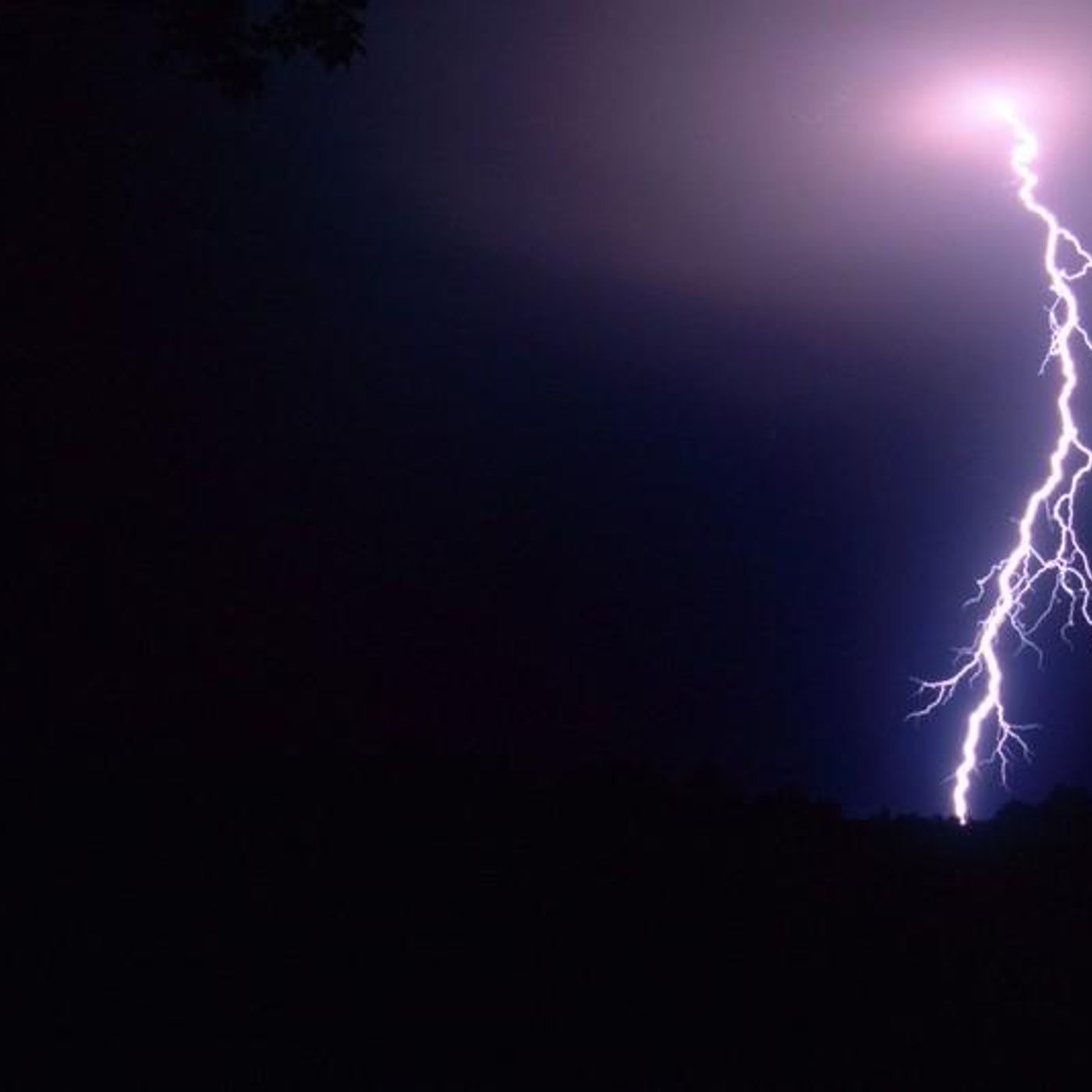
Radiolab
Cellmates
00:30:09
There’s a black hole in the middle of the history of life: how did we go from tiny bags of chemicals to the vast menagerie of creatures we see around us? Today, we explore one of the most underrated mysteries of all time, and present one possible answer that takes us from an unexpected houseguest to a tiny bolt of lightning to every critter you hold dear. It’s the story of one cosmic oops moment that changed the game of life forever. Production help from Matt Kielty and Annie McEwen. Reporting help from Latif Nasser. Special thanks to Eric Steinbrook, Scott Dawson, Ahna Skop & Rachel Whittaker
Loading summary
Transcript272 lines
- [00:00]
Molly Webster
Vrbo Last minute deals make chasing fresh mountain powder incredibly easy. With thousands of homes close to the slopes, you can easily get epic pow freshies, first tracks and more. No need for months of planning. In fact, you can't even plan. Pow Pow is on its own schedule. Thankfully, somewhere in the world, it's always snowing. All you have to do is use the last minute filter on the app to book a last minute deal on a slope side private rental home. Book now@vrbo.com hey, Fidelity.
- [00:32]
Listener/Caller
How can I remember to invest every month?
- [00:35]
Robert Krulwich
With the Fidelity app, you can choose.
- [00:37]
Molly Webster
A schedule and set up recurring investments in stocks and ETFs.
- [00:42]
Robert Krulwich
Oh, that sounds easier than I thought. You got this? Yeah, I do.
- [00:47]
Jad Abumrad
Now, where did I put my keys?
- [00:50]
Molly Webster
You will find them where you left them.
- [00:54]
Robert Krulwich
Investing involves risk, including risk of loss. Fidelity Brokerage Services, llc. Member nyse, SIPC.
- [01:03]
Jad Abumrad
Hey, this is Jad. Before we get started on the podcast, just two things. First, the mailchimp challenge we did a little while back. We did it. You guys did it. I mean, the deal was if a certain number of you became sustaining members, mailchimp would pitch in with some money. It happened. We're super grateful. So thank you. We freaking did it. Okay, number two, I want to let you know that toward the end of this podcast, it's about to happen.
- [01:28]
Molly Webster
Hey, Jen.
- [01:29]
Phoebe Robinson
Hi, Jen.
- [01:30]
Nick Lane
Wait, wait.
- [01:31]
Jad Abumrad
I haven't even said it yet. Wait, wait, hold on.
- [01:32]
Jessica Williams
I know, but we're excited.
- [01:33]
Phoebe Robinson
Yeah, we're happy to be here.
- [01:34]
Jad Abumrad
Okay. But you guys will have to hang out until the end. Is that cool?
- [01:38]
Jessica Williams
Why? Why do we have to be at the end?
- [01:40]
Jad Abumrad
Yeah, that was.
- [01:41]
Phoebe Robinson
Can we just be up top?
- [01:42]
Jad Abumrad
But that was the deal we talked about.
- [01:43]
Phoebe Robinson
This is my Rosa Parks moment. I'm at the front of this episode.
- [01:46]
Jessica Williams
Yeah. And you know why we can say that is because we are black.
- [01:49]
Jad Abumrad
Yeah, you're putting me in a box here. Okay, so what I was gonna say is we're gonna. At the end of this podcast, we're gonna come back and I'm going to introduce you guys. Listening to two very funny people who you just heard, Phoebe Robinson, Jessica Williams, they're starting a podcast here at WNYC Studios. It's called 2 Dope Queens. It's awesome. We'll talk about it. All right. So you guys will hang out?
- [02:09]
Jessica Williams
Yeah, yeah, yeah. I'm in. I got nothing to do.
- [02:11]
Phoebe Robinson
Yeah.
- [02:11]
Jad Abumrad
All right, cool.
- [02:12]
Nick Lane
Oh, wait, you're listening.
- [02:13]
Robert Krulwich
Okay. All right. Okay.
- [02:17]
Jad Abumrad
All right.
- [02:19]
Molly Webster
You're listening to Radio Lab.
- [02:21]
Robert Krulwich
Radio Lab from wny. See?
- [02:25]
Nick Lane
Yep.
- [02:29]
Jad Abumrad
Jad Robert, Radiolab.
- [02:31]
Robert Krulwich
So I'm gonna just tell you the story, just very briefly. I'm gonna tell you the story of three enormous mysteries, two of which you know very well and one of which I bet you've never heard of, ever. Okay, mystery number one.
- [02:45]
Jad Abumrad
This is the one I know. Or the one I don't.
- [02:46]
Robert Krulwich
This is the one you know. All right, so about 4 billion years ago, the Earth is one huge, mostly ocean of lifeless chemicals. And then, for some reason which we have never really been able to understand, lifeless chemicals suddenly produce a pulse and you get life.
- [03:07]
Nick Lane
Hello? Yes, I have just arrived now.
- [03:09]
Jad Abumrad
Nick.
- [03:09]
Robert Krulwich
Okay, wonderful. Like Nick, for example.
- [03:12]
Nick Lane
Nick Lane. I'm a professor of evolutionary biochemistry at University College in London.
- [03:18]
Robert Krulwich
Nick is the main guy in the story I'm about to tell you. But just to continue this setup, that was mystery number one. Where does life come from? Next, mystery number three, to make it.
- [03:27]
Jad Abumrad
More interesting, what about the two you skipped over?
- [03:29]
Robert Krulwich
Two is gonna be the subject of the story. And more important, the middle one is the deep surprise because you've never heard of it. So I thought I would skip over two to remind you how familiar you are with one and three.
- [03:40]
Jad Abumrad
All right, fine. Go to three and then come back to two. It's fine.
- [03:44]
Robert Krulwich
Three.
- [03:44]
Jad Abumrad
All right.
- [03:45]
Robert Krulwich
Consciousness, for some reason. For some reason, one animal on the planet and only one that we can know seems to spring into this very elaborate sense of self awareness. We don't know why it happened. We don't know how it happened. It just did.
- [04:01]
Jad Abumrad
Right. I'm familiar with one and three.
- [04:04]
Robert Krulwich
You are? Now, here's number two. That's the one that keeps Nick up at night.
- [04:07]
Nick Lane
Yeah. Because there's a kind of a gap, a black hole, where everything important in biology happened. We have very little insight into what it was.
- [04:18]
Jad Abumrad
Black hole in biology. I like that.
- [04:20]
Robert Krulwich
So you want to know what it is, this black hole? Yes.
- [04:24]
Jad Abumrad
You do.
- [04:24]
Robert Krulwich
You do. You know you do.
- [04:26]
Jad Abumrad
Okay.
- [04:27]
Ed Yong
Yes.
- [04:27]
Robert Krulwich
Okay, mystery number two. We're a little bit past one. We're way before three. So 4 billion years ago, we got life. It's just floating around, you know, little specks in the ocean.
- [04:41]
Nick Lane
You know, very simple cells, probably pretty much like a bacterium as we know them today. This is very small, for a start.
- [04:48]
Robert Krulwich
If you're looking at the period at the end of a sentence, say, is it about that size or smaller than that?
- [04:53]
Nick Lane
Oh, much smaller. Much smaller than that. A couple of thousandths of a millimeter long. So tiny, tiny things. They all look the same in their size and shape, and they don't seem to be doing anything very interesting.
- [05:06]
Robert Krulwich
Well, you know, they were having babies, or they were using energy and they were figuring a lot of things out. But if you look inside one of these little things, not much going on.
- [05:15]
Nick Lane
Yes, it's basically. It's often described as a bag of chemicals.
- [05:19]
Jad Abumrad
They're not complex.
- [05:20]
Robert Krulwich
They're not complex.
- [05:22]
Jad Abumrad
Simple.
- [05:22]
Robert Krulwich
Simple as can be. And it goes on like this for millions of years, and then tens of millions of years, and then hundreds of millions of years.
- [05:31]
Nick Lane
Well, really 2 billion years or so.
- [05:33]
Robert Krulwich
2 billion years, if not longer. You just have tiny, tiny, simple, tiny, simple. Bopping, bopping, sitting, drifting in the water. Bopping, bopping, bopping, bopping. Nothing, nothing, nothing, nothing.
- [05:44]
Jad Abumrad
Come on with it.
- [05:46]
Robert Krulwich
Look, I'm telling you this for a good reason. There is, you should know there is no rule which says life has to get bigger. We could have stayed infinitely small for a hundred billion years, you know, forever. Really?
- [05:59]
Jad Abumrad
Really?
- [05:59]
Robert Krulwich
Yes, really. But then, Chad, something happened, as they say, about 2 billion years ago. All of a sudden, practically overnight, a new kind of life shows up. A new cell. And it's huge.
- [06:20]
Jad Abumrad
How huge?
- [06:21]
Robert Krulwich
A lot bigger than what was before these first ones.
- [06:24]
Nick Lane
The actual volume went out around about 10,000 times bigger. Whoa. Massive increase in size.
- [06:30]
Robert Krulwich
It's like jump from specks to battleships.
- [06:36]
Nick Lane
And inside these things is massive pieces of complex machinery.
- [06:41]
Robert Krulwich
And it becomes bigger and bigger and more complex, and it ultimately leads to jellyfish, giant redwood trees, beluga whales, Beluga caviar, which is baby whales.
- [06:54]
Jad Abumrad
It's not baby whales.
- [06:55]
Robert Krulwich
Well, never mind. Cherry trees, turtles, librarians, tarantulas, orangutans, elephants, pterodactyls. There's your second mystery. Like, how did life for such an enormously long time, say, so simple, so dull, and so tiny, and then, boom, you get these big life forms, like, what happened and why did it not happen for such a long time? Hmm.
- [07:22]
Jad Abumrad
Well, are you going to enlighten me with some attempts at answers?
- [07:25]
Robert Krulwich
Yes, but I want to remind you, this is a theory we've got here. We're making a hypothesis.
- [07:30]
Ed Yong
I mean, who knows really, exactly what happened? I mean, we're never gonna get. We're never gonna find, like, found footage of that moment, right? We can. We can only imagine, and we can only use the evidence that we've got.
- [07:43]
Robert Krulwich
Now, that is Ed Young.
- [07:44]
Ed Yong
I'm a science writer at the Atlantic.
- [07:47]
Robert Krulwich
It's the guy who introduced me to Nick or to Nick's work and this theory. And he says, here's the important thing to know. I mean, I think during those 2 billion years when nothing much happened, it wasn't that life didn't get complicated. It's that life couldn't get complicated.
- [08:02]
Ed Yong
There is a barrier. There is an energetic canyon that simple cells find themselves trapped in.
- [08:10]
Jad Abumrad
What?
- [08:11]
Robert Krulwich
It means that it's a huge deal to try to get big. Think about what it takes to get bigger. It takes bigger cell walls, it takes more surface, more openings. Let things in, push things out, more power, more moving parts. And then to make the whole thing fit and work together, you gotta have a bigger design plan. That's your DNA. So you're gonna need more DNA.
- [08:29]
Ed Yong
And all that DNA needs to be copied.
- [08:32]
Robert Krulwich
You're going to need some DNA copiers.
- [08:34]
Ed Yong
You then need to read the information that's encoded within it, some DNA readers. And you need to use that information to build proteins and some builders. And that last bit is especially costly.
- [08:44]
Robert Krulwich
In other words, you don't get bigger for free. Every new step takes extra energy.
- [08:48]
Ed Yong
Just like if you're going to, you know, if you're going to increase the size of your company by a thousand times, if you're going to have a thousand times more employees, you're going to need to pay them all.
- [08:59]
Robert Krulwich
Where are you gonna get the money? I mean, you and I, we might be able to go to a bank, but if you're a teeny little thing, you don't have any place to go. So how do you get bigger?
- [09:08]
Jad Abumrad
I mean, can't you just eat more food than you normally eat so that you get more energy, so that slowly, over time, you get bigger? No, no.
- [09:16]
Robert Krulwich
I mean. Well, you could do that, but suppose you don't have a stomach to absorb the food?
- [09:21]
Jad Abumrad
You make a stomach somehow. I don't know.
- [09:24]
Robert Krulwich
But in order to make the stomach, you gotta eat more food to build a stomach. But in order to eat more food, you gotta have the stomach. But you can't really have the stomach unless you eat the food. And you can't eat the food unless you have the stomach. You're stuck in a hole.
- [09:35]
Listener/Caller
Kind of.
- [09:36]
Robert Krulwich
It's a catch 22 kind of a thing.
- [09:38]
Nick Lane
Yeah.
- [09:38]
Robert Krulwich
You're stuck in what Ed calls an energetic canyon.
- [09:42]
Ed Yong
And to climb over the walls of that canyon and to start experimenting with complexity, you need something improbable to happen. You need something very special.
- [09:53]
Robert Krulwich
So special and so improbable that according to this theory, over the course of.
- [09:57]
Ed Yong
All of our planet's history, that has only happened successfully once.
- [10:03]
Jad Abumrad
What? What happened?
- [10:04]
Robert Krulwich
Well, here's the theory. There's life bopping along in Its boring, boring, boring way. Everything is very tiny, very simple. And then one day two single celled creatures start to drift towards one another.
- [10:21]
Ed Yong
One of them is an archaean little blob and one of them is a bacterium.
- [10:26]
Robert Krulwich
Another little blob, but smaller.
- [10:28]
Ed Yong
They belong to the two great houses of simple things, you know, the Montagues and capulets of 2 billion BC.
- [10:36]
Robert Krulwich
In any case, these two little cells start to get near each other slowly.
- [10:42]
Nick Lane
You know, what each cell wants is what the other one has to offer.
- [10:45]
Robert Krulwich
Nick imagines that, I don't know, maybe the little one was expelling some kind of chemical.
- [10:49]
Nick Lane
Let's say it' something like hydrogen gas. Just for the sake of an argument.
- [10:53]
Robert Krulwich
Let'S say the big one likes hydrogen.
- [10:56]
Nick Lane
That'S what it wants.
- [10:57]
Robert Krulwich
And maybe the big one spits out nitrogen, which is what the little one wants. So they kind of come together and they snuggle up. Totally ordinary thing. It happens all the time with cells, he said.
- [11:08]
Nick Lane
But in this case that snuggling gets.
- [11:11]
Ed Yong
Closer and closer until somehow those two cells meet and they merge.
- [11:21]
Jad Abumrad
They just squish together. How do they merge?
- [11:23]
Nick Lane
You know, membranes fuse, cell walls don't always form.
- [11:27]
Robert Krulwich
Maybe the big one had a hole in its wall and the little one just fell through the hole.
- [11:31]
Nick Lane
I don't really know what the mechanism is, but we do know if it's possible.
- [11:35]
Robert Krulwich
The point is somehow this little guy gets in.
- [11:37]
Ed Yong
The bacterium finds itself inside the arcane.
- [11:41]
Robert Krulwich
So that's the first thing that happens. One little guy gets inside another little guy. Okay, I gotta tell you, this is, this is, this is extremely rare.
- [11:50]
Nick Lane
For the most part, cells don't get inside other cells. And when they do get inside other cells, for the most part it doesn't work out.
- [11:58]
Robert Krulwich
Because if you're this little guy on the inside now you're trapped. You can't get to the things you want to eat.
- [12:03]
Nick Lane
It's cut off from the outside world and chances are it will die, which.
- [12:07]
Robert Krulwich
Is what happens, you know, 99.999% of the time, but not this time.
- [12:16]
Nick Lane
If the swallower is capable of bringing in that outside world and feeding it, spoon feeding it to its swallowee if you like, then it will work.
- [12:25]
Robert Krulwich
And maybe that's what happened here, says Nick. I mean, maybe the big cell had some kind of mutation that allowed it to keep feeding the little cell in its belly. So the little cell survives and thrives. Because the second thing that happens here is the little cell on the inside starts to divide.
- [12:41]
Nick Lane
So now you have, you know, A cell with two cells inside it and maybe then four cells inside it, which.
- [12:47]
Robert Krulwich
If you're a big cell, is normally not a great situation.
- [12:50]
Nick Lane
You find yourself with. With guests inside you. Imagine having a house party and. And the guests won't go away. They're having intercourse among themselves, if you like, and producing more guests. There's going to be a riot. There's going to be a murder or something.
- [13:06]
Robert Krulwich
The point is, says Nick, when you get to this point, it really shouldn't work. But somehow it did. Like, not only did one cell get in another, which is rare, and then that cell survived even rarer, and then divided without creating a riot, even rarer. But then somehow this big cell finds ways, over and over, taking care of all those little new house guests.
- [13:28]
Nick Lane
And they're all stages of their life cycle. You got some old folk in there, and you got some babies in there. And how are you going to do it? Well, you probably need to. Let's put in a maternity ward first of all, to look after the babies. Let's, you know, let's put in some kind of clinic for end of life for the geriatrics.
- [13:46]
Robert Krulwich
Somehow this big cell is able to construct all this new machinery inside itself to keep this extraordinarily various group of houseguests happy.
- [13:56]
Jad Abumrad
Wait, why? Why would it bother? I mean, like, what is the. I mean, what does the cell get in return? And you said that it didn't have enough energy to build itself bigger. So how is it even doing this?
- [14:08]
Robert Krulwich
Well, now you're getting to the real nub of the story. The key here, says Nick, is those little house guests that are living now in the big cell, they're not ordinary house guests. They are a very specific kind of bacteria that we now call mitochondria. And if you look at the descendants of those little guys who live in.
- [14:25]
Nick Lane
Us right now, they have an amazingly strong electrical charge that sort of radiates.
- [14:34]
Robert Krulwich
Across the membrane on their outside.
- [14:36]
Nick Lane
And that electrical charge is. It's tiny. It's 150 millivolts. But if you shrink yourself down to the size of a molecule and feel the strength of the electric field right next to that membrane, it's actually 30 million volts per meter, which is equivalent to a bolt of lightning.
- [15:01]
Robert Krulwich
Whoa. This is what the big cell gets back. This is its return gift, lightning. And it's this new electricity that gets it, that helps it fund all these new adventures and construction projects.
- [15:29]
Nick Lane
Now, they can support enormously larger genomes. So you can have. Where bacteria may have one or two copies of a gene, you can now.
- [15:37]
Robert Krulwich
Have 10 more genes or 20 or 30 or maybe 50.
- [15:39]
Nick Lane
There's no penalty for doing so. And what, and what that gives you is a kind of a redundancy that allows different genes to do slightly different jobs or to diverge to, you know, you've got the scope to experiment, to try things out. So you have one group going off to become algae and plants and another group becoming animals and another group becoming the fungi and so on. The descendants did so well. They've taken over the world.
- [16:03]
Jad Abumrad
And they all came from that one single coming together, that one union.
- [16:08]
Nick Lane
Yes.
- [16:08]
Ed Yong
It comes down to one merger between two cells that made one cell. And then everything comes from that. You, me, the redwood tree, or the hummingbird, a fungus, piece of algae growing in a pond. Every type form of life that we can see with our naked eyes, and many that we can't come from that single cell.
- [16:35]
Robert Krulwich
And what this spawns, says Nick, is this is how we get the great tree of life that we see all around us. After eons and eons of sameness, suddenly we get this many splendid thing that is nature, and it starts right here. What we're looking at is truly the second genesis.
- [16:56]
Jad Abumrad
Wait, okay, hold on a second. Hold on, hold on. How do we know any of this actually happened like that all of the life that we can see comes from one cell? How would we possibly know that?
- [17:07]
Robert Krulwich
Well, starting with us, if you go in and look at the genetic material.
- [17:13]
Nick Lane
Inside our cells, about half of our genes, a little bit less than half, we find them in bacteria or archaea.
- [17:21]
Robert Krulwich
Nick says you can see very clearly that the original DNA of those two cells, those two cells that merged into one, they're inside us.
- [17:28]
Nick Lane
So their sequence and their structure has remained kind of almost intact for 2 billion years.
- [17:35]
Ed Yong
And just the structure of your cells alone provides an important clue. If you look at the cells of all of those things, if you look at. If I take one of your cells and one cell from that fungus or from the spru, unless you were an expert, unless you've been trained in this stuff, it would be very hard to tell the difference between those.
- [17:56]
Robert Krulwich
In other words, all of our cells. And this is across animals, plants, fungi, they all look something like those original.
- [18:03]
Ed Yong
Cells, very, very similar. They all have that nucleus, that's internal skeleton. They would have mitochondria, those are the.
- [18:09]
Robert Krulwich
Lightning bolts, the descendants of that first little guy that got swallowed.
- [18:13]
Nick Lane
You know, we have 40 trillion cells, and each of those has got, let's say on average, a thousand mitochondria. So that, you know, that's a tremendous number of mitochondria in one human being. And the giant redwood tree has a lot more than that. And so does the worm. And so from that point of view, just biomass, we are about 40% mitochondria. So just from biomass, they are possibly the single most prolific life form that ever existed.
- [18:42]
Jad Abumrad
Okay, you got me. I do like this idea of like trillions of little lightning bolts in your belly.
- [18:47]
Soren Wheeler
I mean, it is also like, you know, it's a little bit like.
- [18:50]
Jad Abumrad
It's our producer, Soren Wheeler, who chimed in as we were working on this.
- [18:53]
Soren Wheeler
You remember our guy? What was his name? From the floppy ears, the kind of Richard Wrangham.
- [18:59]
Listener/Caller
Is that correct?
- [18:59]
Soren Wheeler
Richard Wrangham, yeah.
- [19:00]
Nick Lane
Life consists of finding energy.
- [19:04]
Jad Abumrad
That's him.
- [19:04]
Soren Wheeler
He had that thing about. He wrote a book as all a long time ago, but it was all about. I actually talked to him at the time. Human ancestors are going along, doing their thing, and they're eating raw leaves in the forest, same way that chimps do now. But then once they learn to cook.
- [19:17]
Nick Lane
Once you start cooking, there's a terrific advantage.
- [19:20]
Soren Wheeler
Cooking would break things down and then once, then you don't have to break things down inside you, which means that you're putting less energy into your food, but getting more out of it.
- [19:29]
Nick Lane
Maybe it increases the amount of energy that you can get from your food by 25, 30, 40, 50%, maybe more.
- [19:35]
Soren Wheeler
And his theory is that, that, that is when we got smart, because we were in again, an energy canyon where there was what was around you and how much work it took to break it down to the parts you need. You couldn't do much until you light a fire underneath it and you like a lightning bolt and you break it down so that you don't have to do that work, because now the fire is doing that work. Then you put it in your tummy and you get all the goods with half the work. And now you have time and energy to make a brain that can think about itself.
- [20:06]
Nick Lane
That is when the genus Homo humans, in the first full flowering of the sense of that word, emerged.
- [20:15]
Jad Abumrad
Wow, that's interesting. So the energy canyon leaping theory might actually touch on mystery number three, too. The consciousness one.
- [20:24]
Robert Krulwich
Yeah, but don't you think that cooking is an act that's intentional? I mean, when you decide to light the fire and cook the meat, then you're doing something that you intend to do. What really gets to me is when you go back to the original pairing. I mean, that was just pure accident. And that so much would flow from something completely cosmically accidental. That's what really, really kind of freaks me out, actually.
- [20:54]
Ed Yong
That merger and the harmonious continuance of that merger was so breathtakingly improbable that only once did it take.
- [21:05]
Robert Krulwich
Nick says it only happened once, 2 billion years ago. And there's no evidence to suggest that it has happened since.
- [21:12]
Nick Lane
So there is no trajectory towards necessary complex life. The universe is not pregnant with the idea of us. There's nothing about the way that evolution has worked on Earth to suggest that complex life is an inevitable outcome.
- [21:28]
Robert Krulwich
And if this hadn't happened, would the Earth just be still rich with little, I don't know, life forms that are smaller than a grain of rice? That's all we'd ever get.
- [21:39]
Ed Yong
I think that's the idea.
- [21:40]
Robert Krulwich
Does that mean that you have to have this incident on planet Zantar? And planet Zantar 36 and planet Zantar.
- [21:48]
Ed Yong
Right. So that's really interesting. Right. So I think when we think about finding, the prospect of finding alien life, we think the universe is so vast that we cannot be alone, that there must be life on other worlds. But I think what this tells us is that we will probably find life elsewhere, but it will probably be microbial. It will, you know, the odds of finding something, you know, like the aliens that you would. You would expect.
- [22:17]
Robert Krulwich
Right.
- [22:17]
Ed Yong
So the odds of finding your Star wars cantina are significantly reduced. The odds of finding, like, a bacterium somewhere, probably reasonable you might find life, but maybe it's going to be boring.
- [22:35]
Robert Krulwich
We could leave it right there.
- [22:38]
Ed Yong
But, you know, you probably won't get killed by them either. So that's. That's a good thing.
- [22:42]
Robert Krulwich
That's true. That's true. Yep. Nick Lean's book on this theory is called the Vital Question. Special thanks to Eric Steinbrook for his work on this podcast and to Richard Wrangham, whose book is Catching Fire. Ed Young, whose forthcoming book is I Contain Multitudes. You can find all these references on.
- [23:11]
Jad Abumrad
Our website, Radiolab.org and speaking of mates.
- [23:15]
Robert Krulwich
Yes.
- [23:15]
Nick Lane
This is what this.
- [23:16]
Robert Krulwich
We call this podcast Cellmates.
- [23:18]
Phoebe Robinson
Yeah.
- [23:19]
Jad Abumrad
Well, we. As promised, I'm going to introduce you to two comedy mates after the break. I'm Jad Abumrad.
- [23:26]
Robert Krulwich
I'm Robert Krulwich.
- [23:27]
Jad Abumrad
Stick around.
- [23:29]
Jessica Williams
Hi, this is Shereen from Sunrise, Florida. Radiolab is supported in part by the Alfred P. Sloan foundation, enhancing public understanding of science and technology in the modern world. More information about Sloan@www.sloan.org.
- [23:46]
Phoebe Robinson
Radiolab is supported by BILT. Nobody wants to pay rent. But if you have to, Bilt works to make it more worthwhile. By paying rent through Bilt, you can earn flexible points that can be redeemed toward hundreds of hotels and airlines, a future rent payment, your next Lyft ride, and more. But it doesn't stop there. You can dine out at your favorite local restaurants and earn additional points, get VIP treatment at certain fitness studios, and enjoy exclusive experiences just for Bilt members. Every month, earn points on rent and around your neighborhood, wherever you call home, by going to joinbuilt.com Radiolab that's J-O-I-N-B-I-L-T.com Radiolab.
- [24:23]
Listener/Caller
Radiolab is supported by Rippling Finance. Teams often spend weeks chasing receipts, reconciling spreadsheets and fixing errors across disconnected spend tools. This can be frustrating. And that's not software as a service, that's sad software as a disservice. If you've been thinking about replacing stitched together tech stacks with one platform for all departments, Rippling can help. Rippling is a unified platform for global hr, payroll, IT and finance, helping people replace their mess of cobbled together tools with one system designed to help give leaders clarity, speed and control. By uniting employees, teams and departments in one system, Rippling works to remove the bottlenecks, busy work and silos in business software. With Rippling, you can choose to run hr, IT and finance operations as one, or pick and choose the products that best fill the gaps. Right now you can get 6 months free when you go to rippling.com Radiolab learn more at r I p p l-I n g.com Radiolab terms and conditions apply.
- [25:29]
Molly Webster
Hey, I'm Molly Webster and this is an ad by BetterHelp. So it happens every year. The seasons are changing, the days are getting shorter and basically once it becomes dark outside of my window I feel like the rest of the world disappears and I'm alone and there's nothing left to do but watch television. This November, Better Help is asking everyone to reach out to our people. That could be your family, your friends, your neighbors, and to resist this call of the cocoon. And yeah, reaching out can take some courage. I've got text messages from January I haven't responded to and you know what? I'm gonna write em back right now. Hi, sorry I've been missing. How are you? Why don't we all do this sooner? Therapy is the same. BetterHelp makes it easier to take that first step. You just fill out a short questionnaire and they find a licensed therapist who they think you'll like. Our listeners get 10% off their first month at betterhelp.com Radiolab that's betterhelp.com Radiolab.
- [26:36]
Listener/Caller
Radiolab is supported by Planet Visionaries, the podcast created in partnership with the Rolex Perpetual Planet Initiative. The show is hosted by Alex Honnold, who you may recognize from Free Solo, where he climbed El Capitan without ropes. Now he's turning his focus to the biggest challenge of all, protecting the only planet we've got. Every episode brings you stories that prove climate optimism isn't naive, it's a strategy. The episodes span the globe, from Arctic scientists and Amazon forest guardians to entrepreneurs reimagining fashion and food systems. You'll hear from explorers, scientists, activists, and storytellers who are working to reshape the future in practical, human ways. In one episode, Alex sits down with wildlife photographer Bertie Gregory to discuss how animals can teach humans resiliency, empathy, and hope in partnership with the Rolex Perpetual Planet Initiative. Check out Planet Visionaries Listen or watch on Apple, Spotify, YouTube, or wherever you get your podcasts.
- [27:45]
Phoebe Robinson
Just a heads up, I speak in a breeze a lot, so I'll just say things like totes and like early taunts, and you just have to roll with it.
- [27:53]
Jad Abumrad
I'll just go with it. I'll nod like I know what you're saying.
- [27:56]
Phoebe Robinson
Okay, great.
- [27:57]
Jad Abumrad
Jad here. As promised, at the top of the show, I want to introduce you to a new project that comes from two very funny people.
- [28:03]
Phoebe Robinson
My name is Phoebe Robison, and I am Michael Fassbender's future baby mama.
- [28:11]
Jessica Williams
My name is Jessica Williams, and I plan to be the maid of honor in Phoebe and Michael Fassbender's wedding.
- [28:18]
Phoebe Robinson
Oh, yay.
- [28:19]
Jessica Williams
You're okay with that? I literally just put myself in your fake wedding.
- [28:23]
Phoebe Robinson
No, obviously, you're in the wedding.
- [28:25]
Jad Abumrad
So Jessica Williams and Phoebe Robinson are two people who are obsessed with Michael Fassbender.
- [28:30]
Jessica Williams
I don't even think he's that hot.
- [28:31]
Phoebe Robinson
No. That's so controversial.
- [28:33]
Jad Abumrad
And they are both comedians and writers. Phoebe has worked for MTV and Comedy Central. Jessica Williams, you might know from the Daily show, where she's a correspondent, and the two of them have teamed up to make a podcast called. It's debuting today. It's called Two Dope Queens. And my bet is that if you like Radiolab, you will also like this podcast.
- [28:51]
Phoebe Robinson
Yeah.
- [28:52]
Jad Abumrad
All right. Can I be old Wyatt for a second?
- [28:54]
Jessica Williams
There's nothing else for you to be.
- [28:55]
Phoebe Robinson
Yeah, true.
- [28:57]
Jad Abumrad
So dope people still use the word dope?
- [28:59]
Jessica Williams
Yeah, I think so.
- [29:00]
Robert Krulwich
Yeah.
- [29:00]
Jessica Williams
But, you know, even if they don't, like, all it takes is, like, two black people to make something cool. Yeah, that's the rule. If we came, if we walked down the street tomorrow and we had our shoes on the wrong foot, as long as it's two black people doing it.
- [29:12]
Phoebe Robinson
I mean, hello. Crisscross. When they did the jeans, it was just two of them.
- [29:17]
Jessica Williams
They were phenoms.
- [29:17]
Phoebe Robinson
Yeah.
- [29:18]
Jessica Williams
Swept the nation.
- [29:19]
Jad Abumrad
How did you guys meet?
- [29:21]
Phoebe Robinson
We met almost two years ago. I was doing a background on a black hair in the military piece that she was doing for the Daily Show.
- [29:31]
Jad Abumrad
Story is, Jessica was doing this segment. Phoebe was part of the segment. One thing leads to another. Phoebe invites Jessica to co host this comedy thing. She was doing, like, a live thing. And she says, the moment they got up there on stage, we murdered this stage.
- [29:43]
Robert Krulwich
Yeah.
- [29:43]
Phoebe Robinson
Homicide, first degree murder.
- [29:45]
Jessica Williams
Law and order, baby.
- [29:47]
Jad Abumrad
This is all good things, right?
- [29:49]
Phoebe Robinson
Yes, yes, yes, yes, yes. On stage, I was like, this feels really good. She's like, yeah. And I was like, we should do this more often. And so we were like, oh, well, you know, like, kind of like when you start dating, you're like, oh, yeah, we'll. We'll go to a movie or like, oh, yeah, we'll go to the Met, and we'll just keep seeing how things go at the end of the day. And then after a while, it's. It morphed into something that is our baby.
- [30:09]
Jessica Williams
We made a baby.
- [30:10]
Phoebe Robinson
Yeah, we made a baby.
- [30:16]
Jessica Williams
My favorite reality customer service thing is never in my life.
- [30:23]
Jad Abumrad
2 Dope Queens is a live comedy show that happens at Union hall here in Brooklyn. Generally, what happens is Phoebe and Jessica, they get up on stage and they just kind of riff for a few minutes.
- [30:33]
Jessica Williams
I think if you're in the audience, we really want it to feel like you're hanging out with us.
- [30:36]
Jad Abumrad
So they get up there, they sort of go back and forth for a while.
- [30:39]
Jessica Williams
Then we have some of our favorite friends who are standups, come and do sets in between us talking and hanging out, I wanted to share this thing.
- [30:46]
Robert Krulwich
That my girlfriend and I have been.
- [30:48]
Jessica Williams
Doing, like, this comedian that Phoebe and I both love named Gary Goleman. We role play. Like, the other night, we were playing Secretary of Housing and Urban Development. But here's the twist. She was Secretary of Housing and Urban Development. I was Deputy Secretary of Housing and Urban Development.
- [31:10]
Robert Krulwich
So there was that status thing.
- [31:12]
Jessica Williams
She was my boss, and I didn't feel she was pushing her agenda hard enough.
- [31:15]
Robert Krulwich
I was like, did we come to Washington to make friends.
- [31:23]
Jessica Williams
We came to make changes.
- [31:27]
Phoebe Robinson
And then we have people like Michelle Buteau. Amazing. Who's really funny. She does stuff for Comedy Central in a lot of places.
- [31:33]
Jad Abumrad
Here's a clip of comedian Michelle Buteau telling a story about how she met this guy.
- [31:38]
Phoebe Robinson
And I was like, oh, my God, this is the one. Like, we're gonna move in together. We're gonna live by the mall. And he came to visit me in New York one time, and both the cell phones were on the bed, and they were exactly alike. And it rang and I picked it up, and this girl was on the other end. She goes, is Eric there? And I go, who dis? And she go, who dis? And I go, who dis?
- [32:07]
Jad Abumrad
Dis.
- [32:07]
Phoebe Robinson
Went on for a real long time. Cause we knew who the this was.
- [32:14]
Jad Abumrad
Okay, so set up the next clip. The Naomi clip. Yes. Like, who is Naomi?
- [32:18]
Jessica Williams
Who is Naomi Ekperri? She's a younger woman, but she is practically an old lady. Like, all she wants to do is, she says in her stand up is, like, sit at home with a blanket and play with her cats. As you can imagine, I love to watch procedurals. I love it. Okay. I love Criminal Minds is my number one. I do like classic Law and Order, but I do prefer a special victim, you know? Yes. I just love it. I love it. I love it.
- [32:46]
Nick Lane
It's.
- [32:46]
Jessica Williams
And it's amazing how every episode involves a white woman in peril. You know, it's like a white woman's in peril. That's how we get people to care, you know? And it's just nonsense. But if there's one thing that I feel like we should be taking away, is that, like, white ladies.
- [33:02]
Robert Krulwich
Okay?
- [33:03]
Jessica Williams
Meghan's, Sarah's, Becky's. Okay, you guys have got to stop with the jogging at dawn and dusk. You gotta stop. You gotta stop, honeys. I hate to go, Jesse Jackson, but if the light is low, you should not go. Are you following me? Are you following me? If you're jogging at those hours, you got two options, okay? You're either gonna find a dead body or become a dead body. Stop it with a jogging.
- [33:41]
Nick Lane
Joking.
- [33:41]
Jessica Williams
We always like to have women represented doing stand up or storytelling on our show. We make sure that that's in every episode. And people, different orientations, people of color. Like, it's really, really fun. And I. I hope that, like, if you come to see the show or even if you start listening to our podcast, that you'll see that we really love doing it.
- [34:00]
Phoebe Robinson
You just want a hilarious show.
- [34:02]
Jad Abumrad
Yep.
- [34:02]
Jessica Williams
And I think we really do deliver on that.
- [34:05]
Phoebe Robinson
Yeah.
- [34:08]
Jad Abumrad
Phoebe Robinson and Jessica Williams from The brand new WNYC Studios podcast, 2 Dope Queens. Definitely check it out. Go to itunes or wherever you get your podcast from and check them out. Two Dope Queens. Thank you, guys.
- [34:23]
Jessica Williams
Thank you.
- [34:24]
Jad Abumrad
I'm Jad Abumrad. Thanks for listening.
- [34:31]
Nick Lane
Hi, this is Nick Lane. Radiolab is produced by Jada Bumrad.
- [34:35]
Robert Krulwich
Dylan Keefe is director of sound design, Soren Wheeler is senior editor, and Jamie York is our senior producer. Our staff includes Simon Adza, Brenna Farrell, David Gebbell, Matt Kielty, Robert Crolich, Andy Mills, Latif Nasser, Melissa o', Donnell, Kelsey Padgett, Arianne Wack, and Molly Webster, with help from Alexandra Lee Hunt, Alexandra Lee Young, Tracy Hunt, Stephanie Tam, and Michael Lowinger. Our fact checkers are Evo Dasher and Michelle Harris. Thank you.
- [35:04]
Phoebe Robinson
End of message.