← Radiolab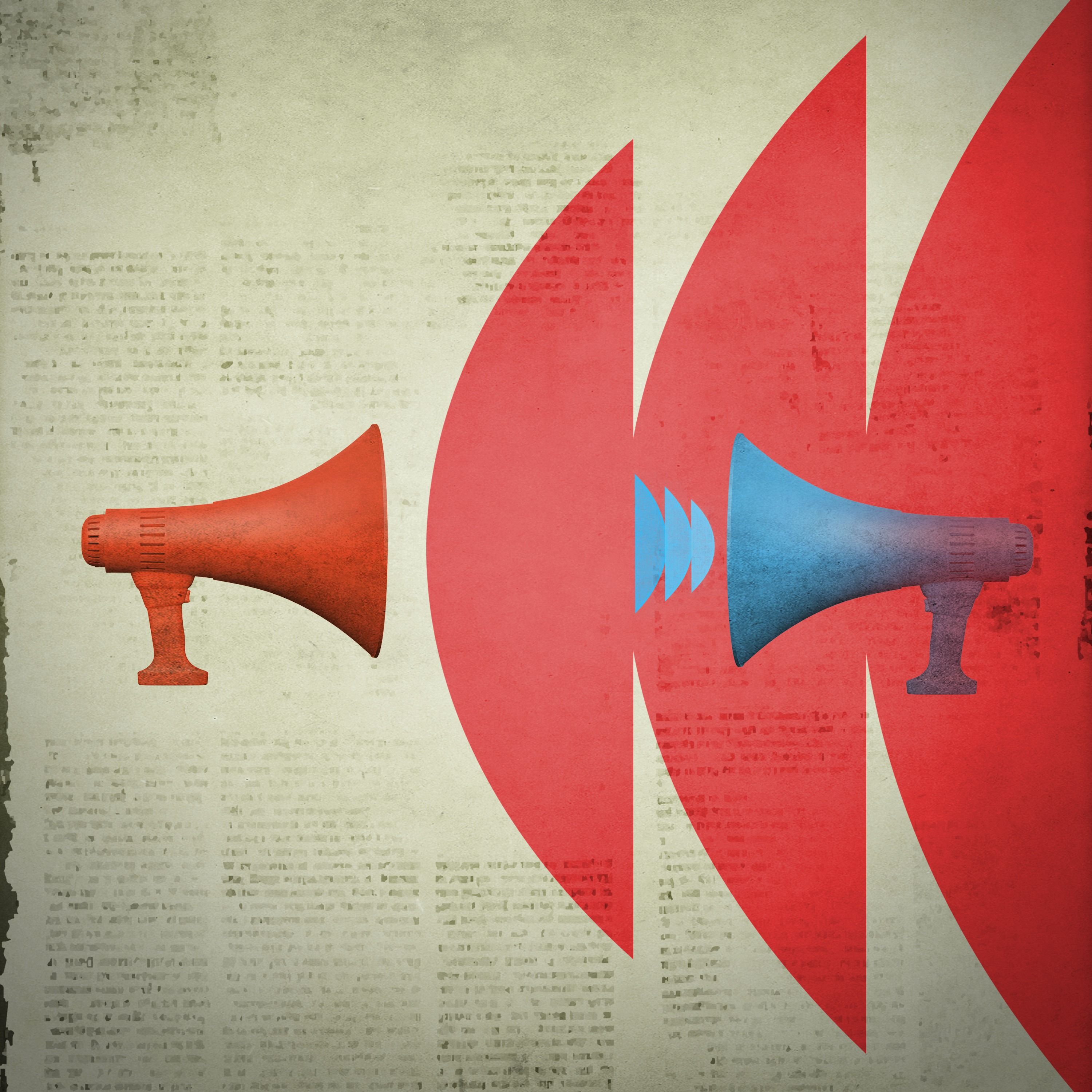
Radiolab
Content Warning
00:29:23
Over the past five years TikTtok has radically changed the online world. But trust us when we say, it’s not how you’d expect. Today we continue our yearslong exploration of what you can and can’t post online. We look at how Facebook’s approach to free speech has evolved since Trump’s victory. How TikTtok upended everything we see. And what all this means for the future of our political and digital lives. Special thanks to Kate Klonick EPISODE CREDITS: Reported by - Simon Adler Produced by - Simon Adler Original music from - Simon Adler with mixing help from - Jeremy Bloome Fact-checking by - Anna Pujol-Mazzini Lateral Cuts: The Trust Engineers Facebook’s Supreme Court Signup for our newsletter!! It includes short essays, recommendations, and details about other ways to interact with the show. Sign up (https://radiolab.org/newsletter)! Radiolab is supported by listeners like you. Support Radiolab by becoming a member of The Lab (https://members.radiolab.org/) today. Follow o...
Loading summary
Transcript118 lines
- [00:02]
Kate Clonick
Oh, wait, you're listening. Okay. All right.
- [00:06]
Simon Adler
Okay.
- [00:07]
Kate Clonick
All right.
- [00:09]
Simon Adler
You're listening to Radio Lab Radio from wny. Right in here.
- [00:21]
Kate Clonick
Awesome.
- [00:22]
Simon Adler
You're gonna be speaking in that microphone? Nope, the one closer here. Hey, I'm Simon Adler. This is Radiolab. 1, 2, 3, 4, 5. Can you hear me, Kate?
- [00:32]
Kate Clonick
Yep.
- [00:32]
Simon Adler
And that.
- [00:33]
Kate Clonick
Oh, wow.
- [00:34]
Simon Adler
Is Kate.
- [00:34]
Kate Clonick
Yeah. Kate Clonick. I'm a professor at St. John's Law School.
- [00:38]
Simon Adler
I've talked to her a bunch over the years. We did a couple different stories that felt like news at the time about Facebook's rules for what we can and can't post on their platform.
- [00:48]
Kate Clonick
Don't get me saying the F word again, because last time my parents yelled at me.
- [00:53]
Simon Adler
Did they?
- [00:54]
Kate Clonick
Yeah, they were like, can you, Kate? You're an adult now.
- [00:57]
Simon Adler
Oh, come on.
- [00:57]
Kate Clonick
You're a serious person.
- [00:58]
Simon Adler
I prefer to swear on the radio as much as possible. We covered the origins of these rules and just how complicated they can become. But beyond the specifics, what we were really exploring was how the ideal of free speech plays out in different spaces in our society. You know, from a good old public square where anyone can say anything they want to, lightly regulated broadcast tv, to straight up public private spaces. And we were asking, like, where does social media fit into all that? And, you know, I kind of thought we were done talking about all this, but then I'm happy we still have a show too. I guess this past month, Jimmy Kimmel.
- [01:43]
Kate Clonick
Can'T say that anymore. The late night host taken off air indefinitely.
- [01:47]
Simon Adler
As we all know, free speech was in the news again. I mean, look, we can do this.
- [01:51]
Kate Clonick
The easy way or the hard way.
- [01:52]
Simon Adler
That's censorship. That's state speech control. And these questions of who can say what, where and how much pressure the government can or can't exert just felt fresh and vital all over again. And so I called Kate. Yeah. To see how this is all playing out online.
- [02:14]
Noor Sultan
Yeah.
- [02:14]
Kate Clonick
And now it is a problem of, okay, how do we stop billionaires and authoritarian governments from twisting these platforms into censorship machines or political propaganda?
- [02:36]
Simon Adler
Okay.
- [02:38]
Kate Clonick
I know. That's kind of how I feel, too.
- [02:43]
Simon Adler
Well, I guess before we get into all of that, let's build a bit of a foundation first.
- [02:52]
Kate Clonick
Sure.
- [02:53]
Simon Adler
So I guess how has the actual practice of keeping stuff up and taking stuff down changed and why?
- [03:02]
Kate Clonick
Sure. So the main thing. The main thing from the last time we talked that has really, truly changed from like 2020 to 2025 is the rise of TikTok. I mean, if you will remember, like, in two short years it had basically caught up with 12 years of Facebook's growth. And I mean, TikTok has a different way that they run their content moderation.
- [03:27]
Simon Adler
Okay, how so?
- [03:29]
Kate Clonick
Well, when we spoke in these past episodes, one of the assumptions of content moderation, when it was getting off the ground, be it Facebook or Instagram or YouTube, was that we don't want to censor people unnecessarily.
- [03:42]
Simon Adler
Yep.
- [03:43]
Kate Clonick
And so you would keep content up until it was reported as being harmful and then you would make rules that would limit and try to preserve voice as much as possible, as they put it. That was like the industry term for free speech voice. There were limits to that obviously, but generally like it was a keep it up unless we have to take it down type of thing. But that's not TikTok. TikTok comes from obviously China and it comes from a censorship kind of authoritarian CCP culture. And I mean, I believe the Chinese kind of approach to speech is very reflected in the algorithm that TikTok uses. It is not a default. Everyone should see everything. This is a free world and people have a right to say whatever they want, even if it's a private platform. It is a. We get to determine what people see and say and that. That's it.
- [04:35]
Simon Adler
So they're just taking tons and tons and tons of stuff down?
- [04:38]
Kate Clonick
Oh, I mean, no, like, okay, TikTok, it, it pre screens such a volume of content that it determines to outside of certain political parameters. And so they're less likely to cause negative interaction effects. To put kind of an economic term on it.
- [05:01]
Simon Adler
If I can put a stupid man's term on it, it's like they are choosing to push things up instead of pull things down.
- [05:09]
Kate Clonick
That's a perfect way of thinking about it. And they push things up that are very milquetoast, very like happy, make you feel good, very apolitical. And so this is basically downranking or shadow banning. The idea that you're going to manipulate the algorithm to not delete the content but not promote it. And in addition to that, the algorithm is constantly improving and iterating on all the behavioral signals that you give it. And so it's able to provide a very addictive and expectation meeting.
- [05:42]
Simon Adler
Product.
- [05:43]
Kate Clonick
Yeah, product. I mean there's no way. I'm almost an experience, but I'm like, it's kind of, but it's not. I don't know what it is.
- [05:51]
Simon Adler
I have a confession, which is that I've maybe spent five minutes on TikTok in my life.
- [05:57]
Kate Clonick
I don't have TikTok, you don't either? Well, I have, like, rules for some of these things.
- [06:02]
Simon Adler
Okay.
- [06:03]
Kate Clonick
But, you know, I study online speech for a living, so it seems kind of crazy. But I, like, I don't need to actually be on TikTok for TikTok to be all over my life. I see TikTok videos constantly. They're cross posted. I don't need to actually be on TikTok.
- [06:18]
Simon Adler
Well, and on that. It is interesting that TikTok figured out how to make banal stuff compelling, because we were certainly told that, well, the reason Facebook wants to leave some of this stuff up is because it's the highly emotive, highly reactive stuff that keeps people around. So what did we have wrong there? Or was this just like an adjacent path to the same outcome, which is keeping people on a platform?
- [06:43]
Kate Clonick
Oh, I mean, I think that it's actually fascinating. You know, what they figured out is it is a format of video that people are. Are hooked by. Okay. And so it does not really matter. You will find yourself often watching things that you didn't know you were interested in. But, like, you're just compelled by certain types of couples that, like, look very different from each other doing any type of, like, interaction.
- [07:06]
Simon Adler
Fascinating. So it's like Facebook figured out the sort of information that would keep you there. TikTok figured out how to package any information to keep you there.
- [07:18]
Kate Clonick
Yes, that's, like, one way of thinking about it. Oh, my God. Yeah. I mean, you know, but this is not new. I mean, like, advertisers have been doing this forever.
- [07:26]
Simon Adler
Sure.
- [07:27]
Kate Clonick
Right. Like, this is, you know, it's just a very different business model. It is a very different product model.
- [07:34]
Simon Adler
And it seems to then be a very different informational ecosystem you're creating. Because if you're pushing up everything that falls within certain bounds and you're deciding what those bounds are, it becomes far more like. Is controlled the right word? What's the word?
- [07:57]
Kate Clonick
Yeah, it's controlled, but it's also, in a certain way, is even more dangerous because the ultimate in censorship in American First Amendment law is really prior restraint. Sorry, sorry, excuse me.
- [08:08]
Simon Adler
What is prior restraint?
- [08:10]
Kate Clonick
Prior restraint is censorship before something goes up or is ever published.
- [08:15]
Simon Adler
Oh, so it's not redacted, it's that it was never printed.
- [08:19]
Kate Clonick
Exactly. That is the exact distinction. And it's important because the existence of this redaction, the proof that it was removed from Facebook, is actually evidence that censorship has happened.
- [08:31]
Simon Adler
Right, right, right, right, right, right.
- [08:33]
Kate Clonick
Whereas with TikTok, you never even know what you Missed. You never even know what you were kept from seeing. And that is really, unfortunately what we're staring down at this moment. Because in the last five years, American social media has moved towards TikTok's approach.
- [09:07]
Simon Adler
Wow, okay. I didn't expect us to be talking about TikTok so much, but I'm glad we have. So if I'm telling the story of this, it's like once upon a time, Facebook creates content moderation for everything. All these policies, all these rules. Meanwhile, TikTok is sort of lurking across the Pacific, eventually jumps over, and Zuckerberg and the Silicon Valley folks see they're doing it this very different way. When does that actually start to shift not just the way Facebook is thinking about its content moderation, but also maybe the way people are experiencing Facebook as a result.
- [09:46]
Kate Clonick
That is not as clear. But the biggest sea change is the one that you're thinking of.
- [09:52]
Mark Zuckerberg
Hey, everyone, I want to talk about something important today because it's time to get back to our roots around free expression on Facebook and Instagram, which is.
- [10:00]
Kate Clonick
The one that happened on January 7th of this year, 2025, when Mark Zuckerberg announced the end of the fact checking program.
- [10:06]
Mark Zuckerberg
We've reached a point where it's just too many mistakes and too much censorship.
- [10:10]
Kate Clonick
And that he was going to try to move towards a community notes based system of content moderation.
- [10:16]
Mark Zuckerberg
So we're going to get back to our roots and focus on reducing mistakes, simplifying our policies, and restoring free expression on our platforms.
- [10:24]
Kate Clonick
And I mean, I think that, like, it was. And it wasn't a sea change.
- [10:27]
Simon Adler
Okay, well, and talk to me, like, when we say Facebook got rid of its fact checking at its sort of height, what was Facebook's fact checking?
- [10:36]
Kate Clonick
Okay, so not much. Which is why this was a really. Okay, which is why this was such a. Such a frustrating announcement. And it was frustrating that the media focused on it so much. The fact checking was like a commitment to fact checking because there had been so much clamor about MIS or disinformation. But they were removing post days after they were flagged. And like, it was very small. And so to watch it go on, the chopping block was really more of a signal to a very particular person and to a very particular party that felt like big tech censorship was coming for them. And like, you know, we can get into a whole kind of conversation about whether or not that was reality based, but that was kind of the complaint.
- [11:18]
Laura
Right.
- [11:19]
Simon Adler
And if I'm going to mount the best defense for conservatives about censorship by Big tech. It would be that during the pandemic there was sort of a party line as to what was an acceptable way to talk about the origins of the pandemic. Right, yeah.
- [11:38]
Kate Clonick
You can even go before the pandemic.
- [11:40]
Simon Adler
Okay, you could take it before you can.
- [11:42]
Kate Clonick
There's a few things. And one of them was, there are serious questions for Joe Biden this evening following the publication of emails allegedly belonging to his son, Hunter. The Hunter Biden laptop scandal reporting lays out purported emails between Hunter Biden and a Ukrainian businessman. New York Post, they broke the story and links to that were taken off Facebook and Twitter. That was absolutely censored.
- [12:05]
Simon Adler
And what was the justification by Facebook?
- [12:08]
Kate Clonick
Well, that was happening a couple weeks before the 2020 election. And so what had been the huge concern for Facebook and all these other companies was how social media impacted the 2016 election. And so they made a lot of big changes. And one of them was just kind of like, we're not going to allow things that could possibly be foreign influence to stay up because this is exactly what we got yelled at in 2016. And so they kind of overcorrected. And I think in hindsight, it was a really hard call and maybe probably the wrong one. And then you extend that to the Wuhan Lab leak. Now, those were just insane, insane issues. And look at us, we're still talking about them today. It's not like they were that censored. Unlike going to say China, where it's like, you're like, oh, you know, Tankman. And they're like, who? Right. Because there are no photos of Tank Man. They are not published. Right. And so it's not like. I just also.
- [13:08]
Simon Adler
Point taken. Okay, well, so then, like, what has changed then? If. Yes, there was some censoring going on and censoring of things in these sort of critical moments. Like, would that not happen now? Is that the difference?
- [13:24]
Kate Clonick
I mean, my honest belief, I can't predict the future, but my honest belief is this administration would very quickly put the platforms in line. Yeah, I think that there would be no hesitation to do this because I don't think that this was ever about free speech. It was about their speech. And that is really what you're unfortunately seeing right now. There is no recognizable free speech notions coming out of this current administration. And with the TikTok ification of social media, people have seen the vector for power that is in content moderation.
- [14:34]
Simon Adler
Okay, so Kate, you were saying that TikTok has this fundamentally different approach to content moderation, that instead of reactively taking stuff Down. They are proactively flooding the zone with happy making stuff that Facebook and X and others have taken notice and started adopting this approach and that all this has happened as folks have begun to see that content moderation itself is, I think you said, a vector for power.
- [15:06]
Kate Clonick
Yeah. I think that basically what you're seeing is the power over what appears in your feed or doesn't appear in your feed, or the types of new content that you're recommended, or the first commenters that you see on a video that you just watched. That type of control is an ability that we've never seen before. I remember when I was first writing about this in 2017, 2018 and presenting my research, one of the things that people were so concerned with was filter bubbles. Yeah. Well, we're going to be in these filter bubbles fed to us by the algorithm. And as it turns out, that was one very true that that would happen. But also, even maybe more disturbingly, we don't even need filter bubbles anymore. People are just choosing platforms based on the types of content that they expect to find there.
- [15:57]
Simon Adler
And in that way. So if we were gone from filter bubbles to platform islands, where the owners of the platform get to push up whatever it is that fits whatever their ideological ends are. China and TikTok, it seems to be like milquetoast stuff that's not gonna rally up, but it's gonna keep your eyeballs on here. It feels a little bit like X, formerly Twitter, is the mirror image where it's like we're just gonna rile you up all the time. Is that right? And is that what we're gonna just see more of which is come to this? Platform island for emotion. Platform island for motion.
- [16:37]
Kate Clonick
B. I think that that's exactly right. I mean, yeah, I mean, that's what we go to the movies for. That's what we turn into, like, certain types of things for. Right. It's. I'm not in the mood for, you know, a horror film, so I don't go to a horror film. This, this kind of approach is much easier to moderate. People get much less upset, and it's much cheaper because there is not as much reactive content moderation to do. You don't have to employ hundreds of people in call centers to report of something that's been flagged. And so this has kind of become the new standard.
- [17:16]
Simon Adler
I remember one of the big questions probably in the first piece we did was this question of like, what kind of space to consider Facebook, because the First Amendment treats private spaces differently than public spaces. So it matters whether or not Facebook is more like a mall or a public square. And so, given all these changes you just mentioned, like, what is the metaphor now? I have one based on what you said, but I'm curious what yours is.
- [17:46]
Kate Clonick
No, I mean, I've always liked the mall metaphor, and it has a weird, squirrely little place in First Amendment law in a bunch of cases. But I want to hear what your. I kind of want to hear what yours is.
- [17:57]
Simon Adler
Well, to me, it's now. Or certainly the direction things seem headed based on what you've said, is that it's now just. It's just broadcast again.
- [18:07]
Kate Clonick
Yeah.
- [18:08]
Simon Adler
And with broadcast, there is no free speech, right?
- [18:11]
Kate Clonick
No.
- [18:11]
Simon Adler
Like abc, NBC, they can cancel a show at any time. They get to decide exactly what the evening lineup is. But with this, with social media, it's like a broadcast camouflaged as an organically generated thing, 100%.
- [18:28]
Kate Clonick
You know, you can shadow ban, or take down or limit the reach, but it doesn't even have to be that subtle. Like, Elon Musk always showing up in my feed, even though I don't follow. Elon Musk is like having Rupert Murdoch in, like, the interstitial spaces before every commercial break at Fox News. You know, like, directly telling me what I should think that isn't subtle. Like, that is the other thing about this, that is maybe the scariest part of the last couple of months is that none of it even is super pretextual. Like, there isn't a lot of, like, excuses. We're not even hiding behind algorithms anymore. It is just the owner of the. Of the. Of the. Of the platform saying the thing out loud and forcing everyone to see it if they're on his platform. You know, I think that if you're going to all of these different platform islands, the other thing is, like, how do we change those to use regulatory regimes to try to control how they speak, what is obviously a problematic thing by any type of measure. We don't want governments controlling speech for the exact reason of all of the authoritarianism we've just discussed. And so I think that there's. It's very hard.
- [19:40]
Simon Adler
Sorry if I can jump in there, though, but it does feel like, yeah, I'm not for, and have never been for the federal government coming in and molding Facebook's content moderation policy.
- [19:51]
Kate Clonick
Of course not.
- [19:52]
Simon Adler
But if something no longer resembles a public square at all and instead has become to keep reusing my. My label, like a camouflaged broadcasting network, where it's like, yeah, these are individuals saying something that they believe in. But then that is being collated, amassed and pushed out as a opinion changing product by someone on high. I am okay at that point with there being some sort of regulation. It's not regulating maybe what people are allowed to post, but maybe how it's being aggregated, I don't know. There have to be some clever, somebody smarter than me who could come up with these sorts of rules.
- [20:34]
Kate Clonick
No, I mean like every western state has some type of media regulator specifically to avoid maybe like two or three people controlling all of media. Right, right. But all of a sudden we're like on the Internet and yes, there is an infinite amount of content on the Internet, but is it so infinite? Like if there are, if we're talking about like the same three main places that people are going to for their news, people are going to, for like their, for their daily interactions, people are going to feel like they're part of a conversation, their water cooler, their public square, whatever it is. If that is like three people and they're all friends of the President, like that's, that's a problem. And maybe even more importantly, journalists, they go to X, they go to Blue sky, they go to YouTube, they go to TikTok and they report things that are happening in those places as if they're real places that things are happening, but they're also controlled by these individuals. And so they're not reflective necessarily of real world, yet they are being reported on as if they were reflective of real world. And. Right. And so I just think that what you see in the last five years is an industry, understand the power that it holds in content moderation, that it's so not a customer service issue, that it is actually like a huge, huge force for, for shaping public opinion and that that has exponential value to political parties and governments. It's like as valuable as oil and guns because how you push things, what you keep up, what you take down, I mean this is how you can basically create the rise and fall of presidencies if you want to, or political parties. And they know how to market them to you no matter how niche you are. And that's scalable. And so it's a way to make a lot of money and then it's a way to control a lot of minds.
- [22:39]
Simon Adler
You know, I think one of the reasons you and I have gotten along so well over the years and have worked so well together in this now trilogy of stories is that we both had sort of an unorthodox approach to this. I mean, most people were saying that These Facebook guys were idiots, that they're bad, that they're causing lots of trouble, that we should just like cast scorn upon them.
- [23:05]
Kate Clonick
Yeah.
- [23:05]
Simon Adler
And you and then me sort of following your lead were more like, what if we actually try to understand this problem? And I guess now with hindsight, I'm wondering, like, did we miss something here where we sort of played the fool?
- [23:23]
Kate Clonick
Um, you know, it wouldn't be the first time that someone has told me that in some way I'm a useful idiot to Facebookers in some type of capacity.
- [23:31]
Simon Adler
I didn't say I. I would say we would be useful idiots. So I didn't call you. I am asking if we. Is the question.
- [23:39]
Kate Clonick
I feel as if a lot of people and a lot of what we've said today, people will be like, of course this is what happened. This is what we were saying would happen. But it wasn't fatal complete. When we talked about it. It wasn't. Every single one of these solutions has the same flaw at the end of the day to it, which is that these are for profit companies that do what they want to do and things change as things settle. So I don't know.
- [24:08]
Simon Adler
Okay, well, so then, like, is content moderation sort of dead?
- [24:15]
Kate Clonick
I just. Yeah, this is like a. This is like a very controversial thing. It really depends on what you mean by that question. There has been a lot of controversy around, like, are they going to invest in these huge cost centers of trust and safety? Are they going to care about this type of issue if they can TikTok ify everything and just send you down these rabbit holes of endlessly drooly, like eye glaze over, like wall e kind of scene where you're on the couch with your Slurpee, like Barcalounger or whatever, like watching things. Is that what they're. They're basically going to do and are they going to have to keep moderating? And I mean, I think that, like, the answer is that we're going to increasingly see a automated content moderation system. It's going to increasingly not embody the edges of society and the range of voice that we had at the beginnings of the Internet and that we are going to kind of see a productification of speech.
- [25:55]
Simon Adler
I'd love to give you one, one. One more idea that I've been playing around with for a couple years.
- [25:59]
Kate Clonick
Yeah.
- [25:59]
Simon Adler
If I was ever going to write a short sci fi story, it would be about the quote unquote perfect piece of art. You step in front of it, it does a quick facial scan of you, pulls everything about you that it knows from the Internet, and then it puts forward an image perfectly generated for you that will evoke a feeling. On Tuesdays, it's happiness. On Wednesdays, it's sadness. And so it's this visual tableau, personalized, every person that evokes the same emotion. And once you have that, once you can control the emotions of people with the flip of a dial by putting something in front of them that's going to only pique that feeling for them, then you could just control everybody.
- [26:44]
Kate Clonick
Well, I love that. Sounds like a Ted Chiang story, honestly. But you should rate that. Maybe you can ask AI to do it for you if you're really busy.
- [27:04]
Simon Adler
This story was reported and produced by me, Simon Adler, with some original music and sound design by me. Mixing done by Jeremy Bloom, of course. Huge, huge thank you to Kate Clonick, as always. And yeah, we will be back next week saying some more things. Until then, thanks for listening.
- [27:33]
Kate Clonick
I think we're using this one.
- [27:36]
Noor Sultan
Hello? Oh, I can hear myself, kid. Podcast crossover special. Hi, I'm from. Wait. Hi, I'm Noor Sultan and I'm from New York. And here are the staff of credits. Weirder Lab was created by Giad Abram Brad and is edited by Zorin Weir.
- [27:57]
Kate Clonick
Dylan Keefe is our director of sound design.
- [27:59]
Noor Sultan
Lulu Miller and Latif Massert are our co hosts. Our staff includes Simon Adler, Jeremy Bloom W. Harry Fortuna, and David Gable. Oh, so I just have to read that one name. Okay.
- [28:17]
Simon Adler
Oh, my God.
- [28:18]
Kate Clonick
So you have to, like, tap it out.
- [28:23]
Noor Sultan
Sindhu. Nice. Sunbuttum.
- [28:25]
Kate Clonick
Yes. Yes. Score. Good job.
- [28:28]
Noor Sultan
Annie McEwan, Alex Neeson and Sara Khari. Oh. Sarah Sandbach, Anissa Vitez, Arianne Wack, Pat Walters, Molly Webster and Jessica Young. Yeah, yeah, I see it. Do I sound, like, happy? With help from Rebecca Rand.
- [28:47]
Kate Clonick
Our fact checkers are Diane Kelly, Emily Krieger, Anna Powell Mazzini and Natalie Middleton.
- [28:55]
Noor Sultan
Guys, I know I'm famous. You don't gotta clap.
- [29:01]
Laura
Hi, this is Laura calling from Cleveland, Ohio. Leadership support for Radiolab science programming is provided by the Simmons foundation and the John Teppel Foundation. Foundational support for Radiolab was provided by the Alfred P. Sloan Foundation.