← Radiolab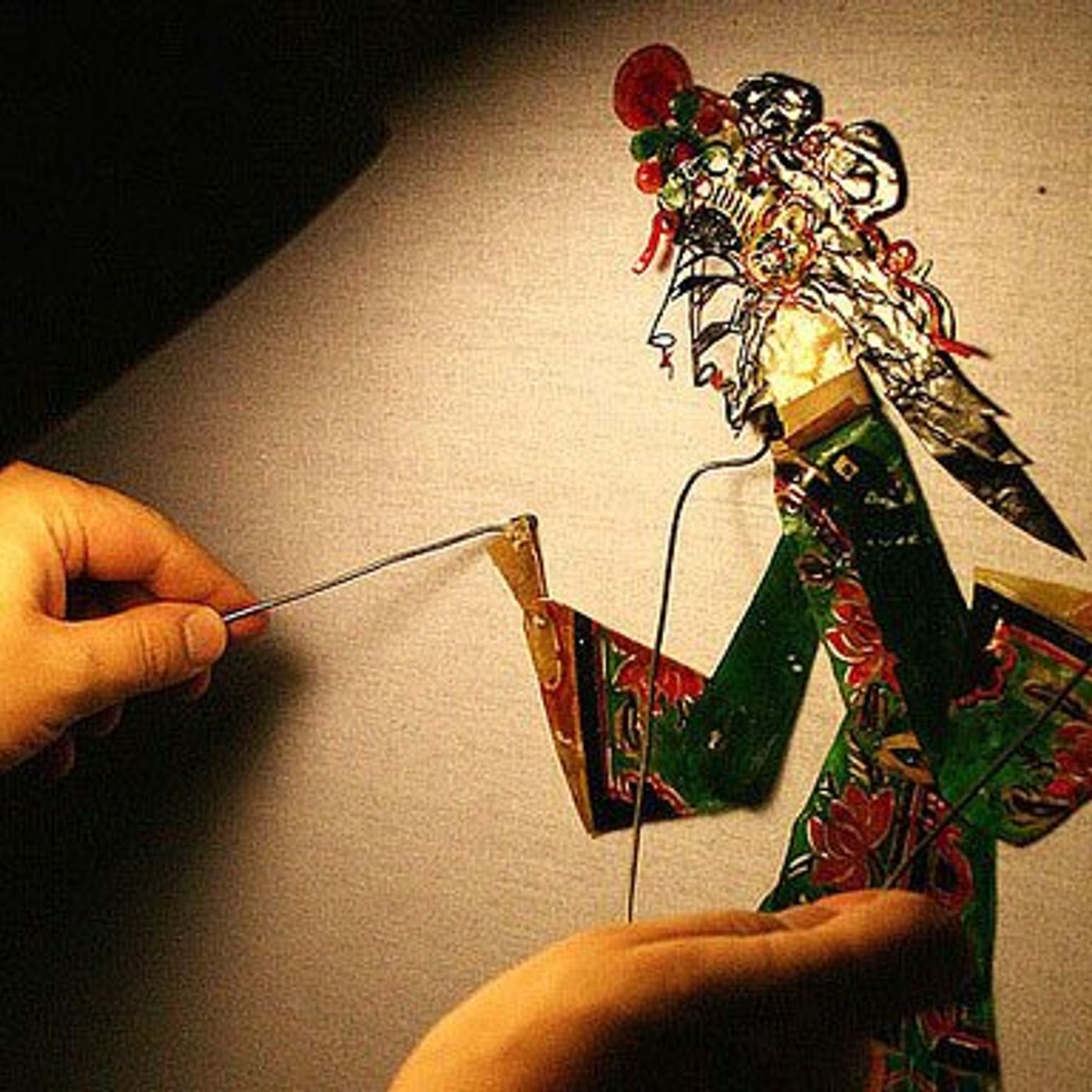
Radiolab
Damn It, Basal Ganglia
00:12:27
The basal ganglia is a core part of the brain, deep inside your skull, that helps control movement. Unless something upsets the chain of command. In this short, Jad and Robert meet a young researcher who was studying what happens when the basal ganglia gets short-circuited in mice...until one fateful day, when things got really, really weird.
Loading summary
Transcript172 lines
- [00:00]
Robert Krulwich
Oh, wait, you're listening. Okay. All right. Okay. All right.
- [00:07]
Liza Schoenfeld
You're listening to Radiolab.
- [00:09]
Robert Krulwich
Radiolab shorts from wnyc.
- [00:15]
Jad Abumrad
Yes, and npr. Hey, I'm Jad Abumran.
- [00:20]
Robert Krulwich
I'm Robert Krulwich.
- [00:21]
Jad Abumrad
This is Radiolab, the podcast. Yes, and today on the podcast, we're gonna present a story that the whole.
- [00:27]
Robert Krulwich
Thing is an accident. Really?
- [00:28]
Jad Abumrad
This particular podcast, we were on tour a few months ago doing the symmetry thing in San Francisco, and right as we were there, we got an email from a woman who lives there telling us this nutty story.
- [00:38]
Robert Krulwich
Something odd had happened to her, and she wanted to share it with us. So he met her in the lobby.
- [00:44]
Jad Abumrad
I missed. I didn't hit the record button fast enough. Could you just tell me your name again?
- [00:48]
Liza Schoenfeld
My name is Liza Schoenfeld, and I'm a research technician at the Glasses Institute at the University of California, San Francisco.
- [00:54]
Jad Abumrad
Now, Liza is just getting started with her scientific career.
- [00:58]
Liza Schoenfeld
Finished my undergraduate degree about a year and a half ago.
- [01:01]
Jad Abumrad
And this story takes place as she was about to take that next step after college and apply to grad schools.
- [01:06]
Robert Krulwich
And the star of our story, other than, of course, Liza herself is a little mischievous. Part of her brain. Well, everyone's brain.
- [01:13]
Liza Schoenfeld
Part of your brain called the basal ganglia.
- [01:15]
Jad Abumrad
Basal ganglia, which at the time, she'd.
- [01:18]
Robert Krulwich
Been studying, just so we understand basal and ganglia. So basil is not the thing from which pesto is made in your case?
- [01:25]
Liza Schoenfeld
No.
- [01:25]
Robert Krulwich
What does basal mean?
- [01:27]
Liza Schoenfeld
I'm gonna have to ask someone else about that.
- [01:29]
Robert Krulwich
Okay, let's go to. Go on to ganglia.
- [01:31]
Liza Schoenfeld
So ganglia, you know, collections of neurons, big collections. So the basal ganglia is a fairly large part of your brain.
- [01:35]
Jad Abumrad
It's actually this big hunk deep in.
- [01:37]
Liza Schoenfeld
The center, and it's responsible for controlling and coordinating movement.
- [01:40]
Robert Krulwich
When I move my neck back and forth, am I using my basal ganglia?
- [01:43]
Liza Schoenfeld
Yeah.
- [01:44]
Robert Krulwich
When I wink, am I using my basal ganglia? Yeah. When I make an expression in my face, am I using my basal ganglia?
- [01:49]
Liza Schoenfeld
Definitely.
- [01:49]
Jad Abumrad
What about if I'm reading the New Yorker?
- [01:52]
Liza Schoenfeld
I don't think so.
- [01:53]
Robert Krulwich
Apologies to the New Yorker and its employees.
- [01:54]
Jad Abumrad
The point is, this part of your brain is really basic.
- [01:57]
Robert Krulwich
And at the lab where she was working, they had figured out this particular.
- [02:01]
Liza Schoenfeld
Basal ganglia trick using this really cool technology called optogenetics.
- [02:05]
Robert Krulwich
Maybe trick isn't quite the right word.
- [02:07]
Jad Abumrad
What they'd done is they'd found a way to take a mouse, thread a little fiber optic cable through its skull, deep into its brain, into its Basal ganglia.
- [02:15]
Liza Schoenfeld
So that when you shine a blue laser, Literally, we just shine lasers into mouse brains.
- [02:18]
Jad Abumrad
They could actually turn its basal ganglia, or parts of it on or off.
- [02:22]
Robert Krulwich
And this is in a live mouse?
- [02:23]
Liza Schoenfeld
This is in a live mouse. So we have these really cool videos showing a mouse running around, having a great mouse time. You turn the light on, we can.
- [02:33]
Robert Krulwich
Get him to freeze in mid stride.
- [02:36]
Liza Schoenfeld
Yeah.
- [02:37]
Robert Krulwich
So you hit the laser, and boom, the mouse stops.
- [02:39]
Liza Schoenfeld
Mouse is like this.
- [02:41]
Jad Abumrad
So you use light to, like, puppetize the mouse?
- [02:44]
Liza Schoenfeld
Yes.
- [02:44]
Jad Abumrad
If you're this mouse, no matter how hard you try, move feet, Move. As long as that light is on.
- [02:51]
Robert Krulwich
Come on, move.
- [02:52]
Jad Abumrad
You can't do it. Liza is holding the strings.
- [02:55]
Robert Krulwich
Not exactly. It turns out she doesn't get to play with the laser that much.
- [02:58]
Liza Schoenfeld
I'm kind of like, I'm the bottom of the totem pole. So I do a lot of pipetting.
- [03:01]
Jad Abumrad
It's like where you squirt liquid from one tube to another.
- [03:04]
Liza Schoenfeld
I'm working on my pipetting skills these days.
- [03:06]
Jad Abumrad
Get the thumb muscles.
- [03:08]
Liza Schoenfeld
Oh, I could beat anyone in the thumb wrestling competition right now.
- [03:11]
Jad Abumrad
So at a certain point, she was like, enough of this time for me to apply to grad school.
- [03:15]
Liza Schoenfeld
Yeah. I applied to five University of California, San Diego, University of Washington in Seattle, ucsf, Rockefeller University, and Harvard.
- [03:24]
Jad Abumrad
Okay, so you're going big.
- [03:25]
Liza Schoenfeld
Yeah, Go big or go home.
- [03:26]
Jad Abumrad
Right, Exactly.
- [03:28]
Robert Krulwich
So she heads off to her first interview.
- [03:30]
Liza Schoenfeld
University of Washington went great. I loved it. I went to Penn, University of Pennsylvania, went down to UCSD in San Diego. It's a beautiful place, Great scientists. It's actually the largest neuroscience community in the world.
- [03:41]
Jad Abumrad
So far, so good.
- [03:42]
Robert Krulwich
Did you ever go back to San Francisco, where we are now?
- [03:44]
Jad Abumrad
This is where things get strange.
- [03:48]
Liza Schoenfeld
Yes. So my last interview, my very last interview was at ucsf.
- [03:52]
Jad Abumrad
And she says, about a week before.
- [03:53]
Liza Schoenfeld
That interview, I got really sick. So I think it was some kind of stomach flu, but it was pretty severe nausea. I wasn't really able to eat or do anything.
- [04:00]
Jad Abumrad
Throwing up?
- [04:01]
Liza Schoenfeld
Yeah. Oh, all sorts of. I don't know. I had some bad dim sum the weekend before. That could have been it.
- [04:06]
Robert Krulwich
Yeah, that's it. So. So she goes to the doctor, he gives her some pills to fight the nausea.
- [04:10]
Liza Schoenfeld
And then the next day was my interview. Friday was my interview. So I went. You know, there's a nice introduction. They give you breakfast.
- [04:16]
Jad Abumrad
At this point, she's pretty familiar with the whole routine.
- [04:18]
Liza Schoenfeld
Generally, the way these interviews are structured is that we talk a little bit about my research in dopamine. And the basal ganglia.
- [04:23]
Jad Abumrad
And these mice, they tell her about their work.
- [04:26]
Liza Schoenfeld
I have to think of a couple witty questions. I ask my questions.
- [04:28]
Robert Krulwich
What's a witty question in this context?
- [04:32]
Jad Abumrad
A witty science question.
- [04:33]
Liza Schoenfeld
It's a witty science.
- [04:33]
Robert Krulwich
Witty science. Okay, never mind.
- [04:35]
Jad Abumrad
Anyhow, she's raring to go, and she heads in to meet her first basal gangliatician of the day.
- [04:40]
Liza Schoenfeld
And he studies. One of the things he studies is.
- [04:43]
Jad Abumrad
Dopamine in the basal ganglia.
- [04:45]
Liza Schoenfeld
He studies stuff that's a little bit more molecular than what I know, but we had a good conversation about dopamine. And at this point in the day, I was feeling okay, no nausea. Then I went to my second interview, which is this woman that I was so excited to talk to. Her name is Allison Dope, and she's pretty well known.
- [04:59]
Robert Krulwich
Her name is Allison Dope.
- [05:01]
Liza Schoenfeld
Allison Dope.
- [05:02]
Robert Krulwich
Wow. And she studies dopamine.
- [05:05]
Liza Schoenfeld
She studies songbirds.
- [05:06]
Jad Abumrad
Songbirds, which is what Liza really wanted to study.
- [05:09]
Liza Schoenfeld
So birds have basal ganglias, too.
- [05:10]
Jad Abumrad
So she's pretty fired up.
- [05:12]
Liza Schoenfeld
And kind of the beginning of that interview, my face started to feel a little bit strange. And I was wearing glasses that day. So what I thought was happening was that my glasses were. You know, your glasses get loose, and they kind of start to slip down your nose, and you have to kind of tighten the muscles around your ears to try and keep your glasses on. So we were talking. I just kept on feeling like, God, why can't I stop tightening that? It was kind of got to the point where it started to distract me, but I felt okay. Then we went to lunch, and this was a lunch with all the current students and a lot of the current faculty and all the prospective students. And at lunch, I remember on the walk to lunch, my head just started spontaneously turning to the right. Like, I would be trying to sit here and face you, and I would just turn over here and face Robert.
- [05:57]
Jad Abumrad
That's such a funny thing. Was your neck moving? And you're like, no, neck. Don't do that. Neck.
- [06:00]
Liza Schoenfeld
Yes, that's exactly what was happening. I was trying to send signals to my neck being like, all right, sitting here having lunch with an important professor. Why don't you just face him, talk to him? And instead, I'm just turning over here, turning over here, turning over here.
- [06:12]
Robert Krulwich
Oh, you're turning a fairly wide arc.
- [06:14]
Liza Schoenfeld
Yeah.
- [06:14]
Robert Krulwich
You are turning away from the professor.
- [06:17]
Liza Schoenfeld
I remember at one point in lunch turning my chair like this so I.
- [06:20]
Robert Krulwich
Could see you're trying to rotate a permanent sidelong glance.
- [06:26]
Liza Schoenfeld
Yeah.
- [06:26]
Jad Abumrad
But she Figured it's not that painful, so it must just be a cramp or something.
- [06:30]
Liza Schoenfeld
And I'm kind of thinking, oh, okay. So I slept funny last night. I must have slept on a weird angle on my pillow. Now I'm having a neck cramp. My glasses are loose. I just gotta tighten the glasses.
- [06:40]
Jad Abumrad
Yeah. Everything under control.
- [06:42]
Liza Schoenfeld
So then I, after lunch, was going to go to. My third interview was with Alison, Dope's husband, who also studies songbirds, so he's familiar with the basal ganglia, too.
- [06:50]
Jad Abumrad
They meet up to walk over to his office together.
- [06:52]
Liza Schoenfeld
And so I explained to him on the walk over, I think I'm having neck cramps. Would it be possible maybe to try and get a hot pad?
- [06:59]
Robert Krulwich
He says, sure, I may track one down.
- [07:01]
Liza Schoenfeld
But on the walk, not only now does my neck start turning to the right, but it's snapping itself back involuntarily. Yeah, my head's snapping back like that.
- [07:08]
Jad Abumrad
So suddenly your eyes are pointed up at the sky.
- [07:10]
Liza Schoenfeld
And then as I'm talking to him, I'm realizing that I can't control my eyebrows from raising pretty tightly.
- [07:17]
Jad Abumrad
Like you're doing right now.
- [07:17]
Liza Schoenfeld
Like I'm doing right now.
- [07:18]
Robert Krulwich
So you're in a state of deep surprise to read your thoughts.
- [07:21]
Liza Schoenfeld
Yes, constant deep surprise. I can't stop it. I look surprised at everything I'm saying, and I can't stop it. So after the eyebrows start and I can't pull them back down, then the mouth, then all this area starts to go.
- [07:33]
Robert Krulwich
The lower face.
- [07:34]
Liza Schoenfeld
Yes.
- [07:34]
Jad Abumrad
What is it doing?
- [07:35]
Liza Schoenfeld
It turns into this really twisted, painful, grimacing smile.
- [07:42]
Jad Abumrad
Would you mind demonstrating? I'll demo it.
- [07:44]
Liza Schoenfeld
I'll demo it. Okay. So I've got. The neck is like this crane back. The eyebrows are like this total surprise. My face is a little bit like.
- [07:50]
Jad Abumrad
This crazy Frankenstein face.
- [07:54]
Robert Krulwich
This is not obviously, the best demeanor for a graduate interview.
- [07:58]
Liza Schoenfeld
No.
- [07:58]
Jad Abumrad
Yeah, it's not.
- [08:01]
Robert Krulwich
Now, is Michael now noticing that something is?
- [08:03]
Liza Schoenfeld
Yeah, I think at that point he thought I was just really excited to be talking about neuroscience. And I'm just trying to think, okay, mouth, like, try and just calm down a little bit. And it was pretty painful, too. I mean, it was like, imagine like a charley horse in your face. Yeah.
- [08:18]
Robert Krulwich
But she gets through the interview.
- [08:19]
Liza Schoenfeld
I actually do. Okay. You know, he asked me tough questions about science, and I can answer them, I think. And I leave the interview, and then I'm met by the woman who's the head of the admissions weekend.
- [08:30]
Jad Abumrad
And she took one look at Liza.
- [08:32]
Liza Schoenfeld
And she said, you know, I don't know if you should do the rest of her interviews. And with her is my student host.
- [08:37]
Jad Abumrad
And Liza decides, all right, let me just call my dad.
- [08:40]
Liza Schoenfeld
Just to say, hey, dad, I'm in the middle of my interview, and something kind of funny is happening with my face. I can't control it. And while I'm talking to him, I lose control of my mouth and my tongue. So I can't. I can kind of talk, but it's. It's pretty bad.
- [08:54]
Jad Abumrad
Pretty bad.
- [08:56]
Robert Krulwich
Is your dad a doctor?
- [08:57]
Liza Schoenfeld
No. Imagine your kid calling you, being like, I'm losing control of my face. And as they're telling you that, I started to think something's really wrong. And then my student host comes rushing back in, running. And he looks at me and he tries to put on a calm face, and he says, so now we need to go to the emergency room.
- [09:17]
Jad Abumrad
So they throw into a taxi.
- [09:18]
Liza Schoenfeld
And in the taxi, it went from I can't control my mouth to a complete.
- [09:22]
Jad Abumrad
I mean, a complete mouth palsied and a torque complete.
- [09:26]
Liza Schoenfeld
I did not look good. As we're pulling up to the emergency room is when my throat started tightening up.
- [09:32]
Jad Abumrad
They rush her inside, and they have.
- [09:34]
Liza Schoenfeld
Me in a gurney in a room in the back of the ER surrounded by six people within two minutes, doctors swarming all around her oxygen mask, EKG leads all over my chest. They do an iv.
- [09:44]
Robert Krulwich
And as she's lying there on the table, she's thinking, like, what's wrong with me? Why can't I control my throat? Why can't I control my body?
- [09:50]
Liza Schoenfeld
And I just. I couldn't. I remember frantically sending messages like, you gotta cut this out now.
- [09:55]
Jad Abumrad
But she wasn't in control. And it turned out that while she was going from interview to interview to interview, talking about how her lab had taken these little miceys and seized control.
- [10:06]
Liza Schoenfeld
Of their basal ganglia, The Compazine that.
- [10:09]
Robert Krulwich
I took, that nausea drug, was actually.
- [10:12]
Liza Schoenfeld
Affecting dopamine systems in my basal ganglia.
- [10:15]
Jad Abumrad
In other words, that drug had been doing to her pretty much what she'd been doing to those mice.
- [10:20]
Liza Schoenfeld
1 to 2% of people who take Compazine, they can have what's called an acute dystonia, which is what happened to.
- [10:26]
Jad Abumrad
Me during all those interviews.
- [10:28]
Liza Schoenfeld
And the crazy thing is, the guy that I talked to first in the morning was the molecular dopamine guy. You know, how does dopamine get packed in the vesicles? How does it get released? And it wasn't until I started talking with the more systems level people who studied the behavioral output of the basal ganglia that I started to have behavioral deficits in my basal ganglia.
- [10:44]
Jad Abumrad
Wow.
- [10:45]
Robert Krulwich
So your basal ganglia are testing the San Francisco docs, and they are failing in ischiatouche. Did you get into San Francisco State?
- [10:54]
Liza Schoenfeld
Ucsf?
- [10:55]
Robert Krulwich
Are you csf? No.
- [10:57]
Jad Abumrad
No. Damn it. Basal ganglia. We should probably tell everybody that Liza's obviously doing okay. Back in the er, when the doctors finally figured out what was going on, they just gave her some Benadryl, of all things.
- [11:09]
Liza Schoenfeld
And actually, within 20 minutes, I was feeling a lot better.
- [11:14]
Jad Abumrad
She could breathe, her face had unclenched. And when we asked her, how has this little adventure changed you? She said, well, I'm still working with those mice. Because when we talked to her, grad school hadn't started yet. And now when I go into that room with a little laser, I go.
- [11:28]
Liza Schoenfeld
In now, and I just really. I empathize with them.
- [11:33]
Robert Krulwich
Come on, little Casper. This will just be for a couple of minutes.
- [11:36]
Jad Abumrad
You can do it.
- [11:37]
Liza Schoenfeld
Yeah, I'm thinking a lot about that.
- [11:46]
Robert Krulwich
Liza Schoenfeld is Now a proud PhD candidate at the University of Washington.
- [11:51]
Jad Abumrad
And thank you to Brenna Farrell for production help on this podcast.
- [11:56]
Robert Krulwich
And that is our podcast.
- [11:58]
Jad Abumrad
There it is.
- [11:58]
Robert Krulwich
I'm Robert Krulowich.
- [11:59]
Jad Abumrad
I'm Jad Abumrad.
- [12:00]
Robert Krulwich
Thank you for listening.
- [12:07]
Samantha
Hi, this is Samantha from Sacramento, California. I'm a Radiolab listener. Radiolab is supported in part by the Alfred P. Sloan foundation, enhancing public understanding of science and technology in the modern world. More information about Sloan@www.sloan.org.
- [12:21]
Robert Krulwich
Thanks.