← Radiolab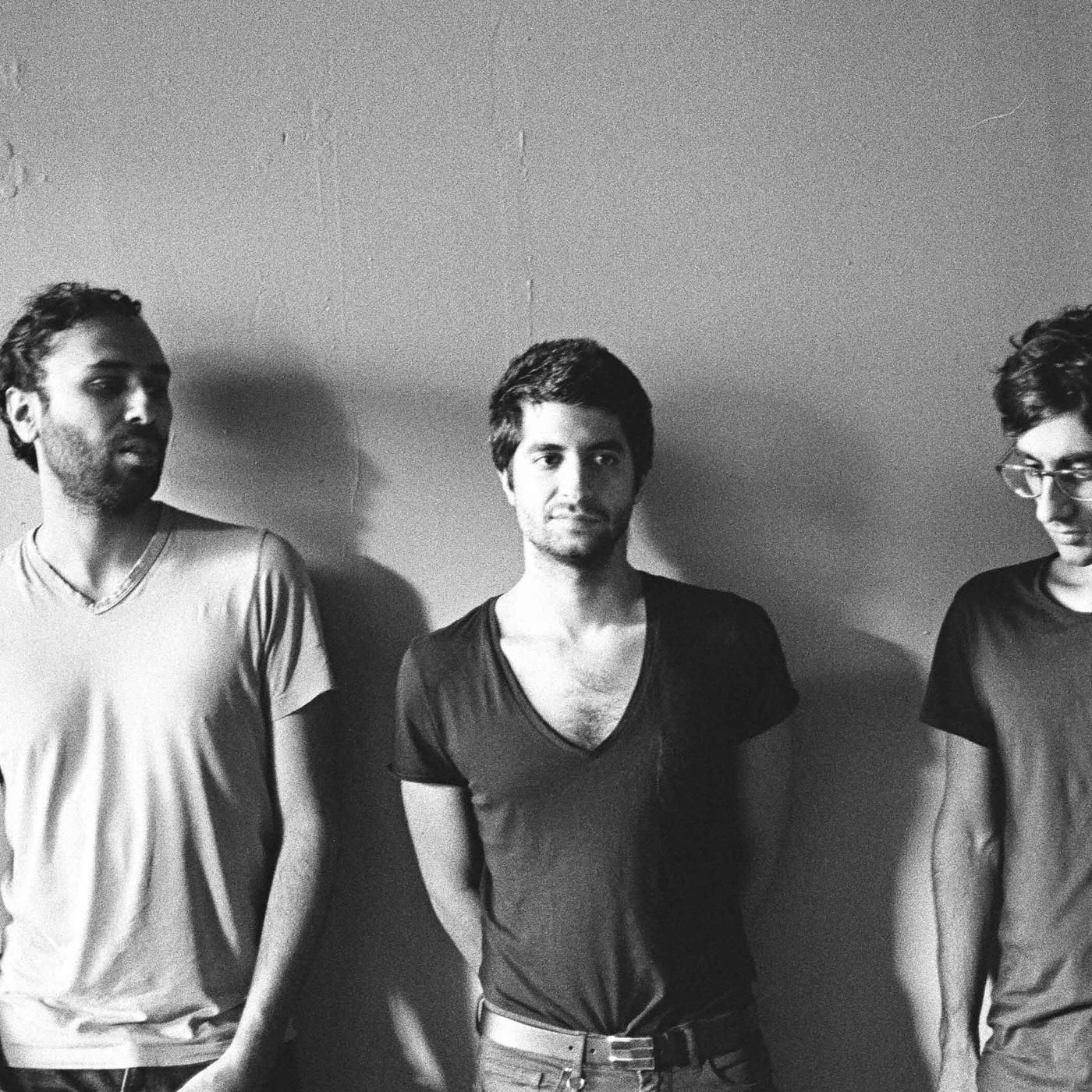
Radiolab
Dawn of Midi
00:13:57
In this short, Jad puts on his music hat and shares his love of Dawn of Midi, a band that he recently started using on the show.
Loading summary
Transcript98 lines
- [00:02]
A
Oh, wait, you're listening.
- [00:03]
B
Okay. All right. Okay.
- [00:06]
A
All right. You're listening to Radiolab.
- [00:11]
C
Radio Lab shorts from wny.
- [00:16]
A
See? And npr. Okay. So I'm gonna put on my music hat for a couple minutes, okay? And then in two weeks, we can put our other hats back on. Whatever they're called.
- [00:28]
B
Slanch. Humanism.
- [00:29]
A
Philosophy. Philosophy, whatever. Look, we are many people.
- [00:33]
B
We are many people.
- [00:34]
A
I am a musician as well as a storyteller. You are a Broadway show tune singer as well as a radio raconteur.
- [00:42]
B
I would like to have been a Broadway show. No one has ever invited me to do that.
- [00:46]
A
Well, I'm gonna invite you at least to listen to my version of that for just a few minutes. I'm gonna tell you about a band that I just discovered. This may be the coolest thing I've heard in years. Actually, you know this band? I mean, maybe you don't know that you know them, but we've used them in a few shows. Remember the piece we did in the Bliss show about the perfect snowflake?
- [01:02]
B
Yeah.
- [01:03]
A
We used them there. Oh, remember the story about the artist who weaponized his own blood?
- [01:07]
B
Yes. Barton Benish.
- [01:08]
A
We used them there too.
- [01:09]
B
So in a subtle way, I have already been exposed to them.
- [01:12]
A
That's what I'm saying. Although I am quite certain you will hate their music. I could be wrong about that.
- [01:17]
B
Well, I will be as generous as I know possibly how to be.
- [01:20]
A
The band is called dawn of midi.
- [01:21]
B
Don of what?
- [01:22]
A
Of midi.
- [01:23]
B
M I D I. Mm hmm.
- [01:24]
A
Do you know what MIDI is?
- [01:25]
B
No.
- [01:26]
A
It's sort of like a computer language for music. Like in my studio at home, I have a bunch of synthesizers and various things. They all talk to each other using midi.
- [01:34]
B
Oh, the dawn of midi.
- [01:35]
A
Dawn of midi.
- [01:36]
B
It's one of those half and halfs. Like, dawn suggests something pleasant, beautiful, and sort of movie, like midi. Technological card.
- [01:44]
A
Cold. Yeah, that's actually not a bad place to start. Okay, so the band is three guys. Akash Israni, he plays the bass. Amino Beliani plays the piano. Akasim Naqvi plays the drums. Met in College at CalArts. Initially, though, their partnership was not about music. It was about tennis. Began on the tennis courts.
- [02:04]
C
On the tennis court, yeah. It was funny, actually, because we would play like late at night.
- [02:08]
A
That's Akash, the bass player.
- [02:10]
C
Qasem had like, stolen the key and kept it or something. And one night we were there at like 3am and I think we were really drunk. And security showed up and he saw us.
- [02:19]
A
They were Pounding the ball back and forth, yelling.
- [02:21]
C
And when he saw the intensity with which we were involved in this match, he was like, you know, you guys should continue, like, carry on. And he left.
- [02:29]
A
And that intensity sort of translated into the music that they started to play. Maybe not the competitive part, but they would take it really seriously. Like, what they would do is they'd.
- [02:38]
C
Get together, we'd go into these classrooms that had no windows and turn out.
- [02:43]
A
All the lights, and they would play these long, crazy sets in pitch black darkness. It was completely, totally improvised. Like, before they started, they would have no idea what key they were gonna play in? No. No idea of what tempo?
- [02:56]
B
No.
- [02:57]
A
Or how long they were gonna go? No. Would you at least figure out who was going to play first? No.
- [03:01]
B
I mean, they just start cold.
- [03:02]
A
Cold. But it would end up sort of like that 3am tennis match. Really intense, rolling, rollicking improvisations. Kind of atonal.
- [03:13]
B
Atonal. Oh, boy.
- [03:14]
A
Yeah, I know, I know. I was just trying not to use that word. But it's really. I like it. It's really interesting stuff. And like I said, we use it in the Snowflake story, but that's not. But that style of music is not actually what I'm gonna present to you now. It's what they do next that I find totally fascinating. To set that up, as they're out on tour doing this free improvisational thing. They were also listening to different kinds of music. Like, they were listening to electronic music as well. Stuff like Aphex Twin. Also, one of them gets really deep into trance music. Not techno trance, but a lot of.
- [03:52]
C
Music from Africa, West African music, as well as music from Morocco.
- [04:01]
A
And these are musical traditions that have a totally different approach to rhythm, which we can talk about in a second. But they're listening to all this stuff, and it begins to somehow seep in. They begin to gradually put a little bit of it into their sets. And to make a long story short, over the course of. Of two years, it was a very.
- [04:20]
C
Incremental and slow process.
- [04:22]
A
They pieced together this style of music that was. That is 180 degrees from what they were just doing. And unlike anything I've ever heard. And the only way I can describe it is it's sort of like ancient folk music filtered through highly obsessive computers that actually aren't computers, but people.
- [04:39]
B
What does that mean?
- [04:40]
A
Here, I'm gonna play you some. Okay.
- [04:41]
B
Okay, hold that on.
- [04:45]
A
No, not that. Let's put this on. Let's just wait. Let's just mute this. All right, Here it comes now. Keep an open mind. Okay, so this is how it starts. With just a baseline.
- [05:12]
B
Is it going to develop or are we going to.
- [05:14]
A
No, it is, it is, but just slowly. Just wait, wait. Hear that?
- [05:20]
B
Do do, right?
- [05:23]
A
It's a pianist. He's playing it with his left hand on the strings. So he's kind of muting it to create a harmonic.
- [05:34]
B
I know a pod of whales who would go crazy for this.
- [05:38]
A
Just look. Okay, you hear the drums are coming. Do you hear that?
- [05:41]
B
Yes.
- [05:47]
A
I don't know about you. Actually, maybe I do know about you. But for me, right about now, I'm getting into a deep trance.
- [05:56]
B
Just don't say anything for a minute and let's see what happens. Sam.
- [06:50]
A
Listen to that.
- [06:50]
B
They're not playing a machine. They're playing traditional instruments.
- [06:53]
A
No, this is all a lie. They're playing real instruments.
- [06:55]
B
It was all performed.
- [06:56]
A
It's acoustic. Although it doesn't sound acoustic.
- [07:00]
B
Yeah, it doesn't.
- [07:02]
A
I am so addicted to this. Just listen some more. See, it just starts to slowly evolve.
- [07:38]
B
A little bit, bit by bit.
- [07:40]
A
And it just keeps doing that for 45 minutes. I mean, it has. It's broken into tracks, but it's really just one long thing.
- [07:47]
B
I think that in seismic laboratories all over the world, we're geologists, gather people who have to listen to impending earthquakes. This is gonna be like, enormous in.
- [07:57]
A
The Crow Witch household too, I imagine.
- [07:59]
B
Cause it's small. Small shifts.
- [08:01]
A
Tiny, tiny shifts. Come on. You don't find that groovy at all?
- [08:15]
B
Yeah, no, I do. Actually, I do.
- [08:17]
A
So these guys basically went from, like, free improv, no rules, to becoming, like human machines.
- [08:23]
B
It's sort of like wishing to be an element in a very finely made.
- [08:28]
A
Swiss watch, except now remove the watch.
- [08:32]
C
I think that something is going on in the world right now.
- [08:37]
A
That's Akash again.
- [08:38]
C
The last 10 to 15 years. You see in a lot of fields right now, people doing things, quote unquote, in an analog way that 10 years ago would have been assumed were absolutely, like, impossible without the aid of technology. You see it from big wave surfers who found out they could ride huge waves if they have jet skis to pull them into these waves. To now saying, hey, wait a minute, we can catch these with our arms again. But the jet ski needed to be there to show them that this was even possible. And you see it with this French beatboxer video online. He's doing something that just sounds impossible. It's unbelievable. And it's like something that. The kind of stuff that Aphex was programming for his music, but this guy's doing it with his mouth. And it's like the computers showed us a world of possibility and now we're sort of almost realizing that that world was inherent to us, not the machine.
- [09:36]
A
Huh. So you're talking about like a reclaiming?
- [09:38]
C
Yeah, absolutely. And it was like, almost like we didn't know how far the biotech of our minds could go until the machine sort of showed us that, hey, wait a minute, like this is, this is coming from you guys.
- [09:57]
B
You know what it is, is if. If you just let it do what it's. And have no known of the usual expectations of resolution or like that usual arc, it's not going to tell you a story. It's just going to keep you company. That's what's happening here.
- [10:24]
A
Yeah, I mean, I think what it's trying to do is to get you into a different state of mind, like a different state of time.
- [10:31]
C
That experience of time that is non.
- [10:33]
A
Narrative, where you're sort of existing in time, not in a sort of regular story way where everything leads to the next thing, beginning, middle and end something else.
- [10:40]
C
What Amino and I often talk about is the idea of quantum states of time.
- [10:44]
A
And I think what he means, what I take it to mean is something very ancient in a way. Like, you know how I mentioned that they were listening to West African and Moroccan trance music? What you have, and a lot of that music are these vertical stacks of rhythms, like almost multiple time flows existing simultaneously in the same moment. And if you listen into this music that we're hearing right now, you try and pick out, okay, what's the bass doing? What's the drums doing? What's the piano doing? You will hear that they're actually almost not fitting together, like they're playing different beats pulling at each other. In some sense. If I listen in and try and pick out all the lines, I get lost in the intricacies of their rhythms. If I listen out, I can just nod my head to it for 45 minutes. But if I listen in, I'm like, jesus, God, what is that bass player doing? I have no idea what beat he's on. And that's just interesting to me, the way that the patterns on the interior are just kind of mess with your ear because they all seem to be on their own cycle, falling in and out of phase. But then when you pull out and just listen to the whole thing together, you're like, oh yeah, I can nod my head to this, I can nod.
- [11:49]
B
To this, this Reminds me, actually. I don't know if you are familiar with Mark Rothko's paintings. Those, like, sort of squares of color that sit one on top of the other. Sometimes I have the same. I'll go, there's a Rothko Chapel in. In Houston.
- [12:05]
A
Yeah. One of the most amazing places.
- [12:07]
B
Because he would often take a sponge and then dip it in the color and then very lightly dab, like, over.
- [12:12]
A
And over and over.
- [12:13]
B
So it's very, very layered. And when I look closely, I see patterns within patterns within patterns within patterns. And I get feelings from the patterns.
- [12:26]
A
Yeah.
- [12:27]
B
I find myself sort of telling stories about the feelings that I'm having. Then I'll pull myself out and I'll see three rather richly tonal blocks of color. Big picture, then little picture again.
- [12:38]
A
Yeah, tonal.
- [12:39]
B
It's the same thing you're describing.
- [12:40]
A
Yeah, I like that phrase, feelings from the patterns. That makes sense to me. And these patterns to me, they feel kind of ancient and new at the same time. Super mechanical and yet deeply human at the same time. It never quite resolves for me, somehow. Any case, not much more to say. You can find out more about dawn of MIDI on our website, Radiolab.org their album is called Dysnomia. It's definitely my favorite thing in years. And they'll be performing next week at La poisson rouge. That's September 3rd. I will be there and Robert and I will be back in two weeks with a full hour. Hi, I'm Ross Frew from Glasgow. Radiolab is supported in part by the National Science foundation and by the Alfred P. Sloan Foundation, Enhancing public understanding of science and technology in the modern world. More information about Sloan@www.sloan.org. thanks.