← Radiolab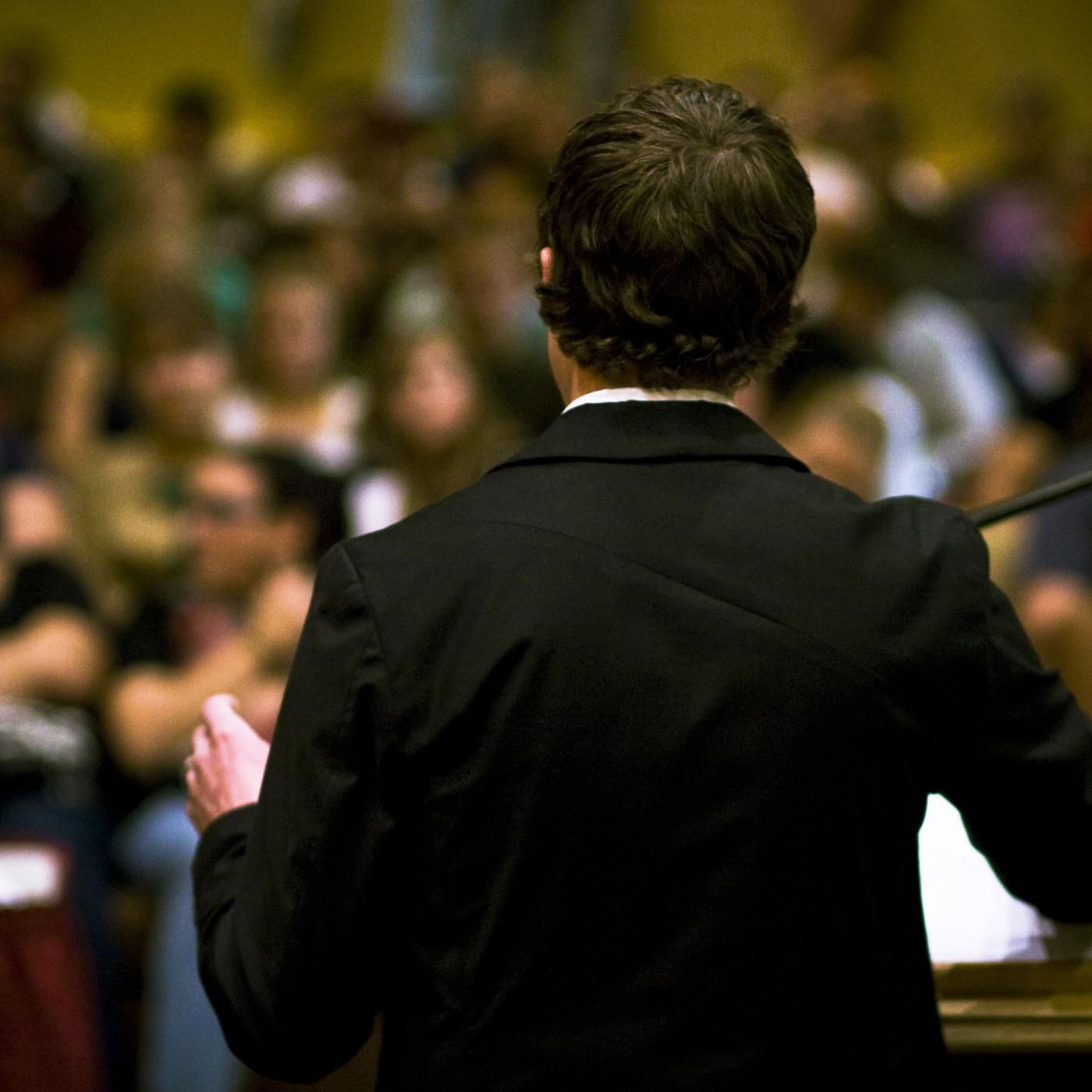
Radiolab
Debatable
00:57:46
Unclasp your briefcase. It’s time for a showdown. In competitive debate future presidents, supreme court justices, and titans of industry pummel each other with logic and rhetoric. But a couple years ago Ryan Wash, a queer, Black, first-generation college student from Kansas City, Missouri joined the debate team at Emporia State University. When he started going up against fast-talking, well-funded, “name-brand” teams, it was clear he wasn’t in Kansas anymore. So Ryan became the vanguard of a movement that made everything about debate debatable. In the end, he made himself a home in a strange and hostile land. Whether he was able to change what counts as rigorous academic argument … well, that’s still up for debate. Produced by Matt Kielty. Reported by Abigail Keel Special thanks to Will Baker, Myra Milam, John Dellamore, Sam Mauer, Tiffany Dillard Knox, Mary Mudd, Darren "Chief" Elliot, Jodee Hobbs, Rashad Evans and Luke Hill. Special thanks also to Torgeir Kinne Solsvik for use...
Loading summary
Transcript459 lines
- [00:00]
Narrator/Announcer
Limu Emu and Doug. Here we have the Limu Emu in.
- [00:06]
Ryan Wash
Its natural habitat, helping people customize their.
- [00:08]
Narrator/Announcer
Car insurance and save hundreds with Liberty Mutual.
- [00:13]
Ryan Wash
Fascinating. It's accompanied by his natural ally, Doug.
- [00:18]
Jad Abumrad
Limu is that guy with the binoculars watching us.
- [00:21]
Scott Harris
Cut the camera.
- [00:21]
Ryan Wash
They see us.
- [00:22]
Host/Interviewer
Only pay for what you need@libertymutual.com Liberty Liberty Liberty Liberty Savings vary unwritten by.
- [00:28]
Arjun Veliapin
Liberty Mutual Insurance Company and affiliates.
- [00:29]
Ryan Wash
Excludes Massachusetts.
- [00:30]
Host/Interviewer
When it comes to gifting, everyone on.
- [00:32]
Ryan Wash
Your list deserves something special. Luckily, Marshall's buyers travel far and wide, hustling for great deals on amazing gifts.
- [00:39]
Host/Interviewer
So you don't have to. That means your mom gets that cashmere.
- [00:42]
Ryan Wash
Sweater, your best friend that Italian leather.
- [00:45]
Host/Interviewer
Bag, your co workers unwrap their favorite beauty brands, and your nephews the coolest new toys.
- [00:50]
Ryan Wash
Go ahead.
- [00:51]
Host/Interviewer
At prices this good, you can grab.
- [00:53]
Ryan Wash
Something for yourself too.
- [00:54]
Host/Interviewer
Marshalls, we get the deals. You gift the good stuff. Shop now@marshalls.com or find a store near you at Lowe's.
- [01:03]
Ryan Wash
Before the holidays is the perfect time for upgrades and upkeep during Black Friday. Get up to 50% off, select major appliances and buy more to save more. With up to an additional 25% off when you bundle, select major appliances plus grab select Dewalt 20 volt max drill or impact driver kits for just $99. Lowe's we help you save valid through 12. 3. Selection varies by location while supplies last. Seelows.com for more details.
- [01:33]
Host/Interviewer
Wait, you're listening. Okay. All right.
- [01:36]
Ryan Wash
Okay. All right.
- [01:39]
Host/Interviewer
You're listening to Radio Lab.
- [01:42]
Arjun Veliapin
Radio Lab from wnyc.
- [01:50]
Ryan Wash
Yeah. So before we get started, I had a couple of questions for you.
- [01:55]
Host/Interviewer
Yeah, please, fire away.
- [01:56]
Ryan Wash
So I've talked to a lot of people who you've attempted to contact. There's a lot of hesitation. People just don't have faith in media right now. And considering our issues, to be honest, white controlled media. So I got a couple questions for you.
- [02:13]
Host/Interviewer
Yeah.
- [02:13]
Jad Abumrad
Quest away.
- [02:15]
Ryan Wash
Why now?
- [02:16]
Jad Abumrad
Why do we want to do this story now?
- [02:17]
Ryan Wash
Yeah, it's been a couple years.
- [02:19]
Jad Abumrad
Yeah, well, you know, it's. Abby just found the story.
- [02:24]
Host/Interviewer
Yeah.
- [02:25]
Jad Abumrad
So it was unknown to us until right now.
- [02:29]
Robert Krulwich
Well, this feels a little newsy of the moment in its upside down way.
- [02:32]
Jad Abumrad
Yeah, this is Robert, by the way.
- [02:34]
Ryan Wash
So we have Robert, we have.
- [02:36]
Host/Interviewer
We have Robert, we have Jad, and we have Abigail.
- [02:38]
Ryan Wash
Jad. J A D. J A D. Yes.
- [02:41]
Robert Krulwich
Yes, we should, I guess.
- [02:43]
Jad Abumrad
Do you have. Do you have other questions?
- [02:45]
Ryan Wash
Sure, we can wait. We can table those.
- [02:47]
Jad Abumrad
No, no, no, no.
- [02:48]
Robert Krulwich
Let's hear them.
- [02:49]
Ryan Wash
So what is the end goal? What do you want the story to say?
- [02:54]
Robert Krulwich
We never know that at the beginning.
- [02:57]
Jad Abumrad
Okay. Hey, I'm Jad Abumran. I'm Robert Krulwich, this is Radiolab.
- [03:01]
Robert Krulwich
And today, Today we're gonna tell you the story of a guy. This is a guy named Ryan Wash.
- [03:06]
Jad Abumrad
He's part of a movement of people who've taken this established corner of the academic world and they've reshaped it and.
- [03:15]
Robert Krulwich
Reframed it into something even weirder and more different.
- [03:18]
Ryan Wash
Weirder?
- [03:20]
Jad Abumrad
No, not weird. Bad weird. Just interesting. Yeah, interesting. Let's replace the word weird with interesting.
- [03:25]
Ryan Wash
I don'. I'm just saying. I'm just saying in debate lingo, that's a link.
- [03:31]
Robert Krulwich
That's a link.
- [03:33]
Ryan Wash
Usually when you run a criticism, the link is the thing that they have done bad.
- [03:39]
Host/Interviewer
Okay, okay.
- [03:40]
Ryan Wash
The description, the description of performance debate is weird is problematic.
- [03:45]
Jad Abumrad
Well, can I put a less judgmentally? Okay, so the world that we're talking about, which is at the center of this whole story, is obviously debate.
- [03:55]
Ryan Wash
Yes.
- [03:56]
Jad Abumrad
High school debate and college debate. Now I have, I never did debate, but from the outside it always seemed like this hyper competitive, like brain sport.
- [04:04]
Robert Krulwich
These guys with these little accordion briefcases where they have all these files in there with all the research.
- [04:09]
Jad Abumrad
Yeah. And they go to these tournaments and they argue about some topic back and forth and back and forth and back and forth. Yeah. Now the interesting thing about debate, I didn't know this beforehand, is that the people who do this often go on to become hugely powerful people. You know, Supreme Court judges, presidents, leading thinkers, scholars, titans of industry.
- [04:27]
Robert Krulwich
It's the farm team of the big folks for tomorrow. So Lee Iacocca from Chrysler, he was a debater.
- [04:32]
Jad Abumrad
Margaret Thatcher, Ted Cruz, Karl Rove, Hillary.
- [04:35]
Robert Krulwich
Clinton, Oprah Winfrey, Richard Nixon, Malcolm X.
- [04:38]
Jad Abumrad
They all were debaters. And today, this is Ryan's story. Ryan Wash's story of debate.
- [04:44]
Host/Interviewer
Or actually it's Ryan's story debating debate.
- [04:47]
Jad Abumrad
Yes. And the story comes from reporter Abigail Keel. And before we get going, just wanna let you know there is some strong language in this story, some profane words. Skip it if you need to. Otherwise, here we go.
- [04:58]
Host/Interviewer
Is it, is it cool if we jump in, Ryan? Yeah, I would love to know Ryan. Like, what was your life like before you were ever on a debate team?
- [05:08]
Ryan Wash
Well, Kansas City, Missouri, inner city, public school, you know, 99% black students. I was actually tricked into debating.
- [05:17]
Jad Abumrad
Really? When was it? When, when was this what you're talking about?
- [05:21]
Ryan Wash
Oh, well, let me see. 2000 I'm sorry, I'm old. 2005.
- [05:29]
Jad Abumrad
When were you born if you sang you're old?
- [05:31]
Ryan Wash
1990.
- [05:32]
Jad Abumrad
Oh, come on.
- [05:35]
Ryan Wash
But, yeah, I ended up getting tricked into debate. I was definitely more of an observant person, which is why I like to play the game of chess, because you know how people move their pieces, the time it takes them to move their pieces all gives away something their tails. And so I was tricked into debate by playing chess. And I ended up winning the school chess tournament that we had. And this little, short German redhead lady named Jane Reinhardt came to chess practice. I ended up being president of chess club. She came to chess practice one day and pulled me in the hallway and.
- [06:09]
Host/Interviewer
Was like, I understand. You know, you were chess champion, and that's a really good thing. And we have this debate program, and I think you'd be really good at it.
- [06:17]
Ryan Wash
Like, you know, anybody who could critically think of chess could critically think at debate. Yada, yada, yada. I didn't even know what debate was.
- [06:23]
Host/Interviewer
So he told her, no, no, not for me. But I persist.
- [06:28]
Ryan Wash
So over the next year, she kept on telling me. She was like, I thought I told you to join debate. I thought I told you to join debate. And I was like, I thought I told you no.
- [06:36]
Host/Interviewer
I can spot a debater at 20 paces.
- [06:39]
Ryan Wash
And she was just like, okay, you think I'm playing. So one Monday, I came to school. She handed me a piece of paper. It was a revised schedule. She had my schedule changed to where I had debate. First hour.
- [06:50]
Host/Interviewer
I just. After the meeting.
- [06:53]
Ryan Wash
And so here I am.
- [06:54]
Host/Interviewer
Here you are. That's what happens with a lot of my debaters. They just come in kind of dazed, like, my schedule got changed. I'm like, yeah, okay, that's fine. Take a seat. So those first few classes, Ryan's learning the basics of debate. And in this kind of debate that he's doing, it's called policy debate. There's two teams and two people on each team. Usually, the debate is about some kind of national policy topic, like the United States government should increase its economic engagement in China. One team at the beginning of the debate is randomly assigned to be affirmative, and that means they're supporting that proposition. They're saying, yes, the United States federal government should do that. Here's why. And the other team is the negative team, and they're arguing against the affirmative. Both of those sides make their case, and then at the end, the judge decides who made the better arguments. I mean, I get them up debating. Almost day one.
- [07:52]
Ryan Wash
We ended up Having mock debates in class like Pepsi versus Coke, you know, Family Guy versus the Simpsons and stuff like that. So it was very fun. It made us learn how to do impact analysis.
- [08:06]
Jad Abumrad
Impact analysis, what is that?
- [08:08]
Host/Interviewer
So, for instance, let's say you're debating apples versus oranges.
- [08:12]
Ryan Wash
If I say the rinds of apples are necessary for the fertilizer to produce oranges, so you must vote for apples.
- [08:19]
Host/Interviewer
That would be the impact of choosing apples over oranges.
- [08:22]
Ryan Wash
You have to be able to compare the two and make argumentation. So the traditional standard for argumentation is.
- [08:27]
Host/Interviewer
And as Ryan started learning all of.
- [08:29]
Ryan Wash
This impact analysis, Fullman's model of argumentation, he started to ethos pathos.
- [08:34]
Host/Interviewer
Logos do really well. Yeah, yeah, he did. He joined the team, started going to tournaments.
- [08:39]
Ryan Wash
You know, debate is one of those activities that affords you the possibility of traveling places. Where I grew up and went to school, I mean, students didn't leave like a 40 block radius for their entire life.
- [08:49]
Host/Interviewer
You know, I mean, you're in control in that debate round and everybody's listening to you. And I think it's important to feel that way, even if it's only in a 60, 90 minute debate round. Ryan needed those wins. He needed. I was enjoying debate, that affirmation.
- [09:09]
Ryan Wash
I was having a great time. The thing that helped me out was that my first tournament was a debate. Kansas City tournament. Debate. Kansas City is an urban debate league. And so we were debating. Other kids from the same neighborhood just went to different schools. And so that environment of debate was to me, very different. Like, yeah, we wanted to win, but there was a lot more camaraderie in the debate, I thought. And so to me, by the time I went to my first national competition, I was very much committed to debate. But once I went to that national tournament for the first time, I was like, okay, I don't know about this.
- [09:45]
Host/Interviewer
You know, at national tournaments, you're up against what I call name brand schools, you know, like predominantly private schools.
- [09:52]
Ryan Wash
And so we were real excited about that. Put our little dress clothes on, got cute, got on the bus, nerves started to kick in a little bit. Just about going to a debate tournament, got off the bus, went inside, and.
- [10:02]
Narrator/Announcer
Then.
- [10:06]
Ryan Wash
We went into the cafeteria. And when we opened the door to walk into the cafeteria and began to walk in, the room went silent. I mean, when I tell you, the talking stopped. Literally 300 other plus students stopped and stared at us because a bus of black kids had just arrived and they like watched us the whole time that we were in the cafeteria. And they was like, what are they doing here? Well, at least that's how I felt, you know. But we walked over to our table and our coach was like, do not worry about them. Pull out your things, get warmed up, get ready for competition. And so got our stuff, pulled out and started to practice. And then they started to whisper. You know, whether they were whispering about debate stuff or about us, I don't know. I wasn't in their heads. But I can definitely explain to you what that felt like. It was real awkward. It was real uncomfortable.
- [11:15]
Host/Interviewer
And making things even more awkward and more uncomfortable is that when the debates actually got going? And this is particularly true at the national level, this is what debate sounds like. This also turns back wealth is because.
- [11:27]
Ryan Wash
They'Re sitting on my own certificates.
- [11:28]
Narrator/Announcer
It causes global nuclear war and escalation.
- [11:30]
Host/Interviewer
If there's a backlash.
- [11:30]
Shanara Reid Brinkley
The plan.
- [11:31]
Host/Interviewer
The US federal government, through an act of Congress, will substantially reform domestic transportation infrastructure by requiring that all federally funded road paving projects in the US use 15 to 22% granite and asphalt and concrete mixes.
- [11:40]
Ryan Wash
Moving targets.
- [11:42]
Jad Abumrad
Is this like sped up or something?
- [11:44]
Host/Interviewer
No, this is what debate sounds like today. Like they, they sort of speed read.
- [11:49]
Ryan Wash
Well, the goal of speed reading, or spreading, if you will, is to get more arguments out.
- [11:52]
Host/Interviewer
The US highway infrastructure has an urgent requirement for parent actions. And apparently, and this is like a quick digression, that this kind of thing actually started in like the 1960s and the students were actually the ones who were driving it.
- [12:05]
Scott Harris
One of the things that makes debate such an interesting intellectual game is that it's much more of a bottom up driven activity than a top down activity.
- [12:13]
Host/Interviewer
That's Scott Harris, director of debate at the University of Kansas. In the case of speed reading, we.
- [12:18]
Scott Harris
Evolved a situation where one team decided, well, I'm gonna present eight arguments, and the other team talked slower and only answered six of them. And the judge says, well, you didn't answer two of these arguments, so you lost the debate because you didn't answer those arguments. So that team said, well, we need to answer all eight of those arguments. And they started to talk faster. And the other team said, well, we'll present 10 arguments. And then they answered 12. And then they've been. And so it escalated to a point that in some instances has gone way too far.
- [12:46]
Host/Interviewer
And getting back to Ryan, it's not as if he didn't know how to do that style of debate.
- [12:50]
Ryan Wash
That's the way I debated. I did try to speak fast, but.
- [12:53]
Host/Interviewer
He says somewhere around the first national tournament, like all that stuff just kind of stopped Making sense to him, like the fast talking and the fact that he had to debate these super, you know, highfalutin topics.
- [13:07]
Ryan Wash
I felt as if I could never take any of the stuff that I learned in debate and take it back to 3,304 askew where I lived.
- [13:16]
Host/Interviewer
And this isn't just unique to Ryan. I mean, what you see at this stage in debate is that a lot of kids, like especially inner city kids from public schools, black students, you know, they just start to drop out of debate at a certain point. But Ryan, Ryan didn't do that.
- [13:31]
Robert Krulwich
Now something big is going to happen. I have a feeling like somebody's going.
- [13:35]
Ryan Wash
To say, no, no, no. What happened was, is that a student from University Academy, she was a senior.
- [13:42]
Host/Interviewer
Her name was Marshana, and she went to a different school than Ryan.
- [13:46]
Ryan Wash
She came over and asked Reinhart. She needed a partner. There was about to be this tournament called the KCKCC TLC tournament.
- [13:54]
Host/Interviewer
It was a big high school debate tournament. And Marshana, she was a senior, so she was older than Ryan, but she needed a partner. So she came to Jane Rinehart. And Jane said, well, here, Ryan, he's your guy.
- [14:06]
Ryan Wash
So met with Marshawna. It was the Thursday before the tournament happened. And I pulled her into this room and I had open, I had three boxes of evidence, you know, and I was ready to go with my traditional stuff.
- [14:16]
Host/Interviewer
The topic was whether the US should increase participation in national service programs. So like Peace Corps, armed services, stuff like that.
- [14:23]
Ryan Wash
And I'm like, oh, this is the stuff that I've been working on. I showed her the Learn and Serve America stuff. I had this like Peace Corps affirmative that I hadn't wrote yet.
- [14:30]
Host/Interviewer
He showed her note cards with statistics on them, quotes from various experts, you.
- [14:34]
Ryan Wash
Know, and she was like, mm, uh huh. Yeah, that's cute.
- [14:36]
Host/Interviewer
Yeah.
- [14:37]
Ryan Wash
And so she handed me this expando and was just like, okay, take this.
- [14:40]
Host/Interviewer
Folder, go home, study it.
- [14:42]
Ryan Wash
So I got home and I opened this expando and it was all of this, it was full of things. And I stayed up literally all night studying this file. I mean, it was not a lot of evidence. There was not a lot of pre written out answers to arguments. There wasn't a lot of that. There was some things. There was Ralph Ellison's I am an invisible man. There was a clip from Ralph Ellison's, you know, invisible man in there. There was, you may write me down in history with your bitter twisted lies. Maya Angelou poem in there. You may trod me in the very dirt, but still like dust all right. There was some original stuff that she wrote. And I'm like, I didn't get it. But she was the senior. So Reinhardt kind of told me, you know, let her, you know, drive the ship. You just ride along. And I was like, okay. So next day we get to the first debate. I still was very unclear when we arrived at the tournament, just what was going on.
- [15:39]
Host/Interviewer
He and Marshana get to the classroom, and standing on the other side of the room are their two opponents.
- [15:45]
Robert Krulwich
Are they white kids?
- [15:46]
Ryan Wash
Mostly, yeah, they were white guys in suits with Republican ties on. If you want to know, if you want to vivid your script.
- [15:56]
Host/Interviewer
The other team, they're affirmative, so they.
- [15:58]
Ryan Wash
Go first and they're like.
- [16:02]
Host/Interviewer
They lay out this whole argument about how the national service programs are good because they increase US Power abroad. And then it was Marshana's turn.
- [16:09]
Ryan Wash
And so she gets up to give this speech, and it starts with this, like, four minute long piece of spoken word.
- [16:17]
Host/Interviewer
It's like this performative speech kind of about her personal experience and debate.
- [16:22]
Ryan Wash
And she had this way of speaking that was very passionately forceful. It made people stop. They stopped writing, they stopped talking.
- [16:36]
Host/Interviewer
And in the middle of this riff, Marshana laid out this argument that the.
- [16:40]
Ryan Wash
Style of debate that they engaged in, that fast paced form of debate was exclusionary because it demotivated minority students from participating.
- [16:49]
Host/Interviewer
And not only that, like, it also creates this resource imbalance because if you're going to start debating with a ton of arguments, then you have to research that many arguments and you need help researching those arguments. So you pay people and you pay coaches to help you make those arguments. And that clearly favors rich and affluent schools. And beyond that, Marshana argued, like, even the language itself sets up a norm of what counts as intelligent, authoritative argumentation.
- [17:15]
Ryan Wash
For instance, like, men's voice to be held up over women, black people to always seem angry and brutally when they're just being passionate, as if they don't have feelings, you know? It was a criticism of the auctioneer style of debate. It was a criticism of the insular lingo of debate. It was a criticism of the way in which debates were decided socially and politically as opposed to argumentatively. So I was like. I was like, okay, I can.
- [17:42]
Robert Krulwich
Were you shocked? Did this shock you?
- [17:45]
Ryan Wash
No, I wasn't shocked. I was like. I was like, on one hand, I was like, damn, that was a great. That was tight snaps. Like we was at the poetry slam. But I was sitting to myself thinking, like, okay, how am I gonna extend this?
- [17:58]
Host/Interviewer
Like, when it got to Be his turn. What's left for him to say?
- [18:01]
Ryan Wash
I don't know what more. What other words I could use? And so it wasn't until the second person from this team got up and he started to speak, and he was like, you know, debating about the state is great. This is disrespectful to the state of debate. And he turned to her. It was this moment he turned to her and he said it, like, from his soul. You should go down the hall, because that's where poetry prose is held. This is academic debate. And I was like, what? And he basically, his argument was that what we were doing was not debate. What we were having was a talent show is how he described it. And I was just like, I get it. And maybe it was the studying I had done all night, but everything kicked in in that moment. My passion came into the room, and.
- [18:50]
Jad Abumrad
I was like, it was it.
- [18:52]
Host/Interviewer
You get it?
- [18:54]
Ryan Wash
Like, I get everything that she was trying to say, what she was saying about the structure of debate, because I had felt those things before. I just didn't know how to articulate them.
- [19:02]
Jad Abumrad
Was it like. I get that I can. Was it, like, permission?
- [19:06]
Ryan Wash
I get what she's saying. Like, debate is fucked up. I get. I'm sorry. And let's just say we definitely went on to win that debate.
- [19:15]
Robert Krulwich
You won this match.
- [19:17]
Ryan Wash
Yeah, we won the debate because.
- [19:19]
Host/Interviewer
Okay, so let me just explain, like, what happened in this debate. Judges in this kind of situation have a choice, right? Like, they can hear the arguments that Ryan and Marshawna are making, and they can think, okay, this isn't really about the Peace Corps or about armed services, so you lose. Or they can do what the judge in this debate did, and they can say, all right, this topic has kind of shifted. But let's look at what we have in front of us. Let's look at the arguments that were made. You have Ryan and Marshana saying that the structure of debate is racist, and then you've got the other team not really responding in any kind of, like, counter, argumentative way. And Ryan, in this debate, what he does is he. He points at that. He points it when this other team says, leave the room. And he says, hey, like, what they just did proves our point that we are excluded from debate. And the judge agreed.
- [20:15]
Jad Abumrad
Oh, so you used. You used his sort of. You used his. You don't belong here as a. Kind of. As a. As an argument.
- [20:21]
Ryan Wash
And that's what I was saying is about our evidence. And it came for a lot from what happened in the debate. Itself.
- [20:27]
Jad Abumrad
That's fascinating.
- [20:28]
Robert Krulwich
But wait a second, wait a second. Like, let me just take that guy's side. Like, so that you're changing the whole. First of all, you're throwing huge bombs at them. Racism, hegemony. Like, what's he supposed to do? Say I'm a racist? I'm gonna be. What is he supposed to do?
- [20:42]
Ryan Wash
Stop. Stop. What do you mean, stop? Stop. First off, he should stop. Second off of, I mean, you don't have to say you're racist. Ain't nobody going to want to admit that they're racist. But you can definitely admit that you've engaged in racist praxis. Or you can have a debate about whether or not that was a racist practice. There's a healthy debate to be had about that. But instead, what he said was that you all do not belong here.
- [21:05]
Robert Krulwich
Leave the room. Like, if you walk in and you say what you just said and you say it forcibly and eloquently, and the other says, hey, you're changing the rules here. You're breaking things down. No, to leave the room. And then in the leave the room, they leave themselves open to this counter attack that you give. It still surprises me that you'd win.
- [21:25]
Ryan Wash
Okay, see, and so this is the thing. There's very few rules to debate, but there's tons of norms. And depending on, you know, the community of debate, the space of debate that you're in, those norms may differ. But I only know of a few rules, like there must be a winner and a loser, time limits. And I've seen that be debatable at times. There must be an affirmative and a negative. Other than that, how one approaches debate, you know, how one approaches the topic, how one approaches themselves and their opposition, all of that stuff is debatable and arguably should be debatable.
- [22:03]
Jad Abumrad
But is it? There's no, like, bible of debate. There's no, like, book.
- [22:08]
Ryan Wash
No, there's like, okay, so they put out things like the NDT rule book, which is like, affirmative teams must be topical. But in the world of debate, what does it mean to be topical? You know, what does it mean to be on topic that has to be debatable in order for a debate to pass. This is getting very interesting.
- [22:29]
Robert Krulwich
I'm just curious if you're really good at this. Like, can you give me parson me what you would have said if you were the guy coming after you or before you?
- [22:37]
Ryan Wash
Well, one of the things that they needed to do in particular was to say that the debate itself shouldn't be about debate. They Were trying to say that, but what they said was, y' all should leave.
- [22:47]
Jad Abumrad
See, that's interesting. Cause that's one of the place where I have sympathy for the other side is where they're like, I thought we were talking about the Peace Corps, like they walked into the wrong room or something.
- [22:58]
Ryan Wash
But that was part of our argument, was that how do you do debate? How do you participate in an activity for hours and hours and hours, weeks upon weeks upon weeks, Arguably years on years and years, and not ever think about why you debate the way that you do? That was what we were pressing.
- [23:15]
Host/Interviewer
So what was the other team's reaction?
- [23:18]
Ryan Wash
They were really upset. Yeah, they called us an N word and shit like that. No.
- [23:23]
Jad Abumrad
Really?
- [23:24]
Ryan Wash
Yes. Like, what do you mean no? Yes.
- [23:26]
Jad Abumrad
That's just. That's. Wow. We'll be right back.
- [23:49]
Host/Interviewer
This is Ms. Smith calling from her 8th grade history classroom. Radiolab is supported in part by the Alfred P. Sloan Foundation. Enhancing public understanding of science and technology in the modern world. More information about Sloan@www.sloan.org.
- [24:09]
Jad Abumrad
Hey, I'm Jad Abumrad.
- [24:11]
Robert Krulwich
I'm Robert Krulwich.
- [24:12]
Jad Abumrad
This is Radiolab.
- [24:13]
Robert Krulwich
And it's back to our story again from producer Abigail Keel, which is a.
- [24:16]
Jad Abumrad
Story about a guy named Ryan Wash, and about debate, how we debate.
- [24:21]
Ryan Wash
Yeah.
- [24:21]
Host/Interviewer
Okay, so just to kind of like pull back from that moment with Marshana and the poetry and all that. This kind of thing wasn't just happening in a vacuum. Like it actually came from all kinds of different places all at once. And one particular interesting person who was influencing it was George Soros with the billionaire.
- [24:43]
Shanara Reid Brinkley
Yeah, Soros. Soros was fascinated by debate.
- [24:47]
Host/Interviewer
That's Dr. Chanara Reid Brinkley. She's a scholar and a big figure in the so called black debate world.
- [24:52]
Shanara Reid Brinkley
Soros thought that debate was one of those kinds of activities that was incredibly important to the production of democracy.
- [25:00]
Host/Interviewer
So he started funding debate programs overseas.
- [25:03]
Shanara Reid Brinkley
In, say, places like Eastern Europe and.
- [25:05]
Host/Interviewer
Here in the us he poured tons.
- [25:07]
Shanara Reid Brinkley
Of money, like millions and millions and millions of dollars to start urban debate programs. First started with New York City, 1997. Right. So they literally, you know, went out to all of these New York high schools, talked to a bunch of administrators. Soros just pumped money into New York City to start an urban debate league.
- [25:28]
Host/Interviewer
Then it went to Baltimore, then to Chicago, Detroit, went to Kansas City, out to la, Newark, and it just kept moving.
- [25:34]
Shanara Reid Brinkley
So we're almost up to maybe 23 or 24 city.
- [25:38]
Host/Interviewer
So, you know, if you take a step back and look at it all, suddenly really, within just a few years, you have all of these new black debaters. And many of those students, she says, would go through the exact same thing.
- [25:51]
Shanara Reid Brinkley
That Ryan went through at the regional level. You can imagine you get a bunch of African American students, a bunch of teachers who are supporting them in a very positive environment. They build relationships and friendships, and so debate feels like home in that space.
- [26:03]
Host/Interviewer
But as soon as they go to that first national tournament, culture shock, because.
- [26:07]
Shanara Reid Brinkley
There is a sea of white people.
- [26:10]
Host/Interviewer
And according to Dr. Reid Brinkley, this influx of black debaters into a primarily white space started to create some tension and pressure. And that all built up and eventually resulted in something called the Louisville Project.
- [26:24]
Ryan Wash
The Louisville Project started. Its goal was to increase meaningful participation of civil rights. Louisville and the Louisville. What happened in Louisville? Let's go back.
- [26:36]
Robert Krulwich
I know that there's a baseball bat associated with these.
- [26:40]
Ryan Wash
Okay, so early 2000s, down at the.
- [26:44]
Host/Interviewer
University of Louisville, there was a debate.
- [26:46]
Ryan Wash
Team, a predominantly African American team. And so they were having a hard time finding traction.
- [26:53]
Host/Interviewer
He says they would go to these.
- [26:54]
Ryan Wash
National tournaments, and, you know, no matter what they did, if they tried to accommodate the more traditional style, there was always something that they did wrong.
- [27:02]
Host/Interviewer
Apparently, those students would try to make arguments about race inside the topics, but usually it didn't work.
- [27:08]
Ryan Wash
And so at a certain point, they decided that they were done with that.
- [27:14]
Shanara Reid Brinkley
And they were like, no, we are unwilling to play your game in the way that you have defined it should be played.
- [27:20]
Host/Interviewer
And so these debaters, what they would basically do is they would show up and they would force a conversation about race, basically saying, like, we're not going to talk about China or global trade until we deal with this.
- [27:31]
Shanara Reid Brinkley
This is Louisville's famous phrase. They said, we can't change the state, but we can change the state of debate.
- [27:38]
Host/Interviewer
So they kind of end up developing this whole new methodology, which is actually a throwback to Aristotle. And in his idea, yeah, you need three things to persuade ethos, pathos, and logos. Logos is like logic, so, you know, getting research and scholars and evidence and things like that. Pathos, that's where emotion comes in. So maybe a personal story or sharing something that will connect with the audience. And then ethos, which is kind of hard to pin down. You can think of it, like, as credibility or sort of like speaking in tune with, like, the spirit of your culture.
- [28:19]
Shanara Reid Brinkley
That's where you get the introduction of the use of hip hop.
- [28:22]
Narrator/Announcer
Some say, the blacker the berry, the sweeter the juice.
- [28:25]
Ryan Wash
I say the darker the flesh and the deeper the.
- [28:27]
Shanara Reid Brinkley
Of Spoken words, they say, the nigga is always already queer.
- [28:30]
Narrator/Announcer
That's exactly the point.
- [28:30]
Shanara Reid Brinkley
It means that it is a case turned to the affirmative because we are seeing the use of what we call street scholars.
- [28:42]
Jad Abumrad
You know, what was the reaction when this first started?
- [28:45]
Shanara Reid Brinkley
They would say things to Louisville like, you know, this isn't research. This is me. Search as if black scholars noted black scholars in their fields are not real experts. They would say things like, hip hop does not belong here. Your argument style doesn't belong here. And they. And then I'm saying these things in really nice ways, you know what I mean? But there could be really angry screaming matches at tournaments.
- [29:09]
Robert Krulwich
Would you have an objection to a prohibition as a coach if you said, like, look, for next year, let's never talk about you and leave your gender, your sex, your background, your family, your religion behind and stay entirely in the brain. I doubt that you would do that, but I'm wondering why you wouldn't.
- [29:29]
Shanara Reid Brinkley
Well, I think that's anti black. I think it's anti black too.
- [29:33]
Robert Krulwich
It's anti everything. It would be anti gay, anti Jew, anti.
- [29:35]
Shanara Reid Brinkley
Right, exactly. It would be anti all of those things, but particularly for our purposes, right. It would be anti black. And the reason why that's important for me is because these students don't get to leave their blackness at the door when they enter for competition. Right. They can pretend that they're not black, but that does not mean that everybody else is going to pretend that they are not black. How? Even when they speak what arguments they make, when they open their mouths to make an argument, people are paying attention to the fact that it is coming out of a black body. They don't get to speak without race being a factor. Nobody gets to speak without race being a factor in a nation where race is a factor.
- [30:15]
Host/Interviewer
Now back to ryan. So he's 16 years old and he sees Marshana do this spoken word poetry thing. Starts to read more about Louisville, and he's just like, I'm in.
- [30:24]
Ryan Wash
I dedicated my debate career to discussing debate. Every debate.
- [30:27]
Jad Abumrad
Every.
- [30:28]
Ryan Wash
Every single one. Every single one.
- [30:30]
Host/Interviewer
Fast forward. He graduates high school, isn't sure he's going to go to college.
- [30:35]
Ryan Wash
I was a first generation college student, so I really didn't know much about the process.
- [30:38]
Host/Interviewer
But then early August 2008, he gets a message from a debate coach at a small school in Kansas called Emporia State University.
- [30:46]
Ryan Wash
And August 14th, I was driving up to Emporia for college.
- [30:51]
Host/Interviewer
So Ryan gets there, gets paired up with a sophomore, Latoya Williams Green, who's.
- [30:55]
Ryan Wash
Now the director of debate at Cal State Fullerton. Go, best friend.
- [30:59]
Host/Interviewer
The two of them start debating together. And over the course of a couple years, Ryan starts to get recognized.
- [31:06]
Shanara Reid Brinkley
He's winning speaker awards, he's, you know, making it into the out rounds at tournaments. But it was an uphill battle.
- [31:13]
Host/Interviewer
She says, that Ryan kept bumping into judges who weren't really into the whole three tier approach to debate.
- [31:20]
Ryan Wash
Yes, I lost a lot of debates before I won any of them.
- [31:23]
Host/Interviewer
And at this point, Toya's graduated and he's debating with a freshman on the team. He's halfway into his senior year.
- [31:29]
Ryan Wash
When I had the freshman, his new.
- [31:32]
Host/Interviewer
Debate partner flunked out of school.
- [31:35]
Ryan Wash
At this point, it was either find somebody to debate with or my debate career was over.
- [31:40]
Shanara Reid Brinkley
And so what happens is Ryan is also close to one of my best friends who's one of my contemporaries, Rashad Evans, who was then a coach at Western Connecticut University. And basically, Rashad had this bombshell idea.
- [31:55]
Host/Interviewer
One day they called Ryan up and they were like, what if you partnered up with this guy from Rutgers, Elijah Smith?
- [32:02]
Shanara Reid Brinkley
And the reason, particularly Rashad thought this was a good idea. First, Elijah was an astoundingly good debater. He just had excellent debate skills and traditional skills. But the other reason was that both Ryan and Elijah were queer black men.
- [32:16]
Host/Interviewer
The thinking was that you've got two guys kind of standing at the intersection of two, like, marginalized groups. And if they're gonna try to make an argument about feeling excluded and invisible in the debate world, well, they can own that argument better than almost anyone.
- [32:33]
Ryan Wash
So I called him one night, it was 9:30, and he's like, hey, do.
- [32:37]
Host/Interviewer
You want to come debate with me?
- [32:39]
Ryan Wash
And he was like, dude, this is a lot. I can't really answer this right now. And I was like, I understand. I'm asking you to come move to Kansas for a semester or what have you. And Leah from Newark, from Newark, New Jersey. He called me back the next morning. It was like 8am My time. He was like, I've already applied and everything. And so within the next couple of weeks, he was down in Emporia. Elijah and I debated four tournaments together.
- [33:04]
Host/Interviewer
First tournament, they won two matches, lost four.
- [33:07]
Ryan Wash
I was very upset. I was heartbroken because I was a senior. And I was like, I don't really do 2 4, but it's fine, you know, it's okay.
- [33:15]
Host/Interviewer
Dr. Reid Brinkley was actually at that tournament, and she said that watching Ryan and Elijah debate was a hot mess. They just didn't have any Chemistry.
- [33:23]
Shanara Reid Brinkley
There was nothing persuasive about it. Nothing popped about it. You know, it didn't really speak to the judges.
- [33:29]
Host/Interviewer
She remembers a time when Ryan came over to her apartment to talk to her and Rashad, and he was just.
- [33:35]
Shanara Reid Brinkley
Like, you know, I don't know what were doing wrong. You know, he. You know, he just didn't know why things weren't clicking, what's not working. I don't know what's happening.
- [33:43]
Host/Interviewer
So the three of them were all talking, and Rashad, well, like, Ryan really looks up to Rashad because Rashad is also a queer black guy, but he's also, like, a really, really great debater.
- [33:53]
Shanara Reid Brinkley
And it was Rashad who said, you're not being a queer black man, right? You're being a debater. And so Rashad would say things like, you need to butch it out. You know what I mean? You need to. You know, you need to fem it up sometimes. Sometimes you need to duck walk. You know what I mean? Sometimes you're gonna have to vogue, you know? So he's saying, be black. You will always be black and queer in these spaces. So rather than attempting to hide parts of yourself, instead, you should be fully you.
- [34:22]
Host/Interviewer
Ryan, with this in his head, went back to Elijah. And within a few weeks, things started to click.
- [34:30]
Ryan Wash
We were just like, here's what our roles are. This is what you do. This is what I do.
- [34:34]
Narrator/Announcer
This debate is about debate. Performative and methodological exclusion perpetuated by the negative.
- [34:39]
Ryan Wash
I would start the debate.
- [34:40]
Narrator/Announcer
This is our argument about how it is that they get to propagate the strategy that allows for us to not even be those that you say we supposed to be.
- [34:48]
Host/Interviewer
Ryan would preach.
- [34:49]
Ryan Wash
I could reign in the choir, if.
- [34:50]
Narrator/Announcer
You will, that this activity is affected by the same structural inequalities that allow the hood to be segregated.
- [34:55]
Host/Interviewer
And then, Elijah, you as a competitor.
- [34:57]
Narrator/Announcer
You do not describe method.
- [34:58]
Ryan Wash
You're an offense or your argument. He did the middle speeches.
- [35:01]
Host/Interviewer
He dealt with logic, counterarguments, things like that.
- [35:03]
Narrator/Announcer
It's a question of black goals. It's a question of new epistemologies.
- [35:06]
Ryan Wash
He was better at the game of debate.
- [35:09]
Host/Interviewer
Ryan said they went from practicing ethos, pathos, logos to being it.
- [35:13]
Ryan Wash
We embody that methodology.
- [35:15]
Narrator/Announcer
So you tell me how their methodology literally deconstructs us to sacrifice. Inside the debate, you.
- [35:21]
Ryan Wash
And then I would end the debates.
- [35:23]
Narrator/Announcer
That's the. That our Herber talks about.
- [35:24]
Ryan Wash
Now, that's real talk, sweetheart.
- [35:29]
Host/Interviewer
In their second tournament, they made it to the finals, and they lost in a close decision. But Their third tournament was actually a national tournament called ceta, the Cross Examination Debate Association.
- [35:39]
Ryan Wash
It's kind of called the People's Tournament.
- [35:41]
Host/Interviewer
And they won that tournament.
- [35:43]
Ryan Wash
I was able to give a pretty good 2ar and we ended up squeaking the debate out.
- [35:47]
Host/Interviewer
And then their fourth tournament, their final tournament together. That's actually. It's the whole reason we're telling this story. It's the ndt, the National Debate Tournament.
- [35:58]
Ryan Wash
That was the tournament. My decision not to go for framework with predicament.
- [36:01]
Host/Interviewer
Very specific 1AR tournament. The NDT is this marathon of a debate tournament. It's like, you know, March Madness or something. It's held every year. It lasts for four whole days and there's 13 rounds of debates, 78 teams.
- [36:17]
Ryan Wash
And the NDT is where Harvard is, Northwestern, you know, Georgetown. That's the tournament that they prepare for.
- [36:32]
Host/Interviewer
That's the tournament those sorts of teams usually win.
- [36:34]
Ryan Wash
So we were definitely the underdogs, Definitely the underdogs. An all black team had never gotten past quarterfinals of this tournament.
- [36:44]
Host/Interviewer
Things kick off Friday morning at 8:00am Emporia versus Idaho State and they beat Idaho State at 11:45am they take care of Puget Sound, 4:15. They go against Oklahoma. Oklahoma actually beats them, but it's prelim, so it's not like they're out or anything. And then the crazy thing is that after the loss to Oklahoma, Ryan and Elijah go on a roll. They take down usc, they roll over Emory. They beat not one, but two different teams from Harvard. They beat Michigan State, and then on the last day they beat another team from the University of Michigan. Then they go on to beat Wake Forest. That puts them in the semis, which has never been done before by a black team. And then they're against Oklahoma, who they beat. And that puts them into the finals.
- [37:31]
Ryan Wash
It was. I can't. Everything's very surreal to me. We're in the finals of the ndt. Never happened before. We're also potentially about to unite the crowns. And what that means is win CITA and the ndt. No team in history had ever done that.
- [37:48]
Jad Abumrad
And who were they up against?
- [37:49]
Host/Interviewer
Well, they were going against a team that Ryan had already faced like twice.
- [37:53]
Ryan Wash
That year and lost every time.
- [37:56]
Host/Interviewer
The 14 time national debate champions, Northwestern University.
- [38:02]
Shanara Reid Brinkley
So when this round gets set up between North Northwestern and in Porea, one of the things that we've described it as is a clash of civilizations.
- [38:14]
Host/Interviewer
She says that about Northwestern because they have one of the biggest debate programs in the country.
- [38:18]
Shanara Reid Brinkley
They've got an entire hive mind, you know, with A hotel war room for them to strategize in.
- [38:26]
Ryan Wash
And then it was us, these two queer black guys from Emporia, Kansas, from.
- [38:34]
Shanara Reid Brinkley
A really small school with not a lot of resources. So it is like a David and Goliath story.
- [38:43]
Ryan Wash
You all ready? Okay, so let me explain the room to you all. This is the biggest room that I had ever debated in.
- [38:48]
Shanara Reid Brinkley
This hotel room that they have the debate happening in is a huge ballroom.
- [38:52]
Ryan Wash
Welcome to the final round of the.
- [38:53]
Scott Harris
2013 National Debate Tournament.
- [38:55]
Shanara Reid Brinkley
And this ballroom was packed.
- [39:02]
Ryan Wash
But the audience itself is segregated. On the right side of the room, Northwestern side, it was packed full of their people. And then on our side, was it.
- [39:10]
Jad Abumrad
Like, racially segregated, too?
- [39:11]
Ryan Wash
It was.
- [39:12]
Jad Abumrad
It was.
- [39:12]
Ryan Wash
It was.
- [39:13]
Host/Interviewer
So just to round this out, the.
- [39:15]
Scott Harris
Judges for this evening's debate, up near.
- [39:17]
Host/Interviewer
The front of the room at a table were the judges, which included our guy, Scott Harris.
- [39:21]
Scott Harris
Yep.
- [39:21]
Robert Krulwich
And how many. How many judges were judging this debate?
- [39:23]
Scott Harris
Five. Four men, one woman. All of them were white.
- [39:26]
Ryan Wash
And the affirmative team in tonight's debate.
- [39:28]
Host/Interviewer
Will be Emporia State University, Ryan and Elijah from Aporia. They were on one side of the stage, and on the other side of the stage are the two Northwestern students.
- [39:35]
Arjun Veliapin
We're wearing our Northwestern jerseys.
- [39:36]
Host/Interviewer
One was this guy.
- [39:37]
Arjun Veliapin
I'm Arjun Veliapin. I debated at Northwestern for four years.
- [39:41]
Host/Interviewer
And the other was his partner, a young woman named Peyton Lee. Peyton Lee.
- [39:46]
Ryan Wash
I don't know if she knew this, but she. She was like my college debate nemesis.
- [39:50]
Arjun Veliapin
My partner, Peyton, I was a sophomore, whereas my partner and Ryan were on the other side, were seniors.
- [39:57]
Ryan Wash
And that was the thing that was really getting me. It was gonna be my last debate. It was Peyton's last debate. It was my last debate. We were seniors. This was it.
- [40:05]
Jad Abumrad
Oh, wow.
- [40:05]
Ryan Wash
College debate is the pros. It's the NFL. It's it.
- [40:10]
Host/Interviewer
Since it's their last debate, everybody kind of gets up before their speeches to say, like, thanks and bye.
- [40:18]
Ryan Wash
I want to thank Northwestern for providing me the opportunity to make debate at home again for myself.
- [40:23]
Jad Abumrad
This is Ryan and my last debate.
- [40:25]
Host/Interviewer
Yep. And this is gonna be my goodbye, so it might take me a little bit. This is Peyton debate has been my family and my friends. It's been my hardest work and my most rewarding play any. And it's taught me more than I could have ever dreamed for that I am indebted to all of you, every part of this community, and in particular, a number of special people in my life.
- [40:54]
Robert Krulwich
Wow.
- [40:56]
Ryan Wash
It was a lot.
- [40:58]
Arjun Veliapin
So the topic for the year was whether or not the United States. Federal government should increase incentives for certain forms of alternative energy.
- [41:08]
Ryan Wash
It was nuclear power, solar power, wind.
- [41:10]
Arjun Veliapin
Or reduce restrictions on other forms of alternative energies.
- [41:14]
Ryan Wash
Coal, natural gas and oil.
- [41:17]
Host/Interviewer
Okay, so Ryan and Elijah were affirmative. So they were supposed to argue like something positive about how the US Government should support solar energy production or should restrict coal usage in energy or whatever. But they're not going to debate that.
- [41:32]
Ryan Wash
We had figured out that we wanted to talk about the ideal.
- [41:36]
Host/Interviewer
In other words, energy isn't the most important conversation that we need to have. The conversation we need to have is whether this community can include people like Ryan, like Elijah.
- [41:47]
Ryan Wash
Can we find home in debate?
- [41:49]
Shanara Reid Brinkley
Because that's how the community feels about itself, that this is a home place for a lot of people. Right. There are people who grew up in debate, people who started debating when they were 12 and 13, went all the way through college. So the people that you often develop the tightest friendships with, people that you know how some of your coolest memories because you all spent the summer together going to debate camp, those people make up your family. There are people who make friends in debate when they're 13 that they keep until they die.
- [42:16]
Host/Interviewer
So Ryan's up first. And to make his argument about home.
- [42:20]
Ryan Wash
Judy Garland referenced the great form lands of campus when she told audiences there was no place like home.
- [42:25]
Host/Interviewer
In the wickers of Oz, he starts talking about a movie.
- [42:29]
Ryan Wash
Have you all seen the Wizard?
- [42:31]
Host/Interviewer
I have.
- [42:31]
Robert Krulwich
I have not.
- [42:32]
Host/Interviewer
Okay, so all right, real quick synopsis. It's a 1978 film and what it is is like an all black cast version of the wizard of Oz. So like Michael Jackson is playing the scarecrow, Richard Pryor is the wiz, and Diana Ross is Dorothy.
- [42:49]
Ryan Wash
It was, that movie was just like, to me, you know, it was the fear that Dorothy felt.
- [42:55]
Narrator/Announcer
Where am I? Where I am? Where am I?
- [42:57]
Ryan Wash
At the beginning of arriving to Oz.
- [42:59]
Narrator/Announcer
The indivisible land of Oz.
- [43:01]
Ryan Wash
Oz.
- [43:03]
Narrator/Announcer
I want to go home.
- [43:04]
Host/Interviewer
I mean, the point Ryan's making is that like that's how he felt too when he came into debate, when he was walking into that cafeteria.
- [43:11]
Ryan Wash
Yeah, yeah.
- [43:12]
Host/Interviewer
And there's a line where you say, let me find it. When the Dorothy's of this world think of energy, they don't think of thorium reactors, but the energy required to get out of bed and navigate the struggle.
- [43:23]
Jad Abumrad
Yep.
- [43:24]
Host/Interviewer
So that's like kind of how is that how you were like tying it?
- [43:27]
Ryan Wash
Yeah. Energy for us meant what it meant to get out of bed in the morning, what it meant to thrive in the world in which you were never meant to survive.
- [43:35]
Host/Interviewer
And for Dorothy, she was able to.
- [43:37]
Ryan Wash
Reach a place of odds.
- [43:38]
Host/Interviewer
Please, is there a way for me.
- [43:40]
Ryan Wash
To get home where you realize that all you ever needed in the first place was yourself, home inside me. And that you had the power all along. And that's part of what our argument was. And that was part of what I was trying to say was that I had been in debate for eight years at that point and I was so sick and tired of people telling me that what I had to say about debate and what I thought about debate wasn't legit when debate was a student driven activity. That I have just as much to say about this topic as you do and your claims are not any more valid than mine and vice versa.
- [44:12]
Host/Interviewer
And Ryan ended his like eight and a half, half minute speech on sort of this like hopeful appeal, you know.
- [44:18]
Ryan Wash
To never give up. You know, we have to ease on down the road together. Dorothy just can't go by herself. You know, Judy Garland may not, may not have much on the fabulous Diana Ra. She did have one thing right and that there is no place, not in me, no place like.
- [44:45]
Host/Interviewer
And then after a few minutes, Arjun, the sophomore from Northwestern, I got up.
- [44:49]
Arjun Veliapin
And I gave the first negative speech.
- [44:56]
Host/Interviewer
He started to make his argument, the.
- [44:58]
Ryan Wash
One that they had beat us with.
- [44:59]
Arjun Veliapin
Every time called topicality, which basically says the topic has posited a question, you.
- [45:05]
Host/Interviewer
Know, should the US government alter its approach to energy policy and we think.
- [45:09]
Arjun Veliapin
That the affirmative should have to answer.
- [45:11]
Host/Interviewer
That or this isn't a real debate. Well.
- [45:15]
Ryan Wash
First of all, I don't think the resolution is a question.
- [45:17]
Host/Interviewer
Second of all, like, nowhere in the rules does it say that you have to be topical. But this is a debate about debating things.
- [45:23]
Arjun Veliapin
Our position was debate should be theoretically fair. Both sides should be able to win.
- [45:27]
Host/Interviewer
And if you're going to come out.
- [45:28]
Arjun Veliapin
Here and argue that racism is bad.
- [45:30]
Ryan Wash
Debate'S not a home.
- [45:31]
Host/Interviewer
Like, like we can't argue against that.
- [45:33]
Arjun Veliapin
I'm not gonna say debate isn't a home for me. I love it.
- [45:36]
Host/Interviewer
It's not fair to have to argue against that.
- [45:38]
Shanara Reid Brinkley
Well, form ourselves as ourselves.
- [45:39]
Ryan Wash
Just who is debate fair for now? Who is debate inclusive for now?
- [45:43]
Host/Interviewer
Is it actually fair if in order to win a debate you need to have like a whole research team and debate camps that cost thousands of dollars to participate in?
- [45:52]
Arjun Veliapin
But also, so any possible, there's a topic that's democratically voted upon by all the schools at the beginning of the year. Something about the topic should be mentioned. Just to give the negative basically respect. Respect for the thousands of hours that my partner and I and the Northwestern debate team and other people in debate have spent researching energy and being prepared to talk about the intricacies of energy policy in the United States.
- [46:19]
Host/Interviewer
This went on for over an hour.
- [46:21]
Ryan Wash
I mean, it was a lot happening.
- [46:23]
Host/Interviewer
And eventually Arjun and Peyton really start to, like, focus their argument on, like, their version of debate, the traditional version. This is how you actually change the world. Not by focusing on yourself, but doing research. It's being able to argue the affirmative side of something and the negative side of it. Because people who learn those kinds of.
- [46:42]
Arjun Veliapin
Skills, they can actually go and do things outside of debate, like deal in.
- [46:47]
Host/Interviewer
Convoluted globalized trade negotiations or solve global warming.
- [46:49]
Arjun Veliapin
Right.
- [46:51]
Host/Interviewer
So after two hours of this, it's almost midnight. Ryan feels, like, exhausted.
- [46:57]
Ryan Wash
Um, yeah, but I felt it in the room that people were like, we're not out of the debate. We can still win.
- [47:04]
Host/Interviewer
At this point, there's only one speech left, and it's Ryan's.
- [47:07]
Ryan Wash
I was nervous. I knew it was my last speech. I knew everybody in the audience was waiting on me. Like, I just felt pressured. And I had maybe five sentences written on a piece of, you know, just copy paper. And I looked over at Elijah and kind of was just like, well, this is it. This is it. That's all I got.
- [47:26]
Host/Interviewer
The audio quality of this speech is kind of terrible, but we're just gonna let it play.
- [47:34]
Narrator/Announcer
The role of the ballot in this debate for you to vote for the team that best performatively and methodologically brings debate back home. I don't think they have really answer this star uniqueness argument that queer bodies are not allowed in their debates. Based all of their evidence assumes the role of a good citizen or an engaged student in democratic society. All of these assume an equal playing field for people, but without a discussion of the access or even the right to have a home in the first place. This leads to black bars out. Our Josh Stephan says that quad bodies situate themselves in a moment of self to be self reflective. That enables them to speak out as a way to engage and change our relationship to the world and also to ourselves. Which says that regardless of whether or not we're using the tools of the master or if we're just simply.
- [48:16]
Host/Interviewer
And Ryan says, like, early on, that piece of paper he was holding, I.
- [48:20]
Ryan Wash
Like, threw it and I start speaking for my soul, or what I would call the shande.
- [48:26]
Jad Abumrad
The shande?
- [48:27]
Ryan Wash
The shande is the place that encapsulates Your soul in your loins. Well, all right.
- [48:34]
Narrator/Announcer
It's always about something out there. It's always about a broader fucking struggle. But the question then becomes how broad do we get? When does their research model ever access our portion of the library? When do we have a discussion about those individuals? Their method of debate then becomes foreclosed to those individuals who have already had access to home. Now the one AR argument goes conceded that black farm bodies do not have a space that they can call home right now. And we need to join these struggles together. We need to hold hands and be Diana Ross and Michael Jackson and ease on down the road together. Which is exactly what our affirmative is. It allows us as car bodies to raise the questions of why is it that in debates is a question of either or instead of and.
- [49:17]
Scott Harris
And.
- [49:17]
Narrator/Announcer
And their notions of fairness is one that is always prefigured because debate isn't fair for who now debate is. Even now it still leaves us out. Why do I have to make a forced choice? Why even do I gotta relegate another team to the exclusion? Especially when they don't have another place to go? When debate has been the place where I've come to share my views, perspectives and opinions about a given subject. This is all the fuck I got. I don't know what the fuck I'm gonna do when this debate is over. I don't know how the hell I'm gonna situate myself. But I know one thing that I'm gonna do. I'm gonna make room for those other choir body that have never ever fucking had a right to speak and have a debate in their own fucking house. Nobody asked me about energy production. Nobody asked me what it means to get out of bed in the morning. Which is why it is that you never ever fucking access me. We are the education that your model of debate free clues because we can teach you some shit about yourself and how you're complacent with the strategies in debate that allow us to be exclusionary to other individuals.
- [50:15]
Ryan Wash
Aren't there was portions of the speech that I don't remember giving which is like apparently there was a part where I almost took my shirt off. Almost ripped my shirt off. I didn't like, I don't remember that. And I had a pause because what I was trying to just get out of that zone and come back to kind of like provide a voice of reason if you will. But as I kind of slowed down to do that, the. The crowd start clapping. And I have 50 seconds left. I still have to answer this Last thing, I still have to extend this piece of evidence. Oh shit. I didn't say anything about warming. What do I do? What do I do? What do I do? And I just was like, I, I don't know. This is reason enough to vote affirmative. Forget it.
- [51:03]
Narrator/Announcer
To vote affirmative in this debate.
- [51:04]
Ryan Wash
Let's move on down the road.
- [51:10]
Robert Krulwich
Amen.
- [51:12]
Ryan Wash
I walked over and shook their hands. I gave Elijah a hug and then I walked out the room and went and smoked a cigarette.
- [51:24]
Scott Harris
At that point, as a judge, I took a deep breath, packed up my notes. I put headphones, noise canceling headphones on my head. I found a room where there was no one else around and I could have total quiet and think about what had been said.
- [51:41]
Host/Interviewer
Now Scott says that he felt like the debate was close, like it was going to be a tight vote.
- [51:45]
Scott Harris
So I sit down and look at my notes. I re listened to the last couple speeches that I had recorded several times.
- [51:52]
Host/Interviewer
On one hand, Northwestern presented a lot of good research and a lot of it he agreed with. On the other hand, like Peyton and Arjun are saying, if you have these skills, then you're going to be better prepared to go talk in front of, of like Congress or something. But Scott says if you just listen to like Ryan and Elijah, like they sound more persuasive, like you can't convince me that somebody who sounds like that isn't actually also prepared to do those things. And so like Ryan and Elijah's whole presentation is actually proof that Peyton and Arjun's argument is invalid. At the same time, he thought.
- [52:31]
Narrator/Announcer
There.
- [52:31]
Host/Interviewer
Have to be things that we all just agree on as our starting point.
- [52:36]
Scott Harris
And if the alternative is a world in which the affirmative can come into a debate and talk about anything they want to talk about, then the ability to make that a fair competitive environment seems a little problematic.
- [52:47]
Host/Interviewer
I think Scott was kind of torn.
- [52:51]
Scott Harris
It took me about 45 minutes to an hour to decide who I thought won the debate.
- [52:58]
Host/Interviewer
Ryan says that when he was sitting there waiting for the decision to be.
- [53:01]
Ryan Wash
Announced, I was very convinced that we lost. And eventually they announced the decision.
- [53:06]
Scott Harris
A 3:2 decision. Three judges voted for Emporia and two for Northwestern.
- [53:10]
Ryan Wash
He was like, It's a 3:2 for the affirmative from Emporia. My partner Elisha Cher, he was like, yeah, people were crying.
- [53:26]
Shanara Reid Brinkley
I mean, if you could have seen this room erupt into joy. I was in tears watching this historic moment happen because I'd been around for so long and I'd watched so many black debaters fail to make it to that top Point I stood there and.
- [53:43]
Ryan Wash
I was like, oh, my God, oh, my God, oh, my God, oh, my God. All I could say, I said it like a million times, like, oh, my God, oh, my God, oh, my God, oh, my God.
- [53:54]
Jad Abumrad
What swait Scott, in the end?
- [53:56]
Host/Interviewer
Well, he actually published this, like, 11 page essay all about, you know, his decision, explaining why he voted the way he did. There's a lot in there. But what I kind of take away from it is that, you know, while. While maybe he didn't like that there was a sort of disregard for the topic, he would have liked it a whole lot less if Ryan and Elijah hadn't been in the room.
- [54:17]
Scott Harris
I mean, debate itself is incredibly important to me. Debate has been the greatest influence in shaping who I am as a person. And so in many ways, I view debate as my home. And given that it was a debate that challenged and criticized the activity that I have made a home for the last 40 years that pointed out weaknesses, it caused me to reflect. Wow.
- [54:46]
Jad Abumrad
So their argument really worked.
- [54:47]
Robert Krulwich
I find this kind of like, it's either a segregating or an integrating event. My sense is that it's kind of integrating, like, in a racially chilly world. This is a strangely warm spot.
- [55:03]
Ryan Wash
No.
- [55:05]
Robert Krulwich
Are you saying no?
- [55:06]
Jad Abumrad
Well, all right.
- [55:08]
Host/Interviewer
You know, when we asked Ryan about how he felt about winning this tournament, I expected him to be really, like, celebratory and, you know, tell me that it changed his life. He was the first black student to win this tournament. And, you know, it seemed important to me. But he didn't really go there.
- [55:28]
Ryan Wash
No.
- [55:29]
Host/Interviewer
You don't seem like, as proud as I want you to seem. You know, like, why, why don't you?
- [55:35]
Ryan Wash
You know, I. You know, it was a good thing for history. It was a good thing to motivate people. I just. I just want to stay focused.
- [55:49]
Shanara Reid Brinkley
It was an important win. It was significant. It was powerful. It was beautiful. But it was very clear to us very early on that not much had changed by the time we got into the next year.
- [55:59]
Host/Interviewer
Shanara Reid Brinkley says that since Ryan's win, there's been like, a backlash, basically. I mean, the next year, another black team broke through. It was two black women this time. And that caused this big controversy, and people were saying that the state of debate was ruined. And in that same year, you even had a group of schools, like, talking about breaking off to form their own tournament where performance styles wouldn't really be invited. I think all of this just makes Ryan, like, not really know how to feel about his win. Like maybe sometimes it can just for him feel like an anomaly.
- [56:38]
Robert Krulwich
Yeah, it sort of sees. There's a series of accidents here. You're in a school where accidentally you have a teacher who pushes you and pretty much forces you into something which suddenly takes you over. You turn out to be peculiarly good at it. Almost again by accident. Then you're thrown into this sequence of events where you get to meet Elijah. And then almost by accident, you become a champion. And then suddenly it. The whole thing feels strangely lonely to me. Lonely but beautiful. But I wonder how it feels to you.
- [57:13]
Ryan Wash
Ironically, the same.
- [57:15]
Jad Abumrad
That is the first time you have agreed with Robert this entire interview.
- [57:19]
Ryan Wash
Oh, stop. I just gotta give him a hard time. Vice versa.
- [57:29]
Narrator/Announcer
Down the road Come on get on down get on down the road. Come on get on down get on down down the road Come on.
- [58:01]
Jad Abumrad
Huge thanks to Abigail Kiel for reporting that piece. Abigail works for an amazing podcast called the Longest Shortest Time. You should definitely check them out. Thank you, Hilary Frank for letting us borrow Abigail. This piece was produced by Mr. Matthew Kielty. We also had original music from Matt and from Dylan Keefe.
- [58:23]
Robert Krulwich
And special thanks to Will Baker, Myra.
- [58:26]
Jad Abumrad
Milam, John Dellamore, Sam Maurer, Tiffany Dillard.
- [58:29]
Robert Krulwich
Knox and Mary Mudd.
- [58:30]
Jad Abumrad
Darren, Chief Elliott and Jody Hobbs and Rashad Evans. Okay, I'm Jad Abumrad.
- [58:37]
Robert Krulwich
I'm Robert Crowich.
- [58:38]
Jad Abumrad
Thanks for listening.
- [58:48]
Arjun Veliapin
Start of message hi, this is Arjun Villiathin from the debate story. I'm just calling to read out the tax for the credits.
- [58:56]
Ryan Wash
So here.
- [58:56]
Arjun Veliapin
Here goes nothing. Radio labs for Jet Admiral keeps Director Sound Design Torn Wheeler Senior editor Jamie Orchards are senior producer. Staff Food Simon Adler, Brenner Farrell, David Gill, Matt Kilty, Robert Curla, Sandy Milk, Lithuania Most o', Donnell, Kelsey Patrick, Adrian Rack and Molly Webster with help from Alexander Lee Young, Tracy Hunt, Stephanie Cameron, Michael, our fact checkers or even Asher Michelle.
- [59:13]
Ryan Wash
Thanks.
- [59:14]
Arjun Veliapin
Looking forward to the story.
- [59:15]
Ryan Wash
Bye.
- [59:15]
Host/Interviewer
End of message. NYC now delivers breaking news, top headlines and in depth coverage from WNYC and Gothamist every morning, midday and evening. By sponsoring our programming, you'll reach a community of passionate listeners in an uncluttered audio experience. Visit sponsorship.wnyc.org to learn more.