← Radiolab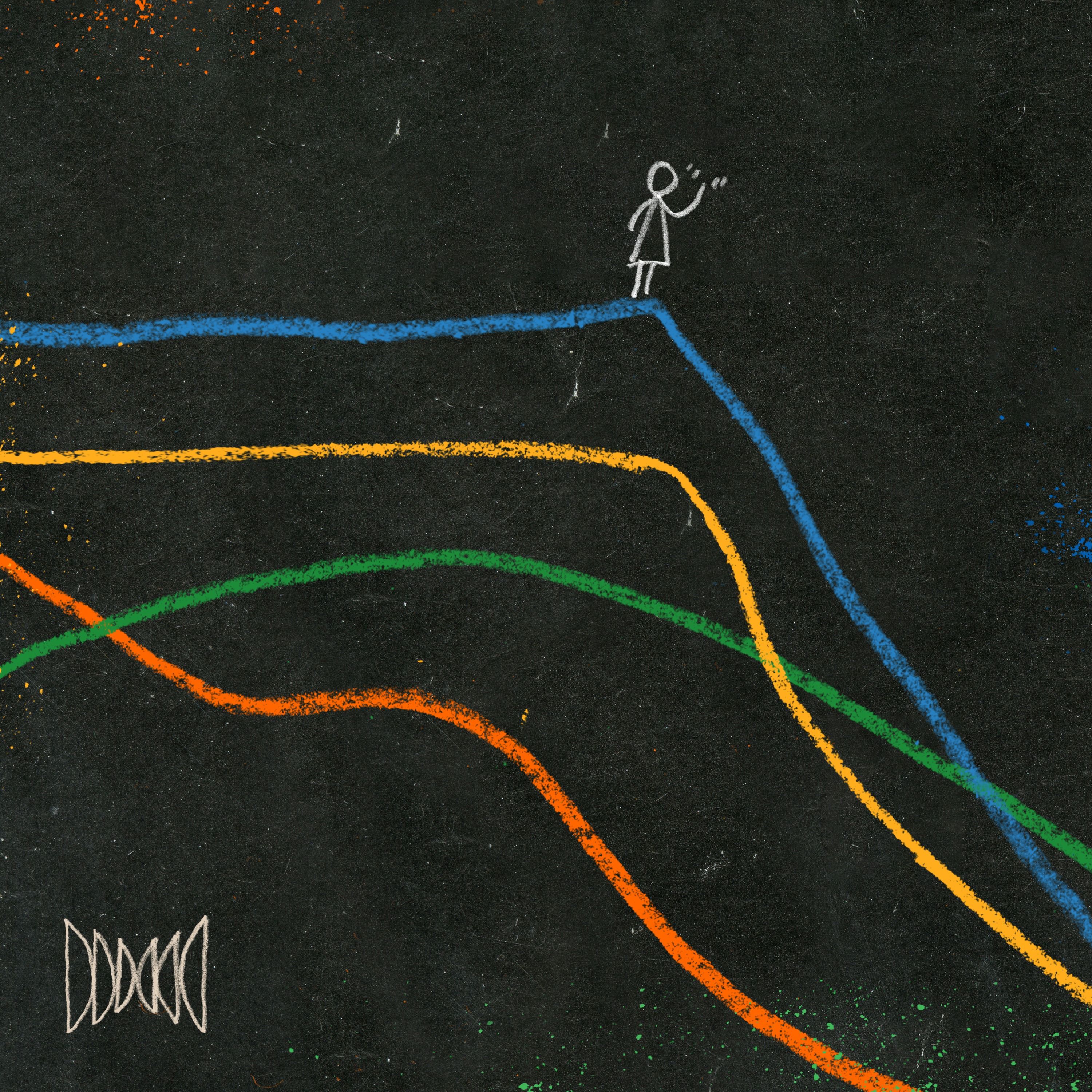
Radiolab
Fertility Cliff
00:26:28
After 35, does fertility tank? As she -- and her friends — approached the age of 35, senior correspondent Molly Webster kept hearing a phrase over and over: “fertility cliff.” It was a short-hand term to describe what she was told would happen to her fertility after she turned 35 — that is, it would drop off. Suddenly, sharply, dramatically. And this was well before she was supposed to hit menopause. Intrigued, Molly decided to look into it — what was the truth behind this so-called cliff, and when, if so, would she topple? This story first premiered in “Thirty Something,” a 2018 Radiolab live show that was part of, Gonads, (https://radiolab.org/series/radiolab-presents-gonads)a six-episode audio and live event series all about reproduction and the parts of us that make more of us. The live event was produced by Rachael Cusick and edited by Pat Walters. Special thanks to epidemiologist Lauren Wise, at Boston University. Plus, Emily, Chloe, and Bianca. And of course, Jad Abumrad...
Loading summary
Transcript128 lines
- [00:01]
Latif Nasser
Oh, wait, you're listening.
- [00:02]
Molly Webster
Okay.
- [00:03]
Valerie Chin
All right.
- [00:05]
Jad Abumrad
Okay.
- [00:06]
Valerie Chin
All right.
- [00:08]
Molly Webster
You're listening to Radio Lab Radio from wny.
- [00:14]
See y.
- [00:19]
Latif Nasser
Hey, it's Molly and Latif and this is Radiolab's last episode of the year. Molly Rapid Fire. What was your favorite episode that you did not work on this year?
- [00:31]
Molly Webster
Voice, Annie McEwan, Matt Kilty on the mic. Those two, they should get their own show, but I don't want them to because I want them to stay.
- [00:38]
Here you go.
- [00:42]
Latif Nasser
I think it was, it had to be probably Lulu's profile of that quantum physicist Qasem in Palestine.
- [00:50]
Molly Webster
In Palestine.
- [00:51]
Latif Nasser
And just because you, you feel it, you're right there with him waiting in line for bread or whatever it is, and all he's thinking about is quantum physics, and you're just like, what? It's just a kind of a portal into a man's mind that you never would have gotten any other way.
- [01:08]
Molly Webster
Yeah, that was amazing because, like, Lulu, you know, wasn't in Palestine, but being on the phone, it was like there was so much sound to hear of.
- [01:19]
Latif Nasser
Like you felt like you were there, you felt like you were right there.
- [01:22]
Molly Webster
Yeah. And I think the thing is, like, especially, especially this year, how much all of these types of stories, the ones you've worked on, I've worked on, the ones we just highlighted, truly none of that would be possible without our listeners and our sustaining members. And so thank you, thank you, thank you for like giving us.
- [01:40]
Latif Nasser
Thank you.
- [01:41]
Molly Webster
Yeah. Giving us the year we've had. I mean, because, Latif, it's been a hard year. Right, right.
- [01:46]
Latif Nasser
Because earlier this year, Congress eliminated all federal funding for public media and our home station, WNYC, we lost $3 million in regular, dependable annual funding.
- [02:01]
Molly Webster
So it sort of goes with saying, I think we should definitely say it, that financial support from listeners is truly critical right now. And, you know, we're at the end of December, so time to Support Radiolab in 2025 is running out. So this is like an ask to say, please consider making a year end donation. Get us kickstarted for 2026 and. And if you do, we have some really killer new gift options.
- [02:29]
Latif Nasser
Yeah, just think about it like you're buying yourself a holiday gift and the thing you get out of it is an. We got a new puzzle.
- [02:36]
Molly Webster
I love the puzzle. It's made of like episode art from your episode. Yeah, one of your episodes.
- [02:41]
Latif Nasser
One of my favorites of the year, the one about the. Lulu calls them hotworms, but they're really a bacteria. It just like had this magical extremophile property where it could plug into this whole other process to read DNA. And it like completely revolutionized all kinds of different fields.
- [02:59]
Molly Webster
And we've got, so we've got a puzzle, we've got T shirt, we've got a bumper sticker that you can, you know, put on water bottles or cars.
- [03:06]
Latif Nasser
Laptop sticker. It could be on anything.
- [03:08]
Molly Webster
Laptops, exactly. So if you wanna provide ongoing support, you can join the lab, which comes with perks like sponsor free listening, bonus content and more. Or you can make a one time year end donation and at Radiolab.org donate. Go to Radiolab.org donate and so to.
- [03:28]
Latif Nasser
Round out the year, you know, we looked back at all our most listened to episodes, and the number one most listened to Radiolab episode of 2025. Thank you for that keyboard drum roll. Was our menopause episode, which Molly hosted and which our contributing reporter Heather Radke brought the story to us. And it was so good. And we figured maybe, maybe people want to hear more.
- [03:57]
Molly Webster
Honestly, I think they do, because we heard back from so many people about this episode that we decided, okay, we can give you more reporting on this topic. And in fact, I did a story about the moments leading up to menopause and this thing that my friends and I kept hearing about called the fertility cliff.
- [04:18]
Latif Nasser
That sounds very dramatic.
- [04:20]
Molly Webster
Yeah, it was so dramatic. It was so dramatic that I decided, okay, I'm gonna dig into this. I wanna understand what this phrase is and like, what it actually means. And we did this story for the first time as part of a live event in 2018. And so I'm just gonna play part of that live event for you here, and then we're gonna have updates at the end. Now here we go.
- [04:49]
Hello.
- [04:49]
Hello.
- [04:50]
Jad Abumrad
How's everybody doing?
- [04:52]
Latif Nasser
All right.
- [04:55]
Jad Abumrad
We'Re so excited that you guys are here tonight. My name is Jad. I host Radiolab and more. Perfect. And I will now introduce a rising star at Radiolab and in podcasting and at WNYC and on Planet Earth. Welcome, Molly Webster.
- [05:24]
Molly Webster
Planet Earth might have been a bit bold. I will just say thank you for coming. This is amazing.
- [05:33]
Hi, everyone.
- [05:34]
Okay, so why are we all here? When I started reporting on the series, one of the first things I did was I just jumped on the phone with a lot of people. People, like everyone in this room. I was like, trying to hit, like different age groups. I wanted 18 year olds. I wanted like 80 year olds. I was calling all my friends back in the Midwest like, hey, I haven't visited in A while. But if you could just tell me your thoughts on reproduction. Like, what's it like in the Midwest? And then I was very. You know, I was like, oh, someone's 20 and married in Colorado. Yes, I'll call you. And I was basically just calling and saying. When I say the word reproduction, what do you do? What do you think? Are you like, oh, God. Or interested? Not interested. Babies. Anything more than babies. One guy talked to me about hip hop, and I was like, I could go that way. Probably won't. And so there are a lot of very random conversations. And one of the things that came up in those conversations was a number. The number was 35. It took me a while to sort of notice the pattern, but I realized that everyone was bringing it up in different ways. It was like, oh, I don't know. There's not that much time left. Or, you know, women would be like, I'm drying up with my biological clock. It's ticking. There was this idea that just kept coming up over and over again. The idea that at the age of 35, your fertility vanishes. If you're a woman, it just goes up in smoke.
- [07:02]
Adina
Like, in every relationship that I'm in, I feel like it's like this countdown clock in the back of my mind, you know? And so I feel like I experience time differently.
- [07:15]
Molly Webster
And Bianca, the young woman on the phone here, she wasn't the only one who told us about this feeling. It came up in another conversation that we had with this woman named Chloe. She said she really, really wanted to have kids. She was in a relationship. She really. She and her partner got along great. Partner wasn't sure she wanted to have kids. And so on her 30th birthday, Chloe's dad sent her an email where he basically said, like, get on it.
- [07:38]
Adina
The biological clock keeps ticking. Especially if you want to have several kids. You don't want to split up with your partner because they've done nothing wrong. But the biological clock.
- [07:48]
Molly Webster
Thanks, dad. It's very helpful. On my birthday and to add flame to the fire, I talked to another woman who saw 35 at such a deadline. She decided that she was going to have a kid by herself when she was 34. She wasn't gonna wait. And she told me that the doctors categorized her in a way that really surprised her. Minute you're 35, you're considered a geriatric mother.
- [08:10]
Lauren Weiss
It's a condition that is written. It was written on my birth chart because I was due two weeks after turning 35.
- [08:19]
Molly Webster
And so I kept thinking As I was, like, hearing all this stuff, I was like, I'm not freaking out about this stuff, but, like, should I be freaking out about this stuff? And then last October, I was on the phone with this sort of big wig doctor in St. Louis. And the minute we got on the phone, the first thing he asked me was how old I was. I said I was 34. And he said, you need to get on a plane and fly out here, and we need to freeze those eggs. And then I thought, off. And then I thought, maybe when the series is done. And then I thought, you know, maybe I should be taking this all a little bit more seriously and actually look into this whole, like, reproductive cliff thing. So started reading a lot of scientific articles, watching YouTube, and I pretty quickly found what seemed to be the culprit of the cliff. So the X axis is age.
- [09:13]
Okay, So I need you to put on sort of your visualization cap, because we're gonna go through a few graphs in this story. And for this one, it is a line graph.
- [09:24]
It goes 20 to 45. And the Y, the vertical line, is something called fecundability, which is the chance a couple will get pregnant after one month of trying. And this is what the graph looked like.
- [09:39]
The shape of the graph is a line that goes pretty straight up from puberty. It stays flat until the age of 33. And then it turns and goes pretty steeply down until it hit zero. Here's me describing it on stage as an animation of it unfolded.
- [09:58]
It goes. And then there's like a fireball at the end. So this is from a journal called Human Reproduction. It was published in 2004. And that is a cliff if I've ever seen one. And I think another thing that I wanted to note is that on this graph, 33 is the age where you actually should start freaking out. 35. You're already done. But there's one tiny caveat, and that is that the data behind this graph is crap. This data is based on French peasants from the 1700s. And you may ask, why them out of everybody? And the idea is that when they're doing fertility studies, they want, ideally, they say, populations of humans that have never used birth control, so people that are pure from artificial hormones. And their idea was that these French peasants were the way to go. And so this came up, you might have seen this. It got written about in a lot of different magazines, and it was the data being used to terrify women. And then so I just say, you know what? Like, I reject this cliff because I'm done with it. And so at this point, I thought maybe I should stop watching YouTube and actually, like, call someone on the phone. And so I called an epidemiologist from Boston. Her name is Lauren Weiss, and she studies fertility.
- [11:35]
Lauren Weiss
I know where the cliff came from. There was a very pivotal. Oh, yeah.
- [11:40]
Molly Webster
Oh, God.
- [11:40]
Tell me about the cliff.
- [11:41]
Lauren Weiss
So the cliff pretty sure came from this review paper written by Brockmans.
- [11:47]
Molly Webster
Who is this Brochman guy, and why does he get to draw a cliff on my fertility?
- [11:52]
Lauren Weiss
He's a very famous reproductive endocrinologist.
- [11:56]
Molly Webster
So after we got off the call, Lauren sent me the paper she was thinking about. This one is a study of recent people. And it has the same, like, axes. It's 20 to 40, is age on the bottom, and then on the side is your chance of pregnancy. And it goes.
- [12:16]
And so this line graph, it starts high, and as it moves right, it continues just flat and unchanging. And then at some point, that line turns downward and it arcs to the bottom of the graph, kind of like a skateboard ramp.
- [12:33]
And then it's like a little like a water slide at the end. And I thought, oh, that looks like. That's kind of like a mesa. That's like a version of a clif. And so then I thought, well, you know, maybe this graph, I'm reacting pretty. Pretty emotionally to it. So I was like, okay, this one.
- [12:54]
And so what you see on stage is I highlight that the downward turn on the graph happens at the age of 31.
- [13:03]
31, my friends. We should have had this event four years ago.
- [13:09]
Latif Nasser
Sigh.
- [13:10]
Molly Webster
But Lauren says it's not really based on great data either. Is it based on more peasants?
- [13:16]
No.
- [13:16]
I'm glad you asked. It is based on recent people, but it's all people that were at fertility clinics for fertility issues. So one could say it's a bit of a compromised data set. It's not really representative of everyone. So back to where we started begs the question, what happens if you actually look at an entire population or, like a good cross section of the population? And Lauren, the scientist who I was talking to, did actually do that. So in 2007, she launched a study with almost 3,000 Danish women who were trying to get pregnant.
- [13:51]
Lauren Weiss
We follow them forward in time for 12 months or until they get pregnant, whichever comes first.
- [13:57]
Molly Webster
And when you look at their data, this is what you see.
- [14:01]
So this graph looks basically like a gently sloped hill. The line starts halfway up, it goes up actually a little bit more, and then it curves gently down, arcing to.
- [14:13]
The bottom ooh oh, oh, oh, there we go there with that.
- [14:21]
Fertility doesn't look like a cliff at all.
- [14:24]
I feel good about that. Does anybody else? All right, on this one, your fertility goes up for a little while.
- [14:37]
Lauren Weiss
Right?
- [14:39]
Molly Webster
30. It goes up till you're 30 and then when you're 35, you're actually just below the fertility you had when you were 20, which seems like. That seems great. So I thought, all right, I'm reacting very emotionally, tell me some numbers. And so they said for 20 to 24 year olds, after one year of trying and having regular sex, which is actually like a technical term. So take that as you will, but I won't judge you. The chance of being pregnant, 78%.
- [15:16]
Lauren Weiss
And if you're age 35 to 40, that percentage is 72%.
- [15:21]
Molly Webster
That feels like, oh, I'll take those odds.
- [15:24]
Lauren Weiss
Yeah.
- [15:26]
Molly Webster
So if you're in the 35 to 40 year old age group here, as I am, that means you have a 3 out of 4 chance of getting pregnant. And you have to keep in mind these are rough estimates. So obviously fertility is affected by age, but it's not the only thing that's affected by age. Miscarriage rates go up as you get older. Down syndrome rates also go up. So treat these like ballpark figures for now, but just in your mind, remember, 72% for 35 to 40 year olds. And so to me, this graph, it's like less cliff, more like English countryside. Like, I will go get a pint on my way to pregnancy. And this one actually made me want to call all those people we heard earlier on the phone and be like, psst, send this to your dad.
- [16:16]
Right.
- [16:18]
But.
- [16:20]
Lauren Weiss
Now I should say that our latest research from the North American study shows stronger effects.
- [16:28]
Molly Webster
Not so fast, Webster. Not so fast.
- [16:31]
What fertility looks like in North America. That's coming up after the break. I'm Molly Webster, this is Radiolab, and we are jumping right back into what a fertility cliff looks like in North America.
- [16:47]
After the Denmark study, Lauren and her team were like, well, you know, Denmark.
- [16:51]
Lauren Weiss
Is cool, but what about other countries?
- [16:54]
Molly Webster
So they start the same study in US and Canada.
- [17:00]
Now, this graph, as it unfolded on stage, was a real humzinger. It started high on the left and then it immediately begins to descend. It slopes down gently, there's a bit of a bump where it regains some height and. And then it turns downward this time, just more steeply, dropping to the bottom.
- [17:22]
Jad Abumrad
Oh.
- [17:25]
Molly Webster
That'S a tricky one. Expected something else, this one. I felt sadder when I looked at it. I felt like this is more like, this is like less English countryside, more like a mountain biking championship sponsored by Red Bull was kind of my feeling on this one. And this is what Lauren said.
- [17:47]
Lauren Weiss
It is steep. It's something you wouldn't want to take your kid on for a walk. You would want to wear a helmet and some protective equipment.
- [17:57]
Molly Webster
And do you think the different results is different parts of the globe? So like they're both truly representative of the area they're in or like that one is wrong and it's really a.
- [18:07]
Line and not an uphill and then a downhill.
- [18:11]
Lauren Weiss
That is such a good question, Molly. And I don't know the answer to.
- [18:15]
Molly Webster
Could be differences in diet, in the environment and smoking. It could be just all that bike riding in Denmark. We all just need to go to Denmark. Exactly. Honestly, it seems like I should have been having sex in Denmark when I was 30.
- [18:28]
Lauren Weiss
Exactly. That is the take home message of our city.
- [18:31]
Molly Webster
I should not have been and it.
- [18:33]
Was very good that I was in North America.
- [18:35]
Depending on what you want your outcome to be.
- [18:37]
Lauren Weiss
Exactly. So the Danish study I think is a happier, cheerier study.
- [18:43]
Molly Webster
And it's true. If you look at the numbers for the North American study, they are lower. So if you're in the 37 to 39 year old age range and you have sex again regularly for one year, you have a 67% chance at conception. Past 40 it drops to 55. So there are three things I took away from talking to Lauren. First, it's pretty obvious that there is no cliff. As another biologist I spoke with said, nothing in biology is a cliff, right? It's all just like a gradual change. It's like a gradual decline with age. And in a way there's something about it being gradual. It kind of lets you choose to freak out where you want to freak out. The second thing I thought about with Lauren was that obviously it's different for everybody and these are just really big studies and it's just averages. Right. And the third thing was like, even in the North American study at like 40, 42, you still land at 50%. So it's not zero, which to me I was like, hey, 50, 50, that's not bad, right? But there was one part of the conversation with Lauren that made me think about 35 in kind of a different way. It started when she reminded me that there's is as much as I was happy about the 50, 50 actually a biological deadline. What is the actual end?
- [20:10]
Lauren Weiss
Oh, the average age at menopause is 50 in the United States.
- [20:14]
Molly Webster
And so maybe the thing that's going on for a lot of people is it's not so much a cliff at 35. Rather, 35 is an age where sort of the end comes into focus. And as I was thinking more and more about the cliff phone conversations I was having, I realized, like, oh, this was playing out for everybody, like, this is biology. But the people who were, like, wondering about their careers and their homes and their parents, like, they were all sort of having the same, like, moment where they're like, oh, there's something happening here.
- [20:48]
Where.
- [20:50]
I feel something in front of me, like, in the way I never had before. It's like there's like this, like, little sliver of possibility before you all come back here in five years when you're 40. And we do this again. Thank you so much.
- [21:09]
So this event, which was called 30, something happened live on stage in 2018. So it felt like it was time to maybe update the numbers. So I called Lauren back a few weeks ago and she said to me that based on sort of a larger data pool, now what they're seeing is just kind of minor adjustments, but if you're in the 37 to 39 year old range and you have sex regularly for one year, you have a 66% chance at conception. And after 40, it drops to 51%. Now, this is unpublished data, but if you look at this mapped on a graph, it doesn't really change the original shape of the graph as you heard me describe it in the episode. Also, the term geriatric pregnancy, you may now hear it as advanced maternal age. And they picked 35 as a cutoff because it was linked to an evidence of decline in fertility and also concern in increased risks for genetic abnormalities. So it doesn't all have to do with the fertility cliff, but it's often linked in conversation. The other thing was that Lauren looked into male data, so.
- [22:26]
Latif Nasser
Ooh, I would like to hear about that. Yeah.
- [22:28]
Molly Webster
If you notice, like in our episode, we didn't dig into that, but the male data, it's actually. It honestly surprised me. It also has a shift downward into, you know, less fecundability around 35. And it. So it does decline, though it does it at slightly later ages than for females.
- [22:52]
Latif Nasser
Yeah.
- [22:53]
Molly Webster
Um, one thing Lauren did say is that it took 12 years to get enough data to be able to say anything about older men with any precision, because there just aren't that many men in their late 40s or early 50s trying to have a baby.
- [23:08]
Latif Nasser
But it. But it sounds like it's. It's so it's more like a. It's like a fertility gentle slope as opposed to a fertility cliff.
- [23:16]
Molly Webster
Yeah, yeah. The decline starts happening at more advanced ages and it's less of a steep slope. And since we did that piece in 2018, there's all sorts of data that, you know, sperm does start to decrease in quality over time, and so you can get more genetic abnormalities. Like there's greater chances of that.
- [23:37]
Latif Nasser
Right. Well, you know, talking about sperm makes me think of donations.
- [23:41]
Molly Webster
Oh, okay, we're going there.
- [23:43]
Latif Nasser
Talking about donations makes me think of our listeners. Of our listeners and how grateful we are for, for all of that.
- [23:49]
Molly Webster
We're so grateful, truly.
- [23:51]
Latif Nasser
And we. Part of the reason we're so grateful is because we like, we know what we're working on and we're really excited about it and we can't wait to get it to you.
- [24:01]
Molly Webster
I feel like if, if listeners smash.
- [24:03]
That donate button now, which is really just Radiolab.org donate, then it will help fund some of the stuff we have.
- [24:11]
Coming up in 2026, which for me.
- [24:13]
Yeah, hoping it's about six snail sex. And for you?
- [24:17]
Latif Nasser
Okay. For me, I'm working on brain balls.
- [24:20]
Molly Webster
Brain balls?
- [24:20]
Latif Nasser
Yeah.
- [24:21]
Molly Webster
How New Year's Eve appropriate?
- [24:23]
Latif Nasser
Yeah, yeah. Just picture a strike of midnight on New Year's when you're watching the ball drop. Just imagine it's a brain ball dropping.
- [24:30]
Molly Webster
All right, well, how could you not donate to that?
- [24:34]
Latif Nasser
After that. After that. Grotesque image.
- [24:39]
Molly Webster
Thank you, Latif. Thank you, Diane Kelly, for fact checking this episode and Lauren Wise at Boston University for all the data crunching. And thank you, everyone, for listening, for being here for 2025.
- [24:56]
Latif Nasser
Yeah, don't drink too much eggnog and have a great holiday season. And we can't wait to connect with you again in the new year.
- [25:10]
Valerie Chin
I'm valerie chin and I'm from brooklyn, new york. And here are the staff credits. Radiolab is hosted by lulu miller and latif nasser. Soren wheeler is our executive editor. Sarah sandbach is our executive director. Our managing editor is pat walters. Dylan keefe is our director of sound design. Our staff includes jeremy bloom, w. Harry fortuna, david gable, maria paz gutierrez sindhu nyanasambundam, matt kielty, mona magavkar, annie mcewan, alex neeson, sarah carey, anissa vitza, arianne wack, molly webster and jessica young, with help from rebecca rand. Our fact checkers are diane kelly, emily krieger, anna pujol nazini, and natalie middleton.
- [26:09]
Adina
Hi, I'm Adina. I'm calling from Greensburg leadership. Support for Radiolab's science programming is provided by the Simons foundation and the John Templeton Foundation. Foundational support for Radiolab was provided by the Alfred P. Sloan Foundation.