← Radiolab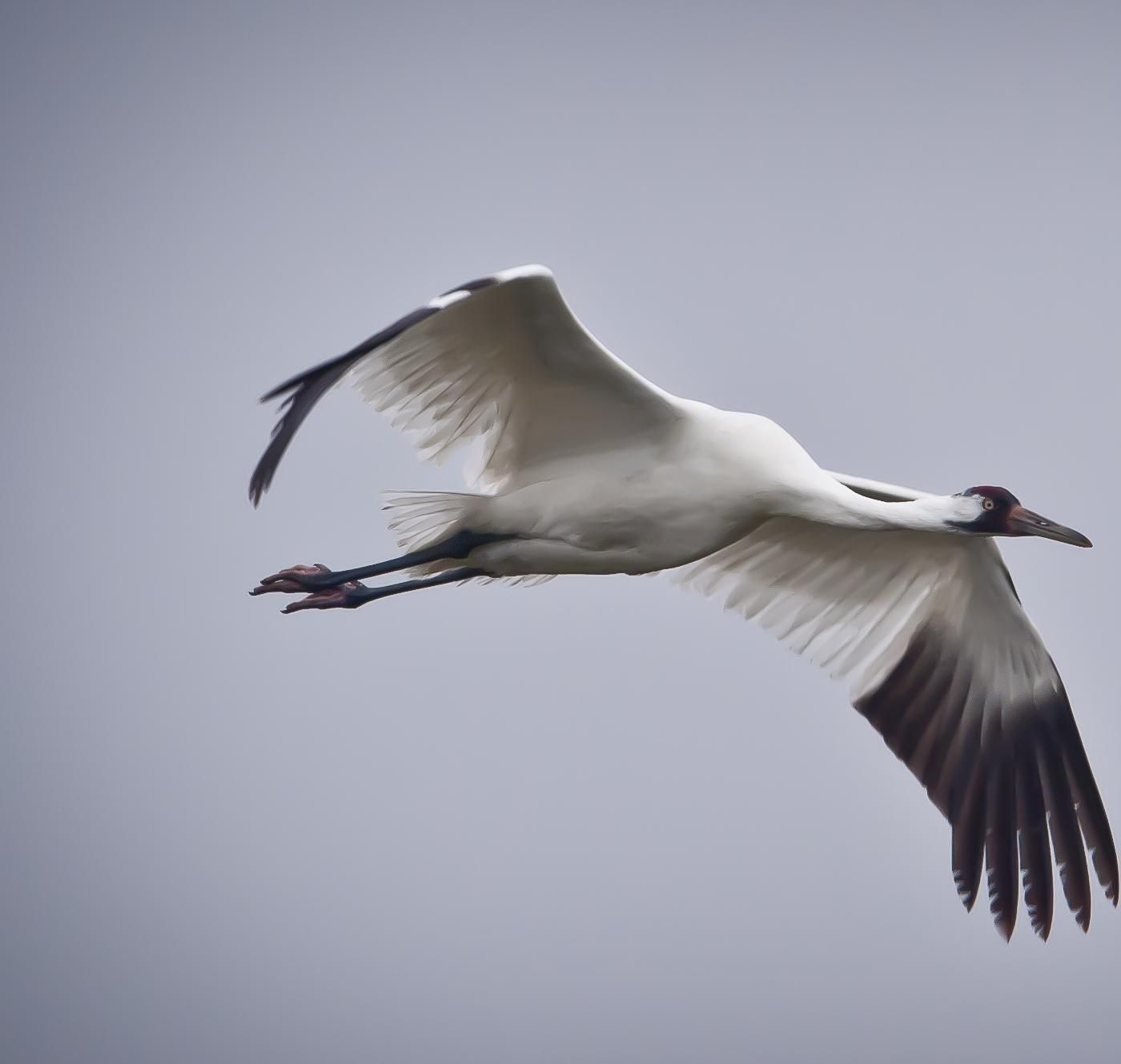
Radiolab
For the Birds
00:14:31
Today, a lady with a bird in her backyard upends our whole sense of what we may have to give up to keep a wild creature wild.
Loading summary
Transcript112 lines
- [00:03]
State Farm Announcer
If your small business is booming and ready to expand, you might say something like, it's happening. Crushed it. But if you need someone who can actually help protect your growing business, just say, like a good neighbor, State Farm is there. And just like that, your State Farm agent can help you get the coverage you need for your new space for your small business insurance needs. Like a good neighbor, State Farm is there. When the flu is keeping you up at night, don't try to tough it out. Knock out your flu symptoms with NYQUIL Intense Flu. You got this. It provides powerful relief of your flu symptoms so you can sleep well through the night. Nyquil Intense Flu. The nighttime sniffling, aching, aching fever. Best sleep with a flu medicine. Use as directed. Keep out of reach of children at Lowe's before the holidays is the perfect time for upgrades and upkeep. During Black Friday, get up to 50% off, select major appliances and buy more to save more. With up to an additional 25% off when you bundle, select major appliances plus grab select Dewalt 20 volt max drill or impact driver kits for just $99. Lowe's we help you save. Valid through 12. 3. Selection varies by location while supplies last. Seelows.com for more details.
- [01:27]
John Moalem
Wait, you're listening.
- [01:28]
Chad Abumrad
Okay.
- [01:29]
Clarice Gibbs
All right.
- [01:30]
John Moalem
Okay.
- [01:32]
Chad Abumrad
All right.
- [01:33]
John Moalem
You're listening to Radio Lab.
- [01:36]
Robert Krulwich
Radio Lab Sharks from wnyc.
- [01:42]
Radiolab Sponsor Announcer
Yes, and npr.
- [01:46]
Chad Abumrad
Hey, I'm Chad Abumrad.
- [01:47]
Robert Krulwich
I'm Robert Krylwich.
- [01:48]
Chad Abumrad
This is Radiolab, the podcast.
- [01:50]
Robert Krulwich
And here's what I want to do today. You know, we just did the hour long show about the Galapagos.
- [01:56]
Chad Abumrad
Yeah.
- [01:57]
Robert Krulwich
And in the middle of that show, we hit on this idea that there are so many of us on the planet now doing so many different things which affect the air and the water, that the creatures on the planet can no longer really be uninfluenced by our presence. They can't be truly wild. And that made me wonder, well, if you want to give the other creatures on Earth a little more room to be wild and independent, then what do we have to give up? In fact, how much are we willing to give up to make that happen?
- [02:32]
John Moalem
I don't know. These are tough questions. I mean, you know, I'm not good at the answer part. Right.
- [02:39]
Robert Krulwich
So this is John Moalem.
- [02:40]
John Moalem
I'm John Moalem. I wrote a book called Wild Ones and I'm a writer with the New York Times Magazine.
- [02:45]
Robert Krulwich
And being a writer, he told me a story. This is a story which sheds some light on this question. But I think you'd have to say it's a difficult light.
- [02:53]
John Moalem
So there was a family of whooping cranes that had been part of.
- [02:58]
Robert Krulwich
This story revolves around a project to create a wild flock of whooping cranes.
- [03:03]
Joe Duff
One of the most spectacular birds in the world. Five foot tall, is pitch white with black wingtips, got a seven foot wingspan, beautiful flyer. This is Joe Duff, I'm the co founder of Operation Migration, the current CEO.
- [03:17]
Robert Krulwich
Now we've done a story on Operation Migration before in Radiolab, but here's the gist. At one point the whooping crane population in North America was down to like 15 birds, just one flock. So Joe and a bunch of other folks decided to see if they could start a new flock of cranes. So they raised some cranes in Wisconsin and then they teach them a new migration route to Florida by leading them there in an ultralight airplane. Joe, in addition to being founder and CEO, is also the lead pilot. And how long have you been. You've been doing this for a while, right?
- [03:50]
Joe Duff
I started flying with birds in 93, 20 years.
- [03:54]
Robert Krulwich
And the key to this whole project.
- [03:55]
Joe Duff
Joe says is to eliminate all things human. These are wild creatures. You know, we do this whole thing in full costume so the birds don't hear voices, they don't see buildings or any other human paraphernalia. In order to maintain their wildness, Joe.
- [04:10]
Robert Krulwich
Even wears an all white crane like costume when he's up there in the ultralight leading the birds down to Florida. And when they get to Florida, the.
- [04:17]
John Moalem
Cranes are supposed to, you know, they're brought to this Chazahowitzka National Wildlife Refuge.
- [04:22]
Joe Duff
It's a coastal wetland, it's all salt.
- [04:24]
John Moalem
Marsh in the Tampa area.
- [04:26]
Robert Krulwich
And the birds are put into, it's called a release pit.
- [04:29]
Joe Duff
It has 12 foot high fences protected by electric wire. But the whole complex is not top netted. And so after a while the birds realize they can fly out, then they.
- [04:39]
John Moalem
Go seek out their own territories.
- [04:41]
Joe Duff
It's called a gentle release into the.
- [04:42]
Robert Krulwich
Wild or the not so wild. And here's where the problem starts. It's the winter of 2007 and we've got a particular bunch of cranes, this.
- [04:53]
John Moalem
Family, they were called the first family because they were the first cranes in the population to have a chick that they led south.
- [04:59]
Joe Duff
The first wild hatch migratory whooping crane in the US since the last nest was reported in 1878.
- [05:06]
John Moalem
And these cranes had wound up in.
- [05:08]
Joe Duff
This little subdivision, a wetland complex that was surrounded by houses.
- [05:13]
John Moalem
It was perfect crane habitat. It was basically a marsh. Just so happened that it was in this Woman's backyard. And so the birds, which had been the product of this very intensive effort and tons of money, hundreds of thousands of dollars an hour to be wild whooping cranes were now just in her backyard, and there was free food there. She had all these bird feeders, this whole array of different bird feeders up around her yard.
- [05:36]
Joe Duff
And that's not good sign.
- [05:38]
Robert Krulwich
Why is this a problem?
- [05:39]
Joe Duff
Well, the problem is we're worried that the birds are going to become acclimated.
- [05:43]
Robert Krulwich
To people to be really safe. Joe says these birds should be afraid of people.
- [05:47]
Joe Duff
Six of them have been shot by vandals.
- [05:50]
Robert Krulwich
Six birds have been shot.
- [05:51]
Joe Duff
Six whooping cranes have been shot in this project by vandals. Yeah.
- [05:55]
Robert Krulwich
So what do you do?
- [05:55]
Joe Duff
We ask the people to stop feeding.
- [05:58]
Robert Krulwich
Do you have a reverse phone directory or do you have a.
- [06:01]
Joe Duff
Well, we track the birds. They're all tracked.
- [06:03]
John Moalem
And so they knew exactly where they.
- [06:05]
Robert Krulwich
Were, and they were able to figure out that the cranes were in the backyard of someone named Ms. Gibbs.
- [06:12]
John Moalem
Clarice.
- [06:12]
Robert Krulwich
Clarice.
- [06:13]
John Moalem
Yes, Clarice Gibbs. And, you know, they knocked on her door and explained, you know, the whole ins and outs of the project. And would you please take your bird feeders down? And she said no.
- [06:25]
Chad Abumrad
No?
- [06:26]
Robert Krulwich
Yeah.
- [06:27]
Chad Abumrad
Why would she say no?
- [06:28]
Robert Krulwich
Well, John talked to the people who.
- [06:29]
John Moalem
Went to see her, and they didn't say crazy, but you got the sense that there was this crazy old bird lady who lived in this house who would not take her feeders down.
- [06:36]
Robert Krulwich
They told John that they thought she was acting kind of erratic and that things just kept worse and worse.
- [06:42]
John Moalem
And they had actually gone and put a plastic fence around one of her feeders at one point. They had thought she had given permission, but she had no memory of that. So it got bitter pretty fast.
- [06:51]
Robert Krulwich
And so John decided, I'm going to go talk to this woman.
- [06:54]
John Moalem
Yeah. So I was sort of girding myself for a crazy old bird lady who lived in this house. But I went to go see her, and it was a. How do I even talk about it? It was a really emotional day for me. We sat at her dining room table, and she was having a lot of trouble remembering the exact chronology of what had happened when she, you know, she said, excuse me. I'm just. It's hard for me to kind of piece things together around that. Around that time. And basically the story emerged at that time.
- [07:26]
Clarice Gibbs
Oh, gosh. If I.
- [07:27]
Robert Krulwich
When we heard that story, we decided we needed to talk to Clarice ourselves. So we called her up out of kind of the blue and asked her if we could record the conversation. Record. We would love to do it.
- [07:38]
Clarice Gibbs
Well, no, it wouldn't bother me at all. I wouldn't mind.
- [07:40]
Robert Krulwich
Okay, Clarice will tell us. Her, I gotta say, is a sort of surprising version of this tale in just a second.
- [07:49]
John Moalem
My name is Zachary Issimo from Sarasota, Florida. Radiolab is supported in part by the National Science foundation and by the Alfred P. Sloan foundation, enhancing public understanding of science and technology in the modern world. More information about Sloan@www.sloan.org.
- [08:08]
Radiolab Sponsor Announcer
Radiolab is supported by BILT. Nobody wants to pay rent, but if you have to, Bilt works to make it more worthwhile. By paying rent through Built, you can earn flexible points that can be redeemed toward hundreds of hotels and airlines, a future rent payment, your next Lyft ride, and more. But it doesn't stop there. You can dine out at your favorite local restaurants and earn additional points, get VIP treatment at certain fitness studios, and enjoy exclusive experiences just for Built members. Every month, earn points on rent and around your neighborhood, wherever you call home, by going to joinbuilt.com Radiolab that's J-O-I-N-B-I-L-T.com Radiolab.
- [08:44]
Molly Webster
Hey, I'm Molly Webster and this is an ad by BetterHelp. So it happens every year. The seasons are changing, the days are getting shorter, and basically once it becomes dark outside of my window, I feel like the rest of the world disappears and I'm just alone and there's nothing left to do but watch television. This November, BetterHelp is asking everyone to reach out to our people. That could be your family, your friends, your neighbors, and to resist this call of the cocoon. And yeah, reaching out can take some courage. I've got text messages from January I haven't responded to and you know what? I'm gonna write em back right now. Hi, sorry I've been missing. How are you? Why don't we all do this sooner? Therapy is the same way. BetterHelp makes it easier to take that first step. You just fill out a short questionnaire and they find a license therapist who they think you'll like. Our listeners get 10% off their first month at betterhelp.com Radiolab that's betterhelp.com Radiolab.
- [09:51]
Rippling Announcer
Radiolab is supported by rippling Finance. Teams often spend weeks chasing receipts, reconciling spreadsheets and fixing errors across disconnected spend tools. This can be frustrating. And that's not software as a service, that's sad software as a disservice. If you've been thinking about replacing stitched together tech stacks with one platform for all departments, Rippling can help. Rippling is a unified platform for global hr, payroll, IT and finance, helping people replace their mess of cobbled together tools with one system designed to help give leaders clarity, speed and control. By uniting employees, teams and departments in one system, Rippling works to remove the bottlenecks, busywork and silos in business software. With Rippling, you can choose to run hr, IT and finance operations as one, or pick and choose the products that best fill the gaps. Right now you can get 6 months free when you go to rippling.com Radiolab learn more at r-ip p l-I n g.com Radiolab terms and conditions apply.
- [10:58]
Radiolab Sponsor Announcer
Radiolab is sponsored by omgs.com There is new research on pleasure that's actually fascinating and the site OMG yes. Makes it accessible to everyone. OMG yes shares finding from the largest ever study into women's pleasure and intimacy. In partnership with researchers at Yale and Indiana University, they asked tens of thousands of couples what they wished they'd discovered sooner. They found the patterns in those discoveries and all that wisdom and pleasure and intimacy is organized as hundreds of short videos, animations and how tos on omgs.com and guess what? Half of OMGS users are men. Hooray for generous lovers. Right? You'll find specific research backed techniques. It's the science of sexual generosity in action. See what they discovered today@omg yes.com that's OMG yes.com.
- [11:52]
Robert Krulwich
We're back. And we we have just called up Clarice Gibbs.
- [11:55]
Clarice Gibbs
No, it wouldn't bother me at all. I wouldn't mind.
- [11:57]
Robert Krulwich
Okay, so you were about to say that first of all, the description how many bird feeders did you have in the backyard, would you say?
- [12:05]
Clarice Gibbs
Roughly at that time? I think I had two or three in an oak tree that's here in our backyard. And where we live is. It's just, you know, it's a peaceful area and birds like things like that. They don't like to be around a lot of congestion and stuff. And we enjoy them. Well, I say we. When my husband was alive, we, you know, we both enjoyed the birds and feed everybody.
- [12:33]
Robert Krulwich
This is where the story flipped for me because when those conservationists were knocking at Clarice's door, her husband of more.
- [12:40]
John Moalem
Than 50 years, he had Alzheimer's and they were sort of hunkered down at their house waiting for his life to end.
- [12:48]
Clarice Gibbs
Yeah, this was before you Know, the Alzheimer's took him really bad.
- [12:54]
John Moalem
And what they were doing was spending a lot of time on their back porch looking at the birds.
- [12:58]
Clarice Gibbs
We would come out here and sit with our tea or lemonade. He would just kind of watch. Our back porch, of course, faces the lake. We have a beautiful yard. We have oak trees. And as I'm sitting here talking to you, there's all kinds of birds around right now feeding. We even have sandhill cranes that have two babies with them.
- [13:28]
Robert Krulwich
So Clarice and her husband would be there on the porch. And if you've had this disease in your family, you know how painful it is, because here's her husband, and he is just disappearing a little bit and a little bit more, and then he's mostly not there. But when a bird or a bunch of birds come by the bird feeders from wherever he was, he's back.
- [13:54]
Clarice Gibbs
As soon as he would spot something, he'd say, babe, there it is. There's the hummingbird.
- [14:00]
Robert Krulwich
And when the whooping crane showed up big and white and wild, that would.
- [14:06]
Clarice Gibbs
Really get his attention. Cause they are such big, beautiful birds, you know, I could see the. Oh, gosh, like a Happiness in his eyes. And he would smile. Oh, to me, it was like, you know, he. He came back to me for a little bit when. When he would see things like this, it would just. It would make him so happy. And it would make me happy, too, to see how it affected him. I'm sorry. I just. I. I get kind of choked up when I talk about him. We were married for 56 years when that disease took him. And it was hard.
- [14:49]
John Moalem
Hard from her point of view, it was like a miracle to see a bird like that. And the way that her husband responded to them and just the way that they took his breath away when really he wasn't responding to a lot else in the world.
- [15:03]
Clarice Gibbs
It's a blessing, you know, when they seem to recognize things and then you lose them again, you know?
- [15:10]
Robert Krulwich
Yeah. So that's why when the crane people showed up at her door and said, please take the bird feeder down, she.
- [15:18]
John Moalem
Said, no, you know, I left that house just, you know, I just couldn't figure out how to make sense of it all once I'd left.
- [15:26]
Robert Krulwich
Have the people who visited her, having read your account, have they changed their minds at all about her or what they do? Because it's a toughie, this situation.
- [15:38]
John Moalem
Yeah. I'm sure they would still believe that the birds shouldn't have been fed, but I don't know if they would be Any more sympathetic to her now her husband.
- [15:46]
Robert Krulwich
And these birds, oddly enough, are the trigger. So I told Joe Clarice's story. So now what do you say?
- [15:54]
Joe Duff
Well, you know, my father died of Alzheimer's, so I can respect exactly what she's going through and how difficult it. However, the cost of that is the demise of a bird, that other people have spent a huge amount of time, 24 hours a day, seven days a week for that entire bird's life until it was a year old, putting in the wild to help save a species.
- [16:17]
Robert Krulwich
But if you put yourself in her shoes, she says she, by the way, was very careful.
- [16:24]
Clarice Gibbs
I was very emphatic that we didn't mess with the birds because I knew they didn't want them being confronted with people, you know, because they are a wild thing. And to me, I don't know. We've always loved nature, We've just always loved nature and the wildlife.
- [16:48]
Robert Krulwich
So she stayed where she felt you'd want her to stay. But it's a hard one to ask that she give up a glimpse at her husband for the sake of the birds.
- [17:04]
Joe Duff
I suppose I'm a little more pragmatic than that, unfortunately.
- [17:11]
Chad Abumrad
You would have him make an exception for her?
- [17:14]
Robert Krulwich
Well, at the very least, I would have him understand that she's in a unique place, that he's.
- [17:21]
Chad Abumrad
No, I don't think it's unique. Well, maybe she is in her particulars, but that is precisely the problem he has to deal with are people like her. She means well, we all mean well. It's not a case of, like, people with guns shooting these birds. I mean, that does happen, but I don't think that's the big problem.
- [17:39]
Robert Krulwich
No, these are two people who both love the bird but can't agree on something about it.
- [17:42]
Chad Abumrad
Right. And he's saying, in order to love the bird, you have to negate, you have to just. You have to disappear. And we can't, as human beings, we don't seem to be able to do that.
- [17:53]
Joe Duff
We all have our own personal requirements and we put those over and above anything else, including wildlife. And that's why wildlife is in such peril.
- [18:07]
Robert Krulwich
He's asking her to say goodbye to her husband for the sake of a bird species.
- [18:14]
Chad Abumrad
I know. I just worry that if everybody in the world is like her, then those birds don't have a chance.
- [18:23]
Joe Duff
I would love it if these birds could just exist on their own somewhere in deep water marshes where they don't ever encounter people. But that's never going to happen. It's just not going to happen.
- [18:36]
John Moalem
And that's the struggle. It's never going to go away. You know, no matter what happens with any of these species conservation projects, we're not going to strike some balance where we never have to think about the power that we're exerting in the world. This give and take, that's. That's what it is. That's the end game. It's. It's that forever.
- [19:11]
Robert Krulwich
Special thanks to Simon Adler, who ferried us through this whole project, and also to John Moalem, whose book the Wild Ones is the source of this story. I am Robert Krulwich.
- [19:25]
Chad Abumrad
Chad Abumran.
- [19:26]
Robert Krulwich
We'll be back next time.