← Radiolab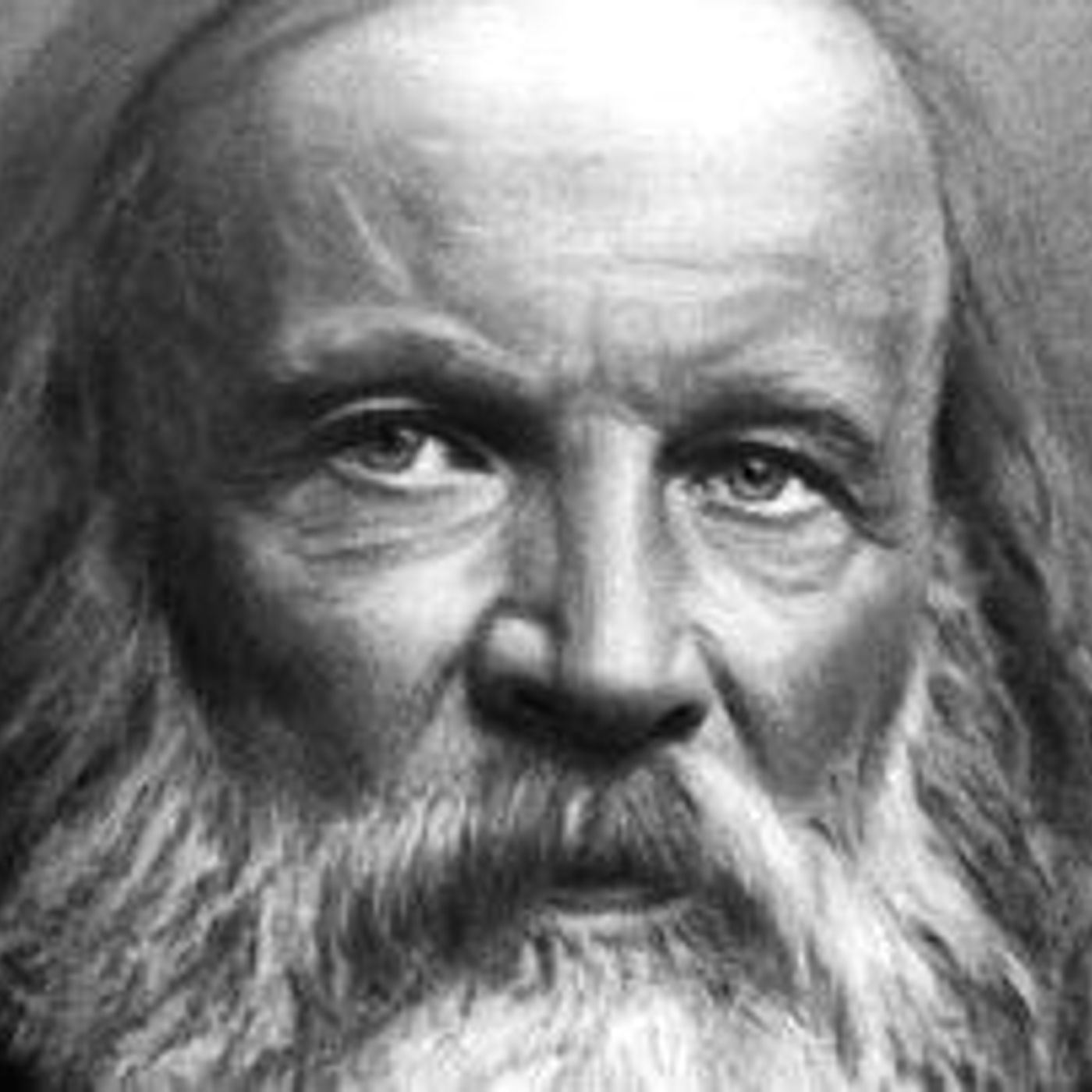
Radiolab
From the Archives: Oliver Sacks' Table of Elements
00:16:02
As we're busy working on our next episode, with stories inspired by the Periodic Table of Elements, we thought we'd bring you one of its chief inspirations. As a young boy, neurologist, author and Radiolab favorite Oliver Sacks pored over the pages of the Handbook of Physics and Chemistry, fantasizing about the day that he, like the shy gas Xenon, would find a companion with whom to connect and share. That companion turned out to be the Periodic Table of the Elements itself, a relationship he's never outgrown. He introduces us to the elements that he's known and loved.
Loading summary
Transcript138 lines
- [00:02]
Robert Krulwich
Oh, wait, you're listening.
- [00:03]
Caller
Okay.
- [00:04]
Robert Krulwich
All right.
- [00:06]
Jad Abumrad
Okay. All right, you're listening to Radiolab Radio Lab from wnyc. So, okay, ready?
- [00:21]
Robert Krulwich
Mm.
- [00:22]
Jad Abumrad
Hey, I'm Jad Abumrad. I'm Robert Krolwich, this is Radiolab and.
- [00:26]
Robert Krulwich
We'Re getting ready for. Well, this whole podcast you're about to hear is an invitation to join us in the next podcast we will be going.
- [00:33]
Jad Abumrad
Happy birthday.
- [00:36]
Robert Krulwich
Not a second year. This is not.
- [00:40]
Oliver Sacks
I hate Facebook.
- [00:42]
Robert Krulwich
I hate that everybody knows this and there's so many of them. Jesus. Happy birthday to you. You ladies and gentlemen, are witnessing the death of privacy.
- [01:01]
Jad Abumrad
Yes. So that happened. We thought we'd throw it in anyhow, back to the flow.
- [01:04]
Robert Krulwich
So I'm Jed. I'm Robert, this is Radiolab. And this particular episode is more or less an invitation for you to get ready for the next episode.
- [01:12]
Jad Abumrad
Yeah. Today we have a preview of an episode that we are working on furiously right now about the periodic table of elements. We're going to tell individual stories about the different elements and those stories are going to take us into outer space and into deep man made holes in the middle of America, into our cells, all kinds of places.
- [01:31]
Robert Krulwich
So this week we've decided to make a small telescoped preview in which we go to one apartment in one building in the city of New York occupied by the rather singular Dr. Oliver Sacks, we should say.
- [01:45]
Jad Abumrad
This was a visit we paid to him about six, seven years ago, I think. And this is the story that in a very real way inspired us to do this upcoming episode about the elements.
- [01:57]
Robert Krulwich
And we also know, by the way, that Oliver isn't, isn't feeling so well right now, which makes it particularly wonderful to hear him in Joy.
- [02:06]
Jad Abumrad
Off we go.
- [02:07]
Oliver Sacks
I think there's always been a desire to somehow categorize and classify the world around us.
- [02:17]
Robert Krulwich
Remember when you were in, I don't know when. It would be like in eighth grade when the teacher comes in in general science and he pulls down the periodic table of elements.
- [02:26]
Jad Abumrad
Oh, yeah, sure. I mean, that was one of the first times where I was like, yeah, I don't want to be a scientist. It's not for me.
- [02:32]
Robert Krulwich
But for kids who love this kind of thing, take Oliver Sachs for example. Yeah. Chad, you should come in.
- [02:37]
Jad Abumrad
I should come in.
- [02:38]
Robert Krulwich
Okay.
- [02:39]
Jad Abumrad
Yeah. So a couple years ago we had went to talk to Oliver Sacks about something. Well, it was actually mostly you that he was going to talk to him and I was just tacking along for the hell of it. And for some reason we ended up in his bathroom.
- [02:49]
Oliver Sacks
I Tend to read a little bit.
- [02:50]
Jad Abumrad
In the toilet, maybe to look at a book or something.
- [02:52]
Robert Krulwich
There are any acknowledgements.
- [02:54]
Jad Abumrad
He seems to have facts and figures.
- [02:55]
Oliver Sacks
In his as well.
- [02:57]
Jad Abumrad
There's a lot of us in there. I'm sorry.
- [02:58]
Robert Krulwich
Sorry.
- [02:59]
Jad Abumrad
And that's when we noticed you have.
- [03:01]
Robert Krulwich
The periodic tried in the bathroom.
- [03:02]
Oliver Sacks
In every bathroom.
- [03:03]
Robert Krulwich
That he had a periodic table of the elements on the wall in the bathroom.
- [03:08]
Jad Abumrad
We thought, wow, how funny. Periodic table in the bathroom. But then he said, well, you know, if you go out onto the couch, you'll see periodic table cushions, some cushions embroidered with the periodic table. And then he took us to his bedroom.
- [03:19]
Oliver Sacks
Although I don't usually take people into my bedroom.
- [03:22]
Robert Krulwich
Oh, we'll come.
- [03:23]
Jad Abumrad
Where he showed us his periodic table comforter.
- [03:27]
Oliver Sacks
I tend to sleep here, right under tungst.
- [03:31]
Jad Abumrad
But the cool part was when he took us to the living room where he had this.
- [03:36]
Robert Krulwich
Describe what isn't before us here. It looks like an altar.
- [03:39]
Jad Abumrad
It's like a little dictionary stand. On top of which was a beautiful.
- [03:44]
Oliver Sacks
Mahogany box, a fine wooden box about.
- [03:47]
Jad Abumrad
The size of a backgammon set called.
- [03:48]
Oliver Sacks
Periodic table of the elements.
- [03:50]
Robert Krulwich
It is a very fine wooden box.
- [03:52]
Oliver Sacks
And if you care to open it.
- [03:57]
Robert Krulwich
It'S made of some sort of fine wood.
- [03:58]
Oliver Sacks
It comes from Russia.
- [04:00]
Robert Krulwich
Does all right. Is there a trick to opening this? Okay. We've all seen the periodic table on a chart, but in Oliver's box there, there were the actual elements. These are all these. We have here, like 90 some odd.
- [04:20]
Oliver Sacks
Little tubes, little samples, little teeny vials of almost all the elements. Silver, arse, bismuth, cobalt, oxygen, copper, hydrogen, phosphorus, iron, manganese, mercury, nitrogen, molybdenum, gold. Since I'm, for example, having my 72nd birthday tomorrow. And element 72 is hafnium. There is a little hafnium, two little rocks.
- [04:46]
Robert Krulwich
Here's what they sound like if you rattle them.
- [04:49]
Oliver Sacks
I have coming to me, I hope it arrives today, an ingot of hafnium, which would be very much more satisfying.
- [04:56]
Robert Krulwich
What would you do with an ingot that you can't do with the two little pebbles?
- [04:59]
Oliver Sacks
I'll be able to hold it in my hand. My first love of chemistry had to do with the sensuous here. One of the liquid elements drew me. I loved the colors faintly. Brown, fluidy thing, the lustre, pale, golden, mercury. Very, very beautiful. The physical properties.
- [05:18]
Robert Krulwich
This is a gas trapped in a little vial.
- [05:20]
Oliver Sacks
Yes, One wouldn't want to drop that.
- [05:22]
Robert Krulwich
Why not?
- [05:23]
Oliver Sacks
Well, it's not good to breathe.
- [05:25]
Jad Abumrad
Can I just jump in here for a second?
- [05:26]
Robert Krulwich
Sure.
- [05:27]
Jad Abumrad
Because I really need to jump in. But the thing that's really crazy about that box and this you don't get from looking at a periodoc chart on a wall, is that all those elements.
- [05:38]
Oliver Sacks
Lithium, beryllium, boron, carbon, nitrogen, that's like the world.
- [05:43]
Jad Abumrad
I mean, everything that we can see and perceive. This table right here, the teeth in my mouth, the sky, the ocean, the mountains, it's all made of some combination of elements from that box. And the box itself gives it all a deep, deep order.
- [06:04]
Oliver Sacks
I had noticed myself and can't help noticing that the elements are organized in a very special sort of way. For example.
- [06:15]
Robert Krulwich
May I? Excuse me. If you want. I have managed to not notice. I find it a little odd that you could organize them at all. I don't even know how to begin the process of figuring out they are related in some way.
- [06:27]
Oliver Sacks
Well, then you are sort of recapitulating what, you know, what everyone felt in the early days.
- [06:35]
Jad Abumrad
Of course, in the really early days, people thought there were just four elements.
- [06:39]
Oliver Sacks
The ancient notion of elements took the form of earth, air, fire and water. Basically the thought that the whole world could be composed of these four ingredients in different ways.
- [06:54]
Jad Abumrad
But then in the 18th century, we're skipping ahead a bit. Chemists began to break things down into smaller pieces, like wind became gases, like.
- [07:04]
Oliver Sacks
Oxygen and hydrogen and nitrogen.
- [07:06]
Jad Abumrad
And earth got divided up into things.
- [07:08]
Oliver Sacks
Like sulfur, phosphorus, iron.
- [07:10]
Jad Abumrad
And eventually chemists got all the way down to the root of it, which was the atom. That's really what an element is. It's a particular kind of atom. The problem was though, when chemists began to start measuring these atoms, they found that they were all different sizes and types. Like one would be heavy, another would be light, third one be really friendly, likes to link up with other atoms. Whereas the fourth would be loner. And they would come in combinations like heavy, friendly, heavy, shy, light, friendly, light, shine. What was the pattern? That was the question. Could they fit all of these differences and similarities into one big schema?
- [07:47]
Oliver Sacks
Since we mentioned his name, let me here show you a picture of the.
- [07:53]
Jad Abumrad
Here's where we get to Oliver's hero.
- [07:54]
Oliver Sacks
The Siberian bigamist, as he was called.
- [07:58]
Jad Abumrad
That would be Dmitri Mendeleev, the great.
- [08:00]
Oliver Sacks
Mendeleev, whom we will talk about.
- [08:02]
Robert Krulwich
Oliver has a black and white picture of him on his kitchen cabinet. This man is not going to win any beauty contest.
- [08:08]
Oliver Sacks
No, he looks like a mixture between Rasputin and. Who do I mean?
- [08:17]
Robert Krulwich
Well, you mean he has a big nose, a shaggy, slightly unkempt white beard. A mustache that goes all over the place, plays piercing eyes, thick eyebrows, and looks like he's in a hunchback position. Generally, if you met him on the sidewalk, you'd probably want to walk around him.
- [08:33]
Oliver Sacks
Yeah, he didn't believe in wasting time going to a barber.
- [08:36]
Robert Krulwich
Let me just ask you, as the degree of your passion, when you look at this man, do you think he's a beautiful looking guy or do you see what I see?
- [08:44]
Oliver Sacks
I think Mendeleev had a beautiful mind.
- [08:47]
Robert Krulwich
And when that mind gets on a train, and it was a long, long ride from Irkutsk to Moscow, strange things will happen. As you're about to hear. We'll be right back.
- [08:58]
Jad Abumrad
My name's Anneliese, and I'm calling right before going to bed in Des Moines, Iowa. Radiolab is supported in part by the Alfred P. Sloan foundation, enhancing public understanding of science and technology in the modern world. More information about Sloan@www.sloan.org. Hey, I'm Jad Abumrad.
- [09:21]
Robert Krulwich
I'm Robert Krulwich.
- [09:22]
Jad Abumrad
This is Radiolab.
- [09:23]
Robert Krulwich
And we're gonna go back to Oliver Sacks talking about his hero. Dmitri Mendeleev now about to take a trip.
- [09:29]
Oliver Sacks
Okay. In 1860, around 1860, there were trains going all over Russia. And Mendeleev could afford to take trains. He was often on enormous journeys. And to while away the time, since he couldn't do chemical experiments or whatever, he would take playing cards with the name of various elements, their chemical and physical properties. And he would play what he called.
- [09:54]
Robert Krulwich
Chemical solitaire, sorting them for likeness or.
- [09:58]
Oliver Sacks
Sorting, I'm afraid I don't know the details.
- [10:01]
Jad Abumrad
But you know what we can imagine, right?
- [10:03]
Robert Krulwich
Sure.
- [10:03]
Jad Abumrad
So let's just say he's sitting there on the train. He's looking out the window, sees trees made of carbon, a lake made of hydrogen and oxygen.
- [10:13]
Robert Krulwich
Hydrogen, oxygen.
- [10:14]
Jad Abumrad
Behind that, a mountain made of silica.
- [10:18]
Oliver Sacks
And he's shuffling their properties and their atomic weights in his mind, wondering how.
- [10:23]
Robert Krulwich
Do these things go together?
- [10:24]
Jad Abumrad
What's the pattern? And he's shuffling. I'm shuffling, shuffling, shuffling, shuffling, shuffling, shuffling. And he did this for years. Until one night, this we think, is true.
- [10:38]
Oliver Sacks
In February of 1869, he is said to have had a dream.
- [10:43]
Jad Abumrad
In his dream, all the atoms of all the elements of all the world, the fat ones, the small ones, the dense ones, the heavy ones, the friendly ones, the shy ones, they all began to dance in his mind. And then they snapped into a grid.
- [10:57]
Oliver Sacks
He awoke with a vision of the periodic table.
- [11:01]
Robert Krulwich
This is one of those dreams which.
- [11:05]
Oliver Sacks
He Then wrote on the back of an envelope.
- [11:13]
Jad Abumrad
The thing about what he wrote on the back of that envelope is that it starts out so simply left to right, the atoms just get heavier and.
- [11:21]
Robert Krulwich
Heavier and heavier, heavier, heavier.
- [11:22]
Jad Abumrad
But every so often, and this is what he intuited in his dream, is that while they're getting heavier, their other traits, like whether they're shy or magnetic or whatever, those traits repeat periodically, change back again, and every time they do.
- [11:36]
Robert Krulwich
Start a new row, the properties repeat.
- [11:38]
Jad Abumrad
Again out of this simple repeating structure.
- [11:41]
Robert Krulwich
Very nice.
- [11:41]
Jad Abumrad
Hush, Mendeleev. You get a table that you can read in a million ways. There are so many ways to read this table.
- [11:49]
Robert Krulwich
I think I'm going to call this the Periodic table, that if you use.
- [11:53]
Jad Abumrad
Your imagination, you can see yourself in there.
- [12:00]
Oliver Sacks
I was a rather shy kid with difficulty forming relationships. And I sometimes compared myself to the inert gases.
- [12:11]
Robert Krulwich
Inert gases are very isolated.
- [12:13]
Oliver Sacks
They react with nothing because I felt they too had difficulties forming relationships. But I did.
- [12:26]
Robert Krulwich
He has now left the chair and has moved to the library. He's taking out any hugely thick, actually a dangerously thick book.
- [12:32]
Oliver Sacks
This is the Handbook of Physics and Chemistry. As you see, it has 5,000 pages. I had a smaller version as a boy. And from brooding in this book, it seemed to me just possible that one of the inert gases, xenon, might be seduced into combination by the most active element of all, which was fluorine.
- [12:56]
Robert Krulwich
This lonely, lonely gas might find a partner somehow.
- [12:59]
Oliver Sacks
Yeah.
- [12:59]
Robert Krulwich
Did they ever get together?
- [13:01]
Oliver Sacks
In fact, it came to me with great joy when I found out in the 1960s that actually a Canadian chemist had in fact made a fluoride of xenon. Ah.
- [13:14]
Robert Krulwich
Ah, yes. Elemental love. And speaking of love, he then took us, I think.
- [13:20]
Oliver Sacks
Let's come here one sec.
- [13:22]
Robert Krulwich
Where are we going? To the living room. And he showed us a small painting. In the painting, there was this dramatic figure of a bearded, scowling character on the side of a mountain holding two stone tablets over his head. And the sky was filled with lightning. And who was it? It was Dmitri Mendeleev.
- [13:41]
Oliver Sacks
When I heard of how Mendeleev had discovered the periodic table, I imagined Mendeleev as a sort of Moses going up to a chemical Sinai and coming down with the tablets of the periodic law. And when I mentioned this fantasy to Peter Selgin, my friend, an artist, he did this imaginative picture of the young Mendeleev, the peaks of a chemical cyanide, behind him, holding aloft the tablets of the Periodic table.
- [14:19]
Robert Krulwich
Which raises maybe the deepest question of all, did Mendeleev think this up and impose it upon the world, or was this pattern always there? In which case Mendeleev just removed the veil and said, oh, there you are.
- [14:33]
Oliver Sacks
Is the periodic table a discovery or an invention? Is it a human construct, or is it a revelation of the cosmic or divine order? Is it, so to speak, God's abacus?
- [15:02]
Jad Abumrad
Okay, so that was our visit with. Wow, did I just get carried away with the sound?
- [15:06]
Robert Krulwich
Yes, it is a little bit closet cluttered, but it was a long time ago.
- [15:09]
Jad Abumrad
It was a long time ago. Anyhow, that was our visit to Oliver Sacks. And also a preview to an upcoming episode that we're making right now about Elements, which we're really excited about.
- [15:19]
Robert Krulwich
I hope you'll be back for that. In the meantime, I'm Robert Krulwich. I'm Jad Abumrad and this is Radiolab.
- [15:24]
Jad Abumrad
Thanks for listening.
- [15:25]
Caller
Hi, this is Jumana calling from Khubar, Saudi Arabia. Radiolab is produced by Jad Abumrad. Our staff includes Brenna Farrell, Ellen Horn, David Gable, Dylan Keefe, Matt Kielty, Andy Mills, Lateef Nasser, Kelsey Patchett, Ariane Wack, Molly Webster, Cyrin Wheeler and Jamie York, with help from Damiano Marchetti, Molly McBride Jacobson, Alexandra Lee Young, Kathy Tu and Simon Adler. Our fact checkers are Eva Dasher and Michelle Harris.