← Radiolab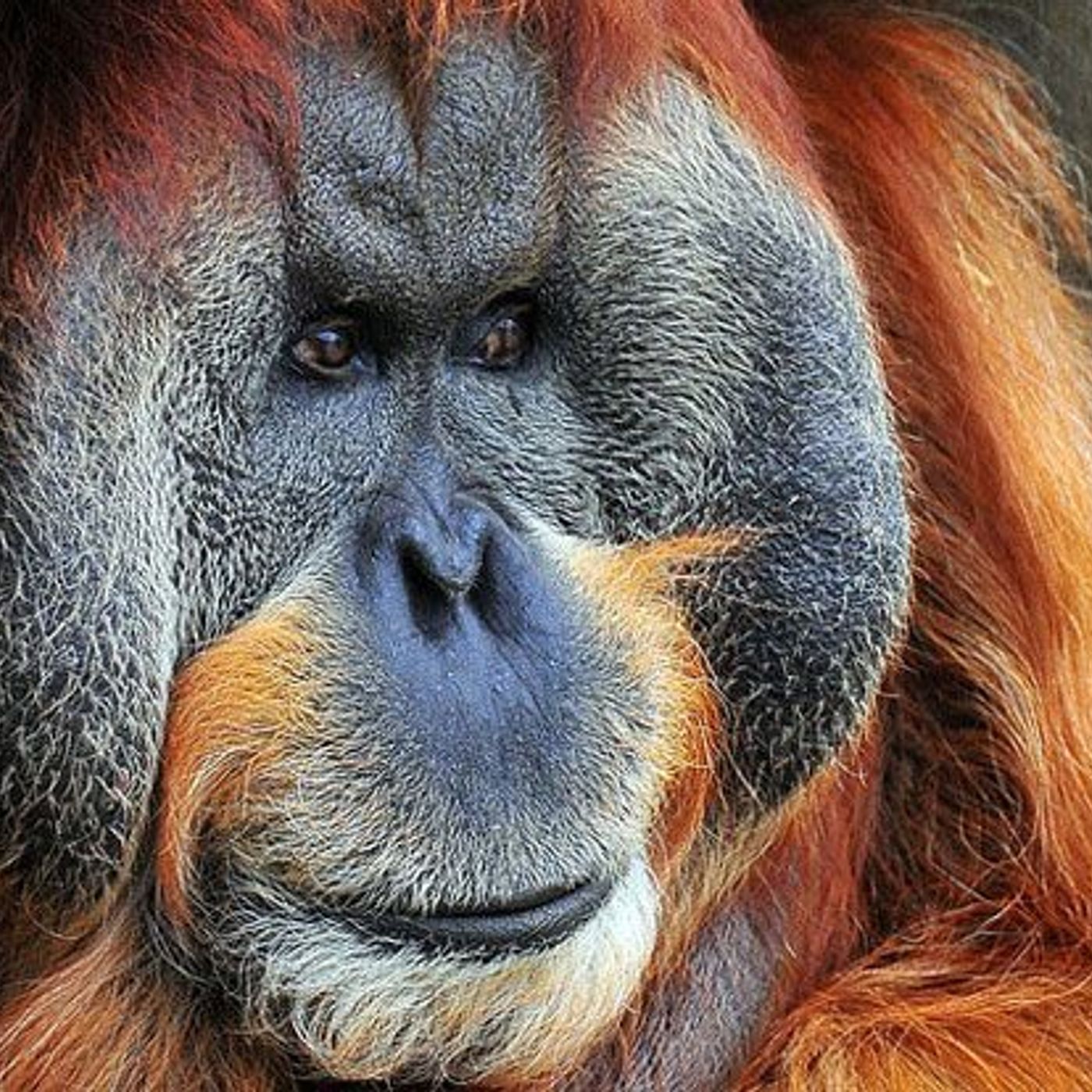
Radiolab
Fu Manchu
00:12:19
In our episode Animal Minds, we asked whether it was possible for one animal to know what was going on in another animal's mind. For us, it was a really about whether we, as humans, can really share a meaningful moment with an animal. In this podcast, we take that question another step further.
Loading summary
Transcript120 lines
- [00:00]
Michael's Shop Announcer
Hey, crafters. You're invited to visit the new knit and sew shop at Michael's. Find hundreds of fabrics in over 800 stores and over 100,000 styles on michaels.com shop your favorite yarn brands, including Big Twist, Caron Cakes and Bernat in multiple styles and colors. You'll also find all the machines, tools, and notions you need with top brands like Singer Brother and Pellon, plus Essential Thread and Floss. It's all new at Michaels.
- [00:29]
State Farm Insurance Announcer
If your small business is booming and ready to expand, you might say something like, it's happening.
- [00:36]
Ben Calhoun
Yes, crushed it.
- [00:38]
State Farm Insurance Announcer
But if you need someone who can actually help protect your growing business, just say, like a good neighbor, State Farm. He's there. And just like that, your State Farm agent can help you get the coverage you need for your new space for your small business insurance needs. Like a good neighbor, State Farm is there.
- [00:57]
Jerry Stones
Wait, you're listening.
- [00:58]
Rob Shoemaker
Okay. All right. Okay.
- [01:02]
Ben Calhoun
All right. Listening to Radiolab, Radio Lab from WNYC.
- [01:13]
Michael's Shop Announcer
And npr.
- [01:16]
Jad Abumrad
Hello, I'm Jad Abumrad.
- [01:17]
Robert Krulwich
I'm Robert Krulwich.
- [01:18]
Jad Abumrad
This is Radiolab, the podcast. So today on the podcast, we're gonna continue the conversation that we started in our last hour. You know, animal minds, like, what can you share with, say, your dog? Like, really, truly share?
- [01:32]
Rob Shoemaker
Right.
- [01:32]
Jad Abumrad
In this 10 minutes, we're gonna explore a kind of sharing that we didn't get to in our last hour. One that's arguably a deeper kind of sharing comes to us from a reporter, Ben Calhoun.
- [01:42]
Jerry Stones
Hello.
- [01:43]
Jad Abumrad
Grew out of a conversation that he had with. Well, just listen, okay?
- [01:48]
Jerry Stones
You can start anytime you want.
- [01:49]
Ben Calhoun
All right, thank you very much, sir.
- [01:51]
Jerry Stones
You ready to go? Are you?
- [01:52]
Ben Calhoun
Yeah, absolutely. Jerry, you ready?
- [01:54]
Jerry Stones
Yes, sir. Whenever you are.
- [01:55]
Ben Calhoun
Let's just start with having you introduce yourself.
- [01:58]
Jerry Stones
I'm Jerry Stones. I'm the facilities director at the Gladys Porter Zoo.
- [02:02]
Ben Calhoun
That's where Jerry is now. But he told me this story. He was working at the Henry Dorley Zoo in Nebraska, and he was working with this orangutan named Fu Manchu.
- [02:12]
Jerry Stones
I call him Fu. Everybody that loved that old boy referred to him as Foo or Phooey.
- [02:18]
Robert Krulwich
Wait, let me just set the scene. So we're in the Nebraska Zoo. Where in Nebraska is this?
- [02:22]
Ben Calhoun
In Omaha.
- [02:22]
Robert Krulwich
Oh, in Omaha.
- [02:23]
Ben Calhoun
Okay, so in the Omaha zoo, it's.
- [02:25]
Jerry Stones
Fall 1967, late 66 or 67, kind of cold.
- [02:31]
Ben Calhoun
The leaves have fallen off the trees. Jerry Stones is just going about his daily business.
- [02:35]
Robert Krulwich
What is his daily business?
- [02:36]
Ben Calhoun
Being in charge of the zookeepers. So he's kind of the top dog among the Crew of zookeepers there, and he's up at the office, and all.
- [02:44]
Jerry Stones
Of a sudden, here come a couple of the keepers running up over this hill. Jerry. Jerry. Jerry. The orangutans are in the trees by the elephant building. Well, mine went dead for a minute because I couldn't figure out what the places they were talking about. And I said, what? And they. The orangs are in the trees by the elephant building.
- [03:06]
Robert Krulwich
So the orangutans are no longer in their assigned area.
- [03:09]
Ben Calhoun
Yes.
- [03:09]
Jerry Stones
So I took off with them. We ran down there, and sure enough, there was this grove of elm trees on this hill overlooking the elephant building. And there, up in the top of these trees were all the orangutans.
- [03:20]
Robert Krulwich
Oh, God.
- [03:20]
Ben Calhoun
Yeah.
- [03:21]
Jerry Stones
And there was Fu Manchu and his female Tondaleo, and an old female named Sophie, a big, heavyset girl, and Toba, a young female, and Dennis, a young male. And they were all up in the trees.
- [03:31]
Ben Calhoun
Five of them.
- [03:31]
Jerry Stones
Five of them up there, you know, looked like these huge red clumps of grapes.
- [03:39]
Ben Calhoun
At this point. Jerry's a young guy, so he went Tarzan on him.
- [03:43]
Jerry Stones
Back in those days, I didn't think anything about going to the top of a tree and grabbing an orang by the hand and leading him back out of the tree, even though a couple of them had already bit me.
- [03:52]
Ben Calhoun
So he gets them all back in the exhibit, and they didn't know how the orangutans had gotten out.
- [03:59]
Jerry Stones
No. I'm questioning everybody and not listening. I have a tendency to do that, you know. Anyway, I would get them down to the building, we put them away in the cage, and we go out to see what was going on. And in the exhibit itself, there's moats on each side of this exhibit.
- [04:15]
Ben Calhoun
You know, like a zoo moat. You've got the exhibit, and then you've got where people look from, and in between, there's a moat.
- [04:20]
Jerry Stones
Right.
- [04:20]
Ben Calhoun
Well, down at the bottom of this moat, there was a door to a furnace room.
- [04:26]
Jerry Stones
Big metal door that had just a regular furnace lock and everything on it.
- [04:30]
Ben Calhoun
It was always shut, kept locked all the time that door was open.
- [04:35]
Jerry Stones
What had happened? The orangs had climbed down in the moat, went into the furnace room, which was in the basement, up a ladder to the janitor's closet on the first floor.
- [04:45]
Ben Calhoun
1, 2, 3, 4, 5. They all emerged from this janitor's closet.
- [04:49]
Jerry Stones
And then just pushed the big glass doors open and went out into the park. I figured somebody had not locked the door shut. Oh, right.
- [04:58]
Ben Calhoun
So Jerry Stones gathers his zookeepers around and he says, basically, we needed to be more careful.
- [05:04]
Jerry Stones
Somebody evidently went out in that moat to do something. And when they came back in, they did not lock the door. A mistake, and it should not happen again. And everybody vowed that this would not happen again. And it didn't. Didn't happen again for about a week.
- [05:21]
Ben Calhoun
A few days go by.
- [05:22]
Jerry Stones
I can't even remember where I was at.
- [05:23]
Ben Calhoun
And again, the orangutans, they're in the.
- [05:25]
Jerry Stones
Trees by the elephant building. And, Jerry, the door was locked. Jerry, we didn't do it. We didn't do it, you know, on and on and on.
- [05:31]
Ben Calhoun
So they take them all back into the building.
- [05:33]
Jerry Stones
Same thing. I get there, go down to mo.
- [05:35]
Ben Calhoun
That furnace room door is open again.
- [05:40]
Jerry Stones
I was convinced that these people were not sharp enough to tie their shoes, you know. And they said, but, Jerry, we don't go down there. Well, somebody screwed up. So I'm discussing with these keepers what's going to happen to them and their short lives. And I swore to God, I said, look, next time this happens, somebody's being fired. A few days later.
- [06:01]
Ben Calhoun
Somebody runs up to him, jerry, come. You got to come see this.
- [06:05]
Jerry Stones
I go, no, not now.
- [06:06]
Ben Calhoun
They ran out into the zoo, and they went to this hill that's near the exhibit. Peaked over the top of it, commando style. Down at the bottom of the moat, Fu Manchu was messing with that furnace room door.
- [06:19]
Jad Abumrad
What was he doing?
- [06:21]
Ben Calhoun
They couldn't exactly see what he was doing because of how far away they were. But he was fiddling with the lock, and he's fiddling, and he's fiddling, and.
- [06:30]
Jerry Stones
Then all of a sudden, the door opened.
- [06:32]
Ben Calhoun
Bam.
- [06:33]
Jerry Stones
Just popped open. And we went boiling down the hill, and we caught him before he could do any damage.
- [06:38]
Robert Krulwich
You mean the orangutan seemed to be opening the door?
- [06:41]
Ben Calhoun
Yes.
- [06:42]
Jerry Stones
You know, I realized now it wasn't their fault. And, you know, I ate the crow that I had to eat. And we still didn't know exactly how he did it. And we went out there and we looked around, and there was a few little sticks and stuff laying around. We thought, well, he must be using this stuff to pry the door open or do something, you know.
- [06:59]
Ben Calhoun
So Jerry figured, easy solution. Clean the exhibit every day.
- [07:03]
Jerry Stones
I said, look, from now on, we need to go out in this yard every day before we put the rings up and search that place over and again. You know, make sure there's no sticks or anything out there. Because I don't know how he did it, but he did it. You know, we knew what the problem Was. And we knew how to deal with it. Went along like that for a week or two. And then here come the keepers, Jerry. The orangutans are in the trees by the elephant building. And we checked it, Jerry. We did everything we were supposed to do. You know, they're bound and determined. They didn't do anything, anything wrong.
- [07:35]
Ben Calhoun
So they had been searching this exhibit every day to make sure that he didn't have anything.
- [07:39]
Jerry Stones
There was no. We walked that exhibit. We cleaned them all. We did everything. There was no sticks, no anything we could find that he used to pry the darn door open.
- [07:46]
Ben Calhoun
No tools.
- [07:47]
Jerry Stones
No tools, no nothing.
- [07:48]
Robert Krulwich
Wait, aren't we now, like, how can this be? How can this be?
- [07:51]
Ben Calhoun
How can this be? So he's ushering Fu Manchu through the building. They've got all the orangutans. They're moving them. And all of a sudden, he sees in the corner of Fu Manchu's mouth.
- [08:03]
Jerry Stones
I saw this little blink of light.
- [08:06]
Ben Calhoun
Just a little glimmer of light.
- [08:09]
Robert Krulwich
Like a silver filling or something.
- [08:10]
Jerry Stones
Yeah, a little shiny thing at the corner of his mouth.
- [08:13]
Ben Calhoun
He walks over, pulls down Fu Manchu's.
- [08:16]
Jerry Stones
Lip, and in there, lo and behold, there was a piece of wire about 4 inches long that he had bent into a horseshoe to fit inside of his lower lip and around his gum.
- [08:31]
Ben Calhoun
And he's had it there for so.
- [08:32]
Jerry Stones
Long that it was just polished, shiny.
- [08:35]
Robert Krulwich
Suggesting what? This animal has been secreting his actual key all this time?
- [08:41]
Ben Calhoun
Yeah.
- [08:41]
Jerry Stones
All this stuff that we're picking up and hauling away to keep him from opening the door was of no use because he was carrying his own key with him all the time.
- [08:49]
Ben Calhoun
What he had done was, was stick the wire into the space between the door jamb and the door, wrap it around the latch and pull it back. It's like the credit card trick, you know, from the movies.
- [09:01]
Robert Krulwich
Yeah, yeah, yeah, yeah, yeah.
- [09:02]
Jerry Stones
Nobody taught him this. Nobody ever did anything like that around him. Not only did he make the tool, but he put it in a place where I couldn't find it. He was smart enough to know that if I found it, I'd take it away from him. The Locksmith Union of the United States gave him an honorary membership, and the zoo in Omaha had that hanging on their wall for years. I don't know if they still have it or not.
- [09:28]
Robert Krulwich
Well, this has been very interesting. It's a really great story to Ben. Very nice. But I don't quite understand what exactly was. Why are you telling it to me? What is the reason for this?
- [09:39]
Ben Calhoun
Well, you know, there's a lot of stories of orangutans using tools, right?
- [09:43]
Jerry Stones
Yeah.
- [09:44]
Ben Calhoun
But even though this is a funny story, there's actually a really serious question at the heart of it about deception.
- [09:52]
Robert Krulwich
Why? What's so important about it?
- [09:53]
Ben Calhoun
Well, deception is special. It requires that the deceiver get into the mind of the person who they're deceiving. And nobody has been able to prove that animals can actually do this, know a human being's thoughts intimately enough, get inside their heads, and, you know, consciously deceive them. So I took the Fu Manchu story to a scientist, a primatologist named Rob Shoemaker.
- [10:25]
Rob Shoemaker
Hello, Rob Shoemaker.
- [10:26]
Ben Calhoun
Hey, Rob, it's Ben. Am I catching you? He's at the Great Ape Trust in.
- [10:30]
Rob Shoemaker
Iowa, and I study the behavior and cognition of orangutans.
- [10:34]
Ben Calhoun
And he says the Fu Manchu story doesn't prove that animals are capable of doing this.
- [10:40]
Rob Shoemaker
Well, in this particular case, I can't prove it one way or another. There's always a question of whether or not it was really happening.
- [10:49]
Ben Calhoun
But when I really pushed him, I'm just wondering, like, personally, do you believe in his case that it was.
- [10:56]
Rob Shoemaker
He said, you know, if I had to just give an opinion about this, that deep down, I have no doubt at all. I 100% believe it was deception. Keeping a tool concealed over a whole number of days and timing his escapes so that no one was around to see him. I think the evidence is just absolutely compelling to suggest that Fu Manchu was able to deceive and was deceiving. And if someone really has that much trouble believing it, I think then maybe they ought to question, is it because I don't believe what I'm hearing, or I don't want to believe it because it's an orangutan? If they don't want to believe it because it's an orangutan, that's no excuse.
- [11:40]
Jerry Stones
It was like, who taught him? I just. I couldn't figure out. I mean, when you think you're so smart that all the other animals are way below you, and all of a sudden you find this animal that does these sort of things, and, you know, people that couldn't open the door with a key right there, you, you know, you have to be in awe. I've been around a lot of other orangutans in my almost 45 years in this business. And next time you go to a zoo and you're around one, you just look at their face and you look at their eyes, and you can see in there, there's this. These wheels turning trying to figure you.
- [12:32]
Jad Abumrad
Ben Calhoun is a reporter here in New York City. Thank you to him and thanks to the people who make Radiolab possible. They are.
- [12:39]
Robert Krulwich
Well, they're the National Science foundation and.
- [12:42]
Jad Abumrad
They are the Sloan Foundation.
- [12:43]
Rob Shoemaker
Yep.
- [12:43]
Jad Abumrad
I'm Jad Abumrad.
- [12:44]
Robert Krulwich
I'm Robert Krulovich.
- [12:45]
Jad Abumrad
Thanks for listening.
- [12:49]
Rob Shoemaker
Sam.
- [13:17]
Tide Commercial Announcer
Did you know Tide has been upgraded to provide an even better clean in cold water? Tide is specifically designed to fight any stain you throw at it. Even in cold butter. Yep. Chocolate ice cream. Sure thing. Barbecue sauce. Tide's got you covered. You don't need to use warm water. Additionally, Tide pods let you confidently fight tough stains with new coldzyme technology. Just remember, if it's gotta be clean, it's gotta be tied.
- [13:45]
Michael's Shop Announcer
Since WNYC's first broadcast in 1924, we've been dedicated to creating the kind of content we know the world needs. Since then, New York Public Radio's rigorous journalism has gone on to win a Peabody award and a DuPont Columbia Award, among others. In addition to this award winning reporting, your sponsorship also supports inspiring storytelling and extraordinary music that is free and accessible to all. To get in touch and find out more, visit sponsorship wnyc. Org.