← Radiolab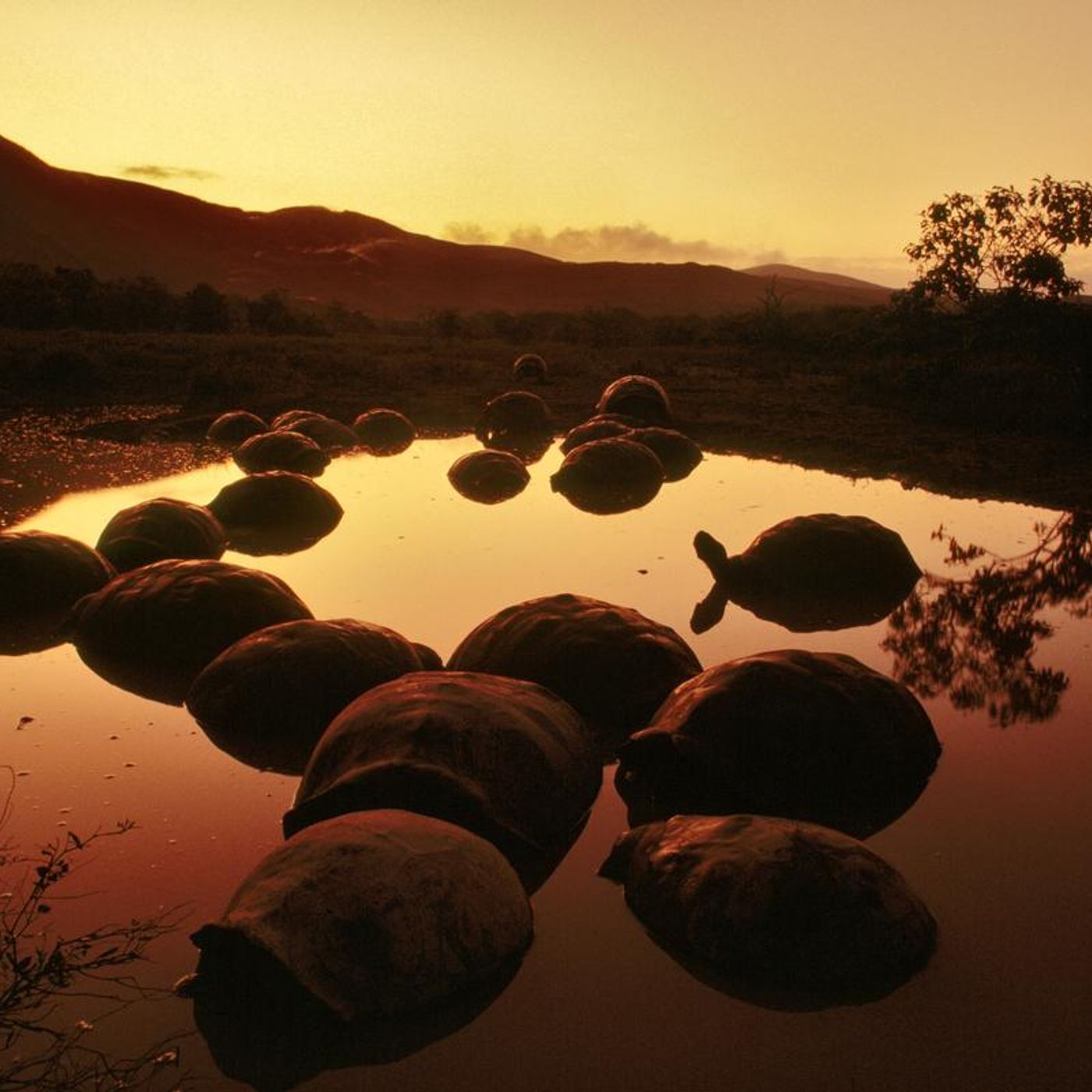
Radiolab
Galapagos
01:02:59
Today, the strange story of a small group of islands that raise a big question: is it inevitable that even our most sacred natural landscapes will eventually get swallowed up by humans? And just how far are we willing to go to stop that from happening? We are dedicating a whole hour to the Galapagos archipelago, the place that inspired Darwin’s theory of evolution and natural selection. 179 years later, the Galapagos are undergoing rapid changes that continue to pose -- and possibly answer -- critical questions about the fragility and resilience of life on Earth. For transcripts, see individual segment pages.
Loading summary
Transcript1 lines
- [00:00]
A
With Venmo Stash a taco in one hand and ordering a ride in the other means you're stacking cash back. Nice. Get up to 5% cash back with Venmo Stash on your favorite brands when you pay with your Venmo debit card. From takeout to ride shares, entertainment and more, pick a bundle with your go tos and start earning cash back at those brands. Earn more cash when you do more with stash. Venmo stash terms and exclusions apply. Max $100 cash back per month. See terms at Venmo Me Stash terms. When the flu is keeping you up at night, don't try to tough it out. Knock out your flu symptoms with Nyquil Intense Flu. You got this. It provides powerful relief of your flu symptoms so you can sleep well through the night. Nyquil Intense Flu. The nighttime sniffling, aching, aching fever. Best sleep with a flu medicine. Use as directed. Keep out of reach of children at Lowes Loyalty is royalty. With Christmas right around the corner, treat yourself for less during the holiday season. Rewards members get early online only access to Black Friday doorbuster deals on Thanksgiving Day. Like the Hisense side by side fridge. Just $799. Not a member. Join for free today. Lowe's we help you save bow at 1127. Only on Lowe's.com, member only. Doorbusters and midnight Eastern loyalty programs subject to terms and conditions. See lowe's.com terms for details. Subject to change. Wait, you're listening. Okay. All right. Okay. All right. You're listening to Radiolab Radio Lab from WNYC and npr. Hey, I'm Jad Abumrad. I'm Robert Krulwich. This is Radiolab. And today we begin on a plane. Thank you, Brooke. Which carried our newly married producer, Tim Howard to the Galapagos. So I took the plane from Quito. We had just finished the honeymoon that morning, me and Brooke, they make announcements. And at a certain point, the flight attendants, they. They open up all of the overhead bins and they walk up and down spraying some sort of insecticide. For what? For, like invasive species, I think. Yeah, like whatever bugs might have snuck on the plane. By this point, I'm getting super excited and I'm thinking about Darwin, and I start reading Voyage of the Beagle, his book on this nook that I had bought for the trip. But then my power supply didn't work and my nook died. That was a big problem for Darwin, too. He kept running out of power. His nook. Oh, God. And Then the islands come into sight. What is the color of the Pacific Ocean when you look out the plane window? That was actually the first thing I noticed. It's this totally wild, like, I've never seen, like this storybook blue, green, iridescent aquamarine. And I'm thinking like, wow, this is gonna be like dropping into another world, you know, like nature in its purest form. My version was this is my dream of what it would be like is you land on. It's sort of like low grassy knoll and an enormous turtle comes by, the one that you could sit on the top of and it wouldn't notice that you were there. Just kind of meets you at the airport, just wandering by. Exactly. That's very similar to what I was picturing. But we land, we take the 40 minute bus ride to Puerto Aor, Which turns out to be kind of a big town. Tons of people live there. Tons. Like a fishing village? Tons. No, it's way bigger than a fishing village. And just let me say that my first hours in Galapagos were totally different than I was expecting. Sort of the first thing that really just like, where the hell am I? I'm walking through the town. It's kind of late. Sun is just starting to set. I'm actually walking down Charles Darwin Avenue, just kind of getting the lay of the land, when all of a sudden. This line of cars comes around the corner, honking, endless honking. And they're waving flags, blue flags. At first I didn't know what the hell was happening, but turns out it was an election rally. And I was just really blown away that this continued, this procession for like 15 minutes. And I remember asking one guy, they're driving so slow, I can just walk up to them. I sold car. I'm like, who's your candidate? And they're like, I didn't know who the guy was, but turns out he was the incumbent. And I'm like, is he gonna win? And this guy, he like, doesn't even say anything. He just kind of points. He like, points at the cars in front and behind as if like, dude, seriously, you see how many of us there are? But then at a certain point, I noticed this one guy by himself standing on the sidewalk wearing a white shirt and jeans. And he's waving a flag, but his flag is a different color, it's white, and it's really loud. But I go up to him and I yell at him, who's your candidate? And he said, I am a candidate. And I'm like, what are you seriously? So his name is Leonidas. He is a naturalist guide. You actually end up meeting a lot of people employed that way in Galapagos. And he tells me, politically speaking, he's an outsider. And of course, I'm wondering why he's standing there by himself waving a flag at this entire parade of people who don't support him at all. And he tells me, well, I'm nervous. If the party in power now, the frontrunners, if they get elected, then I see a dark and uncertain future. More big hotels, more of these enormous boats, more people. And if things keep going this way, who's going to stand up for nature? This is Radiolab, and we are dedicating the entire hour to this little set of islands. And to that question, as the world is filling up with more and more and more people, is it inevitable that even the most sacred, precious, pristine places on the planet will eventually get swallowed up? And how far are we willing to go to return a place to what it was before we got there? And more importantly, can we? Oh, I'm never a doubter. Okay, so this is Linda. Linda Kyo, currently the science advisor for Galapagos Conservancy. I began my work in Galapagos in 1981. She first came to study tortoises. Back then, you know, Galapagos was really isolated. Barely any cars, super limited electricity. All I remember is having a smile on my face all the time. Because, you know, as a biologist, going to Galapagos is like going to Mecca. She says you have islands with massive volcanoes and forests, tree ferns that grow, you know, well above a human's height. Yeah, I mean, powerful colors. You know, there's green mangroves, black lava flows, pink flamingos. This is Matthias Espinosa, a naturalist guide in the Galapagos. And like Linda, he says that when he first got to the Galapagos in the 80s, he couldn't believe that the place was real. It was breathtaking. He visited an island called Fernandina. And the first thing that I saw was a lava flow that was moving. I said, what's going on? You know, no, no, that's not lava flow. These are like, like 1000 sea iguanas taking a sunbath. And he says he would go on these dives. Can you imagine schools of hammerhead sharks, like 500, 800, passing in front of you like tuna. I mean, like sardines. It shows you the power. It shows you also evolution. There is where evolution is very strong. Okay, so quick context. Galapagos Islands, cluster of islands way off the coast. Of Ecuador in the Pacific. 19 bigger islands, bunch of smaller ones. And this is the place, of course, where Darwin landed in 1835. And as he went island to island, he started noticing that there were all these creatures that were really similar to each other, but also a little bit different. The tortoises had different shells depending on the kind of island they lived on. The finches looked similar, but peaks were always a little bit different. And this gets him thinking, what if it isn't the way that everybody always says, what if God didn't create every single species in the beginning and leave them unchanged? What if in fact life is purely change? What if everything has been changing all the time? Darwin's five weeks on Galapagos pushed him to develop his theory of evolution. And that's also why when we think of evolution, we think of the Galapagos. And in particular we think of two iconic creatures, the tortoise and the finch. Let me start by telling you about the tortoise. It's hot, it's bright. It is such a perfect day for tortoise hunting, or not hunting, but, you know, looking for. Fourth day I was there, I went to the island of Floriana, which Darwin visited and they're up in the highlands, basically in the middle of this yard. Oh my God. There are these three massive tortoises just clustered together under a tree. Wow, that is freaking amazing. Describe them, what do they look like? These are such alien looking creatures. They're like the size of, Jeez, I don't even know what. They're massive. They look like they would crush you to death. I wonder how many years these guys have been here for. They can live for over 150 years. Wow. This is a tortoise trying to get over a branch. What was that? That is the sound of a tortoise breathing. That's cool. So Linda, when she first went to Galapagos to study these tortoises about 30 years ago, I did a trip where we backpacked around the caldera. She took a trip to this island called Isabella, hiked up the side of a volcano and looked at all the tortoise country and it was an impenetrable forest. Basically tortoise heaven. And what makes it so perfect for tortoises is in the dry season in Galapagos, the garoua, which is a very, very thick mist, comes onto the island. It rolls over this forest and it catches in the branches of the trees. The water then drips down from the top of the trees down to the ground, creating what we call Drip pools, which provides tortoises with water during the dry season. And they like to rest in water. And so there under the trees, you have these ponds with dozens of tortoise domes just rising out of the water. So that was my first experience. It was a magical, magical area. And then I actually didn't get back there for maybe 15 years from when I was there the first time. And when I returned, that forest was 100% gone. The drip pools were just dry dust bowls. Wow. There was no shade. Tortoises were sitting out in the sun or crowded around the couple of storks that were still there. This is Carl Campbell. I work for Island Conservation and I'm based here in the Galapagos Islands. Carl's actually the guy who showed me those tortoises. It was just a, you know, it was a barren landscape. Yeah, barren. Barren grounds. What happened to the forest goats? Goats. That was definitely not what I thought you were gonna say. I thought you were gonna say people. It was kind of a collaboration. So here's the story. Goats were originally sort of brought to the Galapagos by pirates and whalers. Back in the 1500s, you had tons of sailors making these long voyages across the Pacific. And Galapagos was the major port on the whaling route, where you'd come and get fresh water, but you'd also come in and pick up tortoises. Land tortoises and boats would take away several hundred of them often and turn them upside down, and they can last for up to a year and a half in the hold of a ship. Like lying there upside down? Yeah, lying there upside down. In order to make space for the tortoises, the whalers and pirates would often take goats that they'd brought with them and throw them onto the islands. That way, when they're on their way back and sick of eating tortoises, they could grab those goats. So whalers and buccaneers, they introduced goats to Galapagos. But on islands like Isabella, which is this massive island size of Rhode island, the goats were actually penned in to just a little part of it because there was this black lava rock that ran across the island. Extremely rough lava that's extremely difficult to walk across 12 miles of it. So that had acted as a barrier, basically, with goats on one side, tortoises on the other side. But according to Linda, sometime In the late 1970s, the goats got brave. I mean, we're probably talking just a few goats, but by the 1990s, those few goats, the population had exploded to about 100,000 goats. And if you think of 100,000 goats eating everything in their path, every sort of plant, even the bark off of trees. They destroy the forest. So now they had a dilemma. On the one hand, the tortoises needed help. On the other hand, you had all of these goats that didn't choose to be on the island. You know, it wasn't their fault. And the goats that were out there were gorgeous. You know, they had curled horns, different colored fur, just beautiful animals. And they'd been there for 500 years. Some people were concerned, you know, with goats have their own sort of, if you will, right to be there. Those arguments came up frequently to which Carl would respond, you know, are we going to let tortoises go extinct? You know, there's thousands of islands around the world that have goats on them. These tortoises are only found here. So where do your values lie? And so in 1994, we had what we called a tortoise summit in England. And that was where we started the discussions about, what are we going to do. Experts came from all over the world. Linda says, we want to get rid of the goats. And many of them thought we were nuts and that it was impossible. There's 100,000 of them. So many doubters. Carl says he even heard the idea, why don't you put lions, you know, they eat goats in Africa, you know, why don't you get lions on there? And those are really interesting ideas. But at some point they're going to get hungry and they're going to start eating all the other things that you treasure, like the occasional tourist. In any case, after endless planning and meetings, took eight years, I think they commence Project Isabella. So the helicopters we use, they're called MD500s small helicopter. They're for four passengers, single turbine, five blades. This is Fraser. Fraser Sutherland. I was the engineer, pilot and a sharpshooter. 2004 through to 2006. Almost every day during that time, Fraser would fly over Isabella island. Two guys with him, two shooters either side of the helicopter. What you do is, so you come across and you're flying along and you might see one goat. Says you followed that goat as it ran away till it joined its friends. So you have to find all those other goats, circle real low, you'd find, fly around them, round them up, try and get them in a single group, and then you start picking off the goats one by one by one. And there are actually videos online where you see these packs of goats running for their lives and then dropping to the ground. The last goat or two might sort of run into a area where it's impossible to reach. They would actually go into caves. And what we'd do is we'd find a location as close as we could, or right on top of the cave, drop out one of the two shooters that was in the helicopter, and he'd physically go into the cave, shoo the goats out, or shoot them on site, and then you go on. And actually, in under a year, through this aerial attack, they end up wiping out 90% of the goats on Isabella. But to give an example of the nature of this business, that's Josh Dunlon. He runs an NGO that was involved in Project Isabella. It's relatively easy to remove 90% of a goat population from an island, but as they become rarer and rarer, they're harder and harder to detect. The goats become educated. They learn that this sound means. So the goats start hiding. So they'll go under bushes, they won't move. They'll learn to stand under a tree holding their breath. And so you end up flying around in an expensive helicopter, not finding any goats. Now, the way we deal with that is an interesting one. We use this technique called Judas goats. Yeah, Judas goats. Initially, it was Carl's suggestion, because goats are gregarious and like being in groups, they're herd animals, Right? And so the technique that we would use was you would fire up your helicopter, you fly around, you'd find some goats, capture goats, capture them live, and then come back, back to base camp, offload them, and you put a radio collar on them, and you throw them back on the island. And then you wait, instinctively, that lone goat will go and find other goats. A week, two weeks go by, you fire up the helicopter, they get back over the island with this little device. It's a directional antenna. Start tracking the Judas goat till they spot it with some other goats. And then everyone gets shot except the Judas goat. They let it go, finds more friends, and then everyone gets shot except the Judas goat. And then they do it again. Everyone gets shot except the Judas goat. And you do that every two weeks for a year. Oh, my God. And that is how they go from 90% go free to 91 to 92 to 93 to 94. It's like having a pogrom on you over and over again. It gets worse. Now, Judas goat is a good Judas goat until it gets pregnant, because then it doesn't want to be social anymore. It goes off and has its kid and is very solitary, which is the last thing you want when you're trying to get Goats off islands. So Carl kept mulling this problem. What would it take to basically make, you know, the perfect Judas goat? The ideal Judas goat, if you will, is a goat that would search for and be searched for and that would never get pregnant. So Carl Campbell figured out a technique where we could sterilize them in the field. They'd grab the goats, dart them, and then in a matter of minutes, snip, snip. Did you do this? Yeah, well, I stood next to Carl and watched him do it. And Carl took it one step further and he actually gave these females hormone implants that basically put them into heat for an extended duration. Normally a female goat would be in heat for maybe a couple days. These females would go for more than 180 days. And wherever they went, they would lure those male goats out of their caves so that, you know, all in all, over the course of this two year program, we had hundreds of Judas Goats out. And using those goats, they were able to go from 94% goat free to 96 to 97 to 98. And basically when you have only Judas goats meeting up with other Judas goats, then you can say the goats have been eliminated, that you're done. A point they got to, at least on Isabella in mid-2006. This kind of eradication program was far beyond anything that anyone had ever done anywhere in the world. Because turns out they weren't just doing this on Isabella island. No, we're talking about island by island. Over the course of about seven years, they eliminate over 250,000 goats. So you complete that with Isabella and did it work? Yeah, the results of this were absolutely impressive. You had plants re emerging, you had trees growing back and in a really short period of time. And this allowed for those important drip pools and tortoises, they basically got their home back. This is a real thing, tortoises walking around. Wow. It's incredible. So they did it. They got all the goats? Not all the goats. What do you mean? Those Judas goats, they kept them around. Why? I would just. I would have shot them first. Just out of sympathy for them. Yeah, exactly. Well, they needed the goats because, well, there was the problem of people. Because during the 90s, these demonstrations started that happen. Demonstrations of outrage and violent activity, constant conflict. To explain. This is Augustine Lopez, longtime fisherman and he told me that in the 70s and 80s, lobster was fished all year round, no restrictions. And then fishermen started making a killing fishing sea cucumber because there was this huge demand. But then the national park comes in. Same group that's doing the Goat eradication. And they tell the fishermen they're overfishing the sea cucumber. They've got to limit their catch. And the fishermen are like, who are you to tell me that I can't feed my family? So they lash out. They march down Charles Darwin Avenue. They. They would come down the street throwing rocks and sticks and everything. That's Paul Watson, founder of the Sea Shepherd Conservation Society. He was there counter protesting, and he says that at one point they went after national park buildings and they were attacking the ranger stations with Molotov cocktails. They blockaded roads. They literally drove the rangers out of the national park headquarters and took it over on Isabella. They burned down a building. They kidnapped some people, including some of my crew. And they even killed dozens of tortoises, slitting their throats. According to some accounts, they even hung them from trees. Not only that, but according to Linda, those goats couple islands where they've been eliminated. Fishermen have put them back. Really? Oh, yeah. And so what they decided to do is leave the Judas goats on various islands where they can live out their sterilized days chomping on grass, sharing war stories until such time as they might be needed again. Is the war between the greens and the fishermen and such, is that still hot and difficult? And are they still, you know, killing tortoises and they're not the fishermen. They seem to have stopped, you know, taking over national park and killing tortoises. You know why? It's a combination of reasons. On the one hand, fishermen have started to participate in the actual fisheries management more because it seems like they realize if they're going to keep their livelihood, they can't just fish everything out. But then at the same time, the tourism economy has been taking off, and so all of these fishermen, they find that it's easier for them to actually survive by using their boats to take tourists around island to island. So they're all kind of converting over into the tourism economy, huh? We're going to take a short break. This is Radiolab. We'll be back with producer Tim Howard and this hour on Galapagos in just a moment. Hi, this is Linda Caio. Hey, this is Josh Donlon. Radiolab is supported in part by the National Science foundation and the Alfred Peace Loneliness foundation, enhancing public understanding of science and technology in the modern world. More information about Sloan at www. @www.sloan.org sloan.org Bye. Ciao. End of message. Radiolab is supported by Planet Visionaries, the podcast created in partnership with the Rolex Perpetual Planet Initiative. Stay tuned for a trailer and subscribe wherever you get your podcasts. I'm Alex Hondel, professional rock climber and founder of the Hong Foundation. I wanted to let you know about a brand new season of the Planet Visionaries podcast in partnership with the Rolex Perpetual Planet Initiative. This is the podcast exploring bold ideas and big solutions from the people leading the way in conservation. Join me in conversation with the likes of climate champion Mark Ruffalo, biologist and photographer Christina Mittermeier, and one of the most successful conservations of our time, Chris Tompkins. Join us on Planet Visionaries. Wherever you get your podcasts, you should tell the people who we are and what our new show is. I'm Robert Smith and this is Jacob Goldstein and we used to host a show called Planet Money. And now we're back making this new podcast about the best ideas and people and businesses in history and some of the worst people, horrible ideas and destructive companies in the history of business. We struggled to come up with a name, decided to call it business history. You know why? Why? Because it's a show about the history of business, available everywhere you get your podcasts. I'm Jad Abumran. I'm Robert Krulwich. This is Radiolab. And this hour, well, the honeymoon's over. Galapagos. This is the place where Darwin began to develop his theory of evolution. And it's the place 170 year or maybe 180 years later where our producer Tim Howard landed wearing fishnets and a bad brains T shirt to find. To find a very different landscape than what Darwin saw. Now, we just told you a story about how far humans are willing to go to protect something. This next part, it's about how far we're willing to go to get something back that we've already lost, to sort of restore a place and a creature to its, quote, wild state. This story unfolds on one of Galapagos most northern islands where they also had to get rid of some goats. It's called Pinta. Yeah, Pinta was a very special place. This is James Gibbs, professor of Conservation biology at the State University of New York. It's one of those islands. It's not part of any tourist visitation site, so there are no people there. And when you set foot first on Pinta, you immediately sense sheer abundance. All the insect life, all the birds. The problem is on Pinna, things were spinning out of control. The vegetation was growing wild, the forest was getting overgrown with the wrong kind of plants, and the whole ecosystem was just teetering out of balance. And one of the Reasons for this, according to Linda Caiote, is that we had an island with no tortoises because tortoises are sort of like the lawnmowers. You know, they plow down vegetation, disperse seeds, but for centuries they'd been hunted by those whalers. And in about 1906 the pinta tortoise went extinct. 1906? Yeah, a little over 100 years ago. They don't know the exact date, but then one evening in March of 1972. Ah, yes, this fellow, Peter C.H. pritchard, he's a well known tortoise researcher, he was on Santa Cruz island having dinner with some friends and we got into chatting about tortoises and one of the people he's eating with says, hey, I was recently on Pinna island collecting snails and I saw this tortoise and I thought, do you know what you have done? There've been no tortoises there for a hundred years. He and some national park rangers race out to Pinta and there it was, this beautiful tortoise. One Tortoise, maybe 50 years old. They weren't sure they'd eventually name him George Lonesome George. But at the time the immediate question was, are there any more? Because if they could find a female for George, then they could, you know, maybe de extinct the species. So I poked around in the areas where we got the one and I found a shell of a female. Hey, dead animal. Oh, it wasn't. How had this female tortoise died? Someone chopped it in half. No, you can see the marks where it was just chopped up. I felt violent. I wanted to borrow someone's gun and go and kill the person. Everyone held out hopes for just finding more tortoises back. James says they kept going back, combing the island with highly trained tortoise sniffing dogs. But in the end there's just George. That then shifted the focus on, now what do we do? We then went to a wolf volcano island next door and collected two females. Two females that sort of looked like George but weren't quite the same species. And we put them with George to see if we could get him to breed. He never did, wasn't interested. So they thought, hmm, maybe he needs a Pinta lady. Now, of course there are no female tortoises on Pinta, but they thought, you know, maybe a zoo somewhere or private collection has one, because you really never know. So they called around, offered huge cash rewards. People sent in dozens of tortoises, but Linda took one look at them and was like, no, no, no, no, they weren't Pintas. So then they thought, we've got to take matters into our own hands. Basically, what you do is you sit at the back of the tortoise and first you have to get to where they'll allow you to touch them, and eventually you start, you know, fondling their legs and tails and hoping to get them to ejaculate. And had a volunteer working with me. Her name was Sveva Grigioni. She worked with him every other day or so for a few months and was never successful. We were really starting to get kind of desperate about options. And James says, in a way, it was a paradox, because on the one hand, awesome, we have an actual living Pinta island tortoise. But on the other hand, he might have actually been like, the worst possible candidate for Last of His Kind. He seemed to really like to keep to himself. He never really liked other tortoises much. He didn't seem to like humans, and maybe that's why he survived. He wasn't curious. James says, a lot of tortoises, they hear your footsteps, they raise their heads, they come out to see what's going on, and then they get whacked. Yeah. In any case, for about 40 years, scientists tried everything humanly possible to get Lonesome George to mate with another tortoise so they could resurrect the scientific species and bring Pinta island back to its original state. Nothing worked. Until one day In July of 2008, George turns to the two female tortoises that he had been ignoring for years. And he says, hello, beautiful. And beautiful. Inexplicably, he just suddenly decides to mate with both of them. They each lay eggs. Two clutches were ultimately laid in his corral. And the scientists are like, george got our hopes up dramatically. But they ultimately were infertile. Mother. In the mid-80s, they were having a meeting about this. That's conservationist Josh Dunlin. Again, a whole bunch of herpetologists were out there and some island conservationists, and they're talking about, what Pinta. And they can't get Lonesome George to reproduce, which they're hoping to do, because then they could build a pinta population and put it on pinta. And he says that as the meeting wore on, it got tense. Oh, for sure. In fact, one guy I spoke with, Perry Green, I'm a professor of ecology and evolutionary biology at Cornell University, said that at this meeting, there was one guy who just couldn't take it. All I remember is him just fuming. He sat there getting more and more and more frustrated, and finally he just blurt it out, shoot that tortoise and quit wasting our time. Because in his view, this single individual was holding up this huge conservation opportunity. And of course, the shock was there was a wave went around the room. When he said that, I recall seeing sort of a second wave as the Spanish translation passed around the room. Really what they guy was specifically saying was, don't be precious. A tortoise is a tortoise is a tortoise. Let's just take some tortoises from a nearby island and put them back on penta. But there's a much bigger question here that goes way beyond Galapagos, which is basically like, what is the right way to protect nature? Now people are right now throwing beers at each other around. What is the right strategy? Josh says that there are basically two camps right now. On the one side, you've got this classic, like what you might call Eden approach conservation biology. Its foundation is this idea of pristine wilderness. From the very beginning, I think all of us. Well, I can't speak for other people, but you always have this idea of wanting to get it back to some kind of pre human condition. Pre human being, the operative word. And if you think about it, we all have this. We all have this, this picture of what we want to bring it all back to. You know, it might be like the plains just covered with buffalo, or maybe the Serengeti Desert with lions and elephants, or maybe it's 10,000 hammerhead sharks. But whatever the scene is, it just doesn't have any people. But is carrying that idea, those pictures in your head even, like, useful anymore? It's, like, so cynical. No, but it just seems so unrealistic. Right, But I mean, in the bigger picture, you can make the argument that humans now affect every square meter of the Earth. There's no place, no matter how remote we get, you can go to the North Pole. It's been affected by human activity. You can go, I don't know the depths of the impenetrable jungle. It's been affected by human activity. That's Holly Darimus. She's an environmental law professor at the Berkeley School of Law in California. We're radically remaking the world, and the question is, what's our responsibility? And this brings us to our second school of thought, which in its most extreme version, goes something like this. We're God, we might as well get good at it. And we're going to have to create these ecosystems based on our best science. And you could argue we're going to have to get a whole Lot better at making some very, very difficult decisions. Climate change seems to mean that a lot of species are pretty much doomed. 30%, 40%, 50% of the species now on the planet in a few decades, may be disappearing. And this is what I think is really the tough question now is if we concede that we can't any longer save all the species, then does that put us in the situation of having to decide which ones we'll save and which ones we won't, and do we have any basis for making those kinds of decisions? So you're saying that let's go back to when it was good, let's go back to a better time. That's just silly. I didn't say it was silly. Okay, what did you. Yeah, I said it was impossible. Things might not be silly, they might not be stupid ideas, but we still might not be able to do them. Okay, so here's a wood plaque that says, Lonesome George is the last survivor of the dynasty of land tortoises from Pinta Island. And in fact, in 2012, after decades of trying to get him to. To breed, lonesome George dies, RIP 24th of June, 2012. And the pinnotortes went extinct. So, damn. Case in point, I guess. No going back. Yeah, I mean, that's what I thought. But then I spoke with this woman. Hello? Hello, Gisela, do you hear me? Yes, I do. Who kind of scrambled everything up for me. Can I get you to introduce yourself? Yes. My name is Gisela Kakone. I am a senior research scientist or Yale University. And Giselle has come up with kind of a radical idea. Yeah. I call it the Phoenix Project. Here's the backstory. In the mid-90s, we started in 94, Gisela and some folks from the Galapagos national park, they began taking a census of all the tortoises in the Galapagos. Every population of tortoises on all the islands. They were going to do this big population study, so they went island by island, took a little bit of blood from all these different tortoises, did a genetic analysis. Enopla found something they never expected. A group of tortoises not on Pinta, that had a lot of Pinta DNA. I remember very clearly. That moment was very, very exciting. It's like. Yes. Look at this. Wait, you're saying this Pinta DNA was on another island? Yeah. Not on Pinta, no. How would that happen? We don't think it was natural. Gisela thinks it might have been the whalers. Either the whalers or the pirates, you know, because like we talked about in the 17, 18, hundreds, these whalers would come along, grab a bunch of tortoises, put them on the ship and then they would hunt for whales. There she blows. And sometimes when they were done and the ship was filled with whale products, there's no room down here, they throw a few extra tortoises overboard, say a few from pinta. Maybe those Pinta tortoises swam with the currents to that nearby, nearby island, set up a little expat community and started breeding with the locals. That's our working hypothesis. Which brings us to her idea. You know, on average, 50% of your genome comes from your mom and 50% from your dad, but it's an average. So Gisela thought, just by chance, some of these tortoises are going to have a little bit more pinted DNA from their paper Pinta ancestors than others. Yes. So what if we took those tortoises and bred them together, select them for the next generation so you can give a push to this process? She says if we keep doing that, taking the babies with the most Pinta DNA, breeding them together slowly, surely in four generations you could have 90% of the Pinta genome restored. Really? Yeah. But that's four generations of tortoises, not rats, which means at least 100 years. But in the meantime, the vegetation on pinta is growing out of control. From an ecological point of view, pinta can't wait. So in 2009, they come up with a stopgap. They take 39 tortoises raised in captivity and they use them as placeholders. They sterilize them and put them on pinta. Really? Wow. Yeah. Well, these are very purist sort of visions they've got. Yeah, they sterilize them, 39 of them. So they're just basically the lawnmowers. They're not actually. Exactly. And they put them on pinta and they're just chomping away right now. They're living out their lives really happily on pinta, you know, until the originals are ready. Now, Linda says in the end, you don't actually need to do the full aggressive four generation breeding thing. You can just take the best Pinta ish tortoises you find and put those on pinta and, you know, over the next 200,000 years, they will evolve into a pinta tortoise. And it could be a bit different than the past pinta tortoise because evolution and mutation and all that doesn't occur the same. But eventually nature's going to take over and they will evolve into pinta tortoises. Is this the way that everybody who works on the tortoises thinks about it? This kind of deep time? I don't know. I'm not sure many other people think about that. Just walked past a newspaper that says 72 hours left in the electoral campaign. And the flags are still flying everywhere here. We'll be back in less than 200,000 years. Yeah, but we will be different when we come back. Yeah, we will. Stay tuned. Hi, this is Emily calling from rainy Vancouver, Washington. Radiolab is supported in part by the National Science foundation and by the Alfred P. Sloan foundation, enhancing public understanding of science and technology in the modern world. More information about Sloan@www.sloan.org. went to Rome. I thought that my boyfriend was going to propose to me. He wasn't. I did use my sapphire reserve for the flight. So the points did make up for the whole no proposal. Earn 8 times points when booking through Chase Travel with Chase Sapphire Reserve. Now even more rewarding. See more rewards@chase.com reserve@cards issued by JP Morgan, Chase Bank North America member FPSC subject to credit approval. Terms apply. You should tell the people who we are and what our new show is. I'm Robert Smith. This is Jacob Goldstein. And we used to host a show called Planet Money. And now we're back making this new podcast about the best ideas and people and businesses in history and some of the worst people, horrible ideas and destructive companies in the history of business. We struggled to come up with a name, decided to call it Business History. You know why? Why? Because it's a show about the history of business, available everywhere you get your podcasts. I'm Jad Abumrad. I'm Robert Krylwich. This is Radiolab. Today, a whole hour on the Galapagosa Islands, the place that inspired Charles Darwin to create his theory of evolution, whose basic ingredients are lots of time isolation and then constant change. But Darwin didn't consider this possibility. What if on these islands, thousands of tourists arrive every day carrying fruits and chocolates and souvenirs jumping from island to island. Now the Galapagos government spends millions of dollars checking all of the goods that come in and out, trying to quarantine the ones that might have things that are a problem. But what if simply putting your foot on the ground can completely transform a. Como estado? Back to producer Tim Howard. So I met this woman named Henke Jaeger, who is like a plant scientist. I'm the restoration ecologist at the Charles Darwin Foundation. Here we are in Los Angeles. We were going to look at these incredible craters called los jemelos. Oh, I almost got hit by a car. And as we're walking along the path, see, she's like, oh, wait, look at this right here. She points just to the right of the path. Look at this species here. Small, leafy green thing. They call it yanten in Spanish. It is in plantago, I think, in the US they call it. Was it the wrench of the white man? The wrench of the white man. It's actually the footprint of the white man. Doesn't matter. Point is, it's an introduced species. It's introduced. It's found in Europe, North Africa. Shouldn't be here. And you have this one here. She points right next to it. It's called Tarascanthia sharpie thing. Green and white leaves. It has a terrible common name in English. I'm not going to say it. Wandering Jew, basic houseplant. You can buy it at Home Depot. But there it is in the Galapagos and along this path, just looking to the right and the left. And then she just starts counting the number of invasive species at 1, 2, 3, 4. As you can see here, it's only right next to the trail. But not so much for the new one. You see that they're only there for this border of about 5 to 10 inches along the edge of that path. Why? Why would that be? Because Heinke said what happens is that tourists, they'll be back in their home country, they'll be walking around in a garden or a park, and it'll be filled with tiny seeds. The seeds stick to shoes and socks and trousers. They wear those trousers on the plane, and then they wear them when they come here, and then people walk and then just distribute or disperse the seeds along the trail. Wow. Now, most of these plants are actually probably harmless. And, you know, like you said, Galapagos national park, they spend tons of money, tons of time trying to keep invasives out, but fact is, there's only so much you can do. And every once in a while, one of these hitchhikers slips under the radar and just wreaks havoc. You just grabbed it just like that. You just put your hands around it? Yeah, but that's only possible the first day. So while we were in the highlands of Santa Cruz, Hunky took me through the woods to meet this guy named Arno. My name is Arno Chimadom. He's an ornithologist from the University of Vienna. And shortly after we walked up, he reached out into this tree, and he grabbed this tiny little baby finch right off the branch. He's adorable. He's. Oh, my God. He looks a little bit furry, almost really tiny, vulnerable fledgling of a warbler finch. So the wobble finch is the smallest of the Darwin's finches. You can, like, see him pulsing kind of as he's breathing. So Darwin's finches, in short, Darwin, when he visited Galapagos, he collected a lot of specimens of finches, took them back to England, and eventually he realized that the beaks had all adapted. They were all a little bit different depending on which island the finches lived on. Were the beaks adapted to what? Whatever the finches they were eating. One island's finches had literally, like, the beak would be shaped sort of long, and then the next island, it would look almost the same, but much shorter. And this became one of the most important pieces of evidence that, you know, when animals would move from one place to another, that they would begin to differentiate based on what they were. These are very, very important beaks. But speaking of beaks, that finch that Arno was holding is just a thread, his beak. But you see, the. Especially this side is extremely huge. Yeah. Oh, the nostrils have big holes. Yeah. Ah, poor little guy. Something had gotten inside this little finch's nostrils, drilled these holes, and it was now eating the flesh on the inside of the bird's nostrils. Scientists first began to see this in 1997, when they started to find nests full of dead baby finches. At first, nobody had any idea what kind of creature it was, so they began to frantically study it. I actually visited one of the main researchers, Piedad Lincongo. She's lived in Galapagos for over a decade. She showed me her lab. I'm surrounded by shelves, and on the shelves there are these tiny little plastic cups that are filled with flies. This is the villain. A little black fly. Looks like every other fly. In fact, Piedad says that it's actually in the same family as the regular house fly, but it's actually a bot fly called Filornis downsi. Do you just spell Falornes downsi? Yeah, it's P, H I L. I can't spell out loud. Filor L, O, R, N I, S D, O, W, N, S, I. Okay. Phyllornis actually means bird loving. That's Charlotte Costin. She's a researcher at the Charles Darwin Foundation. She says there's actually very little known about the fly. They're not sure where it came from or quite how it got here, but here's what they do know. The adult fly seems to be harmless. The adult fly is actually vegetarian. It feeds on flowers and we think decomposing fruits. Baby flies, they're not vegetarian. They will, you know, suck blood. And what happens is that as soon as birds start laying eggs, motherflies swoop in and lay their eggs on the base of the nest, sort of underneath the finch eggs. Once the eggs hatch, the eggs are hatch of the flies as well. And the larvae, wriggling little larvae will crawl out from the bottom of the nest, up the finch's body into its beak, and they go into the noses of the baby finches and just start eating. You know, they basically feed on the blood of the baby birds. How did these little fly babies know? That's a very specific trip to take? Good question. We're still trying to figure that out. You know, we assumed that it. Carbon dioxide. Carbon dioxide from the breathing of the birds. Yeah. She's opening a box with some of the birds, the little pinzones, the finches. Oh, God. Pieda showed me this tiny little dead finch in this box. And a cerebro seed. Wow. There's a little hole into the brain of this little finch. Oh, my God. Mueco in La Espada. They ate the whole back of this little finch. Wait, so how big a problem is this? Well, I talked to one scientist, Sonia Kleindorfer, I'm professor in animal behavior at Flinders University, South Australia. And she told me that researchers recently did a survey of finch nests, four different species on two islands. And all research groups found about 95% mortality in the nest. 95% of the babies were dead. Yeah. And Arno told me that this year, small tree finches, so far we had only two nests with fledglings, and all the others were dead. So it's a lot. Yeah, but even worse, so far we found Phylawnis on 13 islands, the flies spreading island to island. Is there any time scale we should worry about? Like, are these finches disappearing very fast, very slowly? Depends on the species. We have at least five species that are known to be facing extinction and another six in serious decline. These five species, does that mean that they may go extinct in the next five years? In the next 50 years? I hope not. But, you know, we have the case of the mangrove finch. We have 60 to 80 individuals left. Wow. It's a race against time. So for starters, they put up all these traps. They took me outside, they showed me where the traps are. There's a trap hanging from a tree here. And you see Them, actually all over Santa Cruz, these bright yellow traps hanging from trees. And this is to control the fly population? No, no, they would need, like, millions of traps every few feet to do that. This is just to grab a few flies, take them back to the lab and study them so they can learn how to fight them. Charlotte and Piedad's fantasy is that the flies use a pheromone to attract the opposite sex. It would be lovely if we could find something like that, because if they could find that chemical, that love chemical that the flies use to attract each other, they could disrupt it, confuse the flies, and screw up their mating. Another possibility is sterile insect technique. Sterilize male flies and introduce them back into the wild. The female mates with a sterile fly and obviously doesn't produce fertile eggs. If they can't make babies, the population will crash. And in some cases, you can successfully eradicate a species. This is very much like the mosquitoes, very much that Andy talked about a couple podcasts ago. Right. But here's the problem. If they're gonna release sterilized male flies into the wild, they have to be able to raise millions of these flies in the lab. And they're trying like crazy. She's showing me all of the larvas that hatch today, and they showed me four baby flies that had just hatched, and they're in these little cups. But she told me that these four flies will probably die because they always die. Right now we have huge problems trying to rear filonisan captivity, which is ironic given, you know, how abundant it is in the wild. When I was there, pied adult that so far, they had only successfully raised three. Three adult flies when you were saying they needed millions. Yeah. And meanwhile, the finch populations are just getting decimated. Charlotte says that they're trying to respond. Ornithologists have started to notice some new behaviors. For instance, adult birds picking the larvae out of the nostrils of the baby birds. And what we're starting to see is that they're beginning to consume them. You mean eat the fly larva? Yeah, which 15 years ago, they would never do. Back in the year 2000, Sonja and some colleagues tried feeding the finches some fly larvae. And if ever there were a look of disgust on a finch face, that was it. So I think there's been a change. They're also seeing baby finches climbing up over each other, just struggling to get away from the larva on the bottom of the nest. They'll even start standing on the nest rim just to avoid being eaten by. But when I asked Charlotte what she makes of all of these changes. She said, I think probably too little too late. But then Sonja told me something really surprising. Yeah, that was a very unexpected discovery. Takes a couple steps to get there. But just to set it up. Back in 2000, she was on Floriana island for the first time. I started studying Darwin's finches, in particular three tree finch species. The small, the medium and the large. And we went out and we set up our mist nets and we caught the birds and we measured them. And the thing to note is that even though these are our three different species, they're actually really hard to tell apart visually. So she would end up relying on their songs, their mating calls. Yep. Do you remember the song types? Could you whistle them for me? Oh, yes. It's a very simple song. The small tree finch goes something like ch, ch, ch. That's a small tree finch. And the. The medium tree finch is just a bit slower. For the medium is a ch, ch, ch, ch. For the large, Chi chu chi chi. Wow. It's like a soprano saxophone and an alto and a tenor or something like that. That's right. So we just, you know, sat in the forest and we would always quiz each other. What's that? What's that? And we all agreed because the calls are really distinct, easy to tell apart. But the interesting thing was from year to year, it got more difficult. Sony says each time she go into the field, the songs sounded like they were starting to blur together. Then when I showed up after a few years again, I was truly even more perplexed. She thought, God, why can't I tell these finches apart? It was very confusing. Am I losing my touch? But that shouldn't really happen. You should actually get better with experience, not worse. And that's where I thought, oh, something's changed in the system. I like to think of it as a kind of Darwin finch, you know, sleuthing adventure. So Sonia and her team rounded up some of the birds. We collected genetic samples, got some DNA and song samples, made some recordings, brought all this stuff into the lab, analyzed the genetic samples and had this terrible realization that the large tree finch is now extinct, totally gone from the island. So you really only had two species left. You had the small tree finches and the medium tree finches. And based on that genetic data, the small tree finches not doing great. But compared to the medium tree finches, they are, because the medium tree finches were on the brink of extinction. Like the large ones. Yeah. But then she sees something amazing in that genetic data. She sees a small group of birds who have mixed up genes, a hybrid cluster, some genes from the small tree finches and. And some from the medium tree finches. Huh. What does that mean? Well, it means that these two different finches had started having babies together, which should never actually happen because these are totally separate species. That's really the classical definition of a species. It's like a biological rule about who you're not going to make a baby with. So they, they choose not to breed even if they could. For who knows, maybe a million years, the medium tree finch had. Has patrolled that boundary. Like, I've got my thing over here and you got your thing over there. But then along come the flies and all of a sudden, like over maybe 20 years, these medium tree finches, they start to break their own biggest rule and they start to mate outside of their own kind. And these hybrid finches, are they doing better against flies? Well, there's, there's a couple clues that say maybe. Yeah. For example, when you look in the nests, they seem to have fewer parasites and they seem to have more babies that survive. 15%. Wow. Whereas the numbers were very small for the medium tree finch and smaller for the small tree finch. Wow. I dare say that sounds kind of hopeful. It does. Yep. Now, the jury is still very much out on what will happen. But if the hybrids do have a fitness advantage and if they survive, we may be witnessing in hyperspeed the creation of an entirely new species. It would possibly be one of the first vertebrate examples of speciation in real time that we can observe. So talked into the story of these finches is story of Galapagos. Same exact story that Darwin saw. These processes that he described that just never, ever stop. It's this unending struggle. Sa. Well, last thing my last night there, I went to meet up with that guy Leonidas, who was running for mayor. I met him at this pizza place. The election had happened the night before. And did he win? No, Bucelli. The incumbent won. So we go outside, chat. My name is Leonia Parales. I was running as a mayor. Turns out he speaks some English, so we do this interview in English. And I'm almost embarrassed that I wanted to talk to him because I think the dude is just gonna be so. So down and out. Exactly the opposite. He was so joyful to have lost. That's what I thought. You're not sad, but you're not sad. I know. Never. Friend today. And he's like, friend. This is a field of four. The Other three all have money behind them. And you see their flags all over Santa Cruz. I just came in second. Whoa. The guy who wins, he spent $500,000. I spent what? Two grand, friend. Is the beginning, is the beginning of a new. A new future for the Galapagos Island. We are ascending and we keep. We have our dreams up. So nature has a voice now. The sea lion has a voice in us. The tortoises has a voice in us, the penguin and everyone. So something is happening. That's exactly how he sees it. So thank you very much for the interview. I hope you enjoyed the Galapagos island. Producer, Tim Howard. And before we close, very special thanks to Matthew Judas, Kilty, without whom Tim would have been crushed just by the sheer amount of tape that you he gathered. Indeed. Also thanks to Dylan Keefe for original music. Thanks to Trish Dolman and screen siren pictures, Alex Gallipant, Matthias Espinoza, the naturalist guide from the first chapter. Who wrote this song, Pico Pinzon. He's also a well known musician in Galapagos. Turns out, thanks to the Galapagos National Park, Charles Darwin Foundation, Island Conservation and the Galapagos Conservancy. I'm Chad Abumrad. I'm Robert Krulowitz. Thanks for listening. Hi, this is James Gibbs calling from Syracuse, New York. My name is Charlotte Corson. Hi, this is Sonia Kleindorfer from Flinders University and I have been asked to leave a message for the credits. Radiolab is produced by WNYC and distributed by npr. And distributed by npr. Radiolab is produced by Jad Abumrad. Our staff includes Ellen Horn, Zorin Wheeler, Tim Howard, Brenna Farrell, Molly Webster, Melissa o', Donnell, Dylan Keith, Jamie York, Lynn Levy, Andy Mills and Kelsey Padgett, with help from Arianne Wack, Matt Kielty, Bari Finkel and Lily Sullivan. Special thanks to Kate Hopkins, Henry Nichols, Jason Cobler, Carol Ann Bassett, Robert Lamb and Trish Thorman. Hope that that was good enough. Okay. I hope that was okay. Thanks. That's it. Bye bye. Thanks for the opportunity. Bye bye. End of message.