← Radiolab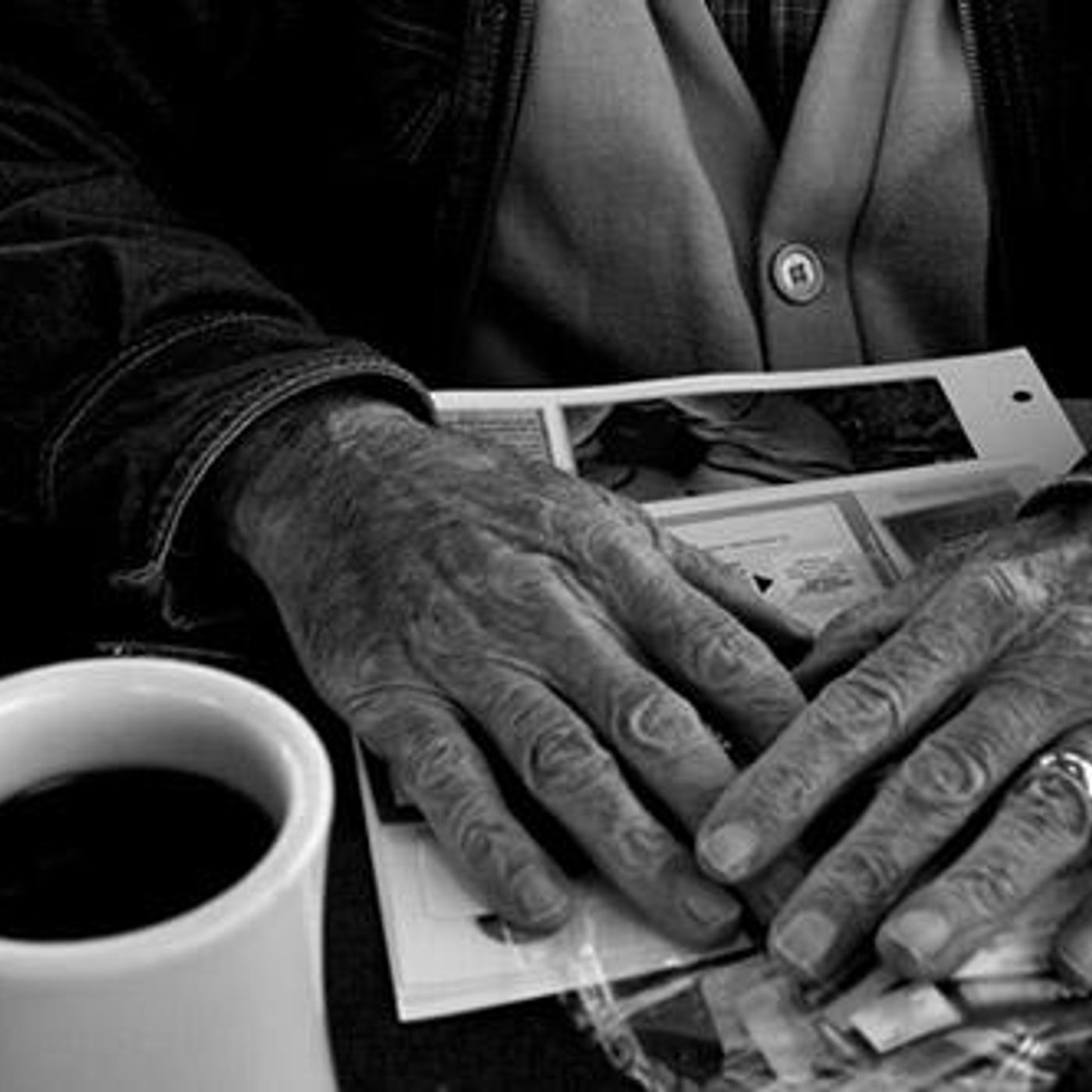
Radiolab
Grumpy Old Terrorists
00:19:17
While working on The Bad Show, producer Pat Walters ran across some recordings that spooked him--partly because they seemed like they had to be a big joke ... and partly because, at the same time, they sounded so deadly serious. In this short, Jad & Robert try to decide how to feel.
Loading summary
Transcript155 lines
- [00:01]
Jad Abumrad
Las fiestas noches mas brilliantes, momentos mas intensos. Y tu aroma de vedesta Cartanto como tu la collection Azaro wanted ofrese fragancias audaces calidas y sensuales. Prada tempurada the most wanted Eau de parfum intense tenun aroma magnetico Delicio mente seductor con notas de toffee y madera Sambar forever wanted Elixir combina notas de cuero y frambuesas con elegancia e intencidar esla confiance dos the scubre Azzaro y esta tempurada Be wanted Compraya. When you give gifts, you like to knock them out of the park. Airwick Essential Mist Diffuser's chic design, long lasting scents and effortless setup makes it the kind of gift that feels complete the moment it's unwrapped. Perfect for your favorite dinner party host or that friend who loves a cozy night in. Plus, its cordless design means you can easily take this gentle fragrance with you from room to room. Airwick Essential Mist Ready to gift. Ready to uplift. Lowe's early Black Friday deals are going fast.
- [01:04]
Robert Krulwich
Don't miss. Up to 50% off.
- [01:06]
Jad Abumrad
Select major appliances.
- [01:07]
Robert Krulwich
Plus up to an extra 25% off when you bundle. Select major appliances. And with Christmas around the corner, you're gonna need more string lights. Right? Save $4 on GE LED 100 count string lights. Now just $5.98.
- [01:20]
Jad Abumrad
Lowes we help you save.
- [01:23]
Robert Krulwich
Valid through 12.
- [01:24]
Jad Abumrad
3. Selection varies by location. Select locations only while supplies last. See lowe's.com for more details. Wait, you're listening.
- [01:30]
Dina Temple-Raston
Okay. All right.
- [01:33]
Jad Abumrad
Okay. All right.
- [01:36]
Dina Temple-Raston
You're listening to Radiolab Lab.
- [01:39]
Jad Abumrad
Radio Lab, Sure.
- [01:41]
Robert Krulwich
From wnyc.
- [01:44]
Jad Abumrad
Yes.
- [01:46]
Dina Temple-Raston
And npr.
- [01:48]
Jad Abumrad
Hey, I'm Jan Abumrad. I'm Robert Krulwich. This is Radiolab, the podcast. And today on the podcast, something a little different we got to it. Cause our producer, Pat. Do you just want to get in here? Hey, this is Pat Walters.
- [01:59]
Robert Krulwich
Yes.
- [02:00]
Jad Abumrad
So maybe you should set this up since you put this in front of us.
- [02:03]
Robert Krulwich
Yeah. This one comes from a writer named Tom. Tom Junot, writer at large with Esquire magazine, who I've wanted to get on the show for a really long time. It's about a pretty recent police bust that happened a few months back that Tom's been covering.
- [02:15]
Jad Abumrad
Maybe we should just start with a. Should we just follow the chronology of your reporting?
- [02:18]
Robert Krulwich
Sure.
- [02:19]
Jad Abumrad
I mean, how did you get into this?
- [02:20]
Robert Krulwich
Yeah.
- [02:21]
Jad Abumrad
How did it start with you?
- [02:22]
Robert Krulwich
Well, I got into it came out, you know, in the local newspaper. It was a front page story that came out on November 2nd.
- [02:29]
Jad Abumrad
Where's local for you? Just so we know, I live in.
- [02:31]
Robert Krulwich
Marietta, Georgia, and local for me is the Atlanta, Georgia area. And the Atlanta Journal Constitution ran a front page story with an illustration of these guys by the sketch artist that showed these guys, you know, being arraigned. Four guys in their orange jumpsuits. And the headline was interesting. It said, they Don't Fit the Profile. It wasn't four Arrested subhead. They Don't Fit the Profile. The headline was they Don't Fit the Profile.
- [03:06]
Jad Abumrad
To explain. The article described four guys who had been caught on tape planning to buy explosives.
- [03:13]
Robert Krulwich
Are you looking for C4?
- [03:15]
Jad Abumrad
I can get it. We are explosives that they were going to use to blow up a federal building in Atlanta, killing presumably hundreds of government employees. Irs, atf, FBI, and the cops. They'd even looked into making this chemical called ricin, which is one of the deadliest poisons known to man. Arsenic. Takes 100 granules to kill someone. Ricine takes one to two granules. Yeah. Ahead of a pin.
- [03:42]
Robert Krulwich
Yeah.
- [03:42]
Jad Abumrad
Yeah. Oh, yeah. On tape, they talk about taking this poison and dispersing it in public places up and down the east coast.
- [03:50]
Robert Krulwich
Newark, New Jersey. Jacksonville, Florida, Highway 95 in North Carolina.
- [03:56]
Jad Abumrad
And South Carolina, which theoretically could have killed hundreds more people.
- [04:00]
Robert Krulwich
They were motivated by an overarching desire to incite civil war, in which case, you know, the right side would battle and win, and constitutional government would be restored in the United States.
- [04:18]
Jad Abumrad
Now, what made them not fit the profile was, well, you could see it right there on the front page in the court sketch.
- [04:24]
Robert Krulwich
Their white hair, their white beards.
- [04:27]
Jad Abumrad
These were not your usual teenage terrorists. These guys, at least some of them were in their 70s. They were retirees.
- [04:35]
Robert Krulwich
I mean, the thing that interested me about it in the beginning was the thing that interested a lot of people, which is the fact that, you know, guys like this who you see sort of chewing the fat at the local Waffle House, Shoney's, McDonald's, you know, the coffee clatch of retirees. And, you know, you always pass these guys and, you know, you see them every day, and you go, well, what are these guys talking about? In this case? They were talking about, you know, killing people in mass numbers.
- [05:05]
Jad Abumrad
We know what we want to do. We know how to do it, but.
- [05:08]
Robert Krulwich
We need to be is prepared to do it.
- [05:11]
Jad Abumrad
Equipped. So a story like this is not our usual thing, but what got us interested in talking to Tom about it is that when you hear these tapes, who do we want to shoot? Lots of people. You're not quite sure how to feel. When do we want to shoot them?
- [05:26]
Robert Krulwich
Yesterday.
- [05:28]
Jad Abumrad
That's right. Like, should I laugh? Like, oh, these are just some old dudes getting a little heated, or should I be really afraid? It made us wonder, like, how do you know when someone's really a threat or when they're just flapping their gums?
- [05:42]
Robert Krulwich
Right. And that is the, you know, the fault line that the story tries to explore.
- [05:48]
Jad Abumrad
I'm curious to meet, as much as you've met the four guys in question. I mean, what are they? Like?
- [05:53]
Robert Krulwich
I've not met any of them. They are in jail. You can't get to them.
- [05:57]
Jad Abumrad
But based on what you learned, what can you tell us?
- [05:59]
Robert Krulwich
Well, I mean, I went the. The most interesting of them to me was Fred Thomas.
- [06:05]
Jad Abumrad
All right, so who's willing to take a life? He's the guy you hear talking the most on the tapes. Who's willing to take a life?
- [06:13]
Robert Krulwich
Fred Thomas was a career Navy guy working outside of Washington, D.C. comes down here to be close to his son.
- [06:21]
Jad Abumrad
This is late 2008.
- [06:23]
Robert Krulwich
Right before prepared to take the oath. Senator, I am Obama. I, Barack Hussein Obama, is inaugurated as president.
- [06:30]
Jad Abumrad
I, Barack Hussein Obama, do solemnly swear.
- [06:33]
Robert Krulwich
And for whatever reason, he begins to see his dreams going sour. And he begins going on to these militia sites, saying that the country that he served has now abrogated his trust.
- [06:51]
Jad Abumrad
Pretty soon, he's hosting militia meetings at his house, ranting about how it's time for them to do something. Are you committed to taking action? And in November 2011, Fred finds himself along with some of the other guys in a white truck in a Walmart parking lot, meeting with an arms dealer to buy a silencer for a fully automatic assault rifle and two fully built bombs made of C4 explosive.
- [07:16]
Robert Krulwich
The bomb that they were accused of buying was actually sort of an ied. It was a cell phone triggered device. That's a little bit scary, for sure.
- [07:27]
Jad Abumrad
When you heard these tapes, were you alarmed?
- [07:29]
Robert Krulwich
Sure, sure. Absolutely.
- [07:31]
Jad Abumrad
Yeah.
- [07:32]
Robert Krulwich
But I heard the tapes before I went to Fred Thomas house. You know, when you pull up to their house in the mountains of Georgia, they have a sign in the driveway that says, frank Sinatra fans only.
- [07:50]
Jad Abumrad
You've had your first lesson.
- [07:52]
Robert Krulwich
All others will be learning the blues. And, you know, when I pulled up to that house and when I saw that sign and when I went into the, you know, Sinatra shrine room there, you know, I Realized that they weren't typical militia types. What I expected. Exactly.
- [08:12]
Jad Abumrad
He then learns that right at the height of his planning, right as Fred Thomas is saying things like, I could shoot ATF and IRS all day long. I could shoot ATF and IRS all day long. All the judges in the doj. As Fred was saying all this, he was in really poor health.
- [08:29]
Robert Krulwich
I mean, he already has, you know, a variant of emphysema that causes him to, you know, have to drag around an oxygen tank wherever he goes. He already can't get up the stairs. The month before the first meeting takes place, he has half a lung removed.
- [08:44]
Jad Abumrad
Really?
- [08:45]
Robert Krulwich
Yeah. When you listen to this tape, what did you think about the potential of.
- [08:51]
Jad Abumrad
This fellow to do something real?
- [08:53]
Robert Krulwich
I mean, he sounds sane on this thing. He sounds determined. The question is whether he or anyone could have done it because of age and health. Right.
- [09:06]
Dina Temple-Raston
Well, wouldn't they have said that about James von Bruin, the guy who shot up the Holocaust Museum?
- [09:11]
Jad Abumrad
As we started thinking about this story, we ended up calling Dina temple Rastan.
- [09:14]
Dina Temple-Raston
I'm NPR's counterterrorism correspondent.
- [09:17]
Jad Abumrad
And she kind of complicated the age argument for us because she said, this guy, James von Bruno, white supremacist, on June 10, 2009, he walked right up.
- [09:25]
Dina Temple-Raston
To the Holocaust Museum. The guard opened the door, he shot him at point blank range, and then started shooting up the museum.
- [09:31]
Jad Abumrad
Oh, my God.
- [09:32]
Dina Temple-Raston
89 years old.
- [09:34]
Jad Abumrad
89.
- [09:35]
Dina Temple-Raston
89.
- [09:36]
Jad Abumrad
She called us back later to say, actually he was 88.
- [09:38]
Dina Temple-Raston
But still, if you saw this man frail, wow. Does that fit any sort of profile? It doesn't.
- [09:46]
Jad Abumrad
To the fact that Fred Thomas was 73 and dragging around an oxygen tank. It doesn't mean anything.
- [09:51]
Dina Temple-Raston
That's right.
- [09:52]
Jad Abumrad
Yeah.
- [09:52]
Robert Krulwich
In fact, I felt like when he was talking about how old and expendable.
- [09:58]
Jad Abumrad
I'm old, unexpendable, and how.
- [10:00]
Robert Krulwich
I mean, he was gonna die soon.
- [10:02]
Jad Abumrad
I ain't got a lot of time left on this Earth anyway. 5, 8, 10 years at the most.
- [10:07]
Robert Krulwich
Now he wanted to, like, leave something behind for his grandchildren and fix the country before he went out.
- [10:12]
Jad Abumrad
I want this country to be good for my grandchildren if it takes killing some people here now, I'm willing.
- [10:20]
Robert Krulwich
Like, suddenly he felt like he was scary because he was so old and infirm. This is a guy with nothing to lose, wanting to go out in a blaze of glory.
- [10:29]
Jad Abumrad
Exactly.
- [10:30]
Robert Krulwich
And it felt weirdly like the things that other real terrorists say. There was an abandon to the way that he was talking about himself.
- [10:39]
Jad Abumrad
But if you go past that little sentence, which I noticed, too. And then you go and learn anything else, then suddenly it gets dull again. That's the way it seems to me.
- [10:48]
Robert Krulwich
Well, he's far from. A lot of these guys who do these things are rootless. He is far from rootless.
- [10:57]
Jad Abumrad
Contrast him with the guy Dina told us about, Von Brun, who had no family, no friends.
- [11:03]
Dina Temple-Raston
The only connection he had to the world was his computer.
- [11:06]
Jad Abumrad
And just before his shooting spree, he.
- [11:07]
Dina Temple-Raston
Gave away his computer. So he was ready to die.
- [11:12]
Jad Abumrad
Tom says that is not Fred's story.
- [11:13]
Robert Krulwich
For all the violence of his rhetoric, he's shown for 73 years of life, no inclination towards violence, no inclination towards crime. He's been what we can see, a loyal husband, a devoted father. He's lived, in some ways, a blameless life. And that is always why I thought that really if someone had, you know, the sheriff had pulled up to his house and said, hey, listen, we know what you're doing. We know what you're up to. Just, you know, get lost. If I. If I hear about this again, I'm going to come out and you're in. You know, you're going to be in trouble. To me, it would have been over.
- [11:48]
Jad Abumrad
So you think that if anyone had knocked on the door and said, we know what you're up to, just quit it, just cut it out.
- [11:54]
Robert Krulwich
Absolutely.
- [11:54]
Jad Abumrad
You think they would have gone away?
- [11:55]
Robert Krulwich
Absolutely.
- [11:56]
Jad Abumrad
But how can you be so sure about that?
- [11:58]
Robert Krulwich
I just think that there was an element of fantasy in this thing, which is scary, but present in almost all of it.
- [12:06]
Jad Abumrad
We ended up going back and forth on this for quite a while with Tom and Robert saying the government might be taking these guys too seriously, but he didn't.
- [12:13]
Robert Krulwich
He didn't shit any.
- [12:14]
Jad Abumrad
And then Pat and Jad saying, well, how can the government not take them seriously? Dino, can we get your take here?
- [12:19]
Dina Temple-Raston
Sure.
- [12:20]
Jad Abumrad
If you're faced with tapes of octogenarians talking about using ricin and spreading it on the highway to kill dozens, hundreds of people, however far fetched it may seem, what do you do? I mean, is there a way that you can get to some sort of, like, clarity as to. Like, here's when I ignore them, and once they pass this line, and here's the line right here, I can put my finger on it, then we act. Is there a line? I mean, what do you do if you're the FBI?
- [12:49]
Dina Temple-Raston
You know, it's a gut thing in the end, for law enforcement, it's a gut thing, and they have to decide whether or not somebody's a real threat or Whether it's somebody they have to watch. But what they started doing is actually letting these so called plots go a bit further. For example, there's a man named Samadhi. They found him in a chat room talking about loving Al Qaeda's ideas and wanting to do something against the United States.
- [13:16]
Jad Abumrad
Sort of like our militia guys.
- [13:17]
Dina Temple-Raston
Right. So basically they introduced someone to Samadhi and said that he was an Al Qaeda sort of affiliate guy, could help him get the explosives he needed, would help him get a van in which he could put the explosives so he could drive it into the garage of this big skyscraper in Dallas. And so Smaati did all this, he.
- [13:37]
Robert Krulwich
Called the guy, they got the van, they filled it with explosives.
- [13:42]
Dina Temple-Raston
Yes, Everything that this guy suggested. But here's the important point. So they put the van in the basement of the building, and this FBI affiliated person hands a phone to Samadhi and says, dial this number and it'll blow up the bomb.
- [13:58]
Jad Abumrad
And where are they standing at this point? Are they anywhere near this building?
- [14:01]
Dina Temple-Raston
They're in a car watching the. They're actually in a car apart from the building, so they could watch the explosion. Anyway, they're apart from the building and they're watching it. And he hands Smati the phone and Samdi dials the number he tells him to dial. And I don't know if this is a hypocrisy part of the story or not, but it was actually the phone number for the local FBI office and he was arrested.
- [14:23]
Jad Abumrad
Oh. So he gave Samani the phone and said, dial this number, the building will blow up right in front of our eyes. And Samani did it.
- [14:29]
Dina Temple-Raston
Exactly.
- [14:29]
Jad Abumrad
That's beautiful police work. That's what I pay my police to do. That they can do that thing. That's brilliant.
- [14:36]
Robert Krulwich
I would want to do that to all of them. Like, I would want to give that phone to everyone who's saying that they want to blow up a building.
- [14:43]
Jad Abumrad
Yeah, because it resolves the central debate here, which is.
- [14:48]
Robert Krulwich
Oh, whether the possible.
- [14:49]
Jad Abumrad
Is possible becomes the probable. Yeah, because if he's willing to dial the number, then you have your answer.
- [14:53]
Dina Temple-Raston
But. Okay, here's the caveat, because I think a lot about this because there was a time a couple of years ago when we had something in the neighborhood of 14 of these kinds of cases in one year.
- [15:08]
Jad Abumrad
The caveat, she says, is that if they dial the cell phone. Yeah, that seems to settle things. But they would never have dialed it had you not given it to them.
- [15:16]
Dina Temple-Raston
And so one way of looking at this and I. And I haven't fully resolved this for myself, is that if you get them stirred up, the fact that they're willing to dial the phone. You got them stirred up in the first place.
- [15:28]
Jad Abumrad
On the other hand, the fact that they were willing to dial the phone means that they were willing to dial the phone. So let's get down to what we can do. What are we willing to do? And you have something of the same tension in this case, the Fred Thomas case. And that's really the heart of Tom's objection. Like, the whole reason we have these secret tapes that we've been listening to is because the FBI recruited a confidential informant, a guy named Joe Sims, to infiltrate the meetings. And he wore a wire. And on the tape, you hear this guy, Joe Sims suggest to Fred Thomas and the guys that they should buy explosives. Again, we didn't know what the price was. You're saying it's a grand for a stick, which apparently cost $1,000.
- [16:13]
Robert Krulwich
Give you a stroke already.
- [16:15]
Jad Abumrad
Sorry, guys, it is what it is.
- [16:16]
Robert Krulwich
We didn't know.
- [16:17]
Jad Abumrad
We didn't know. As you can hear, Fred says there's no way he can afford that. So Joe Sims chips in to help them buy it using government money. And then finally he sets up that.
- [16:27]
Robert Krulwich
Meeting with the arms dealer that eventually led to these guys arrest. I mean, if they weren't even at some sort of level going to do it without the addition of Joe Sims and an undercover FBI agent, it comes really, really close to prosecuting thawed crimes. You know, there is an apparatus at work here that is precisely the apparatus that these guys fear.
- [16:50]
Jad Abumrad
Well, they weren't prosecuted for what they said. They were prosecuted for what they did. This is Sally Yates, the United States Attorney in the Northern District of Georgia.
- [17:00]
Robert Krulwich
When you put together a list of people and groups that you want to kill, when you conduct surveillance on both.
- [17:06]
Jad Abumrad
The ATF and IRS buildings here in Atlanta, when you make arrangements to buy bombs and silencers, that's not a thought crime. I think you ought to ask yourself, is that something you want law enforcement to walk away from?
- [17:21]
Robert Krulwich
Are we absolutely certain that they were going to act on this? And I'm not going to pretend that we were, but we were certain that that was not a risk that we were willing to take. We should probably hear the final. So at the end of the day, what happens? Well, at the end of the day, they meet in a parking lot in Cornelia, Georgia. Joe Simms is waiting there in a white Ford 150 truck with the undercover agent.
- [17:51]
Jad Abumrad
Who is the undercover agent?
- [17:53]
Robert Krulwich
Pretending to be. He's pretending to be an arms dealer. They are there to buy a silencer, and they are there to buy the explosive.
- [18:01]
Jad Abumrad
So what happens?
- [18:02]
Robert Krulwich
They get into the truck. Sims has a wad of bills that is actually supplied by the government. He gives it back to the government, so to speak. He hands it to the undercover agent. Fred Thomas hands his money to the undercover agent. The undercover agent steps out and says, I gotta make a cell phone call. Makes the cell phone call. I talked to the manager of the Captain D's that was being built in the parking lot there. They were there that day, and a Chevy Suburban and a big van comes ripping by these guys as they're going out to lunch. And the manager says to the owner, well, don't look now, but there's a SWAT team in that Chevy Suburban. That thing comes in, and, you know, within seconds, these guys are out. They throw flash grenades in the bed of the white pickup truck where Dan Roberts and Fred Thomas are sitting.
- [18:55]
Jad Abumrad
Flash grenades.
- [18:55]
Robert Krulwich
Flash grenades. And, you know, flash grenades are those things that, you know, they explode with a blinding burst of light and also, you know, tremendous loud noise. The whole purpose of that thing is just shock and awe. They throw the flash grenades. They get these guys out. They go face down on the pavement. They're encircled by a SWAT team in full armor, automatic weapons trained at their heads. And my sources from the. From the Captain D's said that one of the things that they noticed when they stood up was, you know, they. They both had, you know, stained their pants.
- [19:29]
Jad Abumrad
Because they were so scared.
- [19:30]
Robert Krulwich
Yeah. Do you feel any safer?
- [19:39]
Jad Abumrad
No. Not sure.
- [19:44]
Robert Krulwich
Kinda. Yes.
- [20:01]
Jad Abumrad
Thanks to tom janeau and to our own pat walters. Yeah, and thanks to you for listening. Yeah. I'm jad abumrad.
- [20:08]
Robert Krulwich
I'm robert krulwich.
- [20:10]
Jad Abumrad
See ya. I am Haru Zemski, a Radiolab listener from Portland, Oregon. And Radiolab is supported in part by the National Science foundation and by the Alfred. Alfred P. Sloan foundation, enhancing public understanding of science and technology in the modern world. More information about Sloan@www.sloan.org.
- [20:43]
Dina Temple-Raston
End of message.
- [20:47]
Robert Krulwich
With Venmo. Stash a taco in one hand and.
- [20:50]
Jad Abumrad
Ordering a ride in the other. Means you're stacking cash back.
- [20:54]
Robert Krulwich
Nice. Get up to 5% cash back with Venmo stash on your favorite brands when you pay with your Venmo debit card. From takeout to ride shares, entertainment and more. Pick a bundle with your go tos and start earning cash back at those brands. Earn more cash when you do more with Stash. Venmo Stash terms and exclusions apply. Max $100 cash back per month. See terms at Venmo Me Stash Terms.
- [21:17]
Jad Abumrad
When you give gifts, you like to knock them out of the park. Airwick Essential Mist Diffuser's chic design, long lasting scents, and effortless setup makes it the kind of gift that feels complete the moment it's unwrapped. Perfect for your favorite dinner party host or that friend who loves a cozy night in. Plus, its cordless design means you can easily take this gentle fragrance with you from room to room. Airwick Essential Mist Ready to Gift Ready to Uplift.