← Radiolab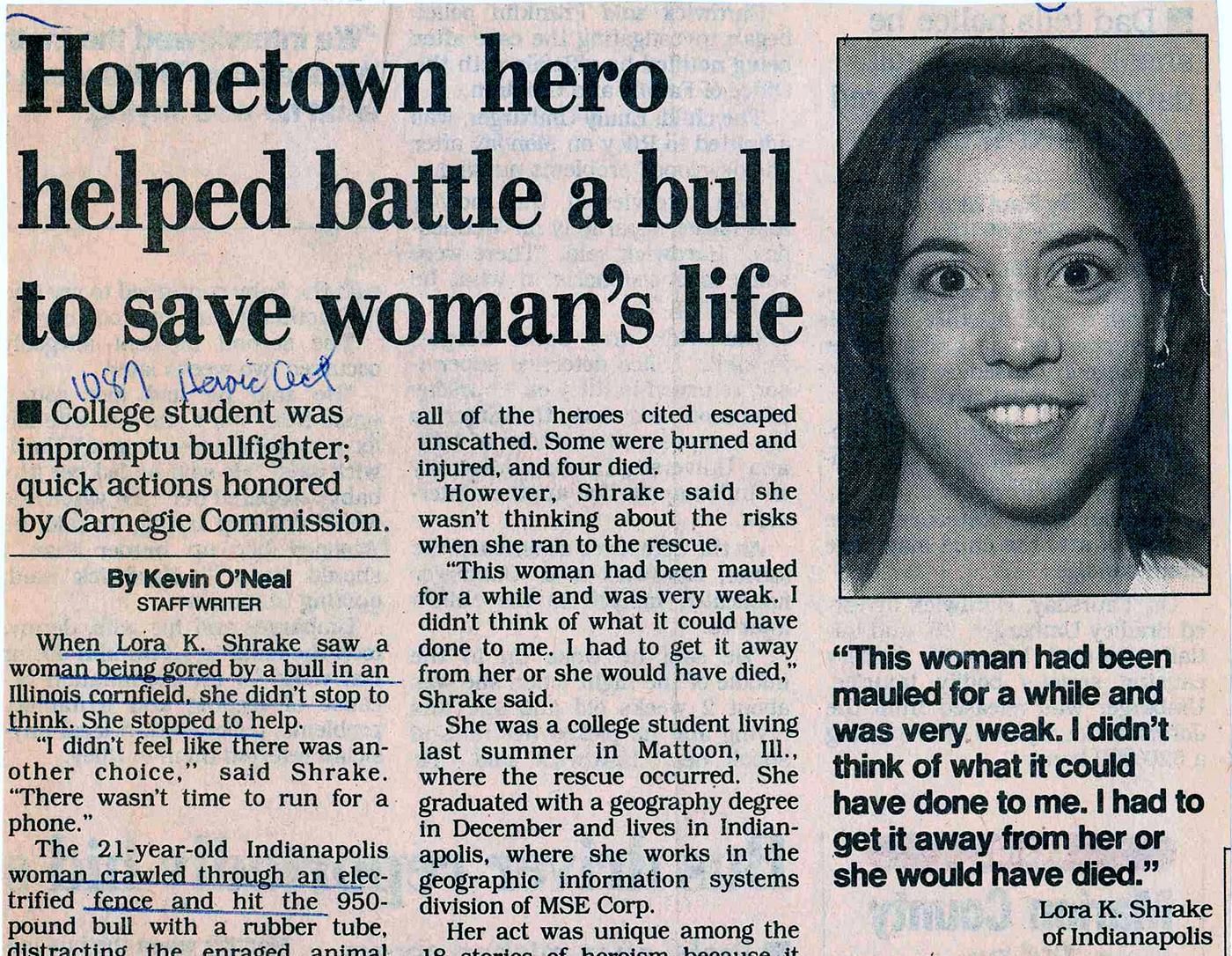
Radiolab
How to Be a Hero
00:28:42
What are people thinking when they risk their lives for someone else? Are they making complicated calculations of risk or diving in without a second thought? Is heroism an act of sympathy or empathy? A few years ago, we spoke with Walter F. Rutkowski about how the Carnegie Hero Fund selects its heroes, an honor the fund bestows upon ordinary people who have done extraordinary acts. When some of these heroes were asked what they were thinking when they leapt into action, they replied: they didn’t think about it, they just went in. Neuroscientist Robert Sapolsky says there is a certain kind of empathy that leads to action. But feeling the pain of another person deeply is not necessarily what makes a hero. Our original episode was reported and produced by Lynn Levy and Tim Howard. This update was produced by Amanda Aronczyk. Support Radiolab today at Radiolab.org/donate.
Loading summary
Transcript219 lines
- [00:02]
A
Oh, wait, you're listening.
- [00:03]
B
Okay.
- [00:04]
C
All right.
- [00:06]
A
Okay.
- [00:07]
C
All right.
- [00:09]
A
You're listening to Radiolab Radio Lab from wnyc. Hey, this is Radiolab. I'm Jad Abumrad.
- [00:22]
D
I'm Robert Krulwich.
- [00:23]
A
Our topic today is goodness. Goodness, selflessness.
- [00:26]
D
So we've done the math.
- [00:27]
A
I. Okay. So you ready for this?
- [00:30]
D
I am ready.
- [00:30]
A
All right. So a while back, we. We did this story that, for us at least, really stuck in our heads. It was a story that was asking this really deep question, and the answer.
- [00:41]
D
That we got to, the answer didn't quite click right. I remember it that way.
- [00:45]
A
Yeah. And so just to sort of set the table, the question was, why do people do good in the world? So we asked that question, looked at it from the perspective of genetics, computer science, all kinds of things. We ended up profiling these three extraordinarily heroically good people.
- [01:01]
D
Yeah, they were heroes. They. They did remarkable things, each one.
- [01:04]
A
And we told their stories with that question in mind. Why do certain people do good in the world and others don't?
- [01:09]
E
Yeah.
- [01:09]
A
And so we're going to revisit that question today and the story that we told because I think we have something better and smarter to say about it.
- [01:15]
D
Finally, something very peculiar to say about it, as it turns out.
- [01:18]
A
Yeah. So we're going to play you the original first, and then we're going to come back and hopefully shed some new light on it.
- [01:23]
B
Yeah.
- [01:24]
A
So here we go again. This story just began with a simple question. That question led us.
- [01:33]
C
Walterkowski.
- [01:34]
A
To a guy named Walter Rutkowski.
- [01:36]
C
And I'm the executive director and secretary of the Carnegie Hero Fund Commission.
- [01:39]
A
Cool. Well, thanks for doing this. Ok, can you just give us a little background on the Hero Fund? What is the Carnegie Hero Fund?
- [01:46]
C
The Carnegie Hero Fund is a private operating foundation that was established by Andrew Carnegie in 1904. And what we do is recognize civilian heroism throughout the United States and Canada by giving an award called the Carnegie Medal. And accompanying the Carnegie Medal is a financial grant.
- [02:04]
A
How much?
- [02:05]
C
Currently the amount is $5,000.
- [02:08]
A
Wow. And how do you guys choose your heroes?
- [02:10]
C
We judge the heroic acts against a list of requirements.
- [02:15]
D
So then you have to have some kind of definition of hero, which includes some and excludes others.
- [02:20]
C
Yes.
- [02:21]
A
Perfect.
- [02:22]
C
A basic definition, which is a civilian. One, meaning no military who voluntarily.
- [02:28]
A
Two.
- [02:29]
C
Leaves a point of safety.
- [02:30]
A
Three.
- [02:30]
C
To risk his own life or her own life to an extraordinary degree.
- [02:35]
A
5.
- [02:35]
C
To save or to attempt to save the life of another human.
- [02:39]
A
Six. How about seven?
- [02:41]
D
Why? Can you read that one? More time.
- [02:42]
C
Okay, I wasn't reading that, just came from memory.
- [02:44]
A
So what is it that happens in a person's mind at that pivotal moment when they decide to voluntarily leave a point of safety and risk their life to an extraordinary degree to save the.
- [02:55]
C
Life of another human?
- [02:56]
A
That's what we wanted to know. Should we just jump in? Okay, so the first one we have on our list is Laura Schrake.
- [03:03]
C
Okay. That's file number 73546. And the award number is 8005.
- [03:09]
F
I am Laura Shrake. I am from Mattoon, Illinois and I currently live in Dubai, United Arab Emirates.
- [03:16]
A
Oh, wow. Laura spoke with our producer, Tim Howard. Okay, so we're going back a little bit here.
- [03:20]
C
Yeah. 15 years back in the mid-90s, 1995, I was a 21 year old college.
- [03:25]
F
Student and I was driving through the country and I saw a woman getting mauled by a bull in a pasture.
- [03:35]
C
So she stopped to see what was.
- [03:36]
F
Going on, jumped out and started yelling at her to see what I could do. The woman was on the ground and.
- [03:43]
C
The bull was 950 pound jersey bull.
- [03:46]
F
Tossing her in, back on the ground.
- [03:49]
C
Wow.
- [03:50]
F
She was clearly struggling.
- [03:51]
C
And where were you?
- [03:52]
F
I was right on the other side of the fence. But the fence was electric.
- [03:59]
A
So here's the moment that we find fascinating at this point, Laura can either go forward through thousands of volts of electricity toward an angry bull that will likely maul her too, or she can stay saf.
- [04:20]
F
I went ahead and just climbed through the fence and I don't remember ever feeling the electricity.
- [04:26]
A
She says by the time she got through crazily enough, a neighbor had shown up and threw her a piece of.
- [04:30]
F
Pipe, maybe about 2ft long.
- [04:32]
C
So she approached the woman, who was.
- [04:34]
F
Still conscious the whole time. She's yelling at me, hit the bull in the face as hard as you can and don't stop.
- [04:40]
C
So Ms. Shrike went up to the bull and beat it repeatedly with this two foot length of tubing.
- [04:51]
F
I think it distracted the bull enough where she was able to get out from under him. And as soon as we were outside the fence, looking back into the pasture, the bull was literally right there at the fence.
- [05:04]
C
Kicked the ground a few times and snorted.
- [05:06]
F
He was not, he was not happy.
- [05:10]
A
To our question, when you were there at that fence and you had the choice to either stay put or to go through it, what was going through your mind? Was there a calculation there?
- [05:22]
F
No, I can't really say that.
- [05:24]
A
I mean, you didn't weigh your options or anything like that?
- [05:27]
F
I Did not. No. It was just, here's the problem. Here's what I need to do. And something needed to happen.
- [05:35]
B
Huh?
- [05:36]
A
So there was no choice moment?
- [05:38]
F
Not that I recall, no. If nobody came to this woman's rescue.
- [05:44]
A
She would die, unfortunately. This is the usual explanation, says Walter. No explanation.
- [05:51]
C
I couldn't stand there and not do anything. I was compelled to act.
- [05:56]
F
I didn't really take the time to think about what else could happen.
- [05:59]
E
I can't say I ever really thought about my own life at that time.
- [06:02]
A
Okay. We just jumped ahead because we thought we'd try again. That's the voice of the next Carnegie hero that Walter told us about.
- [06:09]
C
William David Pennell.
- [06:10]
E
My name's William Pennel.
- [06:11]
C
Who is the 8,362nd person to receive the Carnegie Medal.
- [06:17]
A
Our producer, Lynn Levy, tracked him down.
- [06:18]
F
Bill, can you hear me?
- [06:19]
E
Yeah, I can hear you.
- [06:20]
C
William David Pennell was 37 years old at the time of his heroic act.
- [06:24]
F
Was it 1999?
- [06:26]
E
Yes, it was early in the morning.
- [06:28]
C
It was like 3:19am In a small town near Pittsburgh.
- [06:32]
E
Pittsburgh, Pennsylvania.
- [06:33]
C
Monongahela, Pennsylvania.
- [06:35]
E
We was in bed sleeping, and my wife heard a lot crash. I actually didn't hear it. And the dog, my one dog, was carrying on. So right away I run down there.
- [06:45]
C
Mr. Pennell went outside his house. There was a very bad automobile accident. A car crashed head on into a utility pole.
- [06:52]
E
Flames was like rippling up the windshield out from under the hood.
- [06:55]
C
And he responded to the scene wearing only sweatpants, no shoes or shirt or nothing on it, bare chested and barefoot.
- [07:03]
A
So here we are. Bill's standing in front of this ball of fire. There are three teenagers inside that car. Though he doesn't know it, he can either A, do nothing or B, go.
- [07:15]
C
In through the driver's door.
- [07:20]
E
And this big fella slumped out the door. So I reached in and grabbed a.
- [07:24]
C
Hold of him around the chest, pulled him from the driver's seat out to the ground.
- [07:27]
E
Meantime, the car was just like blazing. And my neighbor was there. She was hollering, there's more of them in there. So I run back to the vehicle.
- [07:36]
C
Found that the front seat passenger was trapped in the wreckage.
- [07:40]
E
I finally got him loose and pulled him out.
- [07:42]
C
Apparently Mr. Pennell was aware that a third person was in the car. A third Mr. Pennell entered the car a third time. By then there was tires blowing out. Flames had grown to about three feet above the car's roof.
- [07:55]
E
The interior like the headliner of the car. And stuff was dripping like plastic down on my back. I mean, I'm in there screaming, you know, somebody give me a hand in here. But nobody, nobody would help. And I reached in and grabbed ahold of the kid that was in the back by the scruff of the neck and pulled him out.
- [08:17]
F
All right, so when you were coming out of your house and you looking at that car, what was going through your head?
- [08:24]
E
Just trying to try to help. I mean, I did what any normal person would do. I mean, you know, I just kept saying, this is somebody's kid, you know what I mean? At the time, my daughter was like 16. And I'm saying to myself, you know, if something God forbid, would ever happen to her, that I would hope someone would be there to help.
- [08:43]
A
Did you ever talk to your neighbors and ask them why they didn't come in there?
- [08:49]
E
You know what, that's funny you brought that up because. No, I've never, never brought it up. Never brought it up.
- [08:55]
A
How come?
- [08:56]
E
I don't know. I guess maybe I probably wouldn't like their answer. I don't know. I don't know why I've never asked him that.
- [09:05]
A
What do you think is the difference between you and those other people who.
- [09:08]
F
Just sort of stood by?
- [09:11]
E
I couldn't answer that. I couldn't answer that.
- [09:15]
A
So our bull girl, she didn't know this guy, didn't really know either. Somebody must be able to tell us something about what they were thinking at that moment that allowed them, that gave them the courage to do what they did.
- [09:28]
C
I can't give you a definite answer as to what propels people to do this. No.
- [09:31]
A
But we took one more shot with Walter and after we take a quick break, we're going to hear one more hero story from him. That's when we come back. This is Sam calling from Denver, Colorado. Radiolab is supported in part by the Alfred P. Sloan foundation, enhancing public understanding of science and technology in the modern world. More information about Sloan@www.sloan.org. Chad Robert, Radiolab.
- [09:59]
D
We're back now with Walter Rakowski who's going to tell us the third and final of his hero stories.
- [10:04]
A
He told us that of all the cases he's heard, this is the one that puzzles him the most.
- [10:09]
C
It's the case of Wesley James Autry, a construction worker from New York. 50 year old man who did jump into the track bed in a subway station to remove a fellow, a young man who had fallen onto the track. The gentleman was 6 foot, 180 pounds. He was inert. And yet Mr. Autry persisted despite the fact that A train was coming. There would come a point, at least in my estimation, where you would have to say, I have to get out of here because I'm going to be killed. I'm not suicidal. But Mr. Autry didn't think that way. He and I part in. In this manner. What he did was he lay atop the victim between the rails while the train passed over them. In the farthest reaches of my imagination, I can see myself jumping onto a subway track to attempt the rescue. What I can see myself doing is lying atop the victim while the train passes over me.
- [11:13]
A
Making this story even more nuts. When we finally met up with Wesley Autry on the platform where this incident happened, 135th and Broadway, he explained to us that his daughters had been with him. They was.
- [11:26]
D
Okay.
- [11:26]
G
And how old are your daughters? At that time, My daughter was 4 and 6. And this.
- [11:34]
A
This them there showed us a picture.
- [11:37]
D
Oh, my God.
- [11:38]
A
Super cute.
- [11:39]
G
The one behind me is Shuki. And this, the baby, Sashi.
- [11:42]
A
So when they're standing there and this guy starts convulsing and then eventually falls off the platform onto the tracks right as a train is coming, his choice is pretty stark. In order to save this complete stranger, he's got to leave his daughters behind, potentially without a dad.
- [11:58]
G
I'm looking at him shaking and going into another seizure. For some strange reason, a voice out of nowhere said, don't worry about your own. Don't worry about your daughters. You can do this.
- [12:09]
A
So he jumps, runs to the guy.
- [12:12]
D
Is he conscious?
- [12:13]
G
No.
- [12:14]
E
No.
- [12:14]
A
Tries to grab the guy's hand.
- [12:15]
G
And each time I grab this hand, we'll slip apart. And when he slip, I look up. The train is getting close. I grab his hand again. We'll slip apart. The train is closer.
- [12:24]
A
50Ft, 20ft, 10ft. And then it's right there. And all he can do is grab the guy, get him in a bear hug, and flatten his body against the guy as much as much as he can.
- [12:40]
G
The first train car just grazed my cats.
- [12:43]
D
Oh, my God.
- [12:44]
A
Train car went right over there.
- [12:45]
G
When the train came to a stop, four to five cars passed over us. I looked him in the eye. I said, excuse me, you seem to have a seizure or something. I don't know you. You don't know me. So I just kept talking to him until he came through. And he was like, well, where are we? I'm like, we only need for train. He said, well, who are you? I said, I came down to save your life. So he kept asking me, are we dead? Are we in Heave. I gave him a slight pinch on his arm. He's like, ouch. I said, see, you're very much alive.
- [13:13]
D
Have you. Did you ever ask yourself at this point, like, what am I doing here? I mean, he asked it, what am I doing here?
- [13:20]
B
What about you?
- [13:21]
G
I can hear the two ladies. We had my daughter standing in between their legs. I can hear my daughter screaming. So when that train come to a stop, I yell up from underneath the train, excuse me, I'm the father. We're okay. I just want to let my daughters know that, that I'm okay, because I know that they are worried about me. Everybody start clapping.
- [13:40]
A
Can I ask you a question? So the point at which you said you heard a voice. Yes. That said, I can do this. I can do this.
- [13:48]
E
What's.
- [13:48]
A
What. What is amazing to me is that you left your daughters right here and dive after a guy you don't know.
- [13:55]
G
He was a stranger, total stranger. But you know what? The mission wasn't completed. I was chose for that.
- [14:02]
A
You felt chose like you were chosen?
- [14:04]
G
I felt like I was the chosen one.
- [14:08]
D
For a religious person, though, I would wonder, why me?
- [14:13]
G
Well, you know what? Maybe 20 years ago, I was supposed to be at a certain point, and.
- [14:21]
A
Then he explained to us exactly why he had jumped. He was the one guy who could, he said, right before his feet left the platform, this one specific moment from his life flashed to mind.
- [14:30]
G
This thing that happened, you know, I had a gun pulled to my temple, but, you know, it was a misfire.
- [14:37]
D
So, you know, a gun was put to your head and missed, so you were almost dead for a second.
- [14:42]
G
I was almost dead, you know.
- [14:44]
D
So you think you might have been.
- [14:45]
B
Spared for a purpose?
- [14:46]
G
I was spared for a reason.
- [14:48]
A
After that moment, he says when the gun went click and he didn't die, he always wondered why had God spared him that moment until he was on the platform and he saw the guy fall off. He says then he knew. This is why I. I can do this. He was just, I can do this.
- [15:04]
G
I can do this. That voice, when that boy said that, you going to be okay. I knew everything was going to work out.
- [15:19]
D
You know what I think at the end of the day?
- [15:20]
A
What's that?
- [15:21]
D
I don't think that there's an answer to the question we asked. I don't think hero question, why were you a hero? I don't think that any three of these heroes, I mean, the last one, had the longest explanation. He had been selected for some purpose. But does he know why he was chosen? Well, Not a clue.
- [15:37]
A
See, I. Guy number three gives me something.
- [15:39]
C
What does he give you?
- [15:41]
A
Okay, so the first two, right, they have no idea.
- [15:43]
D
None.
- [15:44]
A
So there's just something in them that made them act. But guy number three is talking about circumstances, like the world prepared him for that moment. Serendipity. So it makes me think, well, what if circumstances are just right? Maybe any of us could do that.
- [15:59]
E
I got, I got a mailman, he, he used to say to me all the time, he says, how did you manage to do that up there? How did you manage to pull them kids out? I don't know if I could have done that. I said, well, you know what? Don't say you wouldn't do this or you wouldn't do that until you're put in that situation.
- [16:13]
A
In fact, when we asked Walter, how many nominations do you get a year, Are they hard to find?
- [16:18]
C
No, they are not hard at all to find. We are fortunate to be living in a society regardless of what you hear elsewhere. We are fortunate to be living in a society where people do look out for others, even strangers.
- [16:29]
A
He told us they've even had to up their guidelines to make it harder.
- [16:32]
C
To win simply because of the vast number of heroic deeds that happen in day to day life.
- [16:45]
A
I gotta say that we went with this feel good thought about all the people who are doing good because I honestly don't think we knew what to say to end that story.
- [16:54]
D
Well, it's nice to know that there's a lot more good people than we thought.
- [16:57]
A
But we were trying to figure out why people, why people who do that, do that, and why we're different or they're different than us. And we didn't really get there.
- [17:07]
D
But then this guy walked in. You should say just for these purposes, who you are. Once again.
- [17:13]
B
I'm Robert Sapolsky. I'm a professor of neuroscience at Stanford University.
- [17:18]
D
Robert has been on our program many, many times talking about any number of things. And he has just come out with a book called Behave, trying to explain why we do everything we do. It goes into the brain, into history, into culture, everything. And we figured, well, may maybe he would have something to say about our little puzzle.
- [17:35]
B
Yep.
- [17:35]
D
All right, well, let's just ask you, you've heard all three of these things. What do these three tales make you think?
- [17:43]
B
I think what we see with all three is how highfalutin moral reasoning plays like zero role in what went on there. Moral reasoning doesn't do anything.
- [17:54]
A
And you see and you know the first thing that Robert spolsky told us, which maybe wasn't that surprising, is that when we were asking people what were they thinking, that was sort of the wrong question.
- [18:04]
B
And everybody, as you saw, always gives the same answer, which is, I wasn't thinking, I was feeling about what if this were my 16 year old daughter or I hearing a voice or with the bull woman saying, I wasn't thinking. Like before I knew it, I had jumped in.
- [18:19]
A
The evidence suggests, Cybulsky says, that in situations like this, people just don't reason their way to a decision. That's not how it works.
- [18:27]
B
Correct. People don't think their way to a moral decision. And in fact, if you give people enough time to really think their way in a circumstance like that, most people think their way to concluding, this isn't my problem or somebody else will take care of it, or here's why, it's their fault.
- [18:43]
D
So then we ask them, okay, if it's not thinking or moral reasoning, then maybe what these heroes are doing is they're feeling, they're empathizing more than the rest of us and that's why they.
- [18:54]
B
Do what they do ironically. Probably not.
- [18:58]
D
Probably not.
- [18:59]
B
Yeah. Okay, so empathy, you're feeling somebody else's pain. Pain, whether it's pain your toes on fire or pain, you're feeling the pain of somebody else. Pain is painful. And if it's painful enough and acute and burning enough, what that translates into is, I can't take it, this is too upsetting and you need to run away at some point. If you're mostly focused on, my God, what were this to be? What would this feel like if this were happening to me? That's the predictor of people who don't necessarily, don't very readily make that leap from feeling empathy to actually acting compassionately.
- [19:41]
A
Oh, that's not what I expected you to say. I thought you were going to take it the other way. So you're saying when it's hot, when it's me, me, me, me, me, your pain is my pain, those people are less likely to step forward.
- [19:54]
B
Yeah, they're less likely to actually go and do the compassionate thing.
- [19:58]
A
Spolsky told us that there have actually been studies that have found this, that when someone actually empathizes, physically feels another person's pain, they're more likely to turn away from it rather than step forward and try and alleviate that person's suffering.
- [20:13]
B
You put somebody in a circumstance and for example, how many shocks are they willing to get to intervene to help somebody in some simulation game, for example, Example. And you look at. Is this the person whose heart rate soars when they see somebody else in this tough situation, or is this the kind where it remains fairly steady? The latter is more likely to act compassionately.
- [20:38]
A
That's so interesting.
- [20:39]
B
Okay, so what we're barreling towards here is it's not so much about moral reasoning, it's not so much about vast empathy, but it's about a type of empathy that. That allows you to remain detached enough to actually act.
- [20:56]
D
So emotional distance will create the humane or charitable act.
- [21:01]
B
Exactly. You need a certain amount of detachment. That's surprisingly where it comes in. And that runs counter to so many of our instincts about what empathy should be about. And what I think we see here is probably the most reliable realm of people going and doing the heroic thing, which is when it's implicit, when it's automatic, when it's not you sitting there reasoning through, well, how many copies of my genes am I going to pass on if I do this? Or among my close relatives. And where it's not empathy, oh, am I feeling for this person, or as this person, or with this person, or above this? And instead, before I knew it, I had jumped in the river to save this child. And I think that's where you see some of the most interesting, reliably sort of heroic stuff, when it's implicit, when it's automatic.
- [21:52]
D
And do you know how a person can get that kind of compassion made implicit? Is it something you're born with or something cultural that your parents put in you? Or do you have any idea?
- [22:08]
B
The thing is, we don't know a ton about the neurobiology of how a moral good goes from being a frontal task to an implicit task. But we know a ton about how that works in a much more mundane area, which is like, you learn how to do something. Like you're a pianist and you're learning some new tough piece of music, and there's this really tough trill. And every time you're playing it, as you approach the trill, you're thinking, here it comes. Remember, tuck your elbow in and lead with your thumb and do this. It is what would be called a declarative task, declarative, explicit knowledge. And that's completely about this part of the brain, the hippocampus, talking to the frontal cortex. And it's sitting there saying, here it comes, and remember how you do it, and remember how you do it wrong, what happened last time, and how great it felt when you tucked your elbow in. So remember, do that. And then suddenly, there's the day where you're playing the piece and you realize your four measures passed the trill and you played it just fine. That's the first day you played it without having to think about it. And jargon in the learning field is it has stopped being an explicit declarative task, and it's become an implicit procedural task. That's the first time your hands know it better than your head does. I mean, take somebody who's, like, beating the pants off of you at tennis, and they've just done, like, some amazing backhand and crushed you. And what you need to do strategically now is force them to take that procedural knowledge and make it declarative again. Stop at that point and give them this, like, obsequious smile. I say, oh, my God, you're an amazing tennis player. That was an amazing shot. How did you do that? Do you put your hand over on this side of the racket or that side? What about your butt? Are you scrunching your butt on the left side or the right? And you force them. It's like you make somebody, like, think very explicitly and procedurally how you go down flights of stairs and you're gonna fall down the stairs, because none of us have done stairs procedurally since we were about two and a half years old.
- [24:13]
D
So if a bunch of professors had swarmed over our threesome, or at least the first two of our threesome, they might have been ruined for the next experience. But if you let them do their natural thing, then they would rescue again. Maybe if they could just keep it implicit.
- [24:26]
A
Do you think that if it's implicit, do you think that it's a clean analogy? I mean, do you think that the people for whom it is automatic? It's automatic because they've practiced it in some way in the way that, like.
- [24:42]
B
They practice it in some way? Yeah. For example, lots of studies were done as to which people in either Germany or Nazi occupied Europe, shielded Jews, gave them shelter, put their own lives at risk. And it wasn't predicted by level of education. There goes all that moral reasoning stuff. And it wasn't even predicted by things like religiosity. It was people who had simply been raised. You do the right thing. It was automatic. It was implicit for them. They didn't have to sit there and. And think about or feel about. It was automatic.
- [25:21]
D
Is that, thank you, Mommy and Daddy? Is that what that is? Thank you, Mommy, Daddy, Rabbi, priest. What is that?
- [25:27]
B
I think it's mostly that, but of course, it's messier than playing a trill on a piano or doing a tennis backhand. I mean, people first learned about it and you literally can see the transition from which part of the brain's handling the task. So the initial view was, okay, that's how you do trills on the piano. But then you see something even more amazing, which is more complex. Stuff happens. My father in his last years had a pretty severe dementia. He was a professor, he was an architectural historian. And he reached a point where he could not identify the names of all of his kids consistently. He didn't know where he was, what decade, et cetera. But prompt him and he could give you this totally lucid, opinionated, cranky, entertaining 10 minute lecture on the history of flying buttresses and then come back two minutes later and prompt them again and he'd give you the exact same one again. For him, that was as implicit as, you know, the tennis player doing the backhand or playing the trills on the piano. And I fully expect when I'm demented, someday I'll give this exact lecture that I just gave and I can do it over and over and over until the students complain. So all sorts of stuff more complex than a tennis backhand becomes implicit. I think what we're seeing with the woman and with the bowl there in the electric fence is some incredibly high level abstract stuff becomes implicit as well. You don't like, fling your elbow way out to the right when you do the trill. And you don't stand by and watch somebody being done in you. Just before you know it, you don't reason, you don't feel, you just do it. Before I knew it, I had run in there.
- [27:12]
A
Now, is this one of your lectures? Do you talk about this very thing?
- [27:17]
D
In other words, when we come and Visit you in 13 years, will you be greeting us with this very lecture?
- [27:22]
B
Precisely. Empathy. Empathy is an interesting topic. Sit down. This will be on the final.
- [27:37]
D
Big, big thanks to Robert Sapolsky, whose new book is called Behave.
- [27:42]
A
This piece was produced by Amanda Aronchek. And if you liked this story, and it's kind of got you thinking, go and listen to our Good show, which is@radiolab.org A lot of stuff in the Good Show.
- [27:53]
D
There's a lot of good in the.
- [27:54]
A
Good stuff in the Good Show.
- [27:55]
E
Yes.
- [27:56]
A
I'm Jad Abumrad.
- [27:57]
D
I'm Robert Crowicz.
- [27:58]
A
Thanks for listening.
- [28:00]
C
This is Graham Elwood from Memphis. Radiolab was created by Jad Abumrad and is produced by Soren Wheeler. Dylan Keith is our director of sound design, Maria Matissar Padilla. Is our managing director. Our staff includes Simon Adler, Becca Bresler, Rachel Cusick, David Gebel, Bethel Hobte, Tracy Hunt, Matt Kielty, Robert Crowge, Annie McEwen, Latif Nasser, Melissa O', Donnell, Arianne Wack, Pat Walters and Molly Webster. With help from Amanda Oronchik, Shima Olayi, David Fox, Nigar Fatali, Phoebe Wang and Katie Ferguson. Our fact checker is Michelle Harris.