← Radiolab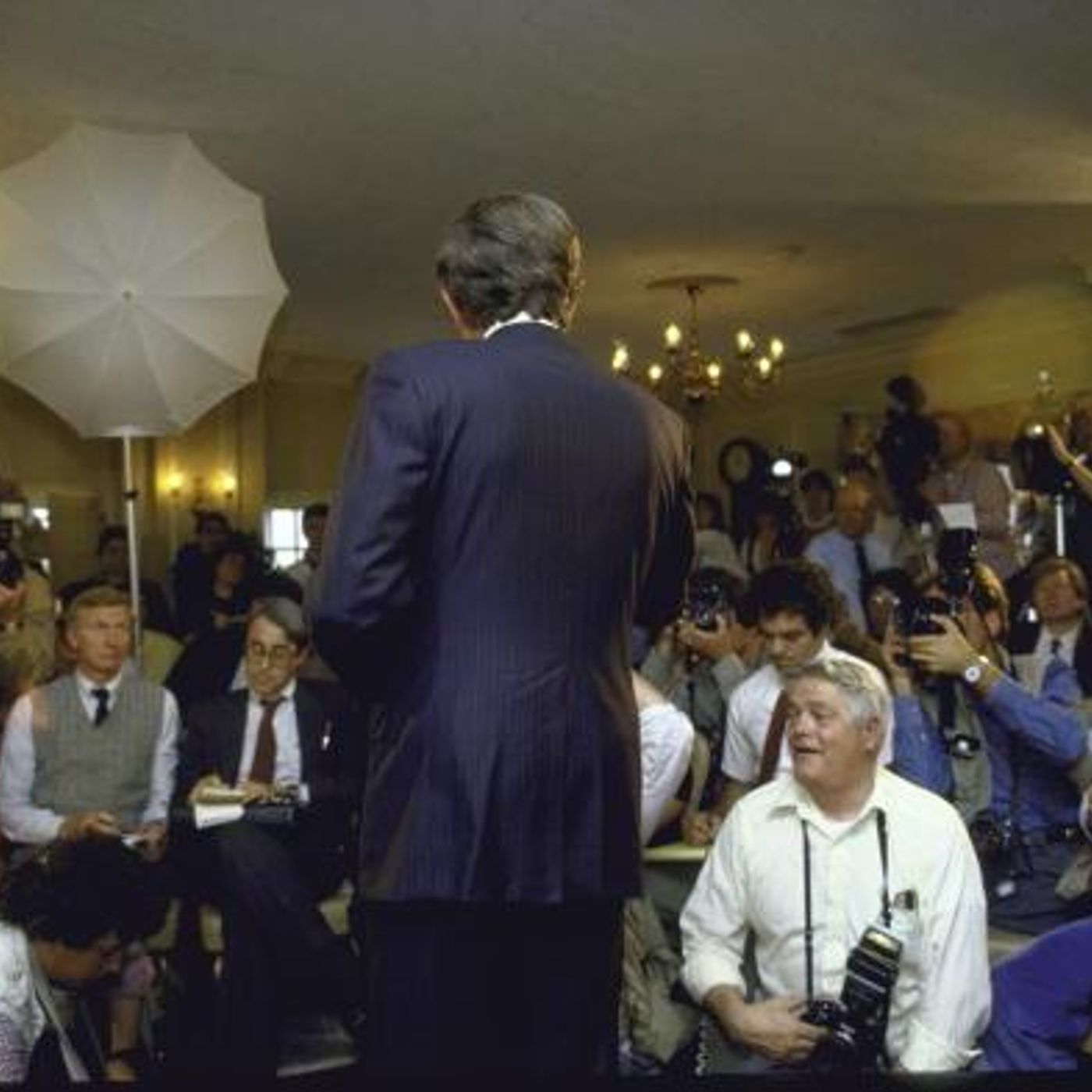
Radiolab
I Don't Have To Answer That
00:34:43
Roosevelt, Kennedy, Eisenhower … they all got a pass. But today we peer back at the moment when poking into the private lives of political figures became standard practice. In 1987, Gary Hart was a young charismatic Democrat, poised to win his party’s nomination and possibly the presidency. Many of us know the story of what happened next, and even if you don’t, it’s a familiar tale. But at the time, politicians and political reporters found themselves in uncharted territory. With help from author Matt Bai, we look at how the events of that May shaped the way we cover politics, and expanded our sense of what's appropriate when it comes to judging a candidate. Produced by Simon Adler Special Thanks to Joe Trippi
Loading summary
Transcript305 lines
- [00:00]
Matt Bai
Suffering from dry, tired, irritated eyes.
- [00:03]
Kevin Sweeney
Don't let dry eyes win.
- [00:04]
Matt Bai
Use Sustain Pro. It hydrates, restores and protects dry eyes.
- [00:08]
Robert Krulwich
For up to 12 hours.
- [00:09]
Matt Bai
Sustain Pro Triple Action Dry Eye Relief.
- [00:14]
Gary Hart
Oh, wait, you're listening.
- [00:16]
Tom Fiedler
Okay.
- [00:17]
Radiolab Announcer
All right.
- [00:18]
Jad Abumrad
Okay.
- [00:20]
Tom Fiedler
All right.
- [00:21]
Jad Abumrad
You're listening to Radio Lab Radio from wny. Hey, I'm Jad Abumrad.
- [00:34]
Robert Krulwich
I'm Robert Krulwich.
- [00:35]
Jad Abumrad
This is Radiolab. And you know, here we are in this moment where we're about to get started with another election cycle, another Iowa.
- [00:41]
Robert Krulwich
Another New Hampshire, Carolinas, all of that. And this is the time when we reporters decide, well, we're gonna have to tell you some stuff, and you're gonna have to decide what matters to you.
- [00:49]
Jad Abumrad
And the story that we're gonna tell in this podcast is about a moment, a shockingly recent moment. That's how I felt when I first heard this story. A moment of when what reporters decide to tell and what people decide to value really changed.
- [01:04]
Robert Krulwich
So we're gonna take you back to an evening in 1987. Tom Fiedler, ACE political reporter for the Miami Herald. It's late at night and he's in his office.
- [01:15]
Tom Fiedler
I'm sat at my desk and just in fact, packing up to go home. My phone rang and I'm thinking, oh, it's probably my wife, and she's wondering why I haven't left yet. I said, all right, I'll pick it up.
- [01:24]
Robert Krulwich
Well, when he picked up the phone.
- [01:25]
Tom Fiedler
Turned out there's it turned.
- [01:27]
Robert Krulwich
It was not a voice he recognized. It was a woman's voice, maybe in her late 20s. And she said to him, I have something you need to know. It was a tip about one of the most powerful and charismatic men in American politics, former Senator Gary Hart, who at the time was not only the most likely candidate to become the Democratic nominee, he was very possibly going to be the next President of the United States.
- [01:49]
Tom Fiedler
Her words to me were, gary Hart is having an affair with one of my best friends.
- [01:59]
Robert Krulwich
And she told him, basically, I can prove it.
- [02:03]
Tom Fiedler
And, you know, I, I was rather, I guess, dumbstruck by that. And he thought, well, now what do we do?
- [02:14]
Jad Abumrad
Now? If you're of a certain age, you probably remember this story, you probably know what happens next. But even if you've never heard of Gary Hart, you still probably know the outline of the story. The accusations, Congressman Anthony Whit, then the denial.
- [02:28]
Gary Hart
I did not have sexual relations with that woman.
- [02:32]
Jad Abumrad
And then after that, the whole wall to wall media thing, which just goes on and on and on until you want to take your head off your shoulders, put it on the sidewalk and beat it with a baseball bat. But the thing that's easy to forget is that it wasn't always like this.
- [02:50]
Matt Bai
No, Hart was the first to walk into this vortex of social forces. And after that, the rules of political journalism and politics change almost immediately.
- [03:03]
Robert Krulwich
That, by the way, is Matt Bai.
- [03:05]
Matt Bai
National political columnist for Yahoo News.
- [03:08]
Robert Krulwich
He wrote a book about this incident which he called all the Truth Is Out.
- [03:11]
Jad Abumrad
And in that book he makes the argument that this is the moment. Gary Hart, 1987, when political journalism slid off the rails. Or you might argue, when it finally got serious.
- [03:22]
Matt Bai
Well, you know, just flashback a minute because I think the Context is important.
- [03:25]
Robert Krulwich
1984.
- [03:27]
Matt Bai
Hart kind of comes from nowhere.
- [03:29]
Gary Hart
It's a whole new ball game in the race for the Democratic presidential nomination.
- [03:32]
Matt Bai
Runs for president, storms New Hampshire Senator.
- [03:35]
Gary Hart
Gary Hart is on his way to a clear cut victory over Walter Mondale.
- [03:39]
Matt Bai
Beats Mondale there and becomes a political.
- [03:42]
Gary Hart
Celebrity this country cannot stand. Four more years of Reaganomics for the rich. Gary Hart.
- [03:51]
Matt Bai
Gary Hart, the senator from Colorado, Gary Hart.
- [03:53]
Gary Hart
I'm a Democrat and proud of it.
- [03:55]
Jad Abumrad
Hart was this tall, good looking Democrat.
- [03:57]
Matt Bai
He's got great wavy hair.
- [03:59]
Lesley Stahl
I mean, dashing, handsome, charismatic and young.
- [04:04]
Robert Krulwich
This is Leslie Stahl, CBS. She's covered politics for 40 years now, works for 60 Minutes.
- [04:09]
Lesley Stahl
He was cool and smart. Women liked him too.
- [04:13]
Matt Bai
He's an anti orthodox Democrat, very liberal, anti nukes. He is sort of the Bill Clinton before Bill Clinton.
- [04:20]
Robert Krulwich
He doesn't get the Democratic nomination in 1984, Walter Mondale does by a nose. But when Mondale gets crushed by Ronald.
- [04:27]
Matt Bai
Reagan, Hart is immediately presumed to be the next nominee of the party at a time when these things were more obvious.
- [04:35]
Jad Abumrad
So Fast forward to 1987.
- [04:37]
Gary Hart
Like it or not, Campaign 88 is.
- [04:39]
Matt Bai
Underway and the leading contender, front runner Gary Hart in New Hampshire, he's winning.
- [04:44]
Gary Hart
On to the White House.
- [04:45]
Matt Bai
He's running double digits higher than any.
- [04:47]
Robert Krulwich
Democrat and he's projected to beat George Bush, the Republican frontrunner.
- [04:51]
Gary Hart
The next President of the United States, Gary Hart.
- [04:56]
Kevin Sweeney
It felt like, look, this is a guy who is changing politics, who is unafraid to speak the truth, who is willing to be really clear about what he wants to do.
- [05:06]
Jad Abumrad
That's Kevin Sweeney. He was Hart's press secretary in 1987. He joined the campaign just a few years out of college.
- [05:12]
Kevin Sweeney
23. I'm idealistic. The first time we really met, I was wearing a necktie with pictures of Lincoln and Washington on it. And Hart said, that's the ugliest necktie I've ever seen in my life. So my mother made it and he said, I apologize.
- [05:27]
Robert Krulwich
Well, that's a good beginning.
- [05:29]
Kevin Sweeney
Yeah, I knew pretty early I wanted.
- [05:31]
Matt Bai
To work for Hart.
- [05:31]
Robert Krulwich
Do you remember why?
- [05:33]
Kevin Sweeney
He was really liberal in social issues at the time. Unafraid to be specific or take a stand.
- [05:39]
Jad Abumrad
He said Hart placed an extraordinary amount of emphasis on not just winning the campaign, but what would they do when they got in office.
- [05:47]
Kevin Sweeney
He commanded that attitude.
- [05:49]
Jad Abumrad
So they wrote out all these position papers on foreign policy, energy, international trade, the budget even. What would his relationship with Gorbachev be?
- [05:57]
Kevin Sweeney
There was something about Hart and something about what happened on the campaign where it did feel like the kind of campaign that I haven't seen since.
- [06:06]
Robert Krulwich
And when does the subject of what goes on below the belt come up, if at all?
- [06:10]
Kevin Sweeney
Um, well, there are rumors, definitely rumors.
- [06:14]
Matt Bai
By this time there are a lot of whispers about his personal life and a lot of speculation. He's been married to his college sweetheart Lee for a very long time. They've been separated twice, the long separations and during those separations he's dated openly in Washington. So it's a well known fact of life in Washington where he is a central figure and has a lot of friends in the press corps that he's dated, that he's dated people for extended periods of time. That he and his wife have a troubled marriage together and not together. He stayed on Bob Woodward's couch for a little while when she kicked him out at one point. Nobody wrote about that.
- [06:46]
Jad Abumrad
The reason they didn't write about it was because of a very old, very well established convention.
- [06:52]
Matt Bai
I mean, look, go back to the 20th century. Franklin Roosevelt, Lyndon Johnson, Dwight Eisenhower. You know, heroes, towering figures, their personal lives simply were not in play.
- [07:03]
Jad Abumrad
Take for example, jfk. Leslie Stahl says that when the press was covering him, vast numbers of reporters.
- [07:10]
Lesley Stahl
Knew that John Kennedy was cheating on his wife. That was no secret. But we wouldn't have dreamed of printing that. Even if the whispers were loud enough to spread around the country. It just wasn't done.
- [07:23]
Robert Krulwich
Is the thought, hey, nobody does that so, you know, forget about it. Or hey, that has nothing to do with statecraft.
- [07:32]
Matt Bai
I think the feeling was that so what, you know, we all get to have a zone of privacy.
- [07:37]
Jad Abumrad
And the assumption was that what happened in your private zone behind closed doors.
- [07:41]
Lesley Stahl
Had nothing to do with whether you were going to be a good president or not. I mean there certain ethics and certain standards.
- [07:48]
Matt Bai
I guess this is the world that Hart still thinks he's living in that. As long as it doesn't burst into public view, it won't be a story.
- [07:55]
Jad Abumrad
But Matt Baeh says that world was actually changing because of a political earthquake that had happened just over a decade before.
- [08:02]
Gary Hart
Talking about the Watergate break in, burglarizing and bugging Democratic headquarters in Washington.
- [08:08]
Matt Bai
That is the big first knocked out brick in that wall.
- [08:11]
Gary Hart
Five people have been arrested and charged with breaking into the headquarters of the Democratic National Committee.
- [08:15]
Jad Abumrad
You know, arguably the biggest scandal in White House history. You had Nixon tapping phone lines, compiling enemy lists. And for the reporters covering Nixon, it.
- [08:24]
Matt Bai
Really is an embarrassment. You had an entire White House press corps, political press corps, campaign press corps, who had followed this man, Richard Nixon, for decades and somehow either missed the fact or failed to report the fact that he had some significant psychological issues and was paranoid and could be corrupted.
- [08:47]
Lesley Stahl
I think there was a sense that we let the public down.
- [08:53]
Robert Krulwich
Leslie Stahl remembers it this way.
- [08:55]
Lesley Stahl
The regular White House press reporters, they should have been digging, chipping away, chipping away, chipping away. They should have been looking behind the curtain. And so right after Watergate, reporters became tougher, saying, okay, we have to be skeptical about everything.
- [09:15]
Robert Krulwich
And in particular, the character issue.
- [09:19]
Matt Bai
Meaning suddenly your makeup, your personal behavior, who you are in your private moments, matters a whole hell of a lot for the kind of president you can be and whether or not we can trust you as a public leader.
- [09:37]
Gary Hart
Hart's character is the subject tonight of our Weekend Journal. When Americans choose presidents, personal character traits are important in this day and age. Candidates personal lives are getting a great deal of scrutiny.
- [09:48]
Kevin Sweeney
I remember there was a bit of a shift in the kinds of reporters who were covering national politics. They had a different orientation, and they were really interested in the character question.
- [09:58]
Robert Krulwich
That's Kevin Sweeney again. He says he was initially frustrated by reporters strange obsession with things that were not really issues. Important issues in the campaign, like age.
- [10:09]
Kevin Sweeney
There was some confusion about Hart's age. The fact that he changed the family name, his signature changed at a certain point in his life.
- [10:17]
Robert Krulwich
He says, when those stories initially popped.
- [10:19]
Kevin Sweeney
Up, I thought it was a false set of issues. I didn't really take it seriously.
- [10:24]
Jad Abumrad
But then when it came to the rumors of, quote, womanizing or marital infidelity, he felt like he needed to talk to Gary Hart.
- [10:33]
Kevin Sweeney
I did say, if anything is happening, it needs to stop. I mean, this can't. Whatever it is. I mean, and he said, you know, nothing is happening. And he shot back and said, they have no right to cover that. That's ridiculous. It's not an issue. Why is that an issue? That's not their job. And I kept pushing back, saying, I don't actually care what their job is. I don't care what you think their job is. This is the new context that exists now. I don't know why or how, but the rules have changed. The rules have changed.
- [11:04]
Tom Fiedler
So, you know, it was.
- [11:06]
Robert Krulwich
This brings us back to Tom Fiedler of the Miami Herald. He was covering Gary Hart, going with him to all the stops in Iowa, New Hampshire and so forth.
- [11:14]
Tom Fiedler
And it seemed like at every stop along the way, someone, some reporter would raise her or his hand and would say, what about the rumors of his womanizing?
- [11:26]
Jad Abumrad
Dumb says that he would see reporters asking all these questions, and he was.
- [11:30]
Tom Fiedler
A little bit troubled.
- [11:31]
Robert Krulwich
So on April 27, 1987, he wrote a column asking the question, is it.
- [11:37]
Tom Fiedler
Ethical for journalists to be even raising this kind of a question? And I really came down to the conclusion that unless the media, unless the reporters involved had actual proof that this was a problem, that he was a womanizer, we just shouldn't be printing that column.
- [11:57]
Robert Krulwich
Runs on a Monday morning.
- [11:58]
Tom Fiedler
That night he gets the call. The voice on the other side says, gary Hart is having an affair with one of my best friends.
- [12:07]
Jad Abumrad
He was dumbstruck, as we know.
- [12:09]
Tom Fiedler
I told her that my position had to be that I couldn't believe what she had to say unless there was proof. And finally she said, my friend is going to fly up to Washington next weekend, and she's going to spend the weekend with Senator Hart. She said, so all you have to do is buy a ticket on that plane.
- [12:29]
Robert Krulwich
And I thought, well, would that be ethically okay?
- [12:34]
Tom Fiedler
What is inbounds and what is out of bounds?
- [12:37]
Jad Abumrad
I mean, character was this new obsession of political journalism. But according to Matt Bai, no one had taken that character question into a candidate's bedroom. That was new.
- [12:46]
Robert Krulwich
But Fiedler thought, well, no, no, no, no.
- [12:48]
Radiolab Announcer
This.
- [12:48]
Robert Krulwich
This is inbounds.
- [12:50]
Tom Fiedler
Because Gary Hart was publicly. Had been carrying on affairs with anyone in particular.
- [12:58]
Jad Abumrad
Now, to be clear, oftentimes when Gary Hart was asked about these rumors of an affair, he was never asked directly just about the rumors. He'd say something like this, it's no one else's business.
- [13:08]
Gary Hart
Now, why is it not anyone else's business? Because it isn't. No, but it hasn't been the business of the American public for 200 years, and it isn't today.
- [13:15]
Jad Abumrad
He'd say something like that. But Fiedler says a couple times when he's asked, he did say something that.
- [13:20]
Tom Fiedler
Amounted to a no, such as if there was any truth to these allegations, it would have come out long before the kinds of answers that were non denials, denials, another phrase that came out of Watergate. So my view at that point was if in fact there was proof that he was carrying on an affair privately while publicly insisting that there really was no basis to this, then that was.
- [13:47]
Robert Krulwich
A relevant issue, relevant to his performance as future president.
- [13:51]
Tom Fiedler
Yes, it was a question of integrity. So we thought the only way that we are going to find out if what the caller told us is true is we've got to catch him.
- [14:04]
Jad Abumrad
That's coming up next.
- [14:14]
Radiolab Announcer
This would be Liza calling for Milwaukee Radio has been supported in part by the Alfred P. Sloan foundation, enhancing public understanding of science and technology in the modern world. More information about Sloan@www.sloan.org. Radiolab is supported by Bilt Nobody wants to pay rent, but if you have to, Bilt works to make it more worthwhile. By paying rent. Through Bilt, you can earn flexible points that can be redeemed toward hundreds of hotels and airlines, a future rent payment, your next Lyft ride, and more. But it doesn't stop there. You can dine out at your favorite local restaurants and earn additional points, get VIP treatment at fitness studios and enjoy exclusive experiences just for Built members. Every month, earn points on rent and around your neighborhood, wherever you call home, by going to joinbilt.com Radiolab that's J-O-I-N-B-I-L-T.com Radiolab.
- [15:09]
Matt Bai
Radiolab is supported by Rippling. Finance teams often spend weeks chasing receipts, reconciling spreadsheets and fixing errors across disconnected spend tools. This can be frustrating. And that's not software as a service. That's sad software as a disservice. If you've been thinking about replacing stitched together tech stacks with one platform for all departments, rippling can help. Rippling is a unified platform for global hr, payroll, IT and finance, helping people replace their mess of cobbled together tools with one system. Designed to help give leaders clarity, speed and control. By uniting employees, teams and departments in one system, Rippling works to remove the bottlenecks, busywork and silos in business software. With Rippling, you can choose to run hr, IT and finance operations as one, or pick and choose the products that best fill the gaps. Right now you can get 6 months free when you go to rippling.com Radiolab learn more at R-I P P L-I-N-G.com Radiolab terms and conditions apply.
- [16:16]
Cokie Roberts
Hey, I'm Molly Webster and this is an ad by BetterHelp. So it happens every year. The seasons are changing, the days are getting shorter, and basically once it becomes dark outside of my window, I feel like the rest of the world disappears and I'm just alone and there's nothing left to do but watch television. This November, Better Help is asking everyone to reach out to our people. That could be your family, your friends, your neighbors, and to resist this call of the cocoon. And yeah, reaching out can take some courage. I've got text messages from January I haven't responded to. And you know what? I'm going to write them back right now. Hi, sorry I've been missing. How are you? Why don't we all do this sooner? Therapy is the same way. BetterHelp makes it easier to take that first step. You just fill out a short questionnaire and they find a licensed therapist who they think you'll like. Our listeners get 10% off their first month at betterhelp.com Radiolab that's betterhelp.com Radiolab.
- [17:22]
Radiolab Announcer
Radiolab is sponsored by omgs.com There is new research on pleasure that's actually fascinating. And the site OMG yes makes it accessible to everyone. OMG yes shares finding from the largest ever study into women's pleasure and intimacy. In partnership with researchers at Yale and Indiana University, they asked tens of thousands of couples what they wished they'd discovered sooner. They found the patterns in those discoveries and all that wisdom and pleasure and intimacy is organized as hundreds of short videos, animations and how tos on omgs.com and guess what? Half of OMGS users are men. Hooray for generous lovers.
- [18:00]
Robert Krulwich
Right?
- [18:01]
Radiolab Announcer
You'll find specific research backed techniques. It's the science of sexual generosity in action. See what they discovered today@omgs.com that's omgs.com.
- [18:18]
Jad Abumrad
Hey, I'm Jad Abumrad.
- [18:19]
Robert Krulwich
I'm Robert Krulwich.
- [18:21]
Jad Abumrad
This is Radiolab. Getting back to the story, reporter Tom Fiedler gets a tip saying that candidate Gary Hart is having an affair. And he thinks to himself, this is inbounds if it's true, therefore we've got to catch him.
- [18:36]
Robert Krulwich
So his editor tells a colleague of his, Jim McGee, to go to the.
- [18:38]
Tom Fiedler
Airport, telling him this is what you're going to do. You're gonna look for a woman who looks like a model.
- [18:43]
Jad Abumrad
That's how the woman on the phone described her friend.
- [18:45]
Tom Fiedler
She's described as a model, blonde, in her mid-20s. And call me back if you see it.
- [18:51]
Jad Abumrad
So this guy Jim races to the.
- [18:52]
Tom Fiedler
Airport, spots this attractive young woman, fits the description, of course, we later knew was Donna Rice.
- [18:59]
Robert Krulwich
So he boards the plane. They land in D.C. he follows her out of the airport into a cab.
- [19:04]
Tom Fiedler
He runs to another cab, jumps in it, and he says, follow that cab.
- [19:08]
Jad Abumrad
Just like in the movies.
- [19:09]
Robert Krulwich
Which they do. He loses her for a while, but then eventually he gets to the house where he thinks Hart and this lady should be.
- [19:16]
Tom Fiedler
And he's not there more than a few minutes when the front door opens and out comes the young woman on the arm of a very handsome man.
- [19:26]
Jad Abumrad
One small problem.
- [19:27]
Tom Fiedler
Jim had never met Gary Hart.
- [19:30]
Jad Abumrad
He had no idea what Gary Hart looked like.
- [19:32]
Tom Fiedler
He said later, he said, I really couldn't pick Gary Hart out of a lineup. That's when I really thought, we have got to go to Washington.
- [19:40]
Matt Bai
And that's what they do.
- [19:41]
Robert Krulwich
The Herald Matt by again.
- [19:43]
Matt Bai
They send a team of reporters, investigative reporters, and feed Loren, a photographer, to Washington.
- [19:48]
Tom Fiedler
We arrive Saturday morning.
- [19:50]
Matt Bai
They stake out his townhouse.
- [19:52]
Tom Fiedler
You know, I'm thinking, my gosh, somebody will surely notice that there are four or five of us. Lurking is probably the right word.
- [19:59]
Matt Bai
It's may. And one guy's in a parka to disguise himself. And Fiedler, who the candidate knows is in a jogging suit, and he's pretending to jog around the street all day long.
- [20:08]
Tom Fiedler
I would change clothes a little bit. Occasionally I would run without the jacket. Other times I would just be wearing a T shirt and shorts.
- [20:16]
Robert Krulwich
He'd run around and around and around.
- [20:17]
Matt Bai
It's not how the CIA would do it, but about what you'd expect from a newspaper.
- [20:21]
Tom Fiedler
Our quote unquote stakeout went on all day into Saturday night. And it got dark. And then front door opens, out comes this man, and out comes the blonde woman.
- [20:33]
Matt Bai
Hart walks out with Donna Rice, sort of arm in arm.
- [20:36]
Tom Fiedler
He quickly realizes something is wrong.
- [20:41]
Matt Bai
He kind of makes the surveillance. They see him. He sees them. He turns her back around.
- [20:45]
Tom Fiedler
They go inside, go back inside the. The townhouse.
- [20:48]
Matt Bai
He sends her away through the back door.
- [20:50]
Tom Fiedler
And then he comes back out of the townhouse, hops in his car and starts to drive off. So our photographer starts to chase Senator Hart's car.
- [21:02]
Matt Bai
He drives a couple blocks, up streets.
- [21:04]
Tom Fiedler
Down streets, back and forth.
- [21:05]
Robert Krulwich
He gets out of the car, walks through a park. Chase continues on foot.
- [21:08]
Matt Bai
He knows they're following him, and they know he knows they're following him.
- [21:11]
Robert Krulwich
Hart ducks around the corner. They lose him for a second. Then they're running to catch up.
- [21:14]
Matt Bai
And then they turn a corner in an alley, and there's Hart. There is the presumed nominee of the Democratic Party, the most important Democratic politician in the country. And they're confronting each other.
- [21:28]
Jad Abumrad
And for a moment, standing in the alleyway behind Hart's townhouse, they just stare at each other because there is no script for this moment.
- [21:36]
Tom Fiedler
Ultimately, he asked, well, who are you? Well, we're from the Miami Herald. And he didn't really say anything. So I told him that we wanted to know why he was meeting with this woman in his townhouse, a woman who, at that point, we knew had spent the night with him.
- [21:57]
Matt Bai
He says, in myriad ways, myriad times.
- [22:00]
Tom Fiedler
I'm not gonna tell you who that woman was. This is private. This isn't public.
- [22:04]
Matt Bai
But he says there's no affair, which he would maintain forever after.
- [22:08]
Tom Fiedler
And ultimately, he said, I've said enough. And he turned and walked inside and slammed the door. We did tell him, though. He said, we're going to write this story unless you give us a reason that explains as to why what we are seeing and what we're concluding is wrong. And he never did that. So we kind of look at ourselves and say, well, now what do we do? Ultimately, the call was, we have the proof we feel we needed. We know that publicly he was saying these things, and we now know that privately he was engaged in this.
- [22:53]
Robert Krulwich
So they ran back to the hotel room. Fiedler frantically typed out the story.
- [22:57]
Tom Fiedler
Gary Hart, whose presidential campaign has been dogged by rumors of womanizing, spent Friday night and much of Saturday with a woman who came from Miami to meet him. I finally went back, and I probably slept for three or four hours.
- [23:18]
Robert Krulwich
Okay, so you're gonna do the story. The only thing that gives me pause is if, under this standard, you'd lose Jack Kennedy, certain you'd lose Woodrow Wilson, I think so. You'd lose a lot of people you might not want to lose, but, you.
- [23:34]
Tom Fiedler
Know, you've leaped to the conclusion that the public would banish a person for that. And I don't go there.
- [23:42]
Kevin Sweeney
So are you worried about how it's gonna land?
- [23:44]
Jad Abumrad
That's our producer, Jamie York.
- [23:46]
Tom Fiedler
Terrified. I was terrified.
- [23:50]
Robert Krulwich
And the next morning.
- [23:53]
Matt Bai
The political world explodes.
- [23:54]
Gary Hart
Democratic presidential hopeful Gary Hart.
- [23:56]
Tom Fiedler
Gary Hart G. It truly became a firestorm.
- [24:01]
Gary Hart
The Miami Herald reports today that Hart, quote, spent Friday night and most of Saturday. The Miami Herald reports that Hart and a Miami woman spent Friday night alone together in his Washington townhouse with a young woman.
- [24:12]
Matt Bai
That story begins ricocheting around the country on cnn.
- [24:16]
Gary Hart
So by Sunday, confronted by Herald reporters last night. Hart denied any impropriety. Hart denied any impropriety.
- [24:22]
Matt Bai
It's very apparent that not only is heart in trouble, but the entire culture of media around politics has changed in some very dramatic way.
- [24:35]
Robert Krulwich
And when you think about the mindset of the television people, the radio people, the newspaper people, is there any self doubt there? Is there people saying, should we. Is this really a question of his ability to conduct matters of state? Is that question being asked?
- [24:51]
Matt Bai
There's a tremendous amount of self doubt.
- [24:53]
Gary Hart
Not everyone agrees that such intense public, public scrutiny is necessary.
- [24:57]
Matt Bai
There was widespread feeling the Miami Herald.
- [25:00]
Gary Hart
Was put on the defensive that what.
- [25:01]
Matt Bai
Fiedler and his colleagues had done was wrong.
- [25:04]
Lesley Stahl
You know, that's out of bounds.
- [25:05]
Gary Hart
What business is it of the press?
- [25:07]
Matt Bai
You staked out a guy in his home.
- [25:09]
Lesley Stahl
What are they up to, sneaking around in the bushes and all that?
- [25:11]
Gary Hart
A lot of reporters don't think it's relevant. And one reason is this. Nobody knows where this is going to lead.
- [25:16]
Cokie Roberts
Has this set a precedent?
- [25:18]
Matt Bai
Should reporters be staking out George Bush's.
- [25:20]
Gary Hart
House, Bruce Babbitt's house, Joe Biden's house?
- [25:23]
Matt Bai
But then in the same breath, there's generally this sense of, but, you know.
- [25:27]
Gary Hart
All he had to do basically was stay clean.
- [25:29]
Matt Bai
What was he thinking?
- [25:30]
Gary Hart
Hart is to blame.
- [25:32]
Matt Bai
And didn't he understand that things had changed? And doesn't the public maybe have a right to know?
- [25:36]
Gary Hart
And so the newspaper that began the controversy is not backing down. This was not character assassination. This was character suicide. He did it. We didn't. Even as the debate heats up over the fhe of its coverage of Gary.
- [25:49]
Matt Bai
Hart, so there was. There was a real conflict. All the various echelon of media respond to this differently. The New York Times refuses to touch it originally. The Washington Post is deeply conflicted.
- [26:01]
Robert Krulwich
And as for the public, in an.
- [26:03]
Gary Hart
Unscientific Herald telephone poll, 63% of the callers said they thought the paper was making too much of a fuss over Gary Hart.
- [26:10]
Matt Bai
I mean, the polling shows that people think the media overstepped. He's still polling very strongly. He's winning in the public mind.
- [26:17]
Robert Krulwich
According to Leslie Stahl, most people seem to be willing to compartmentalize.
- [26:21]
Lesley Stahl
Most people can split off. How's he going to be as president? And you know, is he cheating on his wife?
- [26:27]
Matt Bai
It was not clear that the Tide was going to take Hart out at all.
- [26:31]
Robert Krulwich
So Hart and his team try to get ahead of the story. They schedule a press conference in New Hampshire. And on the flight over, Kevin Sweeney, his press secretary, preps Him.
- [26:39]
Kevin Sweeney
I remember asking Hart a question, something like, have you ever been unfaithful to your wife? And he shot back at me with anger. He said, I don't have to answer that question. That's a question that I can answer to God, to my wife, but it's not a question that I need to answer. In politics, that's a dangerous question to be asking. We don't want to go there. And I just said, that's a great answer. Just hold that anger. That's an appropriate response.
- [27:03]
Gary Hart
Senator Hart. Senator Hart, please.
- [27:05]
Matt Bai
Senator Hart.
- [27:05]
Kevin Sweeney
We get to the press conference.
- [27:06]
Jad Abumrad
Hart and Sweeney walk into this colonial style room at Dartmouth College.
- [27:13]
Matt Bai
There are.
- [27:13]
Kevin Sweeney
There are lights everywhere.
- [27:14]
Matt Bai
The room is filled, sweaty, it's hot. There's more media than anyone's ever seen packed in.
- [27:18]
Kevin Sweeney
It's a really intense environment.
- [27:22]
Gary Hart
Senator Hart. Senator Hart, please.
- [27:24]
Kevin Sweeney
Senator Hart.
- [27:24]
Matt Bai
Hart has very little buffer and he's handling the questions.
- [27:27]
Gary Hart
How are you going to convince him that you're not going to make this kind of mistake in judgment about personal.
- [27:32]
Matt Bai
Behavior again, really pretty brilliantly.
- [27:34]
Gary Hart
I won't tell him. I'll demonstrate it. Time goes on. People are going to want to know about your judgment and your character on the issues that affect their lives and their families and their nation. That's what this campaign is going to be about.
- [27:45]
Matt Bai
He's kind of firing on all cylinders.
- [27:47]
Kevin Sweeney
And Hart goes through, you know, 30 minutes, 40 minutes of questions.
- [27:50]
Gary Hart
And then you raised, in your remarks yesterday, you raised the issue of morality and you raised the issue of truthfulness.
- [27:57]
Matt Bai
At some point, he calls on a young reporter named Paul Taylor, very specific.
- [28:00]
Gary Hart
And I have a series of questions about it.
- [28:02]
Matt Bai
And Paul Taylor walks him through a series of questions.
- [28:06]
Gary Hart
You said you did nothing immoral. Did you mean that you had no sexual relationship with Donna Rice last weekend or any other time you were with the Manning. Do you believe that adultery is immoral?
- [28:18]
Tom Fiedler
Yes.
- [28:19]
Gary Hart
Have you ever committed adultery?
- [28:21]
Matt Bai
He says, senator, have you ever committed adultery?
- [28:25]
Jad Abumrad
Senator Hart looked out at the sea of reporters.
- [28:27]
Matt Bai
No. No politician had ever publicly been asked that broad, direct a question about his personal behavior. It really just. It shocked the room.
- [28:36]
Jad Abumrad
We don't know what Gary Hart was thinking in that moment. He did not want to be interviewed on tape. But it's clear that if he said yes or no to that broad of a question, then his entire married life, because have you ever committed adultery? That word ever, his entire married life would suddenly be in play. And as far as we know, no other person in his situation in history had ever been asked to drag that much of themselves into the limelight. And on his face, you can see.
- [29:06]
Matt Bai
That he knows that this is never going to end. I mean, he knew how many women he'd seen over the years. He could envision them all being paraded through the papers. He could tell already that there was all this new sort of tabloid press and that the political press was following along, that he was never going to be able to talk about his agenda. And Hart stumbled around for a minute, and ultimately he says.
- [29:31]
Kevin Sweeney
I don't have to answer that question. When I heard that response, I felt it. I felt it. The tone was such that it felt like defeat. It felt like he is exhausted and he can't take this. And I was offended. I really, in that moment thought, this is just wrong. This has nothing to do with what is necessary to run this country. And I just thought, this is not. This is not. We're not going to survive.
- [30:14]
Matt Bai
And that moment effectively does him in.
- [30:19]
Gary Hart
I have told you the facts. If you don't believe me, there's nothing I can do about it. Gary Hart is finished as a presidential candidate. Gary Hart's formal campaign is only three weeks old. There was simply no putting the genie back in the bottle. His appearances yesterday were mob Z. Garret Hart campaign has been hammered to its knees, asking the same questions again and again. Today, after what may be remembered as the most disastrous week any presidential candidates endured in years, Hart told an aide, let's go home.
- [30:55]
Jad Abumrad
A couple weeks later, that famous image of Gary Hart and Donna Rice comes out in the National Enquirer. And that was that for people my.
- [31:03]
Robert Krulwich
Age, like that image of Donna Rice sitting in his lap, and he's got this shirt on that says monkey business. That's the thing you remember?
- [31:10]
Jad Abumrad
Yeah. Now, according to Matt Bai, you can look at this whole story, and particularly Tom Fiedler taking that call and Paul Taylor asking that question as this moment when all of these forces way outside of Gary Hart's control come together not just to sink his campaign, but to change political journalism profoundly. But as with all cultural shifts, there's more than one way to look at this. So just for a gut check, we put the whole story.
- [31:36]
Cokie Roberts
We're talking about Tom Fiedler.
- [31:38]
Robert Krulwich
Yeah, Tom.
- [31:38]
Tom Fiedler
Yeah.
- [31:39]
Jad Abumrad
In front of this lady.
- [31:40]
Kevin Sweeney
Can we have you introduce yourself?
- [31:41]
Cokie Roberts
I'm Cokie Roberts with no who you.
- [31:44]
Robert Krulwich
Are like part two.
- [31:48]
Cokie Roberts
I have six grandchildren.
- [31:49]
Robert Krulwich
No, no, no, no, no.
- [31:49]
Cokie Roberts
Something NPR Y. I'm a political commentator and author.
- [31:54]
Robert Krulwich
Okay. Cokie Roberts believes that, yeah, reporters were interested in character more after Watergate, but.
- [32:00]
Cokie Roberts
It wasn't Just that the thing that's important to keep in mind here is that there were many more women covering candidates at that point than there had been before. There were women on the bus, and in the case of Gary, several of those women had had personal encounters with him. There were times when you'd be in a room where he had hit on every woman in the room. So this was not somebody that women who were covering campaigns were ignorant of. And the other thing to keep in mind, Robert, is that the whole women's movement did talk quite a bit about the personal is political. And because the way women were treated was something that we thought, and I continue to think is a good gauge of character. And there was something of a sense that he treated women like Kleenex. So we were expanding the universe of what was a major character flaw.
- [33:03]
Jad Abumrad
So then are you kind of.
- [33:04]
Kevin Sweeney
Are you kind of rooting Fiedler on?
- [33:06]
Cokie Roberts
Oh, absolutely. Finally somebody's written about it, and thank God it's a guy.
- [33:11]
Matt Bai
But as much as you were cheering.
- [33:13]
Kevin Sweeney
Them on, was there any concern that.
- [33:15]
Matt Bai
That was changing the rules of journalism?
- [33:17]
Cokie Roberts
No.
- [33:18]
Kevin Sweeney
Why?
- [33:20]
Cokie Roberts
Because the rules of journalism were constantly changing, as they should.
- [33:25]
Jad Abumrad
And according to Cokie Roberts, this was less about journalism changing than about journalism catching up with the ethics of the time.
- [33:33]
Cokie Roberts
Look, we elect our presidents based on who they are, not on what policies they stand for. It's different from any other office. The voters need to know as much as they can humanly know about that person.
- [33:48]
Matt Bai
So is there a line for you? Is there a place you won't go.
- [33:52]
Kevin Sweeney
In taking the full measure of a.
- [33:53]
Cokie Roberts
Candidate, not for president that I can think of.
- [33:58]
Kevin Sweeney
There's nothing you wouldn't touch?
- [34:01]
Matt Bai
No.
- [34:01]
Cokie Roberts
I mean, I'd have to know that it was true, sure. But no, no, I love that.
- [34:10]
Jad Abumrad
Leslie Stahl had a slightly different take.
- [34:12]
Lesley Stahl
She's fabulous. COKIE Roberts, I didn't go there. That's interesting. I just didn't want to. I just didn't want to ask about it. I didn't want to go there.
- [34:23]
Matt Bai
Excuse me.
- [34:24]
Lesley Stahl
I'm telling you this. Even though I covered Watergate and would have asked any number of questions about character, you know, it's open season, fellas. The public needs to know this. But, you know, sex is really a hard place for me to pry, so I agree with it. But I also have my own opinion that there's propriety and I'm old fashioned, I guess.
- [34:54]
Robert Krulwich
Am I?
- [34:55]
Lesley Stahl
I don't know.
- [34:58]
Gary Hart
I'd intended, quite frankly, to come down here this morning and read a short, carefully worded political statement.
- [35:05]
Robert Krulwich
This is Gary Hart's statement a few.
- [35:07]
Gary Hart
Days after that press conference, saying that I was withdrawing from the race and then quietly disappear from the stage. And then after frankly tossing and turning all night, I said to myself, hell, no, I'm not going to do that, because it's not my style and because I'm a proud man and I'm proud of what I've accomplished in public life. Some things may be interesting, but that doesn't necessarily mean they're important. We're all going to have to seriously question a system for selecting our national leaders that reduces the press of this nation to hunters and presidential candidates to being hunted. Politics in this country, take it from me, is on the verge of becoming another form of athletic competition or sporting match. We all better do something to make this system work. We're all going to be soon rephrasing Jefferson to say I tremble for my country when I think we may in fact get the kind of leaders we deserve.
- [36:24]
Robert Krulwich
Now, we did reach out to Mr. Hart for comment, explaining to him the story we were doing. And he wrote back this thank you for your letter and the invitation to participate in your current story. Though I did not become president, my life continues to be extraordinarily rich. Perhaps someday someone will tell that story. But for now, I have no interest in revisiting what many consider a turning point for the nation and a few an injustice. I do believe that the full and accurate story of that event remains to be told. Signed, Gary Hart.
- [37:09]
Jad Abumrad
Very special thanks to Jamie York, our Jamie York, and to Joe Trippy and to Matt Bai. You can find a link to Matt Bai's book, All the Truth is Out. The Weak Politics went tabloid on our website, Radiolab.org this piece was produced by.
- [37:22]
Robert Krulwich
Simon Adler, and I guess that's pretty much it.
- [37:28]
Jad Abumrad
Next podcast, we'll be exploring these issues in a totally different context. I'm Jad Abumrad.
- [37:35]
Robert Krulwich
I'm Robert Krulwich and we approved this message.
- [37:46]
Gary Hart
Hi, this is Leslie Stahl. Hey, this is Matt Pye. I am reading the credit for the.
- [37:52]
Cokie Roberts
Radiolab show on Gary Hart.
- [37:54]
Gary Hart
Here we go. Message 1. Radiolab is produced by Jad Abumrad.
- [38:00]
Lesley Stahl
I'm going to do it again because.
- [38:01]
Gary Hart
I don't think I did a bum, a bum, a bum.
- [38:04]
Kevin Sweeney
Rad.
- [38:05]
Gary Hart
Our staff includes Simon Adler, Brenna Farrell, David Gable, Dylan Keefe, Matt Kielty, Robert Crowich, Andy Mills, Lateef Nassar, Kelsey Padgett, Arian Wack, Molly Wilson Webster, Soren Wheeler and Jamie York, with help from Alexandra Lee Young. Abigail Keel, Tracy Hunt, Stephanie Tam and Michael Loewinger. Our fact checkers are Eva Dasher and Michelle Harris. Thanks, guys. Your session cannot be continued at this time. Please try again later. Goodbye.