← Radiolab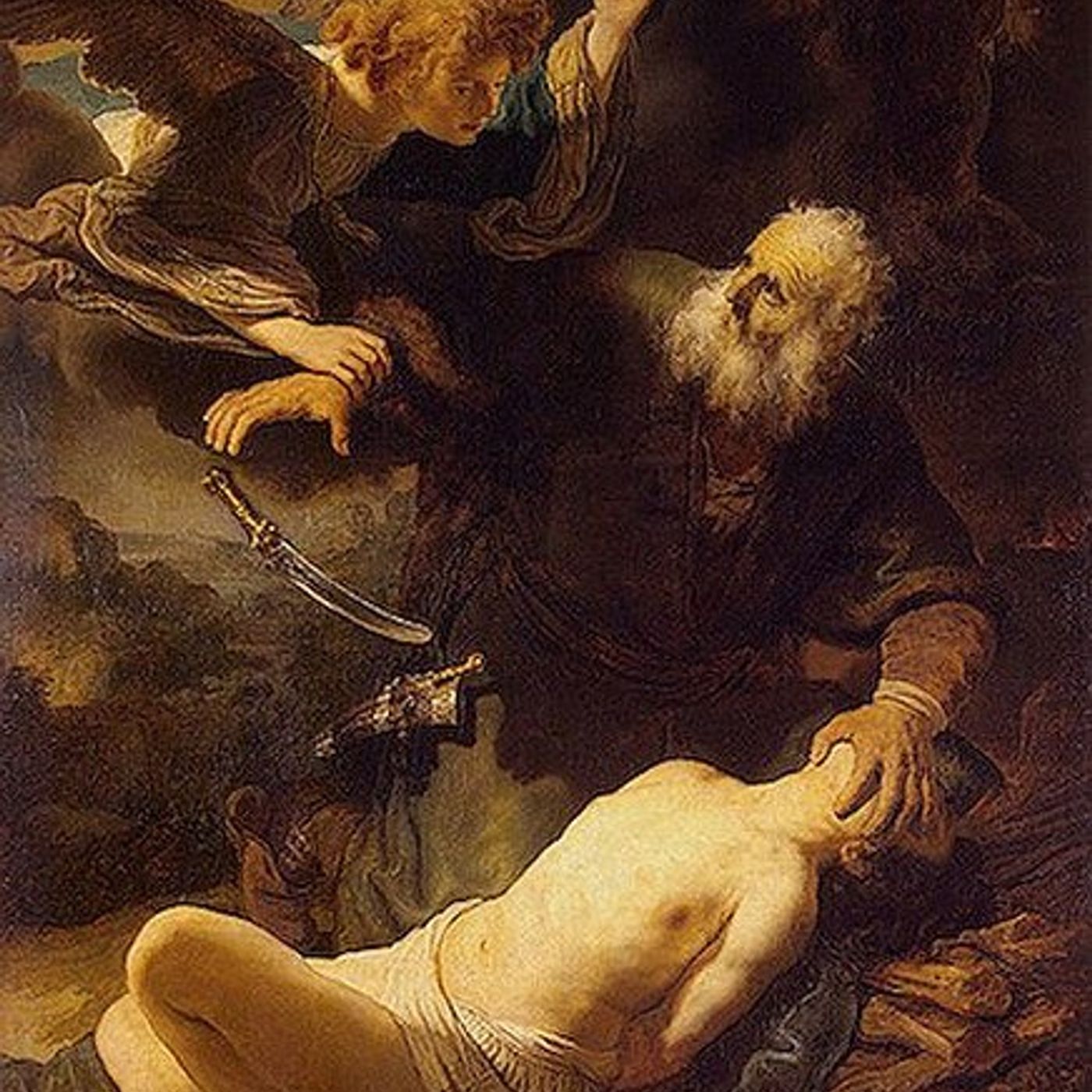
Radiolab
In Silence
00:26:33
Here at Radiolab we explore big ideas and ask big questions to see how the world works.
Loading summary
Transcript19 lines
- [00:00]
A
Limu Emu and Doug, here we have the Limu Emu in its natural habitat, helping people customize their car insurance and save hundreds with Liberty Mutual. Fascinating. It's accompanied by his natural ally, Doug.
- [00:18]
B
Uh, Limu is that guy with the binoculars watching us.
- [00:21]
A
Cut the camera. They see us. Only pay for what you need@libertymutual.com Liberty Liberty Liberty Liberty. Savings vary unwritten by Liberty Mutual Insurance company and affiliates. Excludes Massachusetts. If your small business is booming, you might say cha ching. But you should say, like a good neighbor, State Farm is there and we'll help your growing business. Like a good neighbor, State Farm is there. It's never too early for Lowe's Black Friday deals. Snag some of our biggest savings of the season right now, like 25% off select pre lit artificial Christmas trees and get yourself free. Select Dewalt Cobalt or Craftsman tools when you buy a select battery or combo kit before the Black Friday rush. Because everyone loves free stuff, right? Lowe's we help you save valid through 123 while supplies last selection varies by location.
- [01:17]
B
Hello, I'm Jad Abumrad.
- [01:18]
A
And I'm Robert Krulwich.
- [01:19]
B
This is Radiolab, the podcast.
- [01:21]
A
The podcast.
- [01:22]
B
Now, one of the things that we do on this program, of course, is look at big ideas, try and figure out how the world works. And to do that, we often talk to scientists who are, you know, asking questions, doing experiments, giving us data and statistics. But there are some questions that science just can't get to.
- [01:38]
A
Well, this is Holy Week, so there's Easter being celebrated, and then we're going to have Passover. And so it seemed like an appropriate time to not ignore the fact that for most of the world, some of the deepest and the most unknowable questions are examined through Bible stories.
- [01:54]
B
That's right.
- [01:55]
A
And.
- [01:55]
B
And Robert, this is a sermon that you gave at a synagogue, Right?
- [01:58]
A
It's my attempt to try to reason, to try to make sense out of one of the darkest and most difficult stories that humans have ever told each other. The chapter in the Bible begins with the question. It's only one word long, one word. Abraham is at home with his family, his servants, his wife. We don't know what he's doing at this moment. The story doesn't say. It's probably an ordinary day, a day in his life. And suddenly Abraham hears a voice. And the voice says to him, one Abraham. And Abraham answers, here am I. This is not just a voice. This is the voice of God. The Bible says, God, the creator of the universe, calling down to one man calling to Abraham, not for the first time, not at all. When Abraham was younger, God appeared to him and told him to leave his home, which Abraham did. And then God told Abraham to go to a strange land, which he did. And then God and Abraham exchanged promises and had a covenant together. And God told Abraham to send his first son, Ishmael away into the desert, which Abraham did. And God told Abraham he had a plan to destroy the people of Sodom and Gomorrah. And this time, Abraham argued with God, and they went back and forth. Abraham and God, can't we save those cities? Or some people in those cities? Or anyone in those cities? And later, God sent angels to tell of the coming of Isaac. So it was not completely out of the ordinary. It wasn't a get down on your knees miracle. When God came to where Abraham was and asked Abraham. And Abraham answered, here am I? It was just the start of another conversation, another in a series, until the next sentence. With God's next utterance, this conversation changes shape and becomes like no other conversation in the Bible, like no other story in the Bible, like no other story. Because God says, take now thy son, thine only son, whom thou lovest, even Isaac, and get thee to the land of Moriah and offer him there for a burnt offering upon one of the mountains, which I shall tell thee of now. Most of us know the circumstances here, the backstory. We know that when Abraham was a young man living in Ur with his father and his brother, God came to him and told him that if he left Ur and traveled west, away from his home, far from the places he knew, God would give him children. And from those children would come a mighty nation as numerous as the stars in the sky. And Abraham obeyed and traveled west and settled in a strange land. And he waited for his first child, the child that would spawn this mighty nation. And Abraham waited. And he waited. And he waited. And his wife Sarah waited. And nothing happened. Nothing happened until Sarah was very old, an old woman, well past childbearing age. And that's when three angels appeared at Abraham's tent and said, now is the time for Sarah to have the baby. And Sarah said, oh, come on, even laughed out loud at the craziness of that idea. But in fact, the baby was born. Isaac was born. His arrival was a little awkward because there was already a boy in the house, Ishmael, also Abraham's son by his servant Hagar. But God had his mysterious priorities, and Ishmael was banned from the house. And God made it clear that the future of Abraham's people, the seed of this great nation lay not in Ishmael, the oldest boy, but inside Isaac. So Isaac, for the purposes of nation building, was Abraham's only son, the one whom thou lovest, even Isaac. But now, years later, on this day, now that Isaac was almost a grown up now, God says, take now thy son, thine only son, who thou lovest, even Isaac, and get thee into the land of Moriah and offer him there for a burnt offering, by which he means a human sacrifice. The Hebrew word is olah, meaning an offering which is totally consumed. So Isaac is. Is to disappear, to be reduced to ashes. This, the boy who was to be everything, will now be nothing. And what does Abraham do when he hears this command? What does he say in the story? He says nothing. Instead it says, and Abraham rose early in the morning and saddled his ass and took two of his young men with him and Isaac his son. And he cleaved the wood for the burnt offering and rose up and went unto the place of which God had told him. He does not argue, he does not question, he does not hesitate. He does what he's told and he does it in silence. It is hard to fathom, really. How could he not at least tell Sarah, his wife, that he's going where he's going, why he's going? He has to know that when she hears Isaac has been killed by her husband, if this is going to happen, if it's really going to happen, he has to know that it will be the single most terrible fact of her life and of their marriage. Maybe Abraham is hoping it won't happen. We don't know. All we know is he leaves early, early in the morning, it says, maybe to avoid being questioned by his wife. Where are you going with the chopped wood? Why, Isaac and Abraham and Isaac walk side by side with the donkey and the two servants heading to this place that God had chosen. In the text, they don't speak. At least not out loud. So much of what happens in this story happens in silence. In silence they walk for one day, two days, three days. On the third day, he says to his servants, stay here. And I and the lad will go yonder, indicating the mountain. And he puts the wood onto Isaac's shoulders and his back and he takes out a knife and some hot embers. And now the two of them, the father and the son, they walk on alone. And that's when Isaac stops. And for the very first time, he asks his question, his heart rending question. Father, he says. And Abraham Answers, here I am, my son. And Isaac asks, behold the fire and the wood. But where is the lamb for the burnt offering? And Abraham says, God will provide himself the lamb for a burnt offering, my son. And Isaac doesn't answer. At least there's no answer in the text. And the two of them, they keep walking together to Isaac's annihilation, saying nothing. Why? No protest, no argument, no questions? Why this quiet? There are few silences in the Bible. So troubling, so hard to understand. But there is another one. It's also in the Bible. And maybe the two silences speak to each other. This other silence occurs earlier in the story of Noah. Noah and the Ark. You remember, God sees too much wickedness in the world and decides to destroy what he has created. Except for one good and righteous man named Noah and his family and a collection of animals, two of every kind, that Noah will gather on board a boat, a big boat. The ark. So Noah builds the ark and he brings all the creatures on board two by two. Actually, a few of them came in sevens, but mostly it's two by two. And on they come. There's a beautiful children's book about this by the Dutch artist Peter Speer. It's gorgeously illustrated in simple, delicate line drawings with small splashes of color. And in Speer's book and in my imagination, Noah is kind and hard working and comfortable with animals. Better than comfortable. He can handle them and comfort them and tend to them. He's a lover of living things. And then the rain starts and Noah in zooey confusion, rushing from tamarind to baboon to ospreys, feeding and caring and managing, he looks out the window and he closes the hatch. Now's the time to batten down, keep the living cargo dry. And in Peter Speer's version, as the rain puddles around the ship, as the clouds mount up and darken and flash, promising an annihilating rain, very quietly, animals begin to appear out from the forest. They come down from the hillsides and out of the ground and down from the sky. And they gather. First it's a little group, then a larger one by the ark. By the big, closed, silent ark. And they are not there in two by two by twos. No, they come in haphazard combinations. Three giraffes, seven gorillas, 30 armadillos, then a robin, a panda, a dozen lionesses. These are the animals who are not going to travel on the ark, who are not going to be protected, who are not going to live. And together they stare up at the closed ark, at the boat that contains the survivors, the lucky one. And there is no sound in my imagination and in Speer's book, you see them all so quiet, just the jaguars staring and getting wetter and the camels and the elephants and the mice who, had, one could argue, been wicked, who outnumber the humans on the planet by hundreds of thousands, by millions. They stand there silently accepting or maybe just enduring this inexplicable end. And in the silence, I imagine a chimpanzee baby nuzzling its mother in the light rain, asking, how long will it rain, Mama? Just as Isaac asks his father, where is the lamb for the burnt offering? And there is no answer a parent can give to that question. There is silence. And the animals stand in the silence and make no noise of protest. They don't cry out. They just stand there as the sea level rises in the drip, drip, drippy, endless drip of the rain as the fish, the octopi, the mackerel, were they less guilty? Why did they get to survive, maybe even thrive in an expanded watery environment? There. There aren't any answers to these questions. And what of Noah, tending to his creatures, feeding them, keeping them warm and dry, caring for their babies, nursing them in their sickness? What would he have thought just before he closed down the ramp when the slow tortoise or the last two snails or a pair of lazy worms were scuttled inside, when Noah, the good man, the righteous man, looked out on all those creatures all over the world sentenced to death by drowning and starvation, what did this righteous man say? The Bible doesn't tell us? It's safe to conclude that he turned away and he said nothing, that he closed the ramp and he walked onto the ship and remained silent. I imagine it was a pregnant silence. But the Bible doesn't tell us here is life. Life, we're told, is precious. Life is dust touched by the breath of God. Or life is chemicals that somehow know how to attach to each other, chemicals that link and bond and split and bind and become a jellyfish pulsing in the sea, a butterfly flittering in a forest that can form the shy gaze of a fox pup ready to play, that can become the glance of a boy carrying wood who asks his father, where is the lamb for a burnt offering to take that boy, that fox, that butterfly, to extinguish that life, that breath you would think would wound the universe, would pain the Creator. We know this pain. I think of Abraham Lincoln down at the War office in Washington, D.C. checking telegrams from the front, reading the names of casualties sometimes known to him, of people who'd been killed or wounded. A newspaper correspondent saw President Lincoln there, watched him reading the list as he wrote, with bowed head and tears rolling down his furrowed cheeks, his face pale and wan, his heart heaving from emotion. And when the President walked out of the building, he was in such a daze, he, and I'm quoting, almost fell as he stepped into the street. A good man knows the weight of hurt when someone dies. Abraham Lincoln sent other people's children to kill and to die. And when they died, he shared their hurt. And this image, the image of Lincoln in anguish, is our image of a good man. That's what we admire. To have a heart big enough to feel another's troubles, to sigh with others, to cry with others, to join their suffering, or in different circumstances, when the occasion is right, to laugh with them, to share their joy, and every so often, to love them. That's the best of all. To step out of our lonely selves, however briefly. As the poet Paul Celan has written. At times when only the void stood between us, to get all the way to each other, that's the highest expression of ourselves. There is nothing more sublime between two people, between parents and children, between friends and for those lucky few who feel it, to experience it, between man and God, than to feel the other. To be touched, to be heard, to be loved. And yet, here, in this chapter of the Bible, in this moment between God and Abraham, God who loved Abraham and Abraham who loved God. This is a love story. This is the most twisted love story you have ever heard. A loving God wants to test his favorite disciple, the man who loves him the most. And so he says that son, the son I promised you that would be a nation that would grow and multiply. The son you and your wife waited for all your lives. The son that was so, so improbable that when angels came down and told Sarah a boy was on the way, she laughed. That son, the one you nurtured, promoted over the other boy, Ishmael, the one who will be your future in spite of all the things I told you, what I promised, what you counted on, what we agreed upon. I want you to kill him. Would you do that? And Abraham, Father? Abraham, who had discovered this God in his heart, fought with his father, Terah, destroyed idols honoring other gods, left home, fought battles for God. Abraham, who had contested with God, bargaining over the lives of Sodom and Gomorrah. Abraham hears this command from the God that he loves. And he doesn't argue. He doesn't hesitate, he doesn't refuse. His love is so great, the sages say, so powerful, that he saddles up, he takes his son and walks to Mount Moriah in silence. He doesn't say yes. He just goes without a word. What are we supposed to make of this story? What's it telling us? What kind of God would put his creation, his favorite, to a test like this? And what kind of man would pass the test? Here's a God who wants a human sacrifice as proof of devotion and a father who would kill his son for God. Both parties, God and Abraham, turn devotion into murder. Why doesn't Abraham say why? Why doesn't Noah say why? And the sages say we should admire their devotion, to which I say, I don't know, what is there to admire here? It's interesting to see what happens to these righteous men, Abraham and Noah, after they do as they're commanded. When Noah rides out the flood and releases his cargo back into an empty world to start over, what does he do? Well, he plants a vineyard, he presses those grapes into wine, and he drinks. He drinks hard. His children find him half naked, in a silent stupor. And Abraham, he comes down from Mount Moriah and returns to his servants. And he heads home. But not with Isaac. Isaac is somewhere else, not with his father. The silence between them has deepened. Abraham returns alone to Sarah. And what of Sarah? Well, presumably she heard what happened, what almost happened. But as soon as Abraham returns, in the very next sentence of the very next chapter, Sarah dies. She dies. And Abraham is alone. And he stays silent. And Noah stays silent. And God says to Abraham, because of what you were willing to do, the Bible says, I know that thou art a God fearing man, seeing that thou hast not withheld thy son, thine only son, from me. And God goes on to promise Abraham that he will multiply thy seed as the stars of the heaven. And in thy seed shall all the nations of the earth be blessed. And to Noah, God creates a rainbow, a sign that promises never to destroy so much life again. These stories describe remarkable men who put their faith in God over their deepest instincts, over their horror of suffering, and were rewarded. Noah with a rainbow, Abraham with a blessed nation. But at what price? The thing that makes this story so alive to me is the silence. Abraham saying nothing, Noah saying nothing. And I have a hunch about these men. Their silences look respectful or maybe dutiful or fearful or maybe hopeful that the suffering they were about to allow would somehow be explained away or be justified later on. But I don't think of their silences as acceptance or submission or an expression of blind devotion. They were, says the Bible, good men. And because they were good and caring and above all, human, they could feel the suffering of others, like President Lincoln did, like good people do. Abraham felt for the people of Sodom and Gomorrah, Noah, for the animals that he nursed and he cared for. And so I have to believe that beneath their silences, barely contained, was the furious roar of two wounded, angry, voluptuous human hearts filled with questions and worry and insult and wonder. Why, my son? Why Isaac? Why slaughter so many innocent creatures in a deluge? Why is this happening? Why is this necessary? I can't do this. I need a reason. I need an answer. I need to know. And I believe Abraham and Noah had those feelings. But they had something else, too. They had a hope, a deep hope that beyond reason, that beyond understanding, that somehow there was good in these terrible deeds, that God is merciful in ways we can't understand, that we are not meant to know or built to know. And their hope barely, just barely contained their horror and their anger and their insult. But I have to think it was in both of them a mighty struggle to smother what their hearts felt, to put their hope in a power that was beyond their understanding. Because the other part of being human, of being a good human, beyond our capacity to love and to care, is a desire for answers, for explanations, a desire to know why. And here, I think, is the key to this story's power. Because all of us, not just Noah and Adam, all of us live with this paradox. To see things that seem wrong, that seem cruel, and to wonder, is there a logic, a higher logic to explain what we see? And if we can't know that logic, if we can just hope for it, hope there's an explanation, Is that enough? Can we live with the fact that we may never know that all we have is hope? Can we face the terrible silence of the universe with just hope? In God, in good? This is a powerful question. When cosmologists study the universe, they also tell a story, a story about silence. Their story says that everything we are, all the particles, all the forces, the duct tape of our existence popped into being, they say, entirely by chance, out of a great quiet, out of nothing, out of flux, a quantum flux. Suddenly, with a bang that made no sound, matter and energy appeared and eventually formed atoms. And the atoms stitched themselves into compounds, and the compounds hung around for a long time and spun themselves into stars and then into planets and seas and Clouds and air. And at some time, somewhere, somehow, maybe, God breathed life into those molecules. Or maybe the molecules assembled themselves according to some deeply rooted plan. But cells begat cells and life began on Earth and maybe elsewhere. And those cells then recombined to form newer and newer forms of life. And for a long, long time, for billions of years, sea dwellers and then land dwellers and evergreens and flowers, none of these creatures, none of them had evolved the ability to appreciate what was happening, to have a feeling for the beauty and elegance and chemistry around them. To ask the question, why are we here? Until very, very recently, say the Darwinians, life produced mind. A creature with a brain who could ask, where do we come from? How are we made? Why is the rose red? Oh, what a lovely, velvety, beautiful red. So the universe at long last got an appreciator. After 14 billion years of self assembly, we now have physicists. And one way to think of a physicist is to say that a physicist is the atoms way of admiring themselves. After all, a physicist is made of atoms and can say what a good job those atoms have done. But a human brain not only appreciates beauty, a human brain has a moral sense, a desire for justice, for good. A human brain can suffer and love and care and feel the suffering of others. We may come from silence, but mind. Mind breaks the silence of the universe. Mind introduces meaning, or at least the search for meaning. Maybe this is in the master plan. Because with our minds we can ask, if love and mercy are good things, why are they missing so much of the time? Abraham can ask. Noah can ask. And I can ask, how dare you kill those animals, all that innocent life. How dare you ask a father to kill his son, his own son? How dare you kill that boy in Darfur or in Treblinka or in Baghdad? I hope there's a reason. I sometimes think there's a reason. For the life of me, I can't think of what the reason could be. I know enough of life to know that God, you don't always send angels down to stay the hand of the killer as you did with Abraham. Sometimes the killer kills, often the killer kills. And yet against that awful indifference, somehow we survive and we hope. Which brings me to the last and the most interesting player in this story. To Abraham's son, to the boy who was bound, was tied to a rock while his father stood above him holding a dagger, ready to use that dagger, ready to kill. Isaac saw his father's eyes, saw his father's will. And then Isaac survived. What was Isaac thinking? When he went down alone from Mount Moriah, when he walked into what was left of his long, long life, he must have asked himself, why was I tested? Why was I spared? What was the point? Am I an accident? Am I alive because my father passed a test? Would I be dead if he didn't pass the test? Do I matter? Am I precious? I don't know. I don't know. So what do I do? I go on. I grow older. I marry Rebecca. I have children of my own. I make mistakes. I laugh. I savor my love for Jacob and for Esau and for sunsets. I hope that I'm here for a reason. That one day it'll make sense. Sometimes I believe it does make sense. Sometimes not. I've seen cruelty. I've seen kindness. I hope the kindness wins. But I don't think about it much. I just hope in silence. Sam.
- [27:07]
B
All right. Well. Radiolab is funded in part by the Corporation for Public Broadcasting, the Sloan foundation and the National Science Foundation. I'm Jad Abumrad.
- [27:14]
A
And I'm Robert Krylwich.
- [27:16]
B
We'll see you in two weeks.
- [27:52]
A
And, Doug, here we have the limu emu in its natural habitat, helping people customize their car insurance and save hundreds with Liberty Mutual. Fascinating. It's accompanied by his natural ally, Doug.
- [28:08]
B
Limu. Is that guy with the binoculars watching us?
- [28:11]
A
Cut the camera. They see us. Only pay for what you need@libertymutual.com Liberty, Liberty, Liberty. Liberty. Savings vary. Underwritten by Liberty Mutual Insurance Company affiliates. Excludes Massachusetts. If your small business is booming, you might say Cha Ching. But you should say, like a good neighbor, State Farm is there, and we'll help your growing business. Like a good neighbor, State Farm is there.