← Radiolab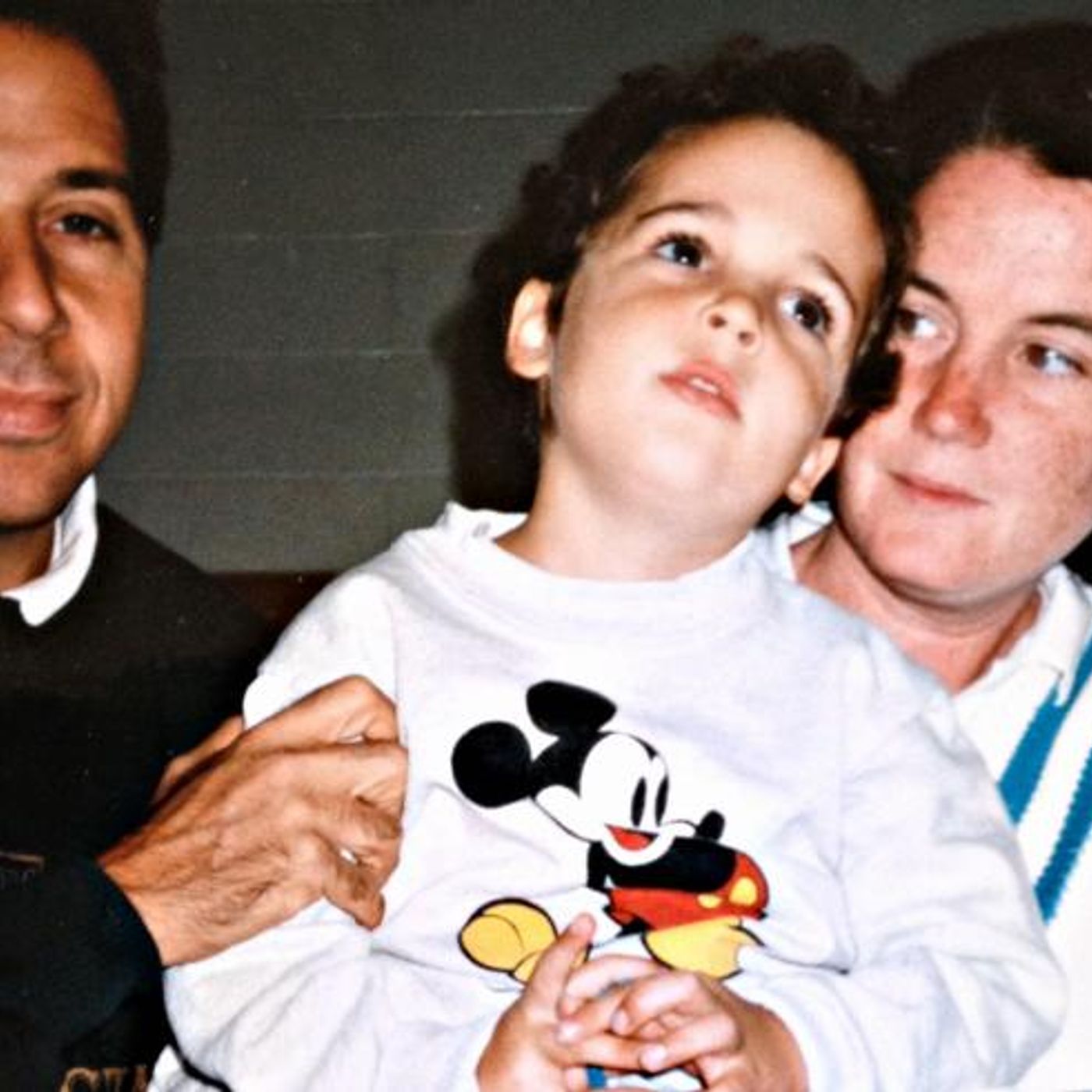
Radiolab
Juicervose
00:43:54
Ron and Cornelia Suskind had two healthy young sons, promising careers, and a brand new home when their youngest son Owen started to disappear. 3 months later a specialist sat Ron and Cornelia down and said the word that changed everything for them: Autism. In this episode, the Suskind family finds an unlikely way to access their silent son's world. We set off to figure out what their story can tell us about Autism, a disorder with a wide spectrum of symptoms and severity. Along the way, we speak to specialists, therapists, and advocates including Simon Baron-Cohen, Barry and Raun Kaufmann, Dave Royko, Geraldine Dawson, Temple Grandin, and Gil Tippy. Produced by Kelsey Padgett.
Loading summary
Transcript331 lines
- [00:04]
Ron Suskind
Listener supported WNYC Studios.
- [00:11]
Jad Abumrad
Wait, you're listening. Okay. All right. Okay. All right. You're listening to Radiolab Radio from wny.
- [00:23]
Cornelia Suskind
See?
- [00:24]
Jad Abumrad
Yep.
- [00:25]
Cornelia Suskind
And npr.
- [00:29]
Ron Suskind
The word hit us like you're hit with a bullet. And we're like, that cannot be our. That cannot be our son.
- [00:46]
Jad Abumrad
I'm Chad Abumrad.
- [00:47]
Robert Krulwich
I'm Robert Krulwich.
- [00:48]
Jad Abumrad
This is Radiolab. And our story today begins with a boy.
- [00:51]
Robert Krulwich
And that boy is going to vanish, not into thin air, but to a place that we know very, very little about.
- [00:58]
Jad Abumrad
And if you're the parent of that boy, what do you do if your child is falling away from everything you know?
- [01:03]
Robert Krulwich
How do you find him?
- [01:05]
Jad Abumrad
How do you get him back?
- [01:06]
Robert Krulwich
So part of this tale we got from Ron Susskind's new wonderful book, Life Animated. And some of you may have heard it, some not.
- [01:12]
Jad Abumrad
Let's start where Ron started. For him, it began around 1993 and.
- [01:18]
Ron Suskind
It was an exciting time.
- [01:20]
Cornelia Suskind
Well, we're going into Owen's room for what is his last night in the crib. I still can't watch it. You still can't watch it? Can you tell us about your crib, Owen? Do you like your crib? Yeah.
- [01:39]
Ron Suskind
Do you know where you're sleeping tomorrow? What kind of bed are you and Walter gonna sleep in?
- [01:44]
Robert Krulwich
In 1993, the Suskind family decided to make a big move. Ron and his wife Cornelia, Cornelia Suskind and their two sons, Walt and Owen.
- [01:52]
Cornelia Suskind
Walter is about five and Owen is about two and a half.
- [01:57]
Robert Krulwich
They dec to relocate from Boston to Washington D.C. you know, I had this.
- [02:01]
Ron Suskind
Senior national affairs job at the Journal.
- [02:03]
Cornelia Suskind
Good night.
- [02:04]
Ron Suskind
Say nighty night. Kind of a dream job.
- [02:07]
Jad Abumrad
I love you.
- [02:08]
Ron Suskind
Lots of excitement.
- [02:10]
Cornelia Suskind
Have a nice last night in your cribby.
- [02:14]
Robert Krulwich
So they make the move and as soon as they arrive in Washington, we.
- [02:18]
Ron Suskind
Start sort of noticing something's amiss.
- [02:21]
Jad Abumrad
Their youngest son, Owen, who to that point had been a totally normal, chatty.
- [02:25]
Ron Suskind
Almost three year old, is hitting all of his markers.
- [02:27]
Jad Abumrad
So suddenly goes sideways.
- [02:29]
Cornelia Suskind
Maybe the very first thing that happened was he stopped sleeping. He stopped sleeping, he stopped eating. He was very fussy initially.
- [02:39]
Robert Krulwich
They figured, well, it's got to be the move.
- [02:41]
Cornelia Suskind
And then we start losing eye contact. Then he starts losing motor skills. He can't hold his cup, it's slipping out of his hand. His gait became very odd and he sort of looked like a drunken sailor walking around the house. And then he stopped speaking. Bit by bit by bit.
- [03:02]
Jad Abumrad
This was all compressed into a few months. A few months really yeah.
- [03:07]
Ron Suskind
What could have occurred? Could he have banged his head, ingested something toxic? You know, first you hit the regular pediatrician, and he's gone. He sent us to a center.
- [03:16]
Jad Abumrad
There was a woman there who sits.
- [03:18]
Ron Suskind
Them down, and she says the word autism.
- [03:22]
Jad Abumrad
What did the word mean to you at that moment?
- [03:24]
Cornelia Suskind
It meant Rain Man, Dustin.
- [03:25]
Ron Suskind
And, I mean, I'm a very good driver. That's all we saw. And we're like, that cannot be our. That cannot be our son.
- [03:35]
Cornelia Suskind
You know, it was just terrifying.
- [03:38]
Robert Krulwich
Now, in reporting this story, we ended up going off in a variety of different directions, but we did visit one place where we got a glimpse, just a hint of what parents like Ron and Cornelia must have felt back then. We visited a school here in Manhattan called the Rebecca School. It's a really unique school for children with autism, other developmental delays. There's little kids in there, age 4, all the way up to, I think, even 21. Every kid that you meet in the school is different. Autism is a many, many flavored thing. But the overwhelming sense you get walking the halls there is that each of these kids is kind of locked away a little bit. Just they don't know how to be with, like, Kelsey Padgett and I, we got there during lunch, and in one of the rooms. I don't know, maybe you should describe this.
- [04:31]
Cornelia Suskind
Yeah, there was this.
- [04:32]
Jad Abumrad
We went to this one classroom where.
- [04:34]
Cornelia Suskind
There was this one boy who really stood out.
- [04:36]
Jad Abumrad
He was about 6 years old, and he had this big mop of black.
- [04:41]
Cornelia Suskind
Hair, and he was just standing there.
- [04:43]
Jad Abumrad
At the table holding an apple.
- [04:47]
Robert Krulwich
Oh, yeah, eat the apple.
- [04:49]
Ron Suskind
You want to eat the apple.
- [04:50]
Jad Abumrad
And just sobbing. Do you want to eat your apple? No, you don't want to eat the apple. And the director of the school, Tina McCourt, she was there, and she just.
- [05:06]
Cornelia Suskind
Stayed with the boy and really, like, tried to be there with him, but.
- [05:09]
Jad Abumrad
There was nothing she could. There goes the apple.
- [05:18]
Cornelia Suskind
You don't want to sing with Carol.
- [05:23]
Jad Abumrad
It was hard to watch.
- [05:27]
Ron Suskind
Because you.
- [05:29]
Jad Abumrad
Don'T know how to help him.
- [05:35]
Walter (Walt) Suskind
So that's a challenge. Right. There's a kid who actually can't tell you what's upsetting to him.
- [05:41]
Ron Suskind
Right.
- [05:42]
Robert Krulwich
That's Gil Tippy, the school's clinical director.
- [05:44]
Walter (Walt) Suskind
Could be that he physically. He actually doesn't know where he is in space, maybe.
- [05:49]
Jad Abumrad
It's as if we were being thrown.
- [05:51]
Walter (Walt) Suskind
Out of an airplane.
- [05:53]
Jad Abumrad
Right.
- [05:53]
Walter (Walt) Suskind
You're just tumbling. You don't know where your body is. It's a thunderstorm. So you only see things in flashes.
- [05:59]
Robert Krulwich
Right.
- [06:00]
Walter (Walt) Suskind
So now the world is totally frightening. It's totally overwhelming.
- [06:07]
Cornelia Suskind
I mean, I do remember the drive home from that. From that terrible day.
- [06:11]
Ron Suskind
I've blocked that out.
- [06:13]
Cornelia Suskind
Well, just. I mean, I just remember, you know, you and I driving home in silence with Owen in the back, and I just felt like, you know, there was no. There's no hope.
- [06:26]
Jad Abumrad
Like, they had no idea if the Owen they knew was in there or if he was just kind of lost to them, like, gone. Now, keep in mind, this was 1994. We knew even less about autism than we know now. We still have no idea what causes autism. But then the prevailing wisdom seemed to be that kids with autism, they couldn't feel emotion. They had no capacity to empathize with other people. This was way before the neurodiversity movement. Like actually right around the moment when autism was becoming a spectrum for the first time.
- [06:56]
Ron Suskind
That's just happening in 1994. Just starting.
- [06:59]
Cornelia Suskind
Barely starting.
- [07:00]
Ron Suskind
Yeah.
- [07:01]
Jad Abumrad
At that point, owen was about 4. Was he active or was he.
- [07:04]
Cornelia Suskind
Yeah, he was very. He was hyperactive. A lot of self stimulatory behavior, you know, hand flapping, running around.
- [07:11]
Jad Abumrad
And Cornelia and Ron say that when they would call him, it was as if he didn't even hear them.
- [07:15]
Ron Suskind
We're hoping he's hearing, you know, but he's not really responding well.
- [07:19]
Robert Krulwich
When you needed him to come to.
- [07:20]
Jad Abumrad
The table, you would basically have to.
- [07:23]
Cornelia Suskind
Go and lead him by the hand or pick him up and bring him over. And he was down to one word, which was juice. So the only thing he was doing was drinking juice for about a year.
- [07:34]
Ron Suskind
And also, you know, there was the Disney movies.
- [07:39]
Robert Krulwich
Don't run away. So he would sit for. He would sit for television entertainments of some.
- [07:45]
Cornelia Suskind
He wouldn't sit for the whole movie for sure, but he would. That would be the one thing that he would sit for quietly for periods.
- [07:52]
Jad Abumrad
You don't know what I've been through.
- [07:54]
Cornelia Suskind
Because he didn't sleep. So at night, I was usually up with him all night, thrashing around.
- [08:00]
Robert Krulwich
And as Owen watched one Disney movie after another after another, not sleeping at all, that word juice, it seemed to expand just a little bit. He began to repeat the word.
- [08:09]
Ron Suskind
Juicervose. Juicervose. Juicervose. Wait, what is he saying?
- [08:12]
Jad Abumrad
Juicervose.
- [08:13]
Ron Suskind
Juicervose.
- [08:14]
Jad Abumrad
Juicervos.
- [08:15]
Robert Krulwich
But you don't know at first what that is?
- [08:16]
Ron Suskind
No, no, no. We think it's juice. Cornelia's. Like I said, does he seem to want more juice? And she's like, no, I gave him more Juice. He didn't seem to want it.
- [08:23]
Robert Krulwich
And Ron says he would say that word over and over for weeks, and they had no idea what it meant.
- [08:29]
Ron Suskind
Until it's about a year and a month after the symptoms have started.
- [08:34]
Jad Abumrad
One night, all four of them are together in the living room, and we're.
- [08:37]
Ron Suskind
Watching the Little Mermaid under the Sea.
- [08:41]
David Royko
Under the sea.
- [08:42]
Jad Abumrad
And at a certain point, Owen, who's got the remote, he starts rewinding the movie back a little bit to rewatch the scene.
- [08:50]
Ron Suskind
It's typical. So Owen knows how to work the remote. Walt kind of showed him how to do it, and he took to that. And he's rewinding the part where Ariel. If I become human, our protagonist, I'll.
- [09:02]
Cornelia Suskind
Never be with my father or sisters.
- [09:03]
Ron Suskind
Again, wants to become human to get her man. Eric.
- [09:06]
Jad Abumrad
That's right.
- [09:07]
Ron Suskind
And the sea witch, Ursula, says it will cost you. Tough choices. And the price is your voice. Your voice.
- [09:17]
Cornelia Suskind
My voice.
- [09:18]
Jad Abumrad
You've got it, sweet cakes.
- [09:20]
Ron Suskind
And all of a sudden, Ariel and Ursula are having it out.
- [09:24]
Jad Abumrad
Come on, you poor, unfortunate sou.
- [09:28]
Ron Suskind
And this part gets rewound again.
- [09:29]
Jad Abumrad
Won't cost much, just your voice.
- [09:32]
Ron Suskind
Again.
- [09:33]
Jad Abumrad
All day. It won't cost much, Just your voice.
- [09:37]
Ron Suskind
And Walt's like, owen, stop rewinding. Just play the movie.
- [09:40]
Jad Abumrad
It won't cost much, Just your voice.
- [09:43]
Ron Suskind
But after the third rewind, just your voice. Cornelius says, it's not juice. It's not juice. It's just. I said, what? Just your voice.
- [09:57]
Jad Abumrad
Just your voice.
- [09:59]
Ron Suskind
At which point I'm like. I grabbed by the shoulders, and I'm like, just your voice. Just your voice. And he starts going, juicer voice, juicer voice, juicer voice. And Walter starts jumping in the bed, crying and laughing and jumping on the bed.
- [10:13]
Jad Abumrad
Did you feel like he chose that phrase for a reason?
- [10:15]
Ron Suskind
That's what we. That's, of course, immediately what we thought.
- [10:17]
Cornelia Suskind
He's trying to tell us something, like.
- [10:20]
Jad Abumrad
He has things to say, but he. He just can't say it. It's his voice. In other words, he's in there.
- [10:26]
Cornelia Suskind
He's in there because he's trying to talk to us.
- [10:29]
Ron Suskind
So we run to the doctor, a very trusted guy, and he's like, you know, sit down. Let's talk. And he says something called echolalia. It's echoing sounds that their auditory processing, their ability to process sound, speech, language, those haywire. And so they just repeat the sound. And we're saying, so he doesn't know what it means. And he's like, probably not echolalia. It's what it sounds like echo. What? It sounds like echo. I said like a parrot. They're like, yeah, yeah, parrot. So we go from Helen Keller to the pet store parrot.
- [11:05]
Jad Abumrad
Life goes on. And years go by where he's murmuring.
- [11:10]
Ron Suskind
A lot of gibberish we might be able to decipher from some movie. Maybe by six, he's got, you know, three word sentences. I want juice. Just, you know, one and a half year old speech. Korn's there full time, 24, 7.
- [11:26]
Robert Krulwich
Ron's working around the clock in a.
- [11:27]
Ron Suskind
Kind of frenzy to pay for all the therapists. And we're fighting it out, basically.
- [11:33]
Jad Abumrad
They see tiny, tiny bits of progress, but no more breakthroughs until Owen's about.
- [11:41]
Ron Suskind
Six and a half and Walt is nine. And Walter gets a little emotional on his ninth birthday.
- [11:48]
Walter (Walt) Suskind
I'm not sure, maybe the anxiety of the moment, of the attention of it.
- [11:52]
Jad Abumrad
This is Walt Susskind.
- [11:53]
Robert Krulwich
And how old are you now?
- [11:55]
Walter (Walt) Suskind
I'm 25.
- [11:55]
Jad Abumrad
Your voice is so much deeper than I imagined it would be.
- [11:58]
Walter (Walt) Suskind
People usually, after like 10 minutes, if it's their first time meeting me, ask if I'm faking my voice. And I have to assure them this is not an effect, this is how I sound.
- [12:10]
Robert Krulwich
In any case, Walt has his ninth birthday and his friends come over and.
- [12:13]
Cornelia Suskind
Then after the party, he's out in the hammock in the yard and he's kind of crying a little bit.
- [12:20]
Walter (Walt) Suskind
Birthdays, it was, I don't know, they were just kind of strange days for me. Like sensory overload in a way.
- [12:27]
Ron Suskind
Well, Owen walks in after. Walter is emotional and we're in the kitchen and he seems to kind of look back and forth between the two of us and like there's something he wants to say.
- [12:39]
Robert Krulwich
To this point, Owen had only said three word sentences. But in this moment, according to Ron.
- [12:44]
Ron Suskind
He looks at us and says, walter doesn't want to grow up like Mowgli or Peter Pan. He says, full sentences, full thing, whole thing.
- [12:57]
Jad Abumrad
Wow.
- [12:58]
Ron Suskind
I mean, literally, it was like a thunderbolt, a lightning bolt went through the kitchen. And Owen goes, runs off in some, you know, reverie, whatever. And we look at each other and like, what was that? You know, this is his first complex sentence or thought that's been expressed. And it's a subtle one, actually, because.
- [13:18]
Jad Abumrad
He'S taking three different characters, two from a movie, one from real life, and he's putting them together. Serana's like, I gotta follow this. So he goes up to Owen's room.
- [13:26]
Ron Suskind
And I see Owen on the bed looking at a Disney book. And I see on the carpet are some of his puppets, and one of them is Iago from Aladdin, the plush toy, you know, which is the $98 one that goes up to your elbow. And I grab it and I put it on my arm, right up to the elbow. And I crawl along on the rug, and I throw the bedspread kind of over my head and just edge up to the edge of the bed, and I push the puppet up through the crease in the bedspread. And so now they're face to face, Owen and Iago. And I'm looking up through the crease, sort of up my arm. And I talk to him as Iago. Now, this is an easy voice. It's Gilbert Gottfried's voice. I mean, anyone can do this. I say, so, Owen, Owen, Owen, how does it feel to be you? And he turns to the puppet like he's bumping into an old friend, and he says, not good. I'm lonely. And it was his voice.
- [14:36]
Cornelia Suskind
Wow.
- [14:37]
Ron Suskind
And so I say, so when did you and I become such good friends? And he says, when I watched Aladdin and you made me laugh. And we go back and forth like this for four or five more exchanges. And then I hear Owen clear his throat like.
- [14:56]
Robert Krulwich
Like that.
- [14:57]
Ron Suskind
And then all of a sudden, I hear him say back, I love the way your foul little mind works.
- [15:04]
Jad Abumrad
He said, what?
- [15:05]
Ron Suskind
I love the way your foul little mind works. That's Jafar the villain. Iago's the villainous sidekick to Jafar, the villain of Aladdin. That's the next line from Jafar.
- [15:18]
Robert Krulwich
You're in the movie.
- [15:19]
Ron Suskind
He's asking for me to respond as.
- [15:22]
Robert Krulwich
I go, did you know the next line?
- [15:24]
Ron Suskind
I didn't know the next line. At that point. I just jumped out from under the bedspread, said, owen, what's going on?
- [15:33]
Jad Abumrad
So now they felt like, okay, he is in there. I mean, despite everything that they had been told about autism, Owen was in there. And some somehow these Disney characters were in there with him.
- [15:45]
Ron Suskind
It doesn't take us long that, you know, we start what we call the basement sessions, where we say, let's see how far this can go.
- [15:52]
Jad Abumrad
A couple times a week, we go.
- [15:53]
Ron Suskind
Down in the basement and start playing out scenes. And we do it the first time. We do it with the Jungle Book, which is a movie he was into at that point. And then 101 Dalmatian, kill the Beast, Beauty and the Beast, Peter Pan, Sword in the Stone.
- [16:11]
Walter (Walt) Suskind
We kind of ran the gamut. I mean, pretty much we'd watch any and every Disney movie there was.
- [16:17]
Ron Suskind
Describe to these guys. What was it like when mom and I started doing voices on Walter?
- [16:22]
Jad Abumrad
Felt amazed. Felt amazed.
- [16:26]
Robert Krulwich
Who was amazed? You were amazed or they were amazed?
- [16:29]
Jad Abumrad
I was amazed.
- [16:30]
Robert Krulwich
This is owen Suskind. He's 23 now.
- [16:33]
Ron Suskind
Why were you amazed?
- [16:34]
Jad Abumrad
I was so surprised by my family. I could hear them respond better. You're saying that when everybody was acting out the Disney movies, suddenly you could hear them better? Right. So when people would talk to you, not in the Disney movies, what do you remember about how they sounded a little weird? Yeah. Gibberish and rubbish. Huh. Do you remember how you felt a little worried?
- [17:14]
Ron Suskind
You told mom once that you were scared.
- [17:16]
Jad Abumrad
I was scared.
- [17:19]
Ron Suskind
Why did it feel good to watch them over and over again, that you kept wanting to watch them over and over again? How did that feel to you?
- [17:28]
Jad Abumrad
It felt comforting.
- [17:29]
Ron Suskind
Comforting?
- [17:30]
Jad Abumrad
Felt comforting.
- [17:31]
Ron Suskind
Why?
- [17:33]
Jad Abumrad
Because it would help me with reducing my autism.
- [17:41]
Robert Krulwich
How does a movie help a boy in Owen's condition? Stay tuned and we'll attempt some explanations.
- [17:51]
Cornelia Suskind
This is Candace, currently calling from her bicycle. Radiolab is supported in part by the National Science foundation and by Alfred P. Sloan Foundation, Enhancing public understanding of science.
- [18:04]
Jad Abumrad
And technology in the modern world.
- [18:06]
Cornelia Suskind
More information about Sloan@www.sloan.org. thank you.
- [18:17]
Jad Abumrad
Hey, I'm Chad Abumran.
- [18:18]
Robert Krulwich
I'm Robert Krulwich.
- [18:19]
Jad Abumrad
This is Radiolab. And today a story about a kid named Owen and a condition that no one can quite pin down. Now, we just heard that Owen, when he watches Disney movies, he feels comforted and that somehow the movie seems to dial down his autism. We were like, why would that be? How could a Disney movie or any movie really make that much difference?
- [18:44]
Ron Suskind
Can you hear me okay?
- [18:45]
Robert Krulwich
I can hear you pretty well. We ended up taking the question to.
- [18:48]
Ron Suskind
This guy, Simon Baron Cohen.
- [18:49]
Robert Krulwich
He's a leading researcher in autism, and.
- [18:52]
Jad Abumrad
Yes, he is the cousin of this guy.
- [18:53]
Ron Suskind
This is my wife, and I'm the director of the Autism Research center at Cambridge University.
- [19:01]
Robert Krulwich
And Simon told us a couple of different things. First of all, he says that in the last few decades, our whole notion of what is happening in the mind of a child with autism has totally changed. We sort of tossed out the Rain.
- [19:14]
Ron Suskind
Man idea, the idea that people with autism lack some inner life. I think that's completely false.
- [19:23]
Jad Abumrad
It's not necessarily that they can't feel emotion or empathy, he says, not at all. It's often a decoding problem. Like they have trouble decoding all of the information that's coming in. I mean, some studies have found that a Lot of kids with autism literally have too many synapses in their brain, so it might be that the world is just coming in too loud.
- [19:41]
Ron Suskind
I think often people with autism feel.
- [19:44]
Jad Abumrad
Very lost and confused.
- [19:47]
Ron Suskind
There's so little predictability in the social world. You know, people come and go. No two days are the same. People say things unexpectedly, they do things unexpectedly.
- [20:01]
Jad Abumrad
And people with autism seem to need.
- [20:04]
Ron Suskind
A lot of predictability.
- [20:06]
Jad Abumrad
We spoke to Temple Grandit, the well known author and autism advocate. And here's how she put it. When I was a little kid, I wanted to feel the nice feeling of being held, but there was just too much overwhelming stimulation. You know, loud sounds hurt my ears. Like the volume control on touch and hearing was way, way, way turned on. And one of the reasons why I withdrew into things like dribbling sand through my hands is I could shut out the hurtful sound. As Temple Grannin explained it to us, a kid with autism gravitating to something like bus schedules or knowing every single fact about every dinosaur that ever lived. That is just a way to slow things down and make the world predictable so that it happens the same way every time. And as Simon Baron Cohen puts it, in Owen's case, he had these Disney movies that he could play over and over and over and over.
- [20:58]
Ron Suskind
And then the fact that it's, you know, it's not just repetition, but it's repetition about human action.
- [21:05]
Jad Abumrad
Jasmine, where are you? Out in the menagerie. Hurry.
- [21:08]
Cornelia Suskind
You know, that creates a kind of.
- [21:10]
Jad Abumrad
Structure to be able to look at human behavior.
- [21:14]
Ron Suskind
You know, in the real world, there's.
- [21:16]
Jad Abumrad
No opportunity to rewind the movie, whereas.
- [21:20]
Ron Suskind
In the world of movies, you can.
- [21:22]
Jad Abumrad
Watch the same Disney cartoon a hundred.
- [21:25]
Ron Suskind
Times or a thousand times, and you could almost go frame by frame, like a literary critic or a film critic. He could really analyze the action to understand, okay, that's what happened, and that's what caused him to do what he did.
- [21:41]
Jad Abumrad
Add to that the element of music. We spoke with Professor Geraldine Dawson, a neuroscience professor at Duke, who guessed that maybe it's not just the repetition that made the difference, but the repetition with music.
- [21:57]
Cornelia Suskind
One of the things that we've learned from neuroscience is, is that music activates emotional centers in our brain. And in fact, it's pretty reliable that certain kinds of music make us feel frightened, make us feel happy, make us feel worried, and so forth.
- [22:20]
Jad Abumrad
Now, she says, when scientists have done brain scans of kids with autism, they.
- [22:24]
Cornelia Suskind
Found that during kind of normal interactions, people with autism don't necessarily activate those emotional centers of the brain. Areas like the amygdala. But during the experience of music, those areas of the brain did become activated in a way that was very much like a typical person.
- [22:47]
Jad Abumrad
So it might be that while Owen was sort of forensically examining these moments of Disney movies, it was the Disney music that was binding those moments to feelings so he could know, like, oh, when a person looks like that, that's when they're happy. When a person looks like that, that's when they're sad. However it works, Simon Baron Cohen thinks it's at least plausible that he's using.
- [23:10]
Ron Suskind
The movie as a scaffold to make sense of the much greater complexity of natural life.
- [23:18]
Robert Krulwich
And that's what got to Ronsucky.
- [23:22]
Ron Suskind
Like, wow, this is a whole new planet here.
- [23:24]
Robert Krulwich
That maybe this Disney ish therapy that they use with Owen might be a whole new approach to treating kids with autism.
- [23:30]
Ron Suskind
Instead of the one size fits all model of sit in the class and hear the things you're supposed to know to be a working member of society. Instead it's like, go with their passion, follow them in there. It's a pathway, the brain finding a way to get to what people need, which is interaction and emotional wholeness. Hiro, why don't you sing the song for them?
- [23:56]
Jad Abumrad
The seaweed is always greener. It's a party at Seas Lake. You cheaper but go way up there. But that is a big mistake. Just don't go to wet.
- [24:07]
Robert Krulwich
Over the years, sometimes down in the basement with the family or sometimes even in doctors offices, Owen started to improvise. He'd go off script and use the characters he knew so well to explain how he was feeling.
- [24:20]
Jad Abumrad
Onto the sea, darling. It's better, it's better, take it from me.
- [24:28]
Robert Krulwich
And as we were thinking about all this and asking ourselves, you know, well, if this works with Disney movies, which are very emotional and clear, how do you do this with paper clips or bus schedules? And as the questions kept coming, we ran into inevitably a counter reaction to Ron's story. And this we didn't expect the story.
- [24:48]
David Royko
It's great, it's a wonderful story. But the fact is most, I mean, the danger with a book, with any book, including Life Animated, is that it's going to give the impression to a lot of people that this is the answer.
- [25:06]
Robert Krulwich
That's psychologist and journalist David Royko. And he warned us that, like with.
- [25:09]
David Royko
Autism, we still don't really know much.
- [25:12]
Robert Krulwich
And we don't have yet a body of established science. And all the anecdotes you're hearing, they're just Anecdotes.
- [25:19]
David Royko
If you've known one person with autism, you've known one person with autism.
- [25:23]
Robert Krulwich
That he says is really all you can say. And to take one person's experience and generalize on it, it's a mistake. A case in point, his son, Ben.
- [25:31]
David Royko
Ben is turning 21 years old today.
- [25:34]
Jad Abumrad
Oh my God. Happy birthday to him.
- [25:36]
David Royko
Thanks. And Ben is never going to be able to live independently. He's never going to have what anyone would consider and normal life.
- [25:46]
Jad Abumrad
Ben has severe autism and is now living in an assisted living facility. He was diagnosed around the same age as Owen. Same basic symptoms.
- [25:53]
David Royko
Lack of eye contact, sudden loss of speech, fascination with spinning wheels, with ceiling fans. The whole, the whole package.
- [26:02]
Jad Abumrad
Dave says he and his wife tried every therapy they could afford and a whole lot they couldn't. But Ben never had any of those big breakthroughs. Instead, even as a teenager, he would.
- [26:11]
David Royko
Hit and he would scratch and he would bite and he would punch and he would kick. Honestly, I was always afraid when Karen and I would end up having to go to an emergency room for some reason that, you know, if they saw her arms, that they would arrest me because they would think I was some horribly abusive person because her arms were nothing. They were covered with, with scabs and scars and scars on scars. And on top of that, you know, there would be the crap like, like, like in his pants. Yeah, I mean, he, he's, he was not. Well, I hate to say it, but here we are on his 21st birthday and he's still not 100% reliable when it comes to toileting.
- [26:50]
Jad Abumrad
And honestly, the reason we ended up calling Dave is because he wrote a review of Ron's book where he said, basically it's a great book, but it's just one more story of a triumphant happy ending. And that is not the norm for.
- [27:01]
David Royko
Many, many people who experience autism. You don't have happy endings. I mean, that's a sad fact for many of the families. And we're not expecting in our life a happy ending for Ben.
- [27:15]
Jad Abumrad
People seem to believe that it's dangerous for parents to have too much hope because what if they really think it's possible for their child to progress a huge amount or recover and then their child doesn't. We have the other concern.
- [27:32]
Robert Krulwich
That's Ron Kaufman of the Autism Treatment Center America.
- [27:35]
Jad Abumrad
We find that we're not afraid of so called false hope. We're more concerned about false pessimism.
- [27:44]
Robert Krulwich
And here's why he says that. In 1981, Ron's dad, Barry Karlman, and I'm Oprah Winfrey. He sits down on a local TV show with a very young Oprah Winfrey and he describes his experience.
- [27:55]
Jad Abumrad
Okay, we had a child who was diagnosed as incurably ill or hopelessly ill, something called autism.
- [28:02]
Robert Krulwich
He tells how at a really young age, a year and a half old, his son began to regress and began to flap hands, lose eye contact, rock back and forth. And then one day he and his wife decided, you know what, we're going to just sit down on the bathroom floor right next to him and we're going to rock back and forth just like him. And he explains that they did this over and over and over, hour after hour, until one day his son turned.
- [28:25]
Jad Abumrad
His head and he actually looked at us. It took 900 hours before he ever gave us eye contact on his own. When he looked at us, we cheered, we cried, because that was really big for us. And so somebody else might look at us and say, you're crazy. But we're not. We just got this little boy, took us 900 friggin hours, but he just looked at us for three seconds. My God. And he went from that to a little boy now who functions on a near genius level, who talks, is communicative, is loving and is embracing.
- [29:08]
Robert Krulwich
And that little boy is Ron.
- [29:10]
Jad Abumrad
For me, it just felt like my mother was loving me and enjoying me and playing with me.
- [29:16]
Robert Krulwich
Nowadays in interviews, Ron seems to say that maybe his parents cured him of autism.
- [29:22]
Jad Abumrad
I actually have never used the word cure. I don't use that in my lectures, YouTube videos. No one's ever actually heard me say that. What I do say is full recovery, which is essentially the same thing, whatever you call it.
- [29:34]
Robert Krulwich
Armed with this heroic story, Ron and his dad Barry now run an autism treatment program that they call Sunrise S O N Rise.
- [29:42]
Jad Abumrad
People come here from all around the world and say, my child is severely autistic. And I will smile and I'll put out my hand and I'll shake their hand and I'll say, I am so excited for this. Wow, you are so blessed. And you know what they'll start to do? They'll cry. And I'll say, why are you crying? No one ever said that to me. You really say that to parents with a severely, like severely autistic kids? Severely. I say it all over the world.
- [30:13]
David Royko
You know, last year there was a woman named Kelly Stapleton who was a fairly prominent autism boy. And I'd gotten to know Kelly a bit.
- [30:24]
Jad Abumrad
She has a daughter with autism. And one day, when her daughter was.
- [30:27]
David Royko
14, she locked herself in a van with a couple charcoal burners and tried to commit suicide with her autistic daughter. You see that in the world of autism more than I can't think of any other place you see it.
- [30:41]
Jad Abumrad
Dave believes that one of the reasons you see so many suicides in this community, and by the way, there's a huge debate about this on the web, but he believes that one of the reasons you see it so much is that all these success stories seem to say to parents like him that as hard as it can be, and it can be really, really hard, you're not trying hard enough.
- [31:00]
David Royko
It's depressing. You know, a new bumper sticker, you know, that's shown up that autism is awesome. An awesome spelled like a U S O M E, like similar to autism. No, autism, it destroys lives is what it does in our definition of it.
- [31:20]
Jad Abumrad
And that's one of the things that makes it very, very confusing for people outside the community to describe what's going on. Because you now have this situation where obviously autism is a spectrum and so you have all of these different kids described by the same word, making things even more confusing. If you take a child when they're two or three, that's Temple Grandin again, you can have two kids that look real severe, and I looked real severe when I was three. Real, real severe. And then you work on these kids, lots of one on one therapy, and one kid you kind of pull them out of it and the other one, you're not able to pull them out of it. And they both look the same at age 3. So if a lot of these kids start out with the same set of symptoms, but they end up in vastly different places, no one knows why, then as a parent you really have no idea what is going to happen or how much you can dare to hope.
- [32:19]
Cornelia Suskind
Notions of what could be up the road or what should be now, if they pop into my head, which is rare, I dismiss them. I have absolutely no idea. Because we have been down so many roads that were disappointing.
- [32:41]
Jad Abumrad
And that's next. Hey guys, this is Nathan Sanchez calling from Santa Clara, California. Radiolab is supported in part by the National Science foundation and by the Alfred P. Sloan Foundation. Enhancing public understanding of science and technology in in the modern world. More information about Sloan@www.sloan.org. thanks guys. I'm Jet Abumrad. I'm Robert Krulwich, this is Radiolab. And to continue with the story after Owen's Disney basement sessions had really taken off and the Disney therapy, as it were, Seemed to be working, and Owen was getting better and better and better.
- [33:27]
Robert Krulwich
Things took a turn, and not for the good.
- [33:31]
Jad Abumrad
Remind me how old he is at this point.
- [33:34]
Cornelia Suskind
14.
- [33:34]
Jad Abumrad
14. 15.
- [33:36]
Ron Suskind
Yeah.
- [33:36]
Robert Krulwich
Ninth grade.
- [33:36]
Cornelia Suskind
Ninth grade. It was tenth grade.
- [33:40]
Ron Suskind
Oh, right.
- [33:41]
Cornelia Suskind
Tenth grade.
- [33:42]
Ron Suskind
Oh, was it? Yeah, that's right. That's right.
- [33:44]
Jad Abumrad
And what happened?
- [33:46]
Ron Suskind
We didn't know what was happening. You know, we just saw over the months that Owen was really out of sorts.
- [33:53]
Jad Abumrad
He got quiet, kind of withdrawn. Basically stopped doing Disney over this period. He's losing a lot of weight.
- [33:58]
Ron Suskind
He's not sleeping.
- [33:59]
Cornelia Suskind
The three of us were scratching our heads saying, what is going on with Owen? He is really moving into a bad place. I mean, I was actually worried that he was becoming schizophrenic.
- [34:10]
Walter (Walt) Suskind
Yeah, I still think about that whole scenario all the time, because we knew something was wrong with Owen, and we couldn't get it out of him.
- [34:16]
Robert Krulwich
This is Owen's older brother Walt, again. And he says when he pick up.
- [34:19]
Walter (Walt) Suskind
Owen from school, he was just a shell of himself. You'd talk to him. So I'd pick him up, he would talk to himself in the car, and it'd be, no, no, you know, it's not true, or something under his breath.
- [34:28]
Ron Suskind
And then at one point, I overhear him in a kind of conversation with Phil, the sidekick of Hercules in that movie, Hercules. Danny DeVito does the voice. And Phil is, you know, listen, kid, you can take him. You know, you gotta stand up for yourself. That kind of thing that Owen was saying. And I didn't. I didn't know where to fit it in.
- [34:52]
Robert Krulwich
Ron says it seemed like Owen was trying to psych himself up for something. So he sat down with Owen on the couch and he grilled him for an hour until eventually Owen told him about his music class at school.
- [35:03]
Cornelia Suskind
There are two kids in this class who are ED kids, emotionally disturbed kids. So they're not. They're not on the autistic spectrum. And socially, they're very on target.
- [35:14]
Jad Abumrad
And they.
- [35:17]
Cornelia Suskind
Basically torment and terrorize him for six months of that school year, unbeknownst to us and unbeknownst to the school.
- [35:28]
Robert Krulwich
What did they do?
- [35:29]
Cornelia Suskind
They sat on either side of him and basically said, you know, we're gonna kill you. We're gonna kill your parents.
- [35:36]
Jad Abumrad
Those two bullies lied and bullied me badly.
- [35:42]
Ron Suskind
I mean, right then, you were in a very bad spot. And you couldn't tell me or mom or anyone, because what happened? The bully said, what?
- [35:51]
Jad Abumrad
Burn your house down?
- [35:52]
Ron Suskind
If.
- [35:52]
Jad Abumrad
What if you tell?
- [35:55]
Ron Suskind
Right.
- [35:55]
Cornelia Suskind
And Owen was so literal as are so many autistic kids. He believed that they literally meant they were going to come and burn his house down.
- [36:04]
Ron Suskind
And there's an extraordinary moment in the middle of this where Walter picks him up and Owen starts to think, go through a calculus. The bully said, if you tell your parents about what we said, we'll burn your house down. But they said nothing about your brother. And so he sees, like, an opening.
- [36:24]
Jad Abumrad
Yep. And so did you tell him? No, I didn't. No, I didn't. Why? Why not? Because I'm afraid he would beat them up. I didn't want that.
- [36:35]
Ron Suskind
Walt, at this point, you know, is a football player, and, you know, he looks like Hercules to Owen. And Owen later describes to us this thinking that if he tells Walter that Walter will hurt the kid and maybe kill the kid. And in Disney, none of the heroes actually kill any of the villains. No, Walter was the hero. You were afraid he was gonna do what?
- [37:06]
Jad Abumrad
Kill. But it's wrong. Did you ever talk to Walt about it? A little bit later after it happened.
- [37:13]
Walter (Walt) Suskind
I just remember finding out, and it was like a combination of, like, rage and helplessness. That in a. I literally just thought of what I would have done to that kid if I. If Owen had told me. I really wanted to kill that kid. I mean, I'm, you know, I'm his protector.
- [37:47]
Ron Suskind
In a way.
- [37:47]
Robert Krulwich
You're.
- [37:48]
Ron Suskind
You were kind of. Walter was worried about protecting you in that time.
- [37:52]
Jad Abumrad
Yeah.
- [37:53]
Ron Suskind
In a way, it was me that was doing what?
- [37:58]
Jad Abumrad
Protecting myself and who else? And my brother.
- [38:01]
Ron Suskind
Right. And Walt.
- [38:03]
Jad Abumrad
And Walt.
- [38:04]
Ron Suskind
You're protecting Walter.
- [38:06]
Jad Abumrad
Yeah. So here you had this moment where it looked like Owen was sliding backwards. But according to Ron, it might have actually been his greatest leap forward, his most profound moment of empathy.
- [38:18]
Robert Krulwich
Walt, these days, Owen is 23. Just turned 23 a few months ago.
- [38:23]
Ron Suskind
And Are you in love right now?
- [38:24]
Jad Abumrad
Yes, I am. With the girl, my dreams. Emily. She and I graduated from review last month.
- [38:33]
Cornelia Suskind
This has been a three year program called Getting Ready for the Outside World Grow.
- [38:39]
Jad Abumrad
Yeah. And so he'll be graduating from the. From the entire program. Yep.
- [38:43]
Cornelia Suskind
Yep. And off on his own.
- [38:45]
Jad Abumrad
And now me, her, and our other two friends, John and Julia, also go to school. Are all gonna move and live at life in Hyannis.
- [38:55]
Ron Suskind
What is life?
- [38:56]
Jad Abumrad
Living independently forever.
- [38:58]
Ron Suskind
What is it? What kind?
- [39:00]
Jad Abumrad
An adult independent living program.
- [39:05]
Robert Krulwich
As we were talking, it was hard not to wonder, how independent will Owen be? Because that's the question that's in front of the Susskinds now, especially Walt.
- [39:14]
Walter (Walt) Suskind
I think what scares me sometimes is Kind of just having to go it alone in a lot of ways and at the same time, just being there for. Sorry.
- [39:36]
Cornelia Suskind
Um.
- [39:41]
Walter (Walt) Suskind
There's some daunting things ahead, and I'm, you know, I'll just have to be ready to take these things on kind of.
- [39:49]
Robert Krulwich
No wonder you don't like birthdays.
- [39:52]
Jad Abumrad
Yeah, that makes sense. Makes perfect sense.
- [39:57]
Ron Suskind
Well, it's a tough one. I mean, Walter's like, you know, he said to me at one point, he's like, is it always gonna be Disney? I mean, forever. And I'm like, God, I know Walt.
- [40:09]
Cornelia Suskind
But we talk to him about, you know, about everything, about, you know, our will and who will be Owen's. You know, how he figures into everything.
- [40:20]
Walter (Walt) Suskind
All the efforts of what we're trying to do and have been doing for all this time is to. One of our favorite movies is the Jungle Book. Cause Mowgli's. It's his quest with his animal sidekicks to get him to the man village. What we have been doing all this time and what we're still doing and we do every day is to bring Owen closer and closer to that man village that we all inhabit. There's so much hope in that. And as he progresses, you feel so good about it. But at the same time, that's not to say he'll ever totally get there, As hard as we might try. We may not get him there, but that doesn't mean you leave him on the path. You stay with him on the path, even if it's a never ending path.
- [41:30]
Robert Krulwich
Thanks to Ron Susskind, Cornelia Susskind, Walt Susskind, Owen Susskind, the whole Suskind family, and Mr. Susskind's book. Ron's book is called Life Animated.
- [41:40]
Jad Abumrad
Thanks also to Jonathan Freeman, Elaine Hall, Steve Silberman, Pamela Delvore, and Kelsey Padgett.
- [41:50]
Robert Krulwich
And sincere thanks also to Gil Tippy and to Tina McCord at the Rebecca School and to the whole staff at that school. They're all heroes in my mind. So here you go.
- [42:00]
Jad Abumrad
There you go. I'm Jad Abumrad.
- [42:02]
Robert Krulwich
I'm Robert Krulwich.
- [42:03]
Jad Abumrad
Thanks for listening.