← Radiolab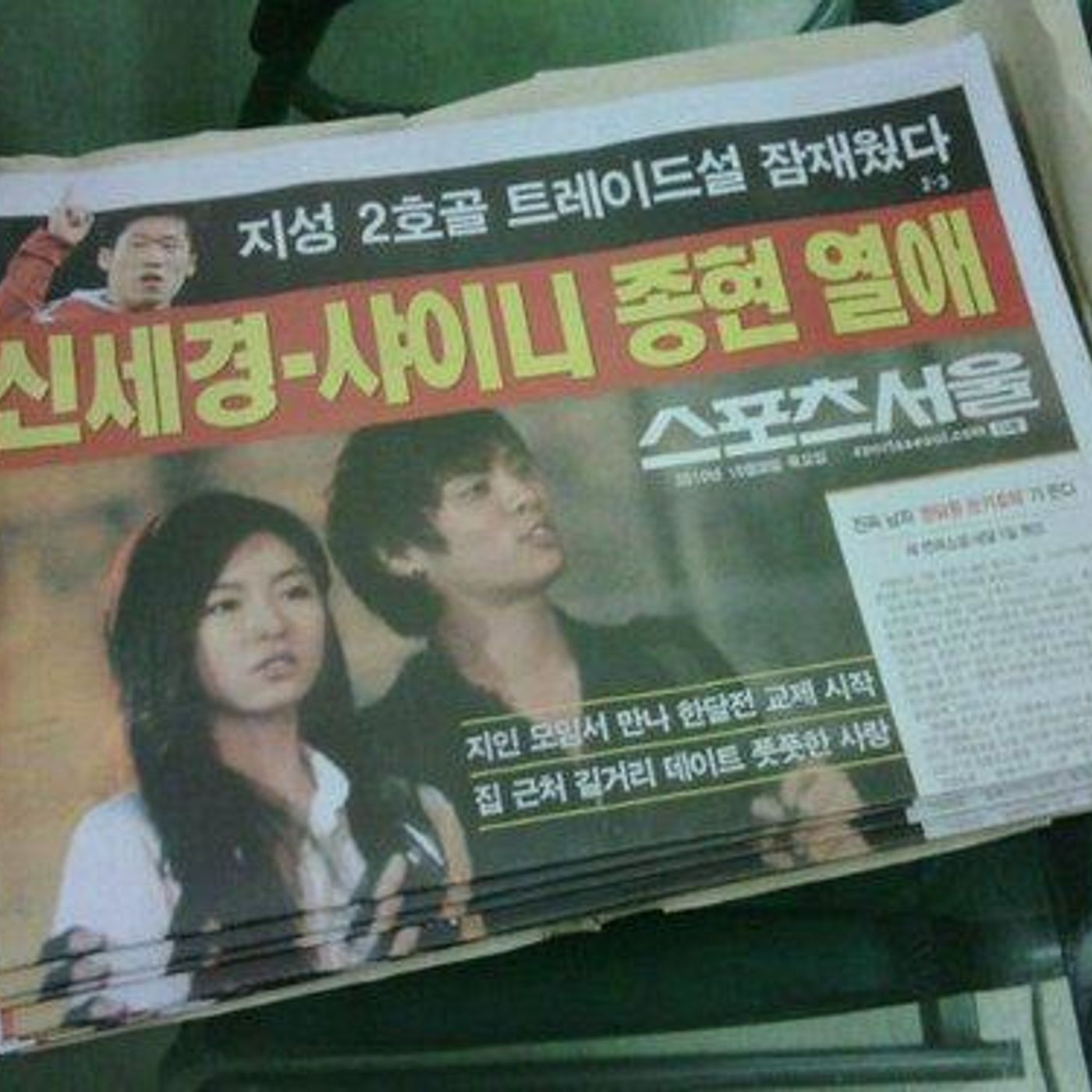
Radiolab
K-poparazzi
00:37:27
In the U.S., paparazzi are pretty much synonymous with invasion of privacy. But today we travel to a place where the prying press create something more like a prison break. K-pop is a global juggernaut - with billions in sales and millions of fans hanging on every note, watching K-pop idols synchronize and strut. And that fame rests on a fantasy, K-pop stars have to be chaste and pure, but also … available. Until recently, Korean music agencies and K-pop fans held their pop stars to a strict set of rules designed to keep that fantasy alive. That is, until Dispatch showed up. Taking a cue from American and British paparazzi, a group of South Korean reporters started hiding in their cars and snapping photos of stars on their secret dates. The first-ever paparazzi photos turned the world of K-pop upside down and introduced sort of a puzzle … how much do you want to know about the people you idolize, and when is enough enough? Produced by Matthew Kielty and Alexandra Young. Reported b...
Loading summary
Transcript154 lines
- [00:00]
Jad Abumrad
Your new home is now ready. Dr. Horton, America's builder has new homes that are ready today. With new construction communities in Ellensburg and throughout the Greater Seattle area, Dr. Horton has the right home for you. At Dr. Horton, we're still building with flexible living spaces, smart home technology and two and three car garages. More communities and more homes available every day. Find your new home in Ellensburg now ready@drhorton.com Dr. Horton, America's builder and equal housing opportunity builder.
- [00:30]
Robert Krulwich
When you give gifts, you like to knock them out of the park. Airwick Essential Mist Diffuser's chic design, long lasting scents and effortless setup makes it the kind of gift that feels complete the moment it's unwrapped. Perfect for your favorite dinner party host or that friend who loves a cozy night in. Plus, its cordless design means you can easily take this gentle fragrance with you from room to room. Airwick Essential Mist ready to gift Ready to uplift.
- [01:01]
Jad Abumrad
At Lowe's, loyalty is royalty.
- [01:03]
Robert Krulwich
With Christmas right around the corner, treat.
- [01:05]
Jad Abumrad
Yourself for less during the holiday season. Rewards members get early online only access to Black Friday doorbuster deals on Thanksgiving Day like the Hisense Side by side fridge. Just $799. Not a member. Join for free today. Lowes we help you save bowed $11.27.
- [01:22]
Robert Krulwich
Only on Lowes.com, member only.
- [01:23]
Jad Abumrad
Doorbusters and midnight Eastern loyalty programs subject to terms and conditions. See lowe's.com/terms for details.
- [01:28]
Robert Krulwich
Subject to change.
- [01:31]
Jad Abumrad
Oh, wait, you're listening.
- [01:33]
Robert Krulwich
Okay, all right.
- [01:35]
Jad Abumrad
Okay, all right.
- [01:38]
Robert Krulwich
You're listening to Radio Lab.
- [01:41]
Jad Abumrad
Radio Lab from wny. Are you surprised that this is so popular?
- [01:54]
Robert Krulwich
Am I surprised? You know what I'm surprised about? I'm surprised that this morning I was walking to the subway and I was like, man, I want to listen to my K pop playlist.
- [02:08]
Jad Abumrad
I guess I'm a little surprised at that myself. Just take a note, Robert.
- [02:17]
Robert Krulwich
Fantastic. And I did listen to it, and it was amazing. And it's just. It's undeniable. Okay.
- [02:24]
Jad Abumrad
I'm Jad Abumrad. I'm Robert Krulwich. This is Radiolab. Today. Oh, sorry. No, no, you go. No, no, please. Today a story from our reporter, Alex Young.
- [02:36]
Robert Krulwich
Hi. Hi.
- [02:37]
Jad Abumrad
Just to set it up, this story for us connects to one we did a few podcasts ago about Gary Hart and the moment when how we covered politics changed. This story is about a similar change that's happening right now right in front of our eyes in South Korea. So we're gonna travel a few thousand Miles. Yeah. And in this one, all the usual dynamics you would expect in this kind of story get totally flipped. It's not about politics this time. It's about music and fans. It's going to sound a little bit like a music piece, as you've already heard, but really, it's a puzzle. If you really admire someone and love them and so on, how much do you want to know about them, really? Yeah. Is it tell me everything or tell me nothing? And if someone does try and tell you everything, at what point do you say stop? Ready?
- [03:32]
Robert Krulwich
I'm ready.
- [03:34]
Jad Abumrad
Where should we begin?
- [03:35]
Robert Krulwich
Well, I think before we get to the moment that I am very excited about, I need to kind of give you guys a little bit of the world in which all of this is gonna happen.
- [03:45]
Jad Abumrad
Okay.
- [03:45]
Robert Krulwich
And so we're gonna start with this woman. When I tell my friends about it, I kind of describe it as a prison, but it's a prison you decide to walk into. Okay, so this. This is Sarah Wolfgang. I was a former trainee for a K pop group in Korea, and I'm here to talk about that. Sarah is Korean American. She was born in America, but I actually grew up in Korea. My parents both worked for the military. And you were living in Seoul? Correct. Okay. Yongsan, Seoul. And Sarah says that her whole K pop adventure, it all started for her because when she was growing up, I really never liked school. So my parents were kind of wanting me to do something else. They still wanted me to finish school, but they encouraged her to try out acting, to go to auditions, try out for school plays. And when I was in high school, about 15 years old, I think maybe 10th grade, her headshots ended up getting passed to a South Korean record company. And when we received the phone call, they were like, oh, hey, you wanna come in? Audition for a K pop group? And I was. I actually denied it. I really didn't want to do it. But then she thought, maybe this will lead to an acting job. So I went in, and then they're like, okay. They put me in front of a camera and they asked me to sing, and I'm not the best singer, but that doesn't seem to matter to K pop. Nope. Everything, you know, can be touched up really well. To make a long story short, they end up offering her a contract of more than five years. And as part of that contract, we were asked to move into the dorms.
- [05:24]
Jad Abumrad
The what?
- [05:24]
Robert Krulwich
There are these facilities that all the agencies have for their idols and training. They described it like a boarding school. All the kids kind of Lived together. And so I moved into the dorms with six or seven other girls. And it was here that Sarah says the company basically kept them under lock and key. Well, they didn't lock us in there, but we weren't allowed to leave. It's like one of those cockroach prisons or like those ant prisons. You can walk in, but you can't walk out. You have no choice.
- [05:53]
Jad Abumrad
Wait, why is she doing this again?
- [05:54]
Robert Krulwich
Well, Let me explain to you guys just, like, how phenomenally huge K pop is. K pop actually started in Korea in the early 90s, but, like, in the last five or so years, it has just spilled out into the rest of the world. And by some estimates, it was generating like around $5 billion a year. And then if you throw in like, K drama, K soap operas, which is called the Hallyu Wave, that Hallyu wave in 2012 was valued at 80,000. $3 billion.
- [06:37]
Jad Abumrad
Jesus. Really?
- [06:39]
Robert Krulwich
Yeah. And nearly all of this is based on a kind of fantasy, because K pop stars are, you know, products of fantasy world. That's Professor Sukyung Kim, theater studies at University of California, Santa Barbara. I study K pop industry. You know, stars are the embodied forms of manga and anime and all these unrealistic figures that don't exist in real life. So they have to have just a really beautiful face, beautiful body, you know, excessively long legs, broad eyes, pale skin, flowing hair. They are not the creature of this world. They shouldn't be. You know, they can only exist in fantasy world. In that fantasy, that's what they're trying to manufacture in those dorms. Like, they wanted us to lose weight so we would wake up at like 4 or 5am in the morning and then go hiking. Sarah says after the hike, they'd come back, eat breakfast, which usually consisted of lettuce. Then they'd have dance classes, singing classes. And then we had lessons of. I think they're called, like, humble lessons, where basically this guy would show up to the dorm and he would teach us to bow correctly. So, like, we would have to bow in unison so that we seemed as like one big happy group. They weren't allowed to have cell phones, computers. Nope. Or a relationship of any kind. All companies pretty much don't want you to be in a relationship. And in fact, Sukyung told me that in 2011, one of the members of 2ne1, which is a girl group managed by YG Entertainment, revealed that their management said they should not be dating before age 29.
- [08:27]
Jad Abumrad
What?
- [08:31]
Robert Krulwich
They shouldn't be dating because stars belong to the Public to the fans. And that was a thing. It was like a purity thing. You know, that pure, angelic virgin Madonna image. This, by the way, is k pop writer AJ park, editor at large@soompi.com like girl groups, they used to call them like nation's fairies. You know, they had this pure chast image to them and the boy bands too, because that being single makes them more marketable and appealing. And AJ says that's. That's the main takeaway. Of course, there's all kinds of cultural observations that you can make about this, but the main driver here is economic. The founders of K pop knew back in the early 90s that the fans would love the stars even more if the stars weren't just beautiful and perfect, but they also seemed somehow available. You would be surprised how many K pop stars come out and be like, oh, I've never had my first kiss yet. And they're like 19, 20 years old. Kind of like, I have it on my first kiss. Will it be with you? You know, feeding the fantasy kind of thing?
- [09:36]
Jad Abumrad
Wait, wait, wait. Is that all that different than America? I mean, didn't you feel weirder or stranger or somethinger when. What's when? Like, I don't know. Catherine Zeta Jones married that guy, whatever his name is.
- [09:49]
Robert Krulwich
Yeah, yeah.
- [09:50]
Jad Abumrad
I don't even want to think about his name because it changed things for me.
- [09:54]
Robert Krulwich
Me too.
- [09:54]
Jad Abumrad
I mean, I didn't have that feeling. I mean, I. I don't know. Come on, what about. Okay, you're always going on about Meryl Streep. Is she married, by the way, to me, but she doesn't know it. She is married to a very quiet man who's a sculptor, you know? How does that make you feel? I lurk around at his shows to see, like, what has he got that I don't have? No, but my point is that, that, I mean, American celebrity culture has fantasy woven in too. Of course. Of course it does.
- [10:19]
Robert Krulwich
Yeah. But there's a big difference in Korea, that fantasy world, it is so extremely controlled. Way more than in America, according to Soo Kyung Kim. And it's controlled not just by the agencies, but by the F. To the extent that it defies all of our common sense.
- [10:35]
Jad Abumrad
What do you mean?
- [10:36]
Robert Krulwich
I'll give you an example. This one I heard from Professor Sukyun Kim and also writer Leslie Timbako. I'm the editor in chief of Soul Beats. It's a big K Pop K Entertainment site. Okay. 2008, there was this new girl group, Girls Generation, called Girls Generation. Girls Generation was a nine member, all girls group that was like appearing on like music shows and like variety shows, being promoted as like the girl next door, all cute, and, you know, like the ideal girlfriend kind of idea. Leslie says that on some of these shows, Girls Generation would appear with boy bands, you know, who were also promoting at the same time. Groups such as Super Junior, SS501, and DBSK. Okay, so these three groups in like various shows, they would be like standing next to each other on stage.
- [11:38]
Jad Abumrad
Talking.
- [11:38]
Robert Krulwich
To each other during variety shows. And this is where we kind of get into the cultural stuff. There are several times when they're on stage with one or more of these boy bands and they're kind of taking the microphone from the host or whatever and kind of just nodding their head, whereas the boy bands are like doing these deep bows. Some of the fans are seeing this and they're thinking, that's disrespectful.
- [12:01]
Jad Abumrad
Why? Why would that be disrespectful?
- [12:03]
Robert Krulwich
Well, the thinking is that since Girls Generation is a new group, they should be bowing much more deeply than their sunbaes or their. Their seniors. Being a rookie group is a big deal in Korea because seniority is something that people hold very strongly. And so as a rookie, you have to show deference to the superior, you know, senior group.
- [12:22]
Jad Abumrad
So they're not showing respect, they're not.
- [12:24]
Robert Krulwich
Showing deference just in their bowing. That's how some of the fans were taking it. But I mean, aside from all that, and this is the key, is that some of the fans thought that the girls generation girls were flirting with some of the boy bands, like, you know, these little sidelong glances or teasing them. And so that interaction, seeing that fans were very, very, very upset about that. And so all the fans of the three groups, the three boy bands, got together and decided to do a Black Ocean.
- [12:55]
Jad Abumrad
What is that?
- [12:56]
Robert Krulwich
We're gonna get there. We're gonna get there.
- [12:57]
Jad Abumrad
Okay.
- [13:00]
Robert Krulwich
Fast forward to June 7, 2008. All of those bands that were on those TV shows are playing this big K pop concert. This event called Dream Concerte Dream Concert, a huge stadium show, like more than 40,000 fans. And Sukyong told me that there's one thing you need to know about fans, about K pop fans. At live events, they all have light sticks, and they come in different colors because each band has its own color. Super Junior, for example, has blue. And when they appear on stage, you see this sea of blue light sticks waving in support of their stars on stage. So they played for a while. And when SS501 comes out. The whole place just turns to light green. Show goes on. TVXQ comes to the stage. They were like the biggest band at the time. And then up go thousands and thousands of these ruby red glittery lights. And at some point, Girls Generation takes the stage. And here's the thing. Pretty much as soon as they walk on stage, all the people in the audience turned off their light sticks.
- [14:18]
Jad Abumrad
What?
- [14:19]
Robert Krulwich
Suddenly there was blackout in the whole auditorium. Everybody stops clapping, screaming, silence.
- [14:26]
Jad Abumrad
Are you saying like the whole, like, everybody.
- [14:28]
Robert Krulwich
40,000 people? Yes. And if you look at. Look up pictures of it, it was a stadium performance. The entire stadium was black.
- [14:36]
Jad Abumrad
No way.
- [14:36]
Robert Krulwich
Yes way. Look at this picture.
- [14:39]
Jad Abumrad
Oh, my God. What are we looking at? So this is. It's totally black. It's like a whole football stadium. This isn't Photoshopped or something?
- [14:49]
Robert Krulwich
No, because if you look down in the corner, you can kind of see the pink Girls Generation section.
- [14:54]
Jad Abumrad
Oh, yeah. There's a little boop.
- [14:55]
Robert Krulwich
Like a little boop of pink.
- [14:57]
Jad Abumrad
Pink is their color.
- [14:58]
Robert Krulwich
Yeah. And then everything else is. Girls Generation had to sing and dance to this silent crowd.
- [15:06]
Jad Abumrad
Had anything like this ever happened before?
- [15:08]
Robert Krulwich
Never.
- [15:08]
Jad Abumrad
Well, how on earth did they pull that off? How could you get this many people doing the same thing?
- [15:13]
Robert Krulwich
Okay, so the way that these shows happen, at least at these dream concerts, is that different sections of the auditorium belong to different fan groups.
- [15:22]
Jad Abumrad
Oh, so they sell it as zone seating.
- [15:24]
Robert Krulwich
Right. So the fan clubs actually get to, like, dole out the tickets. And during the show, there's this moment where some of the fan club leaders stood up and held up these signs that said, quiet.
- [15:38]
Jad Abumrad
Dude, this is that upsetting.
- [15:41]
Robert Krulwich
Yeah. What don't you understand about this, Robert?
- [15:45]
Jad Abumrad
It seems like. It doesn't seem like the most weighty sin I've ever heard. A little blink of an eye, a little leaning forward, a little failure to bow. But that's just the difference, I guess. Okay, wait a second. If you would allow me to frame for a second. So what have we learned so far? We've learned that this is a global phenomenon. This is a nightmare that we've learned. It's a total nightmare. It's a global phenomenon born of the nightmare of these stars who seem to be tightly held in check by everybody. The fans, the agencies, everybody. That's what we know so far. That's what we know so far. Okay.
- [16:15]
Robert Krulwich
And this sort of tight control is how it operated for quite a few decades. But. And this is why I wanted to do this whole story in the first place, just a couple Years ago, in walks this guy, and he just messes everything up. Radiolab Ganghae Nuida we sent an interpreter with a mic over to the Gangnam district in Seoul, Gangnam style, to speak with a guy named Lee Myung Goo. But, you know, he told me to call him Mr. Lee. Hello. Hello. Hey. I hopped on the line from our studio in New York. Want to get started? Yeah. Are you guys ready? Yep. Okay, so here's the story.
- [17:02]
Jad Abumrad
In the early 2000s, Mr. Lee, he.
- [17:06]
Robert Krulwich
Was working at a news organization called Sports Soul, which did all kinds of things, not just sports, they also did, like, business and entertainment. He was actually in charge of all the online news. And while he was there, I think it's fair to say that he took his reporting very seriously. Like, he always had this idea in his mind. I believe any contents that can be published, that's possible to publish should be freely published. That's the kind of culture that would be better to have. So he was a guy who believed in an independent press, but he also knew that there were certain things that he just couldn't report on, that certain subjects, like politics, were just dangerous.
- [18:01]
Jad Abumrad
How? Why? What are you talking about?
- [18:04]
Robert Krulwich
We actually need to back up a little bit, put this into a little bit of context. So between, like after the Korean War, between, say, the 60s and the 80s, South Korea was under a series of military dictatorships, and there was basically a censorship of the press. Things got a lot better in the 90s when they turned to civilian rule. But even today, the government still has a branch that goes around the Internet and deletes websites for their content. So this is like the world in which the press is living in. So getting back to Mr. Lee, it's 2010, he's at sports Seoul having dreams of independence, and he feels like politics is a little tricky. So he does what, to me, feels like a little bit of a Trojan horse move. Basically, he says, if I can't do independent reporting in politics, I'll just sneak it into celebrity news. So. So we looked on the Internet for Hollywood news and media in the UK. And looked at what they were doing.
- [19:19]
Jad Abumrad
Hey, Britney.
- [19:20]
Robert Krulwich
Miley, are you pregnant? So he studied the Sun, US Weekly, tmz.
- [19:26]
Jad Abumrad
Wait, he studied tmz?
- [19:28]
Robert Krulwich
That's what he said. You know, how they take their pictures? How close do they get? Because there wasn't paparazzi in Korea, and we decided to apply that to South Korea. So what kind of tactics did you use to get the photos in the first place? We decided the best way to do the reporting Is by hiding in the car. Their first target were these two stars. Jon Hyun, who is an idol from a boy band called SHINee, huge band. And an actress. Her name is Shin Se Kyung. First, you have to go through the information gathering process. So they tailed both these stars on and off. It's for one month.
- [20:17]
Jad Abumrad
Whoa.
- [20:17]
Robert Krulwich
To get a sense of their movement patterns, you know? And they figure out they have this pattern of meeting up in front of her apartment really early in the morning, like three in the morning or something. And they take these walks. So late October 2010, it came to a point where we could. We couldn't miss the opportunity. They call this. I guess they call this the D.
- [20:40]
Jad Abumrad
Day, the dating day, which I think.
- [20:43]
Robert Krulwich
Is probably pretty funny. And on this particular day, one of Mr. Lee's reporters stakes out the apartment, and the two stars meet up to take their walk. And you get the very first paparazzi photos, as far as we know, in Korea. Huh.
- [21:00]
Jad Abumrad
What do the photos look like?
- [21:01]
Robert Krulwich
So these photos are so what? I think they're so cute. It's these two idols, you know, walking down the street hand in hand under these yellow streetlights. And they just look like they're in their own little world. There's this one photo where he's pulling back her hair, and I think he's putting like, an earbud in her ear. And maybe they're sharing a song. They're listening to a song together. Aww. He's got her purse on his shoulder. You know, he's just holding her bag for her.
- [21:29]
Jad Abumrad
And what happens when the photographer guy runs up and goes, no, no, no, no. In their face?
- [21:33]
Robert Krulwich
Well, the guys at Sports Soul kind of drew this line. They're like, we're gonna keep back a distance from the celebrities.
- [21:40]
Jad Abumrad
Oh. So there's a silent click coming through a car window.
- [21:44]
Robert Krulwich
Right.
- [21:44]
Jad Abumrad
Do they see the guy?
- [21:45]
Robert Krulwich
No, they don't. And that's why these photos, it's not like that typical hands in the face photo. They just look totally serene.
- [21:51]
Jad Abumrad
At this moment, these two innocents are truly innocent. They have no reason to expect anyone to be out there at all.
- [21:57]
Robert Krulwich
Right. Because, you know, before this moment, there weren't paparazzi photographers stalking celebrities like this.
- [22:03]
Jad Abumrad
This is Eden right here. This is Eden.
- [22:05]
Robert Krulwich
Yeah.
- [22:05]
Jad Abumrad
This is just before the fall. Let's move on to the fall.
- [22:15]
Robert Krulwich
Mr. Lee said right before they published. And this has sort of become their tradition. All of the reporters got together and stayed in the office all night. And everybody was on pins and needles because, you know, they didn't know they didn't know what was going to happen. Are people going to be outraged? Are they going to be totally excited about this? They just had no idea what was going to happen.
- [22:36]
Jad Abumrad
And you also will have no idea what's going to happen until after the break. Hey, this is Mark from Astoria, Queens. Radiolab is supported in part by the Alfred P. Sloan foundation, enhancing public understanding of science and technology in the modern world. More information about Sloan@www.
- [23:03]
Robert Krulwich
Radiolab is supported by bilt. Nobody wants to pay rent, but if you have to, Bilt works to make it more worthwhile. By paying rent through Bilt, you can earn flexible points that can be redeemed toward hundreds of hotels and airlines, a future rent payment, your next lift ride, and more. But it doesn't stop there. You can dine out at your favorite local restaurants and earn additional points, get VIP treatment at certain fitness studios, and enjoy exclusive experiences just for built members. Every month, earn points on rent and around your neighborhood, wherever you call home, by going to joinbuilt.com Radiolab that's J-O-I-N-B-I-L-T.com Radiolab Hey, I'm Molly Webster, and this is an ad by BetterHelp. So it happens every year. The seasons are changing, the days are getting shorter, and basically, once it becomes dark outside of my window, I feel like the rest of the world disappears and I'm just alone and there's nothing left to do but watch television. This November, BetterHelp is asking everyone to reach out to our people. That could be your family, your friends, your neighbors, and to resist this call of the cocoon. And yeah, reaching out can take some courage. I've got text messages from January I haven't responded to. And you know what? I'm gonna write them back right now. Hi, sorry I've been missing. How are you? Why don't we all do this sooner? Therapy is the same way. BetterHelp makes it easier to take that first step. You just fill out a short questionnaire and they find a license. Licensed therapists who they think you'll like. Our listeners get 10% off their first month at betterhelp.com Radiolab that's betterhelp.com Radiolab.
- [24:46]
Jad Abumrad
Radiolab is supported by rippling Finance. Teams often spend weeks chasing receipts, reconciling spreadsheets and fixing errors across disconnected spend tools. This can be frustrating. And that's not software as a service. That's sad software as a disservice. If you've been thinking about replacing Stitched together tech stacks with one platform for all departments. Rippling can help Rippling is a unified platform for global hr, payroll, IT and finance, helping people replace their mess of cobbled together tools with one system. Designed to help give leaders clarity, speed and control. By uniting employees, teams and departments in one system, Rippling works to remove the bottlenecks, busy work and silos in business software. With Rippling, you can choose to run hr, IT and finance operations as one or pick and choose the products that best fill the gaps. Right now you can get 6 months free when you go to rippling.com Radiolab learn more at r I p p l-I n g.com Radiolab terms and conditions apply. Radiolab is supported by Planet Visionaries, the podcast created in partnership with the Rolex Perpetual Planet Initiative. Stay tuned for a trailer and subscribe wherever you get your podcasts.
- [26:07]
Robert Krulwich
I'm Alex Honnold, professional rock climber and founder of the Honl Foundation.
- [26:10]
Jad Abumrad
I want to let you know about.
- [26:11]
Robert Krulwich
A brand new season of the Planet Visionaries podcast in partnership with the Rolex Perpetual Planet Initiative. This is the podcast exploring bold ideas and big solutions from the people leading the way in conservation. Join me in conversation with the likes of climate champion Mark Ruffalo, biologist and photographer Christina Mittermeier, and one of the most successful conservationists of our time, Chris Tompkins. Join us on Planet Visionaries wherever you get your podcasts.
- [26:39]
Jad Abumrad
Jed Robert, Radiolab Back to our story from reporter Alex Young.
- [26:43]
Robert Krulwich
So when we left off, we were talking about Lee Min Gu. Mr. Lee and he and his team had just captured the first paparazzi moment in South Korea. They had taken a picture of these two stars. The photos were pretty dark and super grainy. Totally paparazzi style, like shot in the night, probably from a zoom lens like thousands of yards away. It was hard to tell the photographs really. It says that they all got together in their office, they were just about to publish. No idea what was going to happen. And when we first published them, nothing.
- [27:24]
Jad Abumrad
Really. Yeah, seriously.
- [27:27]
Robert Krulwich
Oh come on. I'm kidding. The general response was. People went crazy. Oh my God. Oh my goodness. Oh my goodness. The photos went viral. It just took the whole country. There was an incredible amount of web traffic, so much that our servers were breaking down.
- [27:57]
Jad Abumrad
So people clicked.
- [27:59]
Robert Krulwich
Oh yeah. When it all comes down to it, people really want to know. At first they just, you know, they just inundated the website trying to look at these photos. But then they were like, oh, oh no. So then they rushed over to the fan sites and four of the websites from the boy band. The guy crashed Shin Se Kyung's website, which is called a mini humpy page. It just gets flooded with comments, numerous vile comments about how the fans felt betrayed. People were like, posting defaced pictures of her in typical sexist ways. She got the brunt of it. This is always the way it is, right? Just like in America. That's the way it happens in Korea. You know, when I talk to Lee Min Gu, he was the first one to recognize that usually when this kind of scandal breaks, it's the woman who gets it worse.
- [28:53]
Jad Abumrad
Yeah. Yeah. So how did the agencies respond?
- [29:01]
Robert Krulwich
Shock in the beginning could tell that the companies were not prepared because their official statement would be like, we need to talk to the celebrity about this. Or we had no idea this was going on. And you could see that the companies were struggling. There was actually a couple times later on where, God, the fans got really crazy and they would actually protest at their live shows or whatever. And then pretty much the next day after the protest, the idol at the center of that scandal would just kind of vanish. Like, they would just take an indefinite hiatus from all their promotional activities.
- [29:38]
Jad Abumrad
Like, you mean the agencies just yanked them?
- [29:40]
Robert Krulwich
I mean, yeah, that was the suggestion, yeah.
- [29:43]
Jad Abumrad
Did the agency say anything about that to you?
- [29:45]
Robert Krulwich
No one would go on the record with me, but I did talk to some people over email, and they said that, you know, when fans react this way, they're kind of forced to take drastic action.
- [29:56]
Jad Abumrad
So they kind of confirmed that they were disappearing idols.
- [29:59]
Robert Krulwich
They confirmed with me that they were taking action. But here's what ends up happening. Lee Min Goo says, you know, that very first scandal that they broke, yeah, they got a lot of backlash. But it showed them that what worked in the foreign media could also work in South Korea. So it gave us strength to keep experimenting. So in 2011, Lee Min Gu and like a couple of the people from sportsl, they break off and they form this company called Dispatch. And then the following years, 2012, 2013, this is really important chunk of time where they just start pumping out scandals. We must have done more than 10 stories, small and big. Do you want to hear the list?
- [30:53]
Jad Abumrad
I do want to hear the list.
- [30:54]
Robert Krulwich
First off, there's park jiyeon. She's dating Mr. P. Then there's Buhara, who's with Junhyung. Then there's Taekyeon, who gets caught with Jessica Rain dating Kim Tae Ki. And you have Yuna dating Lee Seung Gi Sully and Chisa. That was like a crazy one. And of Course, we all remember Baekhyun and Taeyeon.
- [31:12]
Jad Abumrad
I don't remember.
- [31:12]
Robert Krulwich
Oh, I remember. But according to Sukyung Kim, you had so many scandals in such a short period of time, headlines after headlines, headlines at such a frequent rate that we fans became somehow desensitized by this news. It shook us. And I'm gonna put myself in there now. Yeah, it shook us. According to writer AJ park, what you saw after this crazy onslaught of scandals is, well, a couple things. So the paparazzi became a trend, something that all the Korean entertainment news started picking up. There starts to be all these other paparazzi companies that come out competitors. Exactly. Just like dispatch, but with a different name. But the craziest part, I think, is that you start seeing celebrities tiptoeing out and telling the truth about their lives. Little by little, the celebrities would get more comfortable about revealing it themselves. For instance, in 2012, on this talk show, Kwang Hee, who is a member of this K Pop boy band, he made waves because he explained that celebrities dating carts, in order to get away from all these new paparazzi, they park by the Han river and they have their dates there. And there are parking lots where multiple celebrities park and have their secret dates inside the car. This is something that people always sort of suspected was the case. But it was kind of like the first time. It was just out in the open like that. And I think. I think that the audience reaction is, like, super telling because you can hear it in the tape.
- [32:55]
Jad Abumrad
They're laughing, so he's breaking the spell. And what you'd expect is.
- [32:59]
Robert Krulwich
Yeah, what you get is casual laughter.
- [33:03]
Jad Abumrad
So that's a sea change. That's a real sea change. So. And this happened in just two years, you're saying?
- [33:07]
Robert Krulwich
We probably have to say five years.
- [33:09]
Jad Abumrad
Yeah. But still, I mean, that's. See, this actually does make me think. Well, first of all, it's interesting to think of paparazzi as liberators in this case.
- [33:17]
Robert Krulwich
Totally, Totally.
- [33:18]
Jad Abumrad
Because we used to thinking of them as, like, scum. But I mean, if you pan out, here's literally the thought I'm having. Like, there's a tendency because we're dumb Westerners to sort of see what happens in places like Korea as being very different from us, like, culturally separate.
- [33:32]
Robert Krulwich
Yeah.
- [33:32]
Jad Abumrad
But to hear that they change that quickly makes me think in some way that we're all very similar. Or maybe we're all headed to the same place and, like, tabloid is the great equalizer. And maybe we were all gonna just end up, all of us in post Kardashian hell, like, literally, like, this is how far they traveled in five years. Then literally in another five years, you will have the Kardashian family of Korea.
- [33:57]
Robert Krulwich
Right, right, right.
- [33:58]
Jad Abumrad
Like, dishing all the time, making sex tapes on their own, whatever it is.
- [34:03]
Robert Krulwich
I also thought the same thing. You know, being from America, you're like, well, this is just inevitable. But I actually don't think so anymore. AJ told me a story that really changed my mind. It was like, it was our Watergate. It was our K Pop gate. It was. It changed everything. This story, it revolves around Aili. This one young female solo artist, Aili, she's just hugely popular. I mean, they actually call her the Korean Beyonce. And in 2013, she was just killing it. Come on, get dirty. By this point, Ailee has a couple albums out. Her YouTube videos have millions and millions of views. But then November 2013, a bomb drops. What happens is this guy cold calls dispatch. Mr. Lee actually picks up, and he recorded this phone call between them. And the guy tells him, I have nude Pictures of Ailee. Mr. Lee tells the guy, we need to know how you obtain these. The guy says, I received them.
- [35:29]
Jad Abumrad
From who?
- [35:31]
Robert Krulwich
The singer. The singer gave them to you? Yes. Why? I was her boyfriend.
- [35:43]
Jad Abumrad
What is Exactly.
- [35:44]
Robert Krulwich
So he's calling dispatch to see how much these nude photos are worth. And when I was talking to Mr. Lee about this, he said that in that moment when he was on the phone as a reporter, I was greedy about the story and the information. He said that he wanted those pictures. But what he ends up telling the guy is, We don't want your photos. And then if you keep listening to the phone call, you can hear him. Start getting really upset with the exact boyfriend. Like, this is not right. You're crossing a line. So to make a long story short, Dispatch turns down the photos. And the photos somehow make their way to a competitor's website. This one American K Pop website called All K Pop, who was pretty big. They were probably the number 1k pop site at that time in the world. Or for English speakers.
- [36:50]
Jad Abumrad
For English speaker. And they publish the naked picture.
- [36:53]
Robert Krulwich
They're the ones who publish the naked pictures. Can't remember if they censored it or not, but if they did, it wasn't a very good job, like you could see. So the photos come out, and what would you expect to happen?
- [37:05]
Jad Abumrad
Some anger, maybe a little bit. And then basically, people just click on the pictures.
- [37:09]
Robert Krulwich
No, what actually happens is instantly the entire K Pop world bands together Black Ocean style, and just comes out against all K pop, the agencies, they start threatening to sue. This competitor website starts this boycott, and in just a few days, the figure was like, 22,000 Twitter followers. Just stopped following them. Really, Their. Their reputation just tanks. It was a warning to them, you know, don't mess with us. And so they really haven't. I mean, I haven't really followed them in a while, but they haven't recovered since then. But what I think is the most surprising part of this is just three days after the photos come out, it was the night of one of South Korea's biggest award ceremonies called the Melon Music Awards. And, you know, scheduled for that night, Ailee was supposed to receive one of these top 10 artist of the year awards. And I think to everyone's surprise, she actually showed up in about two hours. In, You know, they call her name, and she stands up, walks the center stage, goes to the presenters. She takes a bow, and she looks. I think she looks fraught or at least overwhelmed. But then. And she faces the crowd. At one point, her face kind of cracks. She puts her head in her elbow, and she starts crying. She says, it really means a lot to me that you supported me, that. That you believed in me despite everything that's going on. Thank you. And then. And she walked off stage. For me, this story shows that they're gonna draw a line in the sand that's different from ours for now or.
- [39:51]
Jad Abumrad
For a long time. Or can you say.
- [39:54]
Robert Krulwich
I mean, when I asked AJ park the same question, do you think that it's gonna go the way of the West? I mean, she said, no way. I don't think it's ever gonna be that way. Why not? I mean, culturally, Koreans, we're a little more strict. And also. I think there's also a part where we look at the US and we're like, come on, guys. You know, like, we see them as an example of. Let's not totally go there. Yeah. So, like, the US Is a cautionary tale or something. Yeah. Like, don't ever get to that point, guys.
- [40:26]
Jad Abumrad
And maybe this is one of those ones where you really wonder, like, is there a cultural difference that runs deep enough that you can say shh. To your. The part of you that I want to know, I want to see, I want to hear. And I. You think that ultimately there might be a culture.
- [40:42]
Robert Krulwich
No, no.
- [40:42]
Jad Abumrad
Something. Part of me thinks that is as the. As the. When it gets so easy to know, the most intimate details about anyone will all give in. I know there's part of me that just feels that way about humans.
- [40:54]
Robert Krulwich
Yeah, I don't know. I have to go with Robert on this one.
- [40:57]
Jad Abumrad
Well, I'm. I have to go with Ailey.
- [40:59]
Robert Krulwich
Oh, me too.
- [41:01]
Jad Abumrad
Thank you, Alex.
- [41:02]
Robert Krulwich
Thank you.
- [41:05]
Jad Abumrad
This piece was produced by Matt Kielty with Alex Young, reported by Alex Alex and also Brenna Farrell. Thanks to our guests Sukyung Kim, AJ Park, Leslie Tombako, Lee, Myung Goo, Sarah Wolfgang, and very special thanks to stringer and interpreter Harryun Kang, Joseph Kim, Jeremy Bloom, Jeon Choi and the K pop supergroup Crayon Pop, who happens to be on Alex's playlist, Spotify playlist, which also has like K pop favorites from the entire staff. That's@radiolab.org.
- [41:45]
Robert Krulwich
Start of messy. Hi, it's Leslie Tumbako. I was calling about the radio of credits. Hi, this is AJ from Sufi. Hi, this is Kim calling. I don't know if it's too late, but I'll just go ahead and maybe do it. Here goes. Radiolab is produced by Jada Bumrat. Our staff includes Simon Adler, Brenna Farrell, David Cable, Su and Keith, Matt Kielse, Robert Kohlik, Andy Mills, Natif Nasser, Chelsea Padgett, Arianne Wax, Molly Webster, Jordan Wheeler and Jim York, with help from Alexander, Lee Young, Tracey Hunt, Stephanie Tan and Micah Loinger. Our fact checkers are Eva Dasher and Michelle Harris. Yay. Radio Loud. To hear the message again, press two. End of message.