← Radiolab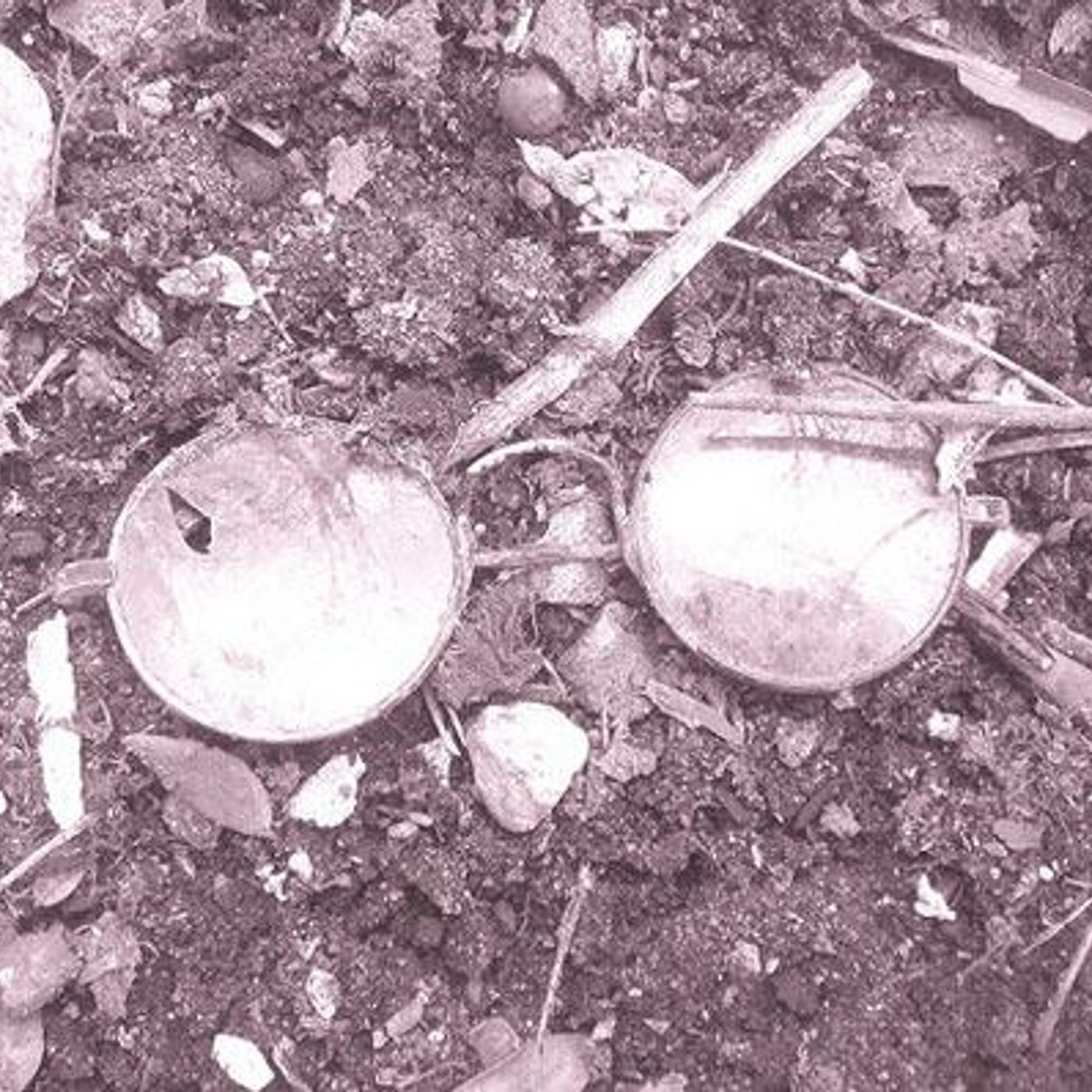
Radiolab
Killer Empathy
00:18:20
Sometimes being a good scientist requires putting aside your emotions. But what happens when objectivity isn't enough to make sense of a seemingly senseless act of violence? In this short, Jad and Robert talk to an entomologist about the risks, and the rewards, of trying to see the world through someone else's eyes.
Loading summary
Transcript160 lines
- [00:00]
Jeff Lockwood
Introducing Fidelity Trader Plus. With customizable tools and charts you can access across all your devices, Try our most powerful trading platform yet@fidelity.com TraderPlus investing involves risk, including risk of loss. Fidelity Brokerage Services, llc. Member nyse, sipc.
- [00:15]
Jad Abumrad
Oh, wait, you're listening.
- [00:16]
Tamara Carboni
Okay.
- [00:18]
Jeff Lockwood
All right.
- [00:19]
Jad Abumrad
Okay.
- [00:20]
Jeff Lockwood
All right.
- [00:22]
Radiolab Narrator
You're listening to Radiolab, Radio Lab shorts.
- [00:27]
Jeff Lockwood
From WNYC.
- [00:32]
Radiolab Narrator
And npr.
- [00:34]
Jad Abumrad
Three, two, one. Hey, I'm Jad Abumrad.
- [00:36]
Jeff Lockwood
I'm Robert Krulwich.
- [00:37]
Jad Abumrad
This is Radiolab, the podcast. And today on the podcast. Well, first we've got a story from our old producer of ours, Lulu Miller. She's not old. She just has been with us and now is at school. Right, Exactly. She's actually kind of young. Chronologically. She's not old, she's old to us. She's an old soul. In any case, this is a story about some of the sticky issues that result when you try and empathize with another being. Yeah, it's a very different story than one we've ever told. It started for Lulu when she spoke with them. Well, she'll handle the introductions.
- [01:09]
Radiolab Narrator
Can you introduce yourself?
- [01:12]
Jeff Lockwood
Award winning author, fantastic husband.
- [01:16]
Radiolab Narrator
Dad of the Year.
- [01:17]
Jeff Lockwood
Dad of the year. No. I'm Jeff Lockwood. I'm a professor at the University of Wyoming.
- [01:22]
Radiolab Narrator
Jeff is an entomologist.
- [01:23]
Jad Abumrad
You mean like a bug guy?
- [01:25]
Radiolab Narrator
He's a bug guy. And mostly he studies crickets and grasshoppers. And this story involves a kind of cricket that's, well, different. The gorillas.
- [01:34]
Jeff Lockwood
Yeah, the gorilla critics. Yeah.
- [01:36]
Radiolab Narrator
And are they related to katydids?
- [01:37]
Jeff Lockwood
The way to think of a gorilla Critiddid is like a cricket on steroids.
- [01:47]
Radiolab Narrator
Okay.
- [01:47]
Jeff Lockwood
It's sort of like the Hulk Hogan of crickets.
- [01:50]
Radiolab Narrator
First of all, he says they're a little bulkier than your average cricket.
- [01:53]
Jeff Lockwood
And they tend to have very strong jaws. Very strong jaws.
- [01:56]
Radiolab Narrator
And mandibles that are really sharp, sort.
- [01:59]
Jeff Lockwood
Of like a serrated knife.
- [02:01]
Radiolab Narrator
And most of all, they're vicious.
- [02:03]
Jeff Lockwood
They all had to be caged separately. If you put them together, they would.
- [02:06]
Radiolab Narrator
Fight to the death.
- [02:07]
Jeff Lockwood
Yeah.
- [02:08]
Radiolab Narrator
Wow.
- [02:08]
Jeff Lockwood
And so when I would go in.
- [02:09]
Radiolab Narrator
In the mornings and reach into one of their cages, as soon as they saw him coming, they'd fly into this rage.
- [02:21]
Jeff Lockwood
It's really sort of a showstopper. They'll sort of rear up on their.
- [02:25]
Radiolab Narrator
Hind leg, beat their abdomens on the ground, flare out their wings, and then clamp onto his fingers, they would draw blood. Wow.
- [02:36]
Jeff Lockwood
So I used this, this glass probe on the big boy. At least until the point at which he snapped off the end of the glass rod. Holy moly. So I ended up with, actually there were two that were very large. I would just take their cage when I went in and pop it in the refrigerator and go get a cup of coffee. And within 15 minutes, because insects are cold blooded, they would be anesthetized by the cold and I could lift them out.
- [03:00]
Radiolab Narrator
That's cheating.
- [03:01]
Jeff Lockwood
Well, that was my solution for them. The little guys I could manage, the big ones, a little bit of chill in the morning is all it took.
- [03:10]
Radiolab Narrator
So the point is, these creatures were completely alien to him. There's like nothing about them he can relate to. But over time, the more he studied them, the more he started noticing things that made them seem way less foreign.
- [03:27]
Jeff Lockwood
See, I kept these in these, for.
- [03:29]
Radiolab Narrator
Example, as soon as he'd put one into a new cage, it would make itself a little nest.
- [03:33]
Jeff Lockwood
And once it has that little nest.
- [03:35]
Radiolab Narrator
Built, that's home in a very real way. Because by moving them around to different.
- [03:40]
Jeff Lockwood
Cages, he soon realized that they could differentiate their nests.
- [03:45]
Radiolab Narrator
They can actually tell the difference between their nest and another.
- [03:48]
Jad Abumrad
And how do they do that?
- [03:49]
Jeff Lockwood
They secrete a pheromone, a chemical, and each cricket is able to self identify its own odor.
- [03:56]
Radiolab Narrator
Whoa.
- [03:57]
Jeff Lockwood
It gave me the sense, and I think there's something to this, that they had a kind of capacity to recognize self.
- [04:05]
Radiolab Narrator
Oh, interesting.
- [04:06]
Jeff Lockwood
We don't see that much in insects, but they had what appears to be a capacity to say, this is mine.
- [04:14]
Radiolab Narrator
And then he began to think differently about that crazy rage too. Because if you think about it, here's this creature, it's completely vulnerable to attack.
- [04:24]
Jeff Lockwood
They really don't have a very good defense for themselves. They don't excrete nasty chemicals, they don't sting, and it can't fly, so it's not going to go flying away either.
- [04:30]
Radiolab Narrator
So maybe that rage is their only strategy.
- [04:34]
Jeff Lockwood
Which again drew me into thinking that I understood them.
- [04:37]
Radiolab Narrator
Perhaps these little guys were more like.
- [04:39]
Jeff Lockwood
Me than many other insects that I had worked with.
- [04:45]
Radiolab Narrator
So he grew to really like them. But then one day, I'd been working.
- [04:50]
Jeff Lockwood
With this particular gorilla, critid, trying to.
- [04:53]
Radiolab Narrator
Move him from one cage to another.
- [04:54]
Jeff Lockwood
And he was agitated and had decided to go on the offensive, which involved trying to come out of the cage. So he was scrambling up the side.
- [05:02]
Radiolab Narrator
Of the cage and to keep him from getting out, Jeff slammed the lid.
- [05:06]
Jeff Lockwood
Down as he was just at the.
- [05:08]
Radiolab Narrator
Edge and caught him between the lid and the edge of the cage.
- [05:12]
Jeff Lockwood
And I quickly lifted the lid up and he fell back into the cage. And I looked down at him and what had happened was I had ruptured his abdomen.
- [05:24]
Radiolab Narrator
A split right down his belly.
- [05:26]
Jeff Lockwood
Jeez. And some of the viscera and kind of globule of yellow fat was leaking out, oozing out of his body. I. I felt guilt. And then, of course, I. I felt sorry for an animal. But what really struck me was what he did next, which was curl his head downward toward his abdomen, pause for a moment, and then began consuming his own. Consuming the viscera that was oozing out of his body. And so he was literally cannibalizing himself.
- [06:12]
Jad Abumrad
Wow, that is disgusting.
- [06:14]
Jeff Lockwood
It was horrifying. I had sort of felt like I had come to know them then this, this was just so out of the imaginable.
- [06:26]
Radiolab Narrator
But the instant that word popped into his mind, unimaginable. He had this sort of Pavlovian reflex. And he thought of this guy, an old professor of his, Dr. LaFarge. LaFarge.
- [06:39]
Jeff Lockwood
He was one of my mentors at Louisiana State University.
- [06:42]
Jad Abumrad
You said this was a teacher of his?
- [06:44]
Radiolab Narrator
Yep. Insect behavior.
- [06:45]
Jeff Lockwood
He was one of the younger faculty members when I was there. Mid 30s, slight of build, but incredibly intense.
- [06:53]
Radiolab Narrator
He's kind of an expert in animal violence. And, and the thing he harped on over and over, the thing he was trying to pound into their brains was.
- [07:02]
Jeff Lockwood
Objectivity to separate one's emotions and interests from the object of study. And he had these wire rimmed glasses. And I remember if he would ask.
- [07:14]
Radiolab Narrator
You a question like, why does the gorilla critid do its crazy war dance?
- [07:18]
Jeff Lockwood
And you tried sort of reading in will intention mental states, maybe because it's.
- [07:23]
Radiolab Narrator
Angry or scared, he would just drop.
- [07:25]
Jeff Lockwood
His chin and look over the top.
- [07:27]
Radiolab Narrator
And tear you apart.
- [07:28]
Jeff Lockwood
His job in the classroom was to make us good objective observers.
- [07:33]
Radiolab Narrator
And Jeff, Jeff stayed in touch with him over the years.
- [07:36]
Jeff Lockwood
I wanted to be good at this.
- [07:37]
Radiolab Narrator
As he set up his own lab.
- [07:39]
Jeff Lockwood
You know, I had a stake in earning his respect.
- [07:43]
Radiolab Narrator
And so that day, as he's watching the gorilla critid consume its own guts, he's thinking, okay, what would Lafarge see in this?
- [07:50]
Jeff Lockwood
So my sense through my research is that what this gorilla critid had done was perhaps to have detected the odor of its own fats. It sort of drew the conclusion that this must be something good to eat without sort of grasping that it was its own self. The smell of its own fat triggered a feeding behavior that. That's highly adaptive, you know, to feed on fat. Fats are very hard to get hold of out in the world.
- [08:17]
Jad Abumrad
And.
- [08:17]
Jeff Lockwood
And so when you smell fats, it's, you know, it's like us and donuts, right?
- [08:22]
Radiolab Narrator
Yeah, go for it.
- [08:23]
Jeff Lockwood
It triggers feeding. Yeah, it triggers feeding.
- [08:25]
Jad Abumrad
So clearly these things don't quite have a sense of self.
- [08:28]
Jeff Lockwood
Right. So maybe they're not just like me.
- [08:31]
Radiolab Narrator
Which was always Lafarge's point. Don't put the creature in your box. It doesn't want to be there.
- [08:36]
Jeff Lockwood
It's sort of a moral danger almost, to sort of not allow the organism to be what it is. It's almost to sort of possess it or to own it. And to really treat the insects sort of with a. With a deep respect. Right. Is oddly enough, to treat them objectively. You know, he was one of the professors who actually engendered a kind of good fear. And he was the kind of person who you. Who you wanted to please.
- [09:15]
Radiolab Narrator
Is that better?
- [09:16]
Tamara Carboni
A little louder?
- [09:17]
Radiolab Narrator
Yeah, a tiny bit.
- [09:19]
Tamara Carboni
Is that okay?
- [09:20]
Radiolab Narrator
Oh, that's great.
- [09:21]
Tamara Carboni
Great.
- [09:22]
Radiolab Narrator
But then, years later, something happened that challenged Jeff's ability to do this, to be the kind of scientist that Lafarge wanted him to be. We're recording over here, and there's really only one person who can tell us this part of the story. Will you introduce yourself?
- [09:37]
Tamara Carboni
Okay. My name is Tamara Carboni.
- [09:39]
Radiolab Narrator
Tamara is actually not a scientist. She worked for the Louisiana State Museum, and back in 1989, she and Dr. Lafage, whose first name is also Jeff, were working together on this termite problem. The termites were getting really bad in the French Quarter, and it was her job to preserve the historic homes, and Jeff was studying the termites.
- [10:00]
Tamara Carboni
I never imagined that I would be fascinated by termites, but I was. So he made it fascinating. Yeah, fascinating.
- [10:10]
Radiolab Narrator
But then one night in July, July 25, they met for dinner to talk about how the project was going, and.
- [10:17]
Tamara Carboni
We were walking home. Well, he was walking me to my house around 10, 10:30 at night. And I think it must have been raining or there was a threat of rain because. Because Jeff was carrying an umbrella. And I could hear footsteps behind us, very determined sounding footsteps. And we got to a corner across from my house, and at that point, this person came around us in front of us, and he said, close your eyes. And in the process of closing my eyes, I saw the gun.
- [11:01]
Radiolab Narrator
So she closed her eyes, and a second later, she felt a tug on her purse.
- [11:06]
Tamara Carboni
I could feel him take hold of the straps, and I was not going to resist. And as I felt him do that, I could hear Jeff say, don't do.
- [11:18]
Radiolab Narrator
That at that instant.
- [11:25]
Tamara Carboni
I don't remember the shot at all. You know, I. I felt Jeff move. And I guess at that point, I opened my eyes. This guy had already run, Never took my purse. I saw Jeff running toward my house, and I just ran after him. I had no idea he was shot. But he got onto the porch and he collapsed on his back. And at that point, he was gushing blood. And I was trying to get Jeff to understand that help was coming. And I kept saying, you're gonna be okay. They're on their way.
- [12:10]
Radiolab Narrator
And did he say anything?
- [12:13]
Tamara Carboni
He couldn't talk. He just. He had this kind of stare. And I just watched him die.
- [12:24]
Jeff Lockwood
The news came by a phone call. And it just seemed, you know, it was one of those classic unreal moments. Something about this, you know, must be wrong. It wasn't Dr. Lafarge. He wasn't really killed. It seemed particularly hard to grasp.
- [12:42]
Tamara Carboni
You know, one minute I'm with this vital person, and the next minute, he's dead.
- [12:48]
Jeff Lockwood
Sadness, anguish, confusion.
- [12:50]
Tamara Carboni
It was hysterical, crying. I was in shock.
- [12:54]
Jeff Lockwood
They never found his killer, never found.
- [12:56]
Radiolab Narrator
Out anything about him, who he was, why he would do this.
- [13:00]
Jeff Lockwood
It was just this seemingly senseless act.
- [13:04]
Radiolab Narrator
And that's how Jeff understood it for years, that it was senseless. But over time, something odd started to happen. Lafarge started appearing in his brain, telling him that that word wasn't good enough. And he began to ask himself again.
- [13:24]
Jeff Lockwood
How would Dr. Lafarge want me to think about this?
- [13:27]
Radiolab Narrator
How would he think about his own death? Okay, so I wonder if you do have the essay with you. So he writes an essay. Will you read the last four paragraphs of. Of the essay?
- [13:39]
Jeff Lockwood
I will. 1, 2, 3, 4. Right. The year after I left Louisiana and came to Wyoming as a freshly minted PhD.
- [13:49]
Radiolab Narrator
The first thing he does is he takes Lafarge's attitude on violence.
- [13:53]
Jeff Lockwood
Violence is the baseline strategy for most encounters between and indeed within species.
- [13:58]
Radiolab Narrator
That it's not some evil, outlying thing, but instead a baseline strategy for all animals. And in that light, he looks at the actions of that night sort of dispassionately. First he figures this kid was probably mugging them because he was poor, hopeless, poor, angry, scared.
- [14:17]
Jeff Lockwood
The woman became tangled in the strap.
- [14:19]
Radiolab Narrator
Dr. Lafarge, having his own instinctual reaction, stepped between them, said, don't hurt her.
- [14:25]
Jeff Lockwood
You can have the purse. I can picture him doing this.
- [14:28]
Radiolab Narrator
But perhaps that action itself scared the kid.
- [14:31]
Jeff Lockwood
The young man drew a gun and fired point blank.
- [14:35]
Radiolab Narrator
I showed the essay to Tamara.
- [14:37]
Tamara Carboni
Yeah, well, no, that's not. I Mean, I don't think. And I don't know if he stepped forward or not. You know, again, my eyes were closed. I could feel some kind of movement. I certainly don't think he stepped between. There wasn't enough space for him to step between us.
- [14:51]
Radiolab Narrator
For Tamara, who's been over the event a million times in her head, doesn't add up so easily. First of all, when Dr. Lafarge spoke.
- [14:59]
Tamara Carboni
To the kid, it wasn't exactly a command. It was more like, don't do that. It was like, don't be an idiot. Don't do that.
- [15:06]
Radiolab Narrator
It wasn't really threatening. It was more like, look, logically, let's not do this. And while she gets that the kid might have been scared and had not been intending to shoot, if he never.
- [15:18]
Tamara Carboni
Ever could imagine himself shooting somebody, he wouldn't have had a loaded gun. I can't relate to this person. I can't imagine doing violence to another human being or killing them. I can't relate to that at all.
- [15:37]
Radiolab Narrator
And over the years, her friends and family, co workers, tried all different kinds of ways to help her make sense of it. Nothing really helped.
- [15:45]
Tamara Carboni
But there was someone that I worked with, my boss, actually, who had been in Vietnam, and he took me aside and he said, you know, you'll never understand this.
- [16:03]
Radiolab Narrator
You're not going to understand it. Yeah, like, don't even try.
- [16:07]
Tamara Carboni
I don't think there's any sense to be made out of it.
- [16:10]
Jeff Lockwood
If we just stop there, then it's to say that it's somehow unnatural or inhuman. In fact, in a weird kind of way, it's profoundly human.
- [16:22]
Tamara Carboni
There's no way I can understand it.
- [16:25]
Radiolab Narrator
In the end, the essay itself kind of falls short, and Jeff admits that.
- [16:30]
Jeff Lockwood
It just isn't sufficient.
- [16:32]
Radiolab Narrator
But he says there is a way of understanding this event. He just hasn't gotten there yet. But it is out there. Yeah, it has to be.
- [16:41]
Jeff Lockwood
And Dr. LaFarge would have, I think, said this as well.
- [16:50]
Radiolab Narrator
But for the moment, I think I.
- [16:51]
Jeff Lockwood
Can say that I understand another being's eating its own, leaking entrails at a level that I can't understand one of my fellow beings pulling the trigger and. And killing a man that I love.
- [17:38]
Jad Abumrad
Thanks to Lulu Miller and to Jeff Lockwood. His original essay first appeared in Orion Magazine. It's called the Nature of Violence. Definitely worth a read. Yeah, see, I. I'm of the school that says that you can't really make.
- [17:50]
Jeff Lockwood
Sense of it, violence like that.
- [17:52]
Jad Abumrad
This is just a hint of the danger of living in a profoundly disordered world, but looks. But I think I'm of the school, though, that you have to try to make sense, even if there's no sense to be made.
- [18:09]
Jeff Lockwood
This is Matt Pritchard, a Radiolab listener in Pittsburgh, Pennsylvania. Radiolab is supported in part by the Alfred P. Sloan foundation, enhancing public understanding of science and technology in the modern world.
- [18:23]
Jad Abumrad
More information about Sloan@www.sloan.org.
- [18:29]
Jeff Lockwood
Cool. I think that's it. Thank.
- [18:36]
Radiolab Narrator
You.