← Radiolab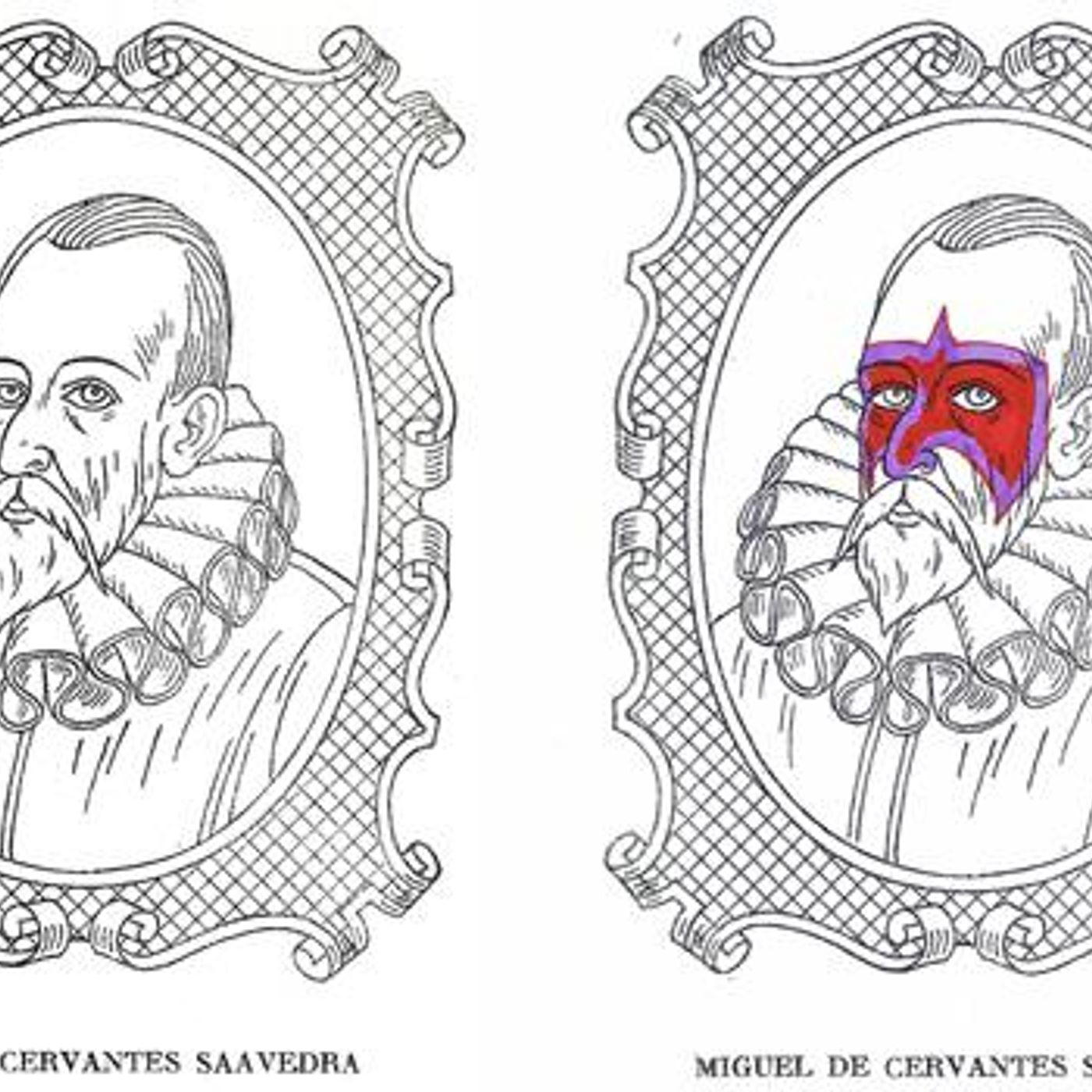
Radiolab
La Mancha Screwjob
00:51:17
All the world’s a stage. So we push through the fourth wall, pierce the spandex-ed heart of professional wrestling, and travel 400 years into the past to unmask our obsession with authenticity and our desire to walk the line between reality and fantasy. Thanks to Nick Hakim for the use of his song "The Light".
Loading summary
Transcript411 lines
- [00:00]
Narrator / Host
They say if you want to go fast, go alone. But if you want to go far, go together. At Amica Insurance, we know what matters most to you and we work even harder to protect it together. As a mutual insurance company, we're built for our customers and prioritize your needs. Amica empathy is our best policy. Visit amica.com and get a quote.
- [00:29]
Simon Adler
Today Limu Emu and Doug. Here we have the Limu Emu in.
- [00:36]
Narrator / Host
Its natural habitat, helping people customize their.
- [00:39]
Robert Brovich
Car insurance and save hundreds with Liberty Mutual.
- [00:44]
Narrator / Host
Fascinating. It's accompanied by his natural ally, Doug.
- [00:48]
Bruce Burningham
Uh, Limu is that guy with the binoculars watching us.
- [00:51]
Narrator / Host
Cut the camera. They see us.
- [00:52]
Simon Adler
Only pay for what you need@libertymutual.com Liberty.
- [00:55]
Bruce Burningham
Liberty Liberty Liberty Savings vary unwritten by.
- [00:58]
Interviewer / Commentator
Liberty Mutual Insurance Company and affiliates excludes Massachusetts. Get ready to shop Lowe's Black Friday doorbuster deals to save $150 on a.
- [01:07]
Narrator / Host
30 inch blackstone griddle.
- [01:08]
Interviewer / Commentator
Now $299 plus choose a whirlpool top load washer or Midea top freezer refrigerator for just $398. These limited time doorbuster deals go fast, so get holiday ready. Today at Lowes, we help you save valid 1128 12. One selection varies by location while supplies last. See lowe's.com for more details.
- [01:33]
Narrator / Host
Oh, wait, you're listening.
- [01:34]
Bruce Burningham
Okay.
- [01:35]
Narrator / Host
All right. Okay. All right.
- [01:39]
Simon Adler
You're listening to Radiolab Radio from WNY and npr. All right.
- [01:50]
Interviewer / Commentator
Hey, guys. Sorry, we're here now.
- [01:53]
Simon Adler
Peter, I'm Simon.
- [01:54]
Interviewer / Commentator
Good to meet you, Simon. How are you, man?
- [01:56]
Simon Adler
I'm doing well. And yourself?
- [01:56]
Robert Brovich
Good.
- [01:57]
Jad Abumrad
Okay, who's who? Peter is a DJ, Peter Rosenberg from Hot 97. Simon Adler is a journalist. Our pal Andrew Moranz from the New Yorker is also in the room and Robert and I are in the back.
- [02:08]
Bruce Burningham
Good.
- [02:08]
Simon Adler
Well, we have all gathered here today to talk about the wonderful world of professional wrestling.
- [02:15]
Narrator / Host
My favorite world, double sledge right off the top.
- [02:20]
Jad Abumrad
So, yes, we're going to talk about professional wrestling for the first half of the show. We realize there's probably a lot of you out there listening right now who.
- [02:26]
Robert Brovich
Are like, seriously, guys, there are people.
- [02:28]
Interviewer / Commentator
Like, you're 35 years old, you love wrestling. I get this a lot. If I'm tweeting about it a lot, I get tweets that go, you know it's fake, right? It's like, well, do I write you that when you tweet about your favorite movie, it's entertainment? The awesome thing about wrestling is, is that there are these random things that are a little bit real.
- [02:47]
Jad Abumrad
And sometimes those moments of realness can just be like, boom.
- [02:51]
Narrator / Host
Is it real? Oh, it's real.
- [02:55]
Jad Abumrad
They can change everything.
- [02:57]
Narrator / Host
Home.
- [02:59]
Jad Abumrad
Now, if you're like me and you grew up in the 80s, you might remember wrestling as like, you know, Hulk Hogan versus Andre the Giant. These epic matchups that were kind of great, but also sort of ridiculous and cartoonish. Well, according to Peter Rosenberg, there was a moment where wrestling started to sort of tinker with reality in a much more nuanced and fascinating way.
- [03:21]
Robert Brovich
In fact, you could argue that pro wrestling became a reinstantiation of the baroque movement of the 16th century with a postmodern twist.
- [03:27]
Bruce Burningham
You could tell.
- [03:28]
Robert Brovich
I know people who would. You're gonna meet em.
- [03:32]
Jad Abumrad
I'm Jad. I'm Robert, this is Radiolab. And according to Peter, this whole thing is where we're gonna start. This whole thing goes back to this.
- [03:40]
Interviewer / Commentator
Moment called the Montreal Screwjob.
- [03:42]
David Shoemaker
The Montreal Screwjob was above anything else that had ever happened or that will ever, probably ever happen again, because it was utter reality transpiring right there in the ring. I mean, it was when real life just came and tore a hole in the fiction.
- [04:03]
Jad Abumrad
That guy you just heard is David Shoemaker.
- [04:05]
David Shoemaker
I write about professional wrestling for Grantland.
- [04:07]
Jad Abumrad
And the guy you're about to hear is journalist Simon Adler. He will take the story from here.
- [04:12]
Simon Adler
Okay, so the moment in question really centers around this one guy named Brett.
- [04:17]
Narrator / Host
Brett.
- [04:20]
Simon Adler
Brett the Hitman Hart.
- [04:23]
Interviewer / Commentator
Bret Hart is seen by many to be the greatest in ring performer of all time.
- [04:29]
Simon Adler
He was one of the good guys.
- [04:30]
Narrator / Host
I am the best there is, the best there was, and the best there.
- [04:35]
Simon Adler
Ever will be in the business. They call him a baby face.
- [04:38]
Jad Abumrad
Is that what you call the good guys?
- [04:39]
Simon Adler
A good guy in wrestling is a baby face.
- [04:41]
Interviewer / Commentator
He was my favorite wrestler as a kid. I didn't understand why at the time, but now I do. It's because he did everything so well. And in that era, the mid to late 80s, when I fell in love with him, so many guys were just big and hulking and a little bit clumsy. But Brett did the kind of work that you could show to someone who's, who's never watched wrestling, I think they could see the art in it and I think they could see how it's like ballet or a million other art forms.
- [05:13]
Simon Adler
What he means. And you can kind of see this when you watch old Bret hart matches on YouTube. He's gliding through the air, bouncing off the mat, off the ropes.
- [05:26]
Interviewer / Commentator
He tells stories brilliantly, within the way he executes a match.
- [05:30]
Simon Adler
So wrestling is scripted, but there's a lot of improv going on. There are these set beats. He knew how to take those moments and in that improv make you think, oh, shoot, he's about to lose. And then, oh, he gave up.
- [05:44]
Narrator / Host
We've seen history made.
- [05:47]
Interviewer / Commentator
He was a natural born wrestler.
- [05:50]
David Shoemaker
You know, his father was a legendary wrestler. His brother Owen, legendary wrestler. He comes from this Canadian wrestling royalty.
- [06:00]
Narrator / Host
Me, as a kid growing up, I had the ability to watch the. Or had the fortune to watch these varied wrestling styles and techniques and stuff.
- [06:09]
Simon Adler
That's Bret Hart in an interview in 2000 on FRESH AIR. And he says that some of his earliest memories as a kid were these massive dudes showing up to his house and hanging out in his basement with his dad.
- [06:22]
Narrator / Host
You know, even then my dad was, you know, say 60, who was teaching.
- [06:26]
Simon Adler
Them how to be wrestlers.
- [06:27]
Narrator / Host
He would pull on these old woolly tights and then he would wrestle with these guys and he would literally put them in wrestling holds, these submission wrestling holds, which is his obsession. And he would torture these big, huge football players for hours. And they would scream, literally these high pitched screams. It was terrifying. I'd be upstairs in the room above it, and as I got older, I would go down and actually venture into the room and sit on the bench and watch. And he. Sometimes these wrestlers would run out. When my dad finally let them go, they'd actually run out, tear out of the, out the doorway and outside sometimes in the snow and run out in their bare feet and you wouldn't even see them again.
- [07:04]
Interviewer / Commentator
I mean, there's a legendary. So many legendary stories about the Hart family. But you, you know, my favorite among many is the bear that lived in their backyard during summers. Because at the time, wrestling a bear was a thing that would actually happen from time to time. No, really, Brett tells a story in his book about, you know, just sitting there and letting the bear lick his toes. I mean, like, this is, this is a life that he lived and he was, he was so in. It was so ingrained in him.
- [07:37]
Simon Adler
So in the early 80s, Brett was working for his dad's company up in Canada. And while that's going on in Canada, there's This guy, Vince McMahon back in the US who is building kind of this wrestling empire. And basically he's buying up all of these small promoters from across the country and goes up into Canada and buys out Brett's dad's company.
- [07:57]
Narrator / Host
He bought it in 1984. They paid him a certain amount of money to stop running Just to kind of go out of business. And then they took on some of his better wrestlers at the time, which was myself. And I had a couple of brother in laws.
- [08:11]
Simon Adler
And shortly thereafter, the WWF comes under fire.
- [08:17]
Narrator / Host
Hulk Hogan and other World Wrestling Federations have taken the offensive against accusations that many have been steroid abusers. McMahon's monster mentality led to widespread steroid abuse in the World Wrestling Federation.
- [08:30]
Simon Adler
So there's this big steroid crisis. Vince has to deal with all of this litigation, and he kind of needs to rebrand his organization. He needs a new good guy, a new champion, a new babyface. And he looks to Brett for that for a couple of reasons, according to David Shoemaker.
- [08:49]
David Shoemaker
One is that he's a traditionalist, sort.
- [08:51]
Simon Adler
Of a throwback to an earlier time. Two, he's not that big. So when you see him, you don't think steroids. That guy's definitely, yeah, Roid rage. And so he saw all that in Bret Hart. So during the 90s, Vince makes Bret a really big star.
- [09:05]
Narrator / Host
He's got it. He's got it. We've got a new champion. We got a new champion.
- [09:09]
Simon Adler
The new face of the company.
- [09:11]
Interviewer / Commentator
I mean, he was on the Simpsons. He was a really, really big star. You know, there are people who criticize Brett for saying he wasn't that fun or he took himself too seriously, but he was a serious worker. He took wrestling very seriously.
- [09:21]
Narrator / Host
I found myself really fighting hard to actually survive and come out of it. Actually to come out of the wrestling profession someday as a success rather than a wrestling tragedy, which is what so many of them turn up.
- [09:40]
Simon Adler
Okay, so Fast forward to 1995, 1996.
- [09:43]
Interviewer / Commentator
At the time, a major rivalry was starting between the WWF, that is Vince McMahon's company, and the WCW, which was Ted Turner's company.
- [09:53]
Simon Adler
Ted Turner, multi kajillionaire. And one of his big tactics is, I'm just gonna start buying all of the wrestlers from the WWF, from Vince McMahon's organization. So he's offering them more money, he's offering them longer contracts.
- [10:06]
David Shoemaker
And he was just like flooding it with money to steal all the stars from WWF.
- [10:09]
Simon Adler
And then in late 1996, Bret got an offer.
- [10:13]
Interviewer / Commentator
Turner really went in for the kill from WCW. That was huge.
- [10:17]
Simon Adler
$2.8 million.
- [10:19]
Narrator / Host
I mean, you have to show some common sense, you know, first of all, you have to do what's right for your family. But I mean, how much money do you need? Sometimes I found myself torn between trying to do the right thing for my family and at the same time, show my Loyalties.
- [10:32]
Simon Adler
That's a clip of Brett talking in a documentary that was being filmed at.
- [10:35]
Interviewer / Commentator
The time called Wrestling with Shadows, which is fantastic.
- [10:38]
Simon Adler
The filmmaker, Paul Jay, was nice enough to let us play some clips. In any case, Brett gets this offer and he's got kind of this terrible.
- [10:45]
Interviewer / Commentator
Decision to make because Vince gave him a lot, you know, he really gave him his life.
- [10:50]
Simon Adler
And initially Brett decides, there's no way I'm gonna leave.
- [10:54]
Narrator / Host
You know, I think my relationship with Vince McMahon was always sort of like a father. And I sort of saw myself, if I left, it would have been a little bit like leaving my dad, especially when the chips are down.
- [11:06]
Interviewer / Commentator
He really did see Vince as a father figure.
- [11:10]
Simon Adler
So Brett goes to Vince and basically says, convince me to stay.
- [11:13]
Interviewer / Commentator
They went back and forth. There was conversation about him signing a long term deal, a 20 year deal with WWF, not for as much money, but for guaranteed security. Vince said, I can't afford to pay you that.
- [11:26]
Narrator / Host
Just talked to Vince.
- [11:28]
Jad Abumrad
Did you?
- [11:28]
Narrator / Host
Yep.
- [11:29]
Simon Adler
In the documentary, Brett and his wife, they're sitting at a kitchen table.
- [11:32]
Narrator / Host
What do you say?
- [11:36]
Interviewer / Commentator
He goes.
- [11:36]
Narrator / Host
Nobody wants Bret Hart more than Vince McMahon. Then why is he letting you go? He can't afford to compete with Turner. Turner's hell bent on trying to put him out of business. I gotta think about everything. I gotta think about everything. Just see what makes sense. I call Eric, maybe, I don't know. Can we cut this off now for a little while?
- [11:59]
Bruce Burningham
Okay.
- [12:01]
Interviewer / Commentator
Ultimately, it became clear that Brett would have to go take the money.
- [12:06]
Narrator / Host
I can't help but feel really heartbroken and disappointed that I left this company.
- [12:20]
Simon Adler
So this really gets to the heart of it. Once Brett decides he's going to leave, they have to figure out how. How are they going to make his exit. This is really the pivotal question behind all of this.
- [12:34]
Vince Russo
Yeah, you know, it's a very, very delicate situation.
- [12:39]
Simon Adler
That's Vince Rousseau. And this was sort of his problem to solve because he worked for Vince McMahon.
- [12:44]
Vince Russo
You know, you could say I was his right hand man because I was writing the show.
- [12:47]
Narrator / Host
You could.
- [12:47]
Simon Adler
He was part of the team that scripted who would win, who would lose, how it would happen.
- [12:51]
Vince Russo
You know, I mean, I was literally putting this show on paper, you know, once a week.
- [12:56]
Jad Abumrad
Wait, why is this a hard question? I mean, can he just pick up and leave?
- [12:59]
Simon Adler
Well, because he's the champion. He has the belt, the physical belt.
- [13:03]
David Shoemaker
The giant golden, like belt buckle thing.
- [13:05]
Simon Adler
And that belt is the symbol of.
- [13:07]
Vince Russo
The company and everybody in it, everybody working behind the scenes, everybody who was trying to support their Family. That belt was a representation of all that.
- [13:18]
David Shoemaker
The worst thing that could happen is your champion walking away with the belt.
- [13:21]
Interviewer / Commentator
Showing up to the new company, holding up the championship from the old company.
- [13:25]
Simon Adler
Where they could just defile it if they wanted to.
- [13:27]
Interviewer / Commentator
That was not an option for Vince McMahon.
- [13:30]
Simon Adler
This isn't a perfect comparison, but the closest thing I've come up to in my mind is it would be like LeBron James quitting his contract with Nike and then showing up in an Adidas commercial and taking a piss into a pair of Nikes.
- [13:46]
Vince Russo
So, you know, Vince, at the end of the day, he just had to get that belt off of Brett.
- [13:51]
Simon Adler
So their initial thought, their first plan was probably the simplest option. There was a match coming up, this big event, a pay per view event in Montreal. Bret being the champion of the company, he should just lose to the number.
- [14:03]
Interviewer / Commentator
Two guy in the company, Shawn Michaels. Vince loved Sean. I mean, really thought Sean was a megastar, which he was right about.
- [14:10]
Simon Adler
Clearly, Sean was next in line. So they pitched this idea to Brett, and Bret was like, I can't do that.
- [14:17]
Narrator / Host
I can't.
- [14:18]
Simon Adler
For one, he thinks Sean's an idiot.
- [14:21]
Narrator / Host
He's got this prima donna personality. I mean, he thinks he's better than everyone else. And there's something very arrogant and obnoxious.
- [14:26]
Simon Adler
About him because he was a showman. He would hump the ring just, like, do ridiculous things. And, like, to Bret, Shawn was the triumph of style over substance.
- [14:36]
Interviewer / Commentator
Also, you're asking Bret to wrap up his career in the WWE with a loss in Montreal in Canada, where he.
- [14:44]
Simon Adler
Is a national hero.
- [14:45]
Narrator / Host
I described it, Vince. I just assumed blow my brains out would be the same. What you're asking me to do from a character standpoint, that's what I would be doing. Brett the Hitman hard would blow his brains out. The whole thing's been hard.
- [15:09]
Simon Adler
Day of the match. Still, nothing has been decided as to how the match is going to end. Brett is backstage, and eventually he goes to Vince to have a conversation.
- [15:18]
Narrator / Host
All right, I gotta just talk.
- [15:20]
Simon Adler
The documentary crew is filming all of this. And at this point, Vince says, no, I don't want any cameras in here. Get those out of here. And so Brett actually ends up wearing a wire to document the conversation that's about to happen.
- [15:32]
Narrator / Host
I never, ever wanted to leave here with any kind of bad feeling, but this week has been a bad week for me. I feel kind of betrayed a little bit. Well, I do, too, a little bit. And again, all we're talking about really is Ted Turner. That's what's coming between you and me, that's all. I can't tell you how appreciative I will always be for everything you've done. I didn't want to leave with any problems, and I actually didn't want to leave at all. And then it's the point where there was no other choice but to go. The way this whole thing has been depicted, it's really hard for me as a hero here to come up short this weekend. What would you want to do today then? I'm open anyway. I think what I'd like to do is get through today. I think tomorrow I should just go in.
- [16:07]
Simon Adler
And so Brett suggests that this ends in a disqualification. And usually what that means is something called a schmaz. Typically in a schmazz, the ring is just flooded with a bunch of wrestlers and chaos ensues. The referee usually is thrown out of.
- [16:24]
Interviewer / Commentator
The ring and it ends in some sort of draw. Brett would then appear on Monday Night Raw the next day and turn over the belt. That is what he planned on doing.
- [16:32]
Jad Abumrad
So that way he could turn over the belt but not lose.
- [16:35]
Interviewer / Commentator
Exactly.
- [16:36]
Simon Adler
And eventually Vince says, okay, fine.
- [16:39]
Narrator / Host
No, I think that's. I'm open anyway. Like I said before, I'm determined this is going to wind up the right way.
- [16:47]
Jad Abumrad
Coming up, it all goes wrong. Radiolab will continue in a moment.
- [16:52]
Narrator / Host
This is Jim Donahue from Fort Worth, Texas. Radiolab is supported in part by the Alfred P. Sloan foundation, enhancing public understanding of science and technology in a modern world world. More information about Sloan@www.sloan.org.
- [17:13]
Jad Abumrad
This is Radiolab. Let's get back to Simon Adler's story of the moment that changed wrestling forever. You'll. You'll also hear Peter Rosenberg from Hot 97 in just a moment as well. He's the first voice we'll hear, but we'll pick up the action with all the big match, the moment we've all been waiting for.
- [17:31]
Narrator / Host
And now, Milton Bradley's Electronic Karate fighters presents the 1997 Survivor Series.
- [17:38]
Interviewer / Commentator
Okay, here we go. So Survivor Series 1997, Montreal.
- [17:43]
Narrator / Host
For tonight, it will finally be settled who is the man?
- [17:48]
Simon Adler
Oh, the drama. So around 9.20pm, 20,000 people in the stands, countless television screens across the country, Shawn Michaels comes out. And he comes out singing his own theme song. I think I'm cute, I know I'm sexy.
- [18:08]
Jad Abumrad
Singing karaoke style.
- [18:09]
Simon Adler
It's pre recorded of him singing.
- [18:12]
Bruce Burningham
That's an approach.
- [18:12]
Simon Adler
Yeah. He's got his hair in a ponytail. He's wearing his trademark black spandex pants. With hearts all over them, like he is the manifestation of everything that Bret despises. And then out comes Bret Hart waving a Canadian flag. And he walks into the ring, he gets in, takes off the championship belt, hands it to the ref, and before the match even officially begins, look out.
- [18:41]
Narrator / Host
And Shawn Michaels is in. And Shawn Michaels is not going to waste any time.
- [18:45]
Simon Adler
Shawn flies at Bret and just starts wailing.
- [18:47]
Narrator / Host
And Bret Hart fighting back with our hands. Bret Hart went with a fistfire.
- [18:53]
David Shoemaker
Sean and Brett, they're going at each other with a sort of, like, real ferocity.
- [18:58]
Simon Adler
Pretty quick, they're outside the ring at.
- [19:01]
Narrator / Host
The front end of the railing. Here comes Bret Hartman.
- [19:05]
Simon Adler
Brett picks up Sean, chucks him over the security railing into the crowd.
- [19:10]
Narrator / Host
Shawn Michaels is in no man's land. And Michaels being pun.
- [19:14]
Simon Adler
Then there's this moment where Bret picks Shawn up.
- [19:17]
Narrator / Host
Look at that.
- [19:17]
Simon Adler
So that Sean's legs are sitting straight up in the air. And then Brett.
- [19:21]
Narrator / Host
Oh, my God, what A suplex.
- [19:23]
Simon Adler
Just slams him on his back.
- [19:25]
Narrator / Host
A suplex all over the concrete.
- [19:28]
Jad Abumrad
And all of this is scripted?
- [19:30]
Simon Adler
Yeah. Everything I know about it is like, they're following the narrative arc, but, like, they know, okay, we're gonna fight outside the ring for a while, and then XYZ will happen. And so eventually, pops in a ring. Brett throws Sean back into the ring.
- [19:47]
David Shoemaker
And then you get to a point in the match, which feels very early.
- [19:50]
Simon Adler
In the match, where Brett climbs onto the turnbuckle, which is the corner post of the ring. He gets up on top of that, catapults himself off the turnbuckle, through the air towards Shawn Michaels. Super dramatic. He's kind of floating in the air there for a moment, and then, oh.
- [20:08]
Narrator / Host
Michaels just pulled a referee right in front of the Hitman.
- [20:12]
Simon Adler
What Sean does right before Brett is about to come and hit him, he pulls the referee in between Brett and Sean. A human shield of sorts. Brett hits the referee, the referee hits Sean, and all three men are lying on the mat.
- [20:27]
Narrator / Host
Is that a disqualification? It might be if he could get up and call it.
- [20:33]
Jad Abumrad
Oh, here we are.
- [20:34]
Simon Adler
Right, this could be the moment. But no, before the referee can can get up, Sean gets up, walks over.
- [20:43]
Interviewer / Commentator
To Brett, and then look at this. Sean.
- [20:47]
Narrator / Host
Oh, you're kidding me.
- [20:48]
Interviewer / Commentator
Puts Brett in the sharpshooter, which is Brett's signature finishing move.
- [20:52]
Narrator / Host
Are you going to copy Brett Hart with a sharpshooter? Yes, he is.
- [20:56]
Simon Adler
Basically, Sean pretzels up Brett's legs and sits on it.
- [20:59]
Narrator / Host
Are you kidding me?
- [21:00]
Interviewer / Commentator
And within seconds, the Sean slides out of the ring, grabs the belt runs to the back, takes off. Things work a certain way in wrestling matches, right? Like no one gets the first pin. The second a match starts and no one puts someone in submission hold and they instantly submit. Especially not Bret Hart. It just did not appear like the time the match was supposed to end.
- [21:24]
Simon Adler
The crowd is kind of shocked. It's strangely quiet. And there's this one moment where the camera zooms in on Brett's face while he's lying chest down on the mat looking up, and there is just this bizarre, amazing look on his face.
- [21:44]
David Shoemaker
Confusion is an emotion that almost never exists in pro wrestling. There's the cartoon confusion of, like, everything's crazy and your arms are going like wild. Your eyeballs pop out of your head. But real confusion is one of the most compelling emotions of all.
- [22:00]
Simon Adler
That's what you see on his face in its most pure form. Genuine confusion. And then anger.
- [22:13]
Interviewer / Commentator
Brett gets up, puts his arms on the rope, looks down, sees Vince McMahon and spits right in Vince's face. He then proceeds to get out of the ring and basically destroy everything in sight.
- [22:27]
Simon Adler
He goes over to the announcer's table, starts ripping it apart.
- [22:31]
Interviewer / Commentator
He destroys the monitors, throws the headphones.
- [22:34]
Simon Adler
Out into the crowd.
- [22:35]
Interviewer / Commentator
He goes pretty nuts. And in maybe the moment that truly made you go, what is happening?
- [22:42]
Simon Adler
Brett gets back into the ring.
- [22:44]
Interviewer / Commentator
He takes his hand in the air and draws with his finger in the air as big as he can. Wc, which is where he was going to be, leaving to go work wcw and keeps doing that, walking across the range, just signaling WCW to the crowd.
- [23:07]
Simon Adler
After the match, Brett heads back into the locker room looking for Vin.
- [23:11]
Jad Abumrad
Swing around, Wavy. You guys should.
- [23:15]
Narrator / Host
These guys are waving.
- [23:15]
Robert Brovich
Okay, let's get out.
- [23:16]
Narrator / Host
Okay, close that up.
- [23:17]
Simon Adler
Brett tells the cameras to shut off. And then to make a long story short, he clocks Vince in the face, knocks him out. Now the WWF has a real problem on their hands. Vince has a black eye and the fourth wall has just been torn down. And they need to figure out how or if they're going to build it back up.
- [23:40]
Vince Russo
And the next day.
- [23:42]
Simon Adler
This again, was the head writer at the time, Vince Russo.
- [23:45]
Vince Russo
We had a television taping right after the. You know, you have Roar on Monday. You know, you do your pay per view on Sunday, you have Raw on Monday.
- [23:53]
Simon Adler
So they all huddle in a room to discuss their options. And Vince says that everybody in that.
- [23:58]
Vince Russo
Room, their first knee jerk reaction is, well, we're gonna sweep this under the rug and not even talk about it. I mean, that was almost just assumed.
- [24:06]
Simon Adler
Because you have to understand there's this old principle in wrestling called kephab. And basically what this is is this law of the wrestling gods passed down since time eternal that says you don't talk about the fact that it's fake. Everyone knows that it's scripted and that it's fake, but you damn well better not mention that ever.
- [24:25]
Jad Abumrad
Why?
- [24:26]
Simon Adler
Because everybody has a better time when everyone is under the spell of it.
- [24:31]
Vince Russo
Oh, and I was like, wait a minute, Vince is walking around with a black eye, the boss has a black eye and one of the boys punched him in the face.
- [24:43]
Simon Adler
Rousseau is saying, I understand kayfabe, but we have to address this. We can't not acknowledge this. And that doesn't have to be a problem. That can be an opportunity for us.
- [24:53]
Vince Russo
I mean it. Like, I hate to say this, but, like, it doesn't get any better than this.
- [24:58]
Simon Adler
Russo says this discussion got very heated.
- [25:01]
Vince Russo
It was passion filled.
- [25:03]
Simon Adler
And in the end, nobody really knew what Vince McMahon was going to do.
- [25:09]
Narrator / Host
By the time Bret Hart stepped center stage for his matchup with Sean.
- [25:13]
Simon Adler
And eventually Vince McMahon decides, I'm going to break with kayfabe. Now, keep in mind, he's always been the owner of the organization, but very few people actually knew that. To most fans of professional wrestling, he was just an announcer. That night on his own TV show, he comes out not as Vince McMahon, the ringside announcer, but as Vince McMahon, the owner of the company.
- [25:35]
Narrator / Host
Let's cut right to the chase. Seven days ago at the Survivor Series, did you or did you not screw Bret Hart? Some would say I screwed Bret Hart. Bret Hart would definitely tell you I screwed him. I look at it from a different standpoint. I look at it from the standpoint of the referee did not screw Bret Hart. Shawn Michael certainly did not screw Bret Hart, nor did Vince McMahon screw Bret Hart. I truly believe that Bret Hart screwed Bret Hart. And he can look in the mirror and know that. I'm sure in some parts of the country right now there's a collective groan that you orchestrated the situation. And the fact that people are not going to understand what you mean by, Bret Hart screwed Bret Hart. So what do you mean by that? There's a time honored tradition in the wrestling business when someone is leaving, they show the right amount of respect to the WWF superstars. In this case, who helped make you that superstar. You show the proper respect to the organization that helped you become who you are today. It's a time honored tradition, and Bret Hart didn't want to honor that tradition. Nonetheless, that was Bret's decision.
- [26:54]
Interviewer / Commentator
Brett screwed Brett, and everything changed from that point on.
- [27:04]
Simon Adler
And according to Peter, after the Montreal Screwjob and after this speech, the writers of the WWF started blurring the lines.
- [27:12]
Interviewer / Commentator
On a different level. Vince McMahon, the chairman of the WWE.
- [27:17]
Narrator / Host
Ladies and gentlemen, he became Mr. McMahon.
- [27:21]
Interviewer / Commentator
Mr. McMahon, the character, the number one villain in the company.
- [27:27]
Narrator / Host
You.
- [27:31]
Vince Russo
There were no more ridiculous, you know, stupid, unbelievable, childish, ignorant, immature characters. Every character we had was basically an extension of themselves.
- [27:44]
Interviewer / Commentator
Cause Stone Cold section, you know, Stone.
- [27:48]
Vince Russo
Cold Steve Austin was Steve Austin 1,000 times magnified. You know, the rock was rocky Maivia 100 times magnified.
- [28:01]
Interviewer / Commentator
And as a result, that was the.
- [28:05]
Vince Russo
Beginning of the biggest boom in the history of the wrestling business.
- [28:09]
Simon Adler
As far as business goes, this was huge for the WWF and Vince McMahon. They came roaring back in the ratings war. They destroyed Ted Turner in the wcw, they won. And if you ask Vince Rousseau why this approach, this new aesthetic was so successful, he says simply, the truth. That was great tv, plain and simple. The fans just want something true.
- [28:33]
Vince Russo
Just tell the fans what happened.
- [28:36]
Simon Adler
But Peter says two things. One, it's way more complicated than that. It's not just about the truth. You still have these writers who are scripting the show and wrestlers who are getting that script and following it. So it's not like it's now a true world. I think it's something more like there are these tiny injections of truth into this world in really unexpected moments. What that does is it puts everyone on high alert all the time for those moments. And when everyone is on high alert for those moments all the time, every moment has the potential to be true. Has the potential to have a little bit of that injection into it. And when you are watching for those injections, it completely changes how you are engaging with the art form, with the entertainment. And that creates an entirely new type of fan.
- [29:26]
Interviewer / Commentator
What they call a smart fan, a smart mark, a smarc, as they're known. People who love the wrestling business, but really love the behind the scenes of the business.
- [29:35]
Jad Abumrad
The what now what?
- [29:36]
Bruce Burningham
The smark mark.
- [29:38]
Interviewer / Commentator
Smart mark.
- [29:39]
Simon Adler
Here's where you can get a little lingo crazy.
- [29:41]
Interviewer / Commentator
The lingo part of wrestling is a huge, huge part of it.
- [29:45]
Simon Adler
And a mark is someone who doesn't know that wrestling is fake. Or using another piece of jargon here, that it is a work.
- [29:54]
Interviewer / Commentator
Yes. A work is anything that's not real, as opposed to a shoot, which is something that's real.
- [30:00]
Simon Adler
Like the Montreal Screwjob.
- [30:01]
Interviewer / Commentator
Yes.
- [30:02]
Jad Abumrad
Are shoots, by definition something that's not.
- [30:05]
Interviewer / Commentator
Supposed to happen in the ring. A shoot should never happen. But then there's something called of course a worked shoot. And that's something that does happen.
- [30:20]
Jad Abumrad
Is that where you script it to seem like it's totally unscripted and it.
- [30:24]
Simon Adler
May even be real life that they're injecting into it. But it was planned.
- [30:27]
Interviewer / Commentator
Was still all disgust that this is what would happen.
- [30:29]
Simon Adler
And so watching wrestling becomes this game of hunting for the truth. According to David Shoemaker. And not just any truths, but the authentic truths, the true truths. The true truths.
- [30:41]
David Shoemaker
Even if you know that it's fake, there's some point where the guys are really going at it in the ring that you're just like, wow, maybe it's real. Just that right there. And that's what makes wrestling so powerful. It's the never ending search for the reality within the unreal.
- [30:56]
Interviewer / Commentator
The fact that we get to blend these things together. I mean, another example that's just fantastic is in the early 2000s, there was Edge, Matt Hardy and a girl named Leeta. Lita and Matt Hardy were legitimately in love. Dating for years. Edge and Matt Hardy were legitimately best friends. And then.
- [31:19]
Narrator / Host
You bastard. I'm gonna make your life miserable.
- [31:22]
Interviewer / Commentator
Edge ended up with Lita, took his best friend's girl.
- [31:26]
Narrator / Host
How did it make your life miserable too?
- [31:28]
Interviewer / Commentator
Something that unfortunately happens in life sometimes.
- [31:31]
Narrator / Host
And the WWE can kiss my.
- [31:36]
Interviewer / Commentator
And it was turned into a storyline.
- [31:38]
Narrator / Host
Men have fought over women since the beginning of time. And we are about to see an epic battle over one right now.
- [31:43]
Interviewer / Commentator
I find it incredible that you could go out into the ring.
- [31:47]
Narrator / Host
I really think they want to just.
- [31:48]
Interviewer / Commentator
Decimate each other and pretend to beat the hell out of someone you want to beat the hell out of. To know that you have to go out there, work really hard against someone you legitimately hate and also absolutely have to protect. How can we not find that fascinating?
- [32:07]
David Shoemaker
That's awesome.
- [32:07]
Interviewer / Commentator
That's incredible.
- [32:08]
David Shoemaker
That's like watching Fleetwood Mac go on tour.
- [32:10]
Interviewer / Commentator
Exactly. That's what I was gonna say next.
- [32:13]
Jad Abumrad
That's Andrew Marantz, by the way, from the New Yorker.
- [32:15]
David Shoemaker
And play all their songs. Cause all their songs they all had these love quadrangles. They all were married and left each other and wrote songs about I'm so pissed off at you because you left me for the guy who's standing right there. And then they go out on tour and Lindsey Buckingham is standing right next to Stevie Nicks playing the song that he wrote about you betrayed me. I hate you so much.
- [32:33]
Interviewer / Commentator
It's crazy.
- [32:34]
David Shoemaker
Night after night.
- [32:35]
Interviewer / Commentator
Super fascinating.
- [32:36]
David Shoemaker
Yeah. I just think There's a part of the human brain that wants to be confused between those boundaries, that wants to be slipping in between what's real, what's fake, to feel that confusion. I feel like that's why Jimmy Fallon was so successful on Saturday Night Live. Not because he was the greatest sketch comedian, but because he broke a lot.
- [32:55]
Interviewer / Commentator
And you, you can't do that in wrestling because those moments are the best.
- [32:59]
David Shoemaker
You have to save them.
- [33:00]
Interviewer / Commentator
You have to save them. And when people acknowledge a moment and you can tell, they look around at the crowd and they're acknowledging, like this is. Or someone says one line that everyone kind of knows is like, whoa, that's kind of real. Those moments are special. And you. You have to save them. Hold on one sec, guys.
- [33:16]
Narrator / Host
Sorry.
- [33:16]
Interviewer / Commentator
Hey, what's up? He's on the way. All right, I'll be leaving shortly.
- [33:21]
Narrator / Host
Peace.
- [33:21]
Interviewer / Commentator
Sorry, guys. Usher awaits. Come on.
- [33:23]
Bruce Burningham
Can I ask you one real quick question?
- [33:24]
Robert Brovich
Yeah, of course.
- [33:25]
Jad Abumrad
What happened to Peter Brett, Bret Hart, after this? Did he go off to WCW and have a big career?
- [33:31]
Interviewer / Commentator
Well, that's sort of the interesting thing is that after the Montreal screw job, a few weeks later, Brett showed up on WCW television. And it never really worked out for Brett.
- [33:43]
Simon Adler
In 1999, just two years into his contract with WCW, during a match, he got kicked in the head and suffered a severe concussion.
- [33:52]
Interviewer / Commentator
And it was the beginning of the end.
- [33:56]
Simon Adler
That same year, ladies and gentlemen, something.
- [33:59]
Narrator / Host
Has gone terribly wrong.
- [34:01]
Simon Adler
Bret's brother, Owen Hart, who was wrestling for the wwf during one of his entrances to the match, he was entering from the ceiling and something with the stunt went terribly wrong and he fell 50ft into the ring and he died.
- [34:20]
Narrator / Host
This is not a part of the show. This is real life. Owen Hart is being attended to right now by a host. I went through a right away, I said I could never. I don't think I can ever go back.
- [34:32]
Simon Adler
Bret Hart spoke with Terry Gross about a year after this incident.
- [34:36]
Narrator / Host
You think of all these sort of contrived storylines that they have in wrestling. You know, this guy's gonna come in and he's gonna do that and he's gonna. He's gonna say this about you, or they're gonna. I just thought anything you can possibly imagine is so pathetically meaningless when you relate to the real life horror of what happened with my brother.
- [34:52]
Simon Adler
He would retire short.
- [35:04]
Narrator / Host
Sam.
- [35:43]
Jad Abumrad
So thank you to Simon. What did we decide his wrestling name was? Simon.
- [35:49]
Robert Brovich
Simon the Growling Gruyere, because he's from Wisconsin. So you have to be like a fierce cheese.
- [35:56]
Bruce Burningham
That's what I think.
- [35:57]
Jad Abumrad
And thank you. Also, very special thanks to FRESH AIR for letting us air their Bret Hart interview. And thank you also to Paul J. For allowing us to play some clips from his documentary Wrestling with Shadows.
- [36:16]
Robert Brovich
Face.
- [36:22]
Narrator / Host
Lay nobody. Could it really be.
- [36:46]
Jad Abumrad
I'm Jad Abumrad.
- [36:47]
Robert Brovich
I'm Robert Brovich.
- [36:49]
Jad Abumrad
Well, Radiolab will continue in a moment.
- [36:51]
Interviewer / Commentator
Here it's Peter Rosenberg, and I'm gonna.
- [36:53]
Narrator / Host
Try to do my best to do this. Radiolab is supported in part by the Alfred P. Sloan foundation, enhancing public understanding of science and technology in the modern world. More information about Sloan@www.sloan.org. radiolab is produced by WNYC and distributed by NPR. Hope that works. Later, guys. Bye.
- [37:19]
Jad Abumrad
We're back.
- [37:21]
Robert Brovich
Tell us who you are.
- [37:22]
Bruce Burningham
I am Bruce Burningham.
- [37:25]
Robert Brovich
And where do you teach?
- [37:26]
Bruce Burningham
I teach at Illinois State University.
- [37:27]
Jad Abumrad
This is Radiolab. I'm Jad.
- [37:29]
Robert Brovich
I'm Robert. So, Bruce, he's a scholar, a language professor, and I called him up because Jad and I were having a little disagreement.
- [37:37]
Jad Abumrad
Friendly one.
- [37:38]
Narrator / Host
Okay.
- [37:38]
Robert Brovich
We're having an argument here. I said that when you get the hip hop and the wrestling and the novels and all that, you're getting a sort of a moment, a contemporary moment where people are fascinated by authenticity. And then Jad, my partner, said, I don't know, maybe people have always been interested in authenticity, and this just comes with being a human. It's nothing about now. It's just about us.
- [38:01]
Bruce Burningham
I mean, it's new in the sense that this generation of which we belong and has become very interested in these kind of questions.
- [38:09]
Robert Brovich
But Bruce told me this preoccupation, it's not really new. In fact, at least in book form, it goes back way longer than you'd think.
- [38:18]
Bruce Burningham
1605.
- [38:19]
Jad Abumrad
Whoa.
- [38:20]
Robert Brovich
Before wrestling and before Fleetwood Mac and before Jimmy Fallon began laughing at his own jokes, there was Miguel Cervantes book Don Quixote.
- [38:28]
Bruce Burningham
Yeah. So the first book really is about authenticity from the get go.
- [38:33]
Robert Brovich
You open this book, Don Quixote by Miguel de Cervantes, and right away the narrator says, I'm going to tell you a story, which I actually gathered from other authors from a bunch of different historical documents. So I'm not really the author.
- [38:46]
Bruce Burningham
He says things like, well, some books say the first adventure was this and some say it was that. So even from the start, you have a very unreliable narrator who then proceeds.
- [38:55]
Robert Brovich
To tell the story of a very unreliable, if not completely crazy character, Don Quixote, who is dry, withered, capricious, and filled with inconstant thoughts. Never imagined by anyone else. So Don Quixote believes that he has been set on Earth to rescue widows, princesses and be kind to orphans.
- [39:16]
Jad Abumrad
He's like a delusional, totally delusional, right?
- [39:19]
Bruce Burningham
He's essentially a guy who's read too many Zane Grey novels and decides he needs to be a cowboy.
- [39:25]
Robert Brovich
He thinks herds of sheep are attacking. He thinks windmills are giants. At the same time, he has this savvy assistant, Sancho Panza, who seems to know what's really going on. And they're constantly arguing about what's real and what's not. And then in chapter eight, something really strange happens. One day, Don Quixote and Sancho Panza are traveling down a road, and they see a carriage with a woman inside. Just an ordinary woman going, you know, to meet her husband. Don Quixote, however, for no reason at all, decides that she is a woman in distress, needs to be rescued. And he. This man standing right next to the carriage, he's. He's a Basque guy.
- [40:02]
Bruce Burningham
He sees this guy and he decides that he's a. He's an enemy who needs to be confronted. And so they start fighting.
- [40:09]
Robert Brovich
Don Quixote was charging the wary Basque with his sword on high, determined to cut him in half. And the Basque was waiting for him, his sword also raised.
- [40:18]
Bruce Burningham
And in mid swing, when both swords are in the air, the narrator stops and says, and I don't know where this goes from there. I've run out of material. And he just sort of stops narrating.
- [40:28]
Robert Brovich
And this is what, 16 oh something?
- [40:30]
Bruce Burningham
1605.
- [40:31]
Jad Abumrad
The book stops.
- [40:32]
Robert Brovich
It just stops.
- [40:33]
Jad Abumrad
You mean that's the end of the book?
- [40:34]
Robert Brovich
Well, no.
- [40:35]
Bruce Burningham
So you turn the page and you're in a new chapter. And now the narrator is telling you how, as luck would have it, he found this manuscript one day when I.
- [40:42]
Robert Brovich
Was in the Alkana market in Toledo. Crazily enough, he's at a bazaar, like a sort of a, you know, shopping kind of place. And he sees this pile of old papers and books together in a basket. And he's rifling through it, and he sees a picture of Don Quixote de la Mancha. I was astounded and filled with anticipation. There it was, apparently a real historical account in which the stupendous battle between the gallant Basque and the valiant Manchigan is concluded. The problem was, it was in Arabic.
- [41:10]
Bruce Burningham
And so then he hires a local Morisco, who is a Christianized Moor, to translate it for him.
- [41:16]
Robert Brovich
All right, so you now got a guy who's writing a book. From historical sources. He's run out of one. He's found another. But now that one has to be translated. And on top of that, he frequently.
- [41:25]
Bruce Burningham
Inserts commentary about the translation and will say stuff like, well, Sidi Ahmeti says this, but we all know that Arabs can't be trusted. So, you know, take that for what that's worth.
- [41:36]
Robert Brovich
And as I'm reading it, I'm thinking, wait a second. This was written in 1605. What did people make of a book that didn't seem to have any author, had author upon author upon author? Like, were they horrifi? What?
- [41:47]
Bruce Burningham
The book was a best seller. It was hugely popular.
- [41:51]
Robert Brovich
Apparently people found all these layers and these ambiguities. A laugh riot.
- [41:56]
Interviewer / Commentator
Oh, yeah, they gobbled it up and.
- [41:57]
Robert Brovich
They laughed as hard as they could. This is Howard Mansing, a Cervantes scholar at Purdue. And Don Quixote was translated into English in 1612, into French in 1614, into Italian in 1622. Everybody read it, including in the New World, by the way, Many copies of the first edition of Don Quixote were shipped to the colonies. Wow. So the book is a worldwide best seller, Maybe the first of its kind. And then 10 years later, 10 years later, Cervantes writes a sequel which kicks up this narrative weirdness to a completely new level.
- [42:30]
Bruce Burningham
In part two, Part two, Don Quixote of La Mancha, he introduces a new character named Samson Carrasco in which this two. He actually visits Don Quixote and Sancho to tell them that part one exists. It's a bestseller. And so in the very early chapters of part two, Don Quixote, this would.
- [42:48]
Robert Brovich
Be like walking up to Huckleberry Finn says, oh, by the way, you're living here in Hannibal, Missouri, but you're now a famous boy.
- [42:53]
Bruce Burningham
That's exactly what happened. Everybody he meets knows who he is because they've read part one.
- [42:58]
Robert Brovich
And now it gets even stranger, because in real life, during that 10 years that it took Cervantes to write his.
- [43:03]
Bruce Burningham
Second book, a person who goes by the pseudonym of Alonso Fernandez de Avellaneda published his own second part of Don Quixote before Cervantes could get his own second part out.
- [43:13]
Jad Abumrad
Wait, so this is an unofficial Part two.
- [43:16]
Bruce Burningham
Today, we'd recognize it as sort of fan fiction or somebody attempting to steal George Lucas idea and come up with their own Star wars installment.
- [43:25]
Robert Brovich
So there's this unauthorized part two floating around. Miguel Cervantes is very annoyed by it, I'm assuming. So in his official sequel to Don.
- [43:34]
Bruce Burningham
Quixote, there is this Scene where Don Quixote is at an inn, and he overhears a character talking about his relationship with this supposed Don Quixote.
- [43:45]
Simon Adler
Wait, so this guy, that's Simon Adler.
- [43:47]
Robert Brovich
Who sat in on the interview with.
- [43:48]
Simon Adler
Me, this guy existed in the fake Quixote 2, is a character in that, and is now appearing in the real Quixote 2.
- [43:59]
Bruce Burningham
Cervantes steals him. If you're gonna steal my character, I'll steal yours back right here.
- [44:04]
Robert Brovich
So now you've got the real Don Quixote. He's bumping into a character stolen from a fake book of Don Quixote.
- [44:11]
Bruce Burningham
So Don Quixote then decides to confront this person.
- [44:14]
Robert Brovich
He marches right up to the guy and he says, I am Don Quixote of La Mancha. The same one who is on the lips of fame and not that unfortunate man who has wanted to usurp my name and bring honor to himself with my thoughts.
- [44:26]
Bruce Burningham
And so the climax of that scene, which is just wonderful, is he forces this other character, who he stolen from the Unauthorized Sequel, who Cerrantes has stolen, to admit that the Don Quixote he knows from the Unauthorized Sequel is not the real one and that the one he's currently talking to is the real one.
- [44:43]
Robert Brovich
I implore your grace, for the sake of what you owe to your being a gentleman, to please make a statement to the magistrate of this village.
- [44:50]
Bruce Burningham
And as a matter of fact, he forces him to sign an affidavit to that effect.
- [44:54]
Robert Brovich
So he busts him.
- [44:55]
Bruce Burningham
He busts him right.
- [44:56]
Robert Brovich
In the novel.
- [44:57]
Bruce Burningham
In the novel.
- [45:01]
Jad Abumrad
Wait, you got a story about a guy that then becomes, in part two, a story about the story about the guy including false guys inside the story about the.
- [45:09]
Robert Brovich
Well, they're false guys from another book that are.
- [45:14]
Jad Abumrad
So why even bother trying to figure out what's real?
- [45:16]
Robert Brovich
Well, exactly right. Has anything like this come before this?
- [45:20]
Bruce Burningham
No. He's really sort of inventing this whole metanarrative game that is so popular today, the meta narrative.
- [45:27]
Simon Adler
What is.
- [45:28]
Bruce Burningham
Well, up until that point, most stories are simply. They purport to be what they are. I'm telling you a story. But Don Quixote pretends to be something other than what it is. It really is the start of modernity, our modern sense of the world.
- [45:42]
Robert Brovich
So you agree with Jad, then? This is like. This has not waxed and waned this particular cause, I think.
- [45:49]
Bruce Burningham
Well, it has waxed and waned. I mean, Don Quixote has been read by different generations for different reasons.
- [45:56]
Robert Brovich
Bruce says he thinks the people who were reading the book Originally, at the time of Cervantes, they actually reveled in.
- [46:02]
Bruce Burningham
The multi levels of fiction.
- [46:03]
Robert Brovich
They loved the meta stuff.
- [46:04]
Bruce Burningham
But during the Romantic period and well into the early 20th century, people were.
- [46:09]
Robert Brovich
Less interested in all these narrative layers, and they were more just thrilled by the romantic Don Quixote or the dreamer Don Quixote.
- [46:16]
Bruce Burningham
But this generation of which we belong has become very interested in this terrain that Cervantes charted a long time ago. You see it in the cinema of the late 90s in movies like the.
- [46:27]
Robert Brovich
Matrix and then later Adaptation and then.
- [46:29]
Narrator / Host
Inception, exploring the concept of a dream within a dream.
- [46:36]
Robert Brovich
See it in Seinfeld.
- [46:37]
Simon Adler
What's going on?
- [46:38]
Interviewer / Commentator
We're gonna shoot the pilot, and then it's gonna be on TV the following week.
- [46:41]
Narrator / Host
Yeah.
- [46:41]
Robert Brovich
Now, there's this comedian, Jerry Seinfeld, who's playing a character that happens to be called Jerry Seinfeld, who's making a show within the show about a character who's. Who's Jerry Seinfeld?
- [46:51]
Bruce Burningham
And so you have reality nested three times.
- [46:54]
Simon Adler
But I guess I'm interested in this idea of how is this happening again? And why is it happening again?
- [47:00]
Bruce Burningham
Well, my sense of things is that both of these moments are moments of intellectual crisis.
- [47:06]
Robert Brovich
Back in Cervantes time, coming out of.
- [47:08]
Bruce Burningham
The Renaissance, you have all of this new scientific knowledge that is calling into question the foundation that everybody was building their lives on. So suddenly, the Earth is no longer the center of the universe. It's now just one planet among several orbiting the sun. So you have people coming to terms with a worldview that they can no longer sustain.
- [47:29]
Robert Brovich
And as for us now, in the.
- [47:31]
Bruce Burningham
Last hundred years, you have Darwinism, you have relativity, you have quantum physics. I mean, cognitive scientists are telling us that we have no free will because they can sort of chart the chemical reaction that happens milliseconds before we think we decide to do something. All of these things tell us that the world that we think we see is not what it is. And I think that inspires people to then start asking these questions. If what I'm seeing is not real, what is? Who am I? And so I think to a great extent, it's a reaction to a moment of intellectual crisis.
- [48:03]
Simon Adler
Wait, but. Okay, let's say that I like professional wrestling a lot. I don't know anything about any of the research you're telling me about. Why the hell do I like professional wrestling? And why did I like it more when they started blurring these lines?
- [48:16]
Robert Brovich
Ooh, hard question.
- [48:18]
Bruce Burningham
Well, I would say humans are humans. And one of the things that we do is as opposed to, as far as we know what other animals on this planet do is we are aware of our own contingency, Meaning we can.
- [48:30]
Robert Brovich
Imagine radically different possibilities. We can imagine worlds where we don't exist. Or maybe we only think we exist.
- [48:37]
Bruce Burningham
I can remember being a child, 4 and 5 years old and going to a fabric store with my mother. And there were two mirrors set against opposite walls. And I was just fascinated at standing in between them and watching the infinite regress go in each direction, you know, And I had not even started kindergarten yet. So I think humans have this fascination with infinite regress and with embeddedness and.
- [49:02]
Robert Brovich
With the questions that it forces you to consider, like where does everything begin and where does it all come from?
- [49:10]
Bruce Burningham
I mean, the question at the heart of Don Quixote realizing that he's a character in a novel is who stands above you? The author stands above you. And so that author has a kind of godlike relationship to you. But that very question starts to make you ask who stands above that authority. And if you start asking that question, it goes on forever in every direction.
- [49:53]
Narrator / Host
Forever.
- [50:10]
Jad Abumrad
Thank you to Rupert Boyd for coming and playing the Spanish guitar for us in this piece on very short notice.
- [50:16]
Robert Brovich
And to Recorded Books for giving us permission to use use George Guidal's wonderful read of the book Tanquijo de la Mancha. He's really good.
- [50:25]
Jad Abumrad
Okay, well, I guess we should go then. We should say goodbye.
- [50:29]
Robert Brovich
Say goodbye.
- [50:44]
Narrator / Host
Is this real life, Satan? I dream it. For more. Hi, this is David Shoemaker, writer for Grantland. This is Bruce Burningham, editor of the Journal of the Cervantes Society of America. Hi, it's Andrew Morantz and these are the credits. Here it goes. Radiolab is produced by Jad Abumrad. Our staff includes Ellen Horne, Doran Wheeler, M. Howard, Brenna Farrell, Molly Webster, Melissa o', Donnell, Dylan Keefe, Jamie York, Lynn Levy, Andy Mills, Kelsey Padgett, Matt Kilty, Arianne Wallace, Wack and Latif Noster, with help from Simon Adler, Ava Dasher, Damiano Marchetti, Kelly prime and Danny Lewis. Special thanks to the legendary Jim Ross.
- [52:36]
Robert Brovich
David Shoemaker, that's me.
- [52:37]
Narrator / Host
And Paul J. The director of Wrestling with Shadows, which you should see. That's it.
- [52:41]
Robert Brovich
Thanks.
- [52:42]
Narrator / Host
Bye. End of message.
- [52:48]
Simon Adler
Did you know you can opt out of winter with VRBO? Save up to $1,500 for booking a month long stay with thousands of sunny homes. Why subject yourself to the cold? Just filter your search by monthly stays.
- [53:00]
Narrator / Host
And save up to $1,500.
- [53:01]
Simon Adler
Book now at vrbo.com when you give gifts, you like to knock them out of the park. Airwick Essential Mist Diffuser's chic design, long lasting scents, and effortless setup makes it the kind of gift that feels complete the moment it's unwrapped. Perfect for your favorite dinner party host or that friend who loves a cozy night in. Plus, its cordless design means you can easily take this gentle fragrance with you from room to room. Airwick Essential Mist Ready to Gift Ready to Uplift.