← Radiolab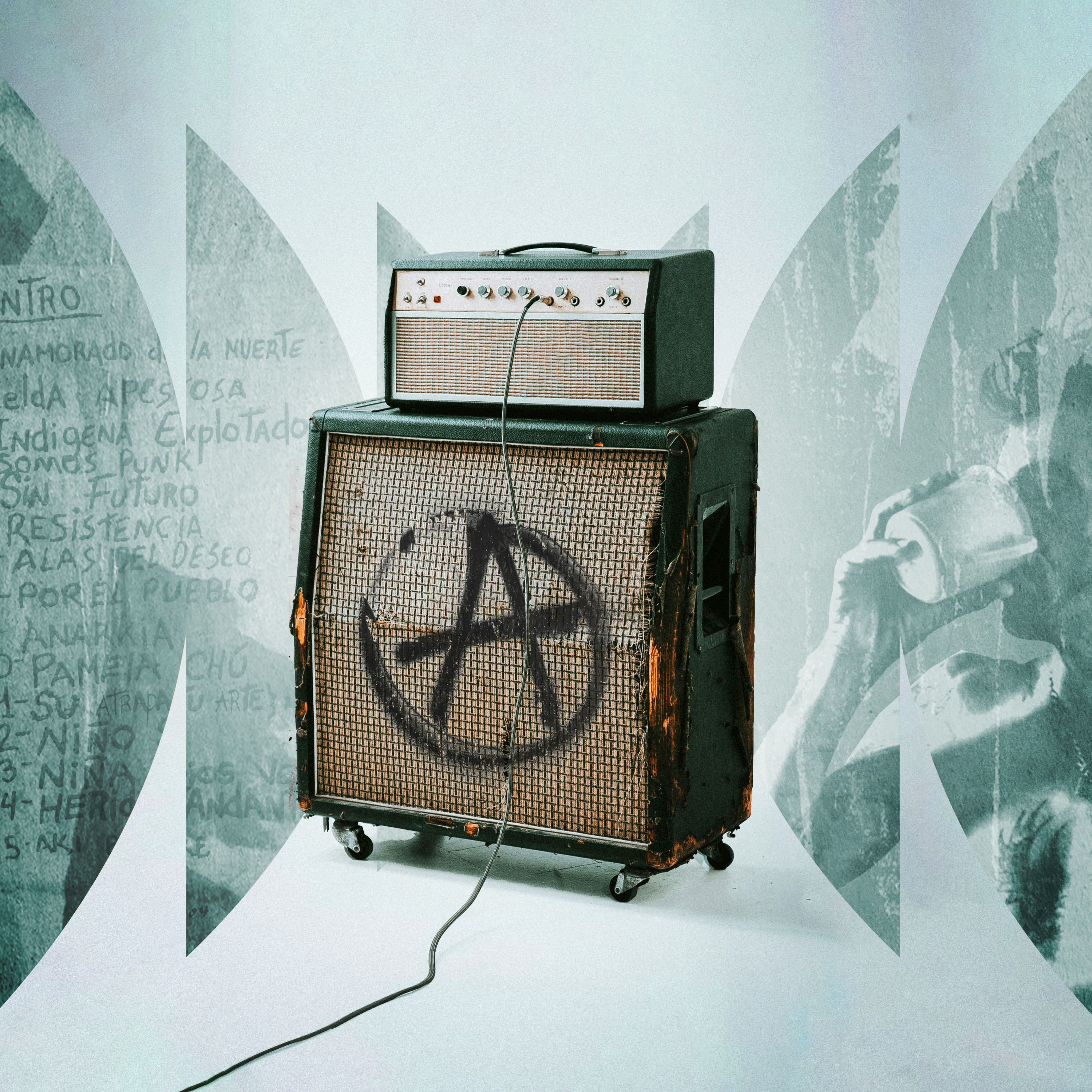
Radiolab
Los Frikis
00:33:07
How a group of 80’s Cuban misfits found rock-and-roll and created a revolution within a revolution, going into exile without ever leaving home. Reporter Luis Trelles brings us the story of punk rock’s arrival in Cuba and a small band of outsiders who sentenced themselves to death and set themselves free. We originally released this episode back in 2015 in a collaboration with Radio Ambulante, but the story is so fascinating (and, in many ways, still relevant) that we haven’t stopped thinking about it. Special thanks to the bands VIH, Eskoria, Metamorfosis and Alio Die & Mariolina Zitta for the use of their music. Radio Ambulante launches their 15th season on September 30th!! Check it out, here!! (https://radioambulante.org/en) EPISODE CITATIONS: Audio - Find some of Radio Ambulante’s other stories about the Frikis here: The Survivors (https://zpr.io/Kh8KWWi6SqaF) When Havana was Friki (https://zpr.io/HrXsgibzvbJj) Please put any supporting materials you think our audienc...
Loading summary
Transcript233 lines
- [00:01]
Radiolab Sponsor Voice
Radiolab is supported by AT&T. Few things feel better than knowing someone is in your corner. Like when your friend saves you a seat when you're running late. That's why ATT has connectivity you can depend on. Or they'll proactively make it right. That's the ATT guarantee. Terms and conditions apply. Visit att.comguarantee for details. AT&T connecting changes everything.
- [00:22]
Latif Nasser
Radiolab is brought to you by Progressive Insurance. Do you ever think about switching insurance companies to see if you could save some cash? Progressive makes it easy to see if you could save when you bundle your home and auto policies. Try it@progressive.com, progressive Casualty Insurance Company and affiliates. Potential savings will vary. Not available in all states. I'm Latif Nasser, this is Radiolab. And today on the show, we have a story from our archives. It's about a group of kids growing up in Cuba in the 90s. And these kids who. Who had great taste in music, by the way, they decided to do something extreme. They decided to escape the system by any means necessary. We wanted to play it for you now in part because it's Hispanic Heritage Month, but also because of what's going on in Cuba now. In 2025, Cuba is facing a major economic crisis. There are power outages, food shortages, protests. The government is punishing dissent and public criticism. All of which is similar to. To the situation that was playing out in the 90s when our story begins, and that these kids were directly responding to. So we're going to play you this episode and then we have a quick update for you at the end. So here you are, Las Freakies.
- [01:42]
Jad Abumrad
Yeah, you're. Wait, you're listening.
- [01:43]
Luis Treyas
Okay.
- [01:45]
Vladimir Ceballos
All right. Okay. All right.
- [01:49]
Luis Treyas
You're listening to Radiolab Radio Lab from wny. See?
- [01:57]
Vladimir Ceballos
Rewind.
- [02:01]
Jad Abumrad
Hey, I'm Jad Abumra. This is Radiolab. Robert's traveling today, so it's just me. And today we have a very different kind of story than we've ever done. It comes from a journalist and filmmaker named Luis Trayas. And an interesting thing kind of happened as we were reporting.
- [02:19]
Tim Howard
This sounds pretty clear. Yeah, it's gotta be a landline.
- [02:22]
Jad Abumrad
Luis. And one of our producers, Tim Howard, had called up this guy, Vladimir Ceballos, who is a filmmaker himself, Cuban guy, exile. And the interview happened to be just a few hours after Obama had made that big announcement.
- [02:39]
Bob Arellano
Today, the United States of America is changing its relationship with the people of Cuba in the most significant changes in our policy in more than 50 years.
- [02:49]
Jad Abumrad
That happened just before the interview.
- [02:51]
Tim Howard
Hello, Is this Vladimir?
- [02:52]
Marcela
Hey, we're recording.
- [02:53]
Vladimir Ceballos
Yes, it's Vladimir.
- [02:54]
Tim Howard
Vladimir, how you doing? This is Tim in New York, and we also have Luis.
- [02:58]
Luis Treyas
Hi, Vlad. It's Luis.
- [03:00]
Vladimir Ceballos
How are you, Luis?
- [03:01]
Luis Treyas
Good, good.
- [03:02]
Vladimir Ceballos
About the news, no?
- [03:03]
Luis Treyas
Yeah, Amazing news, right?
- [03:04]
Vladimir Ceballos
Man, I was crying, man.
- [03:05]
Tim Howard
Really?
- [03:06]
Vladimir Ceballos
Yeah, I was crying, man. Yeah. First of all, you know, I've been here in the United States for 20 years, and I never, never think that I was going to see this day, you know, really.
- [03:22]
Bob Arellano
We will begin to normalize relations between.
- [03:24]
Vladimir Ceballos
Our two countries, because it has been 50 years, 53 years since the United States, you know, brought the relationship with diplomatic relationship with Cuba, and nothing happened in Cuba. You know, everything is the same now. Everything is going to change.
- [03:57]
Jad Abumrad
Today, a collaboration with a fantastic program, Radio Ambilante, Luis Trails comes to us from them. This is a story that predates the stuff you've been hearing in the news. In many ways, it's maybe a tiny, dark preamble to all of that stuff. It's a story about Cuba, the power of music, and a group of Cuban kids who decide to opt out.
- [04:22]
Vladimir Ceballos
In.
- [04:22]
Jad Abumrad
This crazy way that when Luis Treyas told us about it, we almost couldn't believe.
- [04:26]
Luis Treyas
So the reason we called up Vladi is that we wanted to hear the backstory of all of this.
- [04:31]
Vladimir Ceballos
Well, I was born in Pina del Rio in 1964.
- [04:35]
Tim Howard
Tell me about what it was like for you to be a kid.
- [04:40]
Vladimir Ceballos
I was happy because in Cuba, we didn't have any information, we didn't have any communication with anybody outside Cuba. And everything that we received, it was the news that the government wanted to give to us.
- [04:59]
Luis Treyas
He remembers listening to endless Fidel Castro speeches on the radio.
- [05:02]
Vladimir Ceballos
I remember when I was a kid in elementary school, all the time they were teaching us that Russia was the big country in the world, the big economy, and everything that we would hope is to be like them.
- [05:19]
Luis Treyas
Yeah, it was a given that he would get in line every year to get his toy.
- [05:24]
Vladimir Ceballos
You know, I only got three toys.
- [05:26]
Jad Abumrad
Every year because of rationing.
- [05:28]
Luis Treyas
Exactly. And then every week, he and his folks would wake up, they would go to the nearest church to throw eggs.
- [05:35]
Vladimir Ceballos
At the church building.
- [05:36]
Bob Arellano
Throw eggs at the church?
- [05:38]
Jad Abumrad
Why?
- [05:38]
Vladimir Ceballos
Because we didn't believe in God. The government, they didn't believe in God.
- [05:42]
Luis Treyas
You know, that's how you showed you were a good revolutionary. And Vladimir was just being a good boy. But when he turns 14, there comes a day when a friend takes him aside and shows him a video of Led Zeppelin.
- [05:56]
Vladimir Ceballos
I remember that day. I remember, like, do you remember what.
- [05:58]
Tim Howard
Led Zeppelin song it was?
- [06:00]
Vladimir Ceballos
Kashimir.
- [06:03]
Tim Howard
Kashmir.
- [06:04]
Vladimir Ceballos
Oh, yeah, yeah, Kashmir. It was my first time that I hear rock and roll music.
- [06:12]
Radiolab Sponsor Voice
How did.
- [06:12]
Tim Howard
How did it make you feel when you heard Cashmere?
- [06:15]
Luis Treyas
Well.
- [06:18]
Vladimir Ceballos
Different, you know, you see Robert playing and you see Jimmy Page with those long hair and the move that they had and the thing that they say, it was really different. And because of that, you know, I was completely changed. Completely changed my life, let me tell you. Completely changed my life.
- [06:46]
Luis Treyas
He's not sure why, but in that.
- [06:49]
Vladimir Ceballos
Moment, I went from a good example to freaky. I went to freaky. I went to freaky.
- [06:58]
Jad Abumrad
What is freaky?
- [06:59]
Luis Treyas
So freakies are what Cubans call the most extreme metal heads. Hard rock, punk rockers.
- [07:07]
Vladimir Ceballos
We start wearing dirty clothes, clothes with holes, long hair. Problem was the Cuban radio station didn't put any rock music. I remember when I was 19 years old, 20 years old, my father gave me Russian radio and he was a good fm. We went to the roof of some friends because in those roof you can listen to the station from Florida. Oh, man. When we listen to Rolling Stone song Sympathy with the Devil, hello, baby. Hello, baby. Hello, baby. Man, Barry Melo. We were excited to listen Barry Melo. After that, I didn't like, you know. But in the beginning, everything that came from there in English was good, you know, because I don't know that kind of music. Give us another. Another door.
- [08:09]
Luis Treyas
So laddie's walking around with ripped jeans, long hair, and that's fine. It's a normal youth rebellion. But then in the late 80s, everything changes. Mr. Gorbachev opened this gate.
- [08:29]
Vladimir Ceballos
Mr. Gorbachev teared down this wall. The wal walls went down.
- [08:38]
Tim Howard
They are here in the thousands.
- [08:40]
Latif Nasser
They are here in the tens of thousands.
- [08:42]
Luis Treyas
And in reaction, the Castro government dug in.
- [08:51]
Vladimir Ceballos
Fidel says, socialismo, Socialism or death.
- [08:56]
Tim Howard
His slogan is painted freshly all over Havana.
- [08:59]
Luis Treyas
Socialism or death. Suddenly, music you listened to became very ideological. And if you listen to rock, you were listening to the enemy of the cub United States.
- [09:09]
Vladimir Ceballos
The government created a police presence in every neighborhood, every five blocks.
- [09:14]
Luis Treyas
And Vladimir says if the police found you and you had long hair, they'd.
- [09:17]
Vladimir Ceballos
Beat us, kick us, send you away.
- [09:20]
Luis Treyas
To work cutting sugar cane in the cane fields.
- [09:23]
Vladimir Ceballos
That's like that in school.
- [09:24]
Luis Treyas
They'd often cut your hair against your will.
- [09:27]
Vladimir Ceballos
He was abuse.
- [09:31]
Jad Abumrad
And just to jump in, this is the point in the story where things take a very long, no other way to say it, a very punk rock turn. Because into this cultural war steps a guy named Papo.
- [09:40]
Geico Ad Voice
Papo.
- [09:41]
Vladimir Ceballos
We name Him. El Papo Lavala.
- [09:43]
J
Papo Lavala.
- [09:44]
Bob Arellano
You know, Papo the bullet. I really want to say that he tried to embody that. That kind of bullet to your brain that wake up.
- [09:57]
Luis Treyas
That's Bob Arellano. He's a professor at Southern Oregon University. He went several times in the 90s to Cuba to interview Papo, who he.
- [10:05]
Bob Arellano
Calls the Kurt Cobain of the Freakies. Yeah, he looked very intense. He was cocky and confident and just charismatic.
- [10:14]
Luis Treyas
Super tall, skinny.
- [10:16]
J
Yeah. He always wear American flat.
- [10:19]
Luis Treyas
Oh, yeah?
- [10:20]
Vladimir Ceballos
Yeah, like a bandana.
- [10:22]
J
He usually.
- [10:23]
Luis Treyas
Those are two friends of Papos, Jesus Diaz and Luis Hernandez, who was also a bandmate of his. So Luis remembers the first time he met Papo, and it was on a night that a Communist Party meeting was.
- [10:43]
J
Taking place right outside his house, outside the building. And when Papo is coming, he's coming in a bicycle and his head, a flat United States flat. And when he's coming on his head. Yeah, my father. My father going down.
- [11:06]
Luis Treyas
Your father hid. Your father hid when he saw him coming with the American flag on his head. Yeah.
- [11:16]
J
Are you crazy? Taking you flat out of your head. If Papo say, why? Why aren't everyone outside the building? Silence.
- [11:34]
Vladimir Ceballos
Papo was a weird guy.
- [11:44]
Luis Treyas
You can see video of Papo because Vladimir shot a documentary in 1994 where he interviewed Papo and some of the other freaks. And in that documentary, Papo talks about growing up poor.
- [11:54]
Vladimir Ceballos
Father is an alcoholic mother abandoned.
- [11:59]
Luis Treyas
By age 14. He's in the streets, and a few years later, he makes a decision that's really at the heart of this story, just to set it up so that you can understand the context.
- [12:16]
Vladimir Ceballos
What happened was that in 1980 9th, I think, or 1990, somewhere around there.
- [12:22]
Luis Treyas
The Cuban government is fighting in Angola. It's backing a leftist liberation movement, and it's kind of a proxy war with the United States. And in the late 80s, Cuban soldiers start coming back home.
- [12:34]
Vladimir Ceballos
And some soldiers from the Cuban army that were in Africa, they came with hiv. HIV positive. And because of that, the government has all the people in Cuba tested with hiv.
- [12:49]
Luis Treyas
If you belong to a high risk group, you were tested.
- [12:51]
Vladimir Ceballos
They went to your place of work, they went to your apartment, they went to the school. They went to everybody.
- [12:57]
Luis Treyas
Wow.
- [12:58]
Vladimir Ceballos
I remember they went to my ward and they test everybody over there in the radio station. 50 people over there.
- [13:04]
Luis Treyas
Wow.
- [13:04]
Vladimir Ceballos
Give me your blood. Give me your blood. Give me your blood. Give me your blood.
- [13:07]
Luis Treyas
Vladi says they would come in, take your blood, and if they found that.
- [13:10]
Vladimir Ceballos
You were positive, the police Came, put you in the police car, go straight to the sanatorium.
- [13:16]
Jad Abumrad
They just locked you up.
- [13:17]
Luis Treyas
Yeah.
- [13:17]
Vladimir Ceballos
And I remember. I remember one day I was talking.
- [13:22]
Luis Treyas
To him, Papo and his wife.
- [13:24]
Vladimir Ceballos
Papo said, look, you know, I want to live free. Look, they're kicking me out, they're beating me out. They don't want me to live like a rocket here. They are doing a lot of things to me. I'm gonna do a lot of things to them. And he told me, look, I went to this rock concert in Via Clara.
- [13:48]
Luis Treyas
Papa told him I met up with these other rockers, they were HIV positive. And I went and took a syringe, drew some blood from their arm, and I put the needle in my own.
- [13:59]
Vladimir Ceballos
Arm, and I inject myself with hiv. I inject myself with blood contaminated with hiv, you know. And I look at him and said, man, do you know what you did? Do you know what you're doing? You're gonna die, man. And he said to me, I don't care.
- [14:18]
Tim Howard
That's crazy, though.
- [14:19]
Vladimir Ceballos
It was crazy.
- [14:21]
Tim Howard
He knew for sure that when he did that, that was a death sentence for him.
- [14:27]
Vladimir Ceballos
Yes, he knows.
- [14:29]
Luis Treyas
Vladimir's not quite sure that the others that came after Papo really knew what they were doing.
- [14:35]
Vladimir Ceballos
But Papo knew, remember, he says, socialims, socialismo muerte, or death. Death is a door. When you don't have any more doors to open, death is a door.
- [14:54]
Jad Abumrad
Coming up. That door gets wider. Others walk through, and for at least a beat, they find something besides death. Something quite the oppos.
- [15:11]
Radiolab Sponsor Voice
Radiolab is supported by AT&T. Few things feel better than knowing someone's in your corner. Whether you're celebrating a win or trying to work through a loss. Staying connected matters. Check ins, no matter how casual or quick they may seem, are moments that matter. AT and T wants to ensure these moments are always in reach, with their guarantee that covers both wireless and fiber Internet service that is all about having your back. Staying connected matters. That's why in the rare event of a network outage, AT and T will proactively credit you for a full, full day of Service. That's the AT&T guarantee. That's a wrap for now, but if you're thinking of reaching out to someone who has been on your mind, go for it. Credit for fiber downtime lasting 20 minutes or more or for wireless downtime lasting 60 minutes or more caused by a single incident impacting 10 or more towers must be connected to impacted tower at onset of outage. Restrictions and exclusions apply. See att.com guarantee for full details at and T Connecting changes everything. Hey. Oh, Lulu here. As you have likely heard, this summer, the federal government defunded public media in America here at WNYC that has resulted in a loss of $3 million each year that we cannot count on anymore. But while we may have been defunded, we have not been defeated. And that is where you just maybe you come in. If you have never supported Radiolab before, consider tossing a few bucks each month our way. The best way to do that is to join our membership program, the Lab, go online, click a few buttons, and then for $7 a month, boom. You are supporting our team. And as a thank you, this month we will mail you a brand new, beautifully designed jumbo tote bag. One of those ones that can fit, like all your beach stuff and your big grocery hauls. It will not fit. However, our gratitude. If the mission of public radio means something to you, if Radiolab means something to you, your support right now means more than ever. Please go on over to members.radiolab.org and check out what it takes to become a member. Check out the new design of the gorgeous tote bag, which has a sort of aquatic theme because of all the aquatic stories that we randomly did this year. One more time, members.radiolab.org check it out. Thank you so much for listening and standing with us when we need you the most.
- [17:25]
Jad Abumrad
Hey, I'm Jad Abumrad. This is Radiolab.
- [17:27]
Luis Treyas
Yes, 1, 2, 1, 2. Mike check.
- [17:29]
Jad Abumrad
That's Luis Trayes of Radio Milante. Let's go back to his story about Cuba and music in the late 80s and 90s. And so far, a dude has made a crazy decision, dude named Papo to inject himself with hiv. Would you call it a protest?
- [17:43]
Luis Treyas
I think Papa would have called it a protest, but not the guys that came after.
- [17:49]
Jad Abumrad
This is at a moment when there was a cultural war happening between the Castro government and anyone it deemed antisocial, which included kids with long hair who listen to rock. And it was also a moment where if you were found to be HIV positive in Cuba, you were forcibly quarantined.
- [18:04]
Luis Treyas
So Papo injects himself and he gets sent to the sanitarium.
- [18:09]
Jad Abumrad
And can you describe that place? Like, what did he find?
- [18:11]
Luis Treyas
Well, he found a beautiful place in the middle of the Pina de Rio countryside.
- [18:17]
Jad Abumrad
Really?
- [18:17]
Luis Treyas
It's full of palm trees, very green, very lush, farm animals roaming in.
- [18:26]
Jad Abumrad
And you went there?
- [18:27]
Luis Treyas
Yes, yes, I was there. I was there. And there are still farm animals over there. Actually, they would Roam in as a couple of cows and chickens. It's like kind of an idyllic place. So I went there to visit the last two rockers that still remain in the place. Gerson Govea and his wife Johandra. And they're kind of like the keepers.
- [18:52]
Geico Ad Voice
Of all that went down in there, the memories.
- [18:55]
Luis Treyas
So I spent a couple of days with them, and they. They walked me around, and it's full of, like, these little housing units.
- [19:02]
Jad Abumrad
And you're saying this place was idyllic even back then?
- [19:04]
Luis Treyas
Yeah. Gerson and Johanda are walking me through it, and they're like, okay, so we would be walking around here 10 years ago, Nirvana would be coming out of here, Metallica would be coming out of the next house.
- [19:28]
Jad Abumrad
No kidding.
- [19:29]
Luis Treyas
Yeah. So it was like Headbanger's Ball in Pinar de Rio, you know?
- [19:34]
Jad Abumrad
Wait, but why? I mean, how come they were able to have that freedom in the sanatorium but not outside?
- [19:38]
Luis Treyas
Initially, the sanitarium system was under the military, and it was more of a gulag. But in the late 80s, early 90s, the sanitariums went from the military being in charge to the Ministry of Health and Medicine. And these were, by all accounts, very progressive doctors, very concerned about their patients. They gave them all the food and medicine they needed, and they were like, you want to rock out? Go ahead.
- [20:10]
Jad Abumrad
So it was like a prison, but it was also kind of a little bubble of freedom.
- [20:13]
Luis Treyas
Yeah. And strangely enough, they soon found out that they even had power.
- [20:20]
Vladimir Ceballos
No police over there.
- [20:21]
Luis Treyas
A power they didn't have before. Vladi told me this story. The patients inside the sanitarium could go out every 21 days for a day trip. And some of the freakies would go out and just by flashing their ID cards that said they were AIDS patients, police would leave them alone.
- [20:37]
Vladimir Ceballos
I remember on two or three occasions that the police came after them, and one of them has a syringe.
- [20:46]
Tim Howard
A syringe?
- [20:46]
Vladimir Ceballos
A syringe full of blood.
- [20:49]
Luis Treyas
And Vladdy says the guy took out the blood and waved it at the.
- [20:52]
Vladimir Ceballos
Police and said, you want to come to me? Come in, Came to me. And they were afraid of that.
- [21:02]
Luis Treyas
And so word began to spread about what life was like inside the sanitarium. And you have to keep in mind that outside Cuba was falling apart.
- [21:11]
Vladimir Ceballos
Hard economic times in Cuba. The government today tightened bread rationing and raised egg prices. It blamed delays in Soviet shipments to Cuba.
- [21:19]
Luis Treyas
Almost overnight after the fall of the Soviet Union, Cuba was left without the massive subsidies it used to get. That meant long lines for bread Short tempers.
- [21:31]
Vladimir Ceballos
We were. We were suffering.
- [21:33]
Luis Treyas
Vladimir Ceballos, who never actually lived inside the sanitarium, he says that people outside were going hungry.
- [21:39]
Vladimir Ceballos
And he himself, I was waiting, like, £100, £98.
- [21:43]
Tim Howard
Oh, my God.
- [21:44]
Luis Treyas
And as things just kept getting worse, you see like a hungry, sunburned, dehydrated.
- [21:49]
Vladimir Ceballos
50,000 people leave Cuba.
- [21:51]
Tim Howard
They managed to escape on a raft and make it to the Florida Keys. These days, more Cuban than ever are taking the risk.
- [21:58]
Vladimir Ceballos
It was the big crisis, you know, in the Clinton era.
- [22:02]
Luis Treyas
But if you were in the sanatorium, you were fine.
- [22:06]
Bob Arellano
Yeah, just being able to get milk and an egg and beans.
- [22:11]
Luis Treyas
Bob Arellano says that that was a big motivation for a lot of kids.
- [22:15]
Bob Arellano
Yes, I'm not gonna be harassed. Yes, I'm free, and yes, I also get meals.
- [22:21]
Luis Treyas
And it went from being a couple of self injectors, a couple of dozen self injectors, to being hundreds.
- [22:30]
Vladimir Ceballos
Wow.
- [22:30]
Jad Abumrad
And did the government know that this was happening?
- [22:32]
Luis Treyas
Well, there's this Swedish documentary from the time. It's called Socialismo Muerte. And in it there's this bishop of Havana, his last name is Cespes. And he says that he met some of the kids that were injecting themselves with aids. And that at a state dinner, he approached Fidel. He told him, these kids, they're injecting themselves. And Fidel couldn't believe it.
- [23:10]
Vladimir Ceballos
And then after that, in the pharmacy, they don't sell syringe anymore. They put a law that if you didn't inject themselves with hiv, you're going to spend eight years in prison.
- [23:23]
Luis Treyas
But it didn't matter.
- [23:25]
Vladimir Ceballos
It was like a movement. It was like a movie.
- [23:33]
Luis Treyas
And all of a sudden you have all these bands forming across the island in different sanitariums. In the biggest one of them all in Santiago de la Vega, Los Cocos, which is like a half hour, 45 minutes south of Havana, you have the first group that gets formed. It's called Vellache, which translates to hiv. But then in the center of the island, in this town called Santa Clara, you had the Cuban punk band Escoria. And Escoria translates as scum, right?
- [24:05]
Bob Arellano
Escoria.
- [24:07]
Luis Treyas
And according to Bob, if you look back to the 80s, the people who.
- [24:11]
Bob Arellano
Were fleeing Cuba, the balseros, the rafters, one of the responses of the Cuban government were billboards that said, que vaya la escoria, que se vayan. Let the scum leave. So to call yourself Escoria, to call yourself scum, that is punk rock.
- [24:30]
Jad Abumrad
And with these Bands big outside the sanatorium too.
- [24:33]
Luis Treyas
Escoria is. I mean, you can't talk about Cuban punk without. I mean, Escoria is like.
- [24:38]
Jad Abumrad
So their tapes got out or something?
- [24:40]
Luis Treyas
Yeah, totally.
- [24:41]
Jad Abumrad
And what happens next? I mean, these bands are forming. Kids are self injecting. Does it just keep growing and growing?
- [24:46]
Luis Treyas
Yeah. There's tape of Herson and Joandra saying that it got to be so fashionable that kids started to think that in order to be a fan freaky, you had to have aids. Like, really? Yeah. No, there was staple of Uanda saying, which is. And the kids were saying that if you really wanted to be a rocker in that time, you had to have AIDS.
- [25:16]
Bob Arellano
It's like the fact that it went from 10 or 20 to 200 or more was obviously like this kind of just joiner phenomenon of like, that's so cool. I'm gonna do it too. There was even talk among some of the young people I met of thinking that eventually Fidel and those guys will find a cure.
- [25:38]
Vladimir Ceballos
We're gonna find a cure for this.
- [25:40]
Bob Arellano
Cuba with one of the best health care systems in the Western hemisphere.
- [25:44]
Vladimir Ceballos
We're gonna live forever. But everything start to change when the first of them die.
- [25:54]
Luis Treyas
According to Vladi, the first kid that died in Pina de Rio was a guy named Manuel. We don't know his last name or his age.
- [26:01]
Vladimir Ceballos
He was the first. And when the second died and when the third died, everything stopped.
- [26:08]
Luis Treyas
At one point in Vladi's documentary, which was made in 1994, Papo says that in two years, about 18 people died.
- [26:20]
Vladimir Ceballos
And they start seeing how you died, because you don't die like a normal person who had a heart attack or anything. No, you transform yourself.
- [26:28]
Luis Treyas
A lot of them went blind, then they went insane. They started getting opportunistic diseases. You know how AIDS works.
- [26:36]
Vladimir Ceballos
Seeing that they start thinking about what they did.
- [26:41]
Jad Abumrad
Did kids start saying they wish they hadn't done this?
- [26:44]
Luis Treyas
Well, when you see Vladi's documentary and that Swedish documentary, Socialismo Muerte with, which was made in 1995, you definitely see the kids having deep regrets. You have one of them saying, I regret this. I regret it a million times. How about Papo?
- [27:08]
Bob Arellano
Well, I don't. I never heard Papo ever question that he had done it.
- [27:17]
Luis Treyas
And in that Swedish documentary, there's a scene towards the end where you see Papu and he's clearly sick. He's real thin, his face is swollen. And we see him stepping into an evangelical church. He's wearing a Nirvana T shirt, but he's Become a fervent Christian, really. He's found this community of evangelical Christians that accepts AIDS patients. And he's still taunting the government because he says he's still a rocker and that he thinks that Christ is the perfect communist. If more communists were like the Christians, that would be perfect. It's interesting, though, because in that last video, we also see him taking English classes. Thank you.
- [28:07]
Vladimir Ceballos
Good morning.
- [28:08]
Luis Treyas
How are you?
- [28:09]
Vladimir Ceballos
Oh, fine.
- [28:11]
Luis Treyas
And he's saying, like, you know, the other patients in the sanitarium, they're, like, sick like me. They won't go out at night. They won't rock out till the early morning. But I'm like, this is my life.
- [28:29]
Jad Abumrad
So he was sort of defiant to the end.
- [28:31]
Luis Treyas
Yeah. And a few months later, according to Gerson, Papo started to bleed out from his mouth and eyes. He had a parasite in his brain. He became violent, and he died from that disease.
- [29:02]
Jad Abumrad
Part of me wonders, like, is this strong and fierce, or is it just dumb and sad and maybe fierce also? Like, I can't figure out how to feel about this.
- [29:10]
Luis Treyas
Yeah, well, I think it can be all those things, right? It was dumb and stupid and immature, and it was also nihilistic and anarchic.
- [29:20]
Jad Abumrad
And do you think in the end it had any impact?
- [29:23]
Luis Treyas
Well, that's. That's hard to say. It must have. It must have.
- [29:33]
Jad Abumrad
Here's how Luis puts it. Not even five years after Papo died, things did start to shift in Cuba. Make of it what you will, but December 8, 2000, Castro unveils the statue of John Lennon. That same year, Bob Arellano and a bunch of rock musicians, including Will Oldham, David Paho, they're given permission to play a bunch of rock shows in Cuba out in the open. And at one of those shows in Pinar del Rio.
- [30:06]
Bob Arellano
I announced, listen, we're going to send out this next number to Papo La Bala and the Freakis.
- [30:18]
Luis Treyas
Necklift and she's buying a st.
- [30:29]
Bob Arellano
And everyone sang along.
- [30:33]
Jad Abumrad
Now, it would be impossible to draw any kind of cause and effect and say one thing led to another. That would be ridiculous. But Luis says that back when the Freakies were streaming into the sanatorium, Cuba.
- [30:44]
Luis Treyas
Wasn'T changing back then. It started to change precisely because of a hundred gestures, big and small.
- [30:51]
Jad Abumrad
He says, around Cuba at that moment, there are all of these tiny, mostly silent protests taking hold.
- [30:57]
Luis Treyas
And then you have the maleconazo, which was like the first serious civil disobedience that Castro had in 94, where just a mob in Havana rose up because they were so tired of the power outages. They were angry at their poor living conditions. They were leaving the city in rafts by the thousands, by the hundreds. Castro literally had to come down to the Cuban Malecon, the beautiful seaside road that circles around Havana, and he literally had to talk the mob down.
- [31:30]
Jad Abumrad
So at this moment, you know, late.
- [31:32]
Luis Treyas
80S, early 90s, there's this breeding ground of discontent all over Cuba. And I think the Self Injector movement is the best crystallization we have of that.
- [31:45]
Jad Abumrad
Yeah, it's like this sort of a thousand points of light. And this is the brightest point.
- [31:48]
Luis Treyas
Right.
- [31:48]
Jad Abumrad
Or the darkest point, frankly.
- [31:50]
Luis Treyas
Right, exactly. Macho Morning.
- [32:39]
Latif Nasser
Okay, so it's Latif here again now, the reporter who reported this story back in 2015, Luis Treas has an update for you from now 2025. So here it is.
- [32:52]
Geico Ad Voice
Since the story first ran, Bob Arellano has continued traveling to Cuba to work with Vladimir Ceballos on a documentary about the Self Injector movement and the Cuban rock scene. I've stayed in touch with Gerson. He's the self injected punk rocker I visited in the abandoned sanatorium. He's still living there along with his partner Joandra. He tells me that with Cuba's deep political and economic crisis, it's hard to be in a punk band. His town has 18 hour blackouts and even plugging in a guitar is tough. But Gerson says he still thinks about Papo Lavala. He says that in today's Cuba, Papo would be doing the same thing he did when he was alive. He would be finding a way to stay true to himself and keeping it metal.
- [33:42]
Latif Nasser
Huge thank you to Luis. He now works as senior editor on the embedded podcast that's NPR's home for deeply reported narrative series. And thank you to Radio Ambulante. We were so, so excited to collaborate with them back in 2015. And thank you to Daniel Alarcon for making that collaboration possible. Radio Ambulante's new season, which is its 15th season, launches on September 30th. If you don't know them, check it out. Radioambulante.org they tell these incredible stories from around the Spanish speaking world in Spanish. Back in 2015, they also created a Spanish version, a Spanish language version of this story, which goes kind of in a different direction. It goes way more in depth into Luis's visit to Cuba and the story of Gerson and Yohandra, the last two remaining self infected Freakies. Thank you to Vladimir Ceballos and Bob Arellano for the use of their documentaries and to Ali O Dai and the Cuban punk bands HIV and Escoria for their original music in this episode. I'm Latif Nasser. Thank you for listening.
- [34:48]
Marcela
Hi, I'm Marcela and I'm from Quezaltenango, Guatemala. And here are the staff credits. Credit Lab was created by dad Abumrad and is edited by Soren Wheeler. Lulu Miller and Latif Nasser are our co hosts. Dylan Keefe is our director of sound design. Our staff includes Simon Adler, Jeremy Bloom W. Harry Fortuna, David Gable, Maria Paz Gutierrez, Sindhu Niama Sambandan, Matt Kilty, Annie McEwen, Alex Neeson, Sarah Carey, Sarah Sandak, Anissa Vitz, Arianne Wack Tuck Walters, Molly Webster, Jessica Young, with help from Rebecca Rand. Our fact checkers are Diane Kelly, Emily Krieger, Ana Pujol Mazzini and Natalie Middleton. Hi, this is Les calling from Utah. Leadership support for Radiolabs science programming is provided by the Simons foundation and the John Templeton Foundation. Foundational support for Radiolabs is provided by the Alfred P. Sloan Foundation.
- [36:01]
Luis Treyas
Oh, Gecko.
- [36:02]
Radiolab Sponsor Voice
I just love being able to file a claim in under two minutes with the GEICO app. Could you sign a.
- [36:07]
Luis Treyas
Sign what? The app.
- [36:08]
Vladimir Ceballos
Yeah, sure.
- [36:09]
Radiolab Sponsor Voice
Oh, it rubbed off the screen when I touched it. Could you sign it again?
- [36:12]
Vladimir Ceballos
Anything to help, I suppose.
- [36:14]
Latif Nasser
Get more than just savings.
- [36:15]
Geico Ad Voice
Get more with geico. I'm gonna put you on, nephew.
- [36:18]
Luis Treyas
I don't. Welcome to McDonald's.
- [36:19]
Radiolab Sponsor Voice
Can I take your order, miss?
- [36:21]
Geico Ad Voice
I've been hitting up McDonald's for years. Now it's back. We need snack wraps. What's a snack wrap? It's the return of something great. Snack wrap is back.