← Radiolab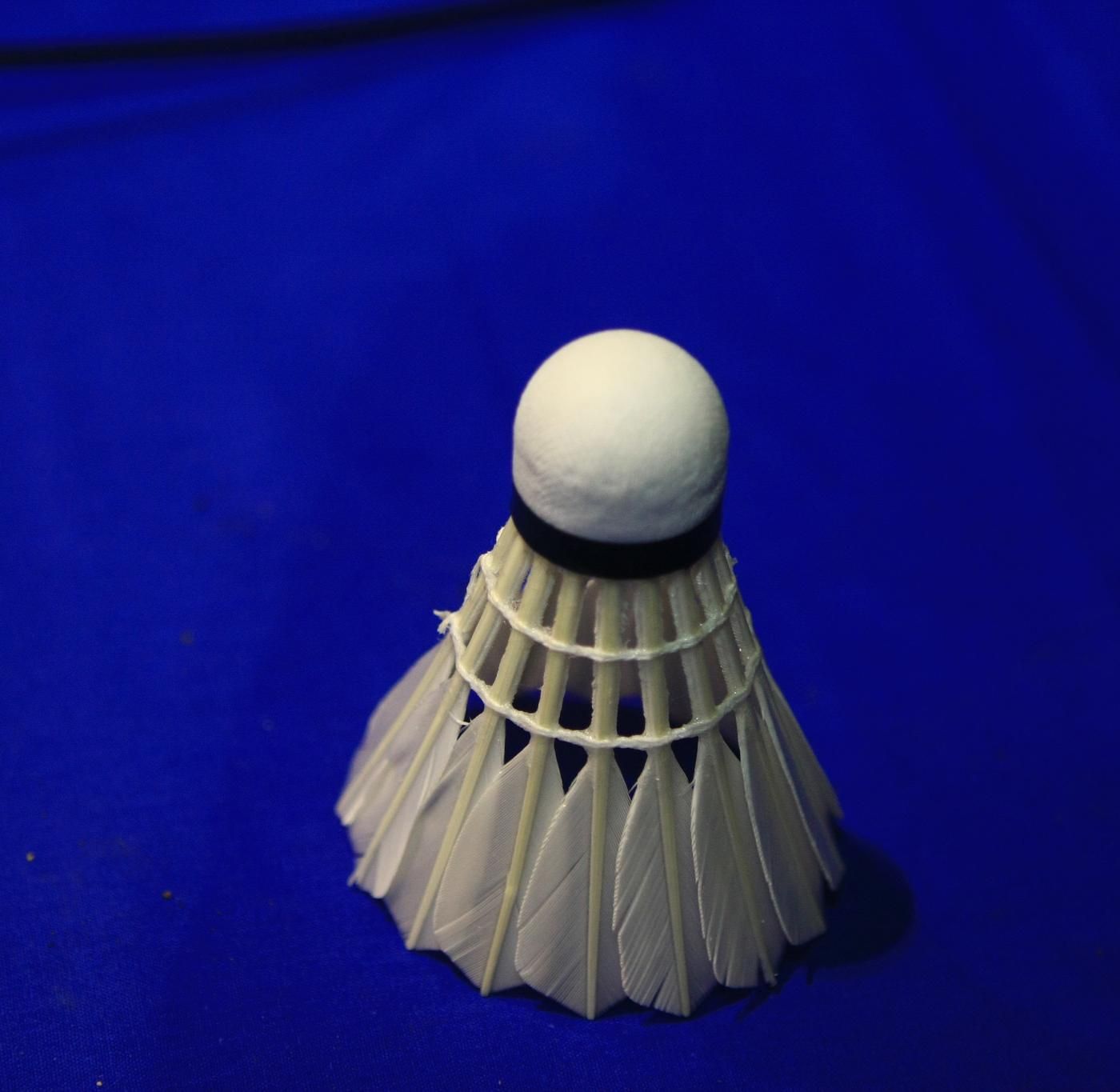
Radiolab
Lose Lose
00:25:21
No matter what sport you play, the object of the game is to win. And that’s hard enough to do. But we found a match where four top athletes had to do the opposite in one of the most high profile matches of their careers. Thanks to a quirk in the tournament rules, their best shot at winning was … to lose. This episode, we scrutinize the most paradoxical and upside down badminton match of all time, a match that dumbfounded spectators, officials, and even the players themselves. And it got us to wondering … what would sports look like if everyone played to lose? Reported by Latif Nasser. Produced by Matt Kielty and Annie McEwen and Latif Nasser. Special thanks to Aparna Nancherla, Mark Phelan, Yuni Kartika, Greysia Polii, Joy Le Li, Mikyoung Kim, Stan Bischof, Vincent Liew, Kota Morikowa, Christ de Roij and Haeryun Kang. Support Radiolab by becoming a member today at Radiolab.org/donate.
Loading summary
Transcript228 lines
- [00:00]
Dr. Horton Advertiser
Your new home is now ready. Dr. Horton, America's builder has new homes that are ready today with new construction communities in Ellensburg and throughout the Greater Seattle area. Dr. Horton has the right home for you. At Dr. Horton, we're still building with flexible living spaces, smart home technology and two and three car garages. More communities and more homes available every day. Find your new home in ellensburg now ready@drhorton.com Dr. Horton, America's builder and equal housing opportunity builder.
- [00:32]
Latif Nasser
If your small business has a problem.
- [00:34]
State Farm Advertiser
You could say, just my luck. But you should say, like a good.
- [00:39]
Latif Nasser
Neighbor, State Farm is there and we'll.
- [00:41]
State Farm Advertiser
Help get you back in business. Like a good neighbor, State farm is there.
- [00:48]
Lowe's Advertiser
One day only Thanksgiving Day deals are coming to Lowes.com/members get early access to online Black Friday doorbuster deals on gifting favorites like the still trending cobalt mini toolbox for just $14.98. Don't miss up to 50% off for one day only. At Lowe's.com we help you save valid 1127 only on Lowe's.com member only doorbusters and midnight Eastern loyalty programs subject to terms and conditions. See lowe's.com terms for details. Subject to change while supplies last.
- [01:19]
Latif Nasser
Oh, wait, you're listening.
- [01:20]
Radiolab Producer
Okay.
- [01:21]
Kim Ha Na (Korean Badminton Player)
All right.
- [01:22]
Latif Nasser
Okay. All right. You're listening to Radiolab.
- [01:28]
Mike Pesca
Radiolab from wnyc.
- [01:36]
Robert Krulwich
Hi, I'm Robert Kwilowicz.
- [01:38]
Latif Nasser
And I'm Latif Nasser.
- [01:39]
Robert Krulwich
This is Radiolab. And today we're going to do something completely upside down and inside out.
- [01:44]
Latif Nasser
Yes, it's a sports story, sort of.
- [01:46]
Robert Krulwich
But like none you've ever heard. And therefore we found a reporter who is a sports reporter. Like none you've ever heard.
- [01:52]
Mike Pesca
Yeah, I've been to a gym lately.
- [01:54]
Latif Nasser
Mike Pesca, he's the host of the Gist podcast put up by Slate, formerly of npr, still sometimes works with npr. And now he's here telling the story to us. Yeah. And how did you even first hear about this? Were you covering it?
- [02:07]
Mike Pesca
Oh, yeah. Yeah.
- [02:08]
Latif Nasser
So this is MORNING EDITION from NPR News. I'm Renee Montagne.
- [02:14]
Mike Pesca
I was covering the 2012 Olympics for NPR.
- [02:16]
Latif Nasser
Good morning. Hello. And I declare open the Games of.
- [02:20]
Mike Pesca
London, the stories of the Olympics. You try to find your own stories that are obscure, but if there's a big story, you chase it. So in those Olympics, so for you.
- [02:30]
Latif Nasser
What were the most notable achievements in the first week of the Games? Well, it's history of the best kind.
- [02:35]
Mike Pesca
Microsoft's breaking the all time record, obviously.
- [02:37]
State Farm Advertiser
So in over 100 years nobody's won.
- [02:39]
Torsten Barrett (Olympic Badminton Referee)
As many medals at the Olympic Games.
- [02:41]
Mike Pesca
And everyone knew that a Bolt.
- [02:45]
Torsten Barrett (Olympic Badminton Referee)
Here comes.
- [02:46]
Latif Nasser
You said Bolt.
- [02:47]
Mike Pesca
And his record setting quest in the 100 would be huge.
- [02:49]
Torsten Barrett (Olympic Badminton Referee)
Oh, he's returned his title in the most emphatic way.
- [02:54]
Robert Krulwich
Brilliant.
- [02:56]
Mike Pesca
But then this badminton story pops up and everyone rushes to figure out what the heck's going on with badminton.
- [03:09]
Latif Nasser
Because the 2012 London Olympics badminton Tournament just. It took this somewhat obscure sport and it morphed it into this bizarro thought experiment about competition and integrity and what it means to win.
- [03:27]
Robert Krulwich
Okay.
- [03:28]
Mike Pesca
But mostly I think that the player.
- [03:30]
Latif Nasser
Although to be fair, Mike, he jumped on this story for very personal reasons.
- [03:36]
Mike Pesca
As a New Yorker, I say a lot of words and they're mispronounced and the NPR audience would jump on them. But I always can say the N in badminton and get a lot of plaudits. So I'm attracted to badminton.
- [03:46]
Robert Krulwich
What's the wrong way to say badminton?
- [03:48]
Mike Pesca
Most people say badminton.
- [03:50]
Latif Nasser
Badminton, like you're talking to some handwear.
- [03:53]
Mike Pesca
At wintertime, like you're chastising a playful cat.
- [03:56]
Latif Nasser
Right.
- [03:56]
Mike Pesca
Badminton bad.
- [03:58]
Latif Nasser
And then also, you know, you and I probably think of badminton as this backyard, fun, silly game. But according to Mike, no, this is anything but.
- [04:11]
Mike Pesca
It has nothing to do with the badminton you play in your backyard. It's much faster than you think it would possibly look.
- [04:20]
Latif Nasser
You get these players flying all over the court, stretching, reaching, diving.
- [04:25]
Mike Pesca
The skill of the competitors is, you know, readily apparent.
- [04:29]
Latif Nasser
This is pulsating badminton.
- [04:32]
Mike Pesca
A shuttlecock is a funny thing, and perhaps not as impressive a thing as a tennis ball, but it looks, you know, a lot like tennis. And there's a lot of tension, severe pressure, and there's a lot of grunting. And it totally seems like every bit of a legitimate and highly skilled sport.
- [04:55]
Latif Nasser
Wait, I'm going to start. Okay, so. So, Robert, so you haven't seen this yet, but I would like to show you something. Okay. This is an ad. Yeah, this. Okay. This is the game that is at the center of this whole story. Women's doubles group A, Women's doubles badminton. It is not a medal round. It's a. In the group play stage. There's a huge crowd here. Like, the place is packed.
- [05:27]
Mike Pesca
Yeah.
- [05:27]
Latif Nasser
Please welcome, representing the People's Republic of.
- [05:30]
Mike Pesca (Intro)
China, Wang Shaoli and Yuyang.
- [05:33]
Latif Nasser
So these two teams come out. You got China, yellow and red uniforms, yellow shoes. So here come versus Korea, purple and white. Yeah. And let's just skip ahead here. All right, so here we go. Game on. This is the first serve. Korean serve. So the Korean player flicks her wrist, the shuttlecock goes over the net.
- [06:02]
Robert Krulwich
China returns right into the net.
- [06:06]
Latif Nasser
That was it. That was the whole thing.
- [06:07]
Robert Krulwich
Well, that was just a.
- [06:08]
Latif Nasser
All right, so Korea, second serve in Chinese return. And same thing again.
- [06:16]
Robert Krulwich
It's the net again.
- [06:17]
Latif Nasser
Yeah. So the service is turned over. Now the Chinese are serving. Okay, China, Korea. China into the net again. Yeah.
- [06:28]
Robert Krulwich
This is not exactly scintillating, I just gotta tell you.
- [06:31]
Latif Nasser
Okay, well, just watch this next point. So the Korean player serves it.
- [06:38]
Robert Krulwich
Yeah.
- [06:38]
Latif Nasser
It sails over the net. And then it goes, goes, goes, goes, goes. And the Chinese player clearly is right there. She has it. She then winds up just a slight bit. Like, you can see. It's like she has this deep ingrained muscle memory from years of doing this. She winds up, she's about to hit it, and then she stops, and the shuttlecock just plunks onto the floor inbounds point to Korea. And then, tellingly, she looks back at the back corner of the court where her coach is sitting.
- [07:12]
Robert Krulwich
They both are.
- [07:13]
State Farm Advertiser
Yeah.
- [07:14]
Robert Krulwich
This is a fix. They're fixing this. Like this is.
- [07:17]
Latif Nasser
Yes.
- [07:18]
Mike Pesca
But there have been plenty of occasions where one side wants to lose, and it ain't hard to lose. And the more important thing is it ain't hard to get away with it.
- [07:25]
Latif Nasser
Usually you wouldn't even notice it.
- [07:28]
Mike Pesca
You know, it's the difference between a couple serves over the line, a couple balls into the net.
- [07:33]
Latif Nasser
But in this case, as the match goes on, you start to realize it's very lethargic. Start from both case. The Korean players seem to be trying to lose, too. They're serving faults. Yeah. Yes.
- [07:45]
Torsten Barrett (Olympic Badminton Referee)
They've got to get into rally, of course.
- [07:47]
Robert Krulwich
But why would everybody be trying to lose like both sides?
- [07:50]
Latif Nasser
Well, it's actually a strategy because the way the tournament is laid out, both these teams are gonna be moving on to the medal rounds. But whoever wins this game is gonna have to play another Chinese team, a really strong team.
- [08:07]
Robert Krulwich
I see.
- [08:07]
Latif Nasser
And whoever loses is gonna play a way easier Danish team. So both teams are hoping to lose.
- [08:17]
Mike Pesca
Yeah. And it is the rare instance where you have both sides incentivized to lose that you get something that should be scored by Spike Jones. It's a little bit of a prisoner's dilemma. Right. Either side could lose, but when both.
- [08:31]
Latif Nasser
Want to lose, it becomes this surreal waiting game.
- [08:35]
Mike Pesca
Right.
- [08:35]
Latif Nasser
You know who's going to crack first and score a point.
- [08:38]
Mike Pesca
And so you got the best players.
- [08:41]
Latif Nasser
In the world who just start hitting the shuttlecock out of bounds. They're surfing fault after Fault.
- [08:48]
Mike Pesca
Faulting on purpose.
- [08:49]
Latif Nasser
And they're just hitting the ball straight in the net.
- [08:50]
Mike Pesca
Hitting the shuttlecock into the net.
- [08:52]
Latif Nasser
I'm sorry. You know, it's blindingly obvious what's going on.
- [08:55]
Mike Pesca
And you know, they're both trying to lose.
- [08:57]
Latif Nasser
Sometimes they hit it below the net.
- [08:59]
Torsten Barrett (Olympic Badminton Referee)
And that is unforgivable.
- [09:01]
Latif Nasser
They're hitting it straight into the ground.
- [09:03]
Mike Pesca
All but tripping over their own shoelaces purposefully.
- [09:06]
Latif Nasser
And so what you get is serve up.
- [09:09]
Robert Krulwich
Oh, into the net.
- [09:10]
Latif Nasser
Point after point of just terrible badminton. And it just devolves into this absurd, repetitive, crazy making lose a thon. This is an absolute disgrace.
- [09:27]
Robert Krulwich
So obviously lame. I mean, this is not. This is not sport. This is.
- [09:32]
Latif Nasser
But it is kind of a sport because. And this is why I really love it. At a certain point, these two teams have to start competing with each other to lose.
- [09:42]
Robert Krulwich
What?
- [09:43]
Latif Nasser
Let me play you this point. So China serves it. Korea hits it back, but it's going way out of bounds. Now, in a normal world, China would obviously let that fall so that they could take the point. But they lunge to save it, right? And they're hitting it back. Now, Korea. Then they are like, no, no, no, you know what? We're pretty sure we want it out of bounds. They hit it in the opposite direction, even further out of bounds. So now China goes to save it once again, but they don't get there in time. So the point goes to China actually didn't want. And the Koreans wanted the whole time.
- [10:17]
Robert Krulwich
So what are you saying then?
- [10:18]
Latif Nasser
Well, it's like they invented a whole new sport which is the exact opposite of badminton. It is photo negative badminton. But then towards the end of the first set, tournament referee has been called for. Out comes the referee. And here comes Torstenberg.
- [10:37]
Torsten Barrett (Olympic Badminton Referee)
Hello, Torsten speaking.
- [10:38]
Latif Nasser
Hi, how are you? Torsten Barrett was the head Olympic badminton referee who got that call.
- [10:43]
Torsten Barrett (Olympic Badminton Referee)
And I also heard the spectators, so I went to watch. It looked pretty awful. This was not right.
- [10:49]
Latif Nasser
The referee is pulling the players together.
- [10:52]
Torsten Barrett (Olympic Badminton Referee)
And told them that they were not playing seriously and they were making a very serious mistake. And they played stupid and said, no, we're playing, we're trying our best.
- [11:08]
Latif Nasser
We were actually able to get in touch with three of the four players in that match. Both Korean players, Jung Kyung Un and Kim Hana, and also one of the Chinese players, Wang Xiaoli. And Wang Xiaoli told me they were trying to lose in that match.
- [11:32]
Kim Ha Na (Korean Badminton Player)
But what we didn't expect, South Korea would do the same thing.
- [11:38]
Latif Nasser
And as for the Koreans, Jung Kyung Un said That they too were trying to lose, at least during certain moments in the game. But when the crowd started to boo and the ref came out, her partner.
- [11:51]
Kim Ha Na (Korean Badminton Player)
Kim Ha Na said that I was surprised and embarrassed.
- [11:55]
Latif Nasser
They were just scared.
- [11:57]
Kim Ha Na (Korean Badminton Player)
We just wanted to get out of the court as soon as possible.
- [12:03]
Latif Nasser
So Torsten walks off the court.
- [12:04]
Torsten Barrett (Olympic Badminton Referee)
They went on court again.
- [12:06]
Latif Nasser
And then the second serve after Torsten walks off the court, nothing but Nash. So for the next few points, it does not get much better.
- [12:18]
Torsten Barrett (Olympic Badminton Referee)
No, it didn't look like world class Benton at all.
- [12:23]
Latif Nasser
So the set comes to an end. Korea wins the set. And while the players are waiting on the sidelines, here comes the tournament referee again. Torsten comes back onto the court. He walks up to the players and he pulls out of his pocket almost subtly and shows to the players this black card.
- [12:40]
Torsten Barrett (Olympic Badminton Referee)
The black card which means disqualification.
- [12:43]
Latif Nasser
This is absolutely extraordinary. He has given both teams a black card or has he threatened them with a black card? I'm really not terribly sure. The players have returned to court.
- [12:59]
Torsten Barrett (Olympic Badminton Referee)
It was now that they should play or they would be in deep. Sorry, maybe I shouldn't say so.
- [13:06]
Latif Nasser
Josh.
- [13:07]
Robert Krulwich
The black card says that pretty clearly.
- [13:10]
Torsten Barrett (Olympic Badminton Referee)
The black card was out. And I told them in very clear words and very seriously that in order to help themselves, they better play. Now.
- [13:24]
Latif Nasser
The Korean player, Jang Kyung Eun said that she turned to her partner.
- [13:28]
Kim Ha Na (Korean Badminton Player)
And I told her, they're them and we are we. So let's just play and do our best.
- [13:36]
Latif Nasser
The second set starts and pretty quick. China's Wang Xiaoli told me both sides.
- [13:44]
Kim Ha Na (Korean Badminton Player)
Changed a little bit.
- [13:45]
Torsten Barrett (Olympic Badminton Referee)
Instead of just serving into the net.
- [13:47]
Latif Nasser
Things started to get better. A rally.
- [13:48]
Torsten Barrett (Olympic Badminton Referee)
They would get the rally going.
- [13:50]
Latif Nasser
But then as the points kept coming.
- [13:52]
Torsten Barrett (Olympic Badminton Referee)
You started to notice like they were playing very slowly.
- [13:55]
Latif Nasser
There's something still really off here.
- [13:57]
Torsten Barrett (Olympic Badminton Referee)
They were not hitting the ball very hard.
- [14:01]
Latif Nasser
Now, the Korean team wouldn't admit this, but Wang Xiao Lee said that both.
- [14:05]
Kim Ha Na (Korean Badminton Player)
Teams didn't change the basic fact were.
- [14:09]
Latif Nasser
Still trying to lose. Which I have to say is exactly what it looks like when you watch it. Because for the rest of the match, you get a bunch of these points where, like where just. They'll lob it super high, you know, as if to say, hey, smash it down on us. Take your point. Or they will, you know, hit it out of bounds and then facepalm, just, you know, practice their swing after they missed one. Just to say, oh, you know, my mechanics are off. I just gotta just practice this a few more times because it's like we've entered a whole Third iteration of this game where it's like they're not just trying to lose, they're trying to cover up badminton. Cover up badminton. You're trying to lose, but you're trying to look like you're trying to win.
- [14:55]
Robert Krulwich
I don't think they're seeing anybody here. No.
- [15:00]
Latif Nasser
So finally, after 20 long minutes of this, the Korean team loses the match. By winning it tonight has left me with a very nasty taste in the mouth. Tonight was not sport. It was a disgrace. Good night. So all four players walked off the court and Kim Ha Na told them.
- [15:31]
Kim Ha Na (Korean Badminton Player)
It was not a pleasant winning at.
- [15:33]
Latif Nasser
All, that her parents were in the audience that day. And afterwards they asked her what happened.
- [15:40]
Kim Ha Na (Korean Badminton Player)
What happened and why, why do you have to get the booze from the audiences and. Etc. And I, I was, I was sad and felt defeated. So I didn't even want to talk to my mom. So I remember I just went to the hotel and had rest.
- [15:59]
Torsten Barrett (Olympic Badminton Referee)
And the next morning at 8 o', clock, all four pairs in fact were disqualified according to the disciplinary regulations of the Badminton World Federation, which has a.
- [16:09]
Latif Nasser
Rule on the books that you can be disqualified for failing to use your best efforts.
- [16:14]
Torsten Barrett (Olympic Badminton Referee)
And the same evening they were on.
- [16:16]
Latif Nasser
The train home, they were just thrown out of the Olympics.
- [16:20]
Kim Ha Na (Korean Badminton Player)
A scandal at the Olympics.
- [16:22]
Latif Nasser
This whole to do about the badminton players. Everyone was talking about some losers. Shuttlecocks were going out, Tippy tapping the shuttlecock into the net like a five year old in the backyard picnic. It was downright humiliating.
- [16:35]
Torsten Barrett (Olympic Badminton Referee)
It was just sad that they were committing suicide in that tournament.
- [16:46]
Kim Ha Na (Korean Badminton Player)
At that time. The punishment hit me quite hard. I was very sad and I felt helpless. I was perplexed and didn't know what happened. We just cried.
- [17:07]
Robert Krulwich
This doesn't sound like it's getting any better.
- [17:09]
Latif Nasser
No, but there's still more after the break.
- [17:12]
Robert Krulwich
Okay.
- [17:13]
Kim Ha Na (Korean Badminton Player)
Hi, this is Neheleb from Hamburg, Germany. Radiolab is supported in part by the Alfred P. Sloan Foundation Enhancing public understanding of science and technology in the modern world. More information About Sloan@www.sloan.org.
- [17:28]
Radiolab Producer
Radiolab is sponsored by omgs.com There is new research on pleasure that's actually fascinating. And the site OMG yes. Makes it accessible to everyone. OMG yes shares finding from the largest ever study into women's pleasure and intimacy. In partnership with researchers at Yale and Indiana University. They asked tens of thousands of couples what they wished they'd discovered sooner. They found the patterns in those discoveries. And all that wisdom and pleasure and intimacy is organized as hundreds of short videos, animations and how to's on omgs.com and guess what? Half of OMGS users are men. Hooray for generous lovers. Right? You'll find specific research backed techniques. It's the science of sexual generosity in action. See what they discovered today@omgs.com that's omgs.com.
- [18:21]
Dr. Horton Advertiser
Your new home is now ready. Dr. Horton, America's builder has new homes that are ready today with new construction communities in Ellensburg and throughout the Greater Seattle area. Dr. Horton has the right home for you at Dr. Horton. We're still building with flexible living spaces, smart home technology and two and three car garages. More communities and more homes available every day. Find your new home in Ellensburg now ready@drhorton.com Dr. Horton, America's builder and equal housing opportunity builder.
- [18:52]
State Farm Advertiser
If your small business has a problem, you could say, just my luck. But you should say like a good.
- [18:59]
Latif Nasser
Neighbor, State Farm is there and we'll.
- [19:01]
State Farm Advertiser
Help get you back in business. Like a good neighbor, State farm is there.
- [19:09]
Lowe's Advertiser
One day only Thanksgiving Day deals are coming to Lowes.com/members get early access to online Black Friday doorbuster deals on gifting favorites like the still trending cobalt mini toolbox for just $14.98. Don't miss up to 50% off for one one day only at lowe's.com we help you save. Bowed 11:27 only on lowe's.com, member only doorbusters and midnight Eastern loyalty programs subject to terms and conditions. See Lowews.com terms for details. Subject to change while supplies last.
- [19:41]
Robert Krulwich
We're back. I'm Robert Krulwich.
- [19:43]
Latif Nasser
And I'm Latif Nasser.
- [19:44]
Robert Krulwich
This is Radiolab.
- [19:45]
Latif Nasser
And when we left off, the Korean and Chinese women's badminton teams had just been disqualified, kicked out of the Olympics.
- [19:53]
Robert Krulwich
So then what happened to the. With the players like Ru, what happened to them?
- [19:56]
Latif Nasser
Well, all four of them did keep playing badminton professionally after this. Jung Kyung Un from Korea even went on to win the bronze in Rio. But at the time, this was a brutal punishment for all of them.
- [20:10]
Robert Krulwich
Well, but you know, they did something wrong. This wasn't right. Right.
- [20:15]
Mike Pesca
You know, I don't even. I question whether it's even unethical. I think it's ethical in a way. What they did, what the players did, I do, I think it's ethical.
- [20:24]
Latif Nasser
How?
- [20:25]
Mike Pesca
Okay, so is the definition of ethics in sports to. To win? Sure. Without cheating? Yes. Does that mean to win every point? No, not necessarily. You know, in baseball there's the thing called the intentional walk.
- [20:41]
Latif Nasser
Sure.
- [20:41]
Mike Pesca
In football, a Team will take a safety instead of punting and letting the other team score a touchdown. So this is a calculation where a point here or there is not as important as the whole. And the whole is the game. So okay, let's move back. Let's pan out a little more. I think an individual game is often lost. Look, we're not going to put our good starter here. We're going to manage the lineup because the goal is to win the championship. And the thing to remember about these players is if what we want is players who are hyper competitive and actually want to win at all costs, that's exactly why they were losing so badly. Because they wanted to win the overall championship at all costs. And the badminton federation had a set of rules that all but guarantee that this would happen.
- [21:27]
State Farm Advertiser
Well, yeah, I mean it's stupid to have an event where people are trying to lose if that event is a sporting event. Especially at the apex of, you know, the only time people care about badminton it seems really.
- [21:40]
Latif Nasser
So this is Chuck Klosterman. We called him in because he writes a lot about sports and also because he wrote the Ethicist column for the New York Times Magazine.
- [21:49]
State Farm Advertiser
Now is this some kind of tragedy? Well, it's not, I guess unless badminton's really important to you than it probably is.
- [21:57]
Latif Nasser
Well, in this case I think the thing that people got really upset about is this idea of the Olympic ideal. In the name of all the competitors, I promise that we shall take part in the Olympic Games, the athlete's oath, in the true spirit of sportsmanship for the glory of the sport and the honour of athletes. To transcend in the way that as a superb athlete you're transcending your humanity. But then also as like this representative of your country and I think it did poke a lot of people, like a lot of people did seemingly get kind of upset about it.
- [22:30]
State Farm Advertiser
Well, yeah, I mean for some reason it is disturbing to see athletes failing on purpose. That just it seems to kind of like tap into some like a.
- [22:42]
Latif Nasser
Feels immoral somehow.
- [22:43]
Torsten Barrett (Olympic Badminton Referee)
Tonight has left me with a very.
- [22:45]
Latif Nasser
Nasty taste of athletes. Yes.
- [22:47]
State Farm Advertiser
Like I don't know if not trying in a sporting event is a moral question, but it feels that way when you see it happen.
- [22:54]
Latif Nasser
That is unforgivable.
- [22:57]
State Farm Advertiser
Here again, one of the interesting things about sports is that we watch these adults playing multi million dollar games but they're the same games that like a six year old or seven year old plays. So when you have a seven year old kid you would say it doesn't matter if you win or lose. It doesn't matter what happens. Just play hard. You don't have to succeed. It's the trying that matters. So when you see people at the highest level not trying, there's, it's almost. It sort of wrecks the entire idea of why we play sports at all. You know why if you're at a playground and two kids race across the playground to see who can get to the swing faster or whatever, like, that's like a biological thing. Maybe we are biologically driven to compete. So that's the baseline expectation of what we have of these badminton players, that they will try to compete.
- [23:39]
Robert Krulwich
But it seems to me there's an opportunity here for true athleticism in a kind of topsy turvy way.
- [23:45]
Latif Nasser
Flip it and reverse it.
- [23:45]
Robert Krulwich
Flip it and reverse it and see if you can do that as well as you do the other one.
- [23:49]
State Farm Advertiser
I mean, sports only work one way though. They don't work both ways. I mean, it would be, be like going to your wife and saying like, okay, you say you really love me, prove it by hating me in a creative way. Or to go to a great piano player and say like, if you're so awesome at playing piano, bang your fist against the keys in a way that I will be, you know, I will be sickened by.
- [24:16]
Robert Krulwich
But if we take it out of matters of the heart and put it back on the field, what would be the most radical solution that you could imagine if your desire was to convincingly and astonishingly athletically lose the ball?
- [24:29]
State Farm Advertiser
I suppose if they were both trying to do it in the most convincing way, it would be. That was not really the case here.
- [24:38]
Mike Pesca
Well, I guess they, they never confronted it. How do you lose on purpose if the other side's also trying to lose on purpose? And I'm trying to think, there are some sports. So in football, let's say, in American football, let's say both sides wanted to lose. Well, here's how the sport would go. You can't make the other team score, but you can score a safety on yourself. So the quarterback would get the ball and start running towards zone, end zone. And then there'd be a jailbreak by the defense to tackle the quarterback before he got overtake him. Baseball is hard. You could hit the batter. That would be, that would be an interesting game.
- [25:11]
Latif Nasser
Yeah.
- [25:12]
Mike Pesca
What, what about darts? Instead of aiming at the dartboard, just turning around and aiming at your opponent.
- [25:17]
Latif Nasser
That's like the, that's like the baseball strategy.
- [25:19]
Mike Pesca
How about the sport of bodybuilding? Think about the implications.
- [25:22]
Latif Nasser
Bodybuild I would win that. I would win that.
- [25:25]
Lowe's Advertiser
Would you?
- [25:25]
Latif Nasser
I think I would win.
- [25:26]
Mike Pesca
I see like a Will Ferrell movie out of this.
- [25:28]
Robert Krulwich
Yes, that's what I've been thinking.
- [25:30]
Latif Nasser
The loser.
- [25:31]
Mike Pesca
We get to a point, our team. All right, this is what we need. You got to go out there.
- [25:34]
Latif Nasser
No. And then there's a loser on the other team who's. Who's also very.
- [25:38]
Mike Pesca
Yeah. Each other down, two losers.
- [25:41]
Latif Nasser
Yeah, yeah, yeah. And then. And then.
- [25:50]
Robert Krulwich
You can hear more of Mike Peska on his podcast, the Gist. More of Chuck Klosterman in his latest book. But what if we're wrong? Big thanks to all the players who talked to us and to those who helped us get those interviews. Joy Lee, Mi Kyung Kim, Yuni Kartika.
- [26:06]
Latif Nasser
Thanks to Aparna Nancharla, who came in and helped us puzzle this whole match out. And in addition, a special thanks to Gracia Pauli. Gracia was on the Indonesian badminton team in those same Olympics. And an hour after the match we featured, she faced off against a different Korean team. All four players in that match were also disqualified for not using their best efforts to win. She really helped us understand what it was like to be in that situation.
- [26:36]
Robert Krulwich
This story was produced by Matt kielty and Annie McKeown and Latif Nasser. I am Robert Krulwich.
- [26:42]
Latif Nasser
And I'm Latif Nasser.
- [26:44]
Robert Krulwich
And I guess that ends the game at this point.
- [26:47]
Latif Nasser
Point.
- [26:51]
Mike Pesca
Go to the next message.
- [26:52]
Latif Nasser
Press six.
- [26:53]
Mike Pesca (Intro)
Hi, it's Mike. I'm going to do this. It's possible that even though this is the fifth time I've said David Gabell wrong, but I'm going to do it once and I'm going to do it with an intro of myself. And here goes. Hi, this is Mike Pesca here to tell you that Radiolab is produced by Jad Abumra. Dylan Keefe is our director of sound design. Soren Wheeler is senior editor. Jamie York is our senior producer. Our staff includes Simon Adler, Brenna Farrell, David Cabell, Matt Kielty, Robert Krolwich, Annie McEwen, Lateef Nassar, Melissa O', Donnell, Arianne Wack and Molly Webster, with help from Tracy Hunt, Nyjar Farrell, Nojar Fatali, Phoebe Wang, Katie Ferguson, Alexandra Lee Young W Harry Fortuna, and Persia Verlin. Our fact checkers are Eva Dasher and Michelle Harris. Thanks.
- [27:42]
Mike Pesca
Here's an idea I have. There's an old riddle, and it goes like this. A king talks to his two sons, two princes, and he says, here's what we're gonna do get those horses out of the stable. Here's what I want you to do. I want you to jump on your horses and ride to the city gate. Whichever horse gets to the city gate last, you're gonna inherit the fortune. Maybe he's a crazy king. So the two princes look at each other. They both think. And then they jump on their horses and they ride fast as they can. Why?
- [28:08]
Latif Nasser
I don't know.
- [28:09]
Robert Krulwich
To rein in their horses at the very last minute, jump off the horses and say, whoa. And then wait until the other one. I don't know.
- [28:18]
Latif Nasser
Are they planning on just removing a section of the gate and then just smashing it up against the other horse?
- [28:25]
Mike Pesca
Yeah. No. That's terrible.
- [28:27]
Latif Nasser
No. Okay.
- [28:28]
Mike Pesca
You like the answer?
- [28:29]
Robert Krulwich
What is the answer?
- [28:30]
Mike Pesca
They jumped on each other's horse. They jumped on the other brother's horse. They maybe.
- [28:35]
Robert Krulwich
Let me just think about that.
- [28:36]
Latif Nasser
That was fun.
- [28:38]
Robert Krulwich
The other source, of course, he said.
- [28:39]
Mike Pesca
Whichever horse gets there last. So how.