← Radiolab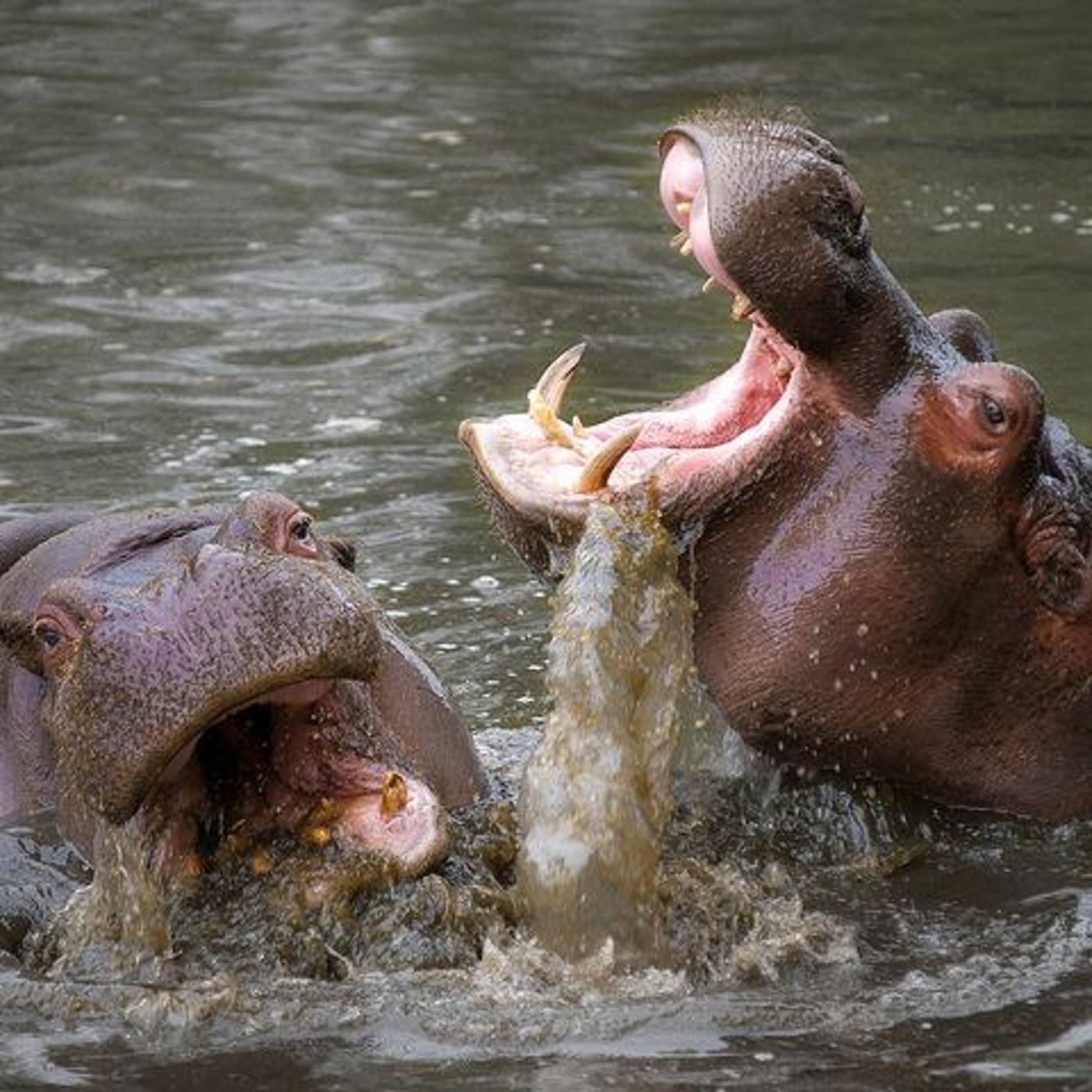
Radiolab
Making the Hippo Dance
00:29:07
We play some never-released tape from the vault, and reveal a bit about what techniques we used to try and make it sing.
Loading summary
Transcript189 lines
- [00:00]
Jad Abumrad
Introducing Fidelity Trader plus with customizable tools and charts you can access across all your devices. Try our most powerful trading platform yet@fidelity.com.
- [00:09]
Announcer
TraderPlus investing involves risk, including risk of loss. Fidelity Brokerage Services LLC Member NYSE SIPC.
- [00:17]
Jad Abumrad
Get ready to shop Lowe's Black Friday doorbuster deals to save $150 on a.
- [00:21]
Robert Krulwich
30 inch Blackstone griddle now $299 plus choose a Whirlpool top load washer or Midea top freezer refrigerator for just $. These limited time doorbuster deals go fast, so get holiday ready. Today at Lowe's we help you save valid 1128 through 12. One selection varies by location while supplies last. See Lowes.com for more details. I quite.
- [00:48]
Announcer
You're listening to Radiolab, the podcast from.
- [00:52]
Jad Abumrad
New York Public Radio. Public Radio WNYC.
- [00:58]
Scientist/Guest Speaker
And npr.
- [01:00]
Jad Abumrad
Three, two, one. Hello, I'm Jad Abumra.
- [01:02]
Robert Krulwich
And I'm Robert Krulwich.
- [01:04]
Jad Abumrad
This is Radiolab, the podcast, and we're working busily on season five. We thought while we do that we would bring you a little extra as an extra. Yeah, a little extra.
- [01:13]
Robert Krulwich
So we very recently went to the Koshland Science Museum run by the National Academy of sciences in Washington D.C. to talk to an audience. Not. Well, there were a bunch of scientists there, but they weren't all scientists.
- [01:25]
Jad Abumrad
No, they were mostly just. Just people.
- [01:27]
Robert Krulwich
And we asked those just people to consider three very puzzling radio questions that we have every time we put our show together. So here is that conversation.
- [01:38]
Jad Abumrad
So we figure since this is a science place, you guys are probably science inclined folk. We would talk about some of the troubles that we run into when we talk about science or try to problems like density, like unfriendliness of ideas. But they're great ideas. But how do you somehow make them friendly to people who maybe don't like or don't know that they like science? So we're going to kind of go through some of our favorite problem solving techniques.
- [02:07]
Robert Krulwich
Yeah, we have hurdles. The most obvious hurdle is when you step into a room to have a conversation with someone who is smart, knowledgeable, very knowledgeable actually, and articulate. And they start talking and you think in the back of your mind, uh.
- [02:25]
Jad Abumrad
Oh, and they write papers like, which is going to be the subject of our first clip. Selective silencing of cell communication and how it influences anterior posterior pattern formation and C. Elegans, which is a heavy collection of words. Yeah, it's like heavy like a. Like a hippo, which is a wonderful animal but Heavy. And so I think one of our goals is to take the hippo and strap on some ballet shoes and make it do a pirouette.
- [02:54]
Robert Krulwich
So here is an example. What you're going to hear is a woman named Cynthia Kenyon, brilliant scientist. She's talking about a little worm that she has figured out. She's done something to the worm that allows the worm to live longer than the worm would ordinarily live. Not just a little longer, but like, twice as long. So just imagine that you're the one holding the mic, and this is what you hear.
- [03:18]
Scientist/Guest Speaker
The DAF16 gene makes a protein called the DAF16 protein. And that protein binds to the DNA where other genes are, and it activates a whole bunch of other genes. So the way it works is that the hormone binds to the Daf2 receptor, and when that happens, Daf2 receptor kind of squashes the activity of Daf16. It turns it down. Okay? So Daf16 can't bind to its genes in the DNA and make them more active. Okay? So when you come along with a mutation or some other way and you inhibit the activity of the receptor, now you liberate DAF 16. It's free, it springs into action, and it activates about 100 genes in the DNA. And these hundred genes each do a little tiny good thing for the cell.
- [04:08]
Jad Abumrad
Okay, so you're sitting there going, oh, yeah, I see. As if you know what she's saying.
- [04:13]
Robert Krulwich
No, I do know what she's saying, but it's interesting. Like you're scanning somebody talking like that. And, you know, you're hearing the right. You're hearing squish. I think she said squish. I think she said spring. Liberate.
- [04:22]
Jad Abumrad
She said liberate.
- [04:23]
Robert Krulwich
Liberate. Yeah. So her verbs, or her verbs are very, very useful to me. It's these nouns.
- [04:28]
Jad Abumrad
Daft.
- [04:29]
Robert Krulwich
Yes.
- [04:29]
Jad Abumrad
Deft two, daft 16.
- [04:32]
Robert Krulwich
So what do you do with a thing like that? What we've done here is we've used the verbs. We're happy with the verbs, but we've amplified and accessorized the nouns. I think.
- [04:41]
Jad Abumrad
No, I think it's the other way around, actually. We stole the nouns, replaced them with our own, and we amped up the verbs.
- [04:48]
Robert Krulwich
No, no. We took the nouns and we made them much more colorful. Anthropomorphized them, gave them character. Rich, rich storytelling.
- [04:57]
Jad Abumrad
Now we're on the same page.
- [04:57]
Robert Krulwich
Yeah.
- [04:58]
Jad Abumrad
Okay, here's what we do.
- [05:00]
Scientist/Guest Speaker
When we make a mutation in the DAF2 gene, we damage it. It actually causes it not to work as well. So that actually is kind of profound. That tells you right away that the worm has a gene in it that's shortening the worm's lifespan, which is why.
- [05:13]
Robert Krulwich
She calls it the Grim Reaper gene.
- [05:17]
Scientist/Guest Speaker
The Grim Reaper gene.
- [05:18]
Robert Krulwich
It's the gene that makes you die.
- [05:23]
Jad Abumrad
If you're a worm.
- [05:24]
Robert Krulwich
Right. So by damaging this gene, Cynthia and her team essentially are taking the Grim Reaper and knocking his knees out. Stop that.
- [05:35]
Scientist/Guest Speaker
Okay, so the question is, what exactly is the Daft2 doing to make the cell age more quickly?
- [05:40]
Robert Krulwich
Here is where the story gets a little weird.
- [05:45]
Scientist/Guest Speaker
Well, we found another gene.
- [05:47]
Jad Abumrad
Hello.
- [05:48]
Scientist/Guest Speaker
Whose name is also DAF, but it's a different DAF. It's called DAF16.
- [05:51]
Jad Abumrad
DAF16.
- [05:52]
Scientist/Guest Speaker
And this is a gene whose normal function is to keep you young. It's like a fountain of youth gene.
- [05:59]
Jad Abumrad
Yeah. So wait, there was a Grim Reaper gene before.
- [06:02]
Robert Krulwich
Right.
- [06:03]
Jad Abumrad
And now there's a fountain of youth genes.
- [06:04]
Robert Krulwich
That's what she discovered. And inside the worms, these genes are struggling with each other. Here's how it works. When. When a worm ages, normally, the DAF2.
- [06:13]
Scientist/Guest Speaker
Receptor, DAF2, kind of squashes the activity of DAF16. It turns it down.
- [06:20]
Robert Krulwich
Silence. And so the worm ages. Okay.
- [06:26]
Scientist/Guest Speaker
So when you come along and you inhibit the activity of the DAF2 receptor.
- [06:30]
Robert Krulwich
Ouch.
- [06:31]
Scientist/Guest Speaker
Now you liberate DAF16. It's free. It springs into action, and it activates about 100 genes.
- [06:39]
Jad Abumrad
1, 2, 3.
- [06:40]
Scientist/Guest Speaker
In the DNA go. These hundred genes each do a little tiny good thing for the cell. And altogether, it makes the cell live twice as long.
- [06:49]
Jad Abumrad
Okay, there you go.
- [06:51]
Robert Krulwich
Yeah. Now, the question is. And, you know, we come. I come out of National Public Radio. He comes out of sort of wnyc. So we come out of a sort of strong journalism tradition. You can't do any of these things in a newsroom for one of the issues here is how much should you embroider?
- [07:10]
Jad Abumrad
Yeah. It's also. I mean, the question, I think also is, how stupid do you want to be?
- [07:18]
Robert Krulwich
Yeah.
- [07:19]
Jad Abumrad
You know, I mean, this is something that we always argue about because there are. I mean, there's a thousand things we left out. And if pure, scientists would be very upset perhaps sometimes at all of the things that we didn't say here.
- [07:32]
Robert Krulwich
On the other hand, it is not an. And I speak from the television tradition where stupid is our middle name. We. I mean, I have been in network television for so long that if anything gets a little too complicated, I instantly turn to him and said, no, just cut it. Just get Rid of it. Just get rid of it. Because we don't have to go there. And then we just save ourselves all the sweat and all the bother. So what you do is you sort of. We watch each other's eyeballs to see, like, when have we come to the very, very, very edge of acceptable stupidity? Just. And repetition.
- [08:06]
Jad Abumrad
Yeah.
- [08:06]
Robert Krulwich
And then that's where we rest. Well, that is the second technique we.
- [08:10]
Jad Abumrad
Want to get to. Yeah, we want to talk about music. Wanted to sort of talk a bit about how we use the music and what are the principles that guide those choices. And to do that, I wanted to play a clip again. This is raw tape of a very interesting guy, a mathematician that we really like. We talk to a lot. His name is Steve Strogatz, who we were talking to him about. I forget what. And he just told us this thing about fireflies. So this is the raw tape here.
- [08:37]
Announcer
Not here, but in Southeast Asia, in Malaysia or Thailand, there are enormous congregations of fireflies along riverbanks. I mean, picture it. There's a riverbank in Thailand in the remote part of the jungle. You're in a canoe slipping down the river. There's no sound of anything. Maybe the occasional exotic jungle bird or something. And you're looking and you just see. I mean, I can't do it. It's radio, but you see, with thousands of lights on and then off, all in sync.
- [09:08]
Jad Abumrad
So that's a little clip of tape that I remember when he said that, we kind of looked at each other like, ooh, that's kind of interesting. We can work with that.
- [09:16]
Robert Krulwich
It's also very painterly. You get the whole idea, you know, you're on a river, you know, you're seeing things. So there's no particular reason to add anything.
- [09:26]
Jad Abumrad
However, here's that same clip of tape all gussied up. Here's what we did with it.
- [09:33]
Announcer
Picture it. There's a riverbank in Thailand, in the remote part of the jungle. You're in a canoe slipping down the river. There's no sound of anything. Maybe the occasional exotic jungle bird or something. And you're looking and you just see.
- [09:47]
Robert Krulwich
Whoop, whoops.
- [09:52]
Announcer
With thousands of lights on and then off, all in sync.
- [10:04]
Robert Krulwich
Imagine all the trees, as far as you can see, are all brilliantly lit and then totally dark. Brilliantly lit, total darkness.
- [10:16]
Jad Abumrad
All of them in sync.
- [10:17]
Robert Krulwich
Yeah. And no Westerner had ever seen this site. There was folklore, there was stories about it, but nobody'd gone in and photographed and captured samples.
- [10:26]
Jad Abumrad
Well, not until 1965.
- [10:28]
Announcer
This was done by John Buck. John Buck B U C K one of the great researchers.
- [10:33]
Robert Krulwich
According to the records.
- [10:35]
Jad Abumrad
I'm 92.
- [10:36]
Announcer
Buck and his wife Elizabeth. Elizabeth Masked Buck went to Thailand and captured bags full of male fireflies.
- [10:44]
Robert Krulwich
You could just reach up and shake the branches and fireflies rained down and.
- [10:50]
Announcer
Brought them back to their hotel room.
- [10:51]
Robert Krulwich
And we turned off the lights, we.
- [10:55]
Announcer
Turned them loose and saw that the fireflies flitted around on the walls and ceiling.
- [10:59]
Robert Krulwich
They flew back and forth, flashing randomly.
- [11:02]
Jad Abumrad
Elizabeth lay on the floor of the room. I was just tired. John stayed awake and he was the one who saw.
- [11:11]
Announcer
Within a few minutes, little groups, duos and trios formed and after a while, fourth one would join in.
- [11:18]
Robert Krulwich
They got closer and closer together and.
- [11:21]
Announcer
Then finally they were synchronized. The whole room was blinking in perfect harmony.
- [11:25]
Robert Krulwich
He was excited the next morning when he told me about it.
- [11:31]
Jad Abumrad
Twenty years later, John Buck is still asking this question.
- [11:34]
Robert Krulwich
Well, what is going on?
- [11:37]
Jad Abumrad
Today on Radiolab, we will do as Steve urges and step away from the individual to find mystery, beauty and order in the group. So there's a real question that I want to ask. Do all the noises and the bleeps enhance what Steve Strogatz, the story he told us, or does it rob it in some sort of way? I don't know.
- [12:05]
Robert Krulwich
I have a prejudice just because of my sheer awe of some of the deep musicality of things, things like that. This is Jad's territory, so he's not allowed to say, but there is something about just the bucks. For example, you hear first of all a string of voices. So you hear Robert's voice, you hear Jad's voice. Those are sort of radio y voices. And then you hear Steve Strogatz's voice, which is a rich voice. And then these two fabulously strange people, one of whom sounds like he's just basically made of sawdust. And I don't know what's with Mrs. Buck, she seems to be hanging upside down or whatever. But when you pick those things, so you get, ah, and you get this strange crazy quilt of just, of raw ingredients just in the sound. And you know, a lot of people would listen to the box and say, well, we can't use them. They're a little hard to hear, a little hard to understand. But this isn't that. This is a guy who just jumps in with both feet and gets happy that we're going to get gradations and variety in. And that's just the sound of voices. Let's talk about something else.
- [13:15]
Jad Abumrad
How about the problem of being in the tech. So what have we done? We've done. What was our first one? We did analogies. Metaphor number two is music and stuff. Music and stuff. Number three, be personal, be third grade. Let me explain what I mean. So the National Science foundation and other people have done a lot of surveys to see how people feel about science. And when they ask people, how do you feel about science? They will say, yeah, you know, I sort of like science, it's okay. But then if you ask the question, have you ever liked science? Well, they say, yeah, you know, when I was in third grade, I loved it because we would do these experiments that involved, you know, the absorbency of paper towels and boiling eggs. And it was amazing. It was so much fun. It was like something right in front of me. And it was me. I could do it.
- [14:04]
Robert Krulwich
And then came the Krebs cycle.
- [14:07]
Jad Abumrad
Yes, yes. Somewhere along the way that Jo gets drained away, probably by the corruption, right? Yeah.
- [14:13]
Robert Krulwich
So all over in a plot that was probably hatched in some dark cave somewhere not too far from Osama bin Laden, there was a meeting of science teachers from the ninth grade who decided that they would take the simply interesting business of swallowing something and having the banana finally get down so it can actually feed each individual cell. Each cell goes, oh, thank you very much. I'm going to eat a banana. This turned into a championship memorization contest in which you had to learn cycles within cycles, within cycles within cycles within cycles. And why, why, why? Here's why. Because the 9th grade teacher wanted to say, actually, thank you very much, Danny, Sheila and Freddy, you are the scientists. The other 37 of you can go home now.
- [14:56]
Jad Abumrad
Yes. And in an interest to invite those other 37 back in, we take a decidedly anti Krebs, anti Krebsian approach. And we live in a state of permanent third gradeness. In the sense we want this to be something that feels like it's yours again. And so the ways that we do that just sort of subtly are when Robert and I go and talk to somebody, we always use the sound of us walking in the door, knocking on the door. It's like the most important sound in all of Radiolab is that sound of knocking on the door.
- [15:29]
Robert Krulwich
I don't know why exactly. Why is that?
- [15:31]
Jad Abumrad
Well, it's because it's the sound of discovery. It's like it's a way of inviting.
- [15:35]
Robert Krulwich
Can I come into your room? That's not a discovery.
- [15:37]
Jad Abumrad
Well, it's the sound of saying, rather than a scientist at a podium, it's a scientist who is in A space that we can go visit and have an adventure with.
- [15:45]
Robert Krulwich
Okay, so then we have one other objection that regularly gets thrown at us all the time, mostly by. There's a guy at NPR named Robert Smith, excellent, excellent reporter, who will lean over what I'm doing all the time and say, so, what's it with you? What's it with you? I said, why? He goes, everybody else here goes out into the world, and if you're going to interview a cat, you go find a cat. You make up a cat. Why can't you just go find the world as it lays? Why does everything have to be built from the bottom up? I said, it doesn't have to be. That's not. Well, now that you mention it, there is a tendency we have because we enjoy, frankly, the craftsmanship and the artistry of doing this.
- [16:30]
Jad Abumrad
But I mean, his criticism of us is that we always sort of make it up. And he was like, why do you always have to make it up? Why don't you just go have an adventure? Don't make up an adventure. Just have one. So we thought, well, that's kind of a good idea.
- [16:43]
Robert Krulwich
Not like it hadn't occurred to us before.
- [16:45]
Jad Abumrad
Well, you know, I mean, it's a show about science, but why not just be the science in a pseudo science y kind of way? Be the experiment, in other words.
- [16:53]
Robert Krulwich
So, you know, try this at home.
- [16:55]
Jad Abumrad
Yes.
- [16:56]
Robert Krulwich
What a mistake.
- [16:57]
Announcer
It's a great thing.
- [16:57]
Robert Krulwich
Again, what a terrible mistake.
- [17:00]
Jad Abumrad
We bumped into a really interesting opportunity in our latest season in the Laughter Show. We were talking to a laugh scientist, and he told Robert something that Robert didn't quite buy, which led us to have certain ideas. Well, here's the raw tape.
- [17:16]
Robert Krulwich
Laughter causes laughter. You can throw the joke away. Laughter causes laughter. Well, to really prove that, you'd have to give a record in which somebody laughs and then somebody else laughs, and then you laugh and then someone else laughs and nothing's going on except the laugh. Yeah. So you can't get a laugh going from nothing if it's not. Well, actually, you can't.
- [17:39]
Jad Abumrad
So he claims.
- [17:40]
Robert Krulwich
Yeah, I just thought that was ridiculous. I mean, I think you have to start with something. Someone has to fall down on a banana peel or something. But he pointed out, and this is true, that a lot of laughter is. Hey, you want to go get a sandwich? Okay. There's a lot of social laughter. It isn't having to do with funny. I said, no, but I mean, I'm talking about laughter. Laughter. You think you can get laughter, laughter going from just Laughter.
- [18:00]
Jad Abumrad
And he said it's his idea that there are certain laughs that have a kind of biologically contagious property, and that if you laugh in a certain way, other people in the room can't help but laugh.
- [18:11]
Robert Krulwich
So we thought, hmm, why don't we try this?
- [18:15]
Jad Abumrad
So if he's right, theoretically, Robert and I should be able to go up to Union Square, get into a crowded subway train, and just start laughing. And through the sheer verve of our laughter, that laughter should spread.
- [18:27]
Robert Krulwich
This was our experimental design, was that I would walk in. We four of us prepared, two of us had tape recorders and recording equipment. They surreptitiously would enter the otherwise crowded Manhattan subway.
- [18:38]
Jad Abumrad
This is rush hour.
- [18:39]
Robert Krulwich
Then Jad and I would enter from a different door and put ourselves within the reach of the microphones, which would be invisible to most people on the subway.
- [18:48]
Jad Abumrad
Yes. Here's how it sounded.
- [18:49]
Robert Krulwich
Okay, here we are.
- [18:50]
Jad Abumrad
Union Square experiment is about to begin.
- [18:57]
Robert Krulwich
We enter the train. I show him a book I put. We start to laugh. No.
- [19:12]
Jad Abumrad
Some more. Our foreheads are getting very hot. No, nothing, nothing. And we tried it. We tried it over and over and over and over. All right, this is take seven. We're on a downtown city sixth train. And we were starting to be like we were the crazy people in subway. And it wasn't simply that we were not amusing to them. They began to hate us and look at us like we were lepers, and it just was not working at all. And we did this pretty much all day because we were like, we are going to crack this one.
- [19:59]
Robert Krulwich
Which maybe, you know, we could have. We could have discovered that we have just proven Professor Provine wrong and laughter does not. But, no, for some reason, we felt that we ought to do what he thought we could have done had we only done it, quote, right, whatever that was.
- [20:13]
Jad Abumrad
So here's what happened. Final trip of the day. We get this notion that, okay, well, it hasn't worked the first 11 times, so maybe it'll work this final time. If. Maybe the problem is that we have these two people with us. Lulu Miller, Orion McManus, who are the recorders. And they kind of enter the train with us surreptitiously and sit and try and be invisible. But they've got these big machines with them. Yeah. So. So maybe it's the machines are throwing the whole experiment off.
- [20:37]
Robert Krulwich
I don't know.
- [20:38]
Jad Abumrad
So we sent them ahead.
- [20:40]
Robert Krulwich
Yes.
- [20:40]
Jad Abumrad
And figured they would ride the train uptown. We would get on as if we don't know them.
- [20:45]
Robert Krulwich
So we were like, several stops ahead of them. So they we would enter and no one would make the connection between the, the microphone bearing twosome and us. We have no relation to them at all. This was going to make the entire place scream with laughter. We felt.
- [21:00]
Jad Abumrad
Yes, exactly. Unbeknownst to us, however, Lulu and Orion hatched a devilish plan.
- [21:07]
Robert Krulwich
Good afternoon, New Yorkers. I have a quick question. I'm hoping everyone here can help me out a little bit this afternoon. I have a bet with my bosses who are going to get on at the next train and they don't think.
- [21:17]
Jad Abumrad
That it's to going possible to get.
- [21:18]
Robert Krulwich
An entire subway car full of people to laugh. They think people are too, you know, uptight. They don't want to have fun. Something like that. So do you think you guys can help me out with this? The next, the next stop they're gonna get on two guys, all right. And they're gonna start laughing.
- [21:33]
Jad Abumrad
All right.
- [21:34]
Robert Krulwich
And we're just gonna kind of like chuckle and then we're gonna see if we get the whole train to just be roaring.
- [21:42]
Jad Abumrad
Can we do that? Yeah. All right, guys. Can you guys hang on?
- [21:49]
Robert Krulwich
There were kids on this train. There were nuns on this train. It was like a whole schmear of people on this train.
- [21:55]
Jad Abumrad
We had no idea that this was happening. We were standing on the platform expecting yet another failure. And here's what happens. This is the train arriving. Okay, Here comes the 6 train. Take 12. Get on the train again.
- [22:12]
Robert Krulwich
I take out a book. I point the book to the Jamstar. Excuses for the humorous interaction. We start to laugh. In a moment, The place went crazy. I was so frightened.
- [22:44]
Jad Abumrad
I tell you, it was the most terrifying thing we've ever experienced, bar none. Because to go from nothing, nothing, nothing, nothing. And then to go to everything, it was. We ran out of the tray. We were frightened. This is actually our reaction afterwards.
- [23:02]
Robert Krulwich
Oh my God. It's like being with too many clowns coming out of the little Volkswagen. You know, 50 of them laughing. Wait a second.
- [23:10]
Jad Abumrad
That made my day.
- [23:12]
Robert Krulwich
Oh, no, not me. I. I just thought, oh my God, I've just gone into hell. Why? I don't know. Because it was too big. It was too big.
- [23:19]
Jad Abumrad
It was so instinct too.
- [23:20]
Robert Krulwich
Yes. That was very serious.
- [23:24]
Jad Abumrad
So I don't know what lesson to draw from that really.
- [23:28]
Robert Krulwich
Make it up. That's what the lesson is. Make it up.
- [23:30]
Jad Abumrad
Or leave the science to the professionals. Yeah, or leave the science to the professionals.
- [23:34]
Robert Krulwich
So I guess the other thing that we'll finish and you can ask questions if you want, is that we Try to hope that maybe that the surprise and the kind of frankly just delight of having a conversation together is somehow an ingredient that other people. If you turn on the radio, you turn on your ipod or whatever and you hear this, that you kind of. There's an image I have from the New Yorker, I think, or from someone who a kid learned how to read and got very, very excited about buy books. She was maybe 4 or 5 years old, and she just loved books. Maybe 3, 4 years old. And one day her mother walked in and found the little girl standing on the picture book with her toes kind of trying to curl. And the mother said, what are you trying to do? And the kid said, I'm trying to get in the book. And I was kind of hoping that, among other things, that this program would create a sense of just happy exploration, that people, when they hear it, would just want to take off their socks and their toes and try to get in the book.
- [24:46]
Jad Abumrad
So, in any case, I mean, do you guys have any questions?
- [24:48]
Robert Krulwich
Yeah, that's our presentation, more or less, so we can go to questions. Yeah, why don't you go to this person here in the green and then we'll. I just wanted you to speak a.
- [24:56]
Announcer
Little bit about the introduction, which, you know, obviously has layers and time shifting.
- [25:02]
Robert Krulwich
And I'm getting old enough that I find that a little annoying. And yc, you know.
- [25:08]
Jad Abumrad
Oh, that. Yeah, it's weird. There's been a lot of emails about that recently. Did you send us an email? You know, I'm a bit annoyed by it, too, frankly. I want to change it, but I made all of those in one feverish night about four years ago, and it's time for another one.
- [25:27]
Robert Krulwich
But, I mean, what does he have in mind? Yeah, what did he have in mind? Who knows what he had in mind? It has strange people going. It seems to be some combination of vomit and.
- [25:40]
Jad Abumrad
I don't really know. I mean, I had everybody read the same little block of text on a metronome, so they were all reading it in the same tempo. And then you just kind of like, you take the syllables and all mash it up. And it seemed like the right thing to do. Do at the time. I don't know. And, I mean, it does make a certain statement that. Okay, you just heard All Things Considered right now, the rules don't apply. So it's like a palate cleanser in a way. It's like the cracker before the next wine. So it has that effect, which is useful.
- [26:10]
Robert Krulwich
What time is this supposed to end at 8.
- [26:12]
Jad Abumrad
Or we have a clock that's counting down right there.
- [26:16]
Scientist/Guest Speaker
My favorite episode was the one with the.
- [26:19]
Jad Abumrad
The Voyager and, you know, Andy Joy and Carl Sagan, that thing. And I listened to the things that you guys put on the web with, you know, Philip Glass and Alice Waters, all those things. So I feel like you guys have this really interesting amount of insight from doing this show.
- [26:31]
Scientist/Guest Speaker
What would you guys put on the Voyager?
- [26:34]
Robert Krulwich
The Voyager is a. Is an inter.
- [26:37]
Jad Abumrad
1977. Carl Sagan and his wife and a few others were charged with making sort of a mixtape of the human experience, putting it on a gold record, sending it out into space so that billions of years from now, an alien would find it somehow play the record and maybe know about us on some level.
- [26:54]
Robert Krulwich
And attack planet Earth and attack.
- [26:58]
Jad Abumrad
What would I. That's a really good question. I would put.
- [27:05]
Robert Krulwich
See, I'm not so sure that I want to say hello. So that's what I mean. Maybe.
- [27:11]
Jad Abumrad
Are you really scared of it?
- [27:12]
Robert Krulwich
Well, there's a guy who wrote Guns Steel and. Yes, Jared Diamond. So. Jared Diamond. I happened to talk to him about something else, and he said, you know, that Voyager thing was the most dangerous act that humanity has ever made.
- [27:24]
Jad Abumrad
That's just silly, though.
- [27:25]
Robert Krulwich
Yeah, I know he's silly, but he's interested in collapse. This is a man who's not what we'd call an optimist.
- [27:32]
Jad Abumrad
No one's gonna find the record. It's not for the aliens. It's for us. It's a gesture, you know, it's. It's as much about what we want to say about ourselves. The alien can't play the record. It's just not gonna. It's not gonna work.
- [27:46]
Robert Krulwich
What do you mean, alien can't play the record? The alien, presumably, is a very sophisticated being.
- [27:52]
Jad Abumrad
There was one particular Bach cello piece I would put on. That's the only one I can think of definitively at this moment. Come on, say one.
- [28:06]
Robert Krulwich
I might. A Broadway show, too. No, no, I wouldn't. Food, glorious food from Oliver. No, I would put it. I think I would put babies laughing of multiple species. I mean, if they do laugh, I would just put the cries of babies. No, not the sad. The happy cries of baby. Oh, Beethoven. You got. Beethoven's so easy. It's like a lazy answer. But good question. Yes. Yeah, that's a good place.
- [28:47]
Jad Abumrad
Yeah, it's a good place to end. I want to just say thank you to the Kashon for having us in the Keck and WAMU for the invite and National Public Radio and WNYC and the National Science Foundation. I was told someone from there might be in the house.
- [29:03]
Robert Krulwich
Yay. Thank you for you and all your money.
- [29:05]
Jad Abumrad
Thank you for supporting us. Thank you, thank you, thank you for making this happen. And while we are spreading thanks around, I want to thank you for listening. That was our conversation, Robert and I, at the Koshland Science Museum. And if you have any to say or.
- [29:24]
Robert Krulwich
Yeah, because these are questions that we pose to the audience and you know, if you have an opinion about our production techniques, how we amend or don't amend conversation, any of the ideas brought up here, if they make you curious, we'd be very curious to hear what you're thinking.
- [29:40]
Jad Abumrad
That's right. Email us@radiolab.org and Radiolab is funded by the Alfred P. Sloan foundation, the Corporation for Public Broadcasting, and the National Science Foundation. I'm Jad Abumrad.
- [29:50]
Robert Krulwich
And I'm Robert Krylwich.
- [29:51]
Jad Abumrad
Thank you for listening.
- [29:53]
Announcer
A Sapphire Reserve story from Ella Langley.
- [29:55]
Jad Abumrad
I kind of say my first concert ever was for cows. I would climb up to the top of the barn and just perform. Now I still do that listening to Apple music, which I get through my Sapphire Reserve card. And when moo can sound very close to boo, it toughens a girl up.
- [30:10]
Announcer
Sapphire Reserve now comes with Apple music. Chase Sapphire Reserve now even more rewarding. See more rewards@chase.com Reserve IT cards issued by JPMorgan Chase Bank NA member FDIC subject to credit report Will terms apply. Apple and the Apple logo are trademarks of Apple Inc. Registered in the US and other countries.
- [30:23]
Scientist/Guest Speaker
Since WNYC's first broadcast in 1924, we've been dedicated to creating the kind of content we know the world needs. In addition to this award winning reporting, your sponsorship also supports inspiring storytelling and extraordinary music that is free and accessible to all. To get in touch and find out more, visit sponsorship.wnyc.org.