← Radiolab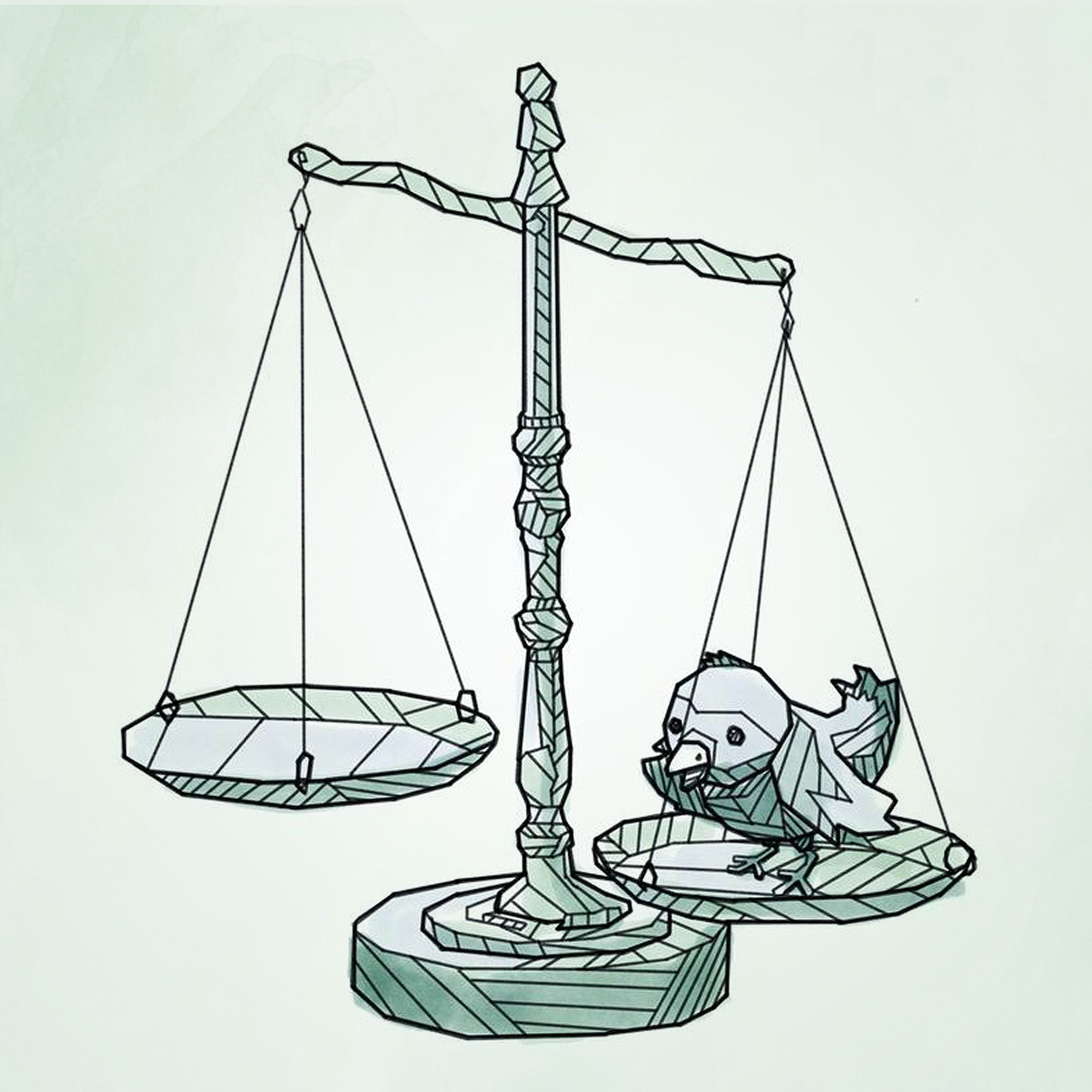
Radiolab
More Perfect: The Hate Debate
00:37:20
Back in 2017 our colleagues at More Perfect gathered a room full of people together to debate a straight forward question: Can free speech go too far? Today, eight years have passed and plenty has changed, but this question feels alive as ever. And so we’re re-airing More Perfect’s The Hate Debate. Taped live at WNYC's Jerome L. Greene Performance Space, Elie Mystal, Ken White and Corynne McSherry duke it out over whether the first amendment needs an update in our digital world. Special thanks to Elaine Chen, Jennifer Keeney Sendrow, and the entire Greene Space team. Additional engineering for this episode by Chase Culpon, Louis Mitchell, and Alex Overington. EPISODE CITATIONS: Videos - If watching is more your speed, you can see the event, in its entirety, here: https://www.youtube.com/live/azcIcVDyVTM?si=ZqpQHQfvTKr2jS0z There’s other Radiolabs for that - Further recommended listening What Up Holmes and Post No Evil. Signup for our newsletter!! It includes short essays, ...
Loading summary
Transcript99 lines
- [00:01]
Latif Nasser
Hey, this is Latif. You might have seen. Last month we did a whole week of shark stories to celebrate the 50th anniversary of the movie Jaws. If you haven't checked it out, please do. We're really proud of it. It's called Swimming with Shadows. A Radiolab Week of Sharks. It also kind of ate up our whole team for weeks. So this month we are running a couple extra rewinds so that we have time to finish a bunch of new episodes that are going to start coming out in August about topics like menopause, artificial intelligence, bioluminescence, evolution of the human voice. There's so many things we are really excited about. All that will be coming at you starting in August. In the meantime, today we have for you a debate over how free free speech should really be. It comes from our sister show, More Perfect, who recorded it live back in 2017. They called the episode the Hate Debate. And we wanted to rerun it because these issues of what should and should not be sayable continue to be as alive and electric as ever. Whether we're talking about college student protesters or non citizens, or social media platforms or government employees, or now there's even the question of whether AI chatbots have free speech rights. This question of free speech and how much of it is too much, it's not going away. So with that, I'm going to hand it over to my predecessor as host, Jad Abumrad, and the debaters. We recorded this at WNYC Green Space in New York in front of a live audience. The evening begins with Jad polling the audience whether or not they think the government should do more to. To limit free speech. Here you go.
- [01:57]
Elie Mistal
Wait, you're listening.
- [01:57]
Jad Abumrad
Okay.
- [01:59]
Elie Mistal
All right. Okay. All right.
- [02:03]
Jad Abumrad
You're listening to Radiolab Radio from WNY.
- [02:11]
Elie Mistal
Rewind.
- [02:15]
Jad Abumrad
Everybody who thinks that your right to free speech, especially online, okay, people say some bad things, fine. But your right to free speech should remain pretty much unlimited. Those of you who feel that way, make some noise. All right, you guys are. You guys are thunderous over here. Let's just do one one more time so I can just get a sort of more accurate. Those of you who don't think it should be limited, go. Okay, now those of you on the flip side, those of you who think there should be some clear hard limits. Easy, easy. Those of you think there should be some clear limits on what you can say online, make some noise. All right. Okay. That gives us a good sense of where we're starting. All right, so let me introduce our debaters for round one. The question is, should the government limit online free speech? Taking one side of that question is Mr. Elie Mistal, our legal editor at MorePerfect, also an editor above the Law, a site for legal news. He is on one side of the stage and of the question on the other. Mr. Ken White, a First Amendment litigator, criminal defense attorney at Brown, White and Osborne in Los Angeles. He has joined us here from the left coast. He's a former federal prosecutor. He runs the free speech and criminal justice blog popat.com. give it up for Ken. All right, let us begin. We'll start with you, Ellie. Is there something wrong with the First Amendment, would you say?
- [03:48]
Elie Mistal
Yeah. No, I don't have a problem with the First Amendment. It was a beautiful thing written for white people who wanted to overthrow the government. It's fine. I have a problem with absolutists who want to elevate threats, harassment, and calls for genocide to the level of a sacred right. I do not think that the First Amendment prohibits us from preventing a Nazi from. From getting a permit to rally any more than I would think that the Second Amendment prevents us from having a sociopath not get a gun permit. Okay. Absolutism is absolutely wrong on this issue.
- [04:25]
Jad Abumrad
Okay, Ellie Mastel, strong beginning. Ken, what do you think?
- [04:29]
Ken White
Well, I don't know what absolutist Ellie is talking about. The last one I know is Hugo Black, and He died in 1971. We have well established, narrow exceptions to the First Amendment, and they are narrow for a reason. We got them narrowed on the backs of the powerless being suppressed by the powerful. All of the types of restrictions that Elie would like are ones that have historically been used against communists, against labor protesters, against war protesters, against minorities and everyone else. The Nazis aren't the ones in danger from the types of restrictions that Ellie is suggesting. He'd like to.
- [05:05]
Jad Abumrad
Okay, there are the two basic positions. Let's get the debate started. All right, Ellie, start us off. Explain why you think that hateful speech, fake news shouldn't be protected by the First Amendment.
- [05:22]
Elie Mistal
Ken just admitted. Just agreed that we already regulate speech at some level. So really, all we're debating about tonight, the only thing that's even up for debate is where we want to draw that line. Ken would draw that line so it protects Nazis. I would draw that line so it protects us from the Nazis. Let's start with a pretty simple example. Fire. Just kidding. There's no actual fire. I'm sure you've all heard that the thing that you can't say is that you can't shout fire in the crowded theater. But actually under our current laws I probably can. Because. Because our current standard is that what is unprotected are things that lead to direct incitement of imminent lawless action. That's a very high bar. So I can probably say fire. What I probably can't say is fire. Kill who you must to survive. That would probably get me in trouble. But the fire analogy comes from an older standard, older than the one that I just quoted. It comes from Oliver Wendell Holmes, who some of you might have heard of. And his standard when he used the you can't falsely shout fire in a crowded theater analogy, his standard was false and dangerous. Speech that is false and dangerous is not protected by the Constitution. I think that's where the line is. I think that's an eminently reasonable line. I think that we had 150 years of a free republic with that line. So I want the line where dangerous lies are not protected by the Constitution.
- [06:54]
Ken White
I don't want the government deciding what's a lie and what's true. May I remind you we are currently led by a president who thinks that global warming is a Chinese hoax to corner the tungsten market. And that's why I don't want the government deciding what to suppress based on its decision about what is true or not. Now Ellie refers to the fire in the crowded theater. Justice Holmes famous quote. Let's remember what he was talking about. He was using that quote. You can't shout fire in a crowded theater to, to justify jailing a man who was protesting World War II by handing out flyers suggesting that people resist the draft. That was the clear danger that the government saw. Now if you don't think that it's plausible that the government would be suppressing the same type of speech now if you gave it the power, if you handed it to them out of fear of Nazis, then just look at what happened after the protests this last year. The alt right and neo Nazis rose. There were massive protests in response and and are largely Republican dominated state legislatures leaped into action and in 17 places they proposed heavily punitive anti protest bills including four charming examples making it easier for you to get off if you run over a protester in your car. That's what the government does with the power to suppress speech when you let the government decide what's true.
- [08:17]
Elie Mistal
I think you just proved that our current first Amendment standard doesn't do better bull to actually protect protesters. All it does is protect Nazis. You want to talk about The Oliver Wendell Holmes case. Let's talk about where our current standard comes from. It's relatively recent. 1969, Brandenburg v. Ohio. Now, what was that case? I said 1969. You probably thought, oh, it was probably like, civil rights and. Yeah, and they were making it. No, it was for Klansmen. Brandenburg was a Klansman. He was all making Klan statements. Somebody arrested his ass for being a Klansman. He got convicted for inciting violence, and the court said, he's just a Klansman. We really need a new standard that protects the right of Klansmen to threaten Black people in 1969.
- [09:01]
Ken White
But you see, Ellie, you know that that's not the right case. That's the one that's best for your argument. The right case is 12 years. The right case is 12 years earlier. Yates v. United States. People convicted for becoming members of the Communist Party under the theory that some ideas can be punished as clear and present danger even when there is no imminent advocacy of wrongdoing. Yates built the wall that eventually Brandenburg completed. Brandenburg's the outlier. Yates is the one that shows how the power is consistently used by the government.
- [09:36]
Elie Mistal
Can you explain to me a standard that allows me to stop Klansmen? Because that's what I want. Like, if you can explain to me how I can make Klansmen not staying in the field, then I think we're gonna agree more than we disagree. Absolutely. But it's a misnomer to suggest that the First Amendment is. Is here to protect minorities. Are you kidding me? The Constitution didn't even think about black people until the 13th amendment, I think, as we all know.
- [09:56]
Jad Abumrad
So, okay, you're saying that you would like to change the standard so that. Well, help me understand.
- [10:01]
Elie Mistal
I want to revert the standard.
- [10:02]
Jad Abumrad
Okay, so what would you say?
- [10:03]
Elie Mistal
Less scary for people?
- [10:04]
Jad Abumrad
How would you. How. What would the standard be?
- [10:07]
Elie Mistal
I can give you an example. The president is a Kenyan. That's false. But that's not particularly dangerous. And so we can let that kind of slide. Right. Hillary Clinton is running a pedophile ring out of a pizza shop. Do not pass go, do not collect $200. That is both false and demonstrably dangerous.
- [10:25]
Jad Abumrad
Okay, but those are two very clear examples. But the idea of falseness and danger can get pretty squishy.
- [10:32]
Ken White
It sure can.
- [10:33]
Jad Abumrad
Can I call up an example, if you guys don't mind? So the Daily Stormer, which is a very popular, popular neo Nazi site, there was a situation where they basically took a Jewish woman, a real estate agent. That's the image right there. You can see it on the screens. And they superimposed it on an image of Auschwitz. They published her name. They published her kids. They said hateful things like, we will drive you to suicide. They called for a sort of troll off on her. Does that qualify for you? And does it qualify for you, Ken? I mean, would you limit that kind of speech?
- [11:06]
Ken White
I think a lot of the comments sent to her were true threats. That is, a reasonable person would see them as statements of actual intent to do her harm. I think that some of the speech about her meets the incitement standard that it's intended to and likely cause imminent lawless action against her. But ideas, however hateful, can't be true or false. And it's not for the government to regulate whether ideas or opinions are true or false, no matter how despicable they are.
- [11:34]
Elie Mistal
No, no, no, no. That is how we got here. Ideas can be true or false. Climate change, real true idea. Climate change, not real false idea. We can make these distinctions, and I don't think that we need to. Your standard requires, and I have, unfortunately, because I am black on the Internet, I have unfortunately had to deal with some true threats, some not true threats, some trying to wrestle with this issue when I go to the cops to try to ask for protection, trying to wrestle with this issue of what's actually protected speech and what's actually not protected speech. And my problem with the current standard is that it basically waits until they start shooting at me before they stop them. I want to stop them before they start shooting. I want to stop them before they start driving their cars into crowded protesters, because by then it's too late.
- [12:20]
Ken White
I want them to stop, too. But here's the problem. With the history of America being what it is, with the power having been used in the past being what it is, what possesses you to think that if you give this broader power to attack speech to the government, it's going to be used the way you want it to be?
- [12:41]
Elie Mistal
I'd rather have this debate in 2020.
- [12:43]
Jad Abumrad
Okay.
- [12:46]
Ken White
It'S a date.
- [12:47]
Jad Abumrad
All right. Now, you've heard Ellie and Ken's points. The question is, did you change your mind? Who thinks the government should limit what we say online? Let's hear some noise. Let me. Those of you who actually leaned farther in that direction over the course this argument, let me hear from you guys.
- [13:13]
Elie Mistal
Go off claps.
- [13:13]
Jad Abumrad
You got a few.
- [13:14]
Corinne McSherry
Golf claps.
- [13:14]
Jad Abumrad
You got a few. Those of you who do not think there should be limits placed from the government by us online, let's hear it. I think we may have a winner for the first round. I'm going to declare that you, Ken White, are the winner for the first round. Give it up for Ken White, First Amendment attorney, former federal prosecutor and founder of Popat.com. thank you for joining us, Ken. Okay, so coming up, we're gonna shift the question a little bit. Instead of asking what should the government do about free speech, should it limit it or not, we're gonna ask what should Twitter do, What should Facebook do? You know, with all the fake news that's happening, all the hate speech that's coalescing online, should they limit free speech more than they are? That is coming up after the break. This is more perfect. I'm Jad Abumrad. Stay with us.
- [14:38]
Lulu
This is an ad by BetterHelp. Lulu here. I am a stranger to many things. I have never seen Star Wars. I have never seen the Grand Canyon. I'm not kidding. I've never been called for jury duty. But I am no stranger to stress. One of my go to tactics for coping is something I like to call vacation. But it turns out that vacation is not a long term solution. You know what is? Therapy. The times I've worked with a therapist in my life has helped me to feel less alone, less tongue tied in conflict, less afraid, and all that has been truly life changing. But it can feel daunting or even stressful to take on the task of finding a therapist. A great way to start trying is with BetterHelp. It's super convenient. You can join a session with a therapist with the click of a button, even while you're on vacation. Plus, you can switch therapists at any time. And Our listeners get 10% off their first month at betterhelp.com Radiolab that's betterhelp.com Radiolab.
- [15:44]
Corinne McSherry
Add a little curiosity into your routine with TED Talks Daily, the podcast that brings you a new TED Talk every weekday. In less than 15 minutes a day, you'll go beyond the headlines and learn about the big ideas shaping your your future. Coming up, how AI will change the way we communicate, how to be a better leader and more. Listen to TED Talks Daily wherever you get your podcasts.
- [16:08]
Jad Abumrad
I'm Chad Abumrad. Let's get back to our debate, our free speech debate at the WNYC Green space. Okay, so round two, we're going to take that same basic question that we asked in round one, but now we're going to transpose it. Whatever we think about the First Amendment, it does place limits on the government, but not so much On Twitter or Facebook. So the question is, should Twitter and Facebook or other social media companies severely limit online speech or shouldn't they? I want to poll you guys first. Just again, so we have a baseline to start from. Those of you people watching on Facebook, do you think the site of which you are on right now should aggressively limit the speech that you might type? Take the online poll. Those of you in the audience, same question. Should Facebook and Twitter be allowed to severely limit online speech? Define it as you will. Okay. Those of you who think, hell, no. All right, that's. I guess I get a kind of a sort of mixed sense of where we're at in the audience. Okay, so here to debate this topic with ellie is Corinne McSherry, legal director of the Electronic Frontier foundation, which is committed to defending civil liberties in a digital world. Give it up for her. All right, so, Corrine, let's start with you. What do you think about the prospect of a Twitter or a Facebook stepping in to take down lies and take down hate speech?
- [17:48]
Corinne McSherry
So I think it's a very dangerous path that unfortunately, we're already well along. I think in moments of crisis, and I think we're in a moment of crisis right now, we look to simple solutions for very complex problems, and we are often sorry. And I think that is where we are right now. The Internet grew up the way it did for mostly good, I would argue, because the platforms and the intermediaries mostly stayed neutral. If we have a world in which Facebook, Twitter, Google, Instagram put themselves in the position of a court and decide what speech should be up, what speech shouldn't, we're going to walk down a dangerous path because those decisions, those tactics will inevitably be used against speech that we would support. For one thing, they will be inevitably used eventually by governments. Private censorship does not stay private. It becomes public censorship almost inevitably. And the third reason is really practical. They're already doing it, and they're doing it badly. All kinds of lawful speech is being taken down every day. Google and Facebook can't save us from the Nazis. We have to do it.
- [19:00]
Jad Abumrad
Okay, thank you, Corrine. Ellie, what do you think?
- [19:04]
Elie Mistal
Yeah, The First Amendment does not apply to Twitter or Facebook. Anybody who tells you that they have a constitutional right to say what they want on Twitter is an idiot. The Twitter trolls want. They don't just want free speech. They want consequence free speech. They want to be able to say they're vile trash and still keep their jobs and still keep their homes and still get the girl. Screw these people. All right. We should have Twitter at least at the level of a Jets game.
- [19:36]
Jad Abumrad
All right, Those are the basic sides. Let's start the debate. All right, Corinne, kick us off.
- [19:46]
Corinne McSherry
Okay, so the problems here are legion, and I'm going to start with the ones that I just touched on briefly before. The reality is that we can all target people that we hate right now. But if we think that the rules that Twitter and Facebook and all those guys are going to come up with aren't going to be used against speech that we support, we are foolish. It's already happening. Community standards complaints are used against valuable speech all the time. I know because I hear about it every day in my job. Then the related problem to that is when you get your lawful speech taken down, you don't have any options. You don't know how to get your stuff put back up. So we have courts, but we don't have a right of appeal. We don't have any challenge. These platforms have the right to host any speech they want. They actually have the First Amendment right to host any speech they want. But I think as users, we want them to use that right wisely. That's not happening right now.
- [20:39]
Elie Mistal
As a user, I want them to stop Nazis. That's really all I'm concerned about. I want them to find a Nazi and stop them from expressing their hateful views on Twitter.
- [20:50]
Corinne McSherry
They can't. They can't. That's foolish. No. Sorry. Then nobody's.
- [20:56]
Elie Mistal
Yes, goodbye.
- [20:57]
Corinne McSherry
Here's why.
- [20:58]
Elie Mistal
Done.
- [20:59]
Corinne McSherry
You know why I know they can't? Because they're trying and they're failing over and over. They cannot tell the difference between hate speech and reporting on hate speech. And so accounts get taken down and suspended when they're doing perfectly lawful things.
- [21:12]
Elie Mistal
One of the reasons why this is so important that we demand better from Facebook, from Twitter, from Reddit, is that the reason why we're seeing so many more Nazis now and is because these platforms have allowed them to organize. There was a reason why the Klan was on the decline 20 years ago, because wearing a hood and going out to meet your friends in the middle of a field like Brandenburg did wasn't really how the modern society was going. But then Twitter and Facebook and these sites and Reddit came along, and now they have a way to talk and talk to each other and realize that, no, I actually hate black people, too. Oh, so do I. Yeah, let's hang out. No. Screw these people. There's no constitutional reason why Twitter should allow them to exist, or Facebook or whatever. There's no business reason why Twitter or Facebook or whatever should allow these people to exist. Get them the F out.
- [22:01]
Jad Abumrad
You know, one of the things I think about is one of the things we heard in the wake of Charlottesville was that a lot of these folks got radicalized online. So why would the prospect of them getting radicalized online, what would balance that out in terms of the failure that these sites are doing? I'm curious to hear you talk more about that.
- [22:16]
Corinne McSherry
Okay, so a couple of things. I do just want to respond to this real quick.
- [22:19]
Jad Abumrad
Sure.
- [22:19]
Corinne McSherry
My view is if white supremacists and Klansmen and Nazis are organizing, I way prefer they were doing it out in public where I can see them and I can challenge them and I can respond to them. And law enforcement will say the exact same thing. People who fight terrorism say it's much better for the. For the, you know, the people to speaking publicly, for the radicals to be radicalizing where you can see them. They're going to organize anyway. Okay, so would you rather do it. They do it in secret or in the open?
- [22:46]
Elie Mistal
I would rather. I would rather them do it in secret. I would actually rather them go and find and make their own Nazi website. Right. Make their own Nazi thing. Right. So that when I. Whenever I get Ken to agree with me, whenever the government is ready to stop these people, they will have all pre registered. They would have all said, hey, look at us. We're here on Nazi meat.com boom. And we can go get them.
- [23:07]
Corinne McSherry
And so great. So we can continue the silo conversations that we're having right now, which is a big part of where, yes, I.
- [23:13]
Elie Mistal
Like to do siloed from Nazis.
- [23:14]
Corinne McSherry
Yes, I think that's. That sounds very nice and it's a good talking point, but in reality, I think that's very, very dangerous for our society. We need people to be talking to each other. When they only talk to people who agree with them, they never change their minds. Now, to your point, that has proven.
- [23:30]
Elie Mistal
Time and time again to me not true. And again, I feel like that is such a happy, clappy white version of this story. Oh, if we just talk to these people, we can convince them that maybe black people shouldn't be sent off to prison camps or once or twice. And the rest of the time they're running cars into people. It doesn't happen nearly.
- [23:50]
Corinne McSherry
Do you know why we have gay marriage equality now? Because people talk to each other. It's not the only reason, but it helped. But I want to answer Jad's question because I think what you're asking is for an example of why I'm worried about how.
- [24:02]
Jad Abumrad
Yeah, I want to gauge your worry against Ellie's worry.
- [24:05]
Corinne McSherry
Yeah. Okay. So the way that it works now and the way that it's likely to continue to work is that. So the social media companies employ a combination of humans and mostly algorithms to try to figure out what's bad speech and what's good speech, and they mess it up. So they'll end up taking down this statement, all white people are racist, as an example of hate speech, but they won't take down. If you might show the previous one, this from a congressman who said not a single radicalized Islamic suspect should be granted enter measure of quarter, et cetera, et cetera. Nasty stuff. Right. They can't tell the difference. And that's what happens. And there's a hat tip to ProPublica. I hope you guys are all ProPublica supporters and fans, because they're great. They did a detailed study to look at Facebook's policies, and they found out that, among other things, they're training their moderators to, in some instances, protect white men over black children.
- [24:58]
Elie Mistal
Yes.
- [24:59]
Corinne McSherry
That's where we are right now. That's what we want to endorse. That's what we want to encourage. I don't think so.
- [25:04]
Elie Mistal
I will stipulate that there are many examples of them getting it wrong. They get it wrong. They're not great at this job yet. But we live in a real world where the actual. Now I'm talking about Twitter cops, but we live in a world where. Where the actual cops get it wrong every fricking day. And in my most radical statements, I'm not saying let's get rid of the cops because they don't know what they're doing. No, I'm saying let's get better cops. And for Twitter, I'm saying let's get better Twitter cops so they don't get it wrong so many times. But you want to talk about letting the perfect be the enemy of the good. Just because Twitter and Facebook have not gotten to the level yet where they're able to effectively police these people doesn't mean they should just stop trying.
- [25:47]
Corinne McSherry
What we have, where we are right now is thousands of accounts are being suspended every day. Let's just say a relatively small percentage of those are for perfectly lawful speech. That's a lot of lawful speech. That's a lot that we have authorized Twitter and Facebook and everyone else to take down and encourage them to. And keep in mind, I want to say one more thing that I said Before, But I want to emphasize it, once we start down this path, if you think that this is going to stay within the decision makers at Silicon Valley, you are dreaming. I mean, that's bad enough. I'm not actually sure why we all want, want Silicon Valley to make decisions about what speech is okay for all the rest of us. But even that aside, it's not going to stop there. Governments are going to come in when they see that Google, Facebook, Twitter can easily take down accounts. They're going to say, okay, could you do that for us? This doesn't stop.
- [26:35]
Elie Mistal
Somebody needs to stop these people. And I refuse to believe that we live in a country where that is impossible.
- [26:41]
Jad Abumrad
Let's take a question, take a question here in the back. If Facebook emailed you and said you can be in charge of what's considered speech that is either left up or is taken down, you could build whatever team of people, would you accept that? Would you think that that could create something that you would be satisfied with or not satisfied with?
- [27:03]
Corinne McSherry
Oh, if I was queen of the world, it's hard to turn that down. But I think even I would have trouble in all instances being perfect about what was lawful speech and what wasn't speech. But that actually isn't my main concern. It's that even I could then potentially be required by a government to then use that algorithm for other purposes. And that would be really dangerous. But here's the one thing that I would say, and this is where I think we agree, is that if I was queen of the world and I was running any of these companies, one of the things I would absolutely do is put in much better processes for people to appeal, for people to challenge when things are taken down wrong. This isn't just a speech issue, it's a due process issue. Because, let's face it, of course, these aren't official government forums. We all understand that. But nonetheless, this is how we talk to each other. These are our public spaces. In those public spaces, it's really important when your account gets suspended, when you get taken offline, to be able to get back up if what you're doing is perfectly legal right now. The reality is, and I know this because I hear from people all the time, it's very confusing. You don't know who to appeal to. You don't know who to. You don't know why you're taken down half the time and you don't know what to do.
- [28:18]
Jad Abumrad
Let's take a question on the far right.
- [28:21]
Elie Mistal
Hi, I just wanted to get your opinions on Money. Because I hear a lot of talk.
- [28:26]
Corinne McSherry
About this being a speech issue or not, but I think for platforms, these social media platforms, I think it's really all about money and it's about followers.
- [28:35]
Elie Mistal
And young kids that are getting rape.
- [28:36]
Corinne McSherry
Threats and threats and that they eventually end in suicide. I think that this has to do with money.
- [28:43]
Elie Mistal
I think there's a bigger issue here.
- [28:45]
Corinne McSherry
And I just don't hear anyone talking about it. And I just wanted to know what you both thought about that. So, I mean, I think that that's, that's really a real pressure point because I think a lot of these companies and I think actually genuinely so feel uncomfortable making money from, from hate. But unfortunately we still have a problem. And I'm going to give you an example from an article I just read yesterday. That's a conversation. It's a, it's a long piece about Google and how it runs advertising and search and so on from Talking Points Memo. And Talking Points Memo mentioned that, you know, one of the problems that they have because these processes are so opaque, they survive because of Google advertising. Them too, right? And they're a legitimate site trying to do good for the world. They survive because of Google advertising. They keep getting penalized for hate speech because they're reporting on hate speech. Specifically Dylan, the Dylan Roof situation.
- [29:32]
Elie Mistal
So we all agree that the robots.
- [29:34]
Corinne McSherry
Are easy to sort of disentangle, but.
- [29:36]
Elie Mistal
No, it is because we agree that the robots are bad. But I think that we can all agree that Talking Points Memo is a decent site. Infowars, on the other hand, if Google and Facebook and whatever, slam them, why would that, why would that be so hard? Here's the other thing. If you really don't think that we yet have the technology and the resources necessary in order to police these sites better, how about we go the other direction? How about we just out people. How about you just. If you, if you're gonna, if you Twitter are gonna tell me. You can't tell who's threatening to kill me, just tell me who it is. Just tell me who it is and I will handle it myself. What's wrong with that?
- [30:18]
Corinne McSherry
See, now he's just trying to piss me off. Okay, so what we're talking about is now a step further. It's social media companies and intermediaries, by the way, all the different people that you interact with, they take it upon themselves to out you right? To pierce your anonymity. That is profoundly, profoundly dangerous. Anonymity. Anonymous speech is the most, probably the most important form of political speech that we have the ability to speak, especially online, without fear of retaliation means that you have the ability to speak your truth. If we out people, if we accept that social media companies should be judge and jury over that should just expose people to the world without any choice, without any recourse. Because once you're outed.
- [31:03]
Elie Mistal
Yes, because there's no appeal that we used to have as a society to protect ourselves from these people was called shame. We could shame them into being part of the herd. And if they didn't want to be part of the herd, we could know who they are and say, hey, guess what? You're no longer part of the herd. Shame is a powerful weapon that we used to have and Twitter has taken away, taking it away from us. And that is why these people are allowed to multiply.
- [31:29]
Corinne McSherry
That weapon was also used to persecute minorities all over the Everything was always.
- [31:35]
Elie Mistal
Used to persecute minorities at some point. The fact that something has been used to persecute minorities doesn't mean that it can't also be used to stop Nazis. That's just clocks were used to persecute minorities when they weren't paid by the hour. All right, but cost is still a good thing.
- [31:50]
Corinne McSherry
The one thing we have always understood in this country, and this is before the First Amendment, is the importance of anonymous speech.
- [31:58]
Jad Abumrad
All right, let me just jump in for a second. We have a question here on the right.
- [32:01]
Audience Member
I just wanted to say that, like, someone said something about, is there a moral reason that Twitter or the government should lean towards free speech? And I personally am someone who used to have abhorrent views, and I was raised as fundamental Christian as you could get. And my views about gay people, had I spoken them on the Internet, probably would have put off some hate speech alarms. And it was not shaming that changed my mind. I encountered people who were engaging, who treated me like a person, even though had back then there been Twitter, I would have been a troll. And it changed my mind. And I don't know if you guys are familiar with the Westboro Baptist Church. They fought a Supreme Court case and won. They have really the worst views of anyone, any group that considers themselves Christian that I can think of. And their person who ran their Twitter is a friend of mine, Megan Phelps Roper. She has this great story about how using Twitter to essentially spread terrible hate speech, saying things like, thank God for AIDS for killing gay people. But it was through Twitter and through the arguments she got in and then through the relationships that she got in that she found a way out of that bubble she lived in and now is out in the world doing amazing work. If what you want, Ellie, happens. That troll that you want to shut up, that Klansman you want to get rid of, he doesn't go away. The mold grows in the shadow and it's only in the sunshine. It's only when you get it out in the open. And we have these conversations and as a former believer in some of this stuff, like don't lose heart, like we can have our minds changed and like we can be convinced of the truth.
- [33:46]
Elie Mistal
I, I respect your story and I'm very glad that some that you were able to get to where you are. However, turns out that I believed what you want me to believe for a good, oh, I don't know, 28, 29 years of my life. I am a 40 year old black man. I am sick of being the educational PBS after school special for racist white people. Gay people are sick of being the ABC after school special for white people. Women are sick of being the after school special trying to teach the white man why they also should have rights. It is simply no longer acceptable for you to expect other people just trying to go about posting their dinner recipes on Facebook. It's ridiculous for you to think that we should still have the burden of educating you. You should go get educated somewhere that can't be on us all the time. Now, I'm willing to do it. I'm willing to do it here. I'm willing to do it in public. I am actually. I'm willing to go to a bar and have a drink with people that I can't see stand. But at some point when I just want to like get on Facebook and see the Mets score, I shouldn't have to hear your bullshit.
- [35:05]
Corinne McSherry
Okay, but I don't actually think that was what he was saying at all. It's entirely possible someone should say that with a microphone. I think he was just saying silo's bad.
- [35:19]
Elie Mistal
But that's what I'm saying. That is what he was saying. Silers are bad. We should all be together. And then. No, I think that.
- [35:25]
Corinne McSherry
No, I think he's saying if we don't talk to each other, nobody's mind ever changes.
- [35:33]
Jad Abumrad
All right, I'm going to jump in now. I think Ellie and Curran have done all they can to persuade you guys. Who thinks that Twitter and Facebook and such should take a strong hand in severely limiting online speech? Those of you who think so, clap. Those of you who disagree with the asshole clapping to your left, make some noise. I believe that means that you are the victor.
- [36:03]
Corinne McSherry
The Internet wins.
- [36:14]
Jad Abumrad
Thank you to our debaters, Ellie Mistahl, mooreperfect's legal editor and executive editor at above the Law. Thanks to Corinne McSherry from the Electronic Frontier foundation and Ken White from Popat.com this episode was produced with Elaine Chen and the very excellent folks at WNYC's Green Space. We had mixing help this week from Louis Mitchell. Supreme Court Audio is from Oyer, a free law project in collaboration with the Legal Information Institute at Cornell. Leadership support for More Perfect is provided by the Joyce Foundation. Additional funding is provided by the Charles Evans Hughes Memorial Foundation.
- [36:47]
Latif Nasser
Okay, so that was the debate. I hope you found it fascinating. And if you did, freedom of speech is a topic we kind of haunt at this show. We keep coming back to it over and over. And let me recommend two episodes in particular. One is called what Up Holmes? It's about the legal history of the First Amendment involving someone who actually came up in the debate, Supreme Court Justice Oliver Wendell Holmes. Second episode from Radiolab. Post no Evil. That one is about social media content moderation. Kind of the nitty gritty of how all of it unfolds at Facebook. That's all for us this week on our podcast, Long May it Continue to Be free. I'm Latif Nasser. Thanks for listening.
- [37:36]
Ken White
Hi, I'm Victor from Springfield, Missouri, and here are the staff credits. Radiolab was created by Jaz Abumrad and edited by Solomon Wheeler. Lulu Miller and Nasse Nasser are our co hosts. Dylan Keith is our director of sound design. Our staff includes Simon Adler, Jeremy Bloom, Becca Bresser, W. Harry Fortuna, David Gable, Maria Paz Gutierrez, Sunu Nanan Samanthan, nat Kilpi, Annie McEwen, Alex Neeson, Sara Kari, Sarah Sandbeck, Anissa Vitzer, Arianne Wack, Pat Walters, Molly Webster and Jessica Young, with help from Rebecca Rand. Our fact checkers are Diane Kelly, Emily Krieger, Ana Pujolmangini and Natalie Middleton.
- [38:26]
Jad Abumrad
Hi, I'm Jerry and I'm calling from Capsovar Kenya. Leadership support for Radiolab science programming is.
- [38:33]
Ken White
Provided by the Simons foundation and the John Templeton Foundation.
- [38:39]
Jad Abumrad
Foundational support for Radiolab was provided by the Alfred P. Sloan Foundation. Since WNYC's first broadcast in 1924, we've been dedicated to creating the kind of content we know the world needs. Since then, New York Public Radio's rigorous journalism has gone on to win a Peabody Award and a Dupont Columbia Award, among others. In addition to this award winning reporting, your sponsorship also supports inspiring storytelling and extraordinary music that is free and accessible to all. To get in touch and find out more, visit sponsorship.wnyc.org.